



VD/VDR
Vitamin D; Vitamin D receptor
Vitamin D is a secosteroidalprohormone, it can be synthesized at sufficient levels in skin, given adequate skin exposure to UV B radiation from sunlight. Vitamin D modulates its biological effects by directly regulating target gene expression through the Vitamin D receptor (VDR), a ligand-regulated transcription factor and a member of the nuclear receptor superfamily. Whether synthesized in the skin or ingested, vitamin D requires two hydroxylation steps to become the biologically active hormone, 1,25-dyhydroxyvitamin D3 [1,25(OH)2D3], a form that signals through the VDR. The hormone-bound VDR modulates target gene transcription in response to vitamin D. VDR acts as a master transcriptional regulator of autophagy. Activation of the VDR by vitamin D induces autophagy and an autophagic transcriptional signature in breast cancer (BC) cells.
There are 2 forms of vitamin D. Vitamin D2 (ergocalciferol) comes from irradiation of the yeast and plant sterol ergosterol, and vitamin D3 (cholecalciferol) is found in oily fish and cod liver oil and is made in the skin. Vitamin D represents vitamin D2 and vitamin D3.
Topical agents containing active vitamin D3 (calcitriol, 1α, 25- dihydroxyvitaminD3, VD3) analogues such as Tacalcitol, Calcipotriol and Maxacalcitol are widely used for psoriasis therapy.
All Product Categories
-
VD/VDR Inhibitors
(5)
View all products
-
VD/VDR Agonists
(22)
View all products
-
VD/VDR Antagonists
(15)
View all products
-
VD/VDR Activators
(59)
View all products
-
VD/VDR Modulators
(8)
View all products
-
VD/VDR Chemicals
(3)
View all products
-
VD/VDR Controls
(2)
View all products
-
VD/VDR Ligands
(7)
View all products
-
VD/VDR Related Products (164)
Related Products (164)

-
Antibodies (3)
-
2MD
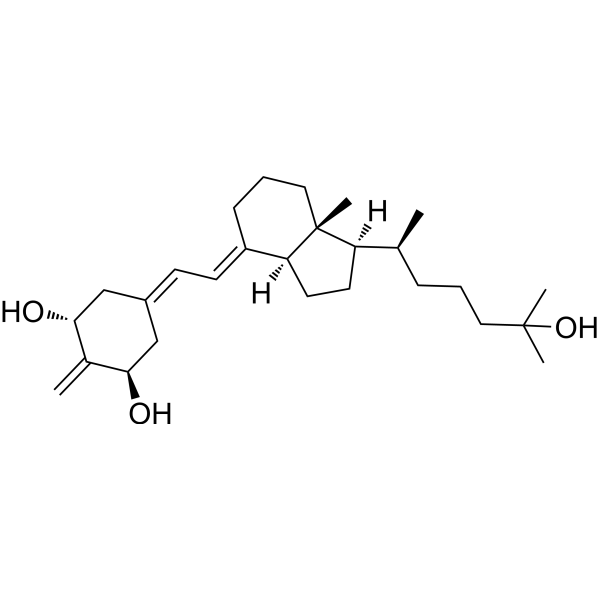 0 ImagesCat. No.: HY-148698CAS No.: 213250-70-52MD is an orally active vitamin D analog. 2MD stimulates periosteal bone formation and decreases trabecular bone resorption. Thus 2MD restores trabecular and cortical bone mass and strength. 2MD also regulates intraocular pressure (IOP)-relative genes and reduces IOP in non-human primates.
-
(1S)-Calcitriol-d6
 0 ImagesCat. No.: HY-10002AS2CAS No.: 1202355-83-6Synonyms: 1α,25-Dihydroxy-3-epi-vitamin D3-d6(1S)-Calcitriol-d6 (1α,25-Dihydroxy-3-epi-vitamin D3-d6) is the deuterium labeled (1S)-Calcitriol (HY-10002A). (1S)-Calcitriol (1α,25-Dihydroxy-3-epi-vitamin-D3) is a natural metabolite of 1α,25-dihydroxyvitamin D3 (1α,25(OH)2D3). (1S)-Calcitriol exhibits potent vitamin D receptor (VDR)-mediated actions such as inhibition of keratinocyte growth or suppression of parathyroid hormone secretion.
-
TGF-β1/Smad3-IN-2
 0 ImagesCat. No.: HY-182038TGF-β1/Smad3-IN-2 is an orally active antifibrotic agent. TGF-β1/Smad3-IN-2 has high affinity for VDR and can inhibit the TGFβ/SMAD3 signaling pathway. TGF-β1/Smad3-IN-2 inhibits hepatic stellate cell activation, reduces extracellular matrix deposition, and alleviates liver fibrosis in a bile duct ligation mouse model. TGF-β1/Smad3-IN-2 can be used for the research of liver fibrosis.
-
Alfacalcidol-d7
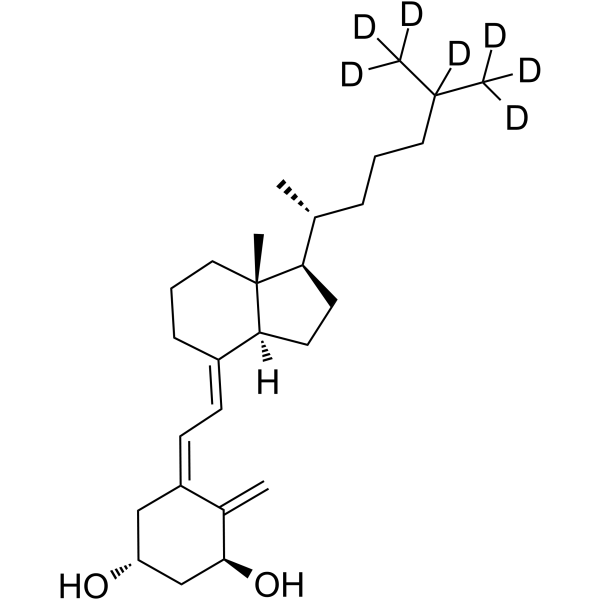 0 ImagesCat. No.: HY-10003SSynonyms: 1-hydroxycholecalciferol-d7; 1.alpha.-Hydroxyvitamin D3-d7Alfacalcidol-d7 is the deuterium labeled Alfacalcidol. Alfacalcidol (1-hydroxycholecalciferol) is a vitamin D active metabolites, acts as a non-selective VDR activator medication, and widely be used in the management of osteoporosis.
-
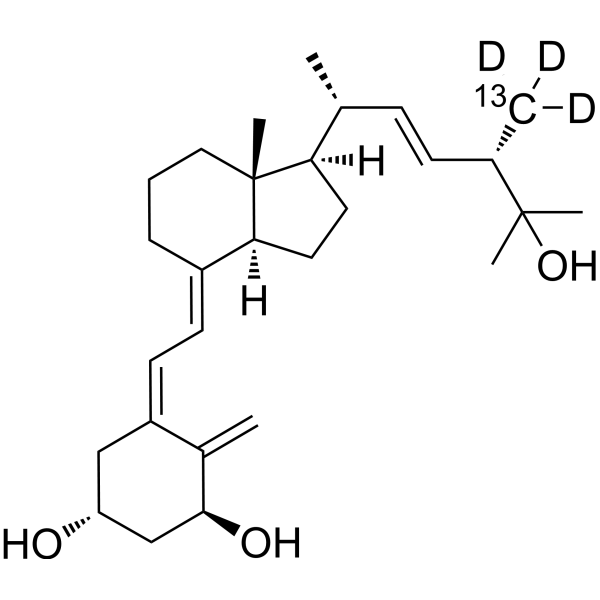
Δ4-Dafachronic Acid-d3
 0 ImagesCat. No.: HY-131492SΔ4-Dafachronic Acid-d3 is deuterium labeled Δ4-Dafachronic acid (HY-131492). Δ4‑Dafachronic acid is an endogenous steroid hormone, an agonist of the DAF‑12 nuclear receptor, and a key ligand for the vitamin D receptor (VDR). Δ4‑Dafachronic acid promotes the active escape developmental trajectory in Austrofundulus limnaeus embryos even under diapause‑inducing conditions. Δ4‑Dafachronic acid is suitable for research on the developmental biology.
-
1alpha, 25-Dihydroxy VD2-d6
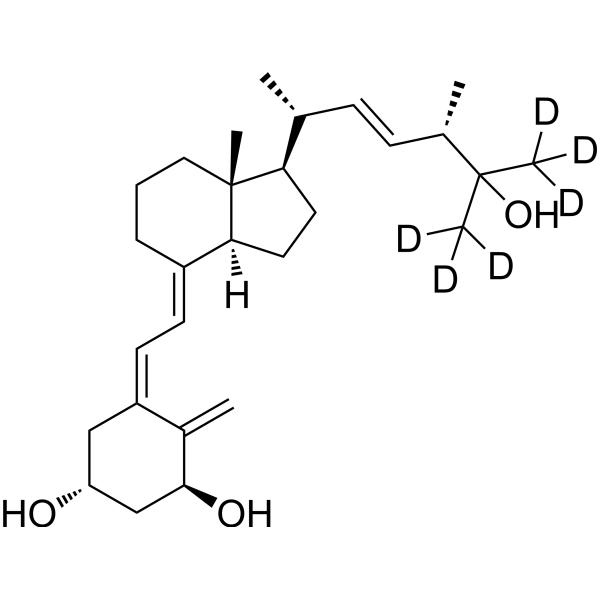 0 ImagesCat. No.: HY-15327CAS No.: 216244-04-11alpha, 25-Dihydroxy VD2-d66 is a deuterated form of vitamin D.
-
(R)-Acenocoumarol
 0 ImagesCat. No.: HY-121814ACAS No.: 66556-77-2Synonyms: (R)-Acenocoumarin; (R)-Nicoumalone(R)-Acenocoumarol ((R)-Acenocoumarin; (R)-Nicoumalone) is a short-acting and orally active anticoagulant, like Warfarin (HY-B0687), works by inhibiting vitamin K epoxide reductase. (R)-Acenocoumarol has a greater in vivo anticoagulant potency than Warfarin. (R)-Acenocoumarol has a single chiral center that produces two different enantiomeric forms. (R)-Acenocoumarol has a longer plasma elimination half-life (6.6 h) and a slower plasma clearance rate (1.9 L/h) than the (S)-enantiomer, resulting in a stronger in vivo anticoagulant effect.
-
VDR agonist 3
 0 ImagesCat. No.: HY-172087CAS No.: 3110217-32-5VDR agonist 3 (Compound E15) is a potent vitamin D receptor (VDR) agonist. VDR agonist 3 can effectively inhibit HSC activation through VDR. VDR agonist 3 significantly reduces liver fibrosis without causing hypercalcemia in a CCl4-induced mouse liver fibrosis model.
-
Vitamin D4-d5
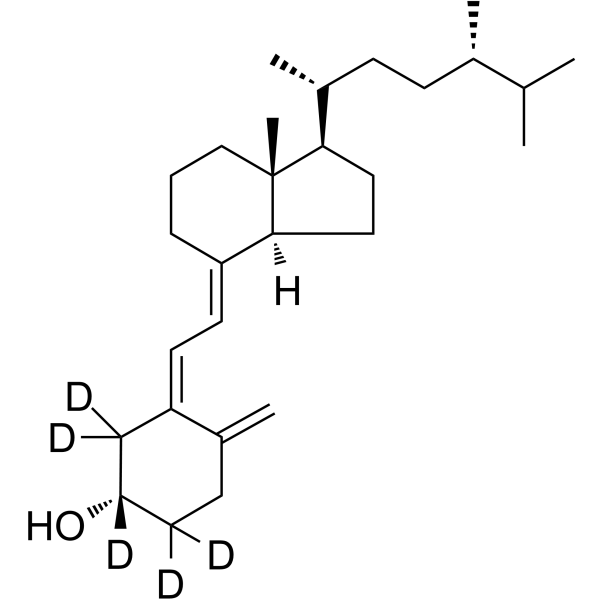 0 ImagesCat. No.: HY-75958S1Synonyms: 22-Dihydroergocalciferol-d5Vitamin D4-d5 is the deuterium labeled Vitamin D4. Vitamin D4 (22-Dihydroergocalciferol) is a Vitamin D derived from fungi. The precursor of Vitamin D4 is 22,23-dihydroergosterol.
-
(1S)-Calcitriol-d3
 0 ImagesCat. No.: HY-10002ASCAS No.: 1539301-06-8Synonyms: 1α,25-Dihydroxy-3-epi-vitamin D3-d3(1S)-Calcitriol-d3 (1α,25-Dihydroxy-3-epi-vitamin D3-d3) is the deuterium labeled (1S)-Calcitriol (HY-10002A). (1S)-Calcitriol (1α,25-Dihydroxy-3-epi-vitamin-D3) is a natural metabolite of 1α,25-dihydroxyvitamin D3 (1α,25(OH)2D3). (1S)-Calcitriol exhibits potent vitamin D receptor (VDR)-mediated actions such as inhibition of keratinocyte growth or suppression of parathyroid hormone secretion.
-
Tisocalcitate
 0 ImagesCat. No.: HY-32347CAS No.: 156965-06-9Tisocalcitate is a Vitamin D analogue, can be used for plaque type psoriasis research.
-
Vitamin D3-13C3
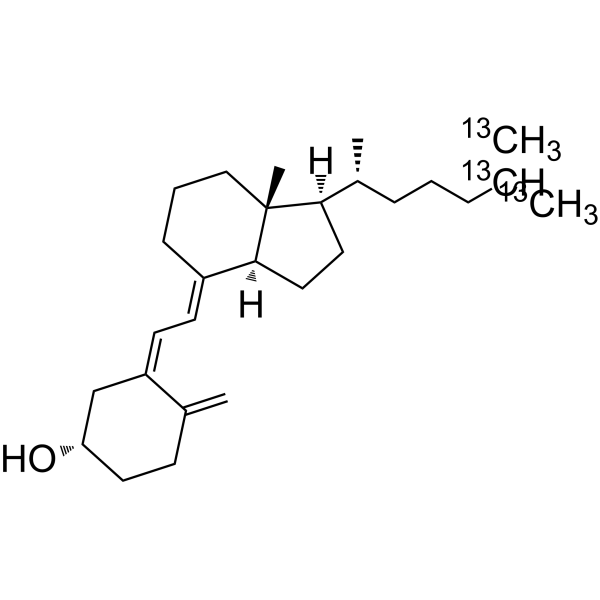 0 ImagesCat. No.: HY-15398S1Synonyms: Cholecalciferol-13C3; Colecalciferol-13C3Vitamin D3-13C3 is the 13C-labeled Vitamin D3. Vitamin D3 (Cholecalciferol; Colecalciferol) is a naturally occuring form of vitamin D. Vitamin D3 induces cell differentiation and prevents proliferation of cancer cells.

-
LG190155
 0 ImagesCat. No.: HY-118970CAS No.: 233268-78-5LG190155 is a nonsteroidal vitamin D receptor (VDR) agonist. LG190155 activates VDR in mesenchymal stem cells, thereby upregulating the BMP6-IL6 autocrine axis. Pretreatment of mesenchymal stem cells with LG190155 significantly enhances their ability to induce differentiation of acute myeloid leukemia cells, without inducing hypercalcemia. LG190155 is applicable to research related to acute myeloid leukemia (AML).
-
Calcipotriol monohydrate (Standard)
 0 ImagesCalcipotriol (monohydrate) (Standard) is the analytical standard of Calcipotriol (monohydrate). This product is intended for research and analytical applications. Calcipotriol monohydrate is a synthetic VitD3 analogue with a high affinity for the vitamin D receptor.
-
ZG-126
 0 ImagesCat. No.: HY-161778CAS No.: 3049802-32-3ZG-126 is an agonist for vitamin D receptor (VDR) and an inhibitor for histone deacetylase (HDAC) (IC50=0.63-67.6 μM). ZG-126 exhibits cytotoxicity in cancer cells MDA-MB-231 and 4T1. ZG-126 exhibits antitumor and anti-metastatic efficacy against melanoma and triple-negative breast cancer (TNBC) in mouse models. ZG-126 also exhibits anti-inflammatory activity, through the reduction of macrophage infiltration and immunosuppressive M2-polarization.
-
Calcitriol-d3
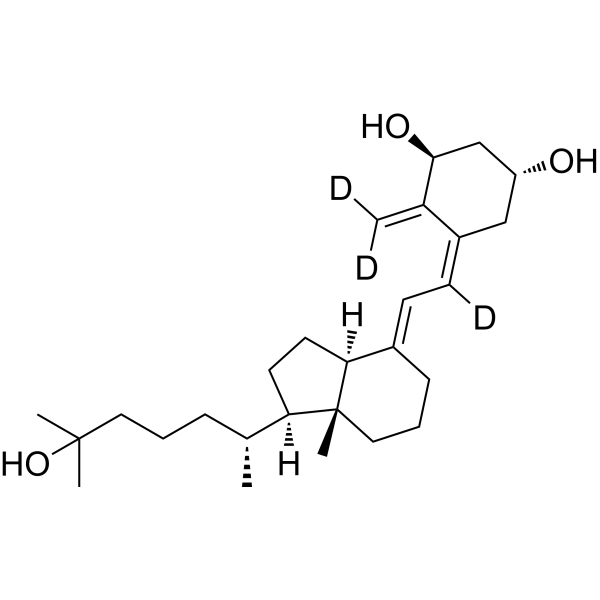 0 ImagesCat. No.: HY-10002S1CAS No.: 128723-16-0Synonyms: 1,25-Dihydroxyvitamin D3-d3Calcitriol-d3 is the deuterium labeled Calcitriol. Calcitriol is the most active metabolite of vitamin D and also a vitamin D receptor (VDR) agonist.
-
Calcitriol-d9
 0 ImagesCat. No.: HY-10002S2CAS No.: 1539301-39-7Synonyms: 1,25-Dihydroxyvitamin D3-d9Calcitriol-d9 (1,25-Dihydroxyvitamin D3-d9) is the deuterium labeled Calcitriol (HY-10002). Calcitriol is the most active metabolite of vitamin D and also a vitamin D receptor (VDR) agonist.
-
Pefcalcitol
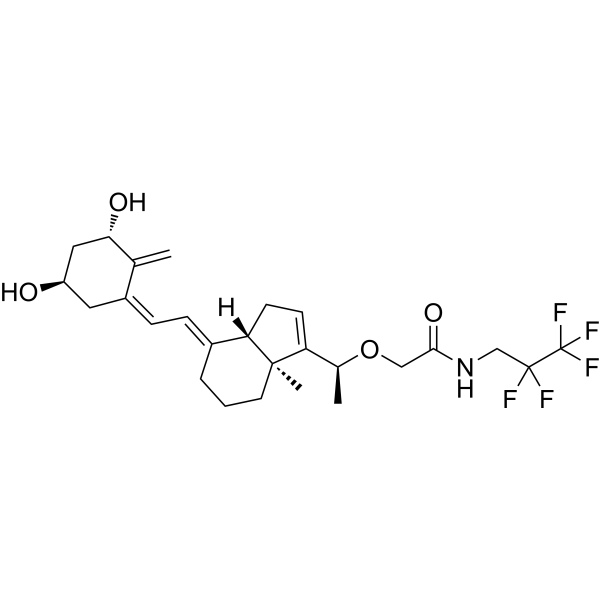 0 ImagesCat. No.: HY-19911CAS No.: 381212-03-9Synonyms: SMD-502Pefcalcitol is a new antipsoriatic anteagent candidates having 16-en-22-oxa-vitamin D3 structures.




