



VD/VDR Agonist
- 1
- 2
-
Calcitriol
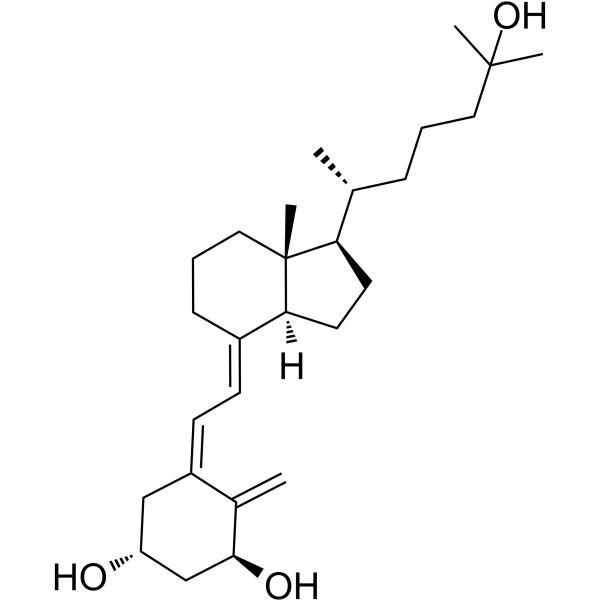 0 ImagesSynonyms: 1,25-Dihydroxyvitamin D3
Calcitriol is the most active metabolite of vitamin D and also a vitamin D receptor (VDR) agonist.
-
Paricalcitol
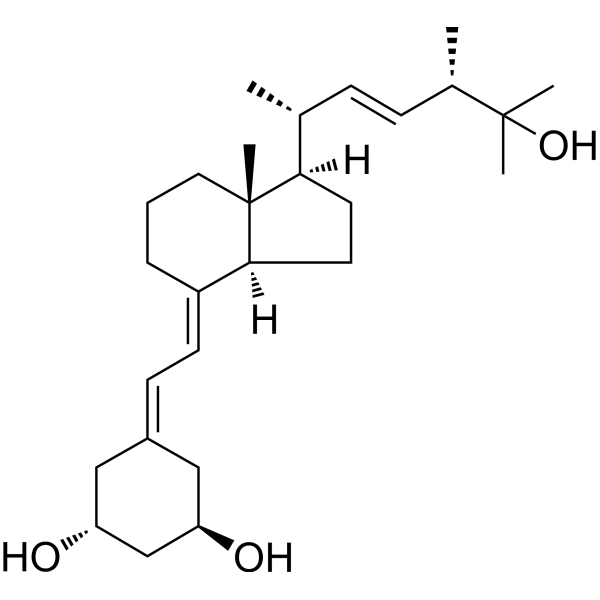 0 Images
Paricalcitol, a vitamin D analogue, is a vitamin D receptor agonist, used for the prevention and treatment of secondary hyperparathyroidism (excessive secretion of parathyroid hormone) associated with chronic renal failure.
-
Seocalcitol
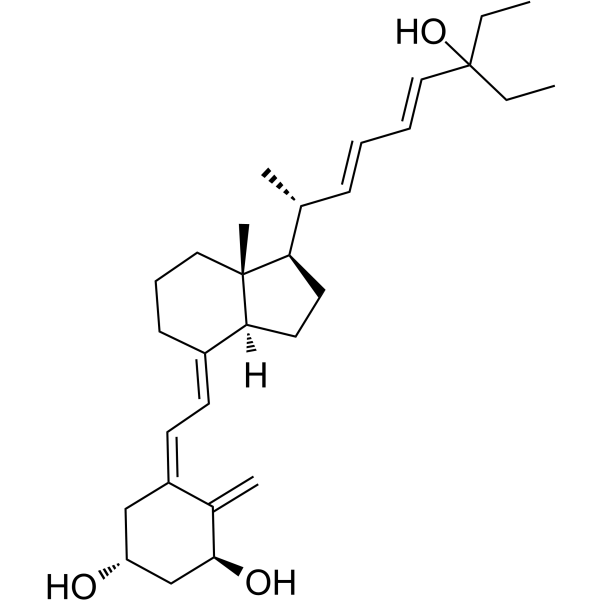 0 ImagesSynonyms: EB 1089
Seocalcitol is a vitamin D analog, binds vitamin D receptor protein from human osteosarcoma MG-63 cells with Kd of 0.27 nM.
-
TEI-9647
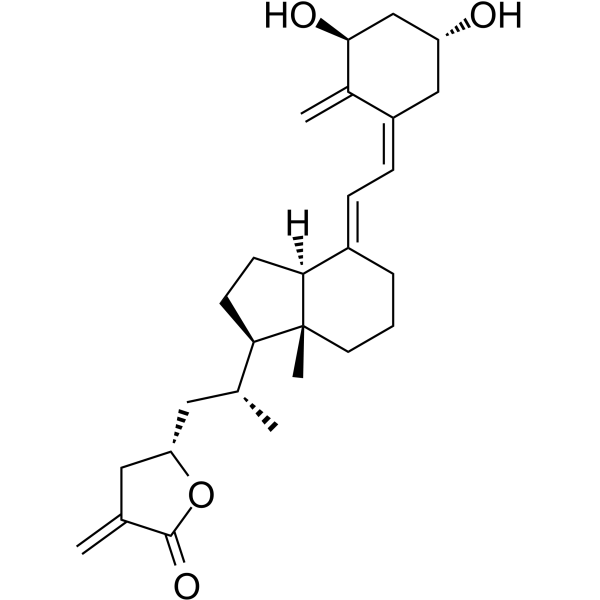 0 Images
TEI-9647, a Vitamin D3 Lactone analogue, is a potent and specific vitamin D receptor (VDR) antagonist. TEI-9647 inhibits VDR/VDRE-mediated genomic actions of 1α,25(OH)2D3. TEI-9647 inhibits bone resorption and HL-60 cell differentiation induced by of 1α,25(OH)2D3. TEI-9647 has the potential for suppressing the excessive bone resorption and osteoclast formation in Paget's disease.
-
Inecalcitol
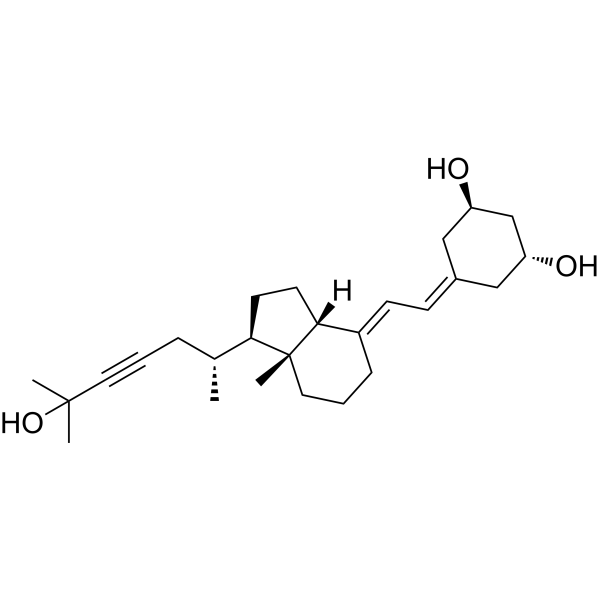 0 ImagesSynonyms: TX 522
Inecalcitol (TX 522), a unique vitamin D3 analog, is an orally active vitamin D receptor (VDR) agonist with a Kd of 0.53 nM. Inecalcitol can induce cell apoptosis and has potent anticancer activities. Inecalcitol is a click chemistry reagent, it contains an Alkyne group and can undergo copper-catalyzed azide-alkyne cycloaddition (CuAAc) with molecules containing Azide groups.
-
25-Hydroxytachysterol3
 0 Images
25-Hydroxytachysterol3 is the metabolite of Vitamin D3 (HY-15398). 25-Hydroxytachysterol3 inhibits the proliferation of epidermal keratinocytes and dermal fibroblasts, stimulates the expression of differentiation- and antioxidant-related genes in keratinocytes. 25-Hydroxytachysterol3 activates vitamin D receptor (VDR) and aryl hydrocarbon receptor (AhR), liver X receptor α/β (LXR α/β) and peroxisome proliferator-activated receptor γ (PPARγ), stimulates the expression of CYP24A1.
-
Calcitriol (Standard)
 0 ImagesSynonyms: 1,25-Dihydroxyvitamin D3 (Standard)
Calcitriol (Standard) is the analytical standard of Calcitriol. This product is intended for research and analytical applications. Calcitriol is the most active metabolite of vitamin D and also a vitamin D receptor (VDR) agonist.
-
Triciferol
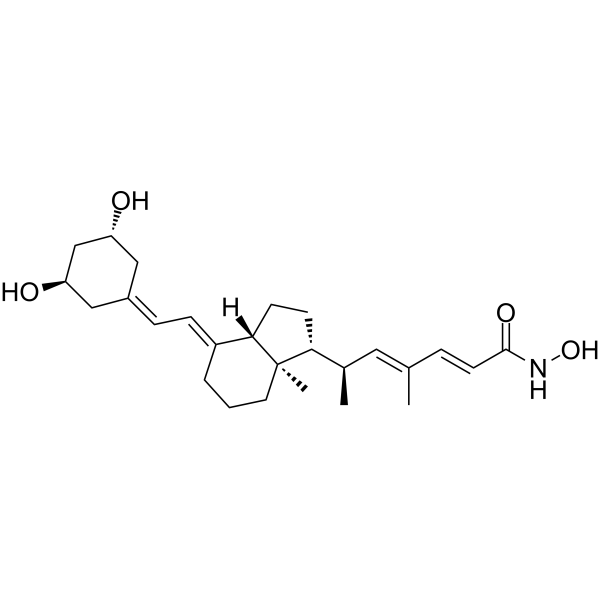 0 Images
Triciferol functions as a multiple ligand with combined VDR agonist and HDAC antagonist activities. Triciferol binds directly to the VDR (IC50=87 nM), and functions as an agonist with 1,25D-like potency on several 1,25D target genes. Triciferol induces marked tubulin hyperacetylation, and augments histone acetylation. Antiproliferative and cytotoxic activities.
-
Elocalcitol
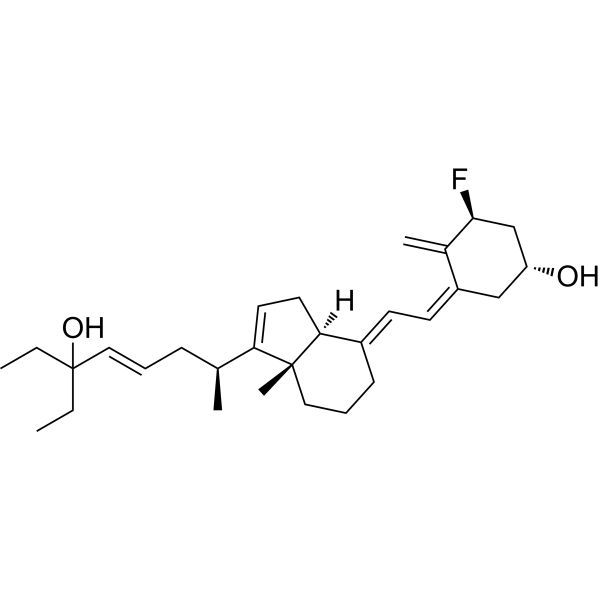 0 ImagesSynonyms: BXL-628; Ro-26-9228
Elocalcitol (BXL-628), a vitamin D analogue, is a selective, orally active vitamin D receptor (VDR) agonist. Elocalcitol shows anti-inflammatory activity. Elocalcitol inhibits growth of prostate cancer cells.
-
20-Hydroxyvitamin D3
 0 ImagesCat. No.: HY-154825CAS No.: 651734-12-2Synonyms: 20(OH)D3; 20S-Hydroxyvitamin D3
20-Hydroxyvitamin D3 (20(OH)D3), a product of vitamin D3 hydroxylation, is a noncalcemic immunomodulator. 20-Hydroxyvitamin D3 binds to vitamin D receptor (VDR), activates VDR and aryl hydrocarbon receptor (AhR) signaling, stimulates CYP24A1 expression, and drives VDR nuclear translocation. 20-Hydroxyvitamin D3 inhibits NF-κB activity via IκBα upregulation. 20-Hydroxyvitamin D3 acts as a substrate for CYP27B1 and rat CYP24A1, undergoing hydroxylation to form dihydroxy-derivatives. 20-Hydroxyvitamin D3 inhibits cell proliferation, colony formation, migration, and tumor growth, and induces cell differentiation in cancer cells. 20-Hydroxyvitamin D3 can be used for the research of inflammatory and autoimmune diseases, melanoma, breast carcinomas, and hepatocarcinoma.
-
VDR agonist 1
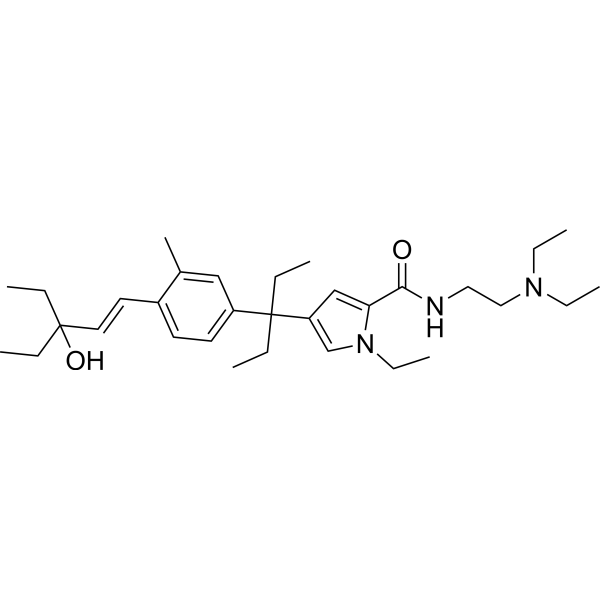 0 ImagesCat. No.: HY-114310CAS No.: 2269494-43-9
-
Paricalcitol solution
 0 ImagesCat. No.: HY-FL50919CAS No.: 131918-61-1
Paricalcitol solution is mainly composed of Paricalcitol (HY-50919). Paricalcitol, a vitamin D analogue, is a vitamin D receptor agonist, used for the prevention and treatment of secondary hyperparathyroidism (excessive secretion of parathyroid hormone) associated with chronic renal failure.
-
VDR agonist 4
 0 ImagesCat. No.: HY-178328CAS No.: 3136765-61-9
VDR agonist 4 is an orally active potent VDR agonist. VDR agonist 4 exerts VDR-dependent antifibrotic activity by regulating multiple fibrosis-related genes to suppress α-SMA and collagen I production, thereby inhibiting hepatic stellate cell (HSC) activation. VDR agonist 4 improves CCl4 (HY-RS16594)-induced hepatic fibrosis in mice. VDR agonist 4 can be used for liver fibrosis research.
-
Paricalcitol (Standard)
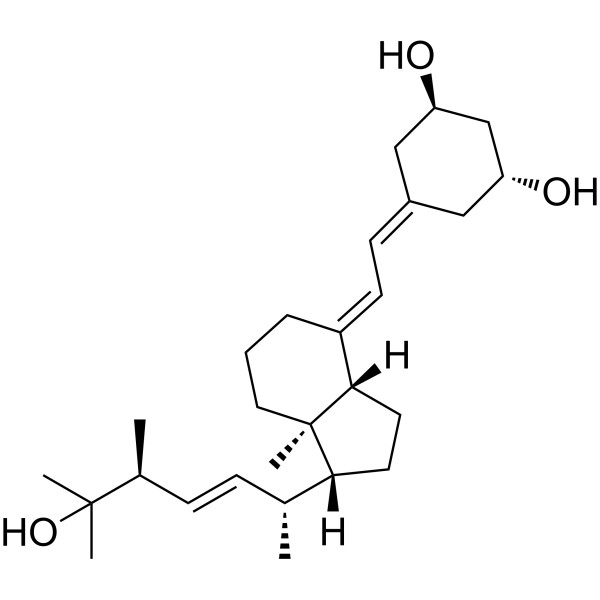 0 ImagesCat. No.: HY-50919RCAS No.: 131918-61-1
Paricalcitol (Standard) is the analytical standard of Paricalcitol. This product is intended for research and analytical applications. Paricalcitol, a vitamin D analogue, is a vitamin D receptor agonist, used for the prevention and treatment of secondary hyperparathyroidism (excessive secretion of parathyroid hormone) associated with chronic renal failure.
-
VDR agonist 5
 0 ImagesCat. No.: HY-181486
VDR agonist 5 is an oral active VDR agonist. VDR agonist 5 activates VDR-mediated signaling to reduce liver fibrosis progression. VDR agonist 5 does not induce hypercalcemia. VDR agonist 5 can be used for the research of hepatic fibrosis.
-
VDR agonist 2
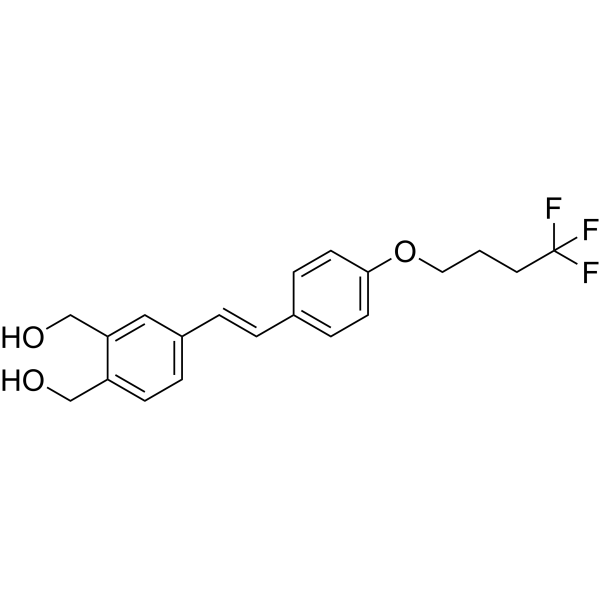 0 ImagesCat. No.: HY-149899CAS No.: 3052323-55-1
VDR agonist 2 (compound 16i) is a VDR (vitamin D receptor) agonist that can effectively inhibit TGF-β1-induced activation of hepatic stellate cells (HSC). VDR agonist 2 has significant anti-hepatic fibrosis effects both in vitro and in vivo.
-
AC-340
 0 ImagesCat. No.: HY-178336CAS No.: 3109965-54-7
AC-340 is a potent hybrid VDR agonist/HDAC inhibitor. AC-340 superinduces VDR target genes (e.g., CYP24A1) and inhibits HDAC6 (IC50 = 0.37 μM) with ~10-fold selectivity over HDAC2. AC-340 induces VDR hyperagonism by causing widespread protein hyperacetylation (e.g., tubulin and H3K9/K27), which leads to elevated H3K27 acetylation on VDR target genes. AC-340 can be used for melanoma cancer research.
-
VDR ligand-1
 0 ImagesCat. No.: HY-179431
VDR ligand-1 (compound 13a) is a nonsecosteroidal VDR agonist with an EC50 value of 16 nM. VDR ligand-1 can be used for osteoporosis, psoriasis, and cancer research.
-
Lunacalcipol
 0 ImagesCat. No.: HY-14863CAS No.: 250384-82-8Synonyms: CTA-018
Lunacalcipol (CTA-018), as a vitamin D analogue, has a dual role in the pathogenesis of Chronic Kidney Disease (CKD), as an agonist of vitamin D receptor and an antagonist of cytochrome P450 enzyme 24-hydroxylase. Lunacalcipol binds to VDR and regulates transcriptional activity of VDR by influencing ligand binding affinity, ligand-dependent coactivator recruitment or inhibitory factor dissociation, efficiency of ligand entry into target cells, tissue specificity and different metabolism of ligand. Lunacalcipol can be used in the study of CKD, especially Secondary Hyperparathyroidism (sHPT).
-
VDR agonist 3
 0 ImagesCat. No.: HY-172087CAS No.: 3110217-32-5
VDR agonist 3 (Compound E15) is a potent vitamin D receptor (VDR) agonist. VDR agonist 3 can effectively inhibit HSC activation through VDR. VDR agonist 3 significantly reduces liver fibrosis without causing hypercalcemia in a CCl4-induced mouse liver fibrosis model.
- 1
- 2



