



VD/VDR Ligand
-
Δ4-Dafachronic acid
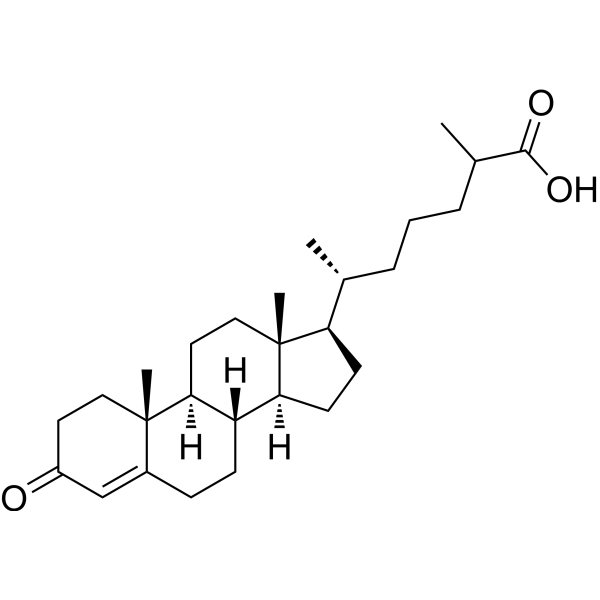 0 ImagesArt. -Nr.: HY-131492CAS. Nr.: 23017-97-2
Δ4‑Dafachronic acid is an endogenous steroid hormone, an agonist of the DAF‑12 nuclear receptor, and a key ligand for the vitamin D receptor (VDR). Δ4‑Dafachronic acid promotes the active escape developmental trajectory in Austrofundulus limnaeus embryos even under diapause‑inducing conditions. Δ4‑Dafachronic acid is suitable for research on the developmental biology.
-
Calcitroic acid
 0 ImagesArt. -Nr.: HY-N10508CAS. Nr.: 71204-89-2
Calcitroic acid is a water-soluble terminal vitamin D metabolite and also a ligand for vitamin D receptor (VDR). Calcitroic acid binds to the ligand-binding domain of VDR, forms a retinoic X receptor complex, recruits the coactivator peptide MED1, mediates partial VDR-dependent transcription, inhibits Calcitriol (HY-10002)-induced VDR activation, and reduces the transcription level of CYP24A1 in the presence of 1α,25-dihydroxyvitamin D3. Calcitroic acid exerts selective activating effects on VDR, upregulates the expression of CYP24A1 and CYP3A4, decreases the transcription levels of iNOS and IL-1β, reduces the secretion of nitric oxide and IL-1β, and possesses metabolic stability due to its resistance to phase I oxidation and hepatic glucuronidation. Calcitroic acid can be used in research related to colon cancer, inflammatory bowel disease and rickets.
-
Calcitroic acid-13C
 0 ImagesArt. -Nr.: HY-N10508SCAS. Nr.: 1637678-42-2
Calcitroic acid-13C is the 13C-labeled Calcitroic acid (HY-N10508). Calcitroic acid is a water-soluble terminal vitamin D metabolite and also a ligand for vitamin D receptor (VDR). Calcitroic acid binds to the ligand-binding domain of VDR, forms a retinoic X receptor complex, recruits the coactivator peptide MED1, mediates partial VDR-dependent transcription, inhibits Calcitriol (HY-10002)-induced VDR activation, and reduces the transcription level of CYP24A1 in the presence of 1α,25-dihydroxyvitamin D3. Calcitroic acid exerts selective activating effects on VDR, upregulates the expression of CYP24A1 and CYP3A4, decreases the transcription levels of iNOS and IL-1β, reduces the secretion of nitric oxide and IL-1β, and possesses metabolic stability due to its resistance to phase I oxidation and hepatic glucuronidation. Calcitroic acid can be used in research related to colon cancer, inflammatory bowel disease and rickets.

-
19-nor-1α,25-Dihydroxyvitamin D3
 0 ImagesArt. -Nr.: HY-15364CAS. Nr.: 130447-37-9
19-nor-1α,25-Dihydroxyvitamin D3 is a vitamin D receptor (VDR) agonist with an EC50 of 4.8 nM. 19-nor-1α,25-Dihydroxyvitamin D3 binds to VDR and promotes gene transcription. 19-nor-1α,25-Dihydroxyvitamin D3 can be used in the research of diseases related to the vitamin D signaling pathway.
-
TGF-β1/Smad3-IN-2
 0 ImagesArt. -Nr.: HY-182038
TGF-β1/Smad3-IN-2 is an orally active antifibrotic agent. TGF-β1/Smad3-IN-2 has high affinity for VDR and can inhibit the TGFβ/SMAD3 signaling pathway. TGF-β1/Smad3-IN-2 inhibits hepatic stellate cell activation, reduces extracellular matrix deposition, and alleviates liver fibrosis in a bile duct ligation mouse model. TGF-β1/Smad3-IN-2 can be used for the research of liver fibrosis.
-
Δ4-Dafachronic Acid-d3
 0 ImagesArt. -Nr.: HY-131492S
Δ4-Dafachronic Acid-d3 is deuterium labeled Δ4-Dafachronic acid (HY-131492). Δ4‑Dafachronic acid is an endogenous steroid hormone, an agonist of the DAF‑12 nuclear receptor, and a key ligand for the vitamin D receptor (VDR). Δ4‑Dafachronic acid promotes the active escape developmental trajectory in Austrofundulus limnaeus embryos even under diapause‑inducing conditions. Δ4‑Dafachronic acid is suitable for research on the developmental biology.



