



Ceramidase
Ceramidases are a group of enzymes that catalyze the hydrolysis of ceramide, dihydroceramide, and phytoceramide into sphingosine (SPH), dihydrosphingosine (DHS), and phytosphingosine (PHS), respectively, along with a free fatty acid. Ceramide catabolism is controlled by ceramidases that are pivotal in the pathophysiology of these diseases of altered lipid homeostasis such as Alzheimer’s disease, type 2 diabetes-induced insulin resistance, cancer, and cardiovascular diseases. Ceramidases are classified into the acid, neutral, and alkaline ceramidase subtypes according to the pH optima for their catalytic activity.
All Product Categories
-
Ceramidase Related Products (36)
Related Products (36)

- 1
- 2

-
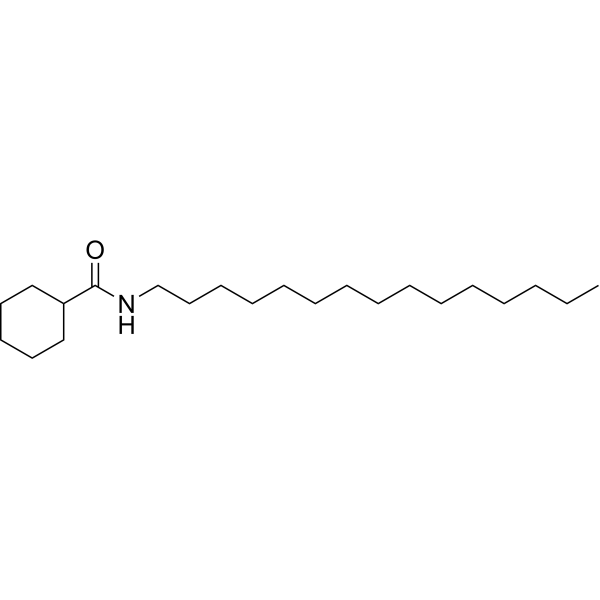
Acid Ceramidase-IN-2
 0 ImagesAcid Ceramidase-IN-2 (compound 1) is an acid ceramidase inhibitor with potentially antiproliferative and cytostatic activities. Moreover, human acid ceramidase is overexpressed in prostate cancer cells, indicating potential anti-tumor effect of Acid Ceramidase-IN-2. And Acid Ceramidase-IN-2 hydrolysis can be inhibited by 3 a-ketoamides GT85, GT98 and GT99 inhibits in vitro.
-
ARN19689
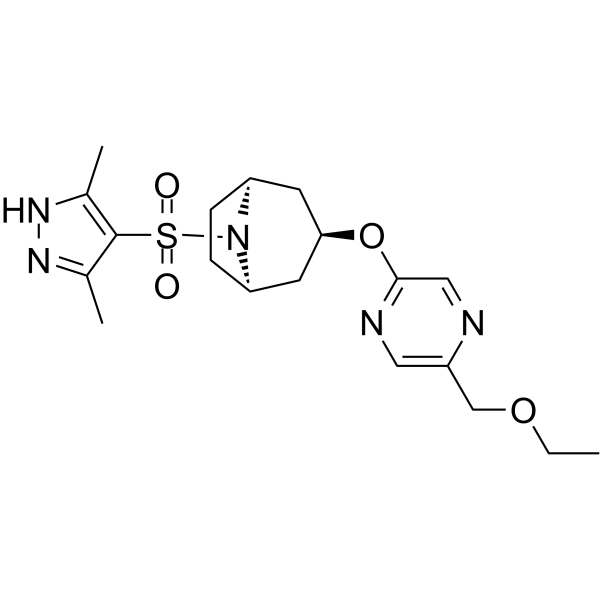 0 ImagesCat. No.: HY-132882CAS No.: 2320521-34-2ARN19689 is a potent, selective, orally active and non-covalent inhibitor of N Acylethanolamine-Hydrolyzing Acid Amidase (NAAA), with an IC50 of 42 nM. ARN19689 is a promising pharmacological tool to be further investigated in the field of inflammatory conditions.
-
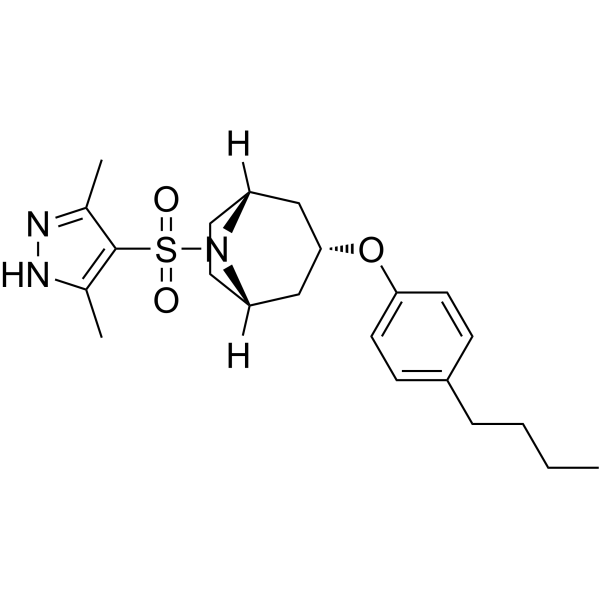
Acid Ceramidase-IN-3
 0 ImagesCat. No.: HY-175496CAS No.: 2907705-12-6Acid Ceramidase-IN-3 is a acid ceramidase (aCDase) inhibitor. Acid Ceramidase-IN-3 inhibits the enzymatic activity of aCDase with a pIC 50 of 8.5 in enzymatic assays and 6.8 in A375 melanoma cellular assays. Acid Ceramidase-IN-3 promotes HSC inactivation, as measured by a dose-dependent reduction in COL1A1 and ACTA2. Acid Ceramidase-IN-3 inhibits aCDase activity in HSCs, promotes HSC inactivation and suppresses YAP/TAZ nuclear localization. Acid Ceramidase-IN-3 increases Dynein/Kinesin (NDE1, NDEL1. KIF3B, KIF15) while decreases several proteins involved with signaling pathway (SARM1, RGAP1, PDGF-D,PDGFR-B). Acid Ceramidase-IN-3 can be used for the study of fibrotic diseases.
-
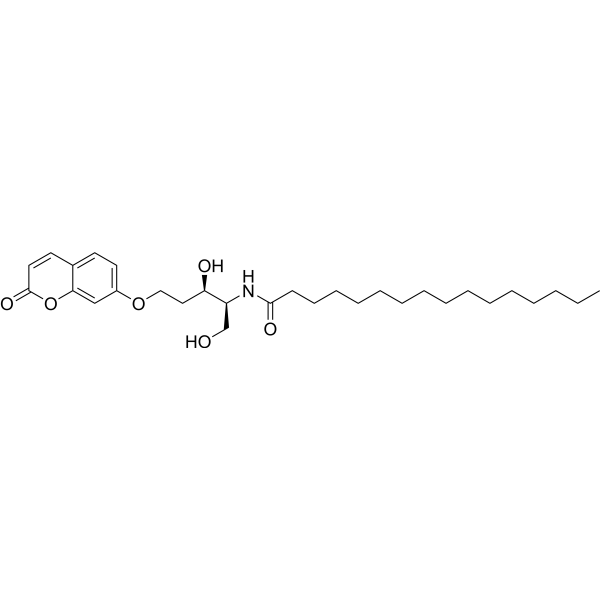
RBM1-151
 0 ImagesCat. No.: HY-N15826CAS No.: 3077081-47-8RBM1-151, a 1-deoxy derivative and vinilog of RBM14-C12 (HY-150163), as a fluorogenic substrate of Amidases (HY-P2736) (Ex/Em). RBM1-151 is hydrolyzed by acid ceramidase (AC) ((appKm = 7.0 μM; appVmax = 99.3 nM/min), N-acylethanolamine-hydrolyzing acid amidase (appKm = 0.73 μM; appVmax = 0.24 nM/min), and fatty Acid amide hydrolase (FAAH) (appKm = 3.6 μM; appVmax = 7.6 nM/min) but not by other ceramidases. RBM1-151 is applicable for basic biological studies of lipid amidase function, as well as potential diagnostic/prognostic evaluations of diseases involving dysregulated AC, NAAA, or FAAH (Farber disease, cancer).
-
C25 Ceramide (d18:1/25:0)
 0 ImagesCat. No.: HY-N15841CAS No.: 67492-18-6C25 Ceramide (d18:1/25:0) is an endogenous ultra-long-chain ceramide that antagonizes the detrimental effects of long-chain ceramides on insulin sensitivity. C25 Ceramide (d18:1/25:0) is specifically enriched in oxidative skeletal muscle fibers, where it serves dual roles in providing structural support to cell membranes and regulating cellular signaling. By participating in the regulation of lipid homeostasis within muscle fibers, C25 Ceramide (d18:1/25:0) helps maintain normal insulin signaling. C25 Ceramide (d18:1/25:0) is primarily utilized in research concerning metabolic diseases—particularly in mechanistic studies investigating the muscle fiber type-specific aspects of insulin resistance.
-
W000113414_I13
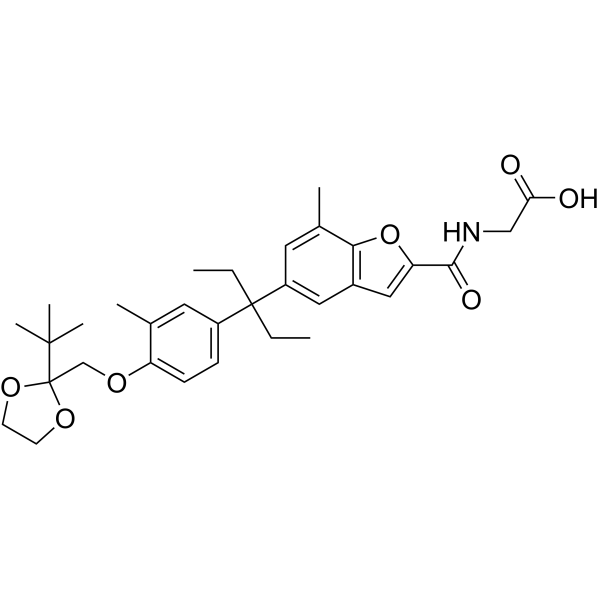 0 ImagesCat. No.: HY-163106CAS No.: 853598-55-7W000113414_I13 is an acid ceramidase (AC) inhibitor. W000113414_I13 exhibits dose-dependent inhibition of AC with an IC50 value of 6.6?μM. W000113414_I13 can be used for the research of cancer.
-
C16 Ceramide (d18:1(14Z)/16:0)
 0 ImagesCat. No.: HY-173585Synonyms: Cer(d18:1(14Z)/16:0)C16 Ceramide (Cer) (d18:1(14Z)/16:0) is a sphingosine ceramide composed of long-chain sphingosine (d18:1) and palmitic acid (C16:0). It is one of the key lipid signaling molecules involved in apoptosis signaling. C16 ceramides are particularly involved in cell cycle arrest, cell death, and insulin signaling inhibition.
-
NAAA-IN-6
 0 ImagesCat. No.: HY-169834CAS No.: 1831115-37-7NAAA-IN-6 (Example 43) is a NAAA inhibitor with IC50 values between 0.01-0.1 µM, which can be used in cancer research.
-
SOBRAC
 0 ImagesCat. No.: HY-171003CAS No.: 362678-28-2SOBRAC is an irreversible inhibitor of acid ceramidase (Ceramidase) with a Ki of 29.7 nM, and it's also a derivative of the acid ceramidase inhibitor SABRAC (HY-165070).
-
AD-2646
 0 ImagesCat. No.: HY-124134CAS No.: 366487-89-0Synonyms: LCL102AD-2646 (LCL102), a ceramide analog, can kill leukemic T cells (EC50: 40 μM). AD-2646 triggers the cleavage of caspase-8, -9 and -3, as well as the caspase substrate PARP. AD-2646 is a ceramidase inhibitor. AD-2646 induces an accumulation of endogenous ceramide owing to perturbed ceramide metabolism.
-
ARN14974 (Standard)
 0 ImagesCat. No.: HY-103592RCAS No.: 1644158-57-5ARN14974 (Standard) is the analytical standard of ARN14974 (HY-103592). This product is intended for research and analytical applications. ARN14974, a benzoxazolone carboxamide, is a potent and systemically active inhibitors of intracellular acid ceramidase (IC50=79 nM).
-
Carmofur (Standard)
 0 ImagesSynonyms: HCFU (Standard)Carmofur (Standard) is the analytical standard of Carmofur. This product is intended for research and analytical applications. Carmofur (HCFU) is a rat recombinant acid ceramidase inhibitor with an IC50 of 29 nM. Carmofur is also a protease inhibitor of SARS-CoV-2 main protease (Mpro), fatty acid amide hydrolase (FAAH) and N-acylethanolamine acid amidase (NAAA). Carmofur has anti-cancer, anti-inflammatory and anti-virus activities, and can be used for the study of COVID-19 and acute lung injury (ALI).
-
Sphingolipid E
 0 ImagesCat. No.: HY-N15594CAS No.: 110483-07-3Synonyms: SLESphingolipid E is a synthetic pseudoceramide sphingolipid similar to type 2 ceramide with a metastable lamellar structure. Sphingolipid E ??can be used as a potential drug carrier to control the penetration of molecules as a lipid component of the intercellular space of the stratum corneum.
- 1
- 2



