



Drug Intermediate
Drug Iintermediate
Drug intermediates are used as raw materials for the production of bulk drugs, or they can refer to a material produced during synthesis of an API that must undergo further molecular change or processing before it becomes an API. Drug intermediates are hygienically formulated using high grade raw materials and they are used in the pharmaceutical and cosmetic industry[1][2].
Referencias:
- [1]. Ma HC, et al. Homochiral Covalent Organic Framework for Catalytic Asymmetric Synthesis of a Drug Intermediate. J Am Chem Soc. 2020 Jul 22;142(29):12574-12578. [Content Brief]
- [2]. Ramachary D B, et al. Development of pharmaceutical drugs, drug intermediates and ingredients by using direct organo‐click reactions[J]. 2008.
All Product Categories
-
Productos relacionados con Drug Intermediate (4714)
Productos relacionados con (4714)

-
Ibrutinib deacryloylpiperidine
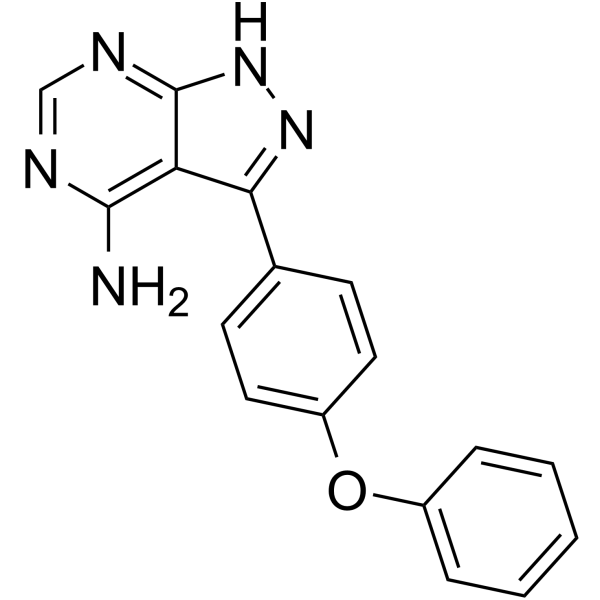 0 ImagesSynonyms: IBT4A
-
2-Methyl-4-pentenoic Acid
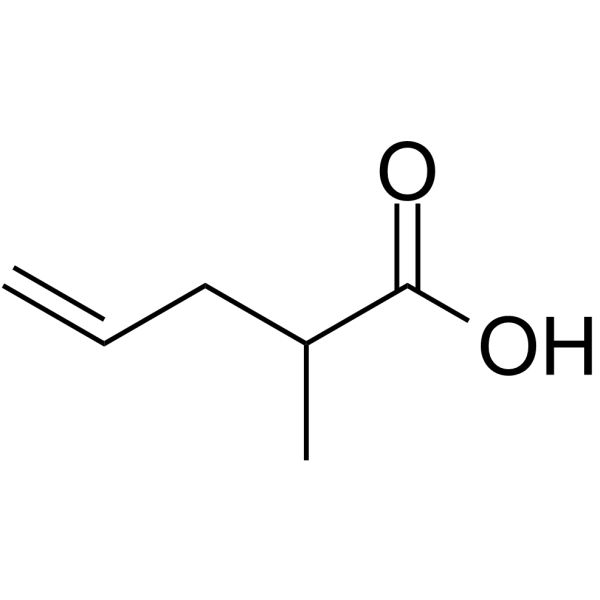 0 ImagesSynonyms: 2-Methylpent-4-enoic acid2-Methyl-4-pentenoic Acid (2-Methylpent-4-enoic acid) is an organic acid that can be used as a precursor for synthesizing other compounds. Additionally, changes in the level of 2-Methyl-4-pentenoic Acid may be associated with the susceptibility to schizophrenia and type 2 diabetes.
-
N-Cbz-Hydroxy-L-proline
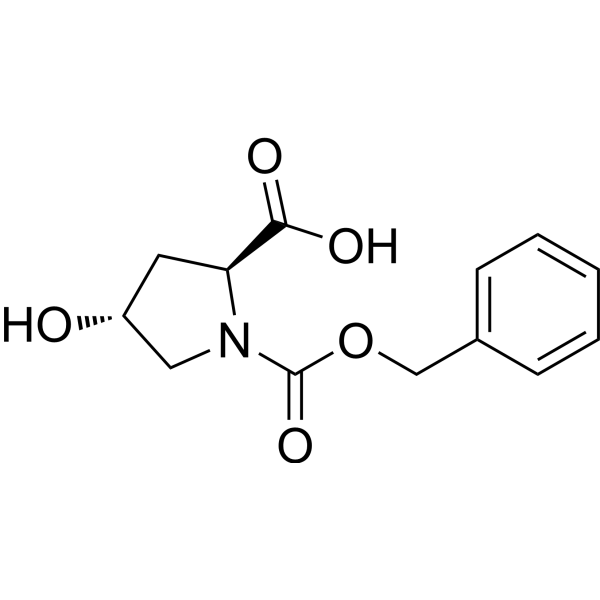 0 ImagesN-Cbz-Hydroxy-L-proline is a chiral N-Cbz-protected amino acid derivative. N-Cbz-Hydroxy-L-proline is commonly used in the synthesis of polypeptides and pharmaceutical intermediates. N-Cbz-Hydroxy-L-proline undergoes decarboxylation under AlCl3/HFIP conditions.
-
Glu-urea-Glu-NHS ester
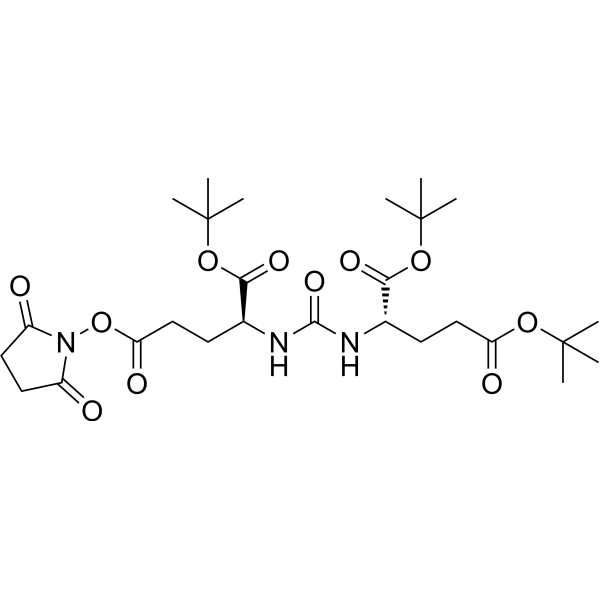 0 ImagesGlu-urea-Glu-NHS ester is an activated N-hydroxysuccinamide (NHS) ester of Glu-urea-Glu. Glu-urea-Glu-NHS ester can be used for synthesis of small-molecule prostate-specific membrane antigen (PSMA) inhibitors, imaging agents (such as PSMAi-PEG conjugates), and targeted drug delivery vehicles.
-
2,5-Dihydroxyterephthalic acid
 0 ImagesReferencia número: HY-W004616No. CAS: 610-92-42,5-Dihydroxyterephthalic acid is a carboxylic acid ligand with antioxidant properties, which serves as a building block for Zn2+-based metal-organic frameworks (MOFs). 2,5-Dihydroxyterephthalic acid forms stable coordination bonds with transition metal ions, inhibits metal center-water coordination to prevent MOF fluorescence quenching, and enhances the hydrophilicity of MOFs. 2,5-Dihydroxyterephthalic acid acts as a pharmaceutical intermediate to synthesize 2,5-dihydroxyterephthalamide derivatives. 2,5-Dihydroxyterephthalic acid is applicable to relevant research in fields such as organic synthesis.
-
Pyridine-3,5-dicarboxylic acid
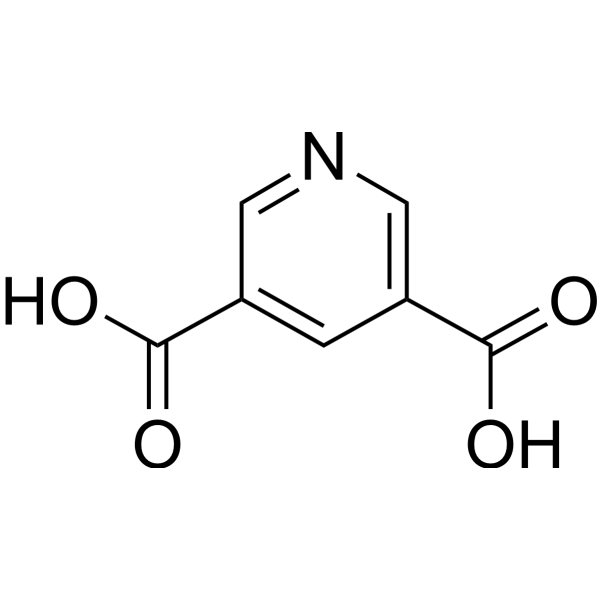 0 ImagesPyridine-3,5-dicarboxylic acid is a pyridine polycarboxylic acid ligand with both nitrogen and oxygen donor functions, and it can serve as an organic linker to participate in the assembly of metal-organic frameworks.
-
Secoisolariciresinol
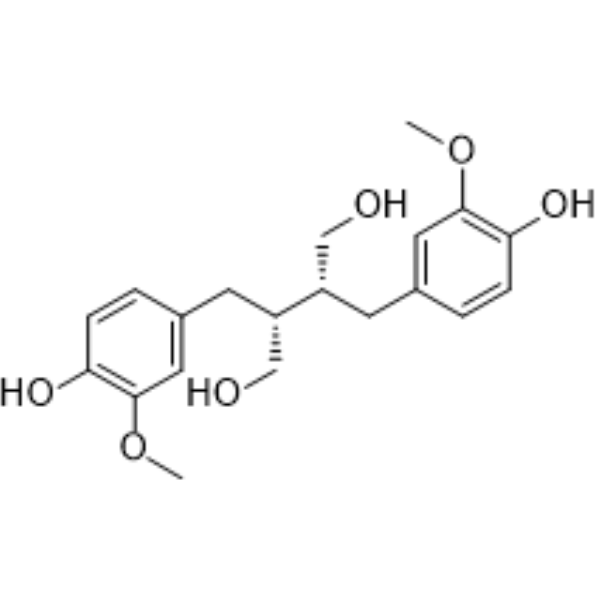 0 ImagesSynonyms: (-)-SecoisolariciresinolSecoisolariciresinol ((-)-Secoisolariciresinol) is a plant lignan and a precursor of enterolignans. Secoisolariciresinol can be converted into enterodiol and enterolactone by intestinal microflora. Secoisolariciresinol may reduce the risk of cancer and cardiovascular diseases.
-
3-Methoxybenzoic acid
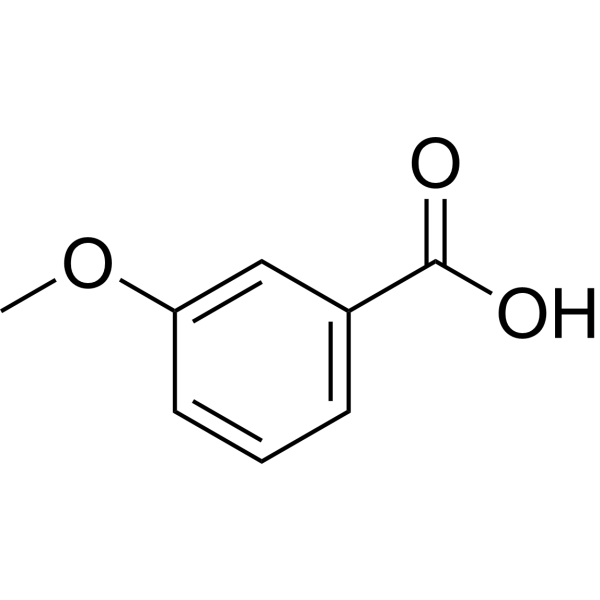 0 ImagesSynonyms: 3-Anisic acid; NSC 27014; m-Methoxybenzoic acid3-Methoxybenzoic acid (3-Anisic acid; NSC 27014; m-Methoxybenzoic acid) is a substituted benzoic acid and precursor for synthesis of hydrazide-hydrazone derivatives active against Gram-positive bacteria, including Bacillus spp.
-
Perlolyrin
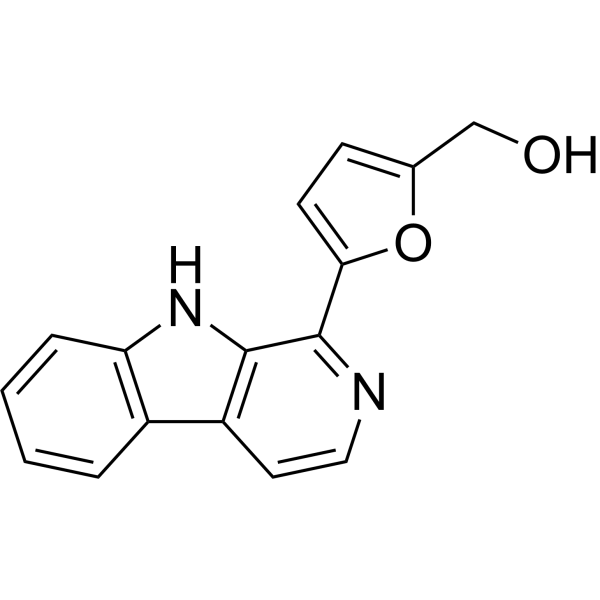 0 ImagesSynonyms: TribulusterinePerlolyrin (Tribulusterine) is an alkaloid that can be found in Tribulus terrestris. Perlolyrin is toxic.
-
4-Methyl-5-thiazoleethanol
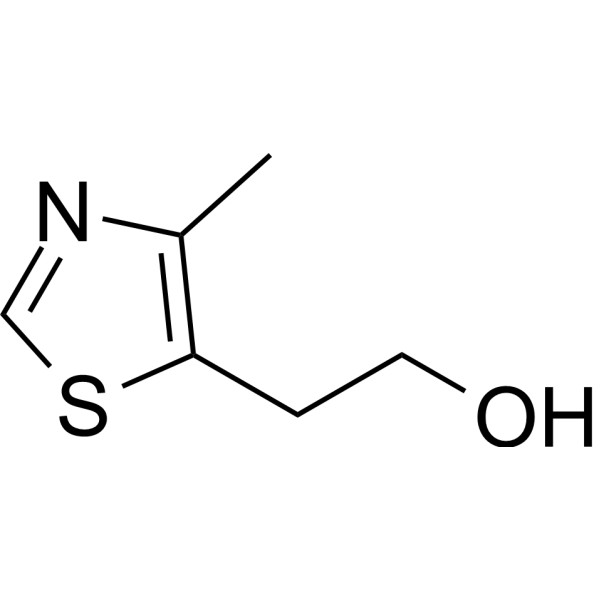 0 Images4-Methyl-5-thiazoleethanol is a natural sulfur-containing flavor compound with the aroma of beef and nuts. In addition, the composite material prepared by modifying graphene oxide with 4-Methyl-5-thiazoleethanol through a one-step esterification reaction can selectively adsorb copper ions (Cu2+) in aqueous solutions.
-
2-Aminobenzenesulfonic acid
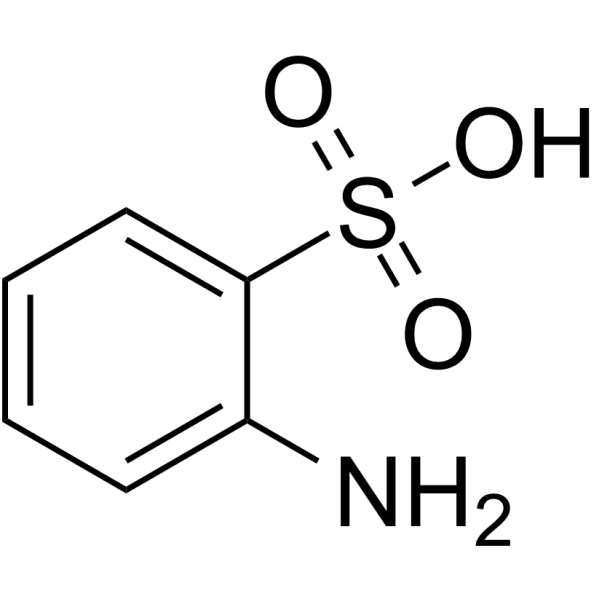 0 ImagesSynonyms: Orthanilic acid; 2-Aminobenzenesulphonic acid2-Aminobenzenesulfonic acid is an anilinesulfonic acid and also the ortho-isomer of aminobenzenesulfonic acid. 2-Aminobenzenesulfonic acid can be used in the synthesis of other active compounds. 2-Aminobenzenesulfonic acid can coordinate via its -NH2 and -SO3 groups to form polymeric copper (II) complexes.
-
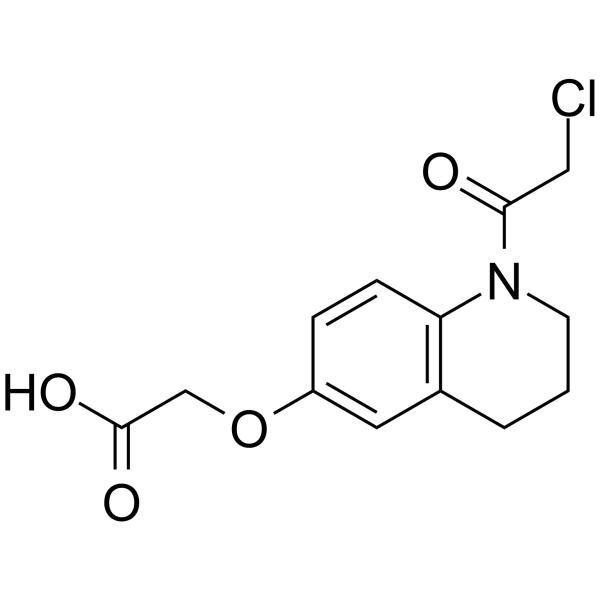
2-(Bromomethyl)acrylic acid
 0 ImagesReferencia número: HY-W017180No. CAS: 72707-66-5Synonyms: α-(Bromomethyl)acrylic acid; α-Methylated acrylamide; α-MAA
-
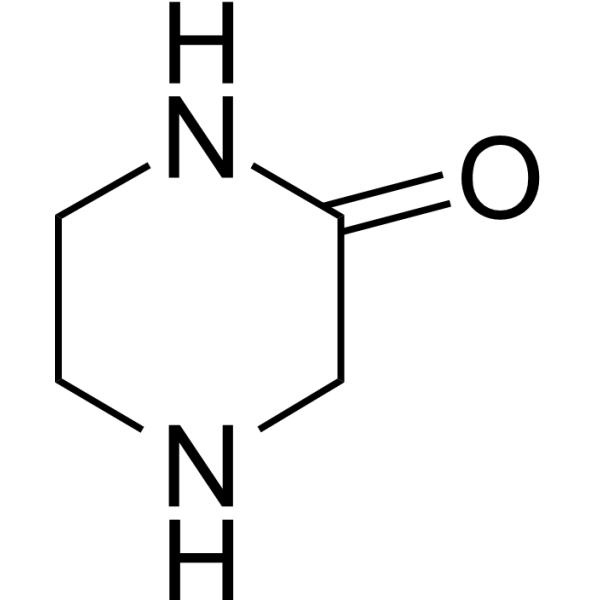
[Glu1]-Fibrinopeptide B
![[Glu1]-Fibrinopeptide B](https://file.medchemexpress.com/product_pic/hy-p0308.gif "Click to View [Glu1]-Fibrinopeptide B Product Detail") 0 Images[Glu1]-Fibrinopeptide B is derived from fibrinopeptide B amino acid residues 1-14. Human fibrinopeptide B (hFpB), a thrombin-derived proteolytic cleavage product of the fibrinogen B beta-chain, to stimulate neutrophils (PMN), monocytes, and fibroblasts.
0 Images[Glu1]-Fibrinopeptide B is derived from fibrinopeptide B amino acid residues 1-14. Human fibrinopeptide B (hFpB), a thrombin-derived proteolytic cleavage product of the fibrinogen B beta-chain, to stimulate neutrophils (PMN), monocytes, and fibroblasts.
-
5-Bromo-2,3-dihydro-1H-isoindol-1-one
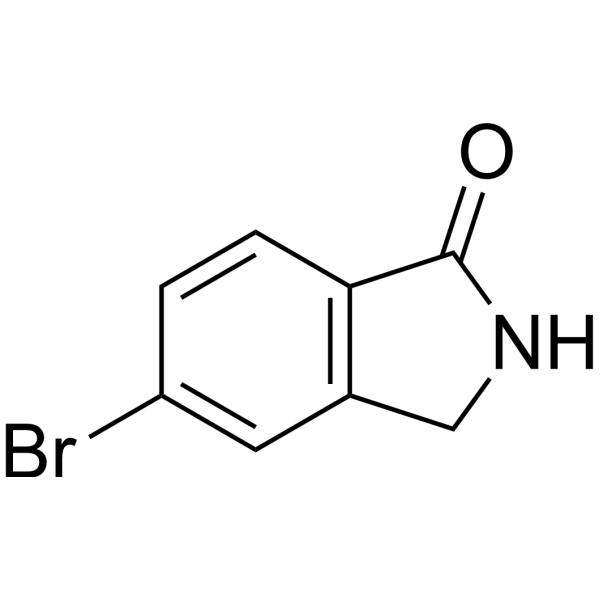 0 Images5-Bromo-2,3-dihydro-1H-isoindol-1-one is an isoindolone derivative that can be used to synthesize a variety of active compounds.
-
4-Aminophenylphosphorylcholine
 0 ImagesSynonyms: (p-Aminophenyl)phosphocholine; p-Aminophenylphosphorylcholine; 4-APPC4-Aminophenylphosphorylcholine ((p-Aminophenyl) phosphocholine; p-Aminophenylphosphorylcholine; 4-APPC) is a phosphatidylcholine derivative that serves as a coupling ligand and antigen probe. When conjugated with gold nanoclusters, the phosphocholine head epitope of 4-Aminophenylphosphorylcholine is specifically recognized by anti-Pc IgM and CRP. It can be covalently coupled to human serum albumin (HSA) or glutathione-protected gold nanoclusters (Au-GSH) via covalent chemistry, respectively. The 4-Aminophenylphosphorylcholine-HSA complex acts as an ELISA coating antigen for detecting endogenous anti-Pc IgM antibodies in plasma; 4-Aminophenylphosphorylcholine-modified Au-GSH can be used to construct an ultra-stealthy NIR-II fluorescent gold nanocluster probe for imaging-related studies in mouse breast cancer and colon cancer models.
-
2,4-Difluorophenol
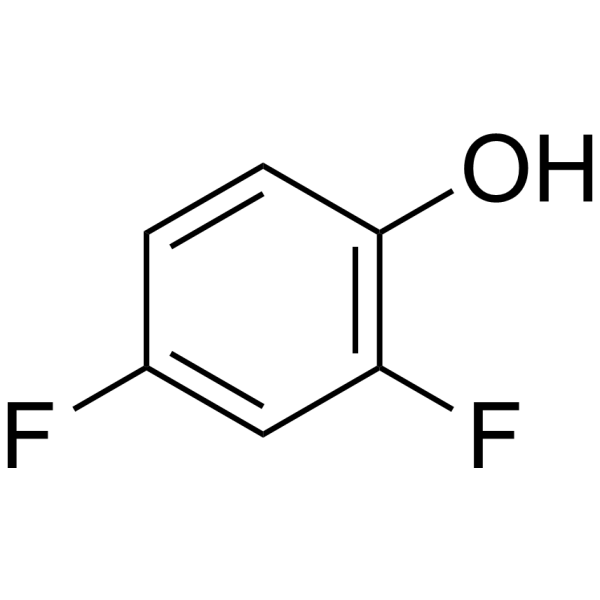 0 Images2,4-Difluorophenol is a difluoro-substituted phenol that serves as a starting material for the synthesis of 4,6-difluoro-5,7-dihydroxytryptamine.
-
4-tert-Butylcalix[4]arene
![4-tert-Butylcalix[4]arene](https://file.medchemexpress.com/product_pic/hy-i0101.gif "Click to View 4-tert-Butylcalix[4]arene Product Detail") 0 ImagesSynonyms: Tetra-tert-butyl(tetrahydroxy)calix[4]arene4-tert-Butylcalix[4]arene (Tetra-tert-butyl(tetrahydroxy)calix[4]arene) is a drug intermediate for synthesis of various active compounds.
0 ImagesSynonyms: Tetra-tert-butyl(tetrahydroxy)calix[4]arene4-tert-Butylcalix[4]arene (Tetra-tert-butyl(tetrahydroxy)calix[4]arene) is a drug intermediate for synthesis of various active compounds.



