



EBV
Epstein-Barr Virus
Epstein-Barr virus (EBV), also known as human herpesvirus 4, is a member of the herpes virus family. It is one of the most common human viruses. EBV is found all over the world. Most people get infected with EBV at some point in their lives. EBV spreads most commonly through bodily fluids, primarily saliva. Primary EBV infection is usually asymptomatic and for many occurs during childhood, but when it occurs in adolescence or adulthood, 30%–50% cases manifest clinically as infectious mononucleosis (IM). EBV also cause infectious mononucleosis (IM), Burkitt lymphoma (BL), nasopharyngeal carcinoma (NPC), Hodgkin’s disease, and other illnesses. Many people become infected with EBV in childhood. EBV infections in children usually do not cause symptoms, or the symptoms are not distinguishable from other mild, brief childhood illnesses.
All Product Categories
-
EBV Related Products (77)
Related Products (77)


-
Rubropunctamine
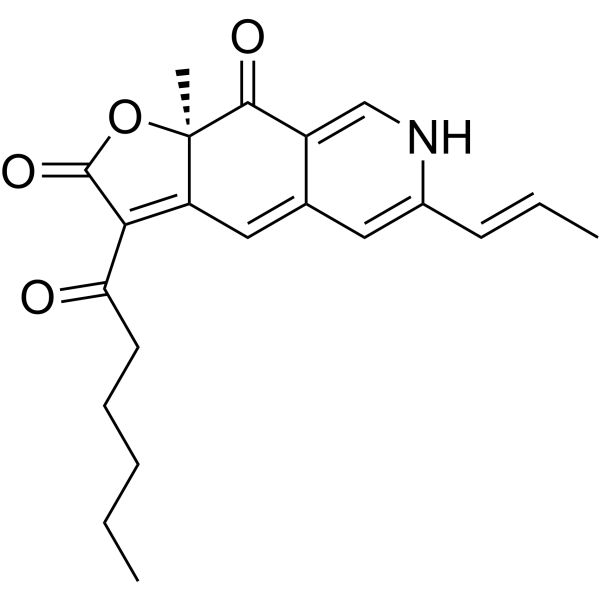 0 ImagesRubropunctamine is a redMonascus pigment. Not only Rubropunctamine exerts antibiotic action against bacteria but also against some yeast and filamentous fungi strains. Rubropunctamine has potential embryotoxicity and teratogenicity.
-
L2P4 TFA
 0 ImagesCat. No.: HY-P10772APurity: 98.25%L2P4 TFA is a peptide-based and EBNA1 targeting fluorescent probe, which inhibits the EBNA1 homodimer formation and selectively inhibits EBV+ tumor growth. L2P4 TFA exhibits cytotoxicity in EBV-positive C666-1 cell with LC50 of 46.4 μM.
-
BMLF1 (280–288)
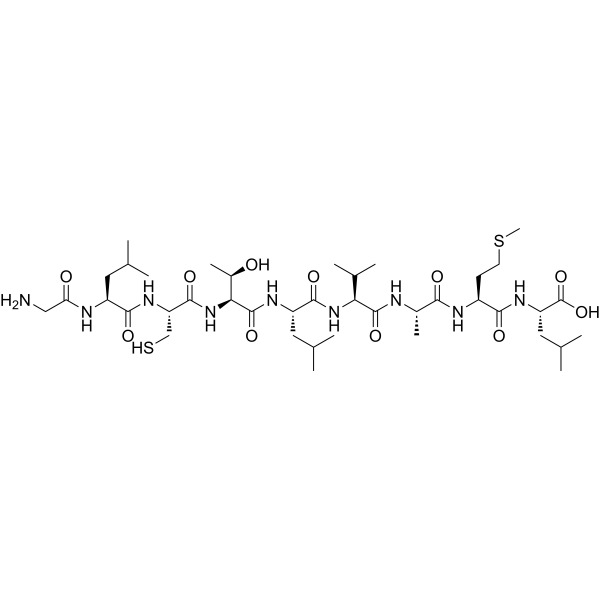 0 ImagesBMLF1 (280–288) is a biological active peptide. (HLA A2.1-restricted epitope from Epstein-Barr Virus lytic protein BMLF1 (280-288).)
-
Vidarabine monohydrate
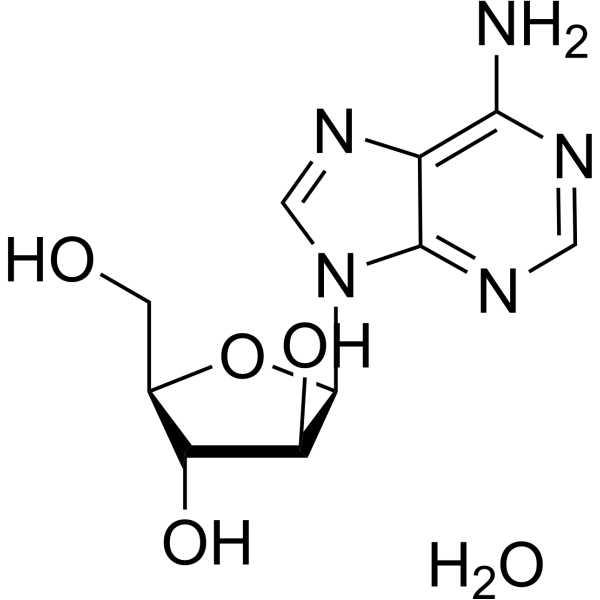 0 ImagesVidarabine monohydrate is a Purine nucleoside derivative and Antiviral agent. The triphosphate derivative of Vidarabine monohydrate competitively inhibits DNA polymerase, incorporates into the terminus of elongating DNA molecules, and interferes with the early steps of viral DNA synthesis. Vidarabine monohydrate inhibits the replication of herpes simplex virus, varicella-zoster virus, cytomegalovirus, Epstein-Barr virus and vaccinia virus, reduces viral shedding, and accelerates skin healing. Vidarabine monohydrate is metabolized to arabinosyl hypoxanthine, causes minimal impairment of corneal wound healing in rabbit models, and is associated with recurrence of herpes simplex encephalitis. Vidarabine monohydrate can be used in the research of herpetic keratoconjunctivitis, herpes simplex encephalitis, herpetic uveitis, and chronic active hepatitis associated with hepatitis B virus.
-
DNA polymerase-IN-6 formic
 0 ImagesCat. No.: HY-170547ADNA polymerase-IN-6 formic is an antiviral agent and a DNA polymerase inhibitor. DNA polymerase-IN-6 formic inhibits the replication of HCMV, HSV-1, HSV-2 and EBV. DNA polymerase-IN-6 formic exhibits low cytotoxicity in mammalian cells. DNA polymerase-IN-6 formic can be used in research related to viral infections.
-
11-Oxomogroside IIa
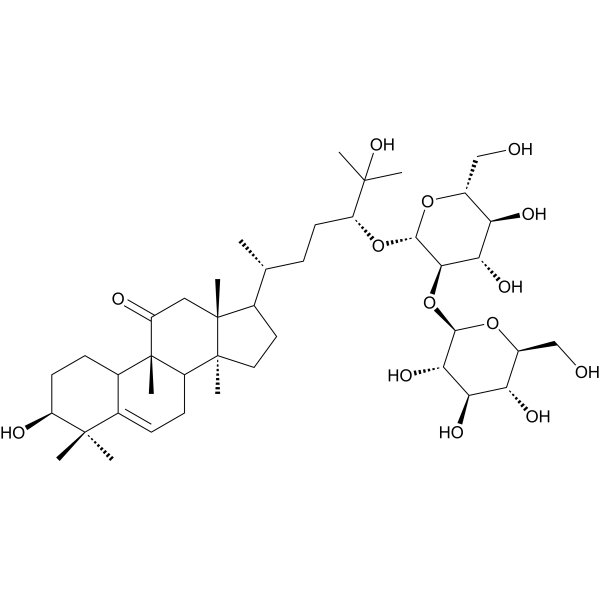 0 ImagesCat. No.: HY-N7041Purity: 99.92%11-Oxomogroside IIa (11-oxomogroside II A1) is a cucurbitane glycoside extracted from the fruits of Siraitia grosVenorii. 11-Oxomogroside IIa has inhibitory effects against the Epstein-Barr virus early antigen (EBV-EA) activation induced by 12-O-tetradecanoylphorbol-13-acetate (TPA), shows weak inhibitory effects on activation of (+/-)-(E)-methyl-2-[(E)-hydroxyimino]-5-nitro-6-methoxy-3-hexemide (NOR 1), a nitric oxide (NO) donor.
-
IALYLQQNW
 0 ImagesIALYLQQNW is a specific nonapeptide sequence derived from the tumor-associated antigen latent membrane protein 1 (LMP1) encoded by Epstein-Barr virus (EBV). As a latent T-cell epitope, IALYLQQNW is able to activate EBV-specific cytotoxic T lymphocytes (CTLs), which are able to recognize and kill EBV-infected cells expressing LMP1. IALYLQQNW plays an important role in the immune response against EBV-associated tumors and can be used in the study of Hodgkin's disease and nasopharyngeal carcinoma.
-
Paederoside
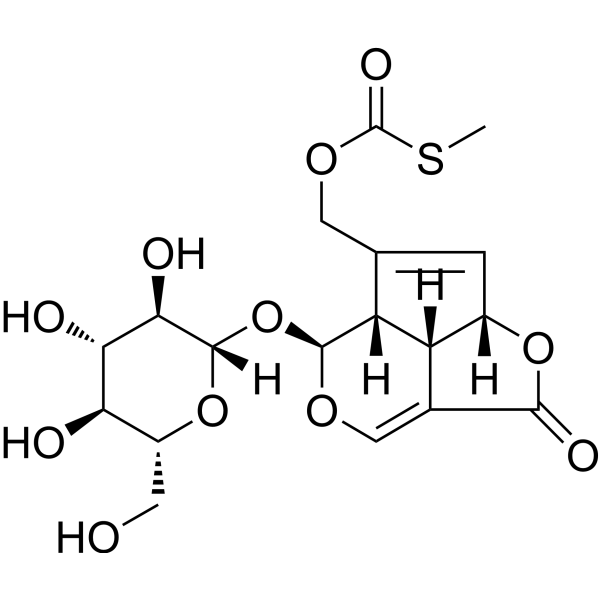 0 ImagesPaederoside is a monoterpene S-methyl thiocarbonate isolated from Paederia pertomentosa. Paederoside shows a high anti-tumor promoting activity against the Epstein-Barr virus activation.
-
Zerumbone (Standard)
 0 ImagesZerumbone (Standard) is the analytical standard of Zerumbone. This product is intended for research and analytical applications. Zerumbone is an orally active natural cyclic sesquiterpene and can be isolated from Zingiber zerumbet. Zerumbone has anti-proliferative, anti-inflammation, anti-cancer, anti-bacterial and anti-mutagenic activity.
-
Fiacitabine
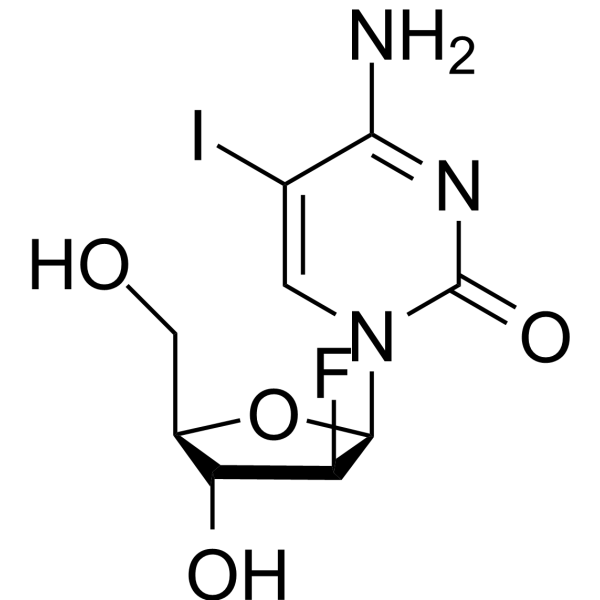 0 ImagesSynonyms: NSC 382097; FIAC; FOACFiacitabine (NSC 382097; FIAC; FOAC) is a potent and highly selective anti-herpesvirus agent. Fiacitabine acts as an inhibitor of HSV DNA polymerase, with a Ki of 0.26 μM for HSV-1 and 0.42 μM for HSV-2, respectively. Fiacitabine can be efficiently phosphorylated by thymidine kinase encoded by the virus itself to generate FIACTP, an active triphosphate metabolite. Fiacitabine is applicable to research related to herpesvirus infections.
-
2α,19α-Dihydroxy-3-oxo-urs-12-en-28-oic acid
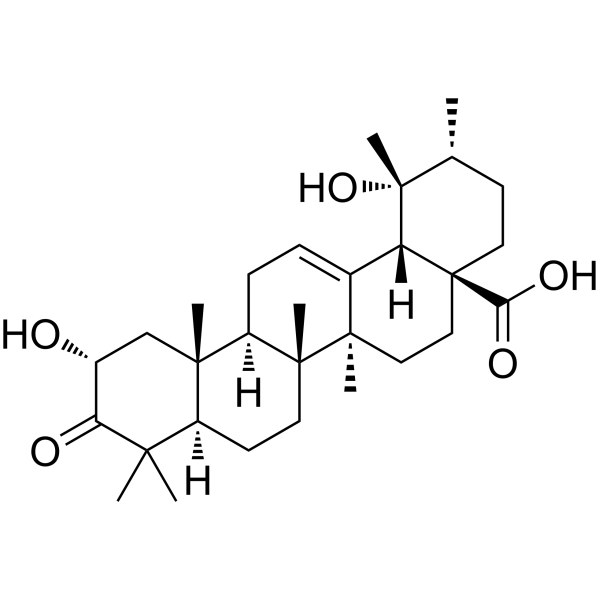 0 Images2α,19α-Dihydroxy-3-oxo-urs-12-en-28-oic acid, a natural ursane-type triterpene, is a potent inhibitor of HIV protease (HIV Protease). 2α,19α-Dihydroxy-3-oxo-urs-12-en-28-oic acid is also an inhibitor of the activation of Epstein-Barr virus early antigen (EBV-EA). 2α,19α-Dihydroxy-3-oxo-urs-12-en-28-oic acid displays an inhibitory activity against nitric oxide production in Lipopolysaccharide (Lipopolysaccharides)-activated RAW 264.7 cells.
-
Lobucavir
 0 ImagesCat. No.: HY-105098CAS No.: 127759-89-1Synonyms: BMS-180194; SQ 34514
-
α-Cembrenediol
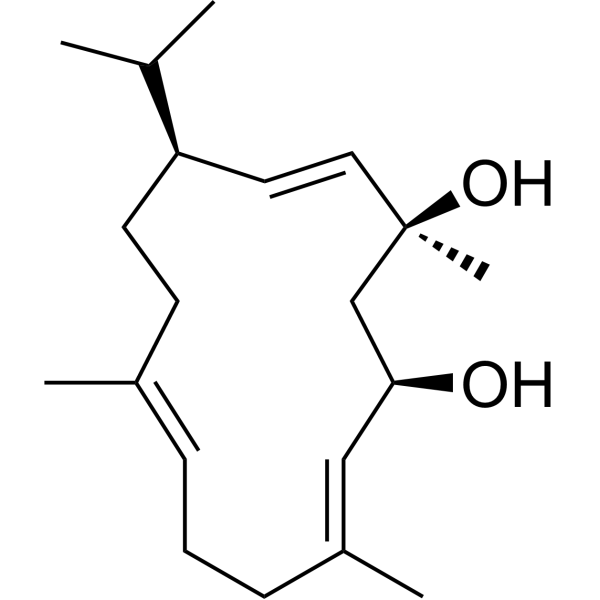 0 ImagesCat. No.: HY-N8459CAS No.: 57605-80-8Synonyms: α-CBDα-Cembrenediol is a potent inhibitor of EBV.α-Cembrenediol inhibits the early antigen of the Epstein-Bar virus. α-Cembrenediol also has anti-tumour activity.
-
Maribavir (Standard)
 0 ImagesSynonyms: 1263W94 (Standard); BW1263W94 (Standard); GW257406X (Standard)Maribavir (Standard) is the analytical standard of Maribavir. This product is intended for research and analytical applications. Maribavir is a potent inhibitor of histone phosphorylation catalyzed by wild-type pUL97 in vitro, with an IC50 of 3 nM. Maribavir has potent antiviral activity against HCMV and Epstein-Barr virus (EBV).
-
DNA polymerase-IN-6
 0 ImagesCat. No.: HY-170547CAS No.: 2701561-91-1DNA polymerase-IN-6 is an antiviral agent and a DNA polymerase inhibitor. DNA polymerase-IN-6 inhibits the replication of HCMV, HSV-1, HSV-2 and EBV. DNA polymerase-IN-6 exhibits low cytotoxicity in mammalian cells. DNA polymerase-IN-6 can be used in research related to viral infections.
-
Cabenoside D
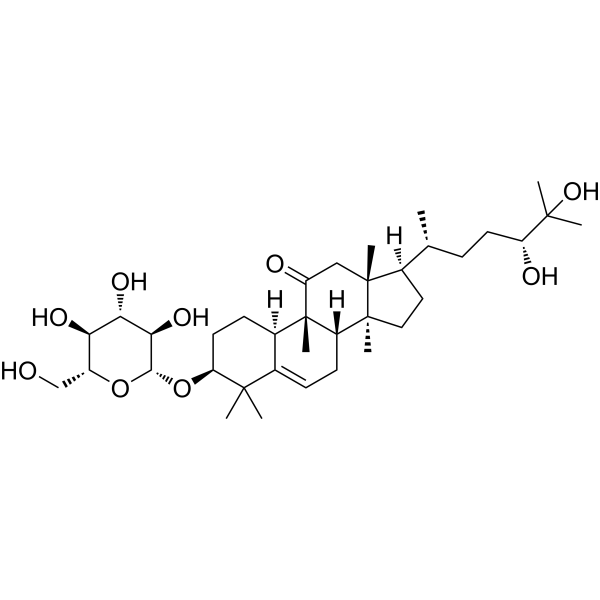 0 ImagesCat. No.: HY-N11020CAS No.: 88901-40-0Cabenoside D (compound 8) is a triterpenoid glycoside, which can be isolated from the methanol extract of lichen root. Cabenoside D shows anti-inflammatory activity and inhibits inflammation induced by 12-O-tetracylacyl hormone-13-acetate (TPA) in mice. Cabenoside D also inhibits TPA-induced Epstein-Barr virus (EBV) early antigen (EBV-EA) activation.
-
EBV EBNA3A (379-387)
 0 ImagesCat. No.: HY-P10663CAS No.: 160790-25-0EBV EBNA3A (379-387) is an antigenic epitope that may elicit the latent-specific CD8+ T cell response in HLA-B*07:02+ individuals.
-
Methyl lucidenate D
 0 ImagesCat. No.: HY-N13723CAS No.: 98665-09-9Methyl lucidenate D is a selective inhibitor of Epstein-Barr virus early antigen (EBV-EA) activation with an IC50 of 290 mol ratio/32 pmol TPA. Methyl lucidenate D exerts potential anti-tumor promoting activity by inhibiting TPA-induced EBV-EA activation and maintains major Raji cell survival (70%) at effective concentrations. Methyl lucidenate D can be used in the field of cancer chemoprevention.
-
CEF14, EBV Rta Protein (28-37)
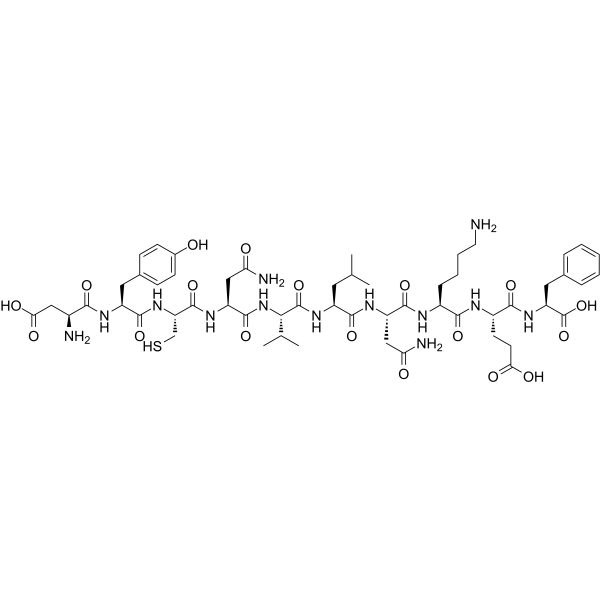 0 ImagesCat. No.: HY-P1890CAS No.: 216862-58-7CEF14, EBV Rta Protein (28-37) is the HLA A24-restricted epitope from Epstein-Barr Virus Rta protein (28-37).



