



EBOV
EBOV studies focus on viral proteins that control nucleocapsid transport, vascular injury, and interferon evasion[1]. GP induces cytotoxicity in human endothelial cells, and this pathogenic effect maps to its mucin-like domain[2]. Mechanistically, VP35 binds double-stranded RNA and inhibits RIG-I-induced IFN-α/β production. Structural data show that VP35 recognizes dsRNA backbone and blunt ends, preventing RIG-I-like receptor sensing[3]. VP35 also inhibits IRF-3 activation, and the R312A mutation impaired this antagonist function in mouse-adapted EBOV[4]. Compared with VP35, VP24 acts downstream by binding karyopherin α1 and blocking nuclear accumulation of tyrosine-phosphorylated STAT1[5]. This distinction separates VP35 as an interferon-production antagonist from VP24 as an interferon-signaling antagonist[5]. Compared with Bundibugyo virus VP24, EBOV VP24 binds karyopherin α proteins with higher affinity and correlates with stronger IFN-I inhibition[6]. For inhibitor studies, myricetin inhibited recombinant VP35-dsRNA interaction in a fluorescence-based assay[7]. - VP35 assays should measure dsRNA binding, IRF-3 activation, RIG-I signaling, and polymerase-complex activity[3][4]. - VP24 studies should compare STAT1 transport, KPNA binding, and EBOV versus BDBV interfaces[5][6].
References:
- [1]. Takamatsu Y, et al. Ebola virus proteins NP, VP35, and VP24 are essential and sufficient to mediate nucleocapsid transport. Proc Natl Acad Sci U S A. 2018 Jan 30;115(5):1075-1080. [Content Brief]
- [2]. Yang ZY, et al. Identification of the Ebola virus glycoprotein as the main viral determinant of vascular cell cytotoxicity and injury. Nat Med. 2000 Aug;6(8):886-9. [Content Brief]
- [3]. Leung DW, et al. Structural basis for dsRNA recognition and interferon antagonism by Ebola VP35. Nat Struct Mol Biol. 2010 Feb;17(2):165-72. [Content Brief]
- [4]. Son KN, et al. Theiler's virus-induced intrinsic apoptosis in M1-D macrophages is Bax mediated and restricts virus infectivity: a mechanism for persistence of a cytolytic virus. J Virol. 2008 May;82(9):4502-10. [Content Brief]
- [5]. Reid SP, et al. Ebola virus VP24 binds karyopherin alpha1 and blocks STAT1 nuclear accumulation. J Virol. 2006 Jun;80(11):5156-67. [Content Brief]
- [6]. Schwarz TM, et al. VP24-Karyopherin Alpha Binding Affinities Differ between Ebolavirus Species, Influencing Interferon Inhibition and VP24 Stability. J Virol. 2017 Jan 31;91(4):e01715-16. [Content Brief]
- [7]. Daino GL, et al. Identification of Myricetin as an Ebola Virus VP35-Double-Stranded RNA Interaction Inhibitor through a Novel Fluorescence-Based Assay. Biochemistry. 2018 Nov 6;57(44):6367-6378. [Content Brief]
All Product Categories
-
EBOV Related Products (22)
Related Products (22)

- 1
- 2
-
K777
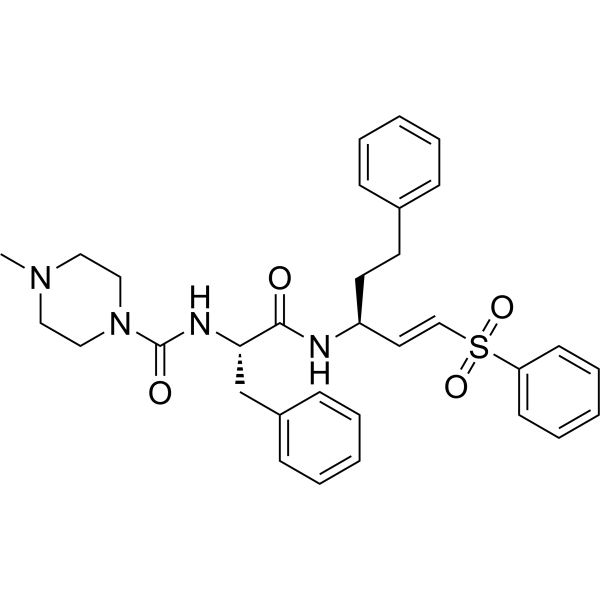 0 ImagesK777 is a potent, orally active and irreversible cysteine protease inhibitor. K777 is also a potent CYP3A4 inhibitor with an IC50 of 60 nM. K777 irreversibly inhibits Cruzain, the major cysteine protease of Trypansoma cruzi, and cathepsins B and L. K777 is a broad-spectrum antiviral by targeting cathepsin-mediated cell entry. K777 inhibits SARS-CoV and EBOV pseudovirus entry with IC50 values of 0.68 nM and 0.87 nM, respectively.
-
Atoltivimab
 0 ImagesSynonyms: REGN3470
-
Cosfroviximab
 0 ImagesCat. No.: HY-P99832CAS No.: 1792982-57-0Synonyms: c13C6-FR1Cosfroviximab (c13C6-FR1) is a mouse/human chimeric monoclonal antibody against Ebola virus glycoprotein (EBOV-GP).
-
EBOV-IN-2
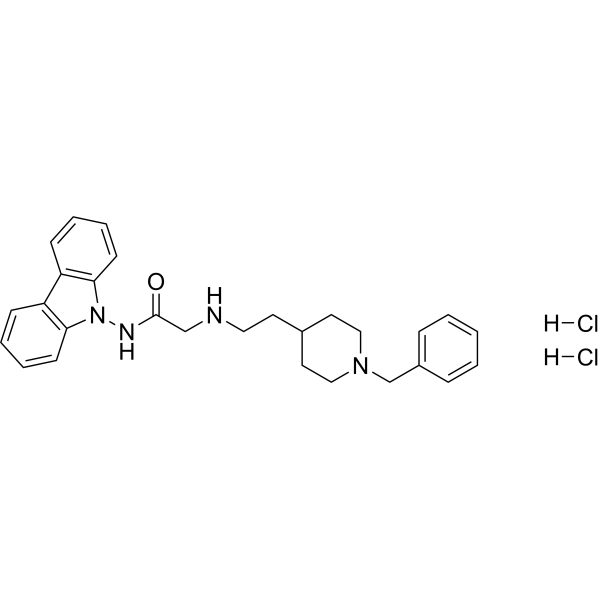 0 ImagesCat. No.: HY-160877EBOV-IN-2 (Compound 2) is an inhibitor of Ebola virus (EBOV) with IC50 values of 0.37 μM and 2.54 μM against Ebola virus glycoprotein pseudotype virus (pEBOV) and African swine fever virus (ASFV), respectively.
-
EBOV/MARV-IN-2
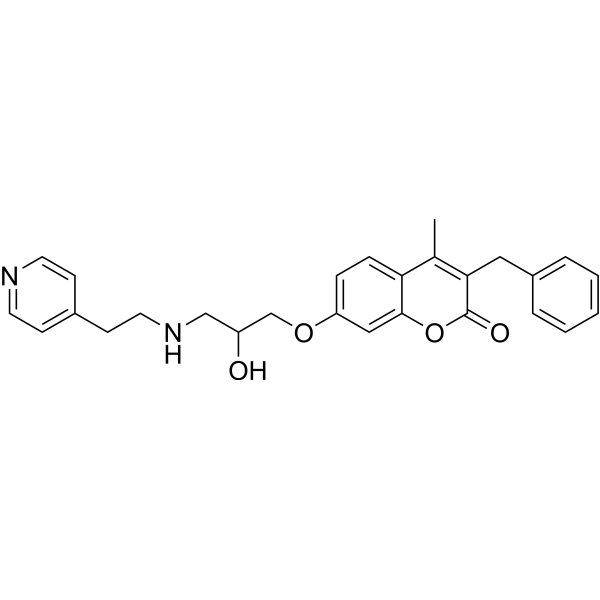 0 ImagesCat. No.: HY-146813CAS No.: 2687244-84-2
-
EBOV-IN-8
 0 ImagesCat. No.: HY-160883CAS No.: 286854-12-4EBOV-IN-8 (Compound 30) inhibits Ebola pseudotyped virus (pEBOV) infection with an IC50 of 62.1% at 10 μM.
-
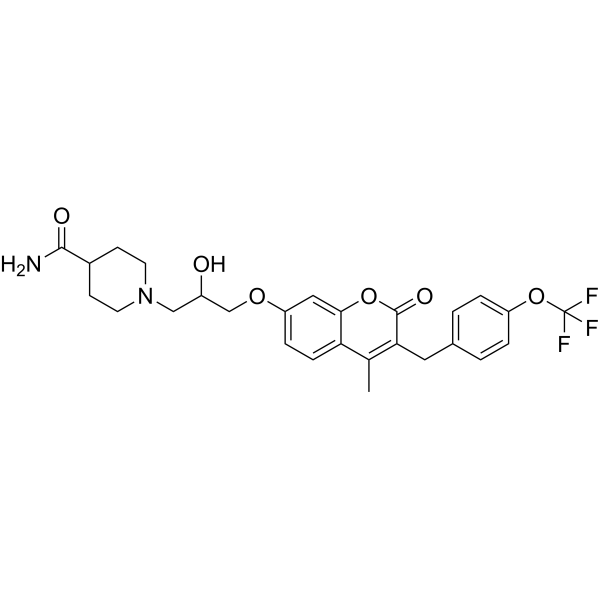
As-358
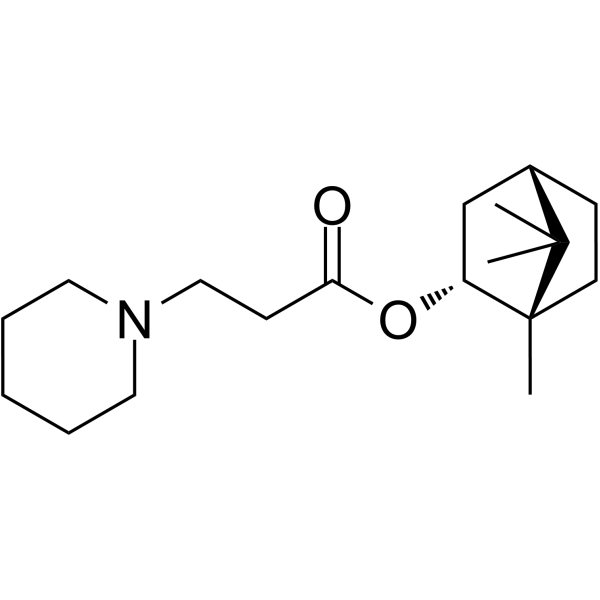 0 ImagesCat. No.: HY-146883CAS No.: 2222042-47-7As-358 has inhibitory effects against Ebola virus and Marburg virus, with IC50s of 47.5 μM and 3.7 μM.
-
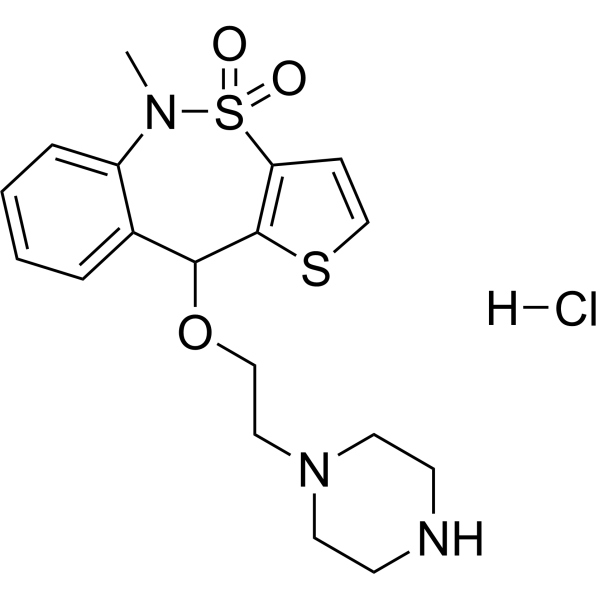
EBOV-IN-4
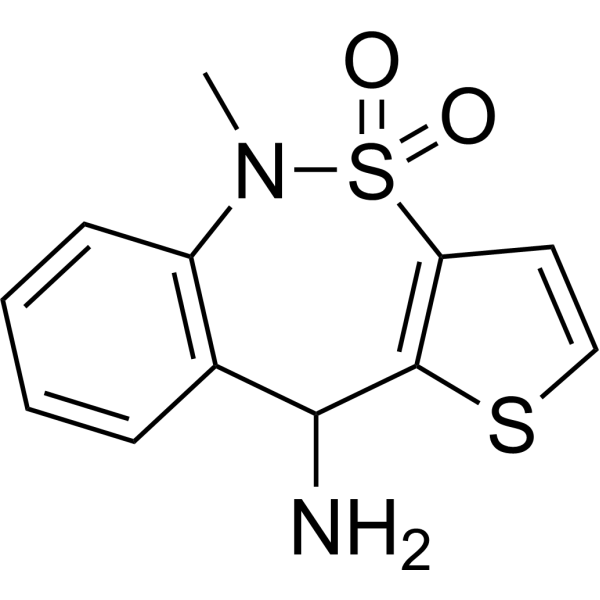 0 ImagesCat. No.: HY-160879CAS No.: 2896193-43-2EBOV-IN-4 (compound 12), a benzothiazepine, is a potent Ebola virus (EBOV) inhibitor with 64.9% inhibitory for EBOV-GP-pseudotype virus (pEBOV) with 10 μM. EBOV-IN-4 is inactive with ASFV.
-
As-358 hydrochloride
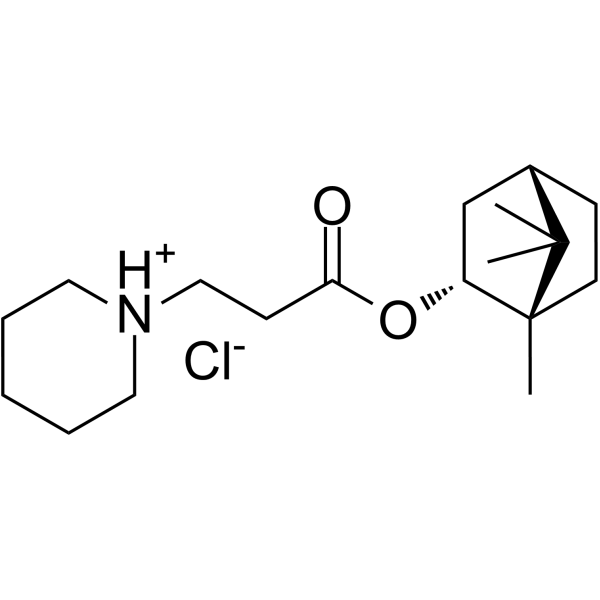 0 ImagesCat. No.: HY-146883ACAS No.: 2374723-26-7As-358 (hydrochloride) has inhibitory effects against Ebola virus and Marburg virus with IC50s of 9.1 μM and 18.1 μM, as well as exhibits good in vivo safety.
-
EBOV-IN-7
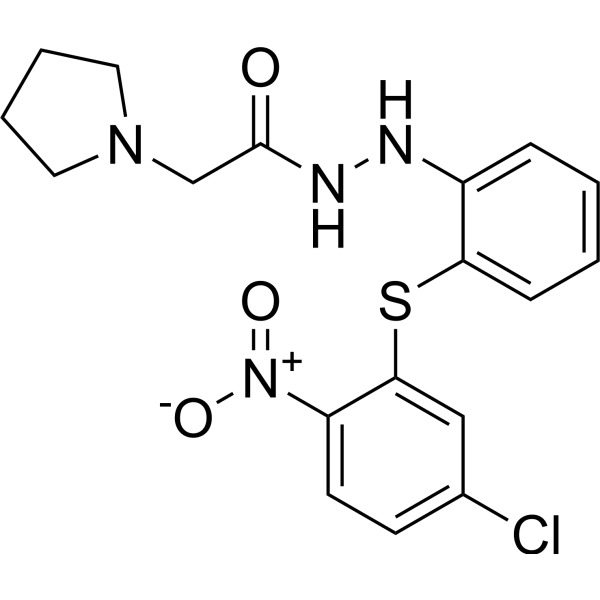 0 ImagesCat. No.: HY-160882CAS No.: 68207-16-9
-
CP19
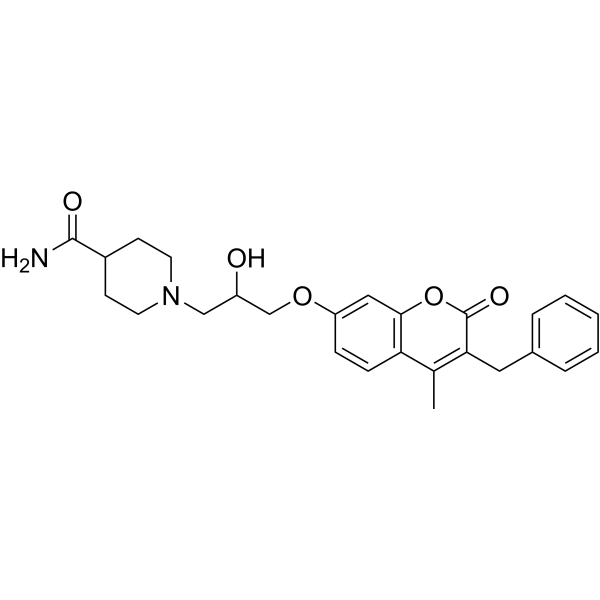 0 ImagesCat. No.: HY-146815CAS No.: 1018148-68-9
-
EBOV-IN-3
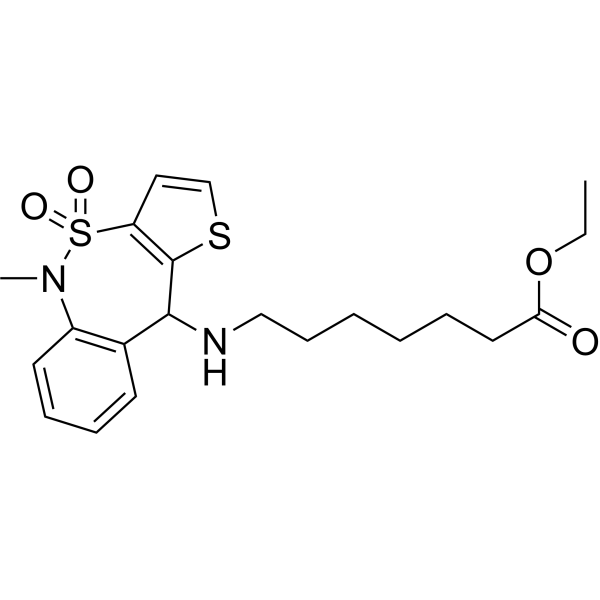 0 ImagesCat. No.: HY-160878CAS No.: 2896193-40-9EBOV-IN-3 (compound 9) is benzothiazepine compound. EBOV-IN-6 has anti-pEBOV activity with a IC50 value of 0.37 μM.
-
EBOV-IN-9
 0 ImagesCat. No.: HY-161691EBOV-IN-9 (compound 2b) is Diphyllin derivative that blocks Ebola viral entry with an EC50 of 40 nM. EBOV-IN-9 against EBOV-infected monocyte-derived macrophages with an EC50 of 107 nM.
-
pEBOV-IN-1
 0 ImagespEBOV-IN-1 (Comp 2) is a pEBOV inhibitor, with an EC50 value of 0.38 μM. pEBOV: pseudotyped Ebola virus.
-
Antiviral agent-88
 0 ImagesCat. No.: HY-170493ACAS No.: 3097805-27-8Antiviral agent-88 is a broad-spectrum Filovirus inhibitor. Antiviral agent-88 inhibits pEBOV, pMARV, Zaire, Sudan, Bundibugyo, Reston, and Tai Forest viruses with EC50 values of 0.23, 3.89, 0.23, 1.61, 1.19, 0.26, and 0.13 μM, respectively. Antiviral agent-88 blocks viral entry into host cells by binding to the viral glycoprotein and occupying its binding pocket. Antiviral agent-88 can be used in research on Ebola virus (EBOV) and Marburg virus (MARV) infections.
- 1
- 2



