



iGluR
Ionotropic glutamate receptors
iGluR (ionotropic glutamate receptor) is a ligand-gated ion channel that is activated by the neurotransmitter glutamate. iGluR are integral membrane proteins compose of four large subunits that form a central ion channel pore. Sequence similarity among all known glutamate receptor subunits, including the AMPA, kainate, NMDA, and δ receptors.
AMPA receptors are the main charge carriers during basal transmission, permitting influx of sodium ions to depolarise the postsynaptic membrane. NMDA receptors are blocked by magnesium ions and therefore only permit ion flux following prior depolarisation. This enables them to act as coincidence detectors for synaptic plasticity. Calcium influx through NMDA receptors leads to persistent modifications in the strength of synaptic transmission.
iGluR Isoform Specific Products
All Product Categories
-
iGluR Inhibitors
(130)
View all products
-
iGluR Agonists
(131)
View all products
-
iGluR Antagonists
(347)
View all products
-
iGluR Activators
(35)
View all products
-
iGluR Modulators
(93)
View all products
-
iGluR MDM2 Inhibitor
(1)
View all products
-
iGluR Controls
(5)
View all products
-
iGluR Ligands
(3)
View all products
-
iGluR Related Products (828)
Related Products (828)

-
Antibodies (11)
-
iGluR Isoform Comparison
-
Diphenhydramine-d3
 0 ImagesCat. No.: HY-B0303S1CAS No.: 170082-18-5Diphenhydramine-d3 is the deuterium labeled Diphenhydramine (HY-B0303). Diphenhydramine is a first-generation histamine H1-receptor antagonist with anti-cholinergic effect. Diphenhydramine hydrochloride can across the ovine blood-brain barrier (BBB).
-
CGP 31358
 0 ImagesCat. No.: HY-120524CAS No.: 125652-47-3CGP 31358 is an anticonvulsant agent that binds to a site on the NMDA receptor complex that is coupled to both the transmitter recognition site and to the channel domain. CGP 31358 inhibits the binding of L-Glutamate to the NMDA receptor complex with an IC50 of 53 μM.
-
MS-377
 0 ImagesCat. No.: HY-120155CAS No.: 206862-30-8MS-377 is a selective and orally active sigma-1 receptor ligand (Ki=73 nM) with weak affinity for sigma-2 receptor (Ki=6900 nM) and no affinity for any other receptors including dopamine, serotonin, PCP site, glutamate, γ-aminobutylic acid, adenosine, adrenergic receptors, etc. (Ki: >10 μM). MS-377 indirectly modulates the NMDA receptor ion-channel complex. MS-377 is a antipsychotic agent. MS-377 inhibits PCP-induced behaviors by inhibition of the increase in dopamine and serotonin release in the rat medial prefrontal cortex. MS-377 can be used for research of schizophrenia.
-
LY 233053
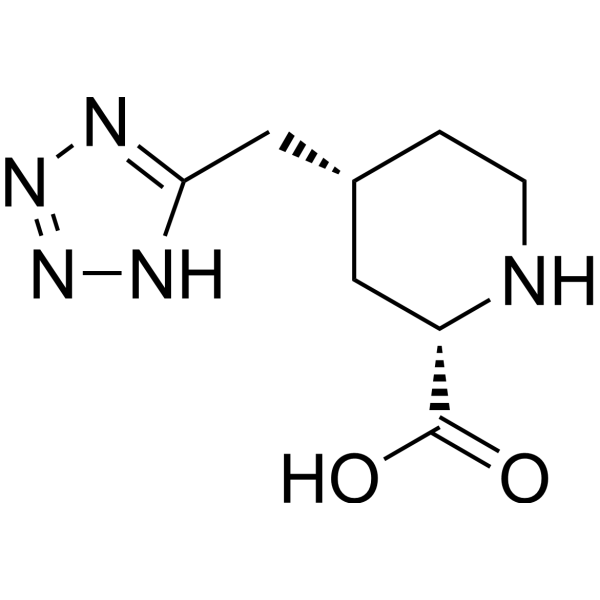 0 ImagesCat. No.: HY-107710CAS No.: 125546-04-5LY 233053 is a potent and competitive NMDA-receptor antagonist with anticonvulsant and antiepileptic efficacy.
-
Tat-CBD3 TFA
 0 ImagesCat. No.: HY-P10357ATat-CBD3 TFA, a 15-amino acid peptide from CRMP2, fused to the TAT cell-penetrating motif of the HIV-1 protein, disrupts CRMP2-NMDAR interaction without change in NMDAR localization.
-
CL-NC
 0 ImagesCat. No.: HY-D3370CAS No.: 3114128-41-2CL-NC is a chemiluminescent probe used for in vivo imaging of N-methyl-D-aspartate receptors (NMDARs), and its detection mechanism relies on bioorthogonal activation achieved via a tetrazine-triggered click-to-release reaction. The isonitrile group of CL-NC undergoes a click reaction with tetrazine, followed by hydrolysis and β-elimination to release a phenoxide anion, which induces the departure of adamantane and generates chemiluminescence. CL-NC has a maximum absorption wavelength of approximately 425 nm, a maximum fluorescence emission wavelength of approximately 670 nm, and a maximum chemiluminescence emission wavelength of 710 nm. When used in combination with Tz-IFDL (HY-D3369), an NMDAR ligand conjugated with tetrazine, CL-NC enables targeted imaging of NMDARs in living cells, as well as in the brain and spinal cord of living mice.
-
L644711
 0 ImagesCat. No.: HY-118489CAS No.: 81997-33-3L644711 is an anion transport inhibitor that reduces cell swelling by inhibiting potassium-activated D-aspartate release in astrocytes. L644711 can be used in the study of brain injury and neuroprotection.
-
GYKI-47261 dihydrochloride
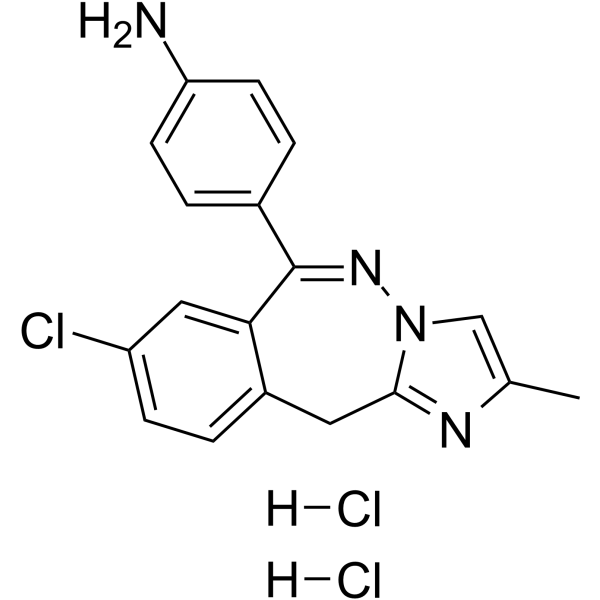 0 ImagesCat. No.: HY-19435ACAS No.: 1217049-32-5GYKI-47261 dihydrochloride is a competitive, orally active, and selective AMPA receptor antagonist with an IC50 of 2.5 μM. GYKI-47261 has broad spectrum anticonvulsive activity and neuroprotective effects. GYKI-47261 dihydrochloride is also a potent inducer of CYP2E1.
-
AVLX-125
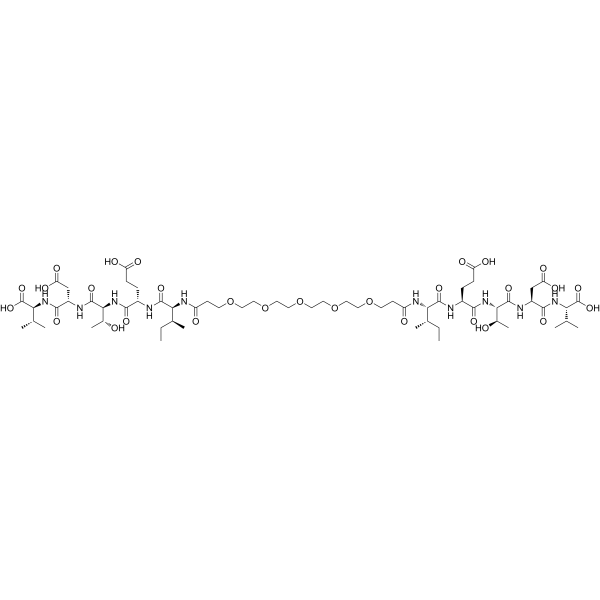 0 ImagesCat. No.: HY-P10212CAS No.: 1786434-31-8Synonyms: UCCB01-125AVLX-125 (UCCB01-125) is a PSD-95 and PDZ domain inhibitor with Kd value of 10 nM. AVLX-125 can be used in the study of inflammatory pain.
-
Dimethyl L-glutamate
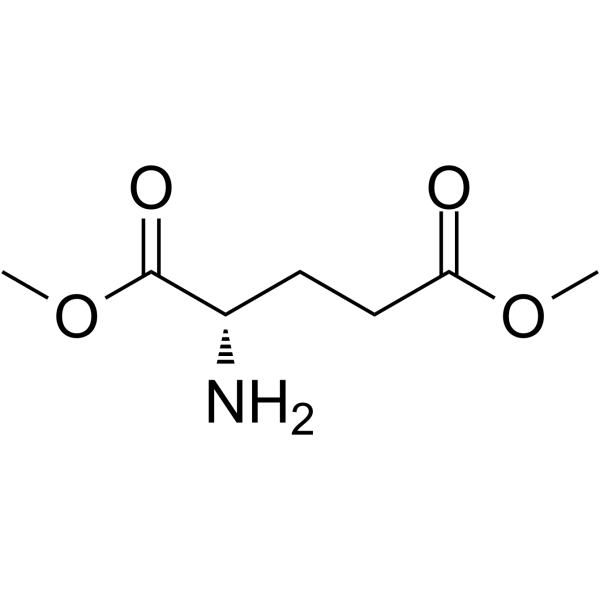 0 ImagesCat. No.: HY-W037817CAS No.: 6525-53-7Synonyms: Dimethyl glutamateDimethyl L-glutamate (Dimethyl glutamate) is a NMDA receptor ligand and a cell membrane-permeable glutamate precursor. Dimethyl L-glutamate binds to NMDA receptors to regulate osteoblast maturation, and promotes osteoblast proliferation, adhesion, extracellular calcium deposition, and alkaline phosphatase activity. Dimethyl L-glutamate replenishes the glutamate pool in insulin-secreting β cells. Dimethyl L-glutamate can be used in research related to bone defects and non-insulin-dependent diabetes mellitus.
-
(-)-Huperzine A-d4 hydrochloride
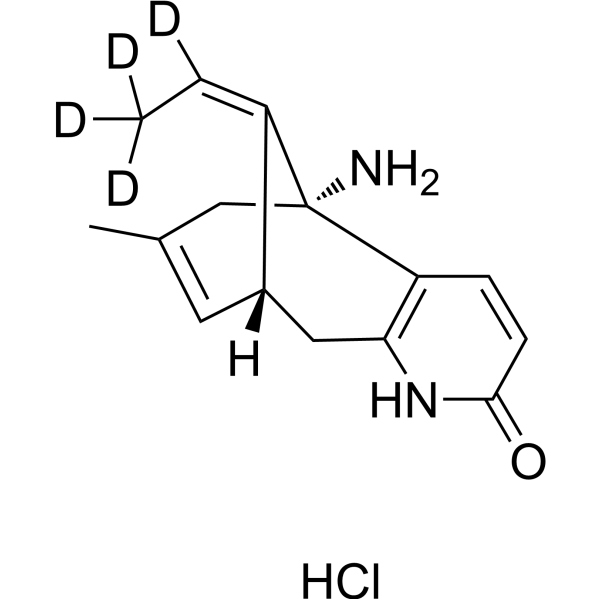 0 ImagesCat. No.: HY-17387S1Synonyms: Huperzine A-d4(-)-Huperzine A-d4 hydrochloride is deuterated labeled (-)-Huperzine A (HY-17387). (-)-Huperzine A (Huperzine A) is an alkaloid isolated from Huperzia serrata, with neuroprotective activity. (-)-Huperzine A is a potent, highly specific, reversible and blood-brain barrier penetrant inhibitor of acetylcholinesterase (AChE), with an IC50 of 82 nM. (-)-Huperzine A also is non-competitive antagonist of N-methyl-D-aspartate glutamate (NMDA) receptor. (-)-Huperzine A is developed for the research of neurodegenerative diseases, including Alzheimer’s disease.
-
Topiramate D12 (Standard)
 0 ImagesCat. No.: HY-110234RCAS No.: 1279037-95-4Synonyms: McN 4853 D12 (Standard); RWJ 17021 D12 (Standard)Topiramate D12 (Standard) is the analytical standard of Topiramate D12. This product is intended for research and analytical applications. Topiramate D12 (McN 4853 D12) is a deuterium labeled Topiramate. Topiramate is a broad-spectrum antiepileptic agent. Topiramate is a GluR5 receptor antagonist. Topiramate produces its antiepileptic effects through enhancement of GABAergic activity, inhibition of kainate/AMPA receptors, inhibition of voltage-sensitive sodium and calcium channels, increases in potassium conductance, and inhibition of carbonic anhydrase.
-
Traxoprodil mesylate
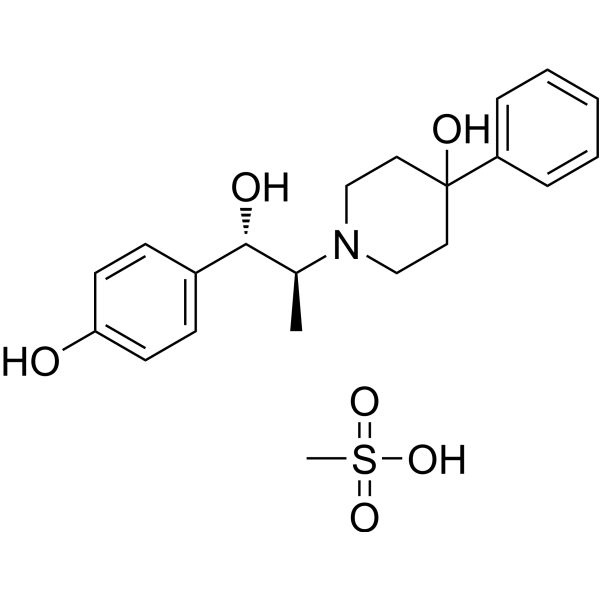 0 ImagesCat. No.: HY-W018061ACAS No.: 188591-67-5Synonyms: CP101,606 mesylateTraxoprodil mesylate (CP101,606) is a potent and selective NMDA antagonist and protect hippocampal neurons with an IC50 of 10 nM.
-
MDL 100748
 0 ImagesCat. No.: HY-182479CAS No.: 130613-18-2MDL 100748 is an NMDA receptor glycine site antagonist. MDL 100748 modulates NMDA receptor function by acting at the strychnine-insensitive glycine site, which is required for NMDA receptor activation alongside glutamate. MDL 100748 decreases response rates in operant conditioning sessions in phencyclidin (PCP)-trained rats. MDL 100748 can be used for reserach on dementias and schizophrenia.
-
(R,S)-3,4-Dicarboxyphenylglycine
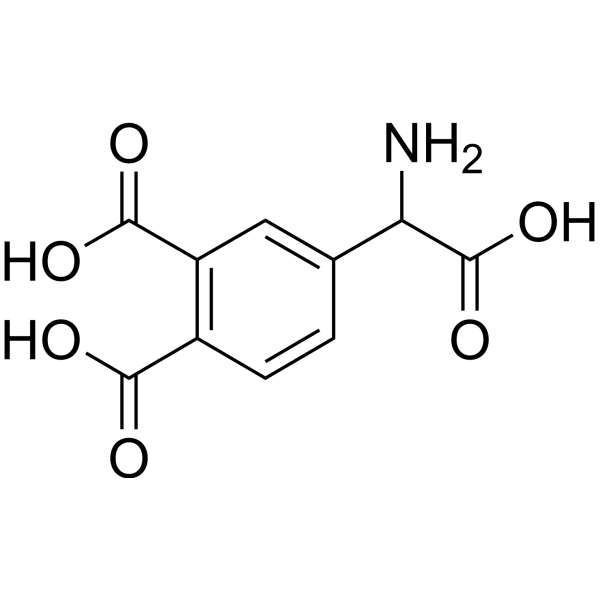 0 ImagesCat. No.: HY-107518CAS No.: 176796-64-8Synonyms: (R,S)-3,4-DCPG(R,S)-3,4-Dicarboxyphenylglycine ((RS)-3,4-DCPG) is an AMPA receptor antagonist. (R,S)-3,4-Dicarboxyphenylglycine antagonizes AMPA-mediated depolarization of motor neurons in neonatal rats. (R,S)-3,4-Dicarboxyphenylglycine can be used in the study of neurological diseases.
-
GYKI-47261
 0 ImagesCat. No.: HY-19435CAS No.: 220445-20-5GYKI-47261 is a competitive, orally active, and selective AMPA receptor antagonist with an IC50 of 2.5 μM. GYKI-47261 has broad spectrum anticonvulsive activity and neuroprotective effects. GYKI-47261 is also a potent inducer of CYP2E1.
-
DL-Phenylalanine-d5 hydrochloride
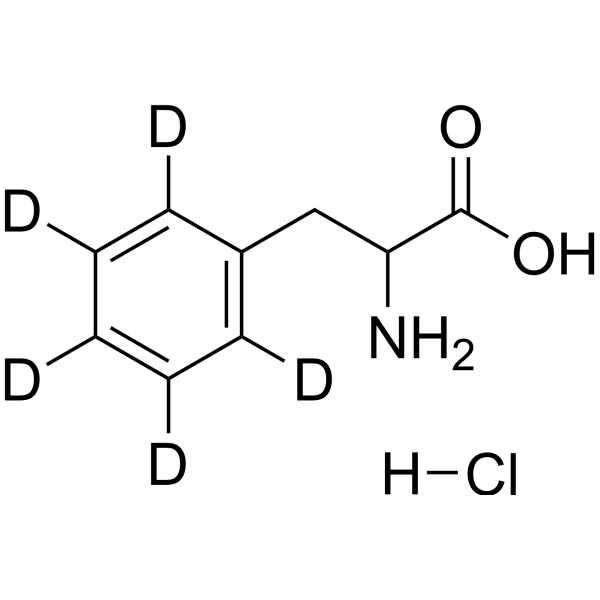 0 ImagesCat. No.: HY-N0215S6Synonyms: 2-Amino-3-phenylpropionic acid-d5 hydrochlorideDL-Phenylalanine-d5 (hydrochloride) is the deuterium labeled DL-Phenylalanine hydrochloride. L-Phenylalanine hydrochloride is an essential amino acid isolated from Escherichia coli. L-Phenylalanine hydrochloride is a α2δ subunit of voltage-dependent Ca+ channels antagonist with a Ki of 980 nM. L-phenylalanine hydrochloride is a competitive antagonist for the glycine- and glutamate-binding sites of N-methyl-D-aspartate receptors (NMDARs) (KB of 573 μM ) and non-NMDARs, respectively. L-Phenylalanine hydrochloride is widely used in the production of food flavors and pharmaceuticals.
-
Orphenadrine-d3 citrate
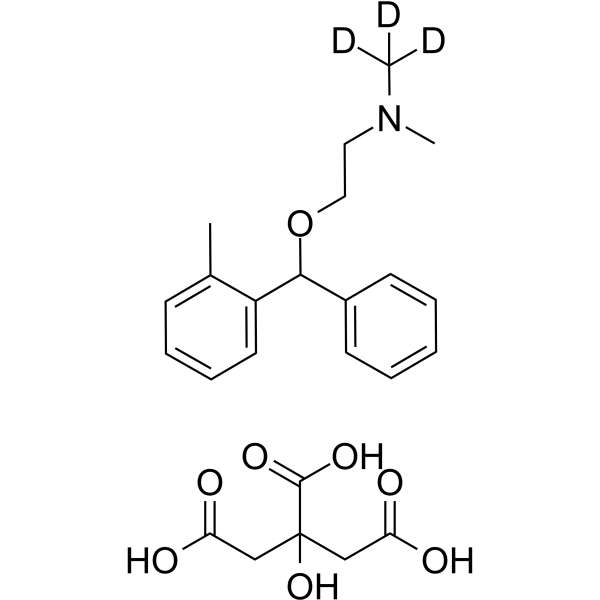 0 ImagesCat. No.: HY-B0369ASOrphenadrine-d3 (citrate) is the deuterium labeled Orphenadrine citrate. Orphenadrine citrate is a NMDA receptor antagonist with Ki of 6.0 +/- 0.7 μM, HERG potassium channel blocker.
-
GluN2A Allosteric modulator 1
 0 ImagesCat. No.: HY-168494GluN2A Allosteric modulator 1 (Compound 11) is an orally active, BBB-penetrable and highly selective GluN2A negative allosteric modulator. GluN2A Allosteric modulator 1 has IC50 values of 0.042 μM and 13 μM for GluN2A and GluN2B, respectively. GluN2A Allosteric modulator 1 can be used for the research of nervous system diseases.
-
Flupirtine-d4 hydrochloride
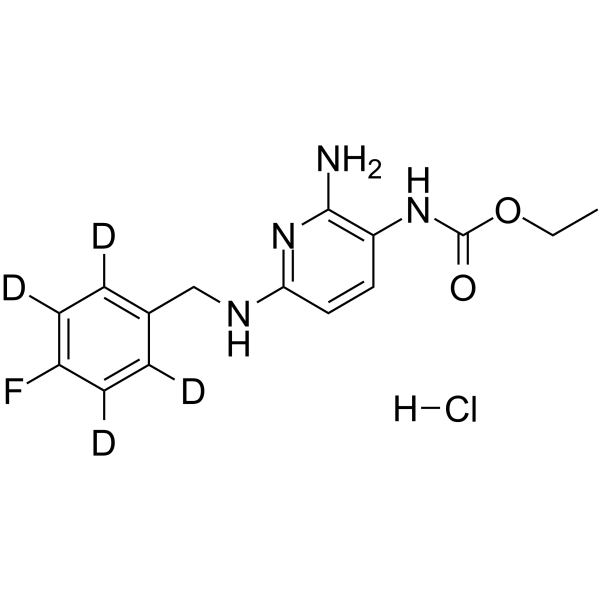 0 ImagesSynonyms: D 9998-d4 hydrochlorideFlupirtine-d4 (D 9998-d4) hydrochloride is the deuterium labeled Flupirtine hydrochloride (HY-W709349). Flupirtine hydrochloride is an orally active, blood-brain barrier-crossing non-opioid analgesic and neuroprotective agent. Flupirtine hydrochloride is a neuronal potassium channel opener (Kv7 activator), a NMDA receptor antagonist and a GABA receptor activator. Flupirtine hydrochloride stabilizes blood-brain-barrier integrity, reduces oxidative stress and brain leukocyte infiltration, enhances angioneurogenesis, suppresses calcium influx, stabilizes neuronal resting membrane potential, and counteracts focal cerebral ischemia. Flupirtine hydrochloride exhibits analgesic, muscle relaxant properties, protects neurons from excitotoxic, ischemic, or cytokine-mediated death. Flupirtine hydrochloride functions as a non-opioid analgesic without antipyretic or antiphlogistic properties, shows no relevant affinity to opiate receptor. Flupirtine hydrochloride can be used for the research of focal cerebral ischemia, pain, Alzheimer’s disease, or multiple sclerosis.




