



Kainate Receptor
Kainate receptors are ionotropic glutamate receptors that mediate pre- and postsynaptic glutamate actions and regulate excitatory and inhibitory synaptic transmission[1][2]. Mechanistically, they participate in postsynaptic information transfer, neuronal excitability control, and presynaptic modulation of GABA and glutamate release[3]. In disease-focused research, kainate receptors have been linked to epilepsy, pain, neurodegenerative disease, psychiatric disease, and mood disorders[1][4]. Compared with related ionotropic glutamate receptor systems, kainate receptors show distinctive subunit organization, with GluK1-GluK3 classified as low-affinity subunits and GluK4-GluK5 as high-affinity subunits[5]. GluK4 and GluK5 do not form functional homomeric receptors but modify heteromeric receptor assemblies with GluK1-GluK3, making isoform composition central to experimental design[6]. NETO1 and NETO2 act as auxiliary kainate receptor subunits that shape receptor biophysical properties and synaptic localization[7]. For experimental applications, GluK1 antagonists have shown positive activity in animal models of pain, migraine, epilepsy, stroke, and anxiety, supporting subunit-selective pharmacology as a practical research strategy[2].
References:
- [1]. Lerma J, et al. Kainate receptors in health and disease. Neuron. 2013 Oct 16;80(2):292-311. [Content Brief]
- [2]. Jane DE, et al. Kainate receptors: pharmacology, function and therapeutic potential. Neuropharmacology. 2009 Jan;56(1):90-113. [Content Brief]
- [3]. Negrete-Díaz JV, et al. Kainate receptors: from synaptic activity to disease. FEBS J. 2022 Sep;289(17):5074-5088. [Content Brief]
- [4]. Matute C. Therapeutic potential of kainate receptors. CNS Neurosci Ther. 2011 Dec;17(6):661-9. doi: 10.1111/j.1755-5949.2010.00204.x. Epub 2010 Dec 6. PMID: 21129167; PMCID: PMC3430855. et al. Therapeutic potential of kainate receptors. CNS Neurosci Ther. 2011 Dec;17(6):661-9. [Content Brief]
- [5]. Iida I, et al. Behavioral analysis of kainate receptor KO mice and the role of GluK3 subunit in anxiety. Sci Rep. 2024 Feb 24;14(1):4521. [Content Brief]
- [6]. Fisher JL, et al. Distinct functional roles of subunits within the heteromeric kainate receptor. J Neurosci. 2011 Nov 23;31(47):17113-22. [Content Brief]
- [7]. Copits BA, et al. Dancing partners at the synapse: auxiliary subunits that shape kainate receptor function. Nat Rev Neurosci. 2012 Oct;13(10):675-86. [Content Brief]
-
Kainate Receptor Related Products (11)
Related Products (11)

- 1
-
CNQX
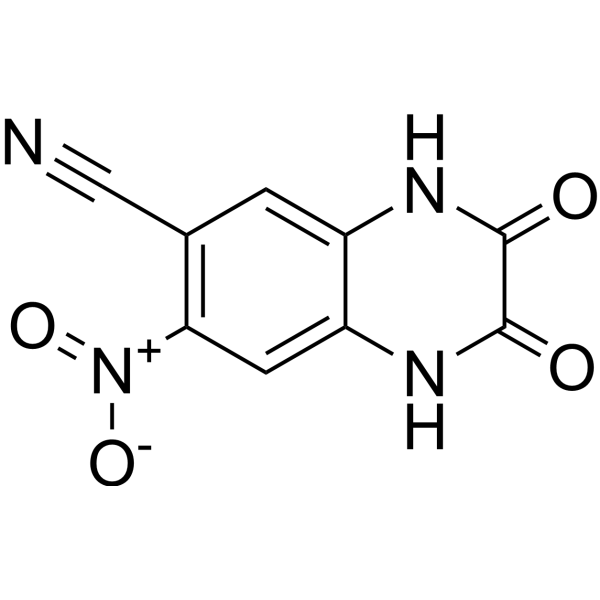 0 ImagesSynonyms: FG9065CNQX (FG9065) is a potent and competitive AMPA/kainate receptor antagonist with IC50s of 0.3 μM and 1.5 μM, respectively. CNQX is a competitive non-NMDA receptor antagonist. CNQX blocks the expression of fear-potentiated startle in rats.
-
Topiramate
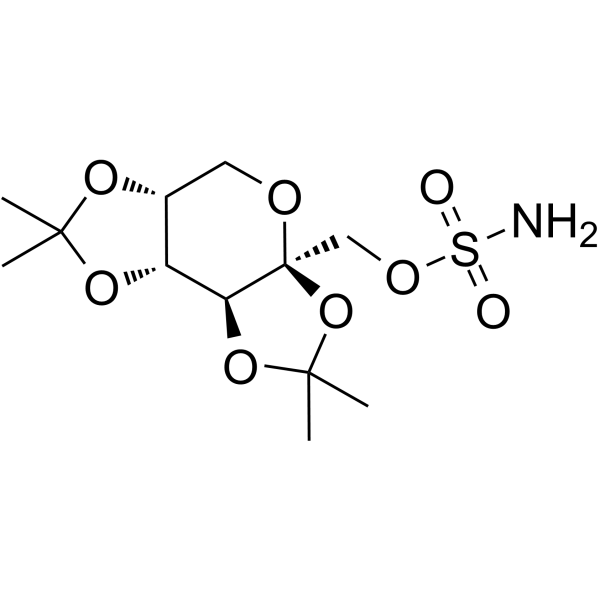 0 ImagesSynonyms: McN 4853; RWJ 17021Topiramate (McN 4853) is a broad-spectrum antiepileptic agent. Topiramate is a GluR5 receptor antagonist. Topiramate produces its antiepileptic effects through enhancement of GABAergic activity, inhibition of kainate/AMPA receptors, inhibition of voltage-sensitive sodium and calcium channels, increases in potassium conductance, and inhibition of carbonic anhydrase.
-
CNQX disodium
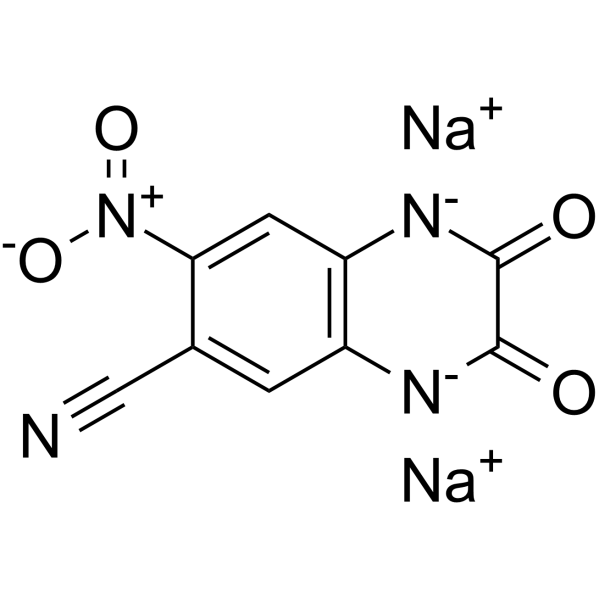 0 ImagesSynonyms: FG9065 disodiumCNQX disodium (FG9065 disodium) is a potent and competitive AMPA/kainate receptor antagonist with IC50s of 0.3 μM and 1.5 μM, respectively. CNQX disodium is a competitive non-NMDA receptor antagonist. CNQX disodium blocks the expression of fear-potentiated startle in rats.
-
GYKI 52466 dihydrochloride
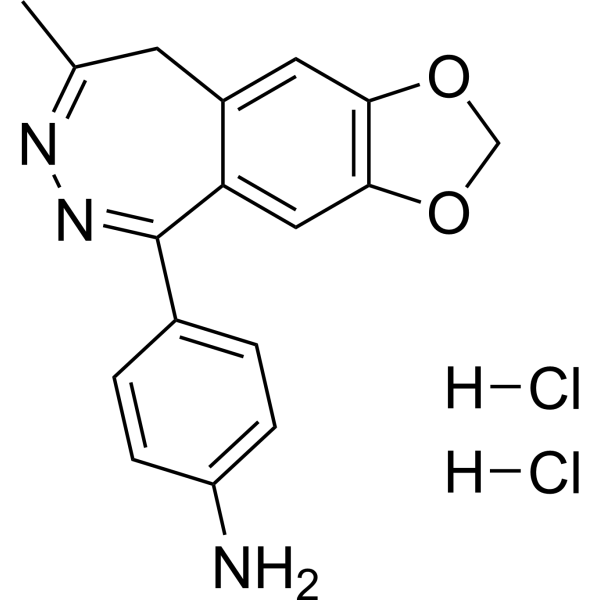 0 ImagesGYKI 52466 dihydrochloride is an orally active, highly selective and noncompetitive AMPA/kainate receptor antagonist with the IC50 values of 7.5 and 11μM, respectively. GYKI 52466 dihydrochloride has good blood brain barrier permeability and anticonvulsant effect. GYKI 52466 dihydrochloride can be used in Parkinson's disease research.
-
SYM 2081
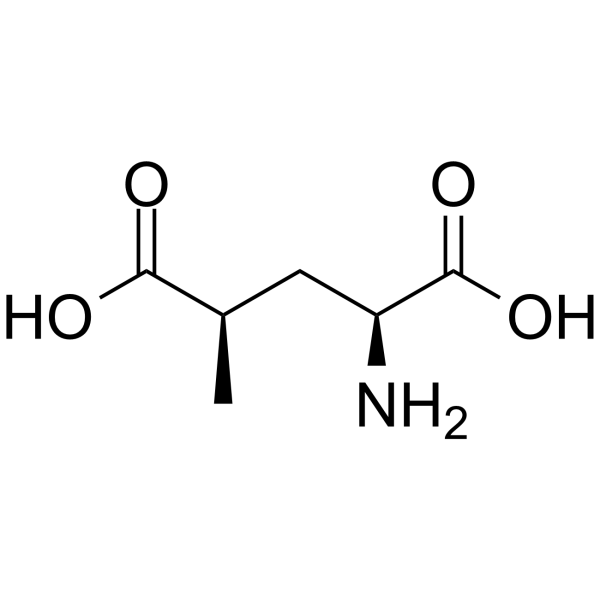 0 ImagesSYM 2081 is a kainate receptor agonist. SYM 2081 is a substrate of EAAT1 (Km of 54 μM). SYM 2081 inhibits EAAT2-mediated glutamate transport (Kb is 3.4 μM in Xenopus oocytes), modulates Apoptotic signaling pathways (increases Bcl-2 and decreases Bax/caspase-3 expression). SYM 2081 exhibits neuroprotective activity. SYM 2081 can be used in the study of hypoxic-ischemic brain damage and inflammatory or neuropathic pain.
-
(S)-Willardiine
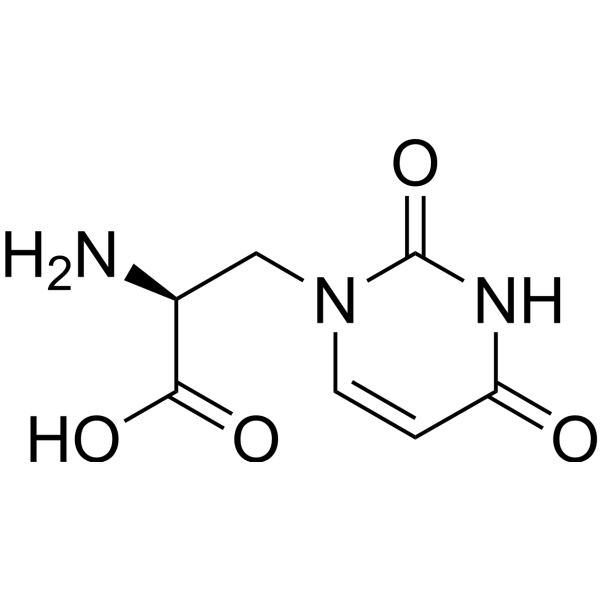 0 ImagesSynonyms: (-)-Willardiine(S)-Willardiine ((-)-Willardiine) is a subtype-selective glutamate receptor agonist and the active isomer of Willardiine. Willardiine binds to and activates hGluR1, hGluR2, hGluR4 and hGluR5, with Ki values of 3.6 nM and 0.24 nM for hGluR4 and hGluR5, respectively. (S)-Willardiine is used to investigate the distribution and physiological functions of glutamate receptor subunits in the central nervous system.
-
Topiramate D12
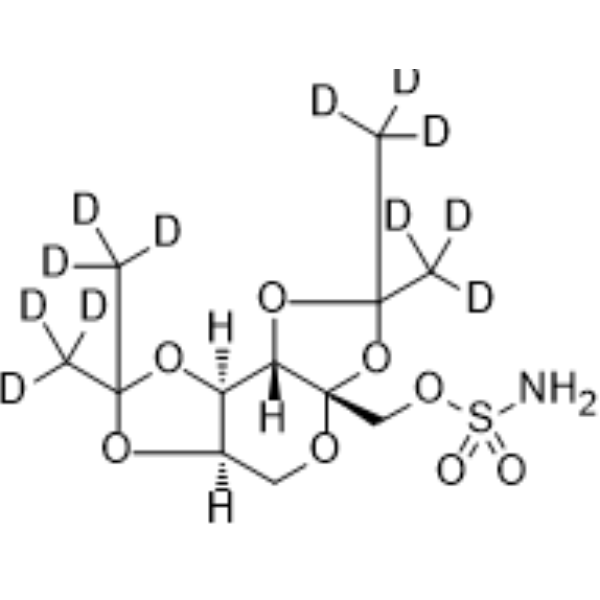 0 ImagesCat. No.: HY-110234CAS No.: 1279037-95-4Synonyms: McN 4853 D12 ; RWJ 17021 D12Topiramate D12 (McN 4853 D12) is a deuterium labeled Topiramate. Topiramate is a broad-spectrum antiepileptic agent. Topiramate is a GluR5 receptor antagonist. Topiramate produces its antiepileptic effects through enhancement of GABAergic activity, inhibition of kainate/AMPA receptors, inhibition of voltage-sensitive sodium and calcium channels, increases in potassium conductance, and inhibition of carbonic anhydrase.
-
GYKI 52466
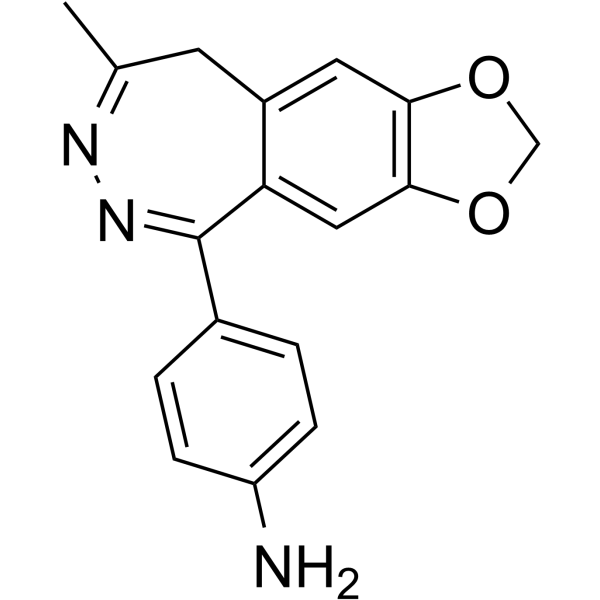 0 ImagesCat. No.: HY-103234CAS No.: 102771-26-6GYKI 52466 is an orally active, highly selective and noncompetitive AMPA/kainate receptor antagonist with the IC50 values of 7.5 and 11μM, respectively. GYKI 52466 has good blood brain barrier permeability and anticonvulsant effect. GYKI 52466 can be used in Parkinson's disease research.
-
TAN 950A
 0 ImagesCat. No.: HY-105476CAS No.: 127607-88-9TAN 950A is antifungal amino acid antibiotic. TAN 950A has affinity for three excitatory amino acid (EAA) receptor and can inhibit [3H]AMPA, [3H]kainite and [3H]CPP binding competitively. TAN 950A can be used for the researches of infection and neurological disease.
-
DNQX disodium salt
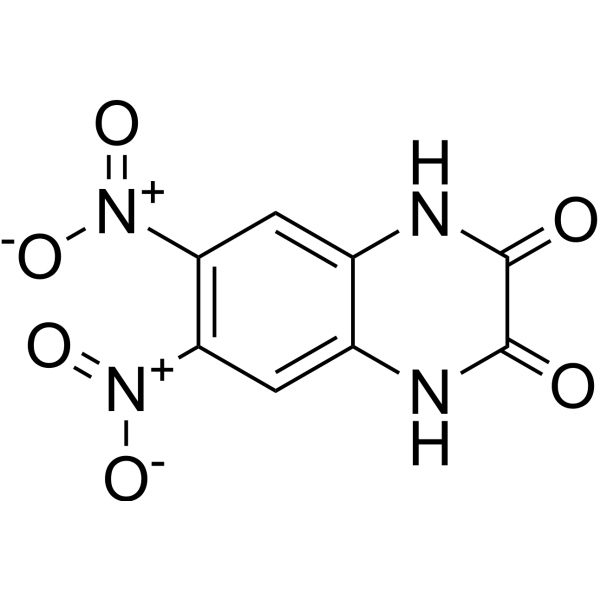
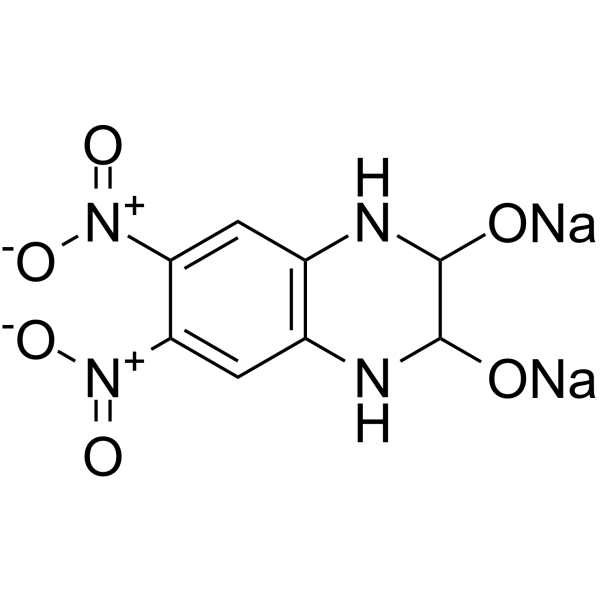 0 ImagesSynonyms: FG 9041 disodium saltDNQX (FG 9041) disodium salt, a quinoxaline derivative, is a selective, potent competitive non-NMDA glutamate receptor antagonist (IC50s = 0.5, 2 and 40 μM for AMPA, kainate and NMDA receptors, respectively).
- 1



