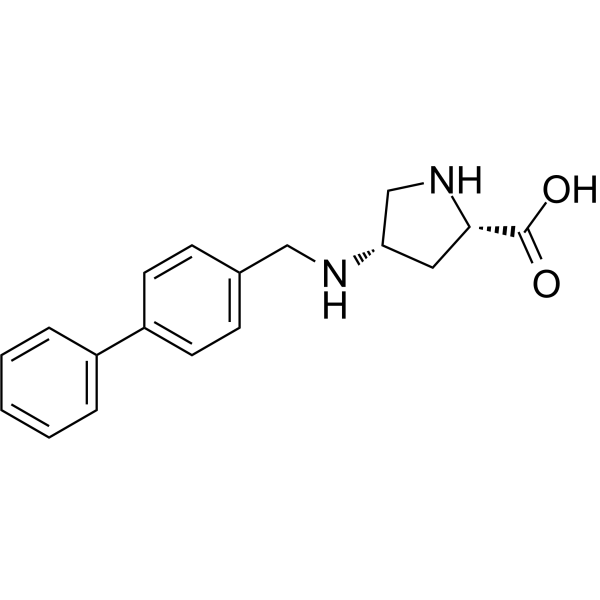
EAAT2
The excitatory amino acid transporter 2 (EAAT2) serves as the primary glutamate transporter in the human central nervous system, regulating extracellular glutamate concentrations and maintaining excitatory-inhibitory homeostasis[1]. Mechanistically, EAAT2 clears synaptic glutamate by uptake into astrocytes, facilitating recycling through glutamine synthesis[1]. Compared with related isoforms, such as EAAT1, EAAT2 exhibits higher expression in cortical and hippocampal astrocytes and displays greater transport capacity for excitatory neurotransmission[1]. Dysregulation of EAAT2 expression or localization contributes to neurodegenerative processes, with experimental models of Alzheimer's disease demonstrating altered EAAT2 distribution and correlation with cognitive deficits[1]. EAAT2-specific agonists or modulators have been employed in preclinical studies to restore glutamate homeostasis, providing neuroprotective effects and highlighting potential translational applications[1]. Therefore, EAAT2 functions as a key molecular target for studying synaptic excitatory control, neurodegeneration, and pharmacological modulation of glutamatergic signaling in disease-relevant contexts[1].
-
EAAT2 Verwandte Produkte (21)
Verwandte Produkte (21)

- 1
- 2
-
DL-TBOA
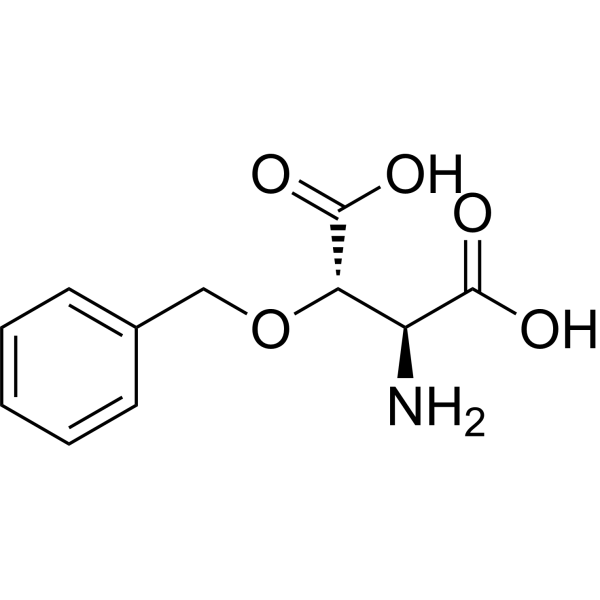 0 ImagesDL-TBOA is a potent non-transportable inhibitor of excitatory amino acid transporters with IC50s of 70 μM, 6 μM and 6 μM for excitatory amino acid transporter-1 (EAAT1), EAAT2 and EAAT3, respectively. DL-TBOA inhibits the uptake of [14C]glutamate in COS-1 cells expressing the human EAAT1 and EAAT2 with Ki valuesof 42 μM and 5.7 μM, respectively. DL-TBOA blocks EAAT4 and EAAT5 in a competitive manner with Ki values of 4.4 μM and 3.2 μM, respectively.
-
LDN-212320
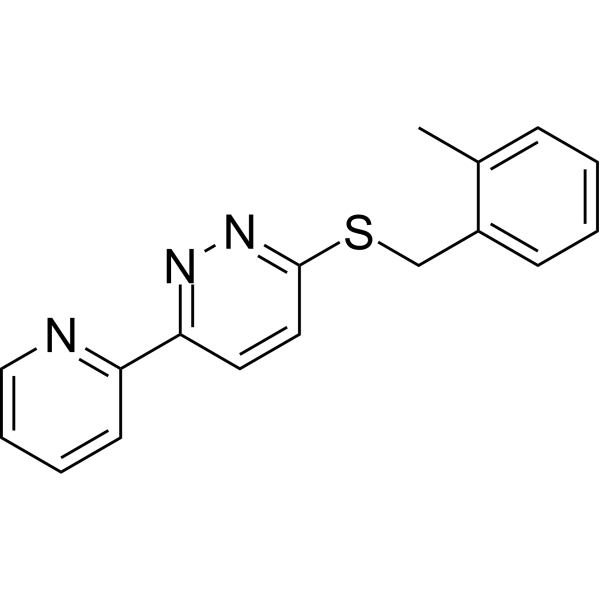 0 ImagesSynonyms: LDN-0212320; OSU-0212320LDN-212320 (LDN-0212320) is a glutamate transporter (GLT-1)/excitatory amino acid transporter 2 (EAAT2) activator (at translational level). LDN-212320 (LDN-0212320) prevents nociceptive pain by upregulating astroglial GLT-1 expression in the hippocampus and ACC[1]
-
TFB-TBOA
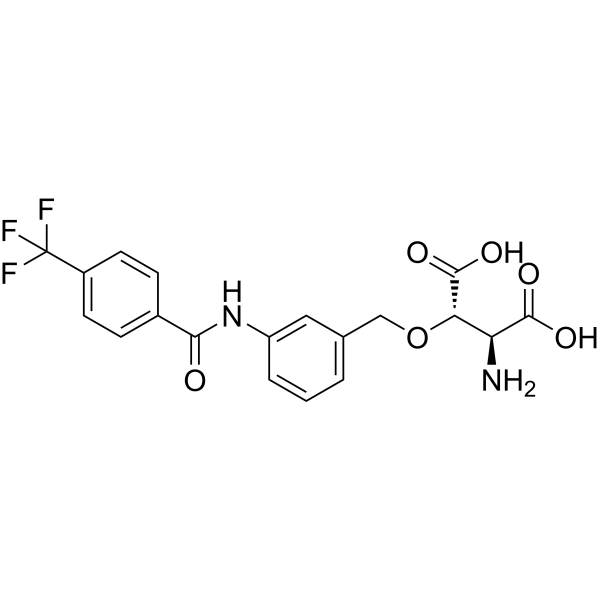 0 ImagesSynonyms: CF3-Bza-TBOATFB-TBOA (CF3-Bza-TBOA) is a potent glutamate transporter blocker that potently suppresses the activity of glial transporters. TFB-TBOA shows IC50 values of 22, 17, and 300 nM for glutamate transporters EAAT1, EAAT2, and EAAT3 respectively in an uptake assay using cells transiently expressing EAATs.
-
Dihydrokainic acid
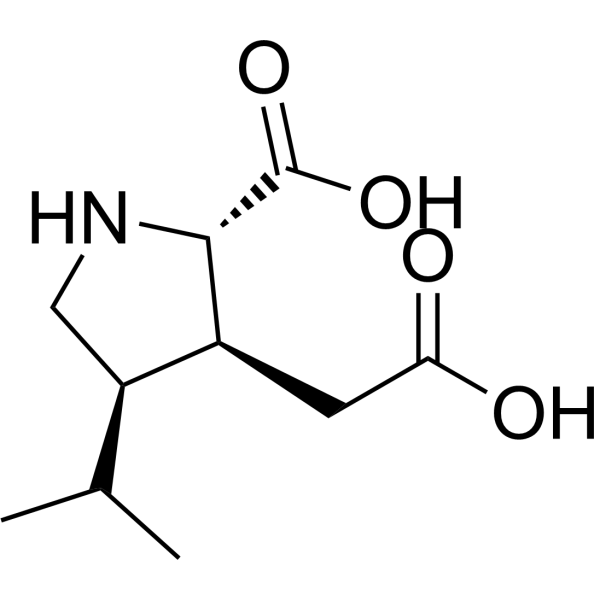 0 ImagesDihydrokainic acid is a glutamate transporters (especially GLT1) inhibitor. Dihydrokainic acid targets GLT1 with high affinity, effectively inhibiting its transport function. Dihydrokainic acid exerts its effect by inhibiting the uptake of glutamate, leading to an increase in extracellular glutamate concentration, thereby affecting neuronal excitability and neurotransmission. Dihydrokainic acid is mainly applied in the field of neuroscience for research on glutamate-related neural functions, epilepsy, learning, and memory.
-
Brelgometon
 0 ImagesArt. -Nr.: HY-187892CAS. Nr.: 3060541-19-4Synonyms: ATH-1105Brelgometon (ATH-1105) is an orally active HGF/MET positive modulator. Brelgometon activates downstream ERK and AKT cascades. Brelgometon reduces pro-inflammatory cytokine levels and extranuclear TDP-43 aggregation; it also upregulates EAAT2 expression and improves mitochondrial function. Brelgometon protects neurons from excitotoxicity, inflammation, oxidative stress and mitochondrial dysfunction; it also maintains neurite length, neuromuscular junction integrity and sciatic nerve function. Brelgometon alleviates motor function deterioration, maintains body weight and prolongs survival in ALS transgenic mice. Brelgometon is applicable to research related to amyotrophic lateral sclerosis.
-
Parawixin10
 0 ImagesArt. -Nr.: HY-182941Parawixin10 (Compound 2) is an N-acylpolyamine. Parawixin10 fails to enhance glutamate uptake in radioligand uptake assays of EAAT1, EAAT2 or EAAT3. Parawixin10 exhibits no positive allosteric modulatory activity in radioligand uptake assays of EAAT1−EAAT3, nor can it improve neuronal survival rates in mice in a dose-dependent and statistically significant manner. Parawixin10 has no neuroprotective activity.
-
HCM-01
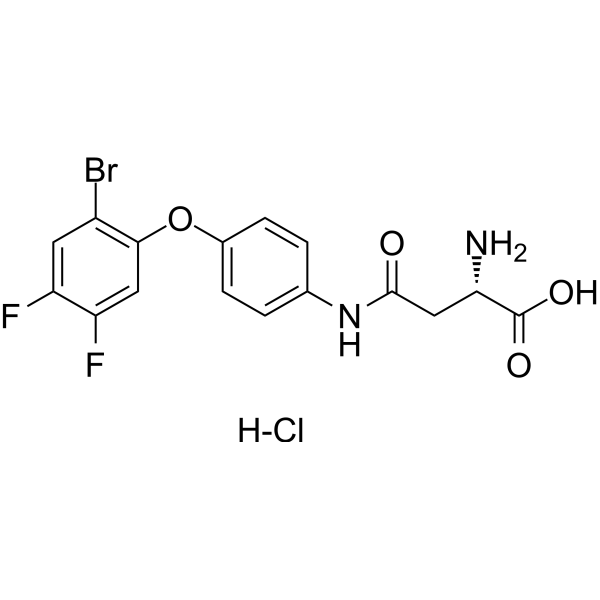
 0 ImagesHCM-01 is an Excitatory amino acid transporter 2 (EAAT2) activator with oral effectiveness and blood-brain barrier penetration.HCM-01 binds to the allosteric site of EAAT2, increases EAAT2 expression in astrocytes, enhances glutamate-handling capacity, and modulates glutamate homeostasis.HCM-01 acts as an antioxidant, improves oxidative/antioxidative balance and increases total antioxidant capacity. HCM-01 can be used for the research of Alzheimer's disease.
-
NA-014
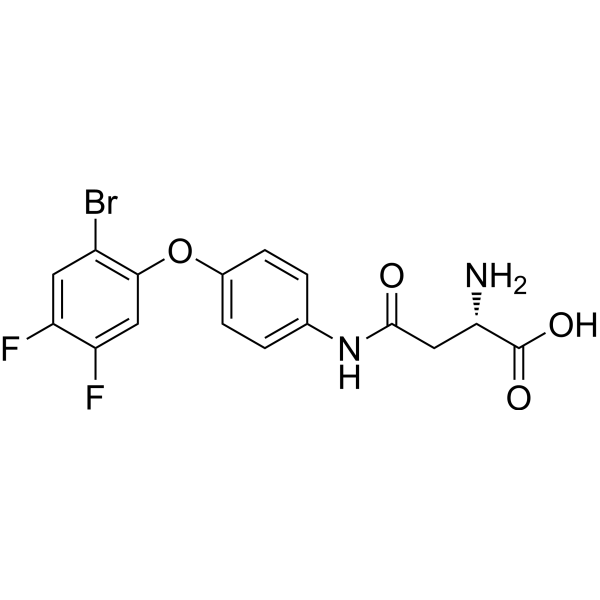
 0 ImagesNA-014 is an excitatory amino acid transporter 2 (EAAT2)-selective positive allosteric modulator. NA-014 increases EAAT2-mediated glutamate uptake. NA-014 can be used for the research of epilepsy, neuropathic pain, stroke, drugs of abuse disorders.
-
EAAT2 activator 1
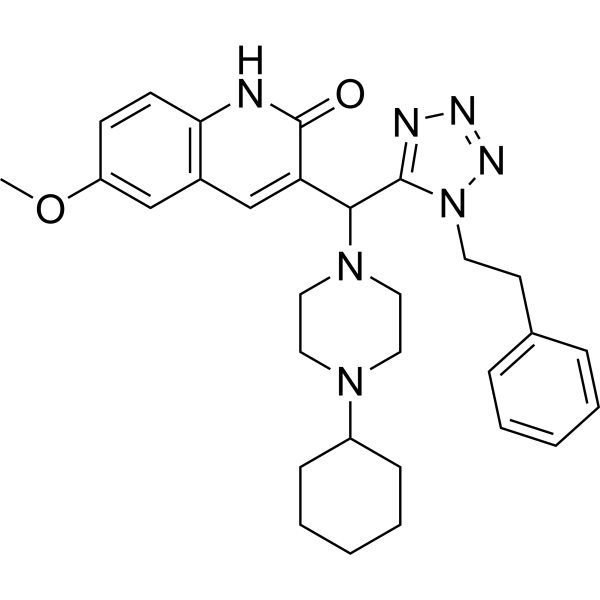
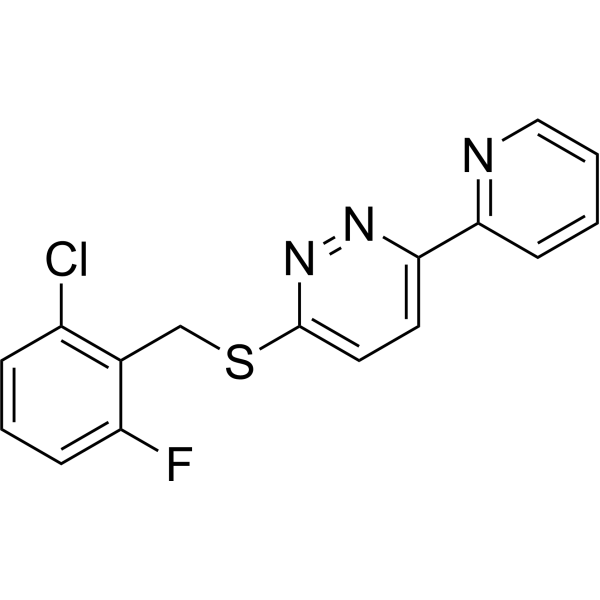 0 ImagesEAAT2 activator 1 is the potent activator of excitatory amino acid transporter 2 (EAAT2). EAAT2 is the major glutamate transporter and functions to remove glutamate from synapses. EAAT2 activator 1 increases EAAT2 protein levels dose-dependently.
-
SYM 2081
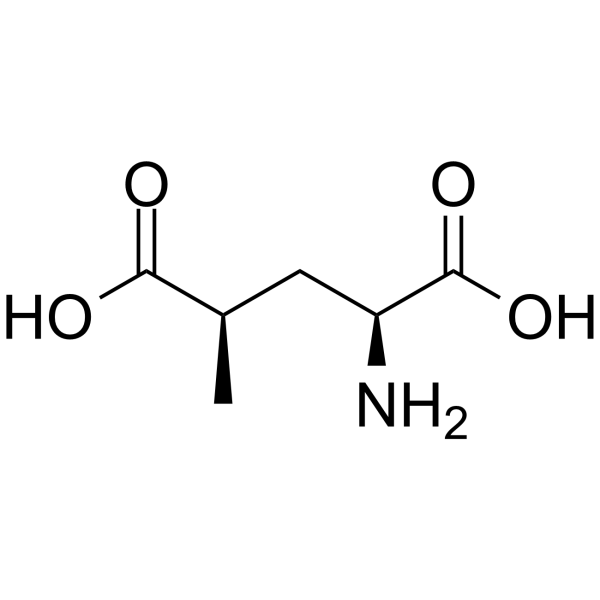 0 ImagesSYM 2081 is a kainate receptor agonist. SYM 2081 is a substrate of EAAT1 (Km of 54 μM). SYM 2081 inhibits EAAT2-mediated glutamate transport (Kb is 3.4 μM in Xenopus oocytes), modulates Apoptotic signaling pathways (increases Bcl-2 and decreases Bax/caspase-3 expression). SYM 2081 exhibits neuroprotective activity. SYM 2081 can be used in the study of hypoxic-ischemic brain damage and inflammatory or neuropathic pain.
-
SLC1A1/EAAT3-IN-1
 0 ImagesSLC1A1/EAAT3-IN-1 (Compound 3e) is a selective EAAT3 inhibitor with an IC50 of 7.2 μM for hEAAT3 over EAAT1,2,4 (IC50: ∼ 250 μM). SLC1A1/EAAT3-IN-1 can be used for psychiatric disorders such as obsessive compulsive disorder and schizophrenia research.
-
(R)-AS-1
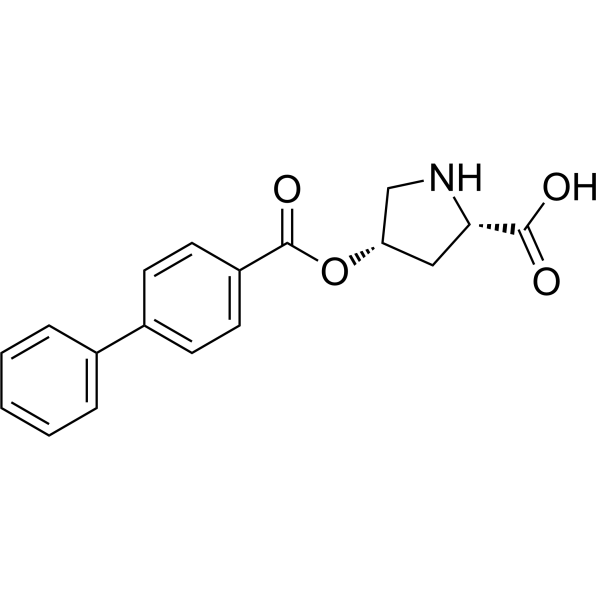
 0 Images(R)-AS-1 is a selective positive allosteric modulator of the excitatory amino acid transporter 2 (EAAT2), with an EC50 of 11 nM. (R)-AS-1 (at doses of 60 and 90 mg/kg) increases spontaneous locomotor activity in mice. Additionally, it demonstrates anticonvulsant activity in mouse models of seizures induced by maximal electroshock (MES), pentylenetetrazole (PTZ), or electrical stimuli (32 or 44 mA), with ED50s of 66.3, 36.3, 15.6, and 41.6 mg/kg, respectively. (R)-AS-1 can be used in neurological disease research.
-
DL-TBOA ammonium
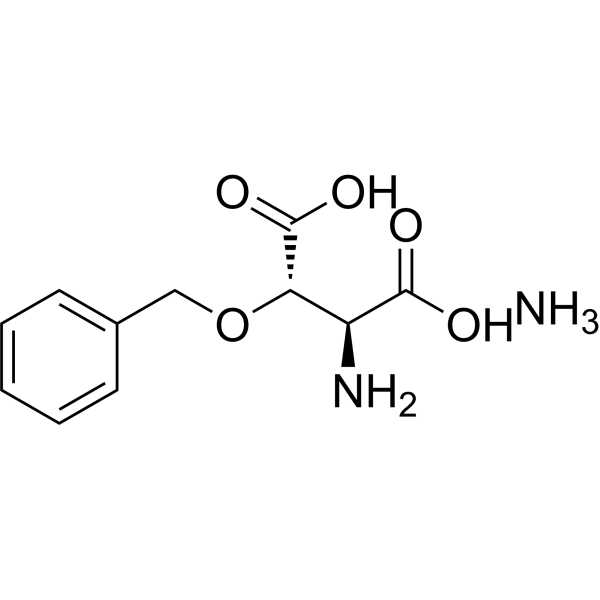 0 ImagesArt. -Nr.: HY-107522BCAS. Nr.: 2093503-71-8DL-TBOA ammonium is a potent non-transportable inhibitor of excitatory amino acid transporters with IC50s of 70 μM, 6 μM and 6 μM for excitatory amino acid transporter-1 (EAAT1), EAAT2 and EAAT3, respectively. DL-TBOA ammonium inhibits the uptake of [14C]glutamate in COS-1 cells expressing the human EAAT1 and EAAT2 with Ki valuesof 42 μM and 5.7 μM, respectively. DL-TBOA ammonium blocks EAAT4 and EAAT5 in a competitive manner with Ki values of 4.4 μM and 3.2 μM, respectively.
-
cis-α-(Carboxycyclopropyl)glycine
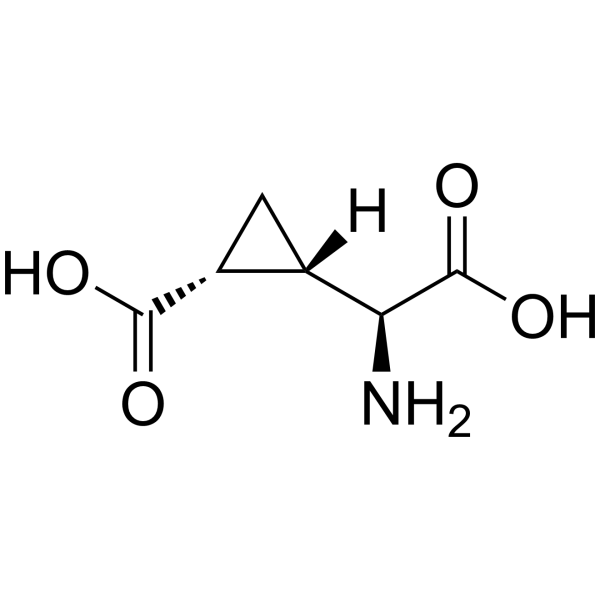 0 ImagesArt. -Nr.: HY-100838CAS. Nr.: 117857-95-1Synonyms: L-CCG IIIcis-α-(Carboxycyclopropyl)glycine (L-CCG III) is a potent, competitive glutamate uptake inhibitor. cis-α-(Carboxycyclopropyl)glycine is a substrate of glutamate transporters (GluT) (EC50: 13 μM, 2 μM for EAAT 1 and EAAT 2, respectively). cis-α-(Carboxycyclopropyl)glycine inhibits a Na+-dependent high-affinity L-glutamate uptake in glial plasmalemmal vesicles (GPV) and synaptosomes.
-
(±)-threo-3-Methylglutamic acid
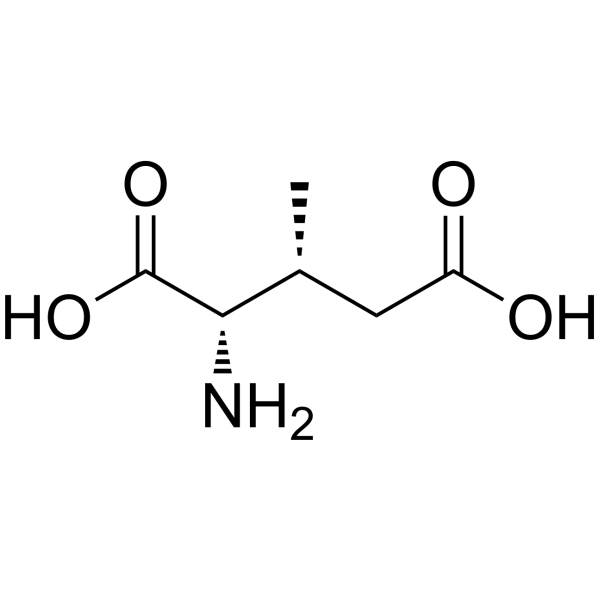 0 ImagesArt. -Nr.: HY-101227CAS. Nr.: 63088-04-0(±)-threo-3-Methylglutamic acid is a potent EAAT2/4 inhibitor. (±)-threo-3-Methylglutamic acid also is an ionotropic glutamate receptor agonist. (±)-threo-3-Methylglutamic acid inhibits glutamate uptake by rod outer segments.
- 1
- 2