



(R)-AS-1

Based on 1 Customer Validation
(R)-AS-1 is a selective positive allosteric modulator of the excitatory amino acid transporter 2 (EAAT2), with an EC50 of 11 nM. (R)-AS-1 (at doses of 60 and 90 mg/kg) increases spontaneous locomotor activity in mice. Additionally, it demonstrates anticonvulsant activity in mouse models of seizures induced by maximal electroshock (MES), pentylenetetrazole (PTZ), or electrical stimuli (32 or 44 mA), with ED50s of 66.3, 36.3, 15.6, and 41.6 mg/kg, respectively. (R)-AS-1 can be used in neurological disease research.
For research use only. We do not sell to patients.
- Purity : 99.9%
- CAS No.: 2506367-95-7
- Formula: C14H16N2O3
- Molecular Weight:260.29
-
Storage:Powder -20°C, 3 years ; In solvent -80°C, 6 months , -20°C, 1 month


To place orders, for customer services and technical support, please contact: MedChemExpress USA
Tel: 609-228-6898 E-mail: [email protected] [email protected]


-
 Biological Activity
-
Chemical Information
- Protocols
- Purity & Documentation
- References
-
 Help & FAQs


-

HY-162455
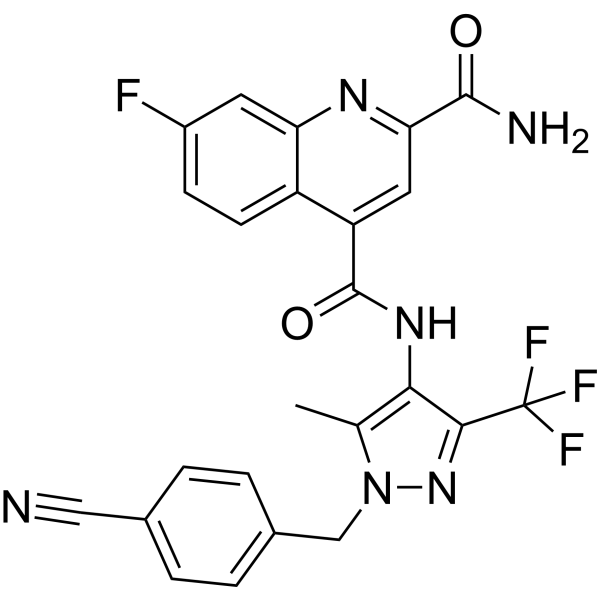
NA-014EAAT2 Positive Allosteric Modulator -
HY-100017
BAY-876GLUT1 Inhibitor -
HY-114992
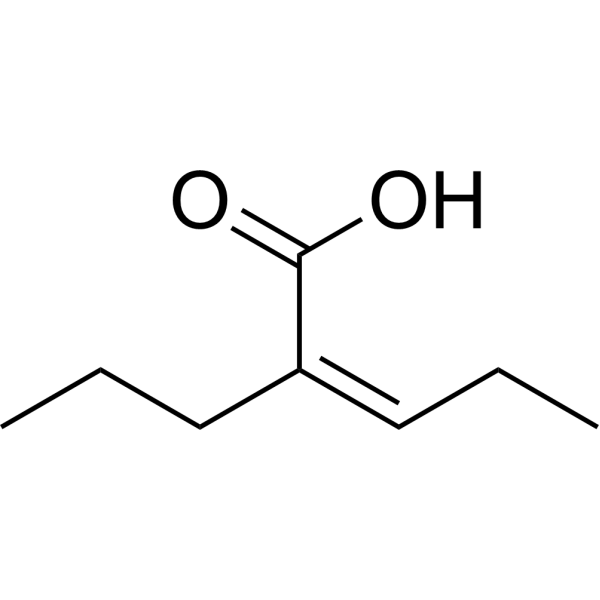
2-Propyl-2-pentenoic acidValproic Acid Metabolite -

HY-W419700
L-Glutamic acid ammoniumGlutamate Receptors Agonist -
HY-15377
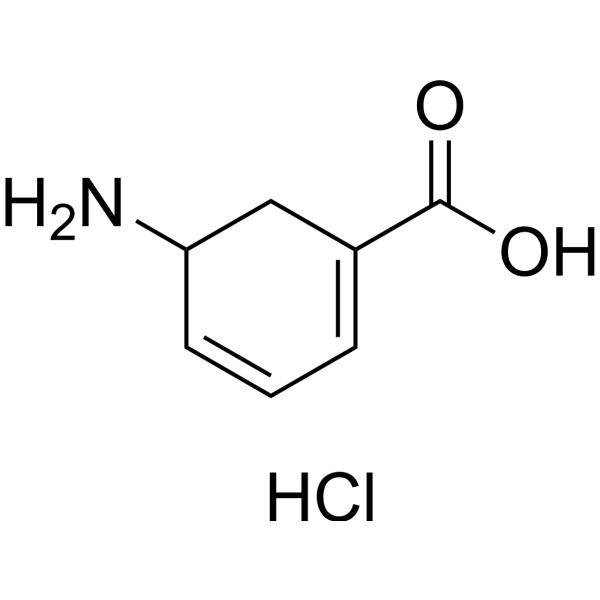
DL-Gabaculine hydrochlorideGABA Inhibitor -
HY-145963
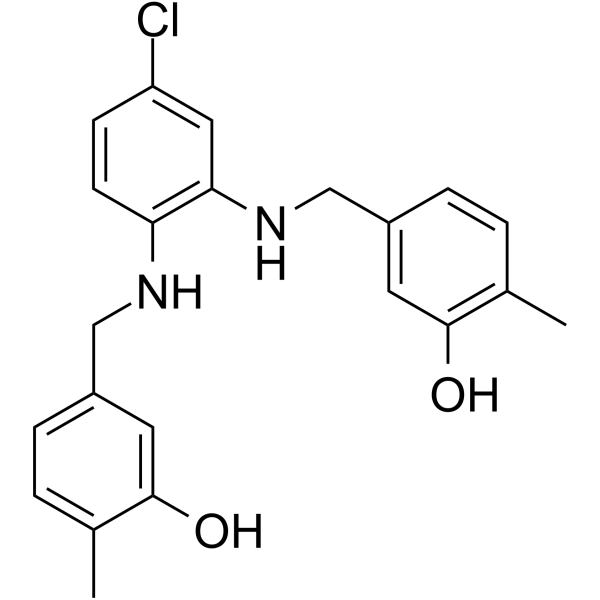
DRB18GLUT Inhibitor -
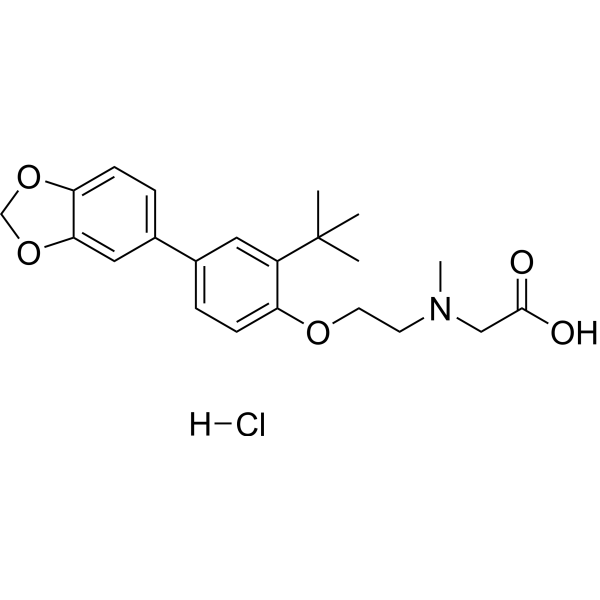
HY-100416A
LY2365109 hydrochlorideGlyT1 Inhibitor -

HY-100416AR
LY2365109 hydrochloride (Standard)GlyT1 Inhibitor -

HY-100017R
BAY-876 (Standard)GLUT1 Inhibitor


Biological Activity
Description
IC50 & Target
|
EAAT2 11 nM (EC50) |


Chemical Information
-
CAS No. 2506367-95-7
-
Appearance Solid
-
Molecular Weight 260.29
-
Formula C14H16N2O3
-
Color Off-white to light yellow
-
SMILES
O=C(NCC1=CC=CC=C1)[C@H](N2C(CCC2=O)=O)C
-
Shipping
Room temperature in continental US; may vary elsewhere.
-
Storage
Powder -20°C 3 years In solvent -80°C 6 months -20°C 1 month


Purity & Documentation
-
Data Sheet (270 KB)
-
SDS (394 KB)
- English - EN (394 KB)
- Français - FR (394 KB)
- Deutsch - DE (394 KB)
- Norwegian - NO (394 KB)
- Español - ES (394 KB)
- Swedish - SV (394 KB)
- Italian - IT (394 KB)
- Korean - KR (394 KB)
- Portuguese - PT (394 KB)
-
Handling Instructions (2659 KB)
References

Calculators
Concentration (start) × Volume (start) = Concentration (final) × Volume (final)


(R)-AS-1 Related Classifications
HY-168773 Related Classifications
 Powered by Bioz