



EAAT1
The excitatory amino acid transporter 1 (EAAT1, also known as GLAST or SLC1A3) is a high-affinity Na+-dependent glutamate transporter primarily expressed in astrocytes, where it regulates extracellular glutamate concentrations and prevents excitotoxic neuronal damage[1][2][3]. Mechanistically, EAAT1 mediates glutamate uptake by coupling the transport of glutamate with Na+ and K+ ions, enabling clearance against steep concentration gradients and maintaining synaptic homeostasis[3][4]. Compared with EAAT2, EAAT1 exhibits a more restricted spatial distribution, with higher expression in spinal cord laminae 1-3 and in cerebellar glial populations, and demonstrates a unique substrate- and Na+-independent leak conductance that distinguishes it from neuronal isoforms EAAT3-EAAT5[5][4]. In disease models, EAAT1 dysregulation is implicated in neurodegenerative disorders, psychiatric conditions, and platelet dysfunction, indicating its role in both central and peripheral glutamate handling[6][7][8]. Recent studies reveal that EAAT1 expression is crucial for the proliferation and survival of T-cell acute lymphoblastic leukemia (T-ALL), where it supports glutamine-derived aspartate synthesis and nucleotide production, highlighting its potential as a therapeutic target[9]. Pharmacological inhibition using selective antagonists, such as UCPH101, demonstrates EAAT1’s dominant role in glutamate clearance at glial synapses, in contrast to other EAAT subtypes which show secondary or context-dependent activity[10].
Références:
- [1]. Zhou Y, et al. GABA and Glutamate Transporters in Brain. Front Endocrinol (Lausanne). 2013;4:165. [Content Brief]
- [2]. Parkin GM, et al. Glutamate transporters, EAAT1 and EAAT2, are potentially important in the pathophysiology and treatment of schizophrenia and affective disorders. World J Psychiatry. 2018 Jun 28;8(2):51-63. [Content Brief]
- [3]. Rauen T, et al. Structural and functional dynamics of Excitatory Amino Acid Transporters (EAAT). AIMS Molecular Science. 2014;1(3):99-125.
- [4]. Divito CB, et al. Glial and Neuronal Glutamate Transporters Differ in the Na+ Requirements for Activation of the Substrate-Independent Anion Conductance. Front Mol Neurosci. 2017 May 29;10:150. [Content Brief]
- [5]. Hu QX, et al. Semi-quantitative distribution of excitatory amino acid (glutamate) transporters 1-3 (EAAT1-3) and the cystine-glutamate exchanger (xCT) in the adult murine spinal cord. Neurochem Int. 2020 Nov;140:104811. [Content Brief]
- [6]. Zoia C, et al. Glutamate transporters in platelets: EAAT1 decrease in aging and in Alzheimer's disease. Neurobiol Aging. 2004 Feb;25(2):149-57. [Content Brief]
- [7]. Karki P, et al. Genetic dys-regulation of astrocytic glutamate transporter EAAT2 and its implications in neurological disorders and manganese toxicity. Neurochem Res. 2015 Feb;40(2):380-8. [Content Brief]
- [8]. Bauer D, et al. Abnormal glycosylation of EAAT1 and EAAT2 in prefrontal cortex of elderly patients with schizophrenia. Schizophr Res. 2010 Mar;117(1):92-8. [Content Brief]
- [9]. Stanulović VS, et al. The glutamate/aspartate transporter EAAT1 is crucial for T-cell acute lymphoblastic leukemia proliferation and survival. Haematologica. 2024 Nov 1;109(11):3505-3519. [Content Brief]
- [10]. Tse DY, et al. Pharmacological inhibitions of glutamate transporters EAAT1 and EAAT2 compromise glutamate transport in photoreceptor to ON-bipolar cell synapses. Vision Res. 2014 Oct;103:49-62. [Content Brief]
All Product Categories
-
EAAT1 Produits associés (11)
Produits associés (11)

- 1
-
DL-TBOA
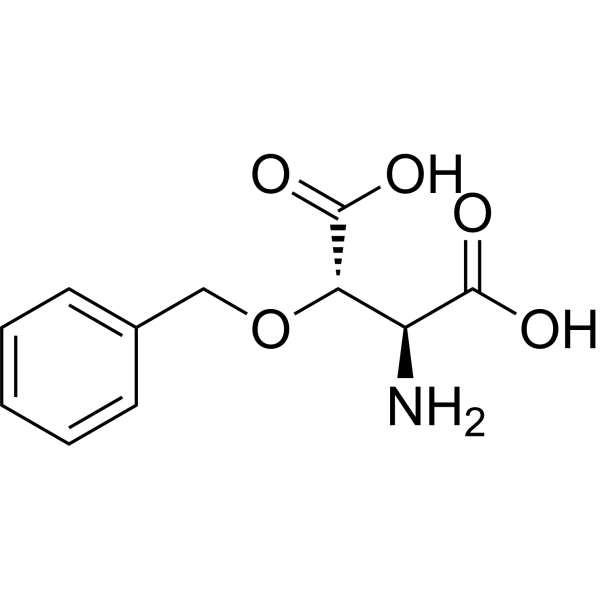 0 ImagesDL-TBOA is a potent non-transportable inhibitor of excitatory amino acid transporters with IC50s of 70 μM, 6 μM and 6 μM for excitatory amino acid transporter-1 (EAAT1), EAAT2 and EAAT3, respectively. DL-TBOA inhibits the uptake of [14C]glutamate in COS-1 cells expressing the human EAAT1 and EAAT2 with Ki valuesof 42 μM and 5.7 μM, respectively. DL-TBOA blocks EAAT4 and EAAT5 in a competitive manner with Ki values of 4.4 μM and 3.2 μM, respectively.
-
UCPH-101
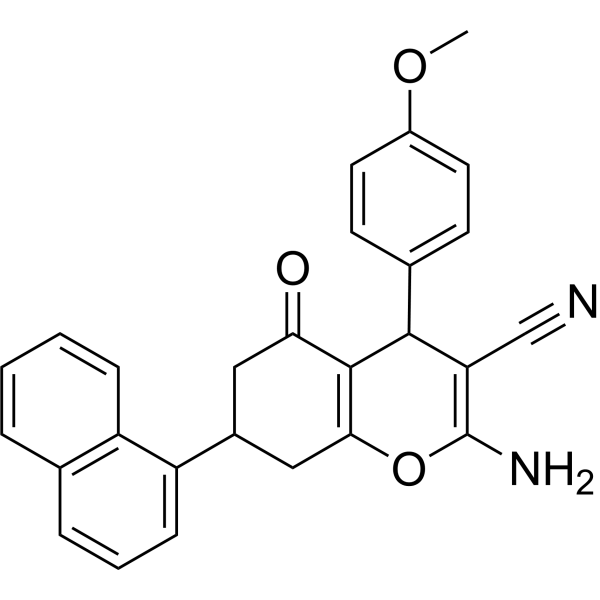 0 ImagesUCPH-101 is an excitatory amino acid transporter subtype 1 (EAAT1) inhibitor with an IC50 of 0.66 μM.
-
TFB-TBOA
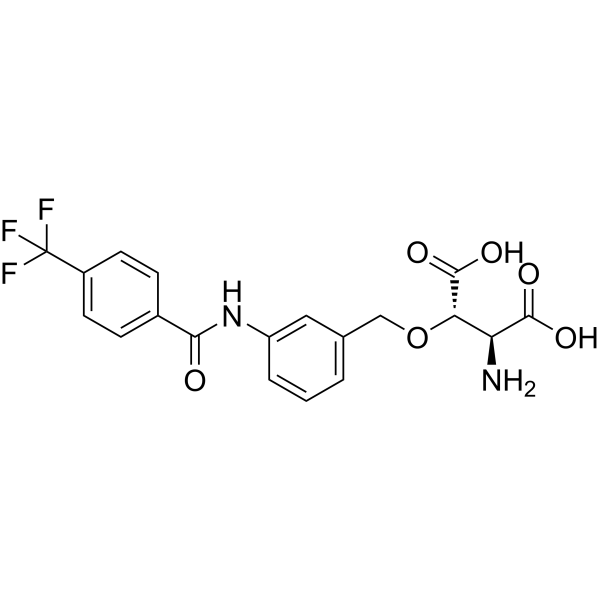 0 ImagesSynonyms: CF3-Bza-TBOATFB-TBOA (CF3-Bza-TBOA) is a potent glutamate transporter blocker that potently suppresses the activity of glial transporters. TFB-TBOA shows IC50 values of 22, 17, and 300 nM for glutamate transporters EAAT1, EAAT2, and EAAT3 respectively in an uptake assay using cells transiently expressing EAATs.
-
UCPH-102
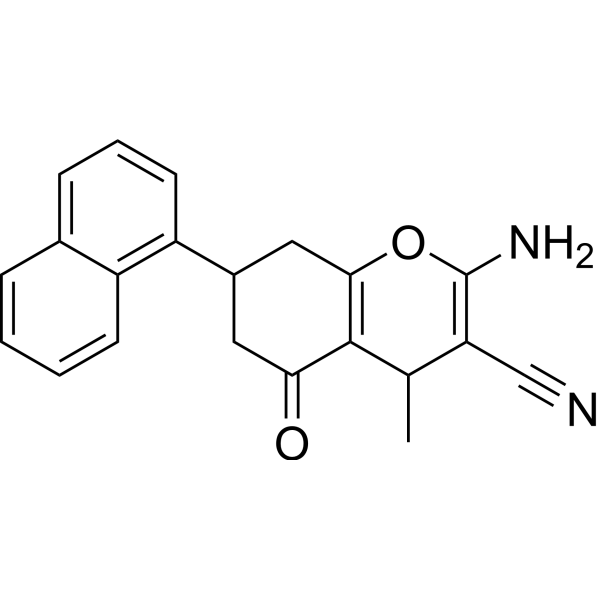 0 ImagesUCPH-102 is a highly selective EAAT1 inhibitor with an IC50 of 0.43 µM. UCPH-102 exhibits a specific anti-proliferative effect on T-ALL cells. UCPH-102 also shows good blood-brain permeability, which can be used in studies of amyotrophic lateral sclerosis, Alzheimer’s disease, chronic pain and obsessive compulsive disorder.
-
SYM 2081
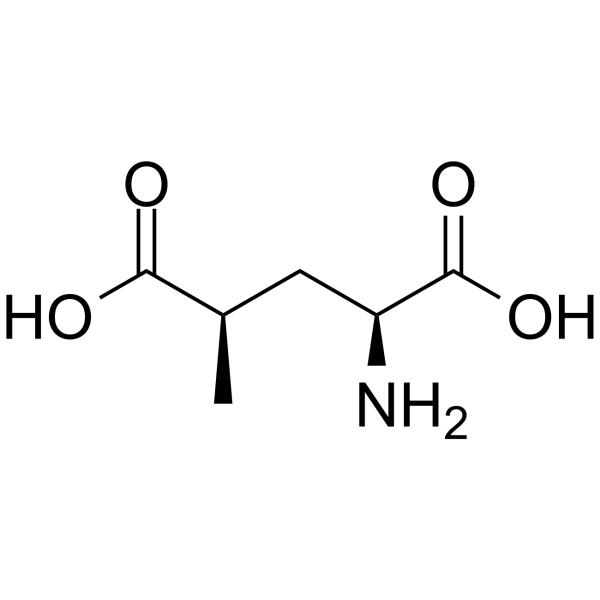 0 ImagesSYM 2081 is a kainate receptor agonist. SYM 2081 is a substrate of EAAT1 (Km of 54 μM). SYM 2081 inhibits EAAT2-mediated glutamate transport (Kb is 3.4 μM in Xenopus oocytes), modulates Apoptotic signaling pathways (increases Bcl-2 and decreases Bax/caspase-3 expression). SYM 2081 exhibits neuroprotective activity. SYM 2081 can be used in the study of hypoxic-ischemic brain damage and inflammatory or neuropathic pain.
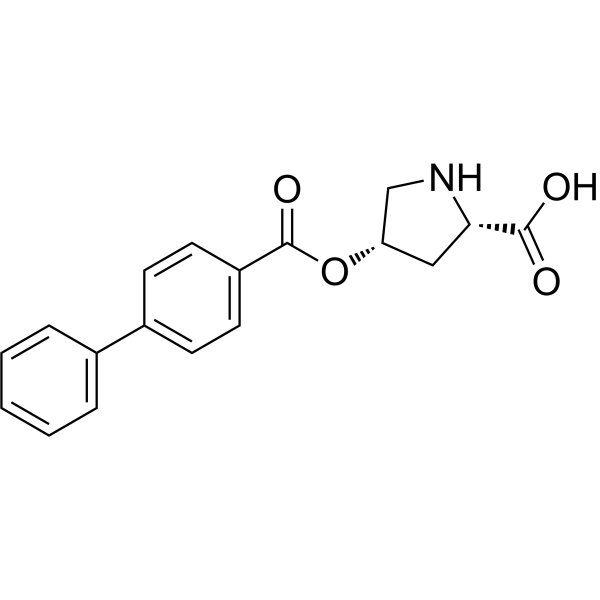
-
SLC1A1/EAAT3-IN-1
 0 ImagesSLC1A1/EAAT3-IN-1 (Compound 3e) is a selective EAAT3 inhibitor with an IC50 of 7.2 μM for hEAAT3 over EAAT1,2,4 (IC50: ∼ 250 μM). SLC1A1/EAAT3-IN-1 can be used for psychiatric disorders such as obsessive compulsive disorder and schizophrenia research.
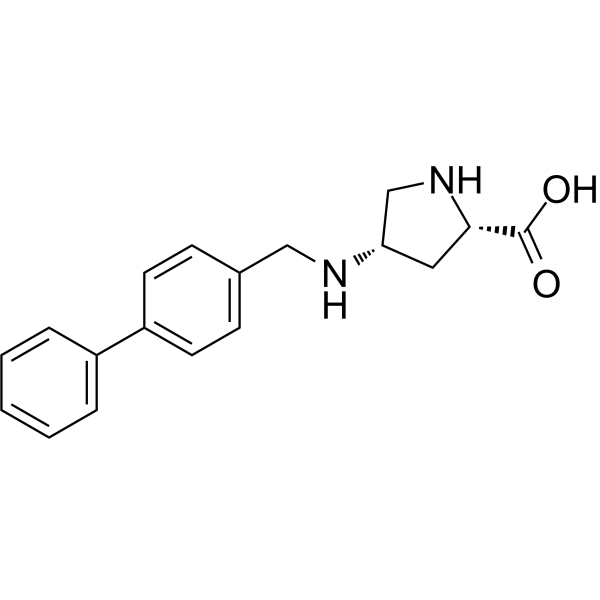
-
Parawixin10
 0 ImagesCat. No.: HY-182941Parawixin10 (Compound 2) is an N-acylpolyamine. Parawixin10 fails to enhance glutamate uptake in radioligand uptake assays of EAAT1, EAAT2 or EAAT3. Parawixin10 exhibits no positive allosteric modulatory activity in radioligand uptake assays of EAAT1−EAAT3, nor can it improve neuronal survival rates in mice in a dose-dependent and statistically significant manner. Parawixin10 has no neuroprotective activity.
-
DL-TBOA ammonium
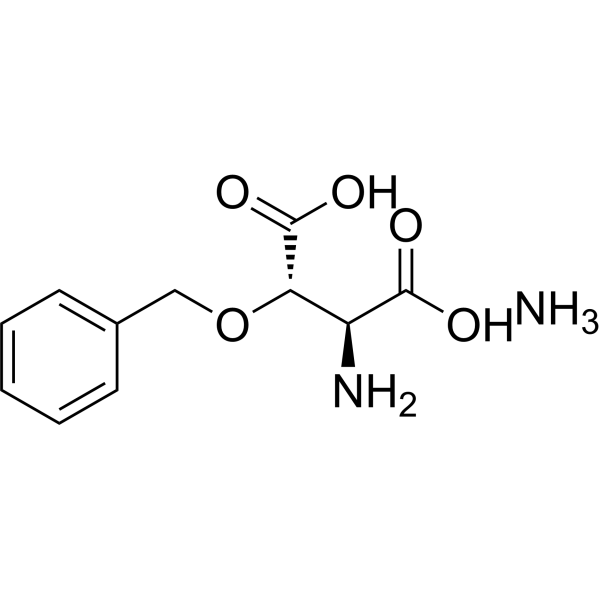 0 ImagesCat. No.: HY-107522BCAS No.: 2093503-71-8DL-TBOA ammonium is a potent non-transportable inhibitor of excitatory amino acid transporters with IC50s of 70 μM, 6 μM and 6 μM for excitatory amino acid transporter-1 (EAAT1), EAAT2 and EAAT3, respectively. DL-TBOA ammonium inhibits the uptake of [14C]glutamate in COS-1 cells expressing the human EAAT1 and EAAT2 with Ki valuesof 42 μM and 5.7 μM, respectively. DL-TBOA ammonium blocks EAAT4 and EAAT5 in a competitive manner with Ki values of 4.4 μM and 3.2 μM, respectively.
-
cis-α-(Carboxycyclopropyl)glycine
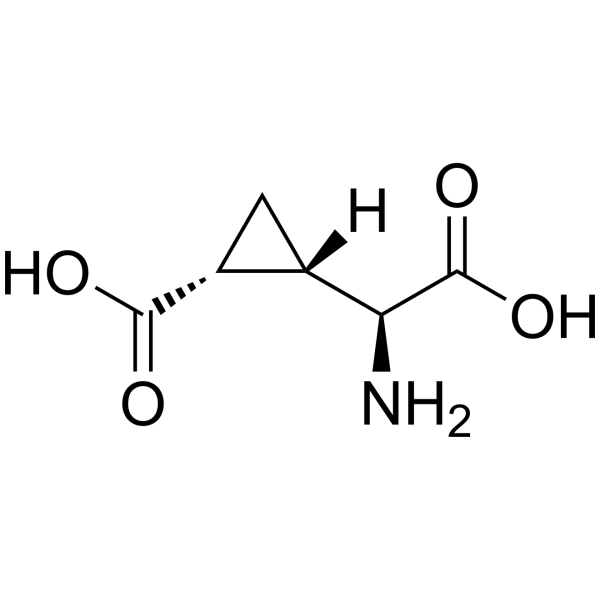 0 ImagesCat. No.: HY-100838CAS No.: 117857-95-1Synonyms: L-CCG IIIcis-α-(Carboxycyclopropyl)glycine (L-CCG III) is a potent, competitive glutamate uptake inhibitor. cis-α-(Carboxycyclopropyl)glycine is a substrate of glutamate transporters (GluT) (EC50: 13 μM, 2 μM for EAAT 1 and EAAT 2, respectively). cis-α-(Carboxycyclopropyl)glycine inhibits a Na+-dependent high-affinity L-glutamate uptake in glial plasmalemmal vesicles (GPV) and synaptosomes.
- 1



