



ASCT2
ASCT2 (SLC1A5) is a sodium-dependent neutral amino acid transporter that primarily mediates glutamine exchange across the plasma membrane and maintains intracellular amino acid homeostasis through an antiport mechanism[1]. ASCT2 supports glutamine-dependent metabolic programs that regulate anabolic growth, amino acid balance, and signaling pathways linked to cellular proliferation[1][2]. Mechanistically, glutamine transported through ASCT2 contributes to tricarboxylic acid cycle fueling and provides substrates required for nucleotide, lipid, and non-essential amino acid biosynthesis, thereby supporting metabolic reprogramming in rapidly proliferating cells and tumors[1][3]. Increased ASCT2 expression is frequently observed in highly proliferative tissues and multiple cancers, where glutamine demand is elevated and transporter activity contributes to tumor growth and survival[1][2][4]. In experimental cancer models, genetic deletion or inhibition of ASCT2 reduces amino acid uptake and suppresses tumor growth, supporting its value as a functional target for studying glutamine-dependent metabolism[2][4]. Compared with the closely related isoform ASCT1 (SLC1A4), ASCT2 displays distinct substrate preferences and functions predominantly as a high-affinity glutamine transporter, highlighting its specialized role in cancer-associated nutrient utilization[1]. A mitochondrial SLC1A5 variant further expands ASCT2-related biology by transporting glutamine into mitochondria, where it promotes ATP production, glutathione synthesis, hypoxia adaptation, and metabolic reprogramming in cancer cells[5]. For experimental applications, pharmacological inhibitors such as GPNA and V-9302 are widely used to interrogate ASCT2-dependent glutamine transport, although inhibitor selectivity and off-target effects require careful interpretation of mechanistic studies[6][7].
References:
- [1]. Scalise M, et al. The Human SLC1A5 (ASCT2) Amino Acid Transporter: From Function to Structure and Role in Cell Biology. Front Cell Dev Biol. 2018 Sep 4;6:96. [Content Brief]
- [2]. Bröer A, et al. Deletion of Amino Acid Transporter ASCT2 (SLC1A5) Reveals an Essential Role for Transporters SNAT1 (SLC38A1) and SNAT2 (SLC38A2) to Sustain Glutaminolysis in Cancer Cells. J Biol Chem. 2016 Jun 17;291(25):13194-205. [Content Brief]
- [3]. Afzal R, et al. Persimmon Leaves (Diospyros kaki) Extract Enhances the Viability of Human Corneal Endothelial Cells by Improving Na+-K+-ATPase Activity. Pharmaceuticals (Basel). 2022 Jan 6;15(1):72. [Content Brief]
- [4]. Cormerais Y, et al. The glutamine transporter ASCT2 (SLC1A5) promotes tumor growth independently of the amino acid transporter LAT1 (SLC7A5). J Biol Chem. 2018 Feb 23;293(8):2877-2887. [Content Brief]
- [5]. Yoo HC, et al. A Variant of SLC1A5 Is a Mitochondrial Glutamine Transporter for Metabolic Reprogramming in Cancer Cells. Cell Metab. 2020 Feb 4;31(2):267-283.e12. [Content Brief]
- [6]. Freidman NJ, et al. Characterizing unexpected interactions of a glutamine transporter inhibitor with members of the SLC1A transporter family. J Biol Chem. 2022 Aug;298(8):102178. [Content Brief]
- [7]. Sung Y, et al. Targeting cancer glutamine dependency with a first-in-class inhibitor of the mitochondrial glutamine transporter SLC1A5_var. Nat Commun. 2025 Nov 3;16(1):9690. [Content Brief]
All Product Categories
-
ASCT2 관련 제품 (8)
관련 제품 (8)

-
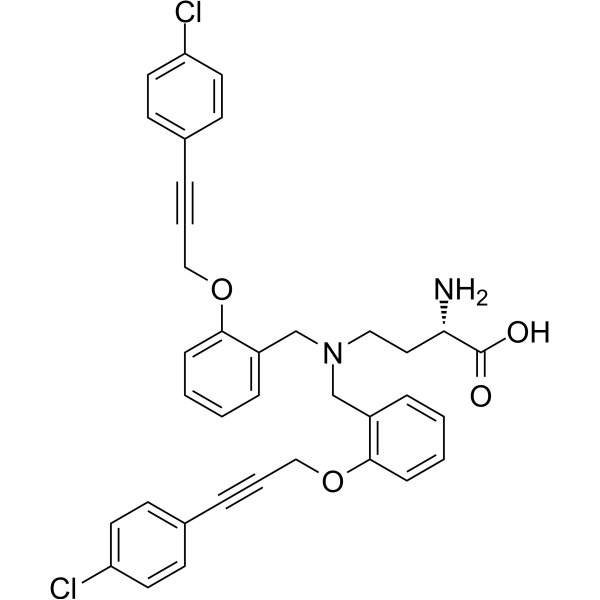
V-9302
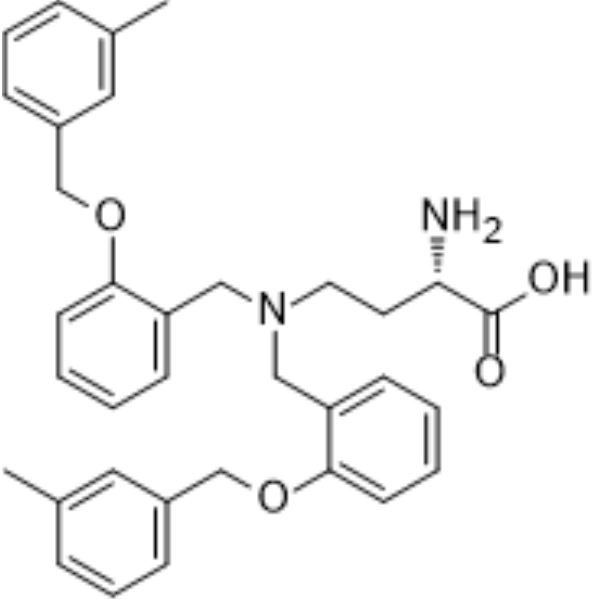 0 ImagesV-9302 is a competitive antagonist of transmembrane glutamine flux. V-9302 selectively and potently targets the amino acid transporter ASCT2 (SLC1A5) not ASCT1. V-9302 inhibits ASCT2-mediated glutamine uptake (IC50=9.6 μM) in HEK-293 cells.
-
V-9302 hydrochloride
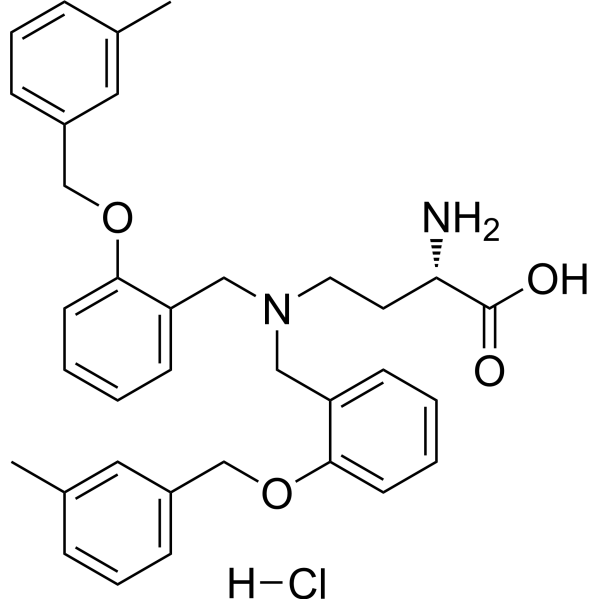 0 ImagesV-9302 hydrochloride is a competitive antagonist of transmembrane glutamine flux. V-9302 hydrochloride selectively and potently targets the amino acid transporter ASCT2 (SLC1A5) not ASCT1. V-9302 hydrochloride inhibits ASCT2-mediated glutamine uptake (IC50=9.6 µM) in HEK-293 cells.
-
GPNA hydrochloride
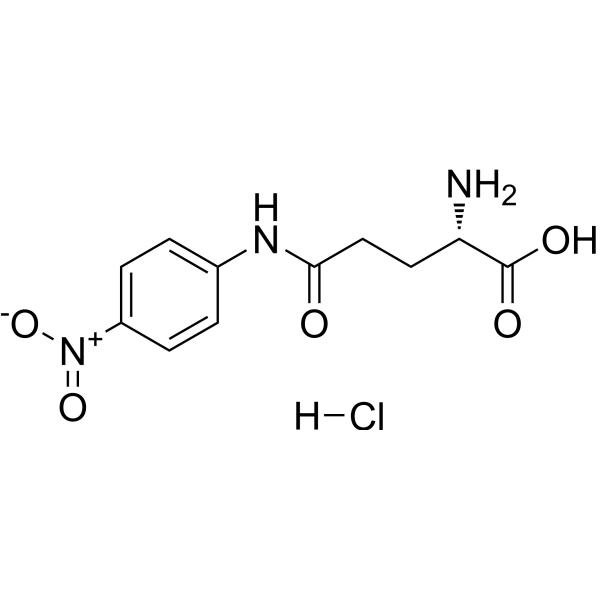 0 ImagesGPNA hydrochloride is a well known substrate of the enzyme γ-glutamyltransferase (GGT). GPNA hydrochloride is a specific glutamine (Gln) transporter ASCT2 inhibitor. GPNA hydrochloride also inhibit Na+-dependent carriers, such as SNAT family (SNAT1/2/4/5), and the Na+-independent leucine transporters LAT1/2. GPNA reversibly induces apoptosis in A549 cells.
-
S-Benzyl-DL-cysteine-2,3,3-d3
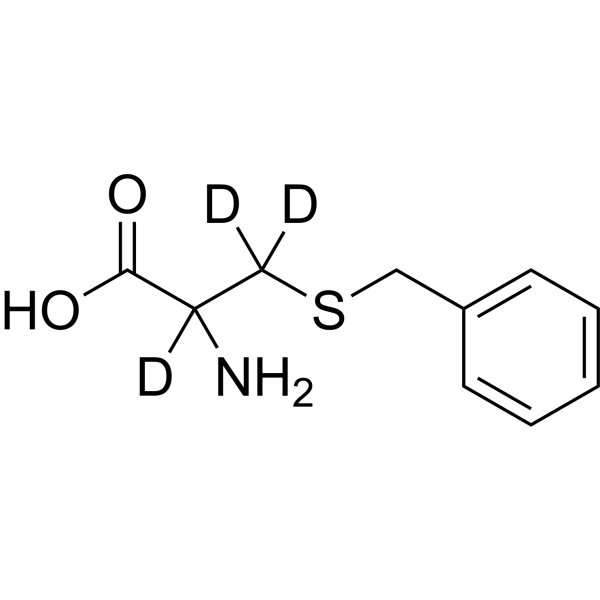 0 ImagesCat. No.: HY-144354SCAS No.: 51494-04-3S-Benzyl-DL-cysteine-2,3,3-d3 is a deuterium labeled Benzylcysteine. Benzylcysteine is an ASCT2 inhibitor that binds to ASCT2 with an apparent Ki of 780 μM. Benzylcysteine inhibit ASCT2 function based on a competitive mechanism, indicating that Benzylcysteine binds to the substrate-binding site of ASCT2.
-
Fluciclovine
 0 ImagesCat. No.: HY-14889CAS No.: 222727-43-7Fluciclovine is an amino acid analogue that can enter cells by targeting the amino acid transporters on the cell surface (mainly ASCT2 and LAT1). After being labeled with ¹⁸F, ¹⁸F-fluciclovine can be used as an imaging agent for positron emission tomography (PET) for prostate diagnosis imaging.



