



V-9302 hydrochloride
Based on 36 publication(s) in Google Scholar
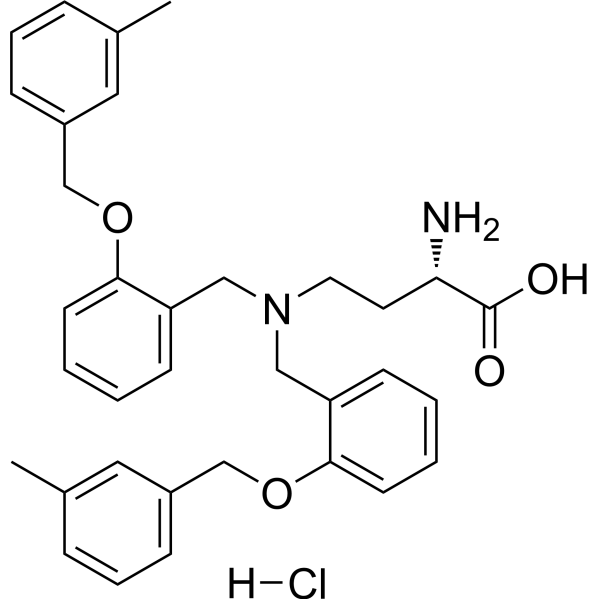
V-9302 hydrochloride is a competitive antagonist of transmembrane glutamine flux. V-9302 hydrochloride selectively and potently targets the amino acid transporter ASCT2 (SLC1A5) not ASCT1. V-9302 hydrochloride inhibits ASCT2-mediated glutamine uptake (IC50=9.6 µM) in HEK-293 cells.
For research use only. We do not sell to patients.
- Purity : 99.10%
- CAS No.: 2416138-42-4
- Formula: C34H39ClN2O4
- Molecular Weight:575.14
-
Storage:
4°C, sealed storage, away from moisture
* In solvent : -80°C, 6 months; -20°C, 1 month (sealed storage, away from moisture)

To place orders, for customer services and technical support, please contact: MedChemExpress USA
Tel: 609-228-6898 E-mail: [email protected] [email protected]


-
 Biological Activity
-
Chemical Information
-
Solvent & Solubility
- Purity & Documentation
- References
-
 Help & FAQs


-
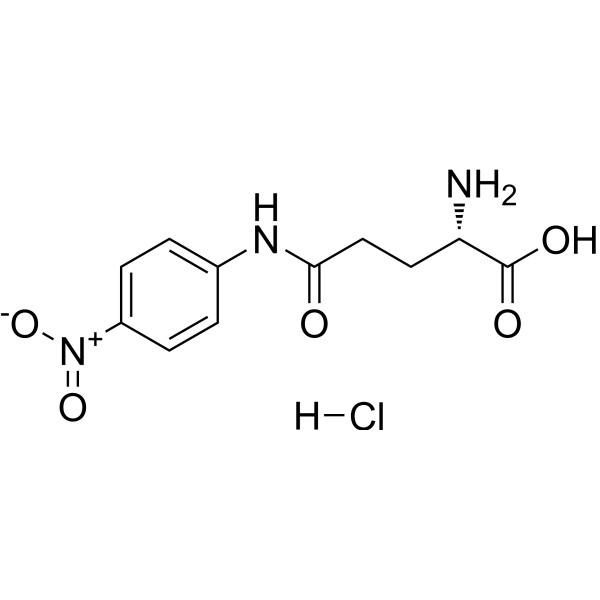
HY-W011391
GPNA hydrochlorideASCT2 Inhibitor -
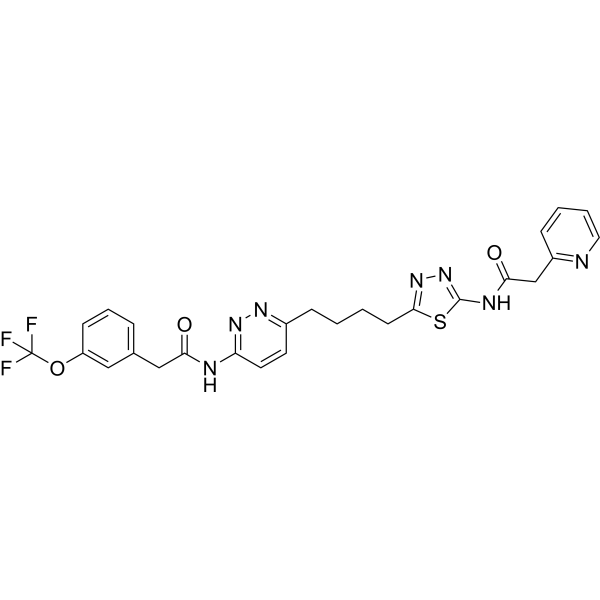
HY-12248
TelaglenastatGLS1 Inhibitor -
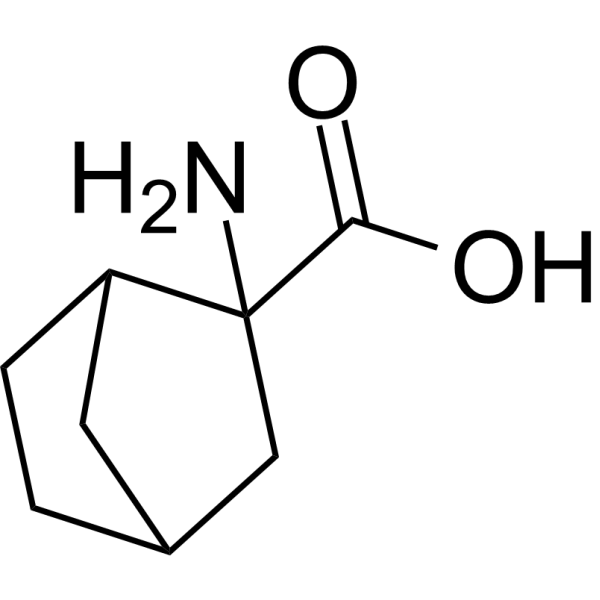
HY-108540
BCHLAT1 Inhibitor -
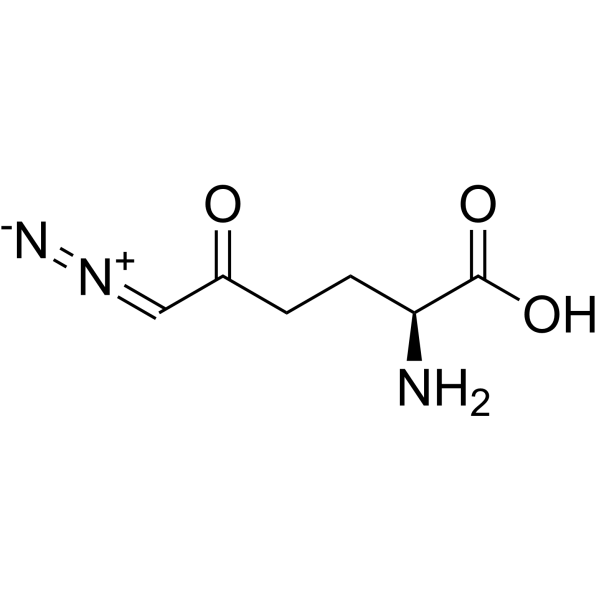
HY-108357
6-Diazo-5-oxo-L-nor-LeucineGlutaminases Antagonist -
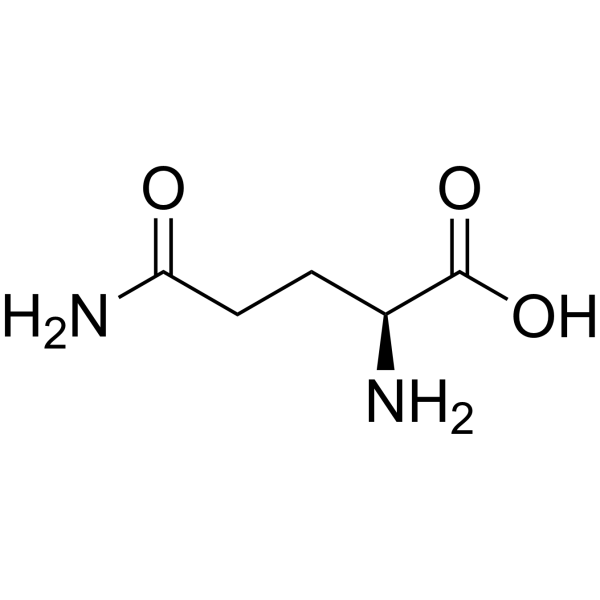
HY-N0390
L-GlutamineEndogenous Metabolite -
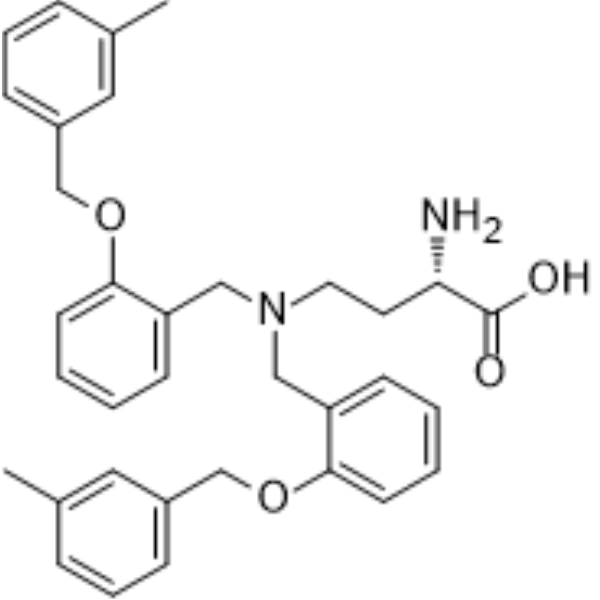
HY-112683
V-9302ASCT2 Antagonist -
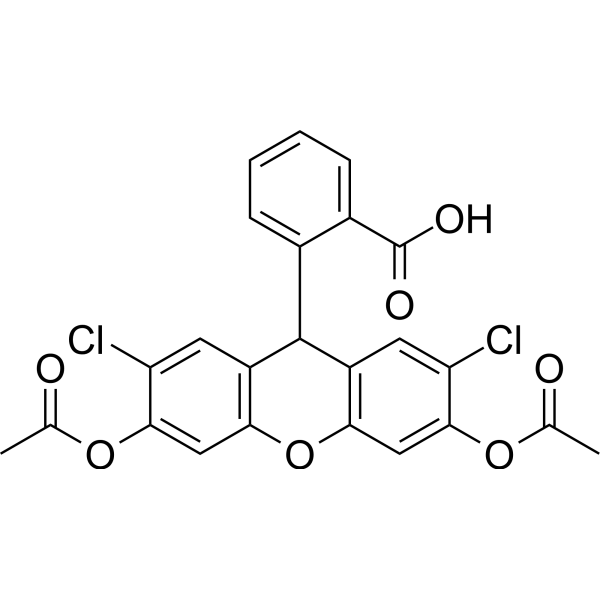
HY-D0940
H2DCFDAROS-Sensitive Probe -
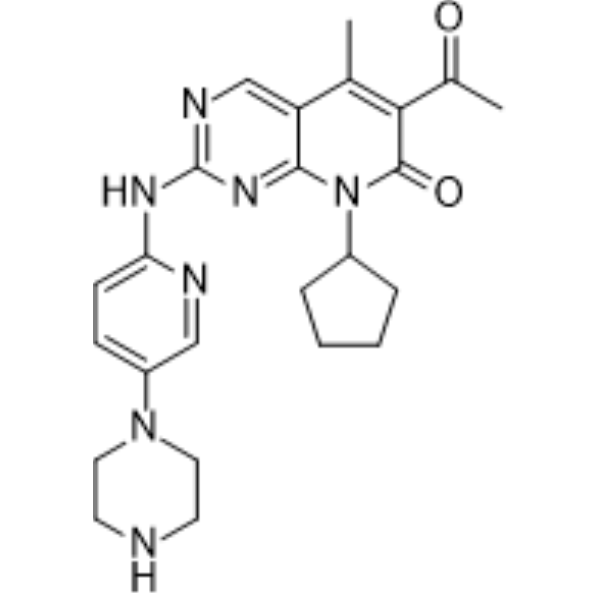
HY-50767
PalbociclibCDK4/6 Inhibitor -
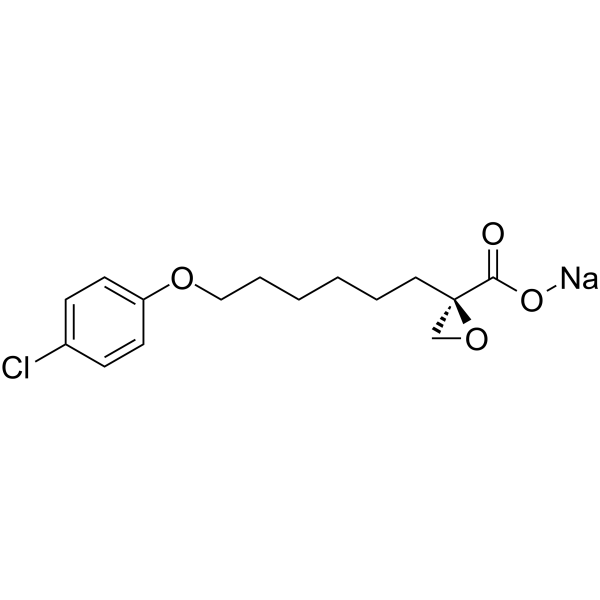
HY-50202A
Etomoxir sodium saltCPT1 Inhibitor -
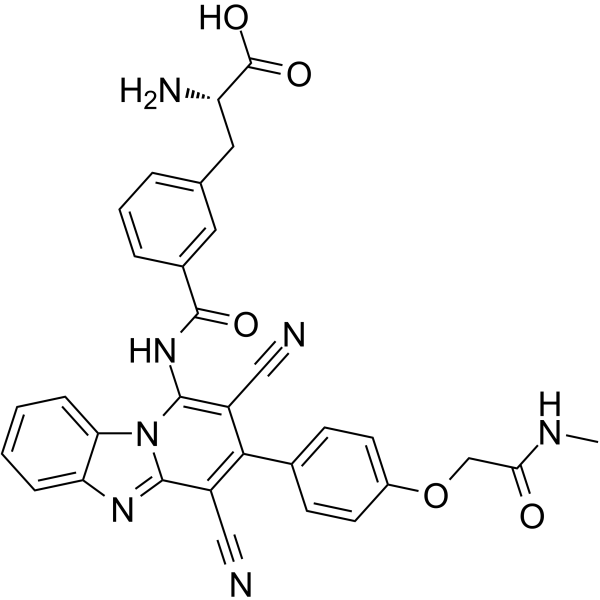
HY-120139
KMH-233LAT1 Inhibitor -
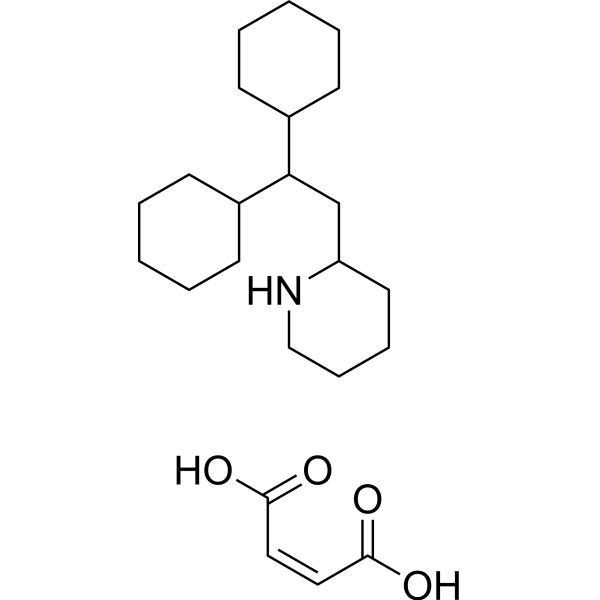
HY-B1334A
Perhexiline maleateCPT1/CPT2 Inhibitor
Publications Citing Use of MedChemExpress (MCE) V-9302 hydrochloride
More- Nature. 2026 Apr;652(8112):1339-1348. [Abstract]
- Cell. 2024 Oct 31;187(22):6251-6271.e20. [Abstract]
- Cell Metab. 2022 Dec 6;34(12):1999-2017.e10. [Abstract]
- Nat Immunol. 2024 Oct;25(10):1845-1857. [Abstract]
- Autophagy. 2025 Jul 23:1-16. [Abstract]
- Cell Discov. 2026 Feb 24;12(1):13. [Abstract]
- Mol Cell. 2026 Jan 8;86(1):150-165.e9. [Abstract]
- J Nanobiotechnology. 2022 May 6;20(1):216. [Abstract]
- Adv Sci (Weinh). 2025 Aug 10:e07057. [Abstract]
- Adv Sci (Weinh). 2025 Feb;12(6):e2411479. [Abstract]
- Biomaterials. 2025 Sep 17:326:123726. [Abstract]
- J Control Release. 2023 May:357:460-471. [Abstract]
- Cell Death Dis. 2024 Feb 5;15(2):111. [Abstract]
- Nano Today. 2025 Apr.
- Proc Natl Acad Sci U S A. 2024 Mar 26;121(13):e2319429121. [Abstract]
- Int J Biol Macromol. 2026 Jan:336:149419. [Abstract]
- Pharmaceutics. 2024 Jun 29;16(7):877. [Abstract]
- Biochem Pharmacol. 2025 Sep:239:117047. [Abstract]
- Biochem Pharmacol. 2025 Mar:233:116796. [Abstract]
- J Gastroenterol. 2025 Oct 8. [Abstract]
- Front Pharmacol. 2021 May 14:12:671328. [Abstract]
- Cancers (Basel). 2026 Mar 25;18(7):1068. [Abstract]
- Biomedicines. 2026 Mar 14;14(3):667. [Abstract]
- FASEB J. 2025 Jul 15;39(13):e70774. [Abstract]
- Infect Med (Beijing). 2026 Jul 31;5(3):100274.
- J Virol. 2025 Nov 25;99(11):e0098525. [Abstract]
- J Biol Chem. 2022 Apr;298(4):101753. [Abstract]
- Magn Reson Imaging. 2022 Nov:93:189-194. [Abstract]
- bioRxiv. 2026 Mar 5.
- bioRxiv. 2025 Dec 31:2024.12.15.628558.
- Npj Imaging. 2025 Aug 1;3(1):34. [Abstract]
- bioRxiv. 2025 Jul 31:2025.07.28.667320. [Abstract]
- University of Regensburg. 2024 Jul 18.
- bioRxiv. 2024 July 05.
- University of Maryland. 2024.
- Research Square Print. 2023 Jan 31.
 Customer Validation & Images

-
Cell Imaging/Staining
-
In Vivo Efficacy Study
-
Others
-
IHC
-
Bio/Physico-chemical Assay


Biological Activity
Description
IC50 & Target
|
ASCT2 |
In Vitro
V-9302 hydrochloride inhibits ASCT2-mediated glutamine uptake in human cells in a concentration-dependent fashion and exhibits a 100-fold improvement in potency over gamma-L-glutamyl-p-nitroanilide[1].
Pharmacological blockade of ASCT2 with V-9302 hydrochloride results in attenuated cancer cell growth and proliferation, increases cell death, and increases oxidative stress[1].
MedChemExpress (MCE) has not independently confirmed the accuracy of these methods. They are for reference only.
In Vivo
The combination of CB-839 and V-9302 (30 mg/kg; i.p.; SNU398 and MHCC97H cells were grown as tumor xenografts in BALB/c nude mice; for 20 or 15 d, respectively) elicits a strong growth inhibition in both SNU398 and MHCC97H xenograft models, while single-drug treatment showed modest anti-tumor effects[2].
V-9302 (50 mg/kg ; i.p.; daily for 5 days) displays markedly reduced tumor growth[3].
MedChemExpress (MCE) has not independently confirmed the accuracy of these methods. They are for reference only.
-
Animal Model:6-week old, female athymic nude mice (bearing HCT-116 (KRASG13D) or HT29 (BRAFV600E) cell-line )[1]
-
Dosage:75 mg/kg
-
Administration:Intraperitoneally; daily fo 21 days
-
Result:Prevented tumor growth.


Chemical Information
-
CAS No. 2416138-42-4
-
Appearance Solid
-
Molecular Weight 575.14
-
Formula C34H39ClN2O4
-
Color White to off-white
-
SMILES
O=C(O)[C@@H](N)CCN(CC1=CC=CC=C1OCC2=CC=CC(C)=C2)CC3=CC=CC=C3OCC4=CC=CC(C)=C4.[H]Cl
-
Shipping
Room temperature in continental US; may vary elsewhere.
-
Storage
4°C, sealed storage, away from moisture
* In solvent : -80°C, 6 months; -20°C, 1 month (sealed storage, away from moisture)


Publications (36)
-
Journal Impact Factor
-
Most Recent
-
Nature
2026 Apr;652(8112):1339-1348. PMID: 41813904 -
Cell
A two-front nutrient supply environment fuels small intestinal physiology through differential regulation of nutrient absorption and host defense. [Abstract]2024 Oct 31;187(22):6251-6271.e20. PMID: 39427662 -
Cell Metab
Cancer cells co-opt nociceptive nerves to thrive in nutrient-poor environments and upon nutrient-starvation therapies. [Abstract]2022 Dec 6;34(12):1999-2017.e10. PMID: 36395769 -
Nat Immunol
2024 Oct;25(10):1845-1857. PMID: 39198631 -
Autophagy
PSAT1 inhibits mTORC1 activation by preventing Rag heterodimer formation in lung adenocarcinoma. [Abstract]2025 Jul 23:1-16. PMID: 40702660 -
Cell Discov
ASCT2 palmitoylation regulated by JNK1-ZDHHC14 axis orchestrates glutamine metabolism and NSCLC progression. [Abstract]2026 Feb 24;12(1):13. PMID: 41730846 -
Mol Cell
Mitochondrial glutamine import sustains electron transport chain integrity independently of glutaminolysis in cancer. [Abstract]2026 Jan 8;86(1):150-165.e9. PMID: 41435838 -
J Nanobiotechnology
Simultaneous glutamine metabolism and PD-L1 inhibition to enhance suppression of triple-negative breast cancer. [Abstract]2022 May 6;20(1):216. PMID: 35524267 -
Adv Sci (Weinh)
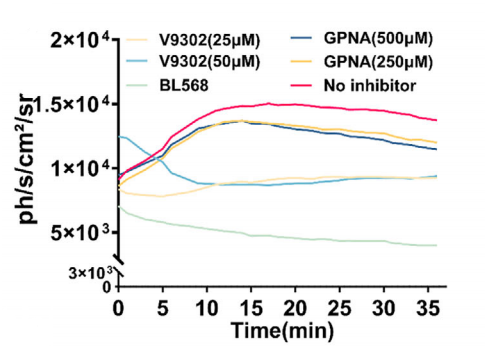
Real-Time Tracking of ASCT2-Mediated Glutamine Uptake in Living Tumors With a Bioorthogonal Bioluminescent Probe. [Abstract]2025 Aug 10:e07057. PMID: 40783801
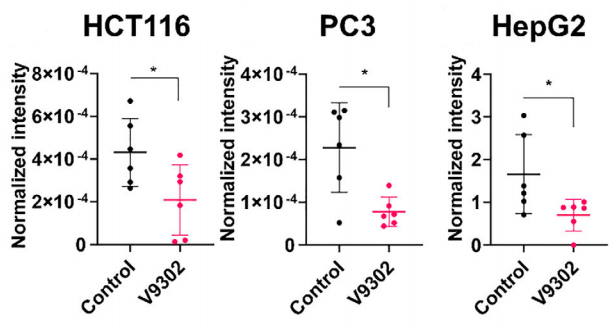
V-9302 hydrochloride purchased from MedChemExpress. Usage Cited in: Adv Sci (Weinh). 2025 Aug 10:e07057. [Abstract]
V-9302 (50 μM, 35 min) suppressed the bioluminescent intensity of HCT116‐luc cells.
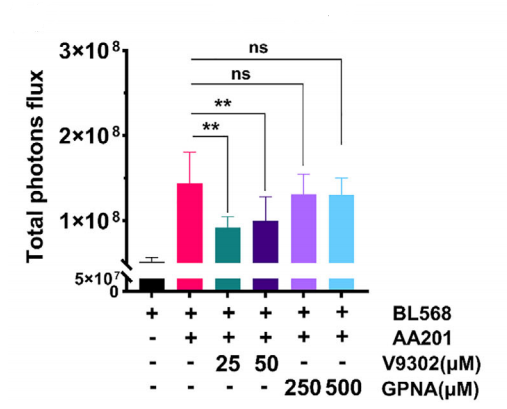
V-9302 hydrochloride purchased from MedChemExpress. Usage Cited in: Adv Sci (Weinh). 2025 Aug 10:e07057. [Abstract]
V-9302 (25 or 50 μM, 35 min) lowered the total photon flux induced by BL568 or AA201 in HCT116‐luc cells.
V-9302 hydrochloride purchased from MedChemExpress. Usage Cited in: Adv Sci (Weinh). 2025 Aug 10:e07057. [Abstract]
V-9302 (25 μM, 70 min) reduced intracellular AA201 levels in all three cell lines.
-
Adv Sci (Weinh)
Addressing Clinical Limitations of Glutaminase Inhibitors: Novel Strategies for Osimertinib-Resistant Lung Cancer by Exploiting Glutamine Metabolic Dependency. [Abstract]2025 Feb;12(6):e2411479. PMID: 39680480
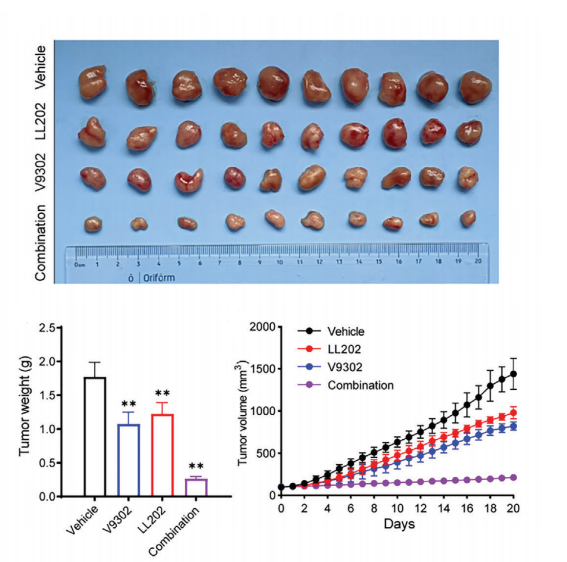
V-9302 hydrochloride purchased from MedChemExpress. Usage Cited in: Adv Sci (Weinh). 2025 Feb;12(6):e2411479. [Abstract]
V9302 (s.c., 30 mg kg⁻¹, 20 days) in combination with LL202 (s.c., 30 mg kg⁻¹, 20 days) inhibited tumor growth in the H1975OR xenograft model.
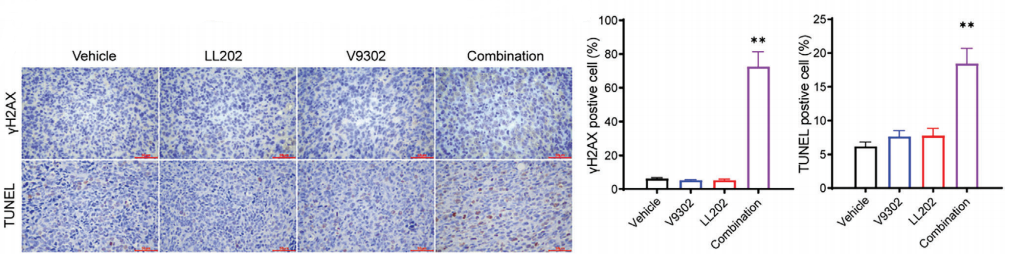
V-9302 hydrochloride purchased from MedChemExpress. Usage Cited in: Adv Sci (Weinh). 2025 Feb;12(6):e2411479. [Abstract]
V9302 (s.c., 30 mg kg⁻¹, 20 days) in combination with LL202 (s.c., 30 mg kg⁻¹, 20 days) increased γH2AX expression level and the number of TUNEL‑positive cells in the H1975OR xenograft model.
-
Biomaterials
Targeting ROS-metabolism dual pathways to trigger PANoptosis by cobalt-vanadium oxides biomimetic nanocakes for tumor immunotherapy. [Abstract]2025 Sep 17:326:123726. PMID: 40987137 -
J Control Release
Targeting glutamine metabolism with photodynamic immunotherapy for metastatic tumor eradication. [Abstract]2023 May:357:460-471. PMID: 37068523 -
Cell Death Dis
IL-17 promotes osteoclast-induced bone loss by regulating glutamine-dependent energy metabolism. [Abstract]2024 Feb 5;15(2):111. PMID: 38316760 -
-
Proc Natl Acad Sci U S A
Activation of polyamine catabolism promotes glutamine metabolism and creates a targetable vulnerability in lung cancer. [Abstract]2024 Mar 26;121(13):e2319429121. PMID: 38513095 -
Int J Biol Macromol
Glutamine modified lipid nanoparticles loaded with GPX4 siRNA for cervical cancer targeting. [Abstract]2026 Jan:336:149419. PMID: 41338505 -
Pharmaceutics
Impact of V9302, a Competitive Antagonist of Transmembrane Glutamine Flux on Reversal of Resistance in Breast Cancer Cell Lines. [Abstract]2024 Jun 29;16(7):877. PMID: 39065573 -
Biochem Pharmacol
SLC1A5 mediates myocardial damage after myocardial infarction by triggering cardiomyocyte ferroptosis. [Abstract]2025 Sep:239:117047. PMID: 40490039 -
Biochem Pharmacol
Glutamine transporter inhibitor enhances the sensitivity of NSCLC to trametinib through GSDME-dependent pyroptosis. [Abstract]2025 Mar:233:116796. PMID: 39923858 -
J Gastroenterol
Inhibition of integrin α3 suppresses gastric cancer progression via STAT3-mediated regulation of SLC1A5-dependent glutamine uptake. [Abstract]2025 Oct 8. PMID: 41060436 -
Front Pharmacol
Restricting Glutamine Uptake Enhances NSCLC Sensitivity to Third-Generation EGFR-TKI Almonertinib. [Abstract]2021 May 14:12:671328. PMID: 34054543 -
Cancers (Basel)
SNAT1 (SLC38A1) Is Not the Main Glutamine Transporter in Melanoma, but Controls Metabolism via Glutamine-Dependent Activation of P62 (SQSTM1)/cMYC-Axis. [Abstract]2026 Mar 25;18(7):1068. PMID: 41976291 -
Biomedicines
Targeting the Glutamine Transporter SLC1A5 Enhances Sensitivity of Acute Myeloid Leukemia to MLN4924. [Abstract]2026 Mar 14;14(3):667. PMID: 41898313 -
FASEB J
Trained Immunity Induced by Oxidized Low-Density Lipoprotein Is Dependent on Glutaminolysis. [Abstract]2025 Jul 15;39(13):e70774. PMID: 40577101 -
-
J Virol
African swine fever virus hijacks host pyrimidine metabolism to promote viral replication. [Abstract]2025 Nov 25;99(11):e0098525. PMID: 41171159 -
J Biol Chem
Inhibitor of glutamine metabolism V9302 promotes ROS-induced autophagic degradation of B7H3 to enhance antitumor immunity. [Abstract]2022 Apr;298(4):101753. PMID: 35189139 -
Magn Reson Imaging
2022 Nov:93:189-194. PMID: 36029935 -
-
-
Npj Imaging
2025 Aug 1;3(1):34. PMID: 40750673 -
bioRxiv
Surface avidity of anionic polypeptide coatings target nanoparticles to cancer-associated amino acid transporters. [Abstract]2025 Jul 31:2025.07.28.667320. PMID: 40766676 -
-
-
-


Solvent & Solubility
In Vitro:
DMSO : 100 mg/mL (173.87 mM; ultrasonic and warming and heat to 60°C; Hygroscopic DMSO has a significant impact on the solubility of product, please use newly opened DMSO)
H2O : 50 mg/mL (86.94 mM; Need ultrasonic)
Please refer to the solubility information to select the appropriate solvent. Once prepared, please aliquot and store the solution to prevent product inactivation from repeated freeze-thaw cycles.
Storage method and period of stock solution: -80°C, 6 months; -20°C, 1 month (sealed storage, away from moisture). When stored at -80°C, please use it within 6 months. When stored at -20°C, please use it within 1 month.
* Note: If you choose water as the stock solution, please dilute it to the working solution, then filter and sterilize it with a 0.22 μm filter before use.
Please refer to the solubility information to select the appropriate solvent. Once prepared, please aliquot and store the solution to prevent product inactivation from repeated freeze-thaw cycles.
Storage method and period of stock solution: -80°C, 6 months; -20°C, 1 month (sealed storage, away from moisture). When stored at -80°C, please use it within 6 months. When stored at -20°C, please use it within 1 month.
* Note: If you choose water as the stock solution, please dilute it to the working solution, then filter and sterilize it with a 0.22 μm filter before use.
Concentration (start) × Volume (start) = Concentration (final) × Volume (final)
In Vivo:
Select the appropriate dissolution method based on your experimental animal and administration route.
- For the following dissolution methods, please ensure to first prepare a clear stock solution using an In Vitro approach and then sequentially add co-solvents:
- To ensure reliable experimental results, the clarified stock solution can be appropriately stored based on storage conditions. As for the working solution for In Vivo experiments, it is recommended to prepare freshly and use it on the same day.
- The percentages shown for the solvents indicate their volumetric ratio in the final prepared solution. If precipitation or phase separation occurs during preparation, heat and/or sonication can be used to aid dissolution.
Add each solvent one by one: 10% DMSO 40% PEG300 5% Tween-80 45% Saline
Solubility: ≥ 2.08 mg/mL (3.62 mM); Clear solution
This protocol yields a clear solution of ≥ 2.08 mg/mL (saturation unknown).
Taking 1 mL working solution as an example, add 100 μL DMSO stock solution (20.8 mg/mL) to 400 μL PEG300, and mix evenly; then add 50 μL Tween-80 and mix evenly; then add 450 μL Saline to adjust the volume to 1 mL.
Preparation of Saline: Dissolve 0.9 g sodium chloride in ddH₂O and dilute to 100 mL to obtain a clear Saline solution.
Add each solvent one by one: 10% DMSO 90% (20% SBE-β-CD in Saline)
Solubility: ≥ 2.08 mg/mL (3.62 mM); Clear solution
This protocol yields a clear solution of ≥ 2.08 mg/mL (saturation unknown).
Taking 1 mL working solution as an example, add 100 μL DMSO stock solution (20.8 mg/mL) to 900 μL 20% SBE-β-CD in Saline, and mix evenly.
Preparation of 20% SBE-β-CD in Saline (4°C, storage for one week): 2 g SBE-β-CD powder is dissolved in 10 mL Saline, completely dissolve until clear.
For the following dissolution methods, please prepare the working solution directly:
It is recommended to prepare fresh solutions and use them promptly within a short period of time.
The percentages shown for the solvents indicate their volumetric ratio in the final prepared solution. If precipitation or phase separation occurs during preparation, heat and/or sonication can be used to aid dissolution.
Add each solvent one by one: 50% PEG300 50% Saline
Solubility: 2.99 mg/mL (5.20 mM); Clear solution; Need ultrasonic
In Vivo Dissolution Calculator
Please enter the basic information of animal experiments:
-
-
-
-
Recommended: Prepare an additional quantity of animals to account for potential losses during experiments.
Working solution concentration: 0.22 mg/mL
This product has good water solubility, please refer to the measured solubility data in water/PBS/Saline for details.


Purity & Documentation
-
Data Sheet (281 KB)
-
SDS (393 KB)
- English - EN (393 KB)
- Français - FR (393 KB)
- Deutsch - DE (393 KB)
- Norwegian - NO (393 KB)
- Español - ES (393 KB)
- Swedish - SV (393 KB)
- Italian - IT (393 KB)
- Korean - KR (393 KB)
- Portuguese - PT (393 KB)
-
Handling Instructions (2659 KB)
References
[1]. Schulte ML, et al. Pharmacological blockade of ASCT2-dependent glutamine transport leads to antitumor efficacyin preclinical models. Nat Med. 2018 Feb;24(2):194-202. [Content Brief]
[2]. Jin H, et al. A powerful drug combination strategy targeting glutamine addiction for the treatment of human liver cancer. Elife. 2020;9:e56749. Published 2020 Oct 5. [Content Brief]
[3]. Edwards DN, et al. Selective glutamine metabolism inhibition in tumor cells improves antitumor T lymphocyte activity in triple-negative breast cancer. J Clin Invest. 2021;131(4):e140100. [Content Brief]


Complete Stock Solution Preparation Table
Please refer to the solubility information to select the appropriate solvent. Once prepared, please aliquot and store the solution to prevent product inactivation from repeated freeze-thaw cycles.
Storage method and period of stock solution: -80°C, 6 months; -20°C, 1 month (sealed storage, away from moisture). When stored at -80°C, please use it within 6 months. When stored at -20°C, please use it within 1 month.
| Optional Solvent | Concentration Solvent Mass | 1 mg | 5 mg | 10 mg | 25 mg |
|---|---|---|---|---|---|
| H2O / DMSO | 1 mM | 1.7387 mL | 8.6935 mL | 17.3871 mL | 43.4677 mL |
| 5 mM | 0.3477 mL | 1.7387 mL | 3.4774 mL | 8.6935 mL | |
| 10 mM | 0.1739 mL | 0.8694 mL | 1.7387 mL | 4.3468 mL | |
| 15 mM | 0.1159 mL | 0.5796 mL | 1.1591 mL | 2.8978 mL | |
| 20 mM | 0.0869 mL | 0.4347 mL | 0.8694 mL | 2.1734 mL | |
| 25 mM | 0.0695 mL | 0.3477 mL | 0.6955 mL | 1.7387 mL | |
| 30 mM | 0.0580 mL | 0.2898 mL | 0.5796 mL | 1.4489 mL | |
| 40 mM | 0.0435 mL | 0.2173 mL | 0.4347 mL | 1.0867 mL | |
| 50 mM | 0.0348 mL | 0.1739 mL | 0.3477 mL | 0.8694 mL | |
| 60 mM | 0.0290 mL | 0.1449 mL | 0.2898 mL | 0.7245 mL | |
| 80 mM | 0.0217 mL | 0.1087 mL | 0.2173 mL | 0.5433 mL | |
| DMSO | 100 mM | 0.0174 mL | 0.0869 mL | 0.1739 mL | 0.4347 mL |
* Note: If you choose water as the stock solution, please dilute it to the working solution, then filter and sterilize it with a 0.22 μm filter before use.


V-9302 hydrochloride Related Classifications
HY-112683A Related Classifications
 Powered by Bioz