



GYKI 52466
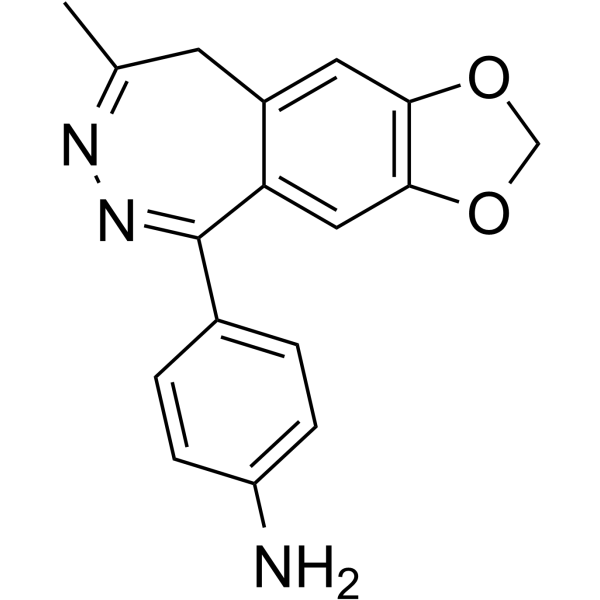
GYKI 52466 is an orally active, highly selective and noncompetitive AMPA/kainate receptor antagonist with the IC50 values of 7.5 and 11μM, respectively. GYKI 52466 has good blood brain barrier permeability and anticonvulsant effect. GYKI 52466 can be used in Parkinson's disease research.
For research use only. We do not sell to patients.
- CAS No.: 102771-26-6
- Formula: C17H15N3O2
- Molecular Weight:293.32
-
Storage:
Please store the product under the recommended conditions in the Certificate of Analysis.

To place orders, for customer services and technical support, please contact: MedChemExpress USA
Tel: 609-228-6898 E-mail: [email protected] [email protected]


-
 Biological Activity
-
Chemical Information
- Protocols
- Purity & Documentation
- References
-
 Help & FAQs


-
HY-12597
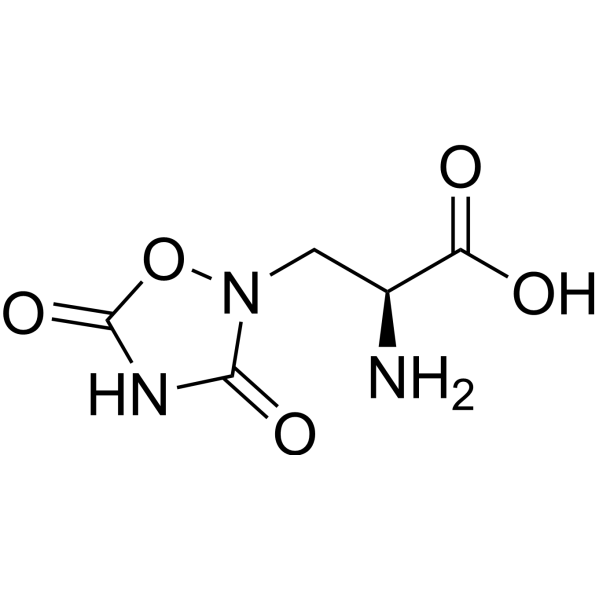
Quisqualic acidmGluR Activator -
HY-15066
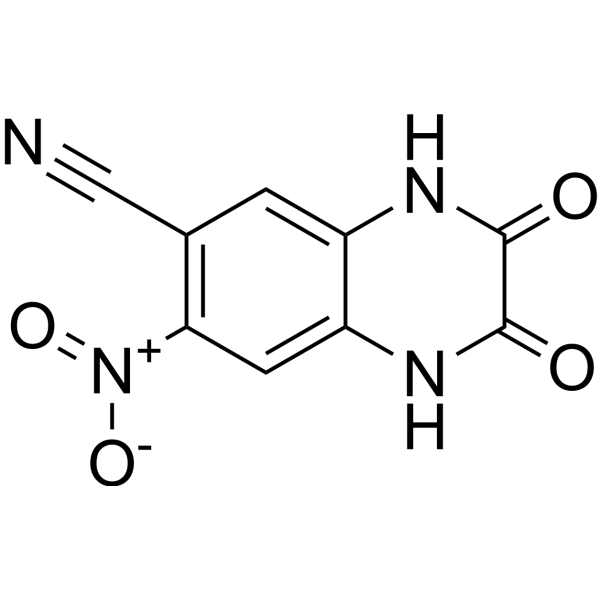
CNQXAMPA Antagonist -
HY-101165
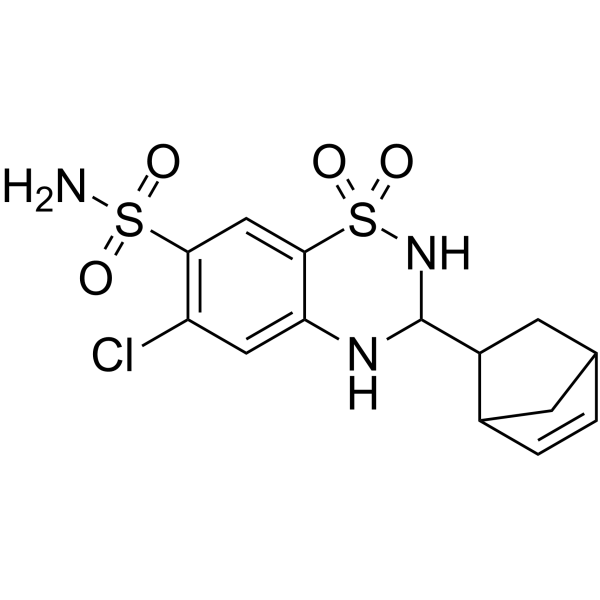
CyclothiazideAMPA Receptors PAM -
HY-100815A
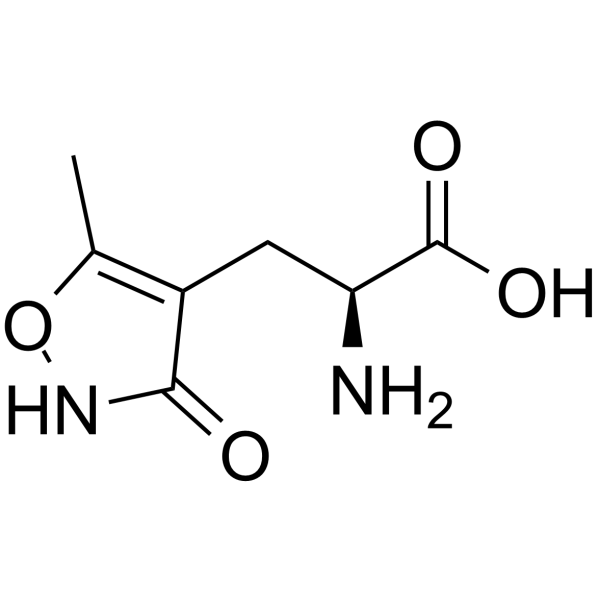
(S)-AMPAAMPA Receptor Agonist -
HY-15066A
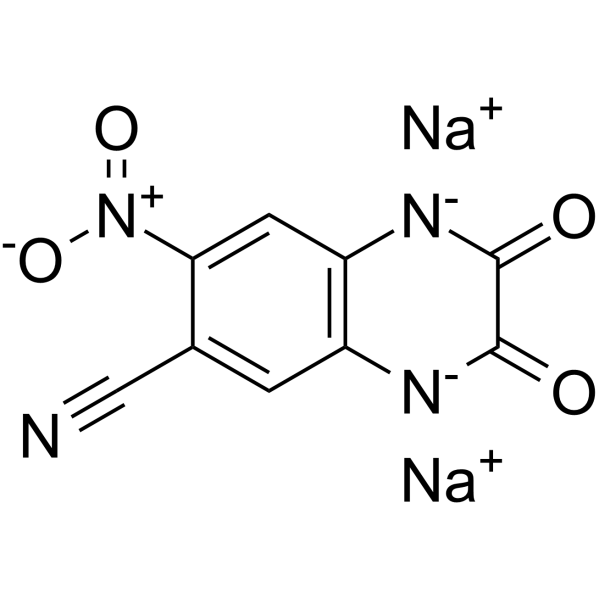
CNQX disodiumiGluR Antagonist -
HY-103232
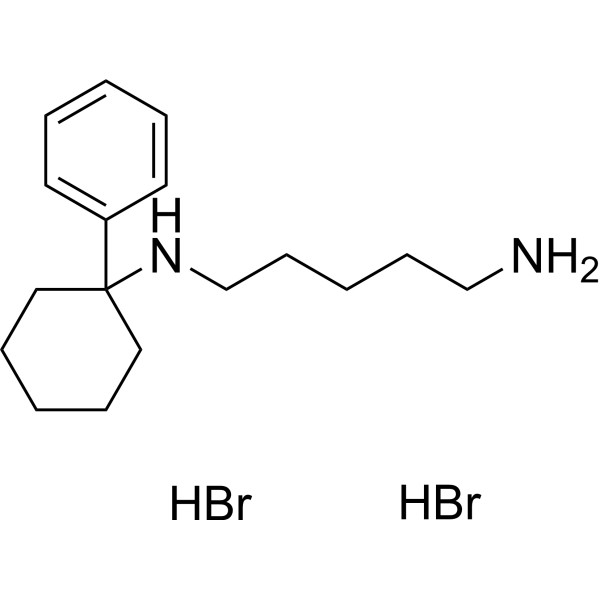
IEM-1925 bromideGlutamate Receptor Antagonist -
HY-103230
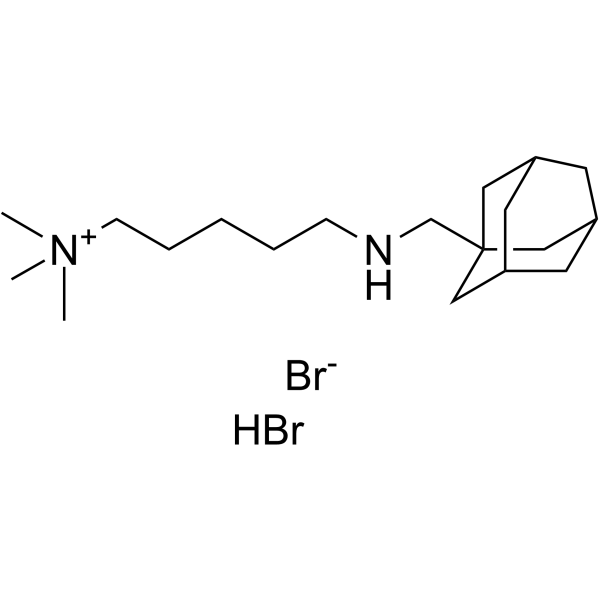
IEM-1460 -
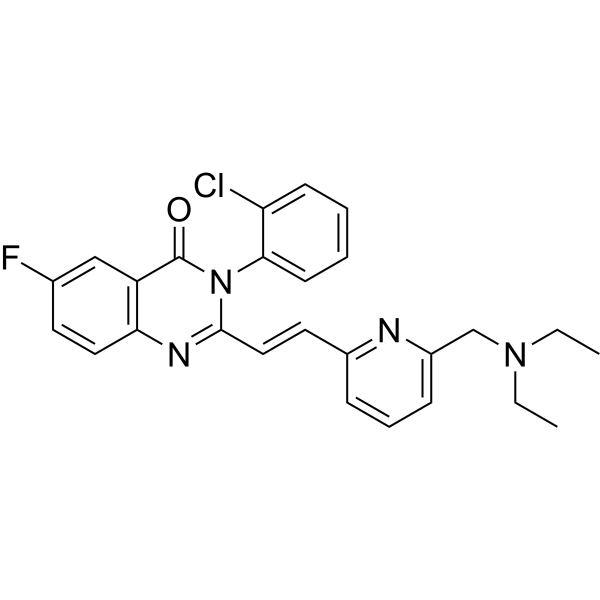
HY-18663
CP-465022AMPA Receptor Antagonist -
HY-101528
IDRA 21AMPA Modulator -
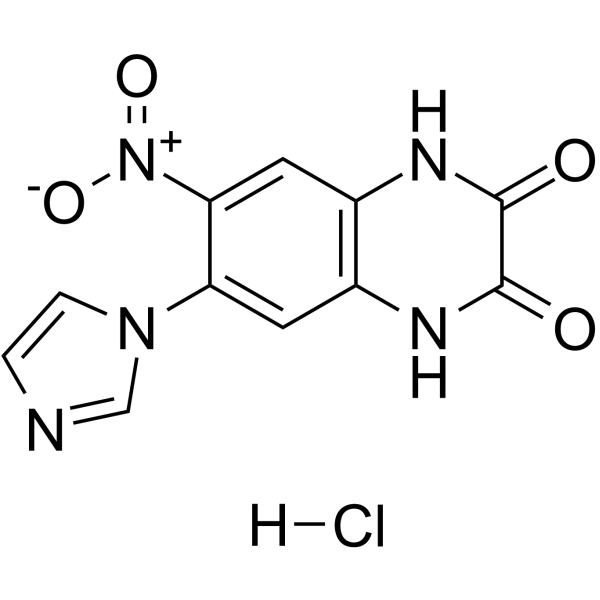
HY-15071
YM90KAMPA Receptor Antagonist -
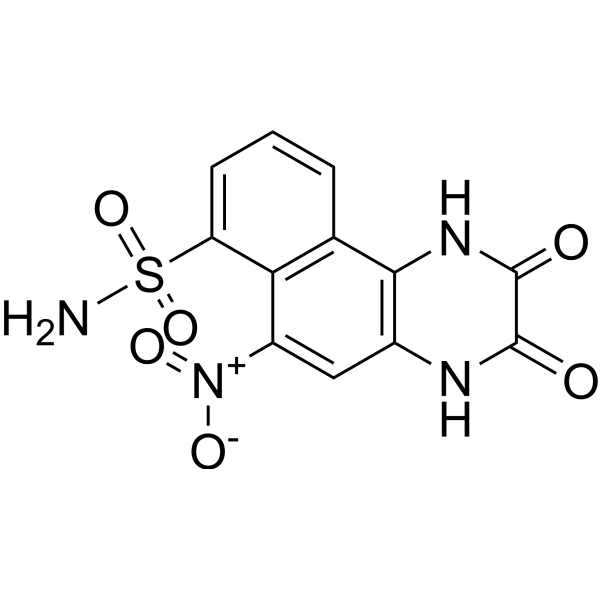
HY-15068
NBQXAMPA Receptor Antagonist -
HY-B1140
DiazoxideAutophagy Inducer
All iGluR Isoforms
More

Biological Activity
Description
IC50 & Target
[1]|
Kainate Receptor 11 μM (IC50) |
Cellular Effect
|
Cell Line

|
Type | Value | Description | References |
|---|---|---|---|---|
| Neuron | IC50 |
10.8 μM
Compound: GYKI-52466
|
Inhibition of kainate-induced C57BL/6N mouse hippocampal neurons excitotoxicity after 48 hrs by MTT assay
Inhibition of kainate-induced C57BL/6N mouse hippocampal neurons excitotoxicity after 48 hrs by MTT assay
|
[PMID: 18083036] |
In Vitro
GYKI 52466 (0.3-100 μM) inhibits inward currents activated by AMPA and Kainate receptor in cultured rat hippocampal neurons[1].
MedChemExpress (MCE) has not independently confirmed the accuracy of these methods. They are for reference only. Further protocols information, click here.
In Vivo
MedChemExpress (MCE) has not independently confirmed the accuracy of these methods. They are for reference only.
-
Animal Model:Male and female DBA/2 mice tested for sound-induced seizure responses[2]
-
Dosage:1.76-13.2 mg/kg
-
Administration:Intraperitoneal injection; 1.76-13.2 mg/kg; once
-
Result:Observed Maximal anticonvulsant protection after the i.p. treatment (5-15 min ).


Chemical Information
-
CAS No. 102771-26-6
-
Molecular Weight 293.32
-
Formula C17H15N3O2
-
SMILES
NC1=CC=C(C2=NN=C(C)CC3=CC4=C(OCO4)C=C32)C=C1
-
Shipping
Room temperature in continental US; may vary elsewhere.
-
Storage
Please store the product under the recommended conditions in the Certificate of Analysis.

Protocols
-
Human pluripotent stem cell midbrain dopaminergic neuron differentiation
Human pluripotent stem cells are directed toward midbrain dopaminergic neurons by first inducing a neural floor-plate-like progenitor state, then patterning cells with ventralizing SHH signaling and midbrain/WNT-FGF cues, and finally maturing progenitors into neurons expressing dopaminergic markers such as TH, NURR1/NR4A2, PITX3, DAT/SLC6A3, VMAT2/SLC18A2, GIRK2/KCNJ6, FOXA2, LMX1A, and EN1. The main readouts are loss of pluripotency, acquisition of FOXA2+/LMX1A+ midbrain floor-plate progenitors, emergence of βIII-tubulin+/MAP2+ neurons, and production of TH+ dopaminergic neurons with molecular, dopamine-release, and electrophysiological features of midbrain dopaminergic identity.
-
Transepithelial/transendothelial electrical resistance assay
TEER measures electrical resistance across epithelial or endothelial monolayers cultured on permeable supports, and the readout reflects ionic conductance through the cell barrier, especially the paracellular pathway regulated by junctional integrity. TEER can be measured without destroying the monolayer and is commonly used before or during transport, permeability, barrier-disruption, and barrier-maturation experiments. TEER values are influenced by biological maturation and technical conditions; reported factors include temperature, medium formulation, passage number, electrode geometry, membrane properties, and junctional length during early monolayer maturation. Therefore, TEER should be interpreted with blank-insert subtraction, area normalization, repeated readings, and, when possible, orthogonal barrier readouts such as FITC-dextran flux or tight-junction staining.


Purity & Documentation
References
[1]. S D Donevan, et al. GYKI 52466, a 2,3-benzodiazepine, is a highly selective, noncompetitive antagonist of AMPA/kainate receptor responses. Neuron. 1993 Jan;10(1):51-9. [Content Brief]
[2]. A G Chapman, et al. The anticonvulsant effect of the non-NMDA antagonists, NBQX and GYKI 52466, in mice. Epilepsy Res. 1991 Jul;9(2):92-6. [Content Brief]

Calculators
Concentration (start) × Volume (start) = Concentration (final) × Volume (final)


GYKI 52466 Related Classifications
HY-103234 Related Classifications
 Powered by Bioz