



Platelet-activating Factor Receptor (PAFR)
The platelet-activating factor receptor (PAFR) is a G-protein-coupled receptor involved in both normal physiological and numerous pathophysiological processes. PAFR responds to platelet-activating factor (PAF), a phospholipid mediator of cell-to-cell communication that exhibits diverse physiological effects. Stimulation of the PAFR via binding of platelet-activating factor (PAF) elicits diverse and potent biological activities and plays a profound role in acute inflammation, allergic disorders, endotoxic shock, and anaphylaxis. PAF is a potent and versatile mediator of inflammation that is produced by numerous cell types and tissues, and particularly by leukocytes.
All Product Categories
-
Platelet-activating Factor Receptor (PAFR) Inhibitors
(16)
View all products
-
Platelet-activating Factor Receptor (PAFR) Agonists
(7)
View all products
-
Platelet-activating Factor Receptor (PAFR) Antagonists
(51)
View all products
-
Platelet-activating Factor Receptor (PAFR) Activator
(1)
View all products
-
Platelet-activating Factor Receptor (PAFR) Control
(1)
View all products
-
Platelet-activating Factor Receptor (PAFR) Related Products (108)
Related Products (108)

-
Antibodies (2)
-
Pinusolide
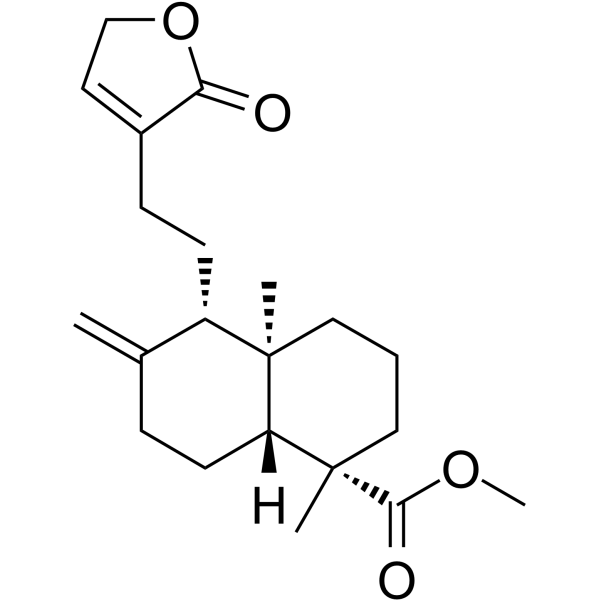 0 ImagesPinusolide is an AMPK activator and PAF receptor antagonist. Pinusolide activates AMPK, phosphorylates ACC, enhances IRS-1 tyrosine phosphorylation, boosts glucose uptake, and modulates insulin signaling. Pinusolide inhibits caspase-3/7 activation, intracellular calcium elevation, reactive oxygen species overproduction, lipid peroxidation, and tumor cell proliferation. Pinusolide stabilizes superoxide dismutase activity, reduces apoptotic hallmarks, induces mitochondrial pathway apoptosis, and triggers DNA fragmentation. Pinusolide can be used for the research of type 2 diabetes, neurodegenerative diseases, acute lymphoblastic leukemia, acute myeloid leukemia, and Burkitt lymphoma.
-
Aggreceride A
 0 ImagesCat. No.: HY-N14932CAS No.: 19207-26-2Aggreceride A is a platelet aggregation inhibitor. Aggreceride A shows an inhibitory activity against aggregation induced by Adenosine 5'-diphosphate (ADP) (HY-W010918), Arachidonic acid (HY-109590) and PAF (platelet activating factor), but was less active against aggregation induced by collagen.
-
Dersalazine sodium
 0 ImagesCat. No.: HY-123505CAS No.: 367249-56-7Synonyms: UR-12746 sodium
-
BN 52111
 0 ImagesCat. No.: HY-122126CAS No.: 120889-14-7BN 52111 is a potent platelet-activating factor (PAF) receptor antagonist.
-
L662,025
 0 ImagesCat. No.: HY-133003CAS No.: 122328-38-5L662,025 is a specific, photolabile and irreversible Platelet-activating factor (PAF-receptor) antagonist, with IC50 values of 5.6 μM (platelet aggregation) and 1 μM (receptor binding), respectively.
-
C16-18:1 PC
 0 ImagesSynonyms: 1-O-Hexadecyl-2-oleoyl-sn-glycero-3-phosphocholineC16-18:1 PC (1-O-Hexadecyl-2-oleoyl-sn-glycero-3-phosphocholine), also known as 1-O-hexadecyl-2-oleoyl-sn-glycero-3-phosphocholine (HOPC), is a member of the platelet-activating factor (PAF) family of glycerophospholipids and serves as a pro-inflammatory lipid mediator with diverse biological and pharmacological effects; it features a mono-ether structure with an oleoyl chain (18:1) ester-linked at the sn-2 position and a hexadecyl chain (16:0) ether-linked at the sn-1 position.
-
Aggreceride B
 0 ImagesCat. No.: HY-N14933CAS No.: 104700-85-8Aggreceride B is a platelet aggregation inhibitor. Aggreceride B shows an inhibitory activity against aggregation induced by Adenosine 5'-diphosphate (ADP) (HY-W010918), Arachidonic acid (HY-109590) and PAF (platelet activating factor), but was less active against aggregation induced by collagen.
-
YM-264 (Standard)
 0 ImagesCat. No.: HY-101833RCAS No.: 131888-54-5
-
(Rac)-L-659989
 0 ImagesCat. No.: HY-117636CAS No.: 129314-27-8(Rac)-L-659989 is the racemate of L-659989 (HY-121394). L-659989 s an orally active, extremely potent, selective and competitive platelet activating factor (PAF) receptor antagonist.
-
R-75317
 0 ImagesCat. No.: HY-119035CAS No.: 115406-25-2R-75317 is a specific platelet-activating factor (PAF) antagonist. R-75317 can prevent the decline in creatinine clearance (Ccr) in a rat model of glomerulonephritis induced by the injection of antibodies extracted from rabbits against rat glomerular basement membrane (GBM) antigens, delay the onset of proteinuria, and improve glomerular hypertrophy, mesangial matrix proliferation, and interstitial fibrosis. R-75317 may be useful in the study of glomerulonephritis.
-
U 66985
 0 ImagesCat. No.: HY-W714099CAS No.: 99103-16-9U 66985 is a platelet-activating factor (PAF) receptor antagonist. U 66985 binds to the PAF receptor site, thereby inhibiting PAF-induced platelet aggregation. U 66985 can be used in studies on the PAF signaling pathway and the functions of lipid inflammatory mediators.
-
Lexipafant
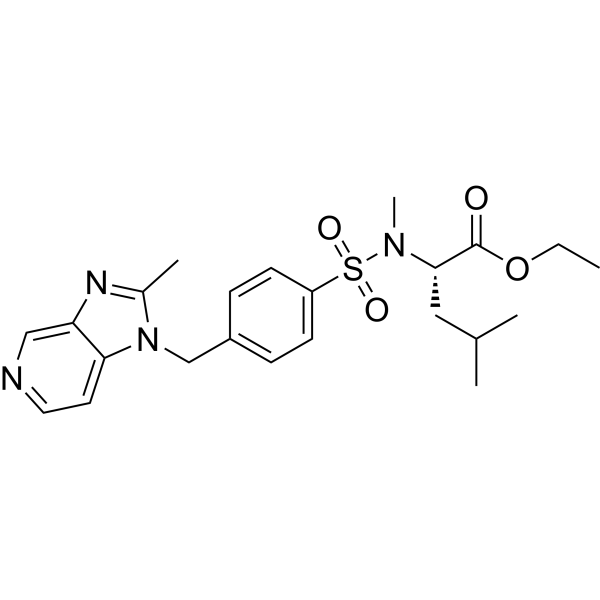 0 ImagesCat. No.: HY-105198CAS No.: 139133-26-9Synonyms: BB-882Lexipafant is a platelet-activating factor (PAF) antagonist that inhibits the inflammatory response and is used in the research of acute pancreatitis.
-
Oxopurpureine
 0 ImagesCat. No.: HY-N15271CAS No.: 32845-27-5
-
Kadsurenin B
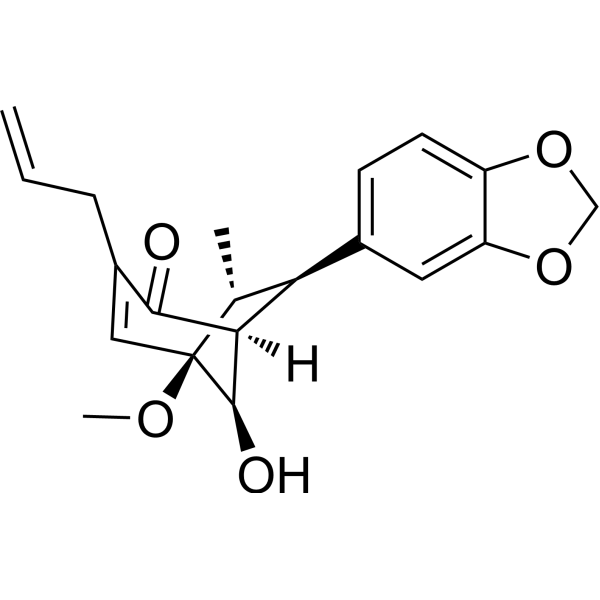 0 ImagesCat. No.: HY-N11920CAS No.: 145701-13-9Kadsurenin B is a PAF (platelet-activating factor) antagonist with neuroprotective activity. Kadsurenin B has a wide range of pharmacological research potential, such as antibacterial, anti-inflammatory, neuroprotective, antioxidant, antiplatelet aggregation, cytotoxic, antiparasitic, etc.
-
TCV-309
 0 ImagesCat. No.: HY-19121CAS No.: 131311-25-6TCV-309 is an antagonist for platelet activating factor (PAF). TCV-309 improves the left ventricular function during ischemia-reperfusion (77.6% recover at 1 μM), protects the cardiac function.
-
ST-899
 0 ImagesCat. No.: HY-176466CAS No.: 143484-41-7ST-899 is a novel platelet-activating factor (PAF) receptor antagonist. ST-899 can significantly reduce the mortality of mice with endotoxin (LPS)-induced shock. ST-899 can significantly inhibit the increase in serum tumor necrosis factor (TNF) levels induced by LPS, but has no effect on interleukin-6 (IL-6). The regulatory mechanism of ST-899 is to block the positive feedback loop between PAF and TNF, thereby reducing the inflammatory response. ST-899 can be used to study inflammatory diseases such as septic shock.
-
Tulopafant
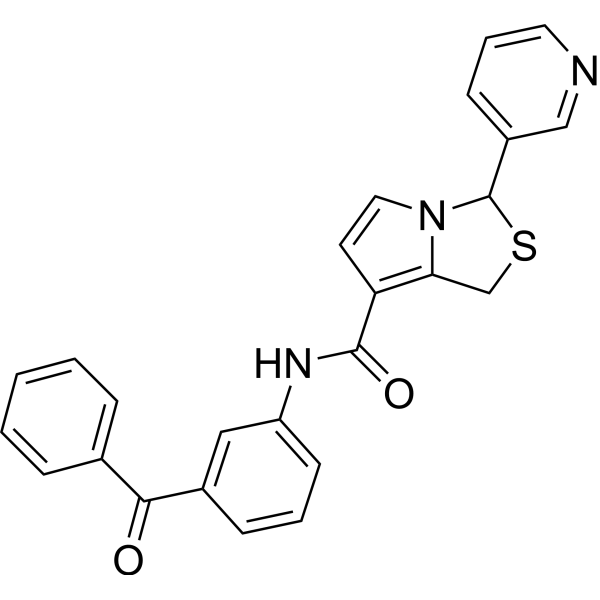 0 ImagesCat. No.: HY-101594CAS No.: 116289-53-3Synonyms: RP 59227Tulopafant is a platelet activating factor (PAF) antagonist.
-
Ro-24-4736
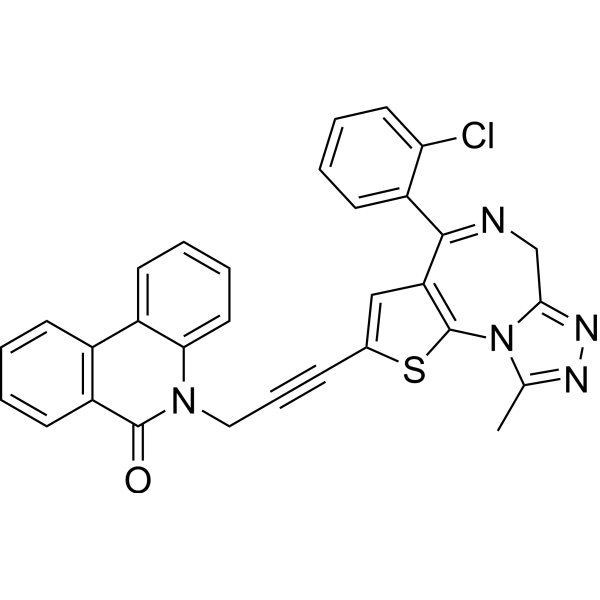 0 ImagesCat. No.: HY-19097CAS No.: 125030-71-9Ro 24-4736 is a potent, selective, p.o.-active platelet-activating factor (PAF) antagonist with a long duration of action. Ro-24-4736 is a click chemistry reagent, it contains an Alkyne group and can undergo copper-catalyzed azide-alkyne cycloaddition (CuAAc) with molecules containing Azide groups.
-
Ro-24-0238
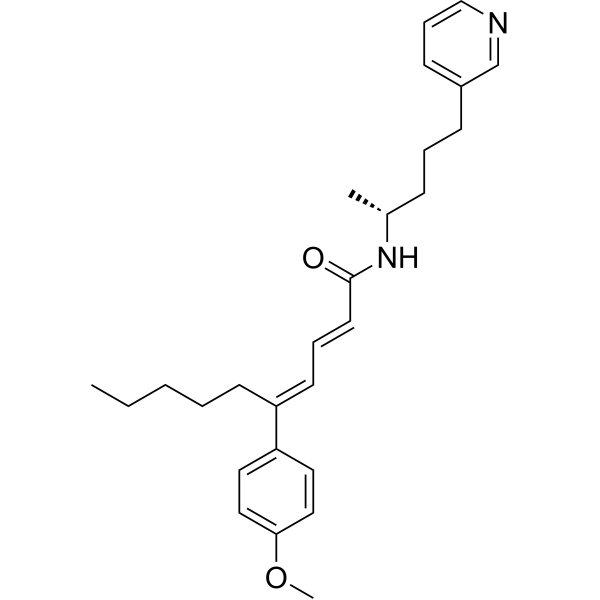 0 ImagesCat. No.: HY-19084CAS No.: 120555-31-9Ro-24-0238 is an antagonist of platelet activating factor (PAF) and inhibitor of thromboxane synthesis, used for lessening the inflammation and damage resulting from a local release of PAF.
-
Minopafant
 0 ImagesCat. No.: HY-19099CAS No.: 128420-61-1Synonyms: E 5880Minopafant (E 5880) is a PAF receptor antagonist. Minopafant can be used in studies of cerebral vasospasm following subarachnoid hemorrhage.




