



Pregnane X Receptor (PXR)
Pregnane X Receptor
Pregnane X Receptor (PXR), a member of the nuclear receptor (NR) superfamily, is a ligand-activated transcription factor that plays a crucial role in the metabolism of xenobiotics and endobiotics in mammals. PXR was first recognized as an exogenous substance receptor regulating metabolizing enzymes and transporters and functioning in detoxification and drug metabolism in the liver. However, further research revealed that PXR acts as an equally important endogenous substance receptor in the metabolism and homeostasis of endogenous substances. PXR is highly distributed in small intestine, liver, rectum, colon and bladder, while its expression in other organs and tissues is either moderate, low or undetectable. PXR can be activated by numerous chemical compounds. Activated PXR, through direct binding to the genomic regions or indirect crosstalk with other transcriptional factors, controls various genes involved in biotransformation, transport, inflammation, oxidative stress and etc.
As a master regulator of xenobiotic response PXR adjusts the expression of many drug metabolizing enzymes (DME), such as cytochrome P450, uridine diphosphate (UDP)-glucuronosyltransferases, sulfotransferases and carboxylesterases. PXR also regulates drug-efflux pumps multi-drug resistance gene 1 (MDR1), MDR2, ATP-binding cassette transporter C 2 (ABCC) and anion-transporting polypeptide 2 (OATP). PXR is participated in tumor cell proliferation and growth, apoptosis and metastasis as well as in liver regeneration and hepatic proliferation, indicating the important role of PXR in cancer[1][2].
As a master regulator of xenobiotic response PXR adjusts the expression of many drug metabolizing enzymes (DME), such as cytochrome P450, uridine diphosphate (UDP)-glucuronosyltransferases, sulfotransferases and carboxylesterases. PXR also regulates drug-efflux pumps multi-drug resistance gene 1 (MDR1), MDR2, ATP-binding cassette transporter C 2 (ABCC) and anion-transporting polypeptide 2 (OATP). PXR is participated in tumor cell proliferation and growth, apoptosis and metastasis as well as in liver regeneration and hepatic proliferation, indicating the important role of PXR in cancer[1][2].
References:
All Product Categories
-
Pregnane X Receptor (PXR) Inhibitor
(1)
View all products
-
Pregnane X Receptor (PXR) Agonists
(12)
View all products
-
Pregnane X Receptor (PXR) Antagonists
(3)
View all products
-
Pregnane X Receptor (PXR) Activators
(13)
View all products
-
Pregnane X Receptor (PXR) Chemicals
(2)
View all products
-
Pregnane X Receptor (PXR) Degraders
(3)
View all products
-
Pregnane X Receptor (PXR) Ligands
(4)
View all products
-
Pregnane X Receptor (PXR) Related Products (41)
Related Products (41)

-
PXR Ligand 2
 0 ImagesCat. No.: HY-169280CAS No.: 3059971-00-2


-
SJYHJ-026
 0 ImagesCat. No.: HY-169264SJYHJ-026 is a PROTAC degrader targeting PXR, with a DC50 of 86.6 nM in SNU-C4 HiBiT-PXR KI cells. SJYHJ-026 shows higher selectivity for PXR over CAR, VDR, FXR, LXRα and LXRβ, and can bind to VHL to form a PXR-SJYHJ-026-VHL complex, inducing proteasomal degradation of PXR. SJYHJ-026 blocks agonist-induced PXR-mediated gene expression (including CYP3A4) and reduces basal PXR activity at the CYP3A4 promoter. SJYHJ-026 can be used for the research of colorectal cancer.
-
Bacopaside I (Standard)
 0 ImagesCat. No.: HY-N4246RCAS No.: 382148-47-2Bacopaside I (Standard) is the analytical standard of Bacopaside I. This product is intended for research and analytical applications. Bacopaside I is an orally active aquaporin AQP1 inhibitor and PKC modulator with neuroprotective and anticancer activities. Bacopaside I specifically blocks the water channel and cGMP-gated ion channel activities of AQP1 without affecting AQP4, thereby inhibiting the migration of colon cancer cells expressing AQP1. Bacopaside I activates the Akt pathway by interacting with PI3K, specifically inhibits MAO-A, effectively alleviates neuron necrosis and apoptosis induced by oxygen-glucose deprivation, reduces oxidative stress, and regulates the surface expression of neuroreceptors. When combined with Bacopaside II (HY-N6016), Bacopaside I significantly reduces the viability, proliferation and invasion ability of breast cancer cells, and binds to the pregnane X receptor (PXR). Bacopaside I is applicable to the research of colon cancer, breast cancer, vascular dementia, cerebral ischemia and other related diseases.
-
Panaxytriol
 0 ImagesCat. No.: HY-W709413CAS No.: 87005-03-6Panaxytriol is an active component of ginseng. Panaxytriol inhibits the nuclear translocation of NF-κB, thereby reducing the production of pro-inflammatory factors (such as TNF-α, IL-1β, IL-6) and nitric oxide (NO) induced by LPS (HY-D1056). Panaxytriol upregulates CYP3A4 by activating the nuclear receptor PXR/CAR. Panaxytriol improves motor dysfunction in a mouse model of brain inflammation. Panaxytriol can be used in the research of neurodegenerative diseases (such as Alzheimer's disease).
-
ERG-IN-4
 0 ImagesCat. No.: HY-180918CAS No.: 3047672-14-7ERG-IN-4 (Compound 12) is an orally active, selective ERG inhibitor with an IC50 of 5.2 μM for hERG. ERG-IN-4 activates PXR. ERG-IN-4 exhibits anticancer activity against MTAP-deleted non-small cell lung cancer.
-
MK-3901
 0 ImagesCat. No.: HY-122163CAS No.: 1149750-69-5

-
Benoxacor
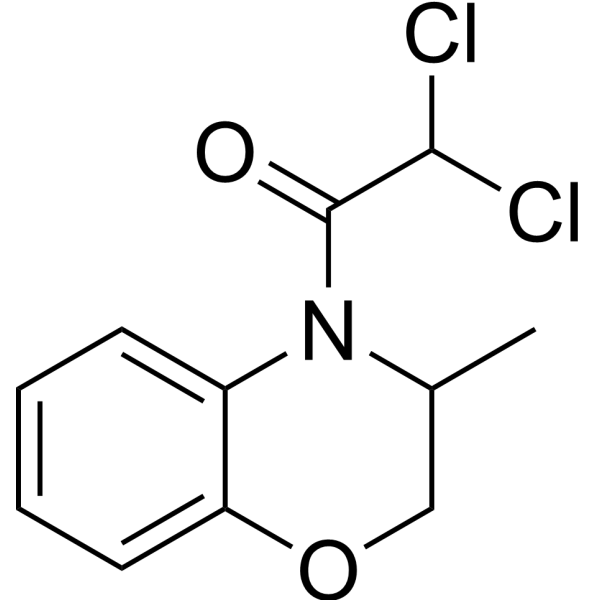 0 ImagesSynonyms: CGA 154281Benoxacor (CGA 154281) is a herbicide safener and xenobiotic metabolism regulator. Benoxacor protects maize from the toxicity of metolachlor mainly by inducing detoxifying enzymes such as Glutathione S-transferase. Benoxacor also activates FXR, PXR and ERRα, and inhibits aromatase (aromatase). However, Benoxacor exhibits potential subacute oral toxicity and a high risk of hepatotoxicity in animal models. Benoxacor induces reactive oxygen species accumulation, interferes with embryonic heart development, and causes increased liver and kidney weights as well as alterations in gut microbiota in mice. Benoxacor can be used in studies related to hepatic steatosis, infertility, breast cancer and developmental toxicity.
-
SJB7
 0 ImagesCat. No.: HY-124773CAS No.: 2135395-15-0SJB7 is a pregnane X receptor (PXR) agonist. SJB7 can stabilize the activation function 2 (AF-2) helix in an “inward” position.
-
PROTAC PXR degrader-1
 0 ImagesCat. No.: HY-169279PROTAC PXR degrader-1 is a PROTAC degrader targeting PXR, with a DC50 value of 49.8 nM in SNU-C4 3xFLAG-PXR KI cells. PROTAC PXR degrader-1 exhibits selectivity towards CAR, VDR, FXR, LXRα and LXRβ. PROTAC PXR degrader-1 induces the formation of a ternary complex with PXR and VHL, triggering proteasomal degradation of PXR. PROTAC PXR degrader-1 reduces both agonist-induced and basal PXR-mediated CYP3A4 promoter activation, and decreases the expression of endogenous CYP3A4 gene in cancer cells. PROTAC PXR degrader-1 enhances the cytotoxic effect of paclitaxel on cancer cells. PROTAC PXR degrader-1 can be used for the research of colorectal cancer.
-
N-Cholyl-L-glutamic acid
 0 ImagesCat. No.: HY-176967CAS No.: 23828-78-6Synonyms: GluCAN-Cholyl-L-glutamic acid (GluCA) is a Cholic acid (HY-N0324) conjugated with L-glutamic acid (HY-14608). N-Cholyl-L-glutamic acid increases expression of PXR and downstream PXR-target gene Cyp3a11. N-Cholyl-L-glutamic acid can be used in the research of Crohn's disease.
-
N-Cholyl-L-threonine
 0 ImagesCat. No.: HY-176965CAS No.: 103444-73-1Synonyms: ThrCAN-Cholyl-L-threonine (ThrCA) is a Cholic acid (HY-N0324) conjugated with L-threonine (HY-N0658). N-Cholyl-L-threonine possesses PXR agonism activity. N-Cholyl-L-threonine can be used in the research of Crohn's disease.
-
SJPYT-328
 0 ImagesCat. No.: HY-169320CAS No.: 2998548-72-2SJPYT-328 is a PXR agonsit. PXR plays a major role in drug metabolism and drug-drug interactions.
-
SR12813 (Standard)
 0 ImagesCat. No.: HY-100793RCAS No.: 126411-39-0Synonyms: GW 485801 (Standard)SR12813 (Standard) is the analytical standard of SR12813 (HY-100793). This product is intended for research and analytical applications. SR12813 (GW 485801) is an inhibitor of 3-hydroxy-3-methylglutaryl-coenzyme A (HMG-CoA) reductase, with an IC50 value of 0.85 μM. SR12813 is also an efficient agonist of human pregnane X receptor (hPXR). SR12813 can strongly bind to hPXR but not to mouse PXR (mPXR).
-
Benoxacor (Standard)
 0 ImagesCat. No.: HY-W020788RCAS No.: 98730-04-2Synonyms: CGA 154281 (Standard)Benoxacor (Standard) is the analytical standard of Benoxacor. This product is intended for research and analytical applications. Benoxacor (CGA 154281) is a herbicide safener and xenobiotic metabolism regulator. Benoxacor protects maize from the toxicity of metolachlor mainly by inducing detoxifying enzymes such as Glutathione S-transferase. Benoxacor also activates FXR, PXR and ERRα, and inhibits aromatase (aromatase). However, Benoxacor exhibits potential subacute oral toxicity and a high risk of hepatotoxicity in animal models. Benoxacor induces reactive oxygen species accumulation, interferes with embryonic heart development, and causes increased liver and kidney weights as well as alterations in gut microbiota in mice. Benoxacor can be used in studies related to hepatic steatosis, infertility, breast cancer and developmental toxicity.
-
Imazalil sulfate
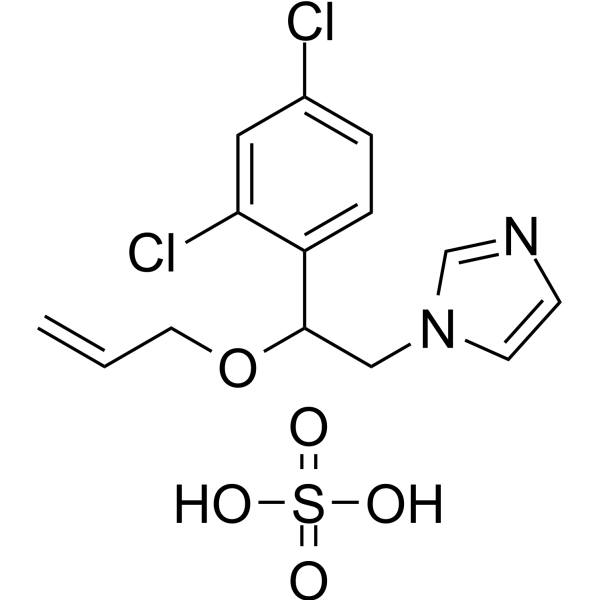 0 ImagesSynonyms: Enilconazolel sulfateImazalil (Enilconazole) sulfate is a fungicide. Imazalil sulfate has oral activity and strongly activates mPXR but not mCAR in mouse liver. Imazalil sulfate is commonly used to protect various agricultural crops against fungal attack. Imazalil sulfate induces developmental abnormalities, gut microbiota dysbiosis, and hepatic metabolism disorder.
-
Tolindate
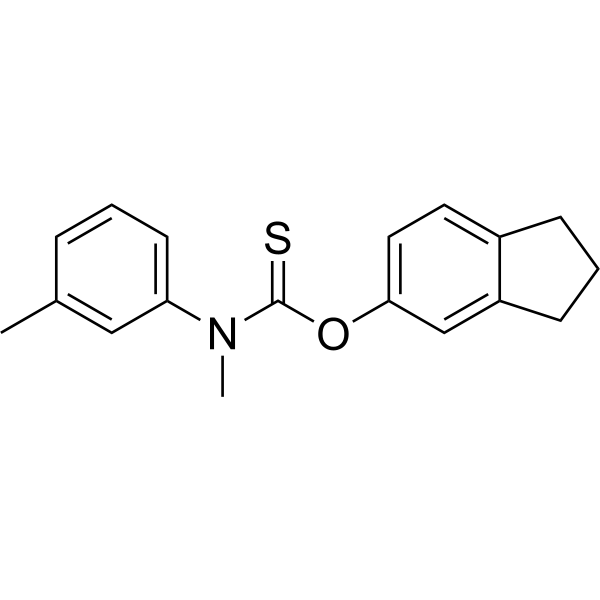 0 ImagesCat. No.: HY-148223CAS No.: 27877-51-6Tolindate is a potent PXR agonist with an EC50 value of 8.3 μM. Tolindate shows antifungal activity.
-
FKBP12 PROTAC dTAG-13 (Standard)
 0 ImagesCat. No.: HY-114421RCAS No.: 2064175-41-1Synonyms: dTAG-13 (Standard)FKBP12 PROTAC dTAG-13 (Standard) is the analytical standard of FKBP12 PROTAC dTAG-13 (HY-114421). This product is intended for research and analytical applications. FKBP12 PROTAC dTAG-13 (dTAG-13) is a FKBP12F36V PROTAC degrader and a PXR partial agonist. FKBP12 PROTAC dTAG-13 induces ubiquitination and proteasomal degradation of proteins tagged with FKBP12F36V, without degrading wild-type FKBP12 or un-fused PXR. It weakly promotes the recruitment of SRC-1, strongly inhibits the interaction between NCoR and PXR, and upregulates the expression of CYP3A4 and other drug metabolism-related genes. FKBP12 PROTAC dTAG-13 is applicable to research related to breast cancer and leukemia.



