



Benoxacor

Based on 1 Customer Validation
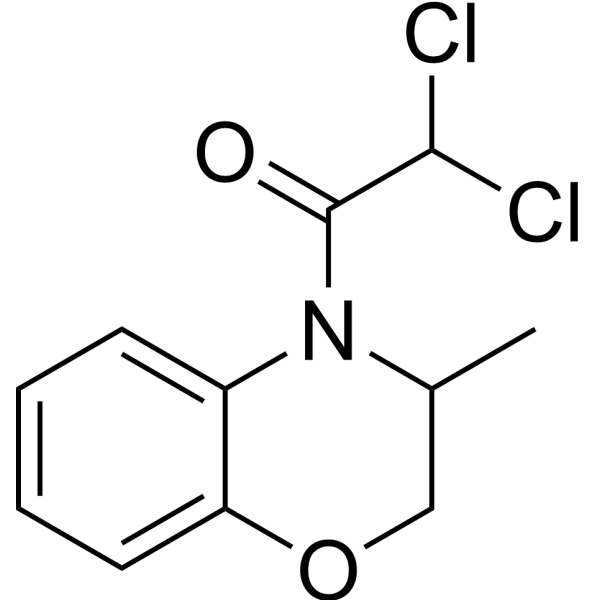
Benoxacor (CGA 154281) is a herbicide safener and xenobiotic metabolism regulator. Benoxacor protects maize from the toxicity of metolachlor mainly by inducing detoxifying enzymes such as Glutathione S-transferase. Benoxacor also activates FXR, PXR and ERRα, and inhibits aromatase (aromatase). However, Benoxacor exhibits potential subacute oral toxicity and a high risk of hepatotoxicity in animal models. Benoxacor induces reactive oxygen species accumulation, interferes with embryonic heart development, and causes increased liver and kidney weights as well as alterations in gut microbiota in mice. Benoxacor can be used in studies related to hepatic steatosis, infertility, breast cancer and developmental toxicity.
Nur für Forschungszwecke. Wir verkaufen nicht an Patienten.
- Reinheit : 99.39%
- CAS. Nr.: 98730-04-2
- Formel: C11H11Cl2NO2
- Molecular Weight:260.12
-
Speicherung:
4°C, stored under nitrogen
* In solvent : -80°C, 6 months; -20°C, 1 month (stored under nitrogen)

To place orders, for customer services and technical support, please contact: MedChemExpress USA
Tel: 609-228-6898 E-mail: [email protected] [email protected]


-
 Biologische Aktivität
-
Chemical Information
-
Lösungsmittel & Löslichkeit
- Protokoll
- Reinheit & Dokumentation
- Verweise
-
 Help & FAQs


-
HY-W009861
Aviglycine hydrochlorideEthylene Biosynthesis Inhibitor -
HY-N0548
α-Angelica lactoneChemopreventative Agent -
HY-111530
GSTO1-IN-1Gutathione S-transferase Inhibitor -
HY-W013754
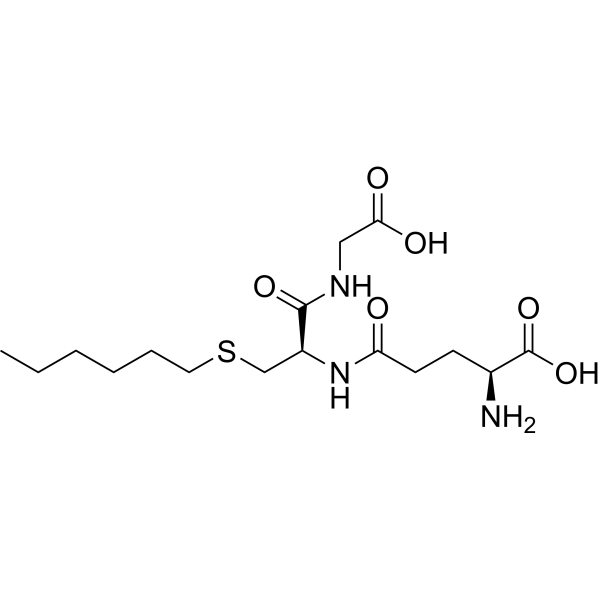
S-HexylglutathioneGlutathione-S-transferase Inhibitor -
HY-13634B
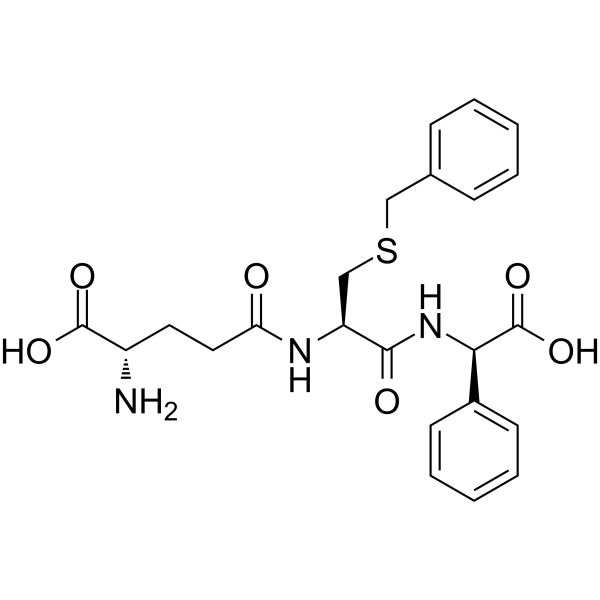
TLK117GSTP1-1 Inhibitor -
HY-112534
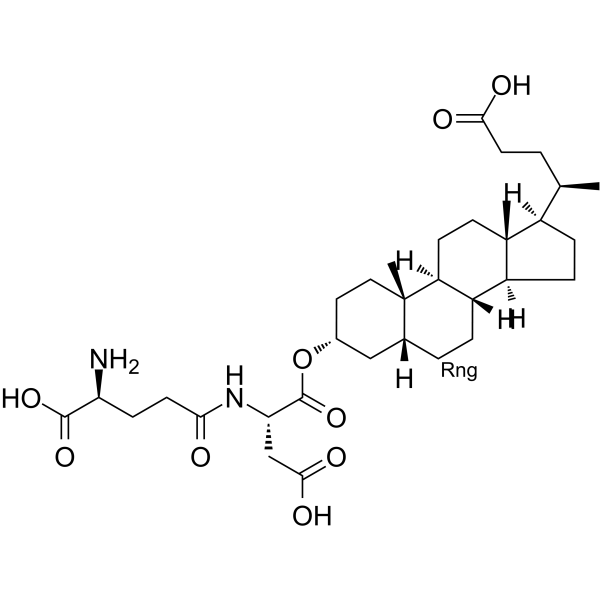
GSTO-IN-2Glutathione S-transferase Inhibitor -
HY-115673
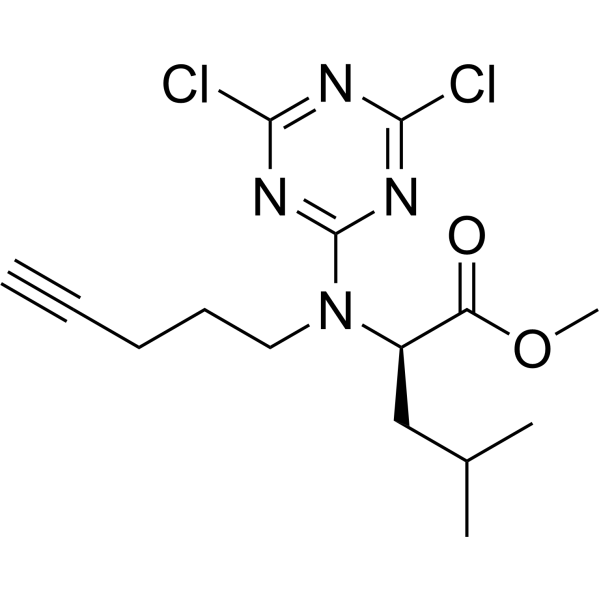
LAS17GSTP1 Inhibitor -
HY-137877
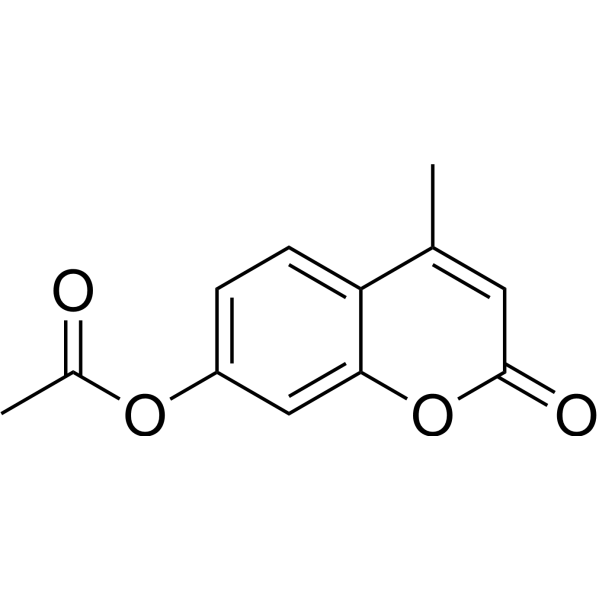
7-Acetoxy-4-methylcoumarinGST Inhibitor -
HY-117143
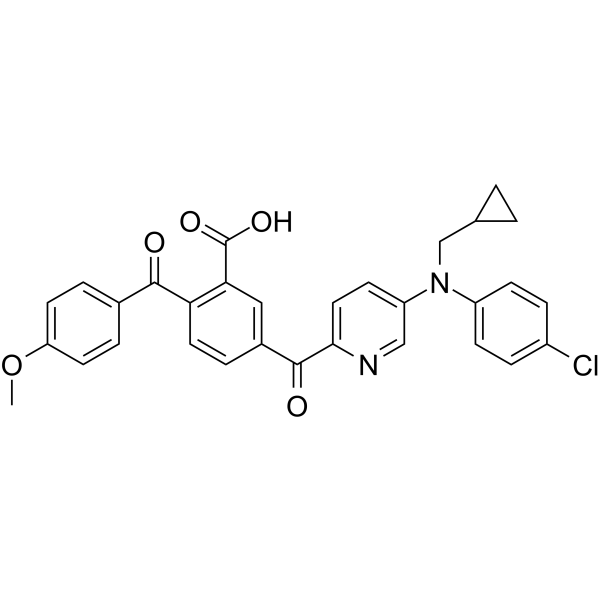
TK05LTC4S Inhibitor -
HY-126329
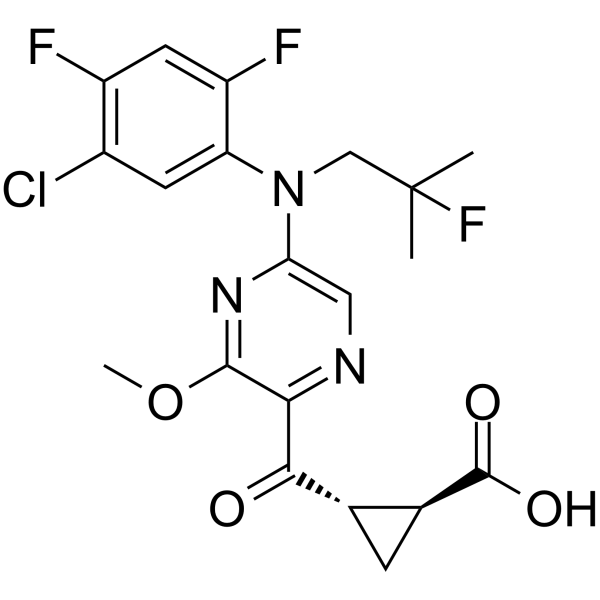
AZD9898Gutathione S-transferase Inhibitor -

HY-N0548R
α-Angelica lactone (Standard)Chemopreventative Agent -

HY-W020788R
Benoxacor (Standard)Herbicide Safety Agent


Biologische Aktivität
Beschreibung
IC50 & Target
|
ERRα |
In Vitro
Benoxacor (5 μM; 0-30 min) is metabolized by liver microsomes from male C57BL/6 mice in a time-dependent and enantioselective manner. Cytochrome P450 enzymes primarily metabolize the E2-benoxacor enantiomer, while microsomal carboxylesterases mainly metabolize the E1-benoxacor enantiomer. The intrinsic clearance of microsomal CYP-mediated elimination is 1.05 mL/min/mg protein, with a normalized clearance of 40.22 mL/min/g liver, whereas the intrinsic clearance of microsomal CES-mediated elimination is 0.54 mL/min/mg protein, with a normalized clearance of 20.77 mL/min/g liver[1].
Benoxacor (5 μM; 0-30 min) is metabolized in a time-dependent and enantioselective manner by glutathione S-transferase in the liver cytosol of male C57BL/6 mice, with an intrinsic clearance rate of 1.46 mL/min/mg protein and a normalized clearance rate of 132.52 mL/min/g liver for GST-mediated elimination[1].
Benoxacor (10 μM; 0.25-48 h) is rapidly taken up by suspension-cultured cells of maize (cultivar: Black Mexican Sweet, same below), and the uptake amount increases continuously within 48 h after treatment with 10 μM[3].
Treatment of maize suspension-cultured cells with Benoxacor (10 μM; 0-48 h) doubles the activity of GST-M, a change detectable as early as 4 h post-treatment and peaking at 24 h[3].
Benoxacor (10 μM; 24 h) increases the activities of three distinct GSTs (a, c, d) isolated via anion exchange chromatography from treated maize suspension-cultured cells[3].
Isolation of GST fractions (b, c, d) from maize suspension-cultured cells treated with Benoxacor (10 μM; 24 h) reveals GST polypeptides (26,000-27,000 Mr) that cross-react with maize GST I and GST I/III antisera, a pattern consistent with that observed in benzofenap-treated maize seedlings[3].
Treatment of maize suspension-cultured cells with Benoxacor (10 μM; 24 h) increases GST-M activity by 3-fold, and this effect is partially blocked by pre-treatment with Cycloheximide (HY-12320) (10/100 μM; 2 h), indicating that this induction activity requires de novo protein synthesis[3].
Treatment of maize suspension-cultured cells with Benoxacor (10 μM; 24 h) increases GST-M activity by 3-fold, and this enhancing effect is significantly blocked by pretreatment with Cordycepin (HY-N0262) (10/100 μM; 2 h), indicating that this inductive activity requires de novo RNA synthesis[3].
MedChemExpress (MCE) has not independently confirmed the accuracy of these methods. They are for reference only.
-
Cell Line:Zea mays (cv. Black Mexican Sweet) suspension-cultured cells
-
Concentration:10 μM
-
Incubation Time:24 h
-
Result:Detected a 27,000 Mr polypeptide in fractions corresponding to activities b and c with maize GST I antisera.
Detected a 27,000 Mr polypeptide in fraction corresponding to activity b, and a 27,000 Mr plus a slightly reactive 26,000 Mr polypeptide in fraction corresponding to activity c with maize GST I/III antisera.
Detected a slightly reactive 26,000 Mr polypeptide in fraction corresponding to activity d with maize GST I/III antisera.
In Vivo
Benoxacor (0.5-2.0 mg/L; waterborne exposure; continuous exposure; 5.5 to 72 hpf) induces concentration-dependent developmental toxicity, cardiac morphological and functional abnormalities, oxidative stress, as well as apoptosis and dysregulated expression of cardiac development-related genes in zebrafish embryos, with the most severe effects observed at the 2.0 mg/L dose[2].
MedChemExpress (MCE) has not independently confirmed the accuracy of these methods. They are for reference only.
-
Animal Model:C57BL/6J mice (male, 8-week-old, acclimated for 4 weeks from 4-week-old)[1]
-
Dosage:0.5 mg/kg b.w.; 5 mg/kg b.w.; 50 mg/kg b.w.
-
Administration:p.o.; daily; 3 consecutive days
-
Result:Increased bodyweight-adjusted liver/testes weight significantly at 50 mg/kg.
Caused no significant changes in body weight or bodyweight-adjusted spleen, kidney, or brain weights at any dose.
Induced no overt pathological changes in liver or intestinal tissues at any dose.
Caused no significant effects on cecal microbiome α-diversity (Shannon, Chao-1 indices) or β-diversity (Weighted Unifrac distance) at any dose.
Identified 163 hepatic differentially expressed genes (DEGs) across all doses, including xenobiotic processing genes Cyp7a1, Cyp3a13, and Cyp26a1; the gene regulation profile matched that of dichloroacetic acid and sedaxane, with 15/16 and 15/21 consistent DE targets respectively, though this was not significant after multiple comparison correction.
Altered 9 serum and 15 liver metabolites before multiple comparison correction; in liver, creatinine and trigonelline were significantly altered, but no changes remained significant after false discovery rate correction.
Caused no significant changes in hepatic catalase, glutathione peroxidase (GPx), superoxide dismutase (SOD), or glutathione S-transferase (GST) activity at any dose.
-
Animal Model:wild-type AB; transgenic Tg Zebrafish (myl7:GFP) (embryos, exposed at 5.5 hours post-fertilization)[2]
-
Dosage:0.5 mg/L; 1.0 mg/L; 2.0 mg/L
-
Administration:aqueous exposure; continuous; 5.5 to 72 hpf
-
Result:Increased total mortality rate in a concentration-dependent manner, reaching ~13% at 72 hpf for the 2.0 mg/L dose, ~10% for the 1.0 mg/L dose, and ~6% for the 0.5 mg/L dose.
Reduced heart rate significantly in a concentration-dependent manner, with the 2.0 mg/L dose causing the greatest reduction relative to controls.
Reduced hatching rate significantly in a concentration-dependent manner at both 48 and 72 hpf, with the 2.0 mg/L dose resulting in the lowest hatching rate (~40%) at 72 hpf.
Induced pericardial edema and linear stretching of the heart, with failure of heart cyclization observed in all treated groups; revealed abnormalities in the myocardial layer and linearized atria/ventricles via histological analysis.
Increased ROS fluorescence intensity significantly in a concentration-dependent manner, with the 2.0 mg/L dose showing the highest intensity (~65,000 fluorescence units).
Elevated SOD and CAT activities in a concentration-dependent manner.
Decreased MDA content at 0.5 mg/L and 1.0 mg/L, then significantly increased it at 2.0 mg/L (~3.5 nmol/mL).
Upregulated relative mRNA levels of pro-apoptotic gene caspase 3 (peak ~3.2-fold at 1.0 mg/L) and cardiac development-related genes nkx2.5, myh6, tbx5a, vmhc, and nppa.
Downregulated relative mRNA levels of gata4 and tbx2b in a concentration-dependent manner, with caspase 9 showing a slight concentration-dependent decrease.


Chemical Information
-
CAS. Nr. 98730-04-2
-
Appearance Solid
-
Molecular Weight 260.12
-
Formel C11H11Cl2NO2
-
Color White to off-white
-
SMILES
ClC(Cl)C(N1C(C)COC2=CC=CC=C21)=O
-
Synonyms
CGA 154281
-
Versand
Room temperature in continental US; may vary elsewhere.
-
Speicherung
4°C, stored under nitrogen
* In solvent : -80°C, 6 months; -20°C, 1 month (stored under nitrogen)


Lösungsmittel & Löslichkeit
In Vitro:
DMSO : 125 mg/mL (480.55 mM; Need ultrasonic; Hygroscopic DMSO has a significant impact on the solubility of product, please use newly opened DMSO)
Please refer to the solubility information to select the appropriate solvent. Once prepared, please aliquot and store the solution to prevent product inactivation from repeated freeze-thaw cycles.
Storage method and period of stock solution: -80°C, 6 months; -20°C, 1 month (stored under nitrogen). When stored at -80°C, please use it within 6 months. When stored at -20°C, please use it within 1 month.
Please refer to the solubility information to select the appropriate solvent. Once prepared, please aliquot and store the solution to prevent product inactivation from repeated freeze-thaw cycles.
Storage method and period of stock solution: -80°C, 6 months; -20°C, 1 month (stored under nitrogen). When stored at -80°C, please use it within 6 months. When stored at -20°C, please use it within 1 month.
Konzentration (Stammlösung) × Volumen (Stammlösung) = Konzentration (Ziellösung) × Volumen (Ziellösung)


Reinheit & Dokumentation
-
Data Sheet (289 KB)
-
SDS (597 KB)
- English - EN (597 KB)
- Français - FR (597 KB)
- Deutsch - DE (597 KB)
- Norwegian - NO (597 KB)
- Español - ES (597 KB)
- Swedish - SV (597 KB)
- Italian - IT (597 KB)
- Korean - KR (597 KB)
- Portuguese - PT (597 KB)
-
Handling Instructions (2659 KB)
Verweise


Complete Stock Solution Preparation Table
Please refer to the solubility information to select the appropriate solvent. Once prepared, please aliquot and store the solution to prevent product inactivation from repeated freeze-thaw cycles.
Storage method and period of stock solution: -80°C, 6 months; -20°C, 1 month (stored under nitrogen). When stored at -80°C, please use it within 6 months. When stored at -20°C, please use it within 1 month.
| Optional Solvent | Concentration Solvent Mass | 1 mg | 5 mg | 10 mg | 25 mg |
|---|---|---|---|---|---|
| DMSO | 1 mM | 3.8444 mL | 19.2219 mL | 38.4438 mL | 96.1095 mL |
| 5 mM | 0.7689 mL | 3.8444 mL | 7.6888 mL | 19.2219 mL | |
| 10 mM | 0.3844 mL | 1.9222 mL | 3.8444 mL | 9.6109 mL | |
| 15 mM | 0.2563 mL | 1.2815 mL | 2.5629 mL | 6.4073 mL | |
| 20 mM | 0.1922 mL | 0.9611 mL | 1.9222 mL | 4.8055 mL | |
| 25 mM | 0.1538 mL | 0.7689 mL | 1.5378 mL | 3.8444 mL | |
| 30 mM | 0.1281 mL | 0.6407 mL | 1.2815 mL | 3.2036 mL | |
| 40 mM | 0.0961 mL | 0.4805 mL | 0.9611 mL | 2.4027 mL | |
| 50 mM | 0.0769 mL | 0.3844 mL | 0.7689 mL | 1.9222 mL | |
| 60 mM | 0.0641 mL | 0.3204 mL | 0.6407 mL | 1.6018 mL | |
| 80 mM | 0.0481 mL | 0.2403 mL | 0.4805 mL | 1.2014 mL | |
| 100 mM | 0.0384 mL | 0.1922 mL | 0.3844 mL | 0.9611 mL |


Benoxacor Related Classifications
HY-W020788 Related Classifications
 Powered by Bioz
Keywords
- Benoxacor
- 98730-04-2
- CGA 154281
- CGA154281
- CGA-154281
- Environmental Pollutants
- Pregnane X Receptor (PXR)
- Estrogen Receptor/ERR
- Glutathione S-transferase
- FXR
- carboxylesterases
- pregnane X receptor
- estrogen receptor alpha
- male C57BL/6 mice
- Zea mays
- glutathione S-transferases
- aromatase
- farnesoid X receptor
- cytochrome P450 enzymes
- zebrafish embryos
- Inhibitor
- inhibitor
- inhibit