



YKL-05-099
Based on 9 publication(s) in Google Scholar
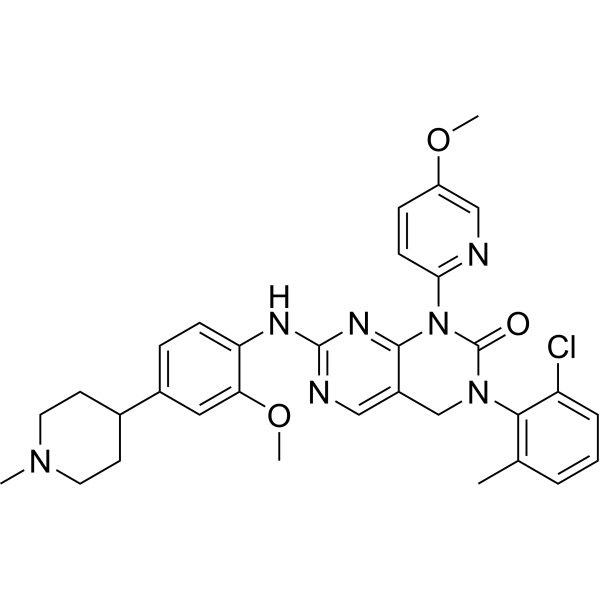
YKL-05-099 is a salt-inducible kinase (SIK) inhibitor. YKL-05-099 binds to SIK1 and SIK3 with IC50s of ~10 and ~30 nM, respectively. YKL-05-099 has slightly less potent SIK2-inhibitory (IC50=40 nM).
Nos produits utilisent uniquement pour la recherche. Nous ne vendons pas aux patients.
- Pureté : 99.73%
- CAS No.: 1936529-65-5
- Formule: C32H34ClN7O3
- Masse moléculaire:600.11
-
Stockage:Powder -20°C, 3 years , 4°C, 2 years ; In solvent -80°C, 2 years , -20°C, 1 year

To place orders, for customer services and technical support, please contact: MedChemExpress USA
Tel: 609-228-6898 E-mail: [email protected] [email protected]


-
 Activité biologique
-
Chemical Information
-
Solvant et solubilité
- Pureté et documentation
- Références
-
 Help & FAQs


-
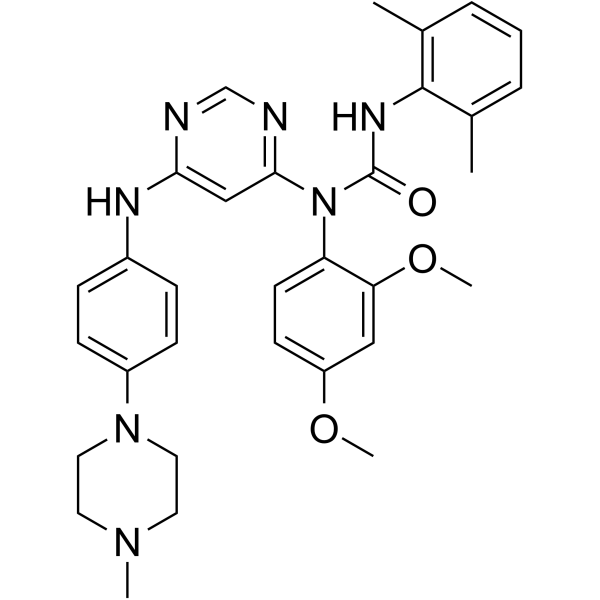
HY-15776
HG-9-91-01SIK Inhibitor -
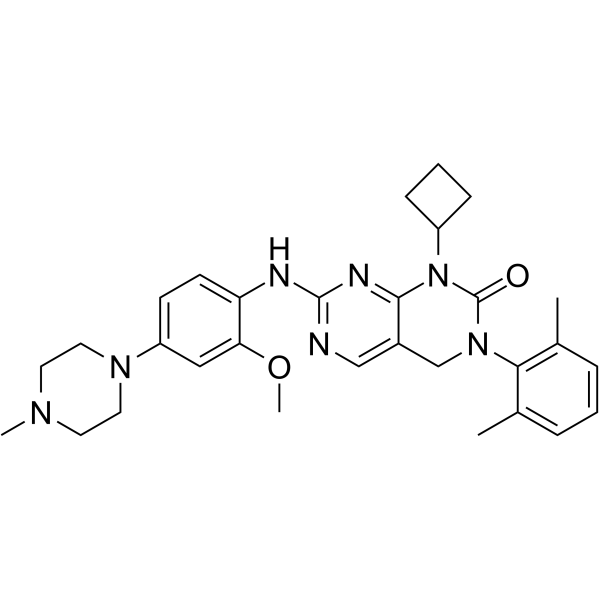
HY-120056
YKL-06-061SIK Inhibitor -
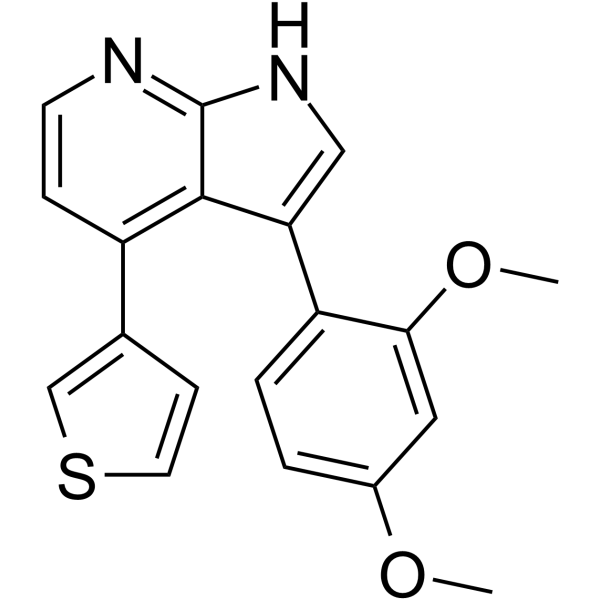
HY-120856
ARN-3236SIK2 Inhibitor -
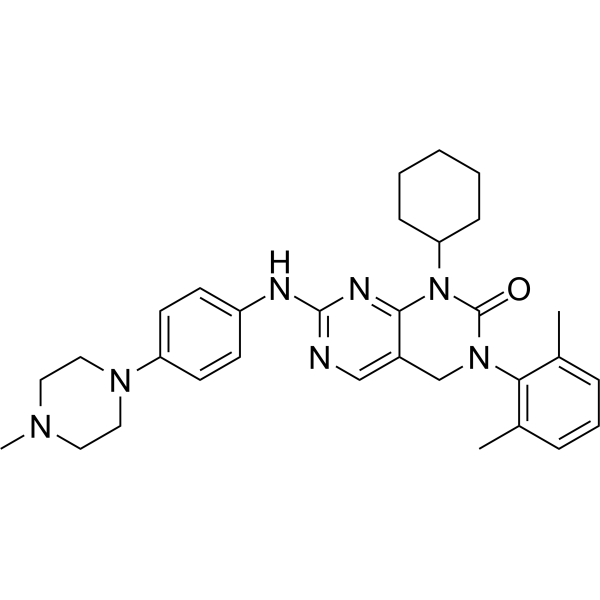
HY-129141
YKL-06-062SIK Inhibitor -
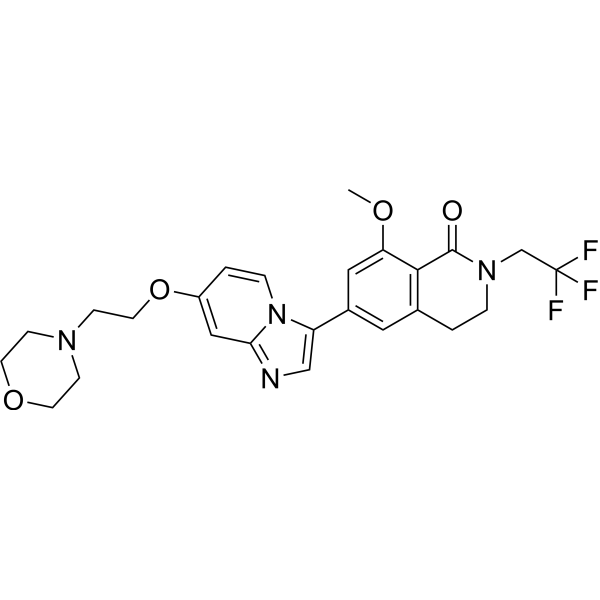
HY-150203
GLPG3970SIK2/SIK3 Inhibitor -
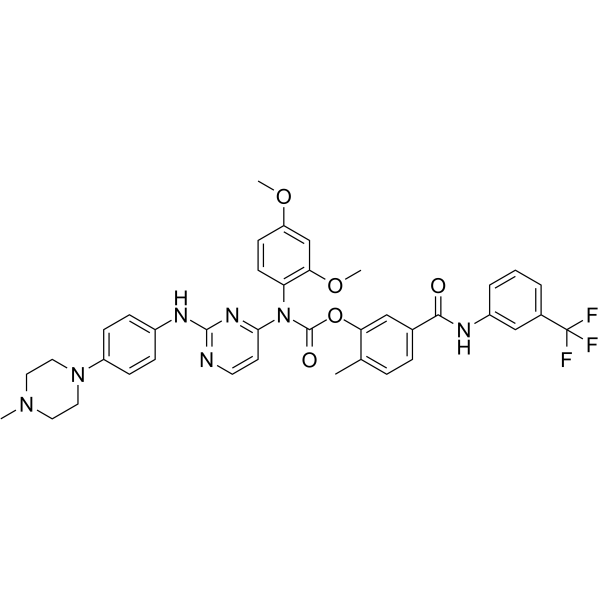
HY-138001
WH-4-025SIK Inhibitor -

HY-101147R
YKL-05-099 (Standard)SIK Inhibitor -
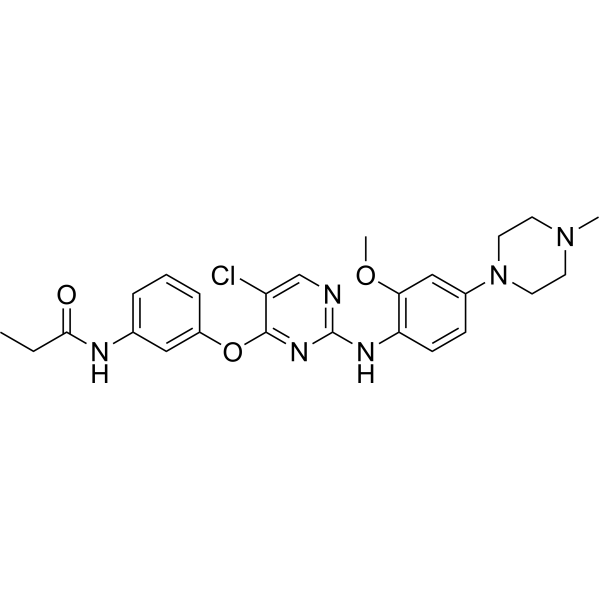
HY-15802
WZ4003NUAK Kinase Inhibitor -
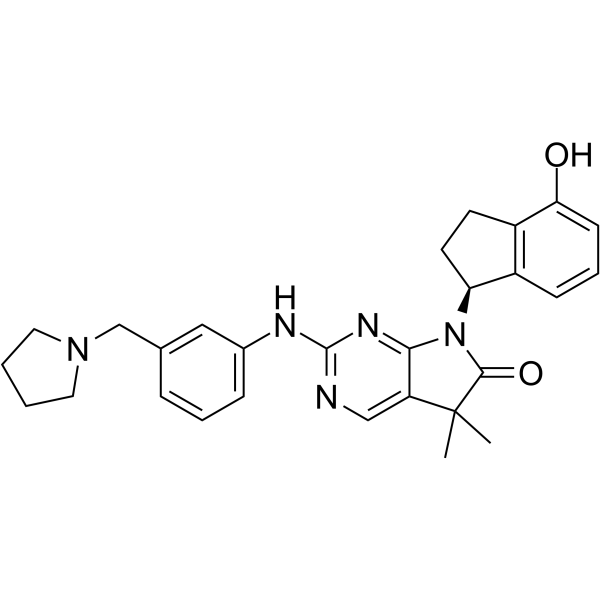
HY-120877
MRT199665MARK/SIK/AMPK Inhibitor -
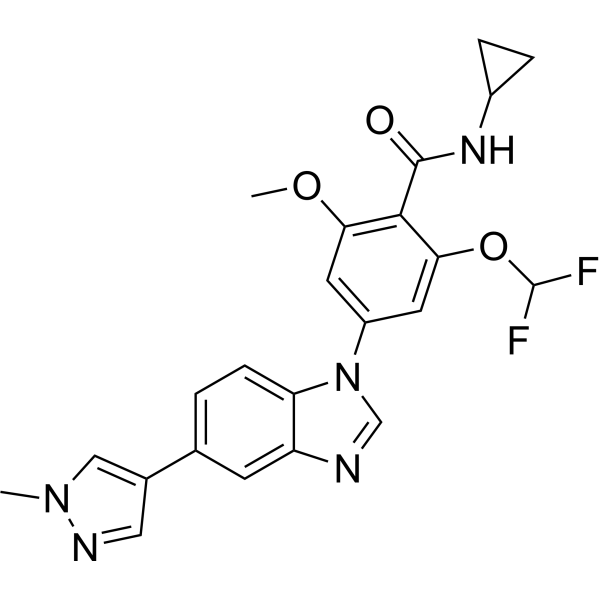
HY-157442
GLPG3312SIK Inhibitor
Publications Citing Use of MedChemExpress (MCE) YKL-05-099
More- Nat Immunol. 2026 Jun;27(6):1237-1252. [Abstract]
- Cancer Lett. 2025 Jul 28:623:217726. [Abstract]
- Proc Natl Acad Sci U S A. 2024 May 21;121(21):e2403685121. [Abstract]
- Br J Pharmacol. 2026 Apr 29. [Abstract]
- JCI Insight. 2022 May 10;e150363. [Abstract]
- bioRxiv. 2025 March 10.
- bioRxiv. 2023 Oct 20:2023.10.19.563158. [Abstract]
- Patent. US20200246435A1.
- Harvard Medical School LINCS LIBRARY
 Customer Validation & Images

-
In Vivo Efficacy Study

-
IF

-
Cell Proliferation/Viability Assay

-
In Vivo Efficacy Study

-
IF


Activité biologique
Description
IC50 & Target
|
SIK1 |
QSK/SIK3 |
In Vitro
YKL-05-099 has slightly less potent SIK2-inhibitory (IC50=40 nM) and IL-10-enhancing activities (EC50=460 nM). YKL-05-099 binds to SIK1 and SIK3 with IC50s of 10 and 30 nM, respectively, in a competitive binding assay. Preincubating bone marrow-derived macrophages with YKL-05-099 reduces LPS stimulated phosphorylation of HDAC5 at the SIK-specific phosphorylation site Ser259. YKL-05-099 suppresses production of the inflammatory cytokines TNFα, IL-6 and IL-12p40, and only modestly enhances IL-1β release in BMDCs stimulated with the yeast cell wall extract Zymosan A[1].
MedChemExpress (MCE) has not independently confirmed the accuracy of these methods. They are for reference only.
In Vivo
MedChemExpress (MCE) has not independently confirmed the accuracy of these methods. They are for reference only.


Chemical Information
-
CAS No. 1936529-65-5
-
Appearance Solid
-
Masse moléculaire 600.11
-
Formule C32H34ClN7O3
-
Color White to light yellow
-
SMILES
O=C1N(C2=NC=C(OC)C=C2)C3=NC(NC4=CC=C(C5CCN(C)CC5)C=C4OC)=NC=C3CN1C6=C(C)C=CC=C6Cl
-
Livraison
Room temperature in continental US; may vary elsewhere.
-
Stockage
Powder -20°C 3 years 4°C 2 years In solvent -80°C 2 years -20°C 1 year


Publications (9)
-
Journal Impact Factor
-
Most Recent
-
Nat Immunol
Inhibition of salt-inducible kinases reprograms T cells and antitumor immunity in ovarian cancer. [Abstract]2026 Jun;27(6):1237-1252. PMID: 42162294
YKL-05-099 purchased from MedChemExpress. Usage Cited in: Nat Immunol. 2026 Jun;27(6):1237-1252. [Abstract]
YKL-05–099 (6 mg/kg; I.P.; 5 times per week) significantly extended survival of OvCa-bearing mice.
YKL-05-099 purchased from MedChemExpress. Usage Cited in: Nat Immunol. 2026 Jun;27(6):1237-1252. [Abstract]
YKL-05–099 (6 mg/kg; I.P.; 5 times per week) significantly increased the expression of apoptosis marked by Cleaved Caspase 3 in PPM tumors.
-
Cancer Lett
2025 Jul 28:623:217726. PMID: 40250791
YKL-05-099 purchased from MedChemExpress. Usage Cited in: Cancer Lett. 2025 Jul 28:623:217726. [Abstract]
YKL-05–099 (1 μM; 72 h) inhibited cell viability in Panc05.04, MIA PaCa-2, AsPC-1 cells.
YKL-05-099 purchased from MedChemExpress. Usage Cited in: Cancer Lett. 2025 Jul 28:623:217726. [Abstract]
YKL-05–099 (15 mg/kg; three times a week for 30 days) decreased tumor volume and weight in nude mice.
YKL-05-099 purchased from MedChemExpress. Usage Cited in: Cancer Lett. 2025 Jul 28:623:217726. [Abstract]
YKL-05–099 (15 mg/kg; three times a week for 30 days) revealed a significant decrease in Ki67-positive cells in PDX tumor tissues.

YKL-05-099 purchased from MedChemExpress. Usage Cited in: Cancer Lett. 2025 Jul 28:623:217726. [Abstract]
YKL-05–099 (15 mg/kg; three times a week for 30 days)increased the expression of 4-HNE in PDX tumor tissues.
-
Proc Natl Acad Sci U S A
Genome-wide CRISPR screens in spheroid culture reveal that the tumor suppressor LKB1 inhibits growth via the PIKFYVE lipid kinase. [Abstract]2024 May 21;121(21):e2403685121. PMID: 38743625 -
Br J Pharmacol
Dual pharmacological targeting of coactivator-associated arginine methyltransferase 1 (CARM1) and salt inducible kinase (SIK) drives ketogenesis in both hepatocytes and mice. [Abstract]2026 Apr 29. PMID: 42055601 -
JCI Insight
2022 May 10;e150363. PMID: 35536646 -
-
bioRxiv
LKB1 suppresses growth and promotes the internalization of EGFR through the PIKFYVE lipid kinase. [Abstract]2023 Oct 20:2023.10.19.563158. PMID: 37904985 -
-
Harvard Medical School LINCS LIBRARY


Solvant et solubilité
In Vitro:
DMSO : ≥ 75 mg/mL (124.98 mM; Hygroscopic DMSO has a significant impact on the solubility of product, please use newly opened DMSO)
* "≥" means soluble, but saturation unknown.
Please refer to the solubility information to select the appropriate solvent. Once prepared, please aliquot and store the solution to prevent product inactivation from repeated freeze-thaw cycles.
Storage method and period of stock solution: -80°C, 2 years; -20°C, 1 year. When stored at -80°C, please use it within 2 years. When stored at -20°C, please use it within 1 year.
Please refer to the solubility information to select the appropriate solvent. Once prepared, please aliquot and store the solution to prevent product inactivation from repeated freeze-thaw cycles.
Storage method and period of stock solution: -80°C, 2 years; -20°C, 1 year. When stored at -80°C, please use it within 2 years. When stored at -20°C, please use it within 1 year.
Concentration (start) × Volume (start) = Concentration (final) × Volume (final)
In Vivo:
Select the appropriate dissolution method based on your experimental animal and administration route.
- For the following dissolution methods, please ensure to first prepare a clear stock solution using an In Vitro approach and then sequentially add co-solvents:
- To ensure reliable experimental results, the clarified stock solution can be appropriately stored based on storage conditions. As for the working solution for In Vivo experiments, it is recommended to prepare freshly and use it on the same day.
- The percentages shown for the solvents indicate their volumetric ratio in the final prepared solution. If precipitation or phase separation occurs during preparation, heat and/or sonication can be used to aid dissolution.
Add each solvent one by one: 10% DMSO 40% PEG300 5% Tween-80 45% Saline
Solubility: ≥ 2.5 mg/mL (4.17 mM); Clear solution
This protocol yields a clear solution of ≥ 2.5 mg/mL (saturation unknown).
Taking 1 mL working solution as an example, add 100 μL DMSO stock solution (25.0 mg/mL) to 400 μL PEG300, and mix evenly; then add 50 μL Tween-80 and mix evenly; then add 450 μL Saline to adjust the volume to 1 mL.
Preparation of Saline: Dissolve 0.9 g sodium chloride in ddH₂O and dilute to 100 mL to obtain a clear Saline solution.
Add each solvent one by one: 10% DMSO 90% (20% SBE-β-CD in Saline)
Solubility: 2.5 mg/mL (4.17 mM); Suspended solution; Need ultrasonic
This protocol yields a suspended solution of 2.5 mg/mL. Suspended solution can be used for oral and intraperitoneal injection.
Taking 1 mL working solution as an example, add 100 μL DMSO stock solution (25.0 mg/mL) to 900 μL 20% SBE-β-CD in Saline, and mix evenly.
Preparation of 20% SBE-β-CD in Saline (4°C, storage for one week): 2 g SBE-β-CD powder is dissolved in 10 mL Saline, completely dissolve until clear.
In Vivo Dissolution Calculator
Please enter the basic information of animal experiments:
-
-
-
-
Recommended: Prepare an additional quantity of animals to account for potential losses during experiments.
Please enter your animal formula composition:
-
%DMSO +
Recommended: Keep the proportion of DMSO in working solution below 2% if your animal is weak.
-
%+
-
+%Tween-80 + +
-
%Saline +
The co-solvents required include: DMSO, . All of co-solvents are available by MedChemExpress (MCE). , Tween 80. All of co-solvents are available by MedChemExpress (MCE).
Working solution concentration: 0.22 mg/mL
Method for preparing stock solution: mg drug dissolved in μL DMSO. Stock solution concentration: mg/mL.
1. Take μL DMSO stock solution;
2. Add μL .
μL , mix evenly;
3. Then add μL Tween 80, mix evenly;
4. Then add μL
Please ensure that the stock solution in the first step is dissolved to a clear state, and add co-solvents in sequence. You can use ultrasonic heating (ultrasonic cleaner, recommended frequency 20-40 kHz), vortexing, etc. to assist dissolution.


Pureté et documentation
-
Fiche technique (277 KB)
-
SDS (393 KB)
- English - EN (393 KB)
- Français - FR (393 KB)
- Deutsch - DE (393 KB)
- Norwegian - NO (393 KB)
- Español - ES (393 KB)
- Swedish - SV (393 KB)
- Italian - IT (393 KB)
- Korean - KR (393 KB)
- Portuguese - PT (393 KB)
-
Instruction de manipulation (2659 KB)
Références


Complete Stock Solution Preparation Table
Please refer to the solubility information to select the appropriate solvent. Once prepared, please aliquot and store the solution to prevent product inactivation from repeated freeze-thaw cycles.
Storage method and period of stock solution: -80°C, 2 years; -20°C, 1 year. When stored at -80°C, please use it within 2 years. When stored at -20°C, please use it within 1 year.
| Optional Solvent | Concentration Solvent Mass | 1 mg | 5 mg | 10 mg | 25 mg |
|---|---|---|---|---|---|
| DMSO | 1 mM | 1.6664 mL | 8.3318 mL | 16.6636 mL | 41.6590 mL |
| 5 mM | 0.3333 mL | 1.6664 mL | 3.3327 mL | 8.3318 mL | |
| 10 mM | 0.1666 mL | 0.8332 mL | 1.6664 mL | 4.1659 mL | |
| 15 mM | 0.1111 mL | 0.5555 mL | 1.1109 mL | 2.7773 mL | |
| 20 mM | 0.0833 mL | 0.4166 mL | 0.8332 mL | 2.0830 mL | |
| 25 mM | 0.0667 mL | 0.3333 mL | 0.6665 mL | 1.6664 mL | |
| 30 mM | 0.0555 mL | 0.2777 mL | 0.5555 mL | 1.3886 mL | |
| 40 mM | 0.0417 mL | 0.2083 mL | 0.4166 mL | 1.0415 mL | |
| 50 mM | 0.0333 mL | 0.1666 mL | 0.3333 mL | 0.8332 mL | |
| 60 mM | 0.0278 mL | 0.1389 mL | 0.2777 mL | 0.6943 mL | |
| 80 mM | 0.0208 mL | 0.1041 mL | 0.2083 mL | 0.5207 mL | |
| 100 mM | 0.0167 mL | 0.0833 mL | 0.1666 mL | 0.4166 mL |


YKL-05-099 Related Classifications
HY-101147 Related Classifications
 Powered by Bioz