1. Antibodies
  2. Primary Antibodies
  3. Polyclonal Antibodies Small-molecule Compounds Antibodies
  4. 4 Hydroxynonenal Antibody

4 Hydroxynonenal Antibody is a Rabbit-derived and non-conjugated IgG polyclonal antibody, targeting to 4 Hydroxynonenal.

商品は「研究用試薬」です。人や動物の医療用・臨床診断用・食品用の製品ではありません。
研究用途以外に使用した場合、当社は一切の責任を負いかねます。

容量 価格(税別) 在庫状況 数量
無料サンプル   今すぐ申し込む  
10 μL $80 在庫あり
50 μL $210 在庫あり
100 μL $340 在庫あり
250 μL   お問い合わせ  

* アイテムを追加する前、数量をご選択ください

Top Publications Citing Use of Products

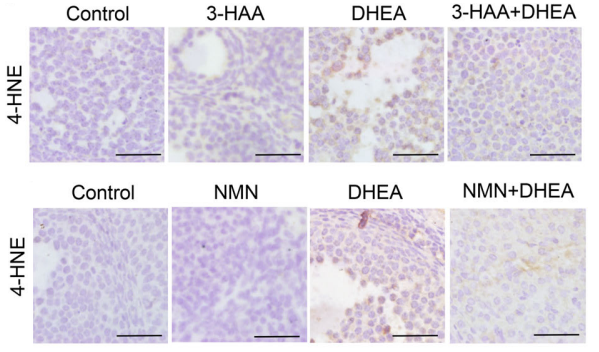
    4 Hydroxynonenal Antibody purchased from MCE. Usage Cited in: Adv Sci (Weinh). 2025 Oct 13:e06497.  [Abstract]

    4 Hydroxynonenal Antibody (diluted 1:400). Representative 4‐HNE‐stained images of ovarian tissues from the indicated groups of mice (scale bar, 20 µm).

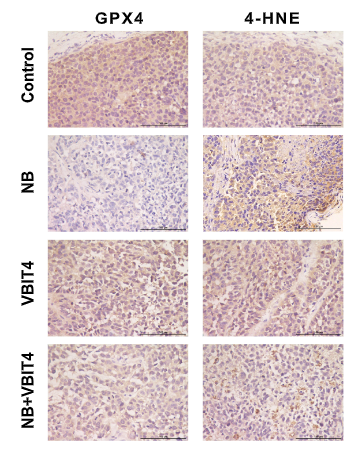
    4 Hydroxynonenal Antibody purchased from MCE. Usage Cited in: Redox Biol. 2025 May 29:85:103672.  [Abstract]

    IHC staining of 4-HNE, and GPX4 in xenograft tumors across different treatment groups.

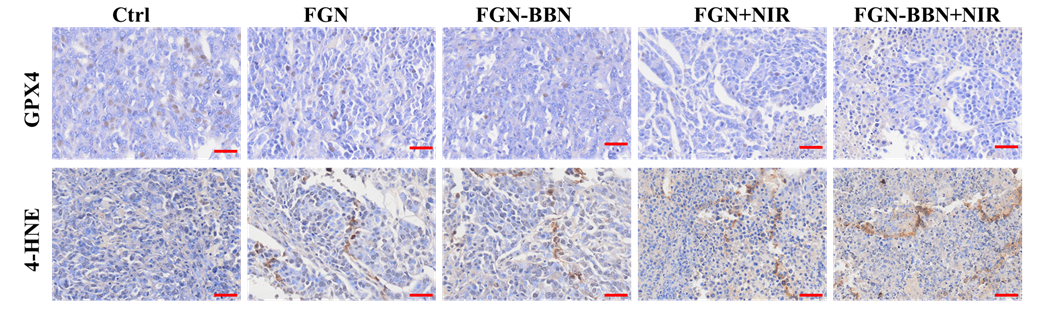
    4 Hydroxynonenal Antibody purchased from MCE. Usage Cited in: Mater Today Bio. 2025 Sep 18:35:102317.  [Abstract]

    4 Hydroxynonenal Antibody (1: 500). Representative immunohistochemical staining of 4-HNE and GPX4 in tumor sections from each treatment group (Ctrl, FGN, FGN-BBN, FGN+NIR, and FGN-BBN+NIR). Scale bar: 50 μm.

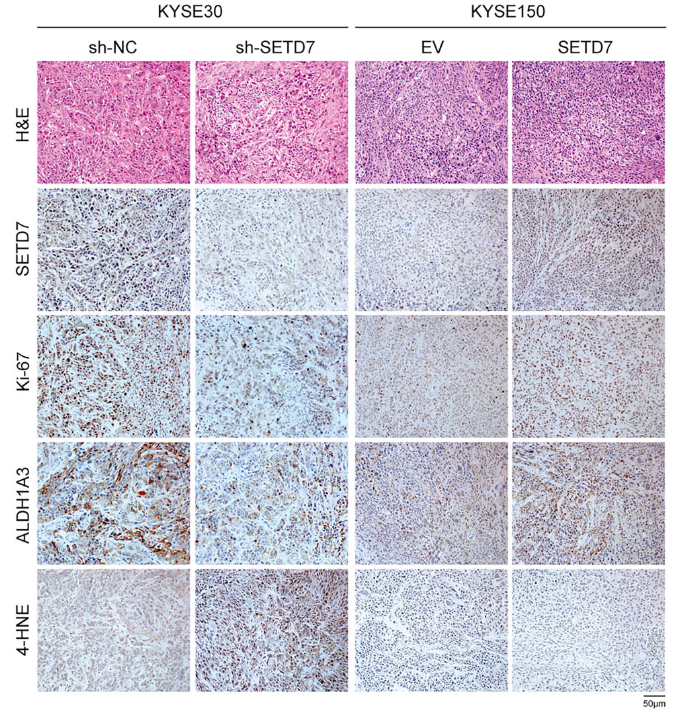
    4 Hydroxynonenal Antibody purchased from MCE. Usage Cited in: Cell Death Dis. 2025 Nov 7;16(1):810.  [Abstract]

    Representative images of H&E staining and IHC staining for SETD7, Ki67, ALDH1A3, and 4-HNE in subcutaneous xenograft tumors. Scale bar: 50 μm.

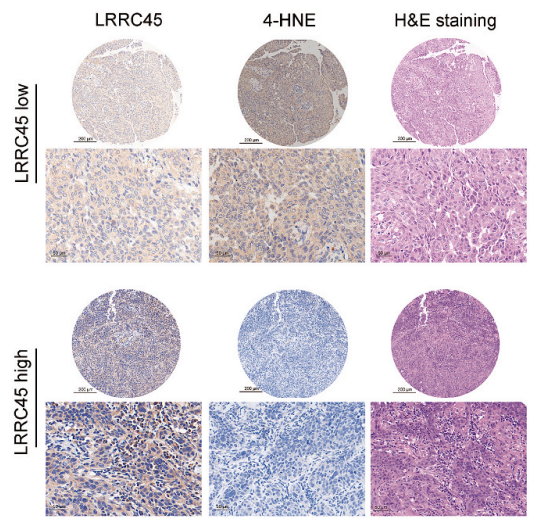
    4 Hydroxynonenal Antibody purchased from MCE. Usage Cited in: Free Radic Biol Med. 2024 Nov 8:226:29-42.  [Abstract]

    Representative IHC staining images showing levels of LRRC45 and 4-HNE (4 Hydroxynonenal) in bladder cancer tissues. The scale bars represent 200 μm (low magnification) and 50 μm (high magnification).

    4 Hydroxynonenal Antibody purchased from MCE. Usage Cited in: J Future Foods. 2025 Oct 27.

    Representative immunohistochemical staining of 4 Hydroxynonenal (4-HNE) (brown).
    • WB: Western Blot;
    • IHC-P: Immunohistochemistry-Paraffin;
    • IHC-F: Immunohistochemistry-Frozen;
    • ICC/IF: Immunocytochemistry/Immunofluorescence;
    • IF-Tissue: Immunofluorescence-Tissue;
    • mIHC: Multiplex Immunohistochemical;
    • IP: Immunoprecipitation;
    • ChIP: Chromatin Immunoprecipitation;
    • FC: Flow Cytometry;
    • ELISA: Enzyme Linked Immunosorbent Assay
    • Product Detail

    • Verification Image

    • Background

    • 説明

    製品説明

    4 Hydroxynonenal Antibody is a Rabbit-derived and non-conjugated IgG polyclonal antibody, targeting to 4 Hydroxynonenal.

    Host

    Rabbit

    Clonality

    Polyclonal

    分子量

    Predicted band size: 0.156 kDa

    Species Reactivity
    Species independent
    SwissProt ID

    Gene ID
    Immunogen

    KLH conjugated 4-Hydroxynonenal.

    Application &
    Dilution Ratio
    Application Dilution Ratio
    WB
    WB: Western Blot
    1:500-2000
    IHC-P
    IHC-P: Immunohistochemistry-Paraffin
    1:100-500
    IF-Tissue
    IF-Tissue: Immunofluorescence-Tissue
    1:100-500
    mIHC
    mIHC: Multiplex Immunohistochemical
    1:800
    Sensitivity Endogenous 純度 affinity purified
    Conjugation Non-conjugated Modification Unmodified
    Isotype IgG  
    Appearance

    Liquid

    Formulation

    Supplied in 0.01M TBS(pH7.4) with 1% BSA, 0.03% Proclin300 and 50% Glycerol.

    Storage & Stability

    Stored at -20°C for 1 year. Avoid repeated freeze / thaw cycles.

    輸送条件

    Shipping with blue ice.

    Verification Image
    ALL IHC-P mIHC
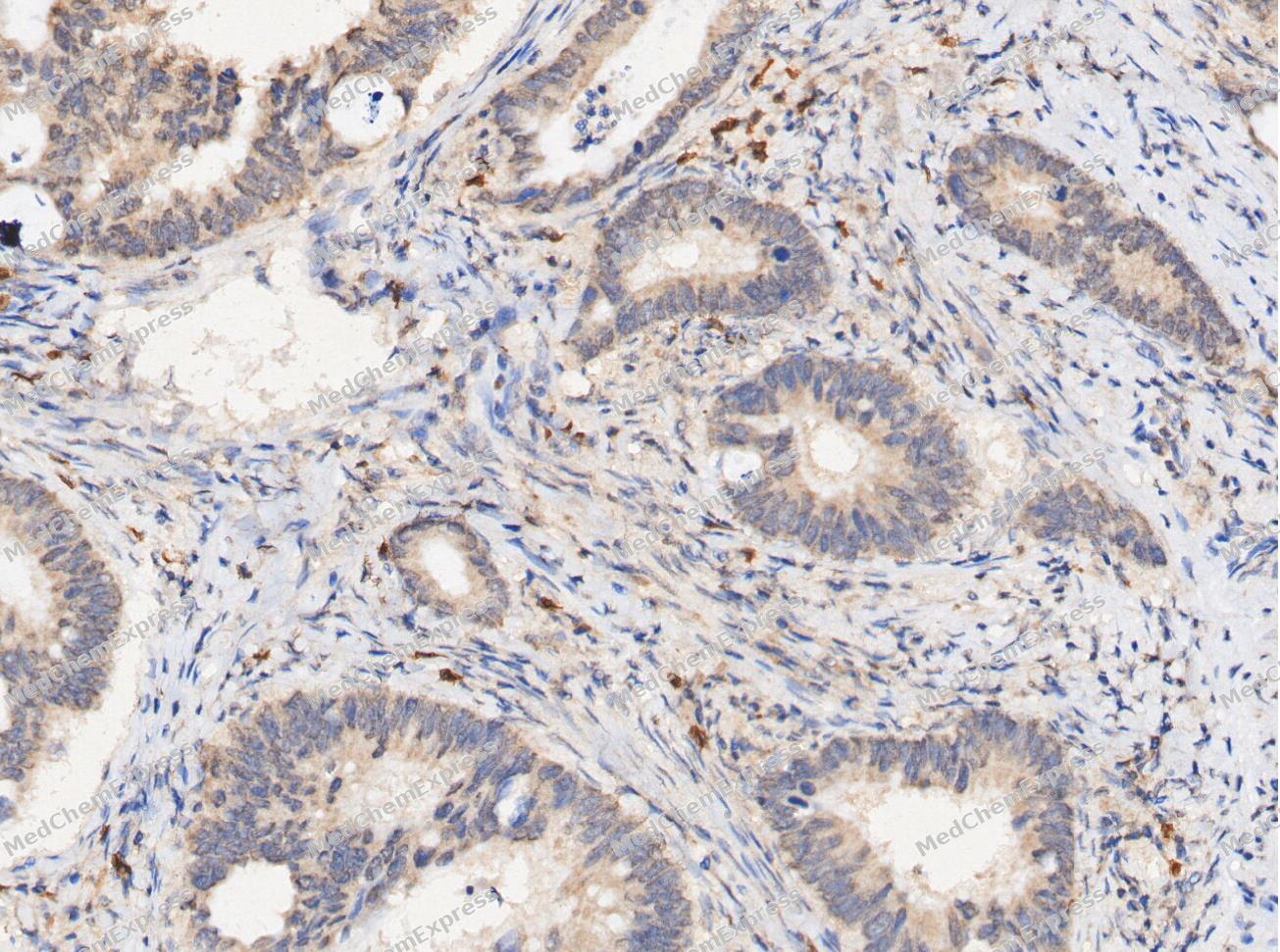
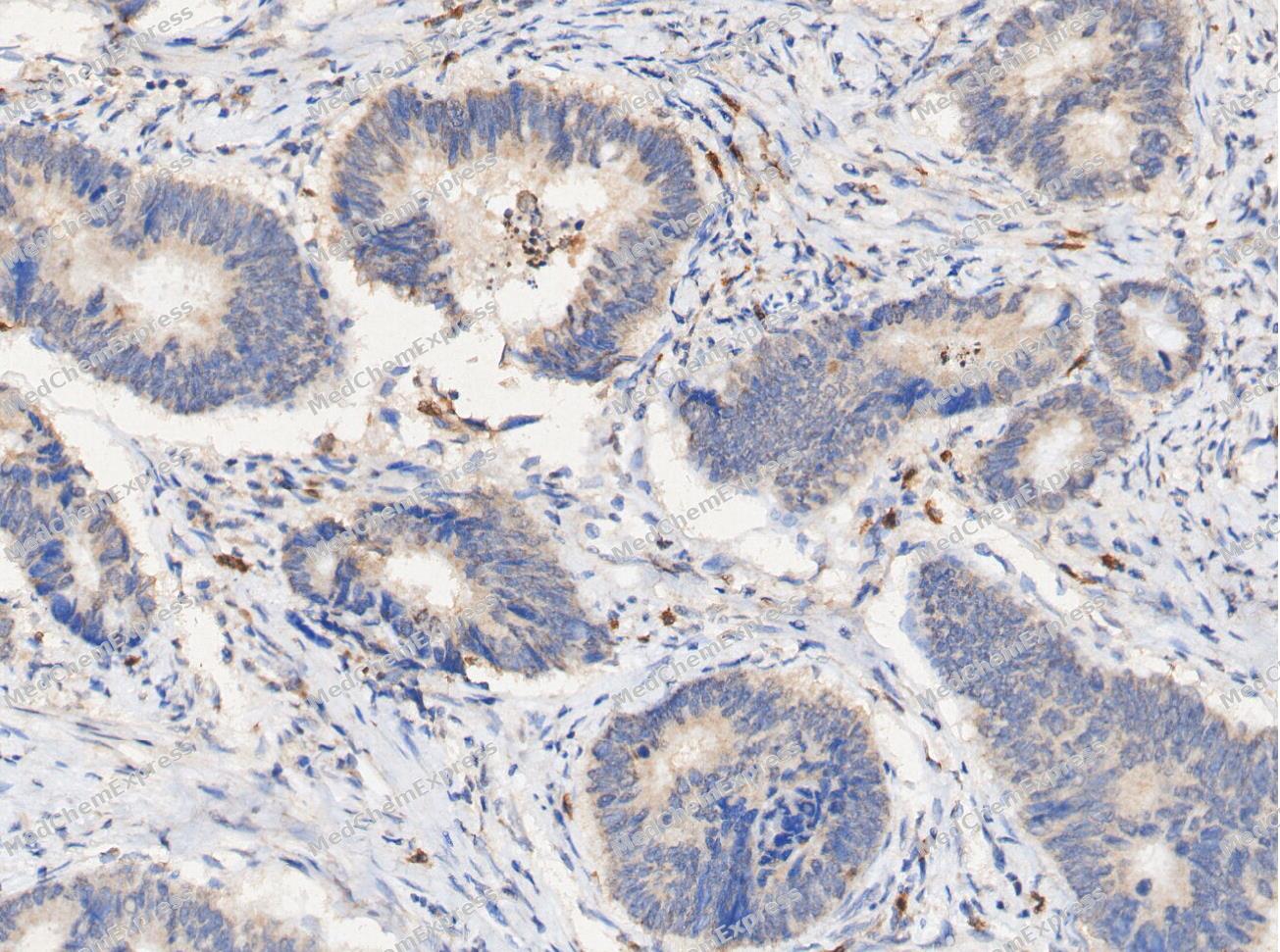
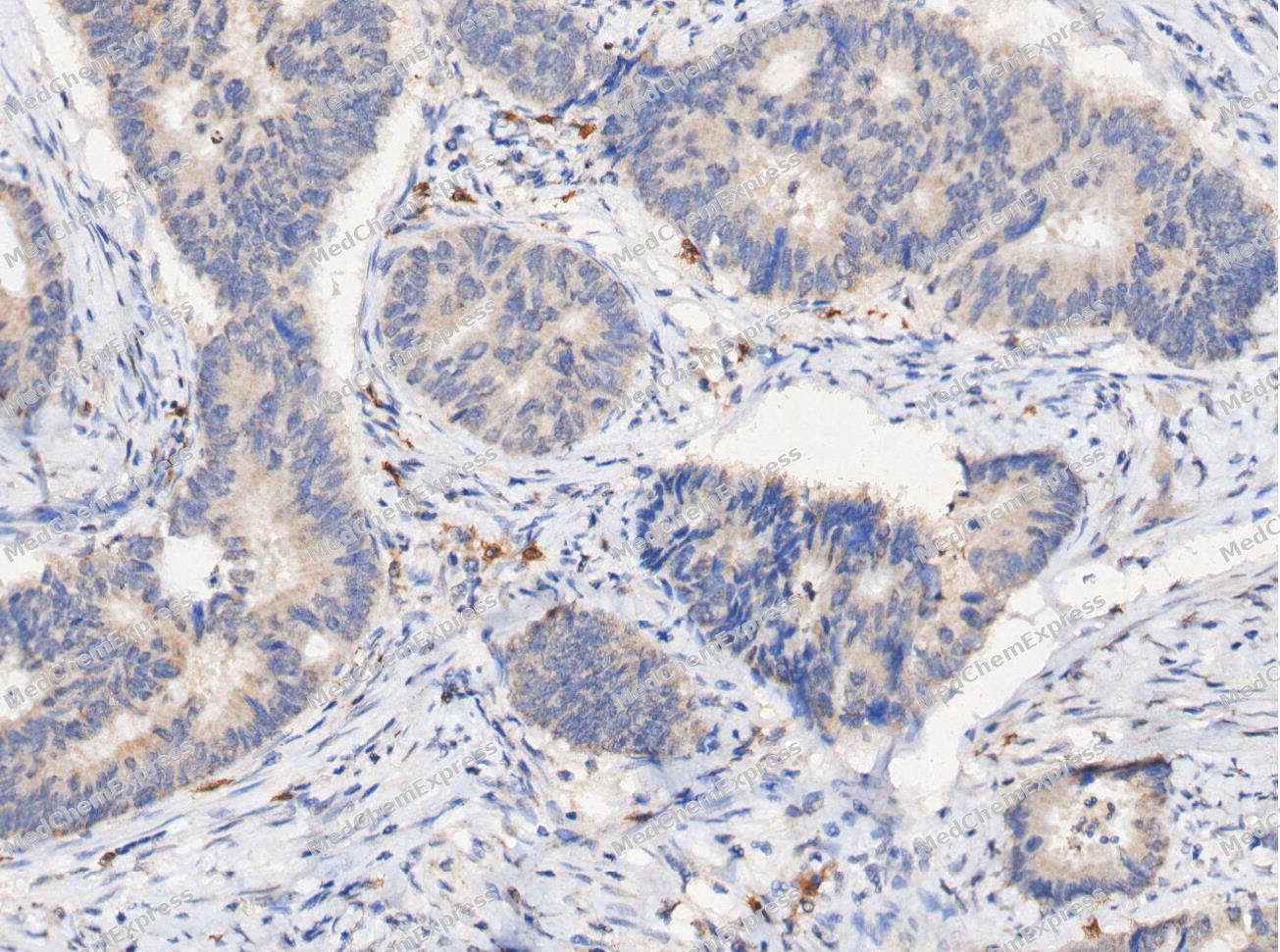
    • Immunohistochemical analysis of paraffin-embedded human Colon cancer‌ tissue using 4 Hydroxynonenal antibody was performed. The section was pretreated using high-temperature and high-pressure mediated EDTA antigen retrieval buffer (pH 9.0), for 5 minutes. The tissues were incubated with primary antibody (HY-P81208, 1:500 dilution) at room temperature for 60 minutes. Detection was performed using an HRP conjugated compact polymer system. DAB was used as the chromogen. The tissues were counterstained with hematoxylin and mounted with neutral balsam mounting medium.

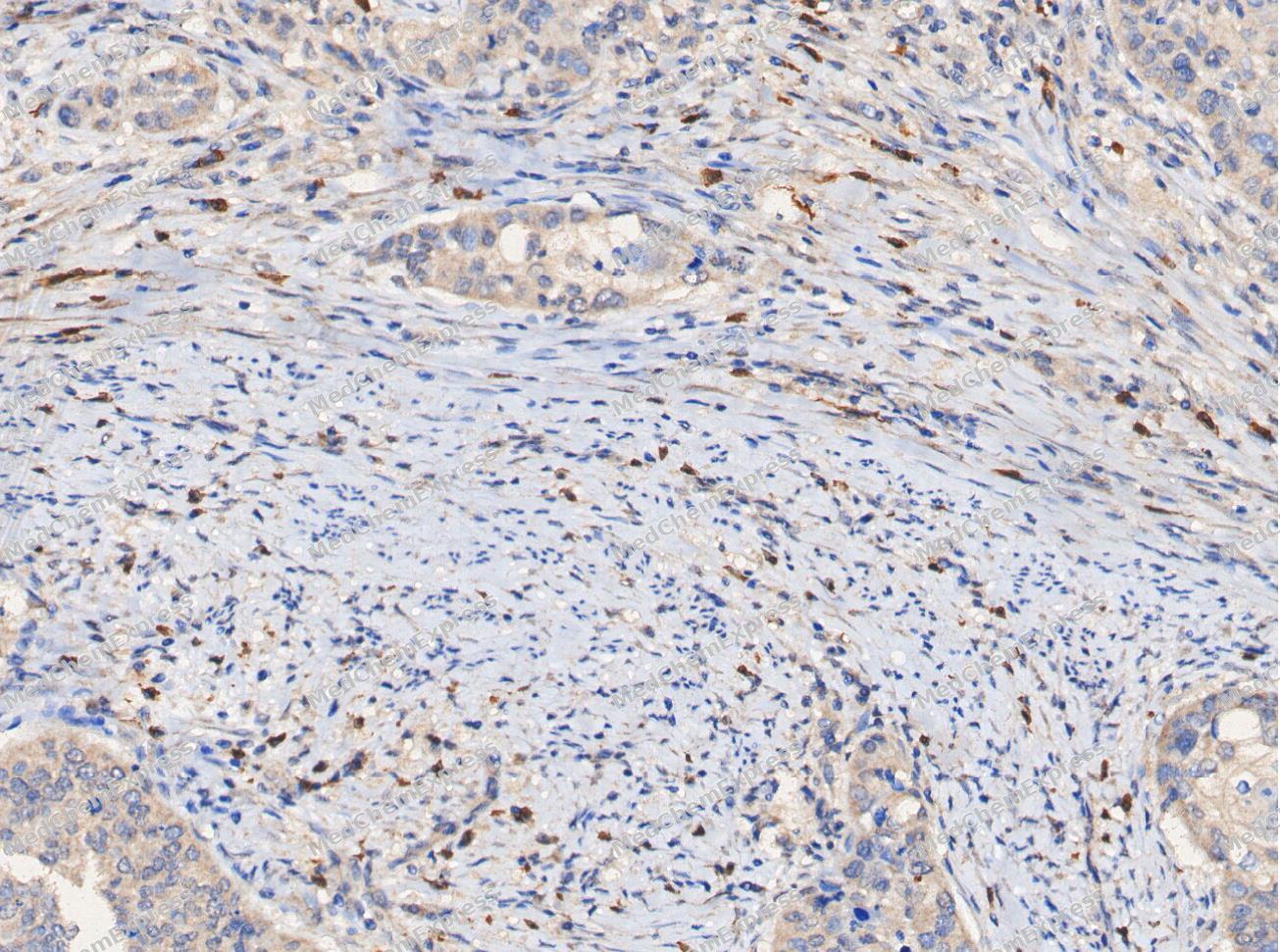
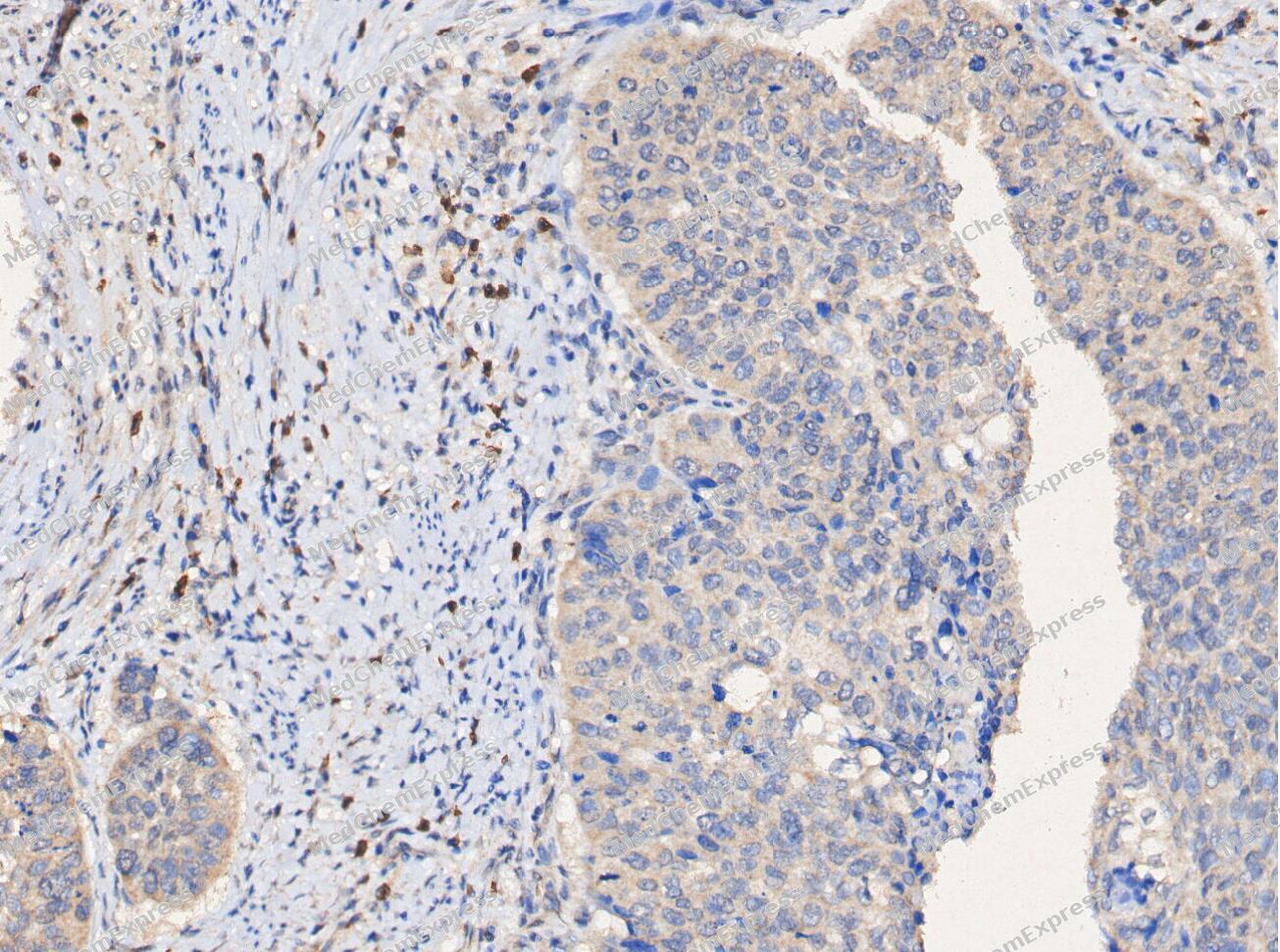
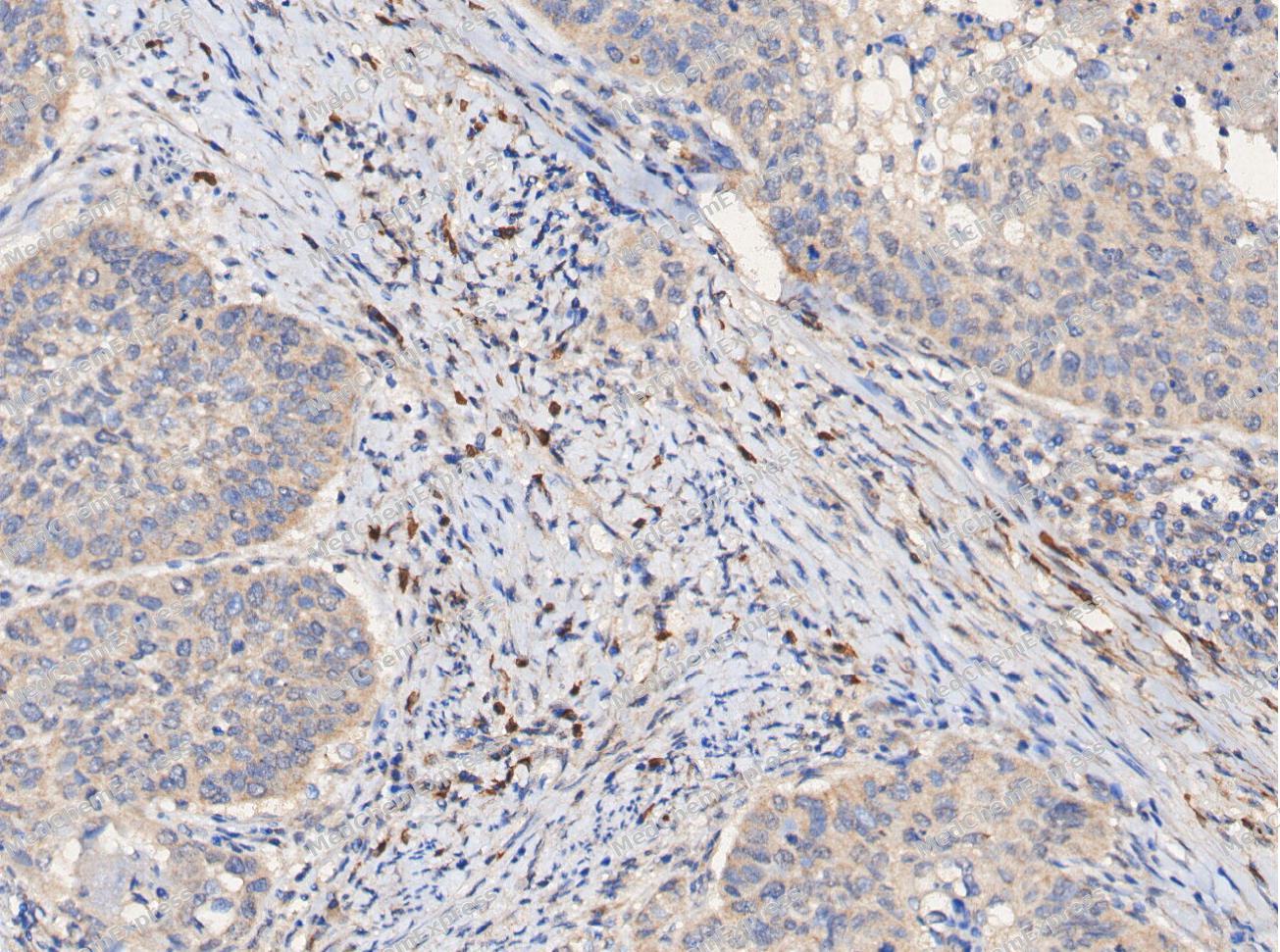
    • Immunohistochemical analysis of paraffin-embedded human Esophageal Carcinoma tissue using 4 Hydroxynonenal antibody was performed. The section was pretreated using high-temperature and high-pressure mediated EDTA antigen retrieval buffer (pH 9.0), for 5 minutes. The tissues were incubated with primary antibody (HY-P81208, 1:500 dilution) at room temperature for 60 minutes. Detection was performed using an HRP conjugated compact polymer system. DAB was used as the chromogen. The tissues were counterstained with hematoxylin and mounted with neutral balsam mounting medium.

    • Immunohistochemical analysis of paraffin-embedded human Esophageal Carcinoma tissue using 4 Hydroxynonenal antibody was performed. The section was pretreated using high-temperature and high-pressure mediated EDTA antigen retrieval buffer (pH 9.0), for 5 minutes. The tissues were incubated with primary antibody (HY-P81208, 1:500 dilution) at room temperature for 60 minutes. Detection was performed using an HRP conjugated compact polymer system. DAB was used as the chromogen. The tissues were counterstained with hematoxylin and mounted with neutral balsam mounting medium.

    • Immunohistochemical analysis of paraffin-embedded human Colon cancer‌‌ tissue using 4 Hydroxynonenal antibody was performed. The section was pretreated using high-temperature and high-pressure mediated EDTA antigen retrieval buffer (pH 9.0), for 5 minutes. The tissues were incubated with primary antibody (HY-P81208, 1:500 dilution) at room temperature for 60 minutes. Detection was performed using an HRP conjugated compact polymer system. DAB was used as the chromogen. The tissues were counterstained with hematoxylin and mounted with neutral balsam mounting medium.

    • Immunohistochemical analysis of paraffin-embedded human Colon cancer‌ tissue using 4 Hydroxynonenal antibody was performed. The section was pretreated using high-temperature and high-pressure mediated EDTA antigen retrieval buffer (pH 9.0), for 5 minutes. The tissues were incubated with primary antibody (HY-P81208, 1:500 dilution) at room temperature for 60 minutes. Detection was performed using an HRP conjugated compact polymer system. DAB was used as the chromogen. The tissues were counterstained with hematoxylin and mounted with neutral balsam mounting medium.

    • Immunohistochemical analysis of paraffin-embedded human Esophageal Carcinoma tissue using 4 Hydroxynonenal antibody was performed. The section was pretreated using high-temperature and high-pressure mediated EDTA antigen retrieval buffer (pH 9.0), for 5 minutes. The tissues were incubated with primary antibody (HY-P81208, 1:500 dilution) at room temperature for 60 minutes. Detection was performed using an HRP conjugated compact polymer system. DAB was used as the chromogen. The tissues were counterstained with hematoxylin and mounted with neutral balsam mounting medium.

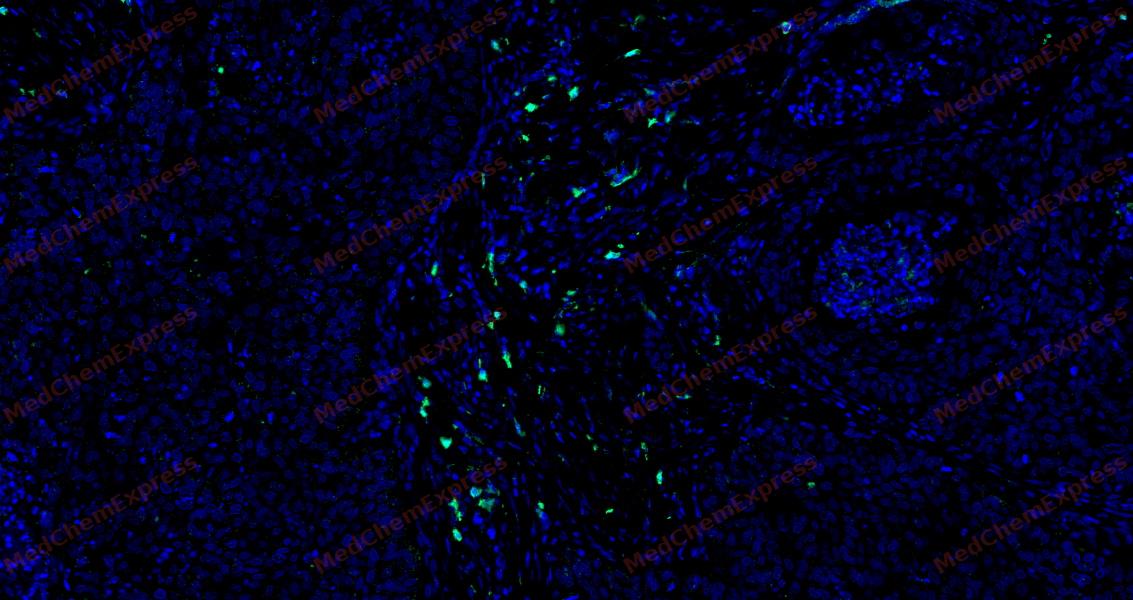
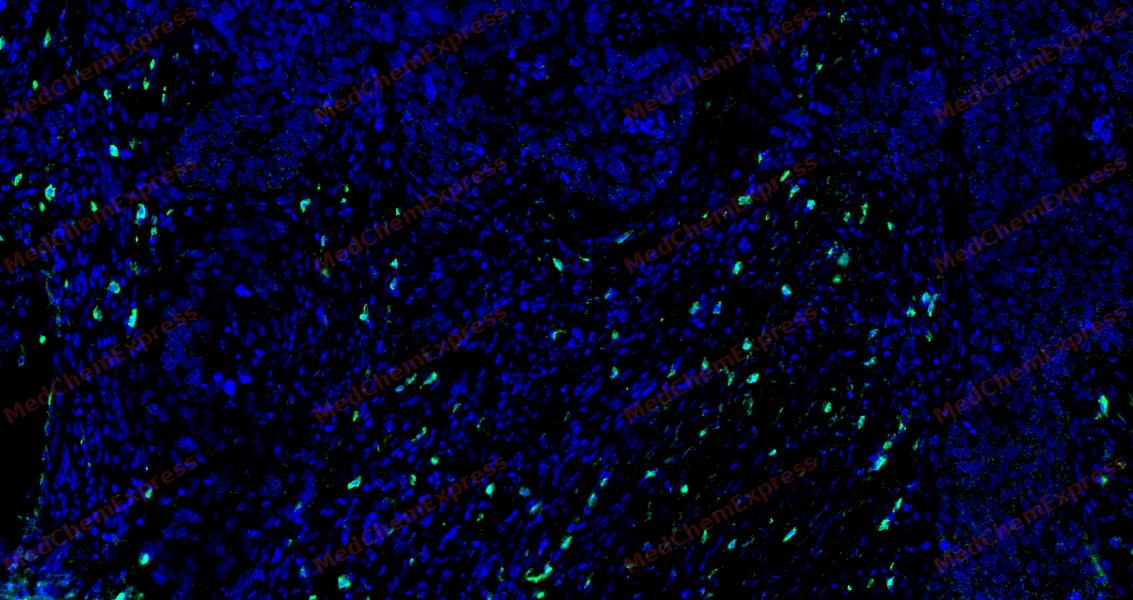
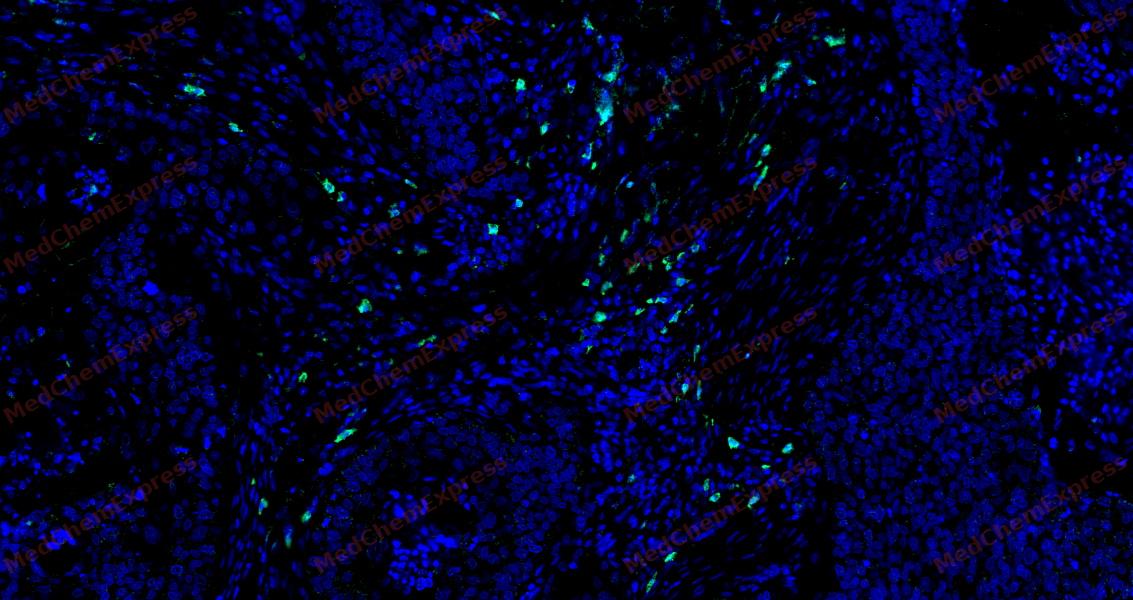
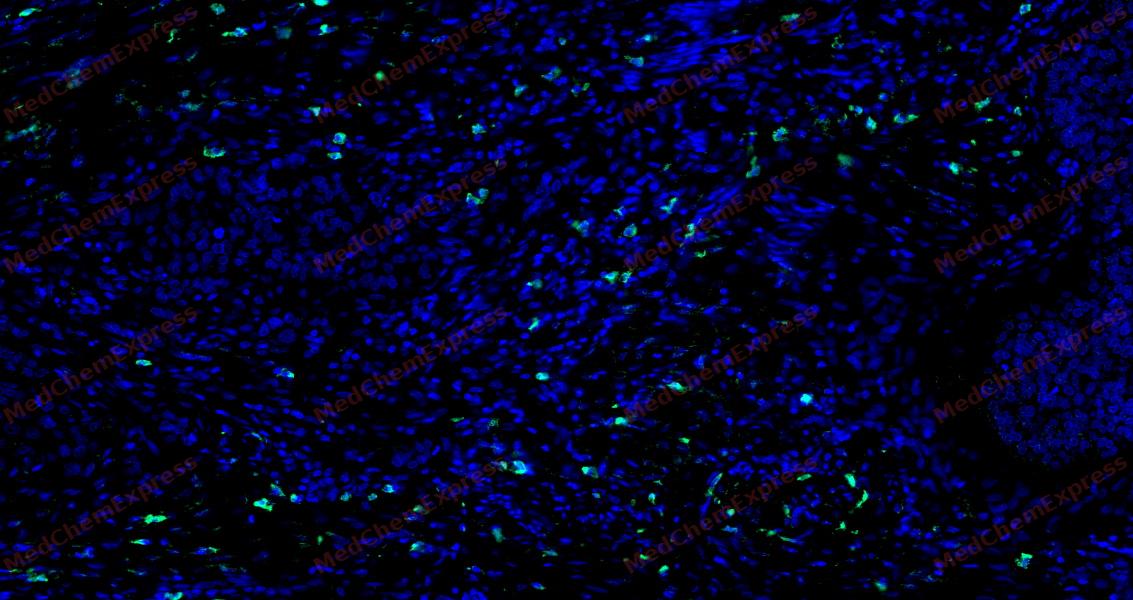
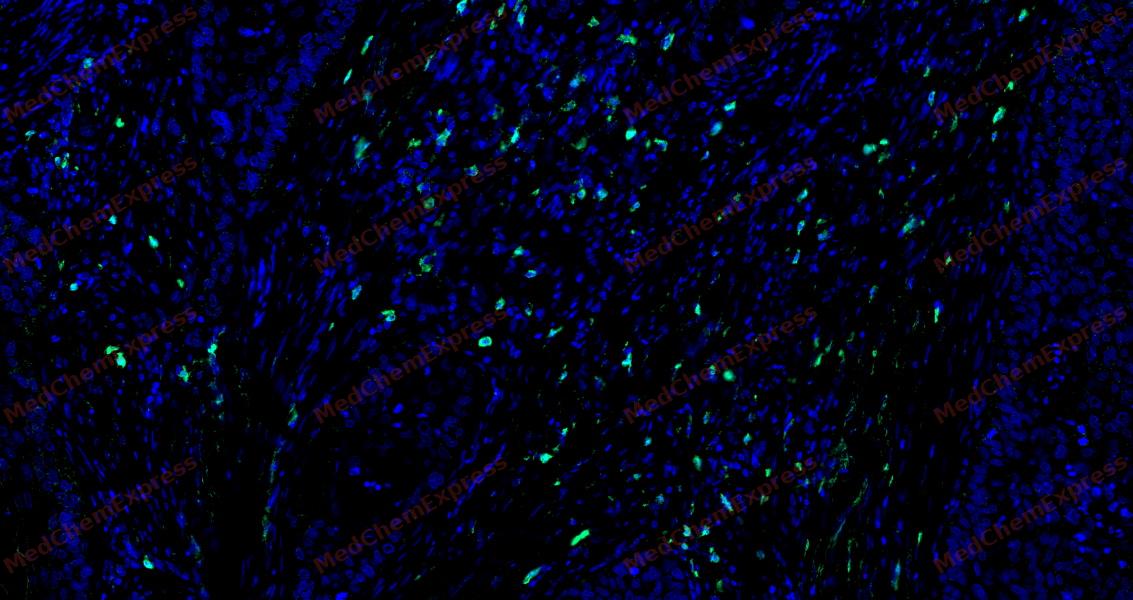
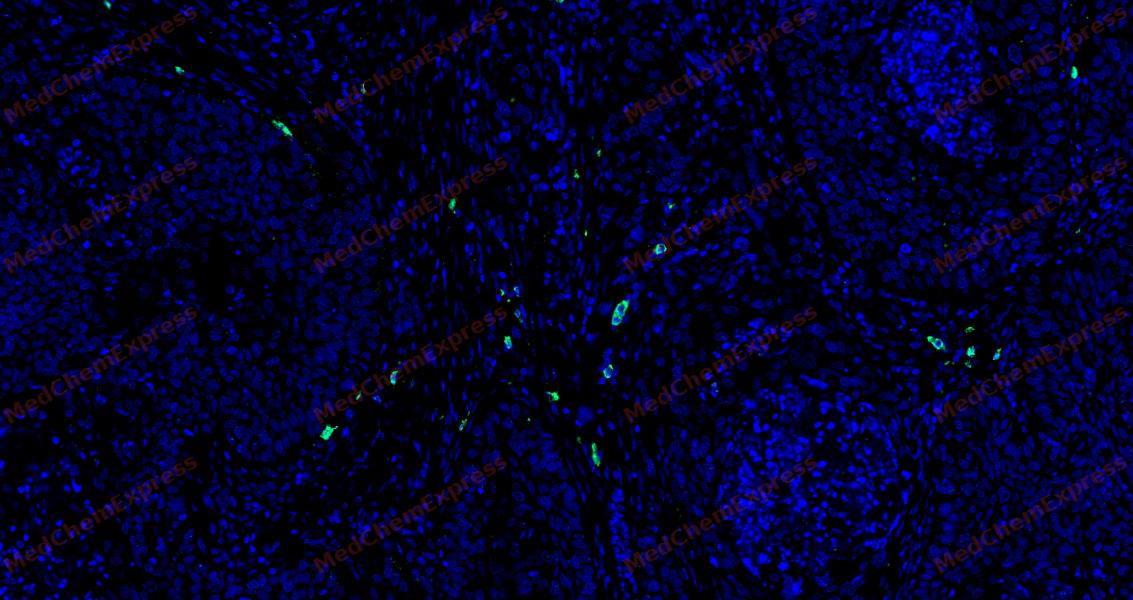
    • Tyramide signaling amplification based immunofluorescence was performed on paraffin-embedded human Esophageal Carcinoma tissue using 4 Hydroxynonenal antibody. Antigen retrieval was performed in EDTA buffer pH 9.0 (95 °C, 20 min) followed by cooling to RT. Then incubated with primary antibody (HY-P81208, 1:800 dilution) at room temperature for 60 minutes and HRP conjugated secondary antibody for 10 minutes. Fluorescence was then developed with Vari Fluor 532 TSA (200×)(HY-D1832). The tissues were counterstained with DAPI and mounted with Anti-fade mounting medium.

    • Tyramide signaling amplification based immunofluorescence was performed on paraffin-embedded human Esophageal Carcinoma tissue using 4 Hydroxynonenal antibody. Antigen retrieval was performed in EDTA buffer pH 9.0 (95 °C, 20 min) followed by cooling to RT. Then incubated with primary antibody (HY-P81208, 1:800 dilution) at room temperature for 60 minutes and HRP conjugated secondary antibody for 10 minutes. Fluorescence was then developed with Vari Fluor 532 TSA (200×)(HY-D1832). The tissues were counterstained with DAPI and mounted with Anti-fade mounting medium.

    • Tyramide signaling amplification based immunofluorescence was performed on paraffin-embedded human Esophageal Carcinoma tissue using 4 Hydroxynonenal antibody. Antigen retrieval was performed in EDTA buffer pH 9.0 (95 °C, 20 min) followed by cooling to RT. Then incubated with primary antibody (HY-P81208, 1:800 dilution) at room temperature for 60 minutes and HRP conjugated secondary antibody for 10 minutes. Fluorescence was then developed with Vari Fluor 532 TSA (200×)(HY-D1832). The tissues were counterstained with DAPI and mounted with Anti-fade mounting medium.

    • Tyramide signaling amplification based immunofluorescence was performed on paraffin-embedded human Esophageal Carcinoma tissue using 4 Hydroxynonenal antibody. Antigen retrieval was performed in EDTA buffer pH 9.0 (95 °C, 20 min) followed by cooling to RT. Then incubated with primary antibody (HY-P81208, 1:800 dilution) at room temperature for 60 minutes and HRP conjugated secondary antibody for 10 minutes. Fluorescence was then developed with Vari Fluor 532 TSA (200×)(HY-D1832). The tissues were counterstained with DAPI and mounted with Anti-fade mounting medium.

    • Tyramide signaling amplification based immunofluorescence was performed on paraffin-embedded human Esophageal Carcinoma tissue using 4 Hydroxynonenal antibody. Antigen retrieval was performed in EDTA buffer pH 9.0 (95 °C, 20 min) followed by cooling to RT. Then incubated with primary antibody (HY-P81208, 1:800 dilution) at room temperature for 60 minutes and HRP conjugated secondary antibody for 10 minutes. Fluorescence was then developed with Vari Fluor 532 TSA (200×)(HY-D1832). The tissues were counterstained with DAPI and mounted with Anti-fade mounting medium.

    • Tyramide signaling amplification based immunofluorescence was performed on paraffin-embedded human Esophageal Carcinoma tissue using 4 Hydroxynonenal antibody. Antigen retrieval was performed in EDTA buffer pH 9.0 (95 °C, 20 min) followed by cooling to RT. Then incubated with primary antibody (HY-P81208, 1:800 dilution) at room temperature for 60 minutes and HRP conjugated secondary antibody for 10 minutes. Fluorescence was then developed with Vari Fluor 532 TSA (200×)(HY-D1832). The tissues were counterstained with DAPI and mounted with Anti-fade mounting medium.

    Background
    Function:4-Hydroxynonenal (HY-113466):4-Hydroxynonenal (4-HNE) is an α,β unsaturated hydroxyalkenal and an oxidative/nitrosative stress biomarker. 4-Hydroxynonenal is a substrate and an inhibitor of acetaldehyde dehydrogenase 2 (ALDH2) . 4-Hydroxynonenal can modulate a number of signaling processes mainly through forming covalent adducts with nucleophilic functional groups in proteins, nucleic acids, and membrane lipids. 4-Hydroxynonenal plays an important role in cancer through mitochondria.
    RRID
    Synonyms
    4-Hydroxy-2-Nonenal; 4Hydroxynonenal; 4-Hydroxynonenal; HNE; 4HNE; 4-HNE; (E)-4-Hydroxy-2-nonenal; 2-Nonenal, 4-hydroxy-, (2E)-; (2E)-4-Hydroxy-2-nonenal; 4-Hydroxy-2(E)-nonenal
    ドキュメンテーション
    Help & FAQs
    • Do most proteins show cross-species activity?

      Species cross-reactivity must be investigated individually for each product. Many human cytokines will produce a nice response in mouse cell lines, and many mouse proteins will show activity on human cells. Other proteins may have a lower specific activity when used in the opposite species.

    最近チェックした製品:

    オンラインお問い合わせ

    Your information is safe with us. * Required Fields.

    製品名


    カスタマ需要量 *

    お名前 *


    タイトル

    メールアドレス *


    電話番号 *

    デパートメント


    組纖名 *

    市区町村

    都道府県

    国或いは地域 *


    必ず会社名を記載ください。個人への返信は行いません。

    備考

    バルクお問い合わせ

    Inquiry Information

    製品名:
    4 Hydroxynonenal Antibody
    製品番号:
    HY-P81208
    数量:
    MCE 日本正規代理店: