



ACAN Antibody
(Synonyms: Aggrecan; Aggrecan core protein; Cartilage-specific proteoglycan core protein; CSPCP; Chondroitin sulfate proteoglycan core protein 1; Chondroitin sulfate proteoglycan 1; Aggrecan core protein 2; AGC1; CSPG1; MSK16; PGCA_HUMAN.)
Based on 1 Customer Validation
ACAN Antibody is a Rabbit-derived and non-conjugated IgG monoclonal antibody, targeting to ACAN.
-
Host:
Rabbit
-
Isotype:
IgG
-
Application:
IHC-P
-
Reactivity :
Human
-
Formulation:
Supplied in 50mM Tris-Glycine(pH 7.4), 0.15M NaCl, 40%Glycerol, 0.01% sodium azide and 0.05% BSA.
-
Conjugation:
Non-conjugated


To place orders, for customer services and technical support, please contact: MedChemExpress USA
Tel: 609-228-6898 E-mail: [email protected] [email protected]





Applications
| Application |
IHC-P

IHC-P: Immunohistochemistry-Paraffin
|
|---|---|
| Dilution Ratio | 1:50-100 |


Product Details
ACAN Antibody is a Rabbit-derived and non-conjugated IgG monoclonal antibody, targeting to ACAN.
-
Host Rabbit

-
Clonality Monoclonal,Recombinant

-
Species ReactivityHuman
-
Observed Molecular WeightObserved band size: 261 kDa
Note: Due to possible protein modifications or aggregation, the molecular weight should be confirmed by actual measurement, and the predicted value is for reference only.

-
Calculated Molecular Weight Predicted band size: 261 kDa

A synthesized peptide derived from human Aggrecan aa700-900.
Endogenous
affinity purified
Non-conjugated
Unmodified
IgG


Product Properties
-
Appearance
Solution
-
Formulation
Supplied in 50mM Tris-Glycine(pH 7.4), 0.15M NaCl, 40%Glycerol, 0.01% sodium azide and 0.05% BSA.
-
Concentration
Batch-dependent, Please check the COA for the concentration of each lot. Check Lot Concentration
-
Storage & Stability
Stored at -20°C for 1 year. Avoid repeated freeze / thaw cycles.
-
Shipping
Shipping with blue ice.


Verification Images
-
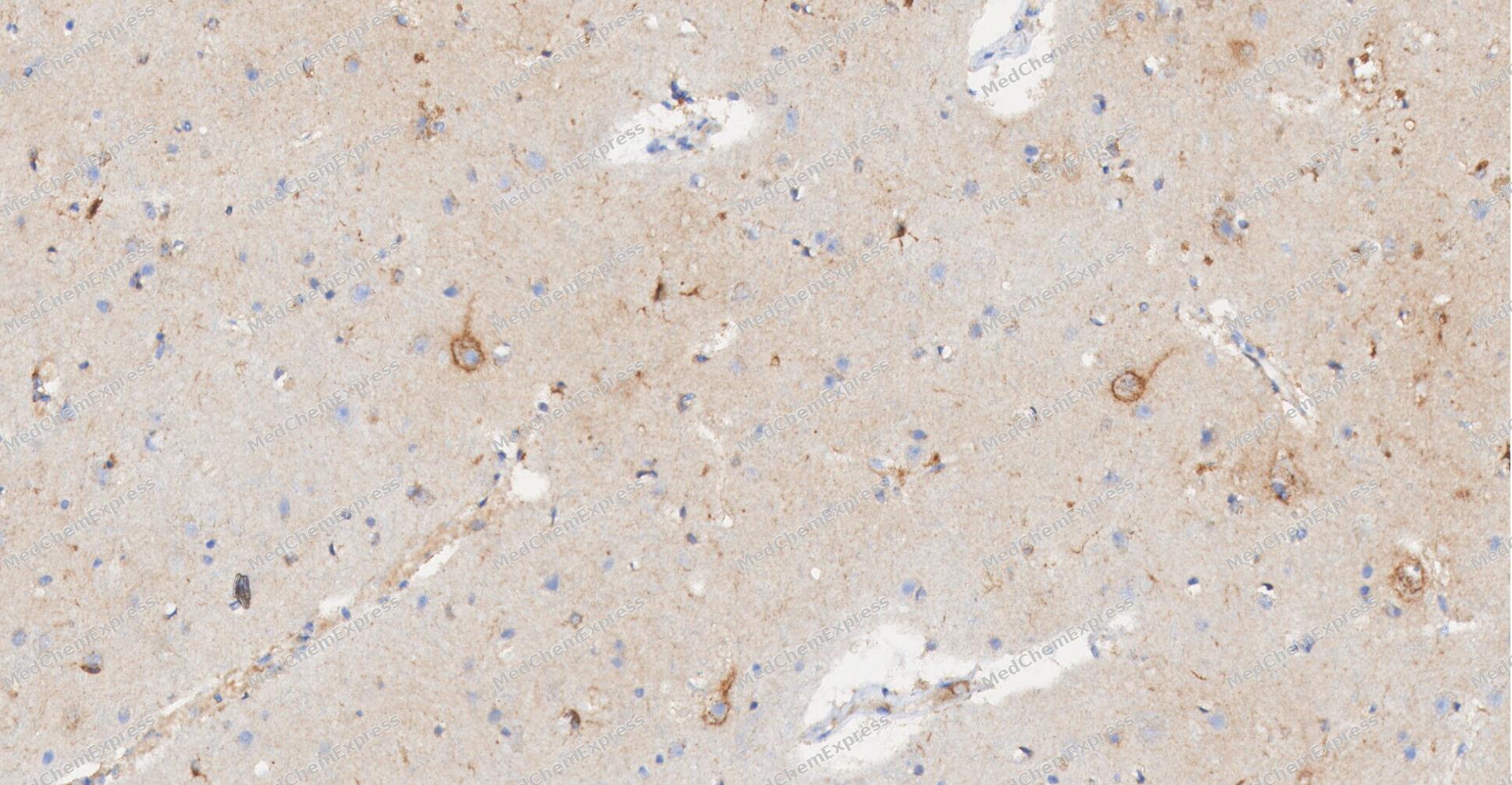 Immunohistochemical analysis of paraffin-embedded human Brain tissue using ACAN antibody was performed. The section was pretreated using high-temperature and high-pressure mediated EDTA antigen retrieval buffer (pH 9.0), for 5 minutes. The tissues were incubated with primary antibody (HY-P81088, 1:100 dilution) at room temperature for 60 minutes. Detection was performed using an HRP conjugated compact polymer system. DAB was used as the chromogen. The tissues were counterstained with hematoxylin and mounted with neutral balsam mounting medium.
 -
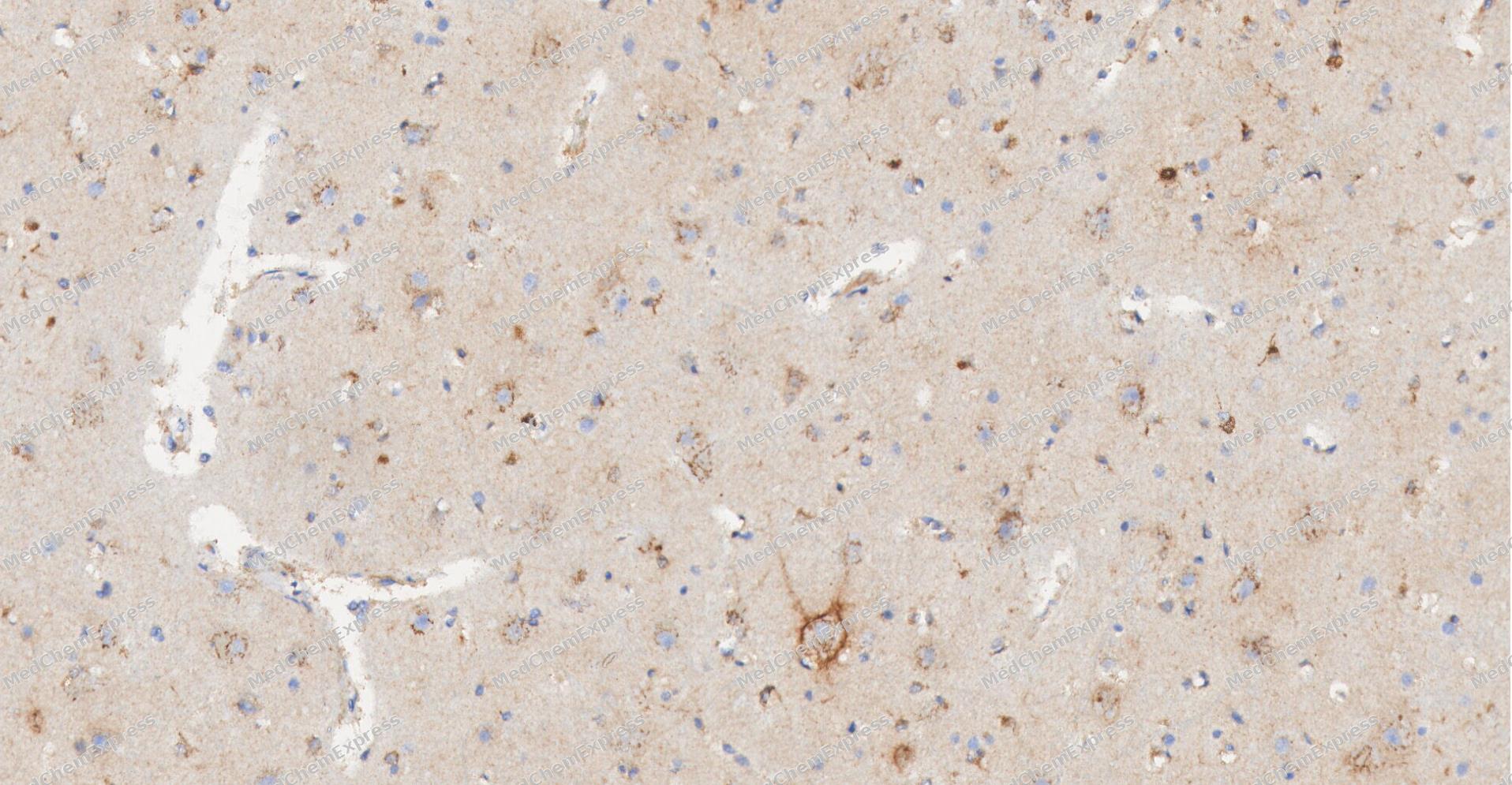 Immunohistochemical analysis of paraffin-embedded human Brain tissue using ACAN antibody was performed. The section was pretreated using high-temperature and high-pressure mediated EDTA antigen retrieval buffer (pH 9.0), for 5 minutes. The tissues were incubated with primary antibody (HY-P81088, 1:100 dilution) at room temperature for 60 minutes. Detection was performed using an HRP conjugated compact polymer system. DAB was used as the chromogen. The tissues were counterstained with hematoxylin and mounted with neutral balsam mounting medium.
 -
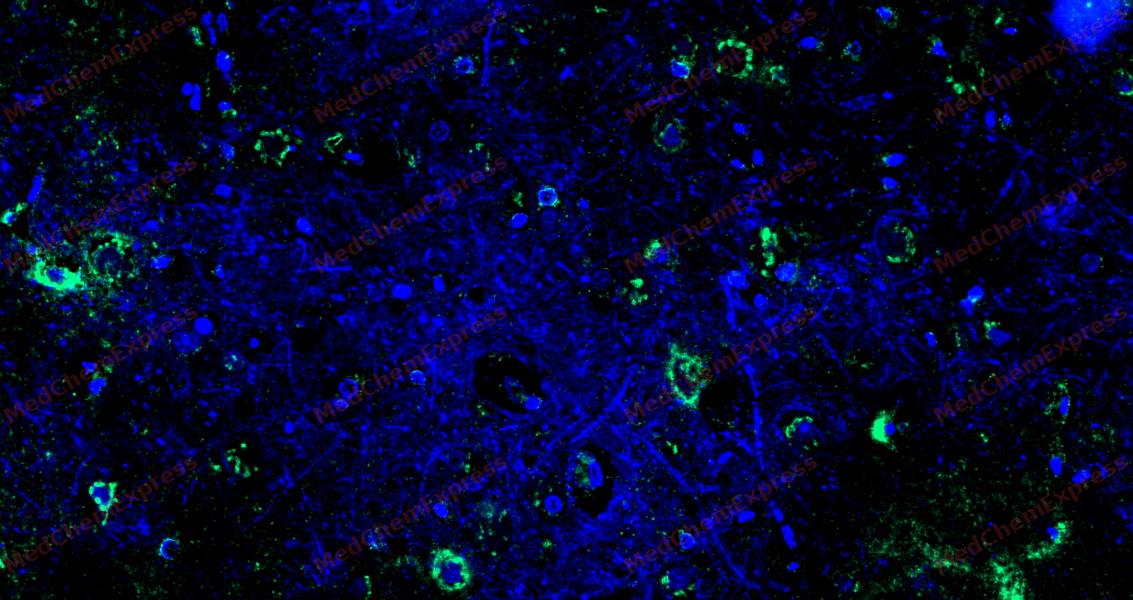 Tyramide signaling amplification based immunofluorescence was performed on paraffin-embedded human Brain tissue using ACAN antibody. Antigen retrieval was performed in EDTA buffer pH 9.0 (95 °C, 20 min) followed by cooling to RT. Then incubated with primary antibody (HY-P81088, 1:200 dilution) at room temperature for 60 minutes and HRP conjugated secondary antibody for 10 minutes. Fluorescence was then developed with Vari Fluor 532 TSA (200×)(HY-D1832). The tissues were counterstained with DAPI and mounted with Anti-fade mounting medium.
 -
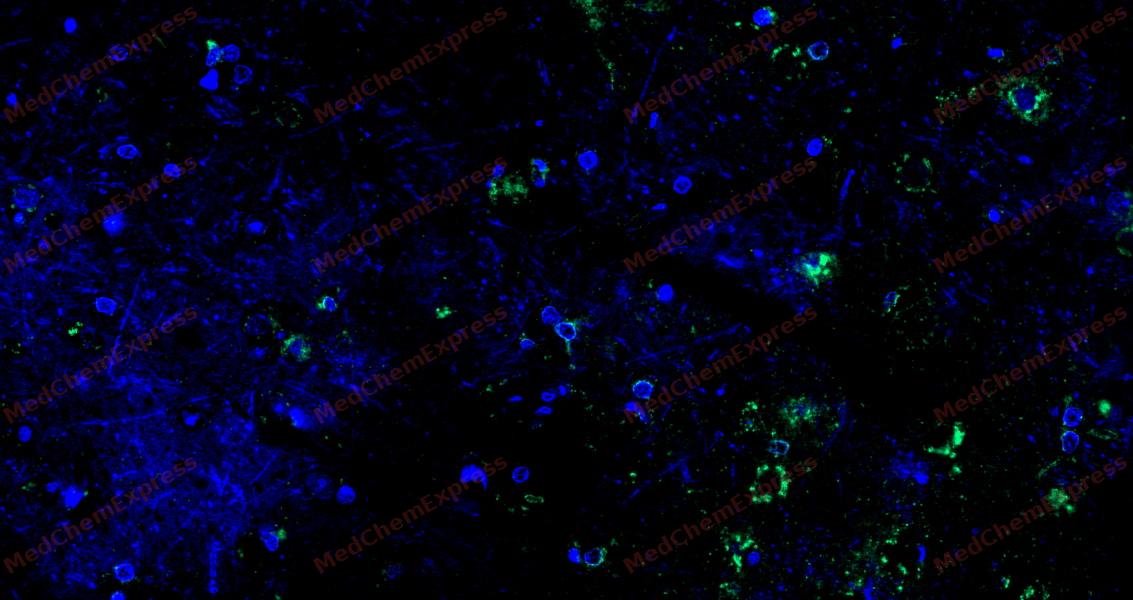 Tyramide signaling amplification based immunofluorescence was performed on paraffin-embedded human Brain tissue using ACAN antibody. Antigen retrieval was performed in EDTA buffer pH 9.0 (95 °C, 20 min) followed by cooling to RT. Then incubated with primary antibody (HY-P81088, 1:200 dilution) at room temperature for 60 minutes and HRP conjugated secondary antibody for 10 minutes. Fluorescence was then developed with Vari Fluor 532 TSA (200×)(HY-D1832). The tissues were counterstained with DAPI and mounted with Anti-fade mounting medium.
 -
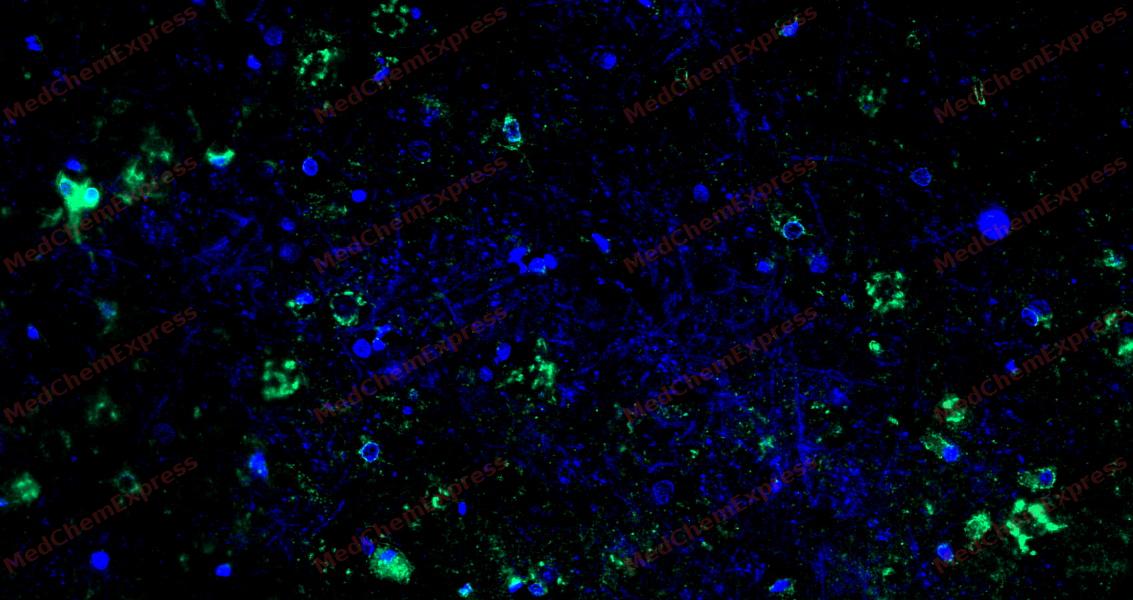 Tyramide signaling amplification based immunofluorescence was performed on paraffin-embedded human Brain tissue using ACAN antibody. Antigen retrieval was performed in EDTA buffer pH 9.0 (95 °C, 20 min) followed by cooling to RT. Then incubated with primary antibody (HY-P81088, 1:200 dilution) at room temperature for 60 minutes and HRP conjugated secondary antibody for 10 minutes. Fluorescence was then developed with Vari Fluor 532 TSA (200×)(HY-D1832). The tissues were counterstained with DAPI and mounted with Anti-fade mounting medium.


Background
-
Function
ACAN is a This proteoglycan is a major component of extracellular matrix of cartilagenous tissues. A major function of this protein is to resist compression in cartilage. It binds avidly to hyaluronic acid via an N-terminal globular region
-
Subcellular Localization
Secreted, extracellular space, extracellular matrix
-
Expression
Tissue_specificity:Detected in fibroblasts (at protein level) (PubMed:36213313) . Restricted to cartilage (PubMed:7524681) -
Isoforms & Post-Translational Modification
P16112 has 4 isomers: P16112-1: 261329 Da (predicted); P16112-2: 257441 Da (predicted); P16112-3: 250372 Da (predicted); P16112-4: 265340 Da (predicted).
Contains mostly chondroitin sulfate, but also keratan sulfate chains, N-linked and O-linked oligosaccharides. The release of aggrecan fragments from articular cartilage into the synovial fluid at all stages of human osteoarthritis is the result of cleavage by aggrecanase -
Subunit
Forms a complex (via covalent bonds) with MATN1; the interaction increases with age of the organism via an increase in occupancy of MATN1 binding sites (By similarity). Interacts with FBLN1 (By similarity). Interacts with COMP (PubMed:17588949)
-
SwissProt ID
-
Synonyms
Aggrecan; Aggrecan core protein; Cartilage-specific proteoglycan core protein; CSPCP; Chondroitin sulfate proteoglycan core protein 1; Chondroitin sulfate proteoglycan 1; Aggrecan core protein 2; AGC1; CSPG1; MSK16; PGCA_HUMAN.


Documentation
-
Data Sheet (231 KB)
-
SDS (252 KB)
- English - EN (252 KB)
- Français - FR (252 KB)
- Deutsch - DE (252 KB)
- Norwegian - NO (252 KB)
- Español - ES (252 KB)
- Swedish - SV (252 KB)
- Italian - IT (252 KB)
- Korean - KR (252 KB)
- Portuguese - PT (252 KB)
-
User Guide for Antibodies (1077 KB)

 Powered by Bioz
