



Caspase-1 Antibody
(Synonyms: caspase-1 isoform alpha subunit; CASP1; ICE; IL1BC; Caspase-1 subunit p20; CASP 1; Caspase 1 apoptosis related cysteine peptidase; Caspase 1 apoptosis related cysteine protease; Caspase1; IL 1 beta converting enzyme; IL 1BC; IL1B convertase; IL1BCE; Interleukin 1 beta convertase; Interleukin 1 beta convertase precursor; Interleukin 1 beta converting enzyme; CASP-1; Interleukin-1 beta convertase; IL-1BC; Interleukin-1 beta-converting enzyme; ICE; IL-1 beta-converting enzyme; p45; CASP1_HUMAN; CASP1_MOUSE.)Based on 8 publication(s) in Google Scholar
Caspase-1 Antibody is a Rabbit-derived and non-conjugated IgG polyclonal antibody, targeting to Caspase-1.
-
Host:
Rabbit
-
Isotype:
IgG
-
Application:
WB, IHC-P, IHC-F, ICC/IF, FC
-
Reactivity :
Human, Mouse, Rat,
-
Formulation:
Supplied in 0.01M TBS (pH7.4) with 1% BSA, 0.02% Proclin300 and 50% Glycerol.
-
Conjugation:
Non-conjugated


To place orders, for customer services and technical support, please contact: MedChemExpress USA
Tel: 609-228-6898 E-mail: [email protected] [email protected]



Publications Citing Use of MedChemExpress (MCE) Caspase-1 Antibody
More- Phytomedicine. 2025 Jul:142:156698. [Abstract]
- Nano Res. 2026;19(1):94907900.
- Int J Mol Sci. 2026 Jul 20;27(14):6440.
- Neurochem Int. 2025 Sep:188:105994. [Abstract]
- Mol Med Rep. 2025 Dec;32(6):327. [Abstract]
- Genes Immun. 2025 Aug;26(4):365-375. [Abstract]
- Int J Biochem Cell Biol. 2025 Oct 30:106874. [Abstract]
- Cytotechnology. 2026 Jun;78(3):108. [Abstract]

 8 Publications Citing Use of MCE Caspase-1 Antibody (5)
-
WB

-
Flow Cytometry

-
WB

-
IF

-
Flow Cytometry


Applications
| Application |
WB

WB: Western Blot
|
IHC-P
IHC-P: Immunohistochemistry-Paraffin
|
IHC-F
IHC-F: Immunohistochemistry-Frozen
|
FC
FC: Flow Cytometry
|
ICC/IF
ICC/IF: Immunocytochemistry/
Immunofluorescence |
|---|---|---|---|---|---|
| Dilution Ratio | 1:500-2000 | 1:100-500 | 1:100-500 | 1μg/Test | 1:100-500 |


Product Details
Caspase-1 Antibody is a Rabbit-derived and non-conjugated IgG polyclonal antibody, targeting to Caspase-1.
-
Host Rabbit

-
Clonality Polyclonal

-
Species ReactivityHuman, Mouse, Rat,
-
Observed Molecular WeightObserved band size: 46 kDa
Note: Due to possible protein modifications or aggregation, the molecular weight should be confirmed by actual measurement, and the predicted value is for reference only.

-
Calculated Molecular Weight Predicted band size: 46 kDa

KLH conjugated synthetic peptide derived from mouse Caspase-1 p20: 181-280/402
Endogenous
affinity purified
Non-conjugated
Unmodified
IgG


Product Properties
-
Appearance
Solution
-
Formulation
Supplied in 0.01M TBS (pH7.4) with 1% BSA, 0.02% Proclin300 and 50% Glycerol.
-
Concentration
Batch-dependent, Please check the COA for the concentration of each lot. Check Lot Concentration
-
Storage & Stability
Stored at -20°C for 1 year. Avoid repeated freeze / thaw cycles.
-
Shipping
Shipping with blue ice.


Publications (8)
-
Journal Impact Factor
-
Most Recent
-
Phytomedicine
Ophiopogonin C protects against acute lung injury by fatal sepsis through pyroptosis macrophage. [Abstract]2025 Jul:142:156698. PMID: 40397999
Caspase-1 Antibody purchased from MedChemExpress. Usage Cited in: Phytomedicine. 2025 Jul:142:156698. [Abstract]
Ophiopogonin C reduced pyroptosis macrophage in sepsis model of ALI Flow cytometry for pyroptosis cells. Antibody: Caspase-1 Antibody (1 h, HY-P81232).
-
Caspase-1 Antibody purchased from MedChemExpress. Usage Cited in: Nano Res. 2026;19(1):94907900.
RAW264.7 cells were transfected with siNC or siTet1 for 48 h before stimulated or not with LPS. The indicated protein level was detected by western blot. Antibody: Caspase-1 Antibody (HY-P81232).
-
Neurochem Int
2025 Sep:188:105994. PMID: 40398748
Caspase-1 Antibody purchased from MedChemExpress. Usage Cited in: Neurochem Int. 2025 Sep:188:105994. [Abstract]
Expression of ASC and Cleaved caspase-1 in KA-induced TLE model mice injected with NLRP6-AAV (n = 5). Primary antibodies: rabbit anti-ASC (1:1000), rabbit anti-Caspase-1 (1:1000; Caspase-1 Antibody (HY-P81232)), rabbit anti-GAPDH (1:5000).
-
Mol Med Rep
Curcumin exerts therapeutic effects on colorectal cancer by inducing pyroptosis through caspase‑1 activation. [Abstract]2025 Dec;32(6):327. PMID: 40999987
Caspase-1 Antibody purchased from MedChemExpress. Usage Cited in: Mol Med Rep. 2025 Dec;32(6):327. [Abstract]
Representative images of immunofluorescence staining of caspase-1 groups. Scale bar, 40 µm. Primary antibodies: Caspase-1 Antibody (1:500; 16 h, HY-P81232).
-
Genes Immun
S-nitrosylated NEDD4 exacerbates gouty arthritis by upregulating NOD1 to induce pyroptosis. [Abstract]2025 Aug;26(4):365-375. PMID: 40594913
Caspase-1 Antibody purchased from MedChemExpress. Usage Cited in: Genes Immun. 2025 Aug;26(4):365-375. [Abstract]
The percentage of pyroptotic cells (Caspase-1+/PI+ cells) was evaluated by flow cytometry. Primary antibody: Caspase-1 Antibody (incubate overnight at 4 °C, HY-P81232).
-
Int J Biochem Cell Biol
Melatonin alleviates endoplasmic reticulum stress and its mediated inflammation in adipocytes via the PER1/ATF6 signal. [Abstract]2025 Oct 30:106874. PMID: 41176027 -
Cytotechnology
The role of pterostilbene in alleviating inflammatory response and pyroptosis in myocardial ischemia-reperfusion by inhibiting the cGAS-STING pathway. [Abstract]2026 Jun;78(3):108. PMID: 42111627


Verification Images
-
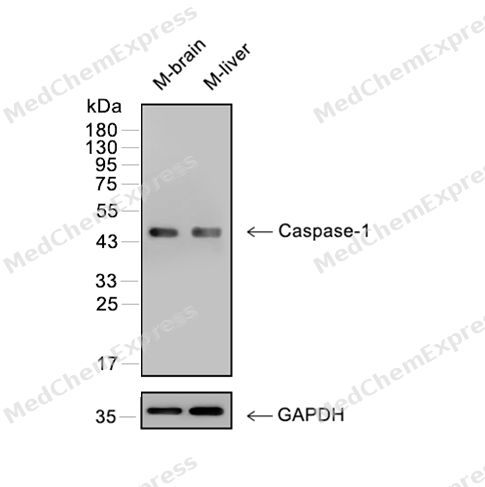 Western blot analysis of extracts from M-spleen (lane 1) and 293T (lane 2) using Caspase-1 p20 antibody. Proteins were transferred to a PVDF membrane and blocked with 5% nonfat powdered milk in PBST for 2 hour at room temperature. The primary antibody (1/1000) and Loading control antibody (GAPDH, 1/3000) was diluted with 5% nonfat powdered milk in PBST at 4°C overnight. Goat Anti-Rabbit IgG-HRP Secondary Antibody (1/8,000) was incubated for 45min at room temperature.
 -
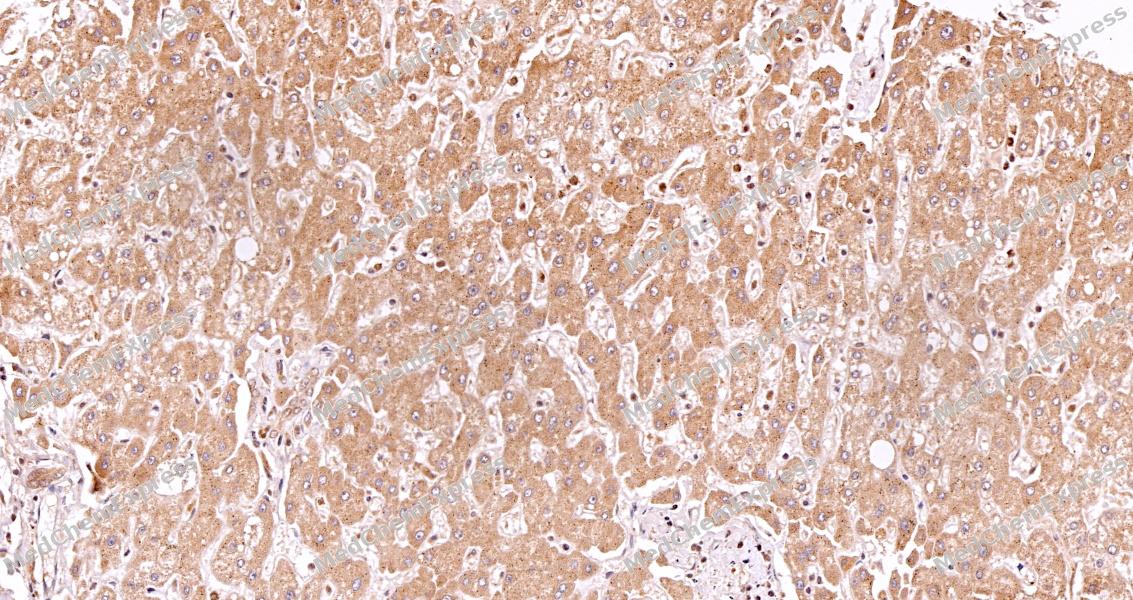 Immunohistochemical analysis of paraffin-embedded human liver tissue using Caspase-1 Antibody (HY-P81232, 1/500). The section was pretreated using heat mediated antigen retrieval with sodium citrate buffer (pH 6.0) for 8 minutes. The tissues were blocked with quick block buffer for 0.5 hours at room temperature, washed with PBS and PBST, and then incubated with the primary antibody overnight at 4℃. The detection was performed using an HRP conjugated compact polymer system. DAB was used as the chromogen. Tissues were counterstained with hematoxylin and mounted with DPX.
 -
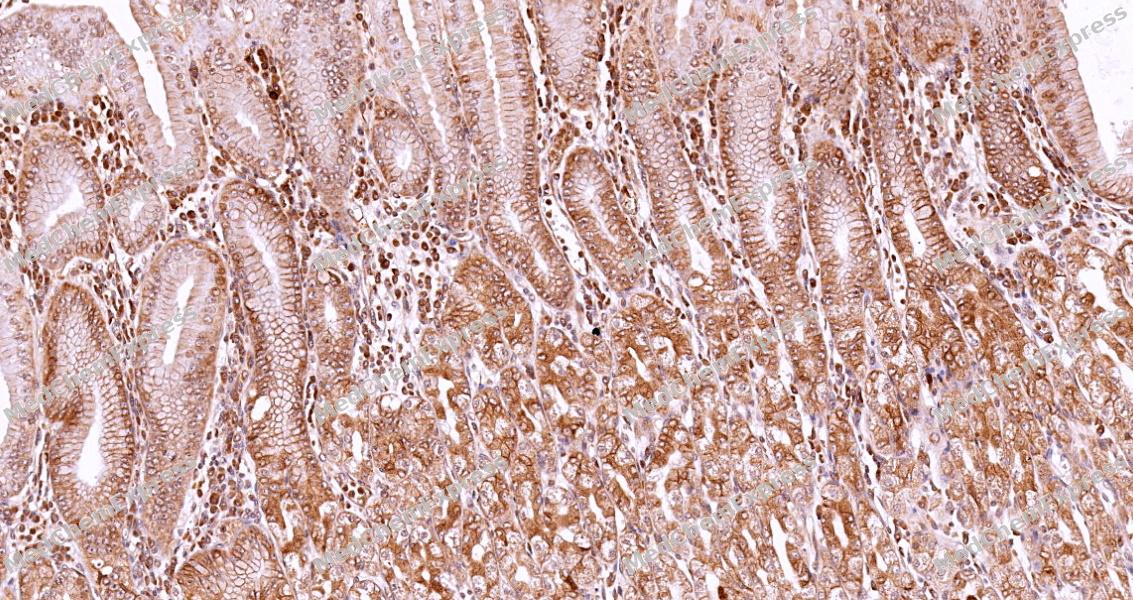 Immunohistochemical analysis of paraffin-embedded human stomach tissue using Caspase-1 Antibody (HY-P81232, 1/500). The section was pretreated using heat mediated antigen retrieval with sodium citrate buffer (pH 6.0) for 8 minutes. The tissues were blocked with quick block buffer for 0.5 hours at room temperature, washed with PBS and PBST, and then incubated with the primary antibody overnight at 4℃. The detection was performed using an HRP conjugated compact polymer system. DAB was used as the chromogen. Tissues were counterstained with hematoxylin and mounted with DPX.
 -
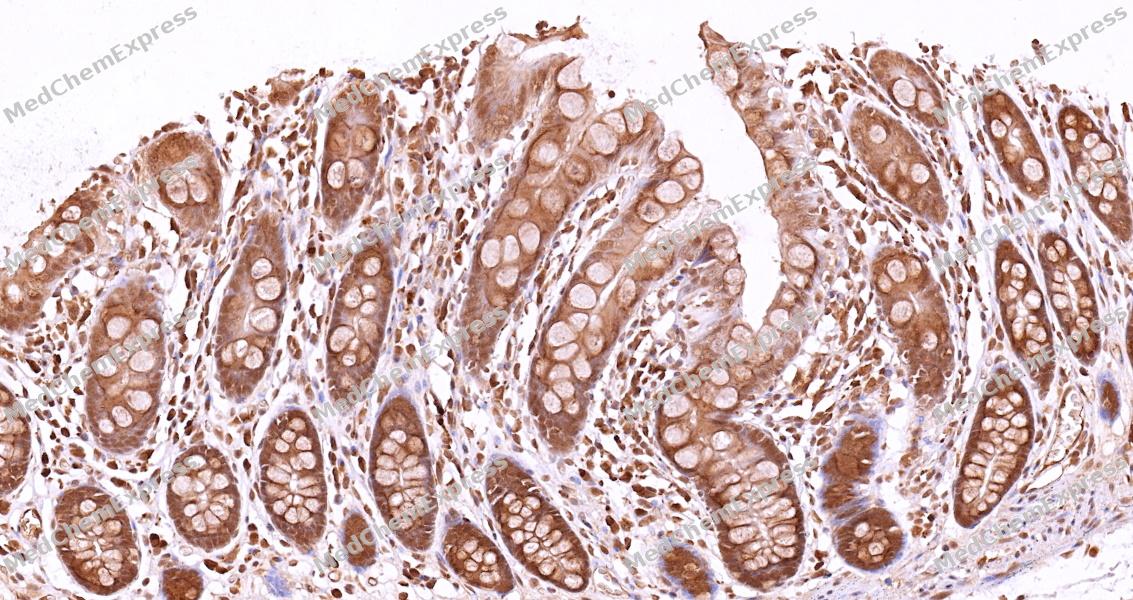 Immunohistochemical analysis of paraffin-embedded human colon tissue using Caspase-1 Antibody (HY-P81232, 1/500). The section was pretreated using heat mediated antigen retrieval with sodium citrate buffer (pH 6.0) for 8 minutes. The tissues were blocked with quick block buffer for 0.5 hours at room temperature, washed with PBS and PBST, and then incubated with the primary antibody overnight at 4℃. The detection was performed using an HRP conjugated compact polymer system. DAB was used as the chromogen. Tissues were counterstained with hematoxylin and mounted with DPX.
 -
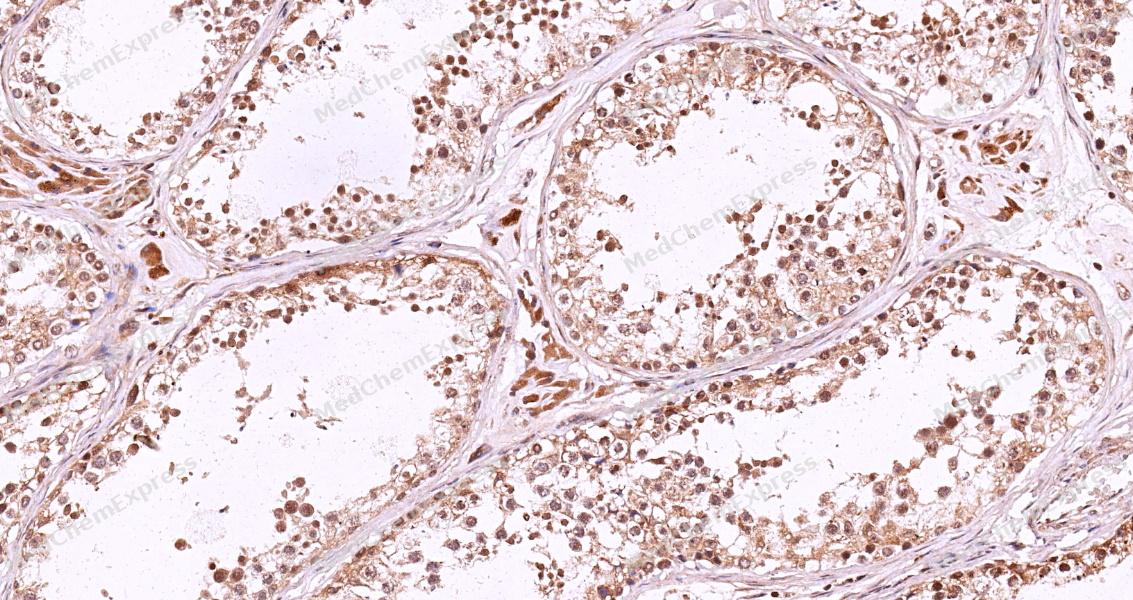 Immunohistochemical analysis of paraffin-embedded human testis tissue using Caspase-1 Antibody (HY-P81232, 1/500). The section was pretreated using heat mediated antigen retrieval with sodium citrate buffer (pH 6.0) for 8 minutes. The tissues were blocked with quick block buffer for 0.5 hours at room temperature, washed with PBS and PBST, and then incubated with the primary antibody overnight at 4℃. The detection was performed using an HRP conjugated compact polymer system. DAB was used as the chromogen. Tissues were counterstained with hematoxylin and mounted with DPX.
 -
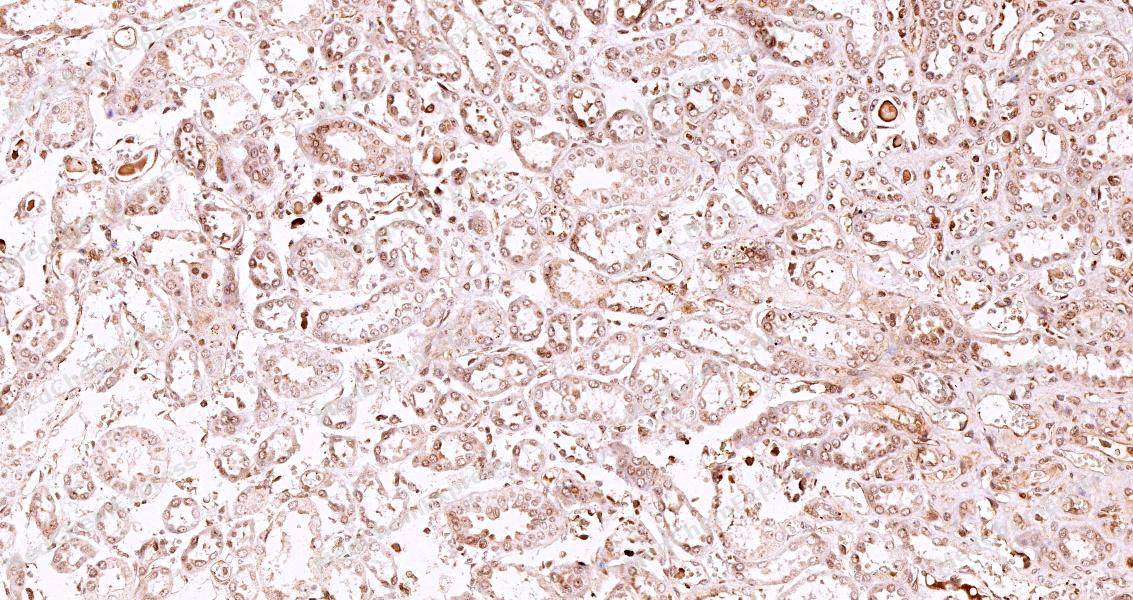 Immunohistochemical analysis of paraffin-embedded human kidney tissue using Caspase-1 Antibody (HY-P81232, 1/500). The section was pretreated using heat mediated antigen retrieval with sodium citrate buffer (pH 6.0) for 8 minutes. The tissues were blocked with quick block buffer for 0.5 hours at room temperature, washed with PBS and PBST, and then incubated with the primary antibody overnight at 4℃. The detection was performed using an HRP conjugated compact polymer system. DAB was used as the chromogen. Tissues were counterstained with hematoxylin and mounted with DPX.
 -
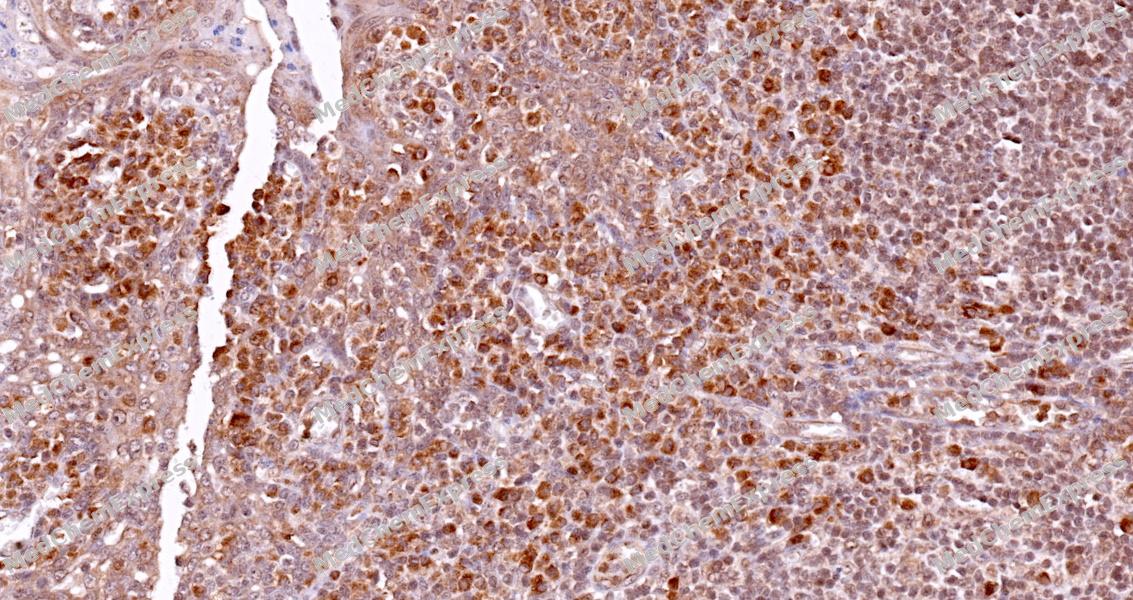 Immunohistochemical analysis of paraffin-embedded human tonsil tissue using Caspase-1 Antibody (HY-P81232, 1/500). The section was pretreated using heat mediated antigen retrieval with sodium citrate buffer (pH 6.0) for 8 minutes. The tissues were blocked with quick block buffer for 0.5 hours at room temperature, washed with PBS and PBST, and then incubated with the primary antibody overnight at 4℃. The detection was performed using an HRP conjugated compact polymer system. DAB was used as the chromogen. Tissues were counterstained with hematoxylin and mounted with DPX.


Background
-
Function
Caspase-1 is the effector protease of canonical inflammasomes, where inflammasome activation enables processing and secretion of IL-1β and IL-18[1]. Mechanistically, caspase-1/11 cleaves gasdermin D (GSDMD), and GSDMD functions downstream as a pyroptosis executioner while also providing negative feedback on caspase-1/11 activation[2]. In endothelial models, homocysteine and lipopolysaccharide induced NLRP3 inflammasome assembly, caspase-1 activation, IL-1β cleavage, and caspase-1-dependent pyroptosis linked to endothelial dysfunction[3]. In respiratory infection models, Nontypeable Haemophilus influenzae activated caspase-1 and caspase-1 inhibition significantly reduced IL-1β release in respiratory cells and human lung tissue[4]. Compared with related isoforms, caspase-1 primarily controlled infected macrophage pyroptosis and IL-18 production in pneumonic melioidosis, whereas caspase-11 mediated infected lung epithelial-cell pyroptosis[5]. More broadly, murine caspase-11 and human caspase-4/5 define the noncanonical inflammasome pathway as cytosolic LPS sensors, separating their upstream recognition role from canonical procaspase-1 inflammasome activation[6]. For experimental applications, caspase-1 inhibitors can test IL-1β-dependent inflammatory output, while GSDMD-derived peptide inhibition provides a tool to suppress caspase-1/11 activation and downstream substrate cleavage[2][4].
-
Subcellular Localization
Cytoplasm; Cell membrane
-
Expression
Tissue_specificity:High level expression seen in spleen and lung, low level expression seen in brain, heart, liver, kidney, testis and skeletal muscle -
Subunit
Heterotetramer that consists of two anti-parallel arranged heterodimers, each one formed by a 20 kDa (Caspase-1 subunit p20) and a 10 kDa (Caspase-1 subunit p10) subunit (PubMed:32109412).
-
SwissProt ID
-
Synonyms
caspase-1 isoform alpha subunit; CASP1; ICE; IL1BC; Caspase-1 subunit p20; CASP 1; Caspase 1 apoptosis related cysteine peptidase; Caspase 1 apoptosis related cysteine protease; Caspase1; IL 1 beta converting enzyme; IL 1BC; IL1B convertase; IL1BCE; Interleukin 1 beta convertase; Interleukin 1 beta convertase precursor; Interleukin 1 beta converting enzyme; CASP-1; Interleukin-1 beta convertase; IL-1BC; Interleukin-1 beta-converting enzyme; ICE; IL-1 beta-converting enzyme; p45; CASP1_HUMAN; CASP1_MOUSE.
Documentation
-
Data Sheet (263 KB)
-
SDS (254 KB)
- English - EN (254 KB)
- Français - FR (254 KB)
- Deutsch - DE (254 KB)
- Norwegian - NO (254 KB)
- Español - ES (254 KB)
- Swedish - SV (254 KB)
- Italian - IT (254 KB)
- Korean - KR (254 KB)
- Portuguese - PT (254 KB)
-
User Guide for Antibodies (1077 KB)
References
[1]. Dinarello CA. Mutations in cryopyrin: bypassing roadblocks in the caspase 1 inflammasome for interleukin-1beta secretion and disease activity. Arthritis Rheum. 2007 Sep;56(9):2817-22. doi: 10.1002/art.22841. PMID: 17763412. et al. Mutations in cryopyrin: bypassing roadblocks in the caspase 1 inflammasome for interleukin-1beta secretion and disease activity. Arthritis Rheum. 2007 Sep;56(9):2817-22. [Content Brief]
[2]. Hu Y, et al. The Gasdermin D N-terminal fragment acts as a negative feedback system to inhibit inflammasome-mediated activation of Caspase-1/11. Proc Natl Acad Sci U S A. 2022 Nov 8;119(45):e2210809119. [Content Brief]
[3]. Xi H, et al. Caspase-1 Inflammasome Activation Mediates Homocysteine-Induced Pyrop-Apoptosis in Endothelial Cells. Circ Res. 2016 May 13;118(10):1525-39. [Content Brief]
[5]. Wang J, et al. Caspase-11-dependent pyroptosis of lung epithelial cells protects from melioidosis while caspase-1 mediates macrophage pyroptosis and production of IL-18. PLoS Pathog. 2018 May 23;14(5):e1007105. [Content Brief]
[6]. Wu J, et al. Pyroptosis by caspase-11 inflammasome-Gasdermin D pathway in autoimmune diseases. Pharmacol Res. 2021 Mar;165:105408. [Content Brief]

 Powered by Bioz
