



ITCH Antibody (YA2623)
(Synonyms: ITCH; E3 ubiquitin-protein ligase Itchy homolog; Itch; Atrophin-1-interacting protein 4; AIP4; NFE2-associated polypeptide 1; NAPP1)
Based on 1 Customer Validation
ITCH Antibody (YA2623) is a Rabbit-derived and non-conjugated IgG monoclonal antibody, targeting to ITCH.
-
Host:
Rabbit
-
Isotype:
IgG
-
Application:
WB, IHC-P
-
Reactivity :
Human, Mouse, Rat
-
Formulation:
Supplied in rabbit IgG in 50mM Tris-Glycine(pH 7.4), 0.15M NaCl, 40%Glycerol, 0.01% sodium azide and 0.05% BSA.
-
Conjugation:
Non-conjugated


To place orders, for customer services and technical support, please contact: MedChemExpress USA
Tel: 609-228-6898 E-mail: [email protected] [email protected]





Applications
| Application |
WB

WB: Western Blot
|
IHC-P
IHC-P: Immunohistochemistry-Paraffin
|
|---|---|---|
| Dilution Ratio | 1:500-1:1000 | 1:50-1:100 |


Product Details
ITCH Antibody (YA2623) is a Rabbit-derived and non-conjugated IgG monoclonal antibody, targeting to ITCH.
-
Host Rabbit

-
Clonality Recombinant,Monoclonal

-
Species ReactivityHuman, Mouse, Rat
-
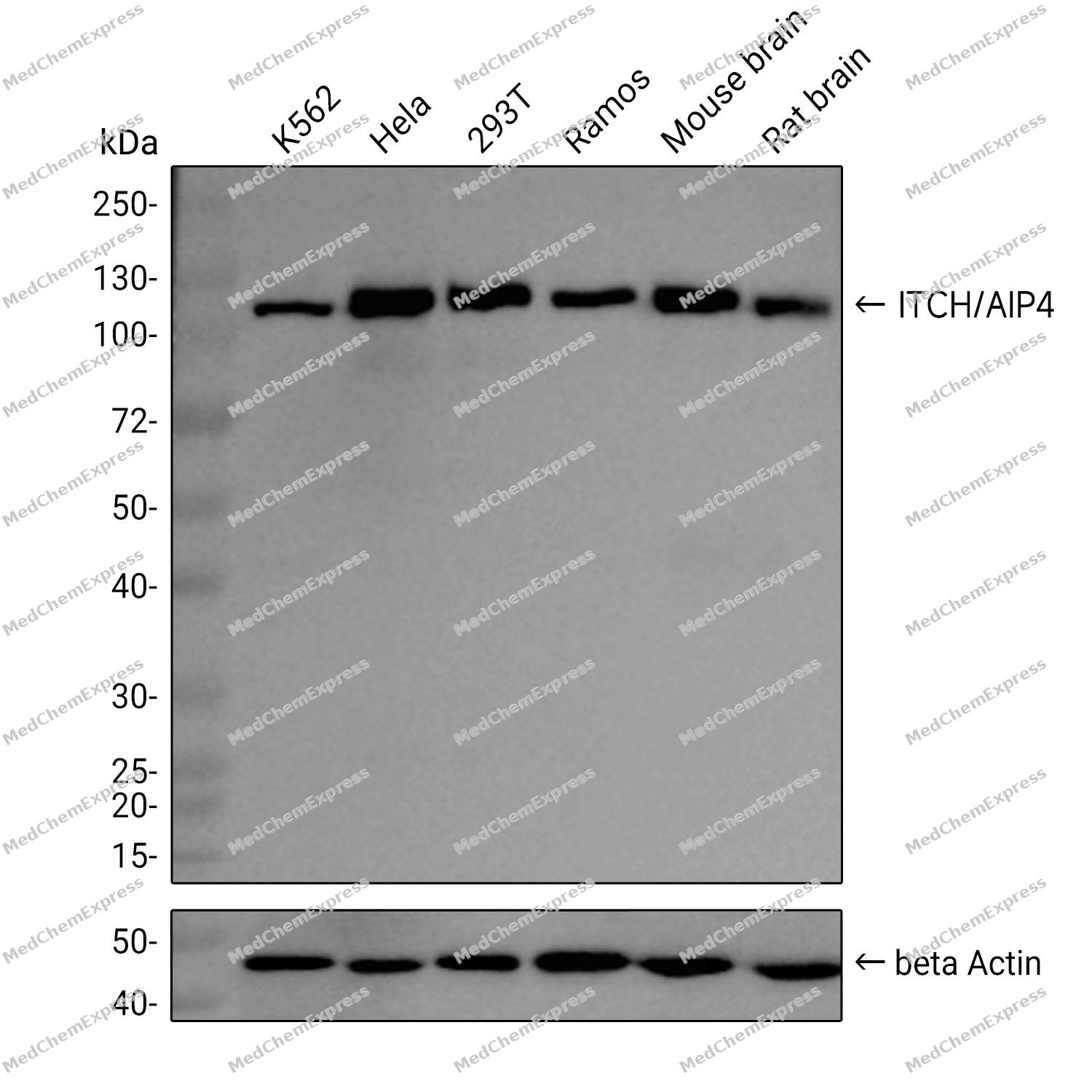
Observed Molecular WeightObserved band size: 103 kDa
Note: Due to possible protein modifications or aggregation, the molecular weight should be confirmed by actual measurement, and the predicted value is for reference only.

-
Calculated Molecular Weight Predicted band size: 103 kDa

Entrez Gene: 83737 Human ; 16396 Mouse ; 311567 Rat
SwissProt: Q96J02 Human ; Q8C863 Mouse ;
OMIM: 613385 Human
A synthesized peptide derived from human ITCH aa800-850.
Endogenous
Affinity Purified
Non-conjugated
Unmodified
IgG


Product Properties
-
Appearance
Liquid
-
Formulation
Supplied in rabbit IgG in 50mM Tris-Glycine(pH 7.4), 0.15M NaCl, 40%Glycerol, 0.01% sodium azide and 0.05% BSA.
-
Concentration
Batch-dependent, Please check the COA for the concentration of each lot. Check Lot Concentration
-
Storage & Stability
Stored at -20°C for 1 year. Avoid repeated freeze / thaw cycles.
-
Shipping
Shipping with blue ice.


Verification Images
-
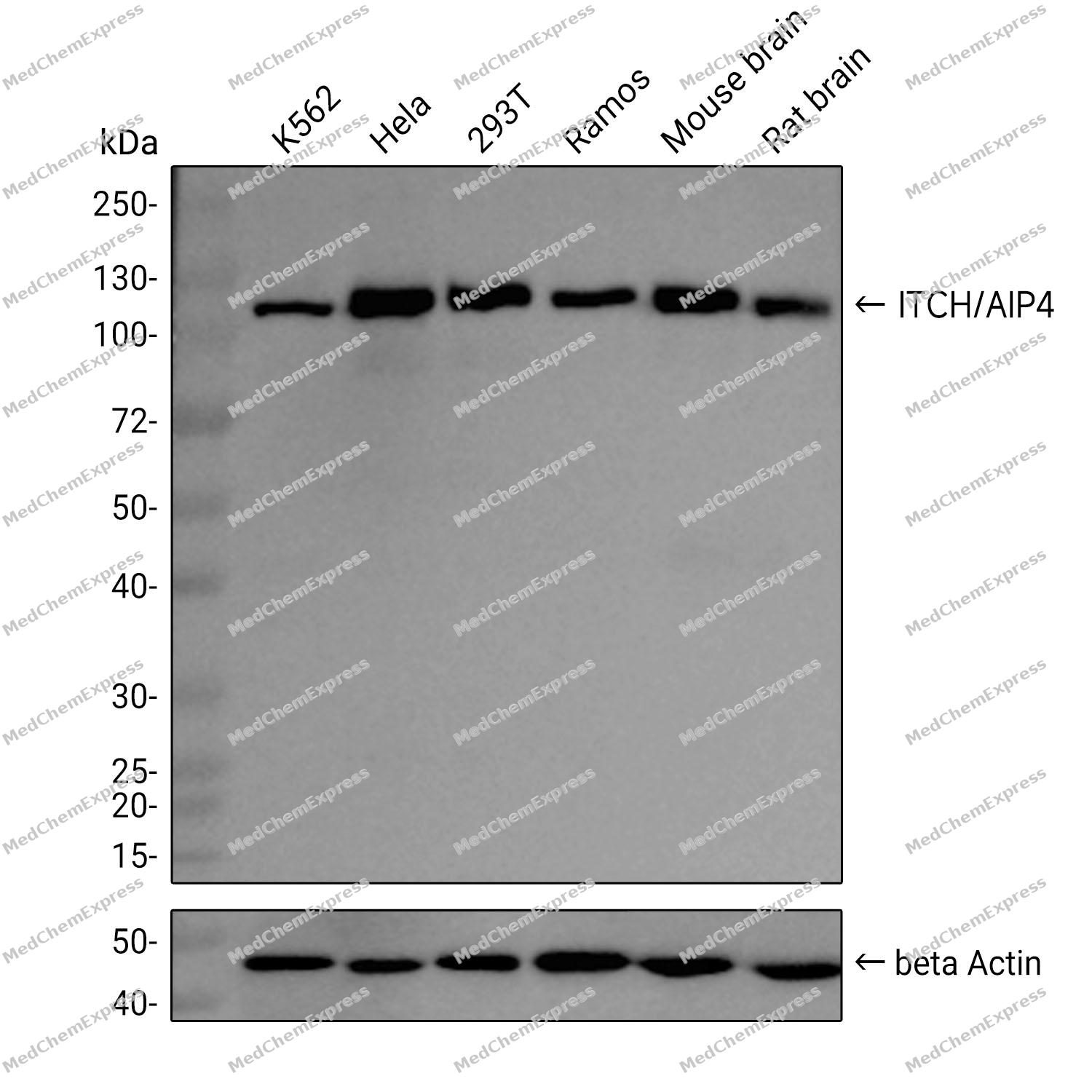 Western blot analysis was performed on extracts from K562 (lane 1, 15 μg), HeLa (lane 2, 15 μg), 293T (lane 3, 15 μg), Ramos (lane 4, 15 μg), Mouse brain (lane 5, 15 μg), and Rat brain (lane 6, 15 μg) using ITCH/AIP4 Rabbit mAb.Proteins were transferred to a PVDF membrane and blocked with 5% non-fat milk in TBST at 4°C overnight.The primary antibody (1:1000 dilution) and the loading control antibody (beta-Actin, HY-P80438, 1:5000 dilution) was incubated in 5% non-fat milk in TBST for 1 hour at 37°C.Goat Anti-Rabbit IgG-HRP Secondary Antibody (1:20000 dilution) was then applied for 40 minutes at 37°C.
 -
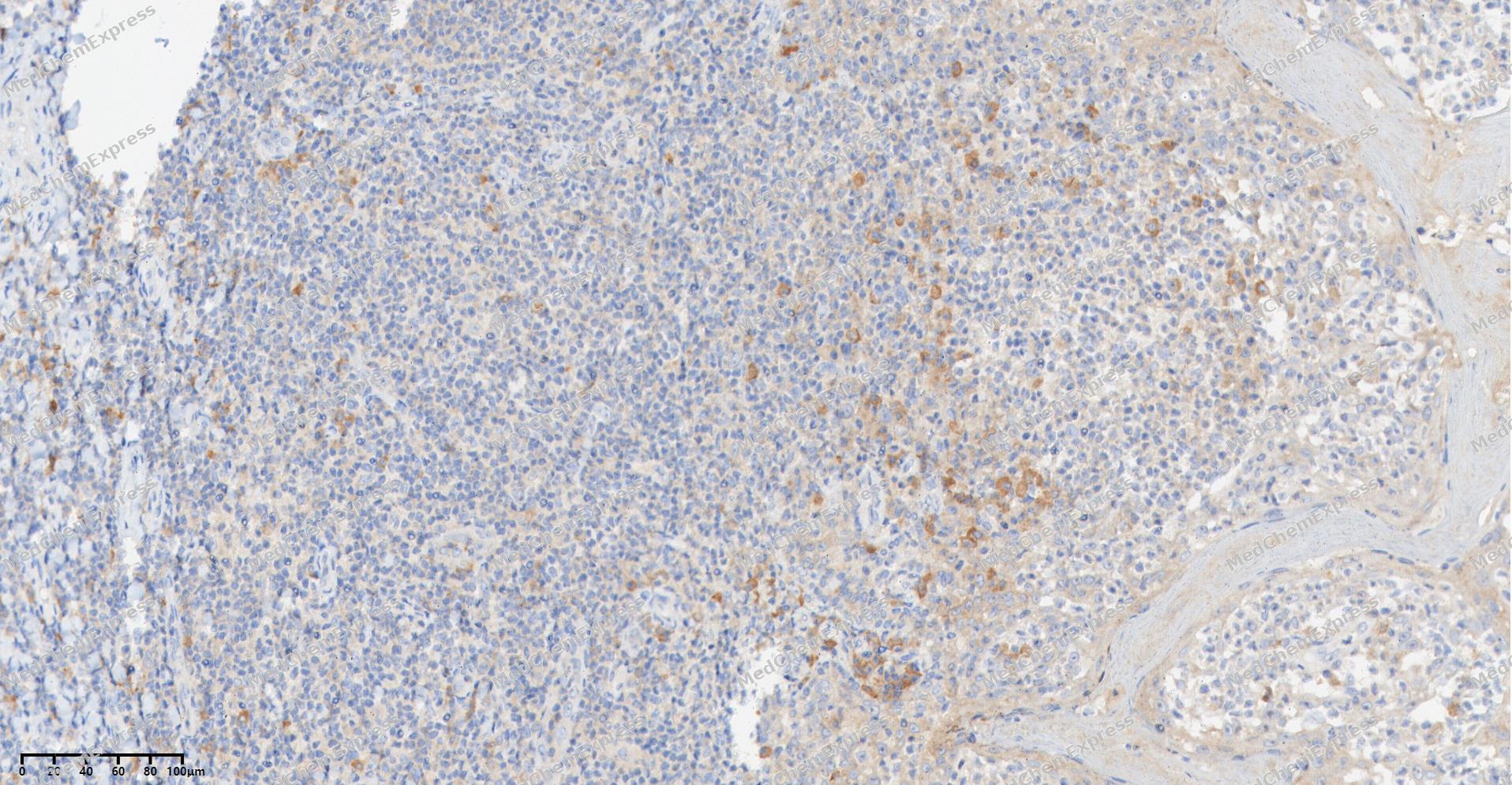 Immunohistochemical analysis of paraffin-embedded human Tonsil tissue using ITCH antibody was performed. The section was pretreated using high-temperature and high-pressure mediated EDTA antigen retrieval buffer (pH 9.0), for 5 minutes. The tissues were incubated overnight at 4°C with the primary antibody (HY-P82878,1:50 dilution). Detection was performed using an HRP conjugated compact polymer system. DAB was used as the chromogen. The tissues were counterstained with hematoxylin and mounted with neutral balsam mounting medium.
 -
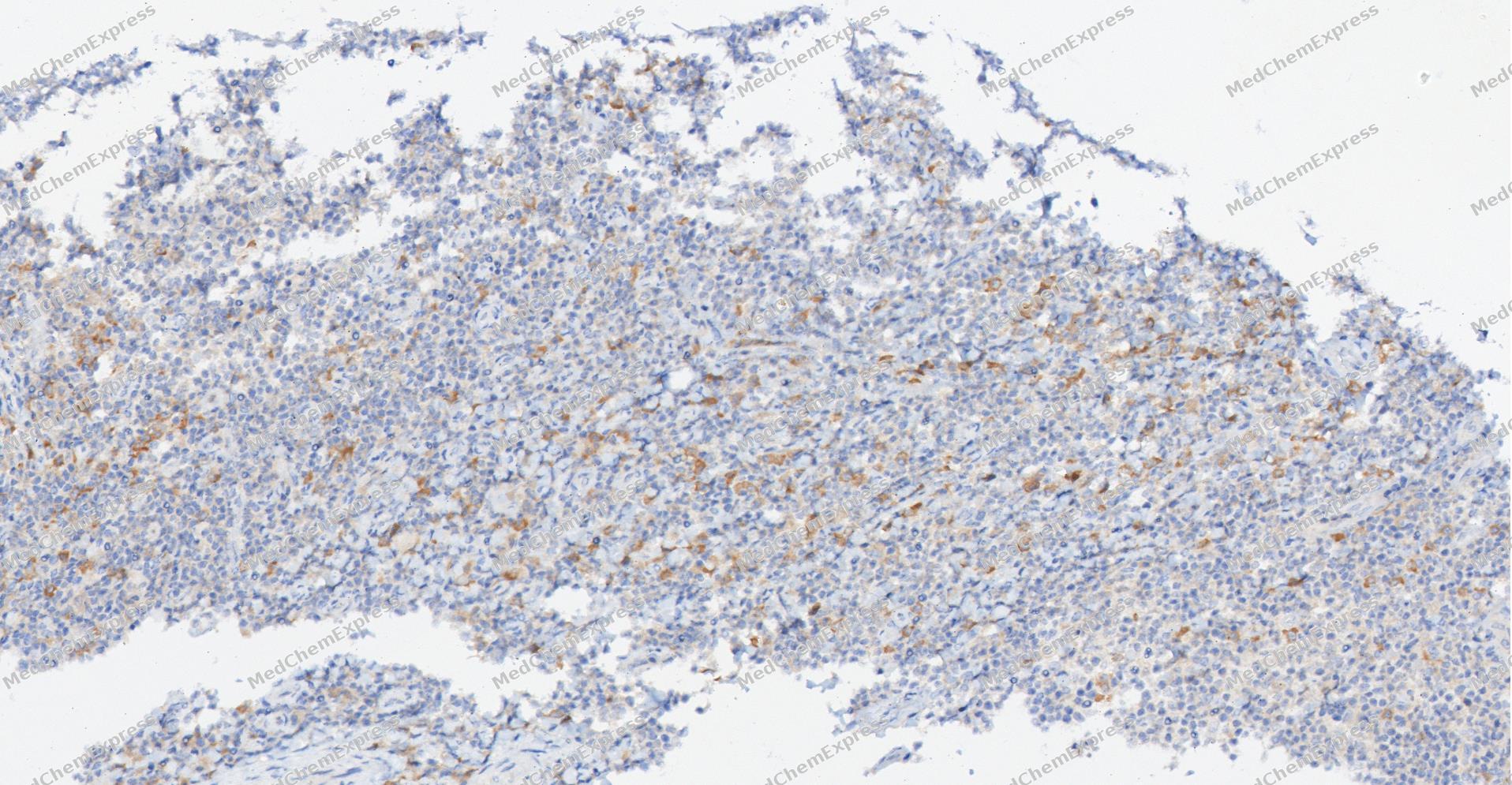 Immunohistochemical analysis of paraffin-embedded human Tonsil tissue using ITCH antibody was performed. The section was pretreated using high-temperature and high-pressure mediated EDTA antigen retrieval buffer (pH 9.0), for 5 minutes. The tissues were incubated overnight at 4°C with the primary antibody (HY-P82878,1:50 dilution). Detection was performed using an HRP conjugated compact polymer system. DAB was used as the chromogen. The tissues were counterstained with hematoxylin and mounted with neutral balsam mounting medium.
 -
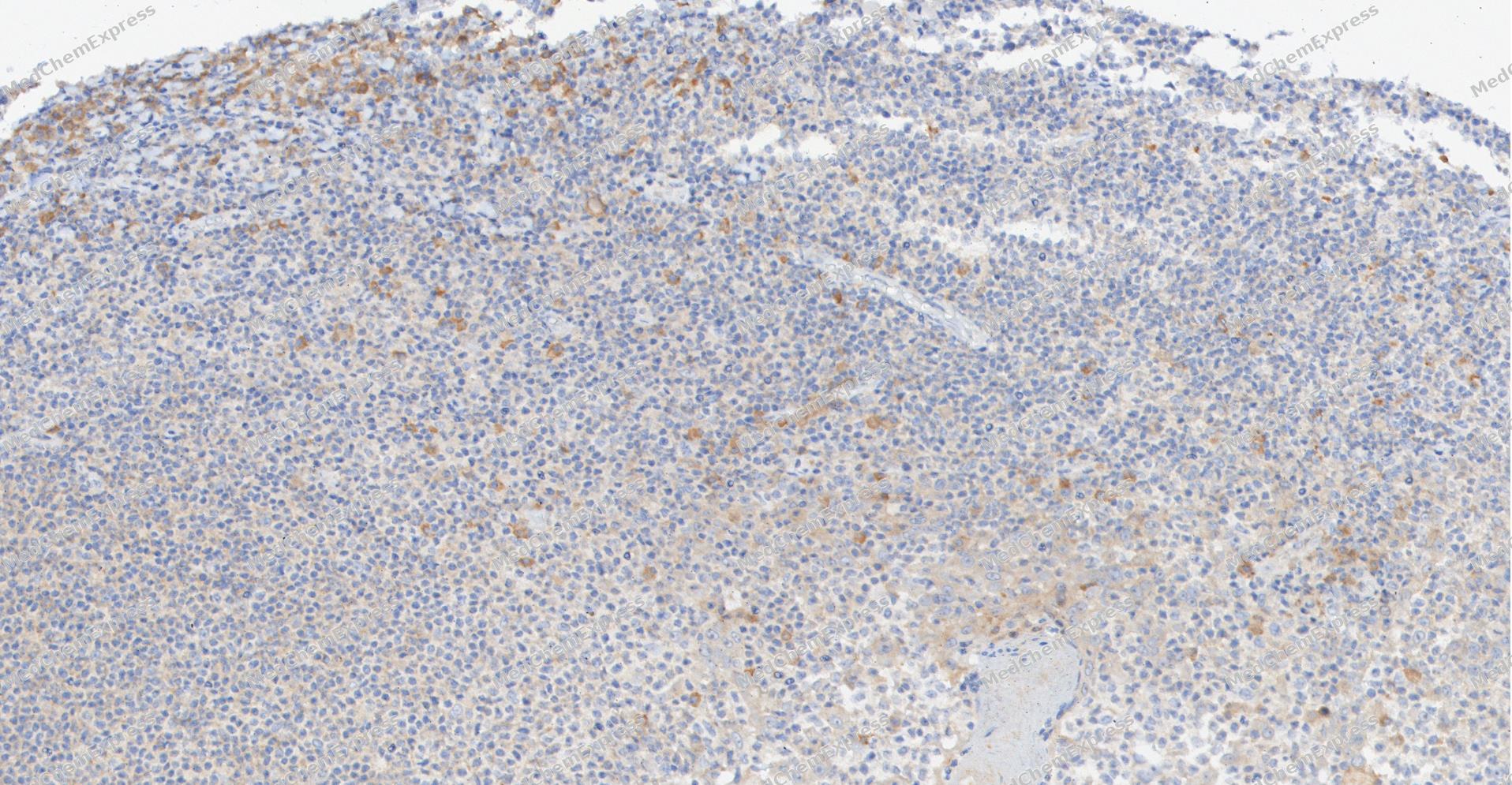 Immunohistochemical analysis of paraffin-embedded human Tonsil tissue using ITCH antibody was performed. The section was pretreated using high-temperature and high-pressure mediated EDTA antigen retrieval buffer (pH 9.0), for 5 minutes. The tissues were incubated overnight at 4°C with the primary antibody (HY-P82878,1:50 dilution). Detection was performed using an HRP conjugated compact polymer system. DAB was used as the chromogen. The tissues were counterstained with hematoxylin and mounted with neutral balsam mounting medium.
 -
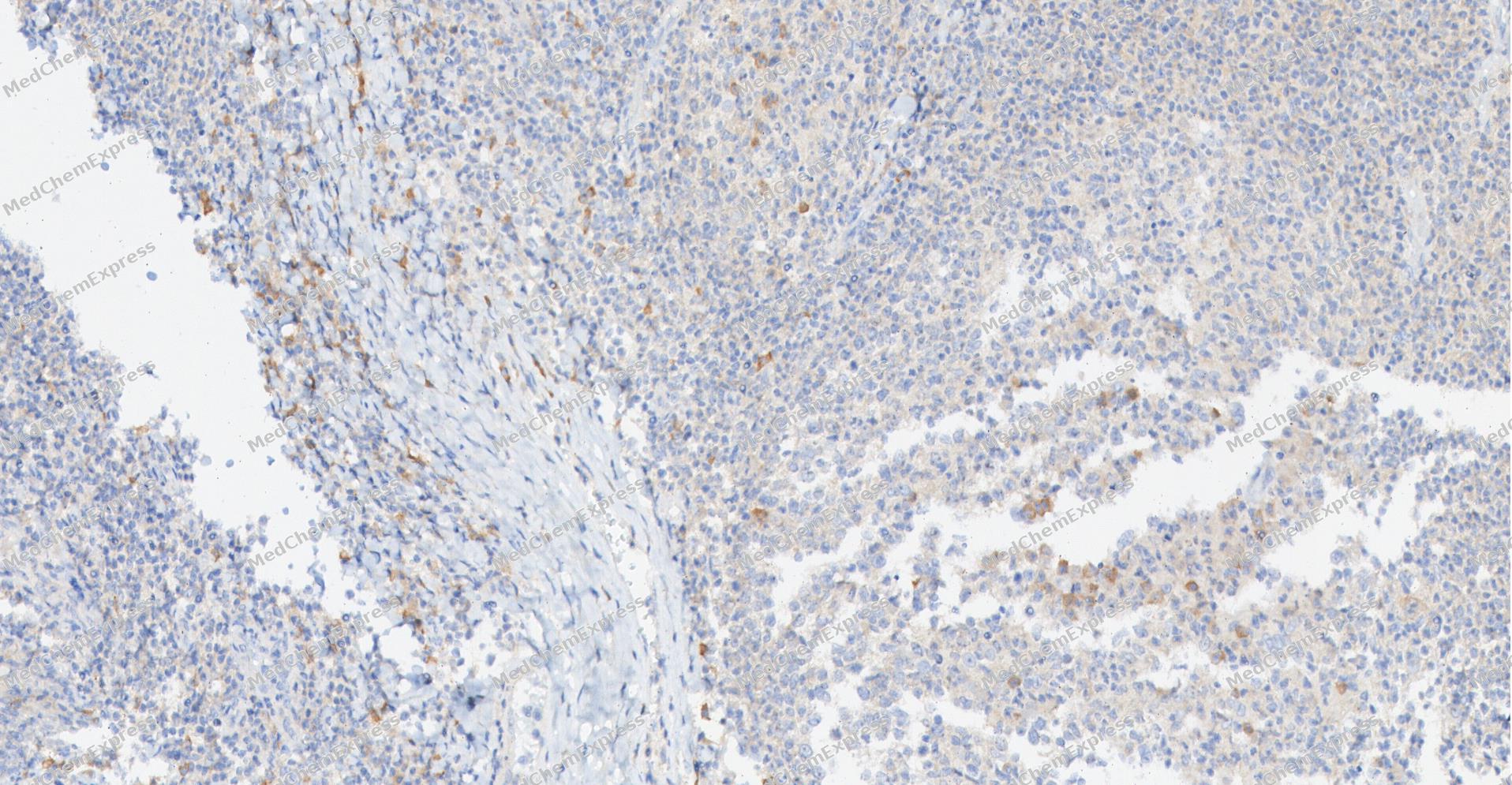 Immunohistochemical analysis of paraffin-embedded human Tonsil tissue using ITCH antibody was performed. The section was pretreated using high-temperature and high-pressure mediated EDTA antigen retrieval buffer (pH 9.0), for 5 minutes. The tissues were incubated overnight at 4°C with the primary antibody (HY-P82878,1:50 dilution). Detection was performed using an HRP conjugated compact polymer system. DAB was used as the chromogen. The tissues were counterstained with hematoxylin and mounted with neutral balsam mounting medium.
 -
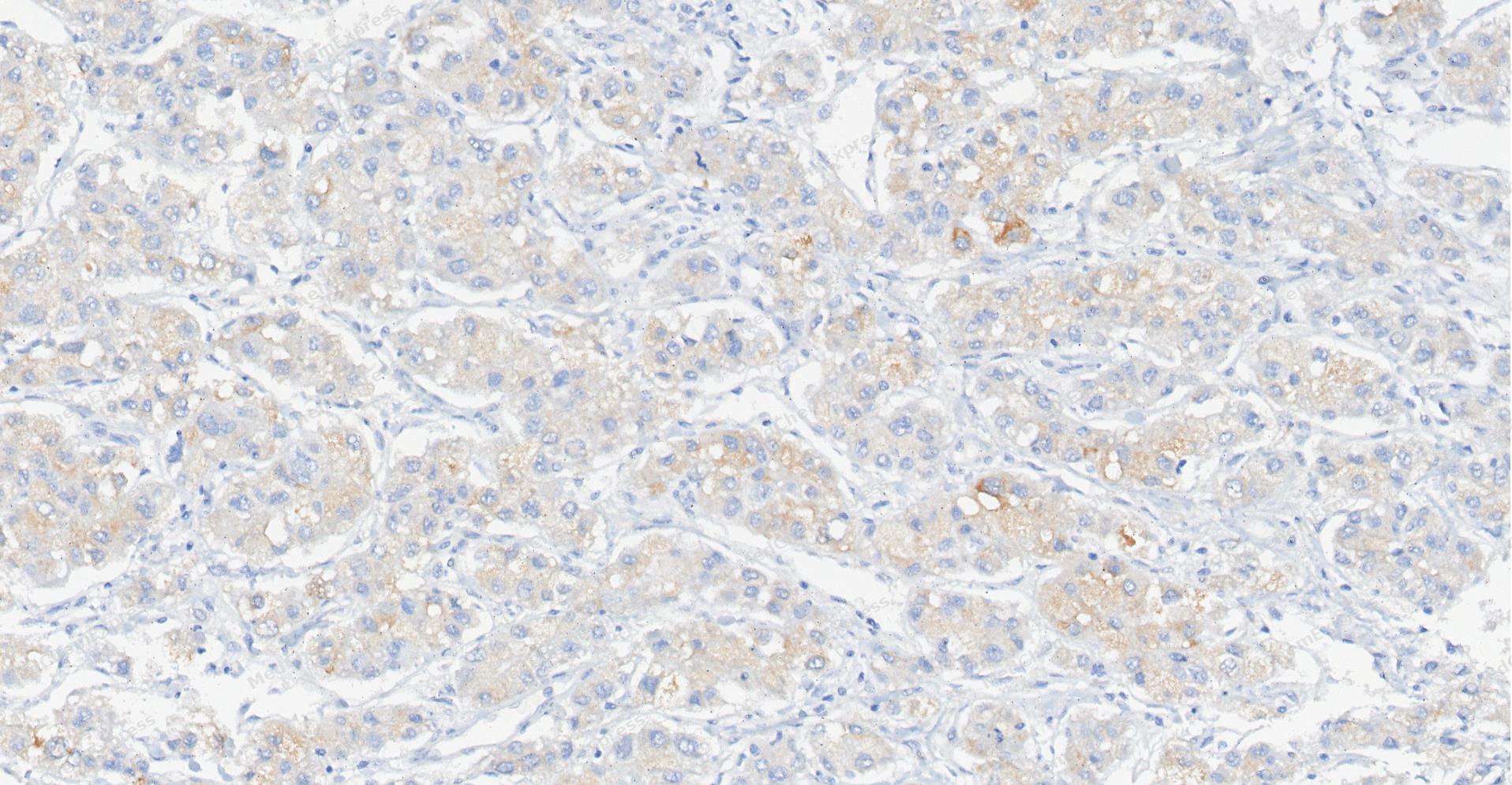 Immunohistochemical analysis of paraffin-embedded human Liver Cancer tissue using ITCH antibody was performed. The section was pretreated using high-temperature and high-pressure mediated EDTA antigen retrieval buffer (pH 9.0), for 5 minutes. The tissues were incubated overnight at 4°C with the primary antibody (HY-P82878,1:50 dilution). Detection was performed using an HRP conjugated compact polymer system. DAB was used as the chromogen. The tissues were counterstained with hematoxylin and mounted with neutral balsam mounting medium.
 -
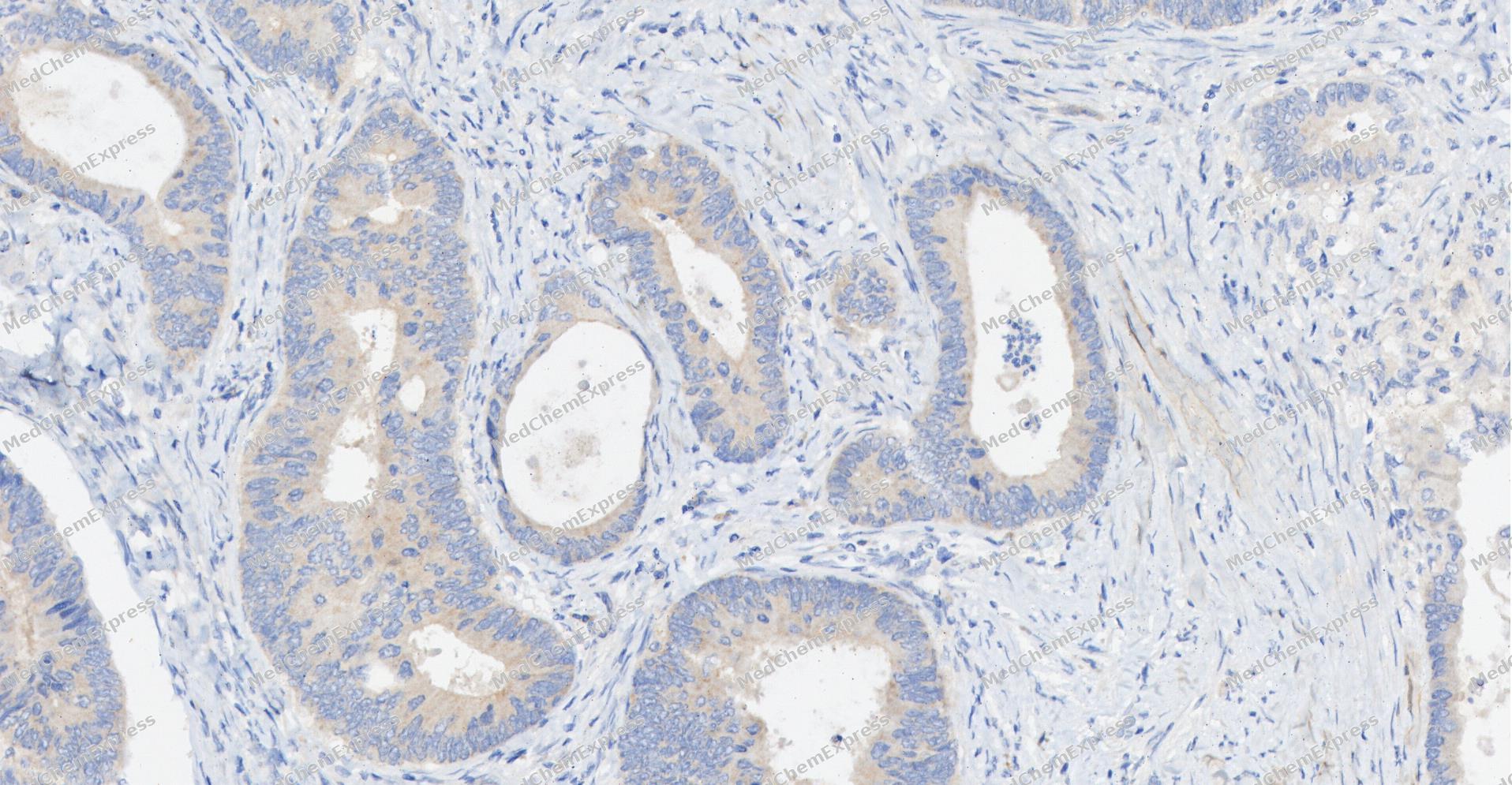 Immunohistochemical analysis of paraffin-embedded human Colon cancer tissue using ITCH antibody was performed. The section was pretreated using high-temperature and high-pressure mediated EDTA antigen retrieval buffer (pH 9.0), for 5 minutes. The tissues were incubated overnight at 4°C with the primary antibody (HY-P82878,1:50 dilution). Detection was performed using an HRP conjugated compact polymer system. DAB was used as the chromogen. The tissues were counterstained with hematoxylin and mounted with neutral balsam mounting medium.
 -
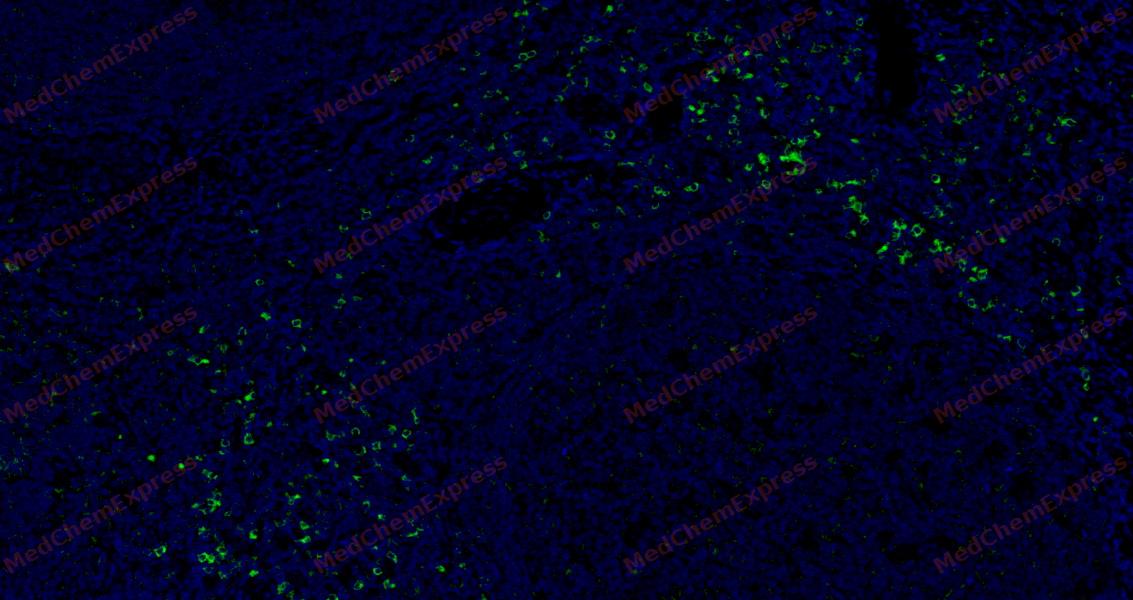 Tyramide signaling amplification based immunofluorescence was performed on paraffin-embedded human Tonsil tissue using ITCH antibody. Antigen retrieval was performed in EDTA buffer pH 9.0 (95 °C, 20 min) followed by cooling to RT. Then incubated with primary antibody (HY-P82878, 1:50 dilution) at room temperature for 60 minutes and HRP conjugated secondary antibody for 10 minutes. Fluorescence was then developed with Vari Fluor 532 TSA (200×)(HY-D1832). The tissues were counterstained with DAPI and mounted with Anti-fade mounting medium.
 -
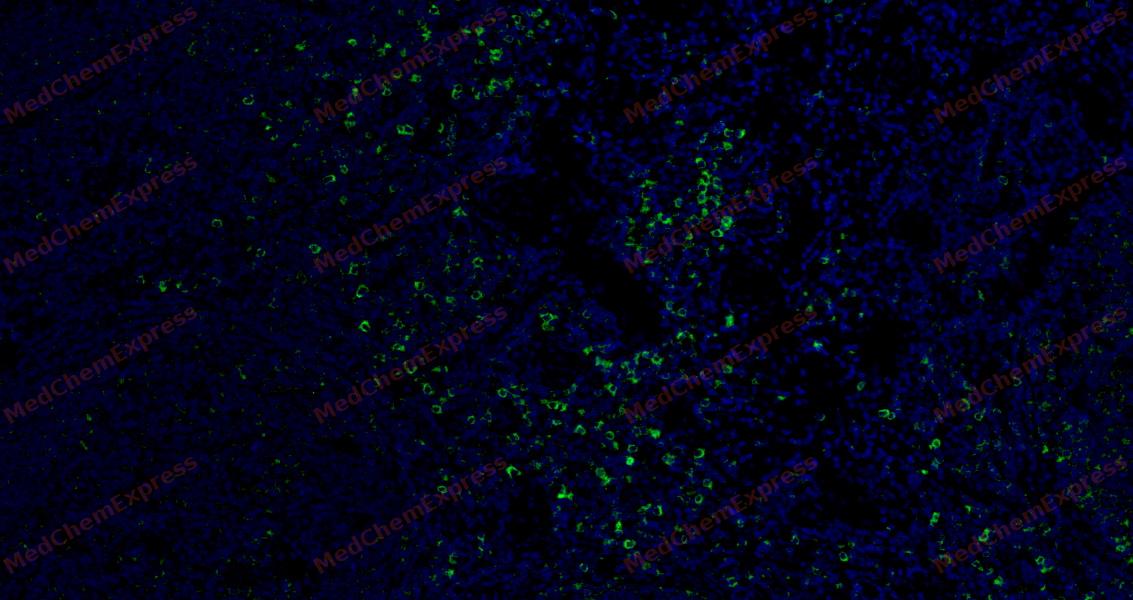 Tyramide signaling amplification based immunofluorescence was performed on paraffin-embedded human Tonsil tissue using ITCH antibody. Antigen retrieval was performed in EDTA buffer pH 9.0 (95 °C, 20 min) followed by cooling to RT. Then incubated with primary antibody (HY-P82878, 1:50 dilution) at room temperature for 60 minutes and HRP conjugated secondary antibody for 10 minutes. Fluorescence was then developed with Vari Fluor 532 TSA (200×)(HY-D1832). The tissues were counterstained with DAPI and mounted with Anti-fade mounting medium.
 -
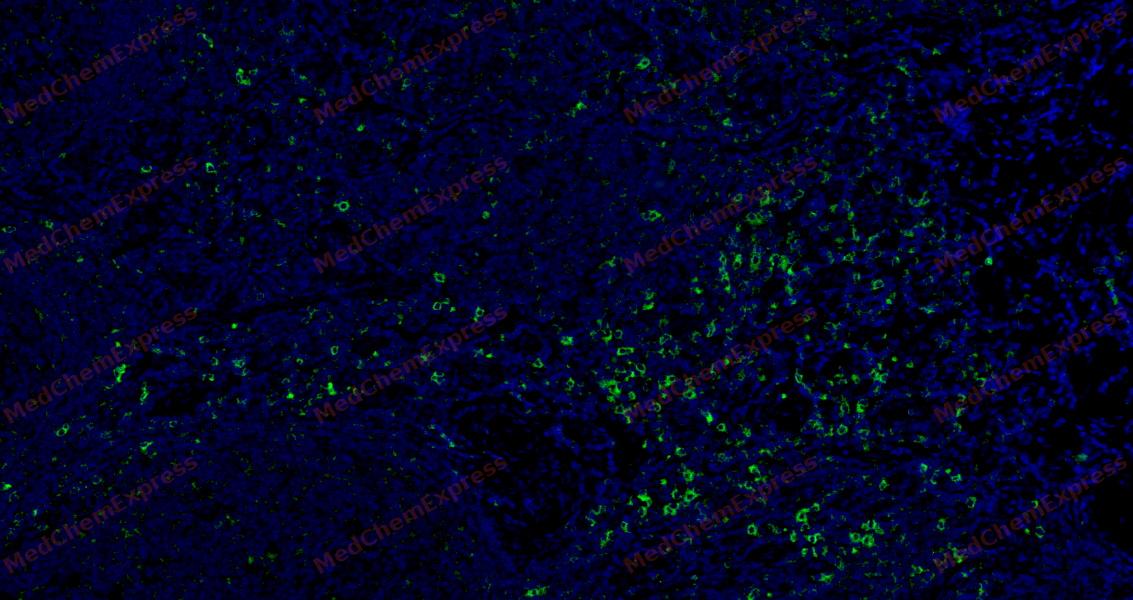 Tyramide signaling amplification based immunofluorescence was performed on paraffin-embedded human Tonsil tissue using ITCH antibody. Antigen retrieval was performed in EDTA buffer pH 9.0 (95 °C, 20 min) followed by cooling to RT. Then incubated with primary antibody (HY-P82878, 1:50 dilution) at room temperature for 60 minutes and HRP conjugated secondary antibody for 10 minutes. Fluorescence was then developed with Vari Fluor 532 TSA (200×)(HY-D1832). The tissues were counterstained with DAPI and mounted with Anti-fade mounting medium.
 -
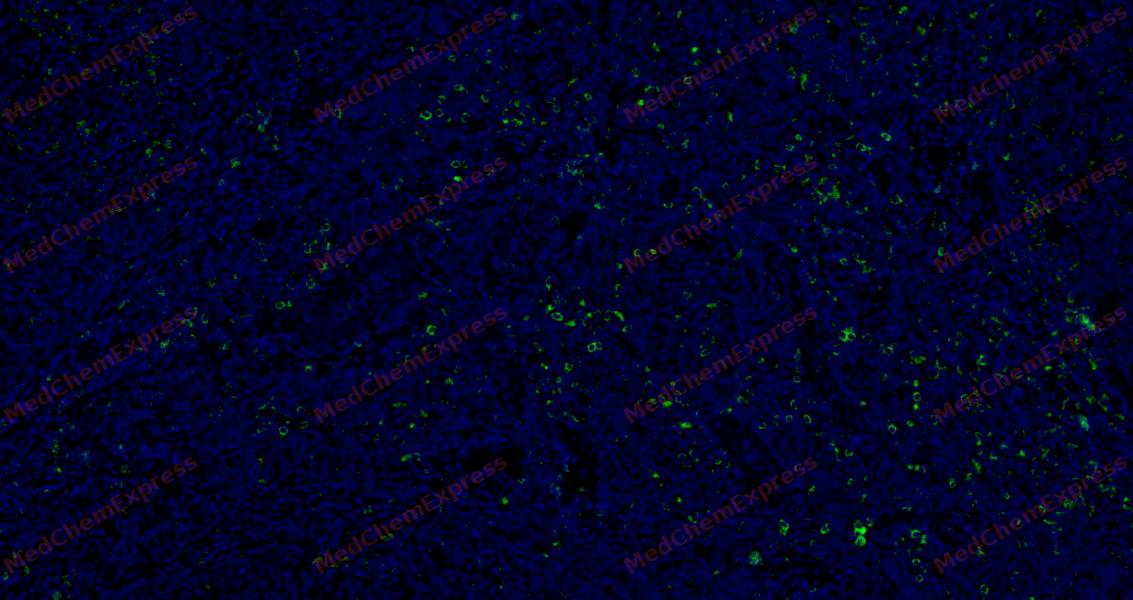 Tyramide signaling amplification based immunofluorescence was performed on paraffin-embedded human Tonsil tissue using ITCH antibody. Antigen retrieval was performed in EDTA buffer pH 9.0 (95 °C, 20 min) followed by cooling to RT. Then incubated with primary antibody (HY-P82878, 1:50 dilution) at room temperature for 60 minutes and HRP conjugated secondary antibody for 10 minutes. Fluorescence was then developed with Vari Fluor 532 TSA (200×)(HY-D1832). The tissues were counterstained with DAPI and mounted with Anti-fade mounting medium.
 -
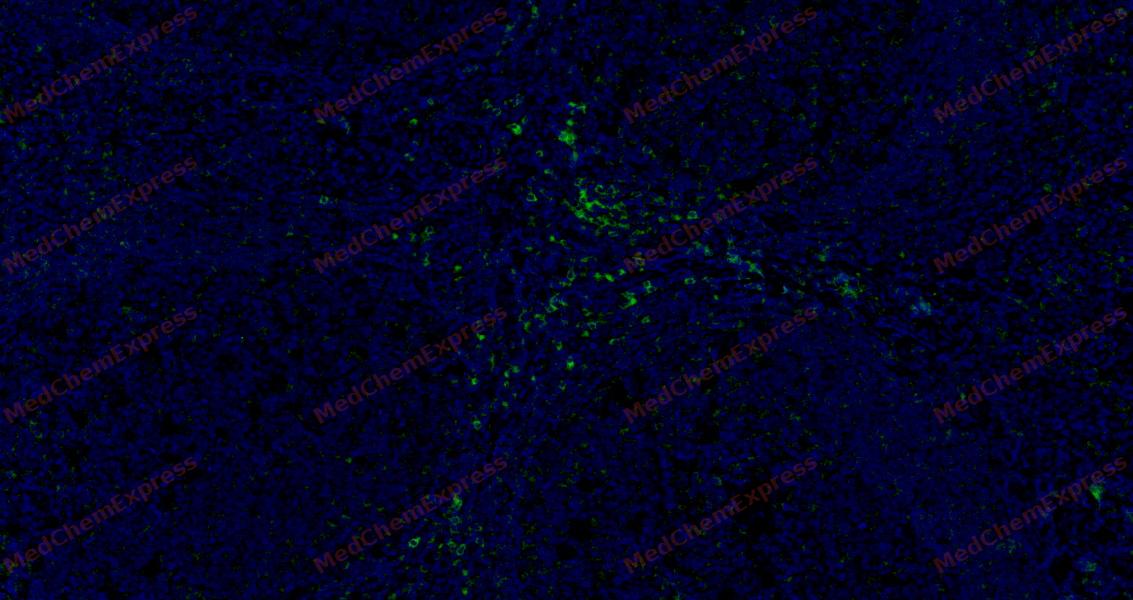 Tyramide signaling amplification based immunofluorescence was performed on paraffin-embedded human Tonsil tissue using ITCH antibody. Antigen retrieval was performed in EDTA buffer pH 9.0 (95 °C, 20 min) followed by cooling to RT. Then incubated with primary antibody (HY-P82878, 1:50 dilution) at room temperature for 60 minutes and HRP conjugated secondary antibody for 10 minutes. Fluorescence was then developed with Vari Fluor 532 TSA (200×)(HY-D1832). The tissues were counterstained with DAPI and mounted with Anti-fade mounting medium.
 -
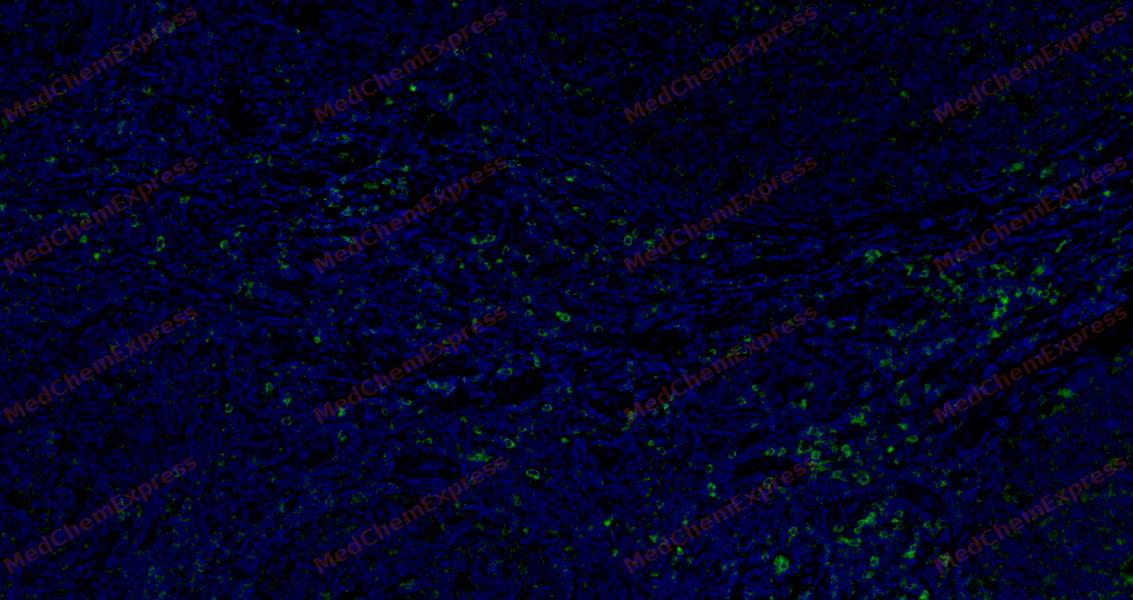 Tyramide signaling amplification based immunofluorescence was performed on paraffin-embedded human Tonsil tissue using ITCH antibody. Antigen retrieval was performed in EDTA buffer pH 9.0 (95 °C, 20 min) followed by cooling to RT. Then incubated with primary antibody (HY-P82878, 1:50 dilution) at room temperature for 60 minutes and HRP conjugated secondary antibody for 10 minutes. Fluorescence was then developed with Vari Fluor 532 TSA (200×)(HY-D1832). The tissues were counterstained with DAPI and mounted with Anti-fade mounting medium.


Background
-
Function
ITCH acts as an Acts as an E3 ubiquitin-protein ligase which accepts ubiquitin from an E2 ubiquitin-conjugating enzyme in the form of a thioester and then directly transfers the ubiquitin to targeted substrates. Catalyzes 'Lys-29'-, 'Lys-48'- and 'Lys-63'-linked ubiquitin conjugation. Involved in the control of inflammatory signaling pathways. Essential component of a ubiquitin-editing protein complex, comprising also TNFAIP3, TAX1BP1 and RNF11, that ensures the transient nature of inflammatory signaling pathways. Promotes the association of the complex after TNF stimulation. Once the complex is formed, TNFAIP3 deubiquitinates 'Lys-63' polyubiquitin chains on RIPK1 and catalyzes the formation of 'Lys-48'-polyubiquitin chains. This leads to RIPK1 proteasomal degradation and consequently termination of the TNF- or LPS-mediated activation of NFKB1. Ubiquitinates RIPK2 by 'Lys-63'-linked conjugation and influences NOD2-dependent signal transduction pathways. Regulates the transcriptional activity of several transcription factors, and probably plays an important role in the regulation of immune response. Ubiquitinates NFE2 by 'Lys-63' linkages and is implicated in the control of the development of hematopoietic lineages. Mediates JUN ubiquitination and degradation. Mediates JUNB ubiquitination and degradation. Critical regulator of type 2 helper T (Th2) cell cytokine production by inducing JUNB ubiquitination and degradation. Involved in the negative regulation of MAVS-dependent cellular antiviral responses. Ubiquitinates MAVS through 'Lys-48'-linked conjugation resulting in MAVS proteasomal degradation. Following ligand stimulation, regulates sorting of Wnt receptor FZD4 to the degradative endocytic pathway probably by modulating PI42KA activity. Ubiquitinates PI4K2A and negatively regulates its catalytic activity. Ubiquitinates chemokine receptor CXCR4 and regulates sorting of CXCR4 to the degradative endocytic pathway following ligand stimulation by ubiquitinating endosomal sorting complex required for transport ESCRT-0 components HGS and STAM. Targets DTX1 for lysosomal degradation and controls NOTCH1 degradation, in the absence of ligand, through 'Lys-29'-linked polyubiquitination. Ubiquitinates SNX9. Ubiquitinates MAP3K7 through 'Lys-48'-linked conjugation. Together with UBR5, involved in the regulation of apoptosis and reactive oxygen species levels through the ubiquitination and proteasomal degradation of TXNIP: catalyzes 'Lys-48'-/'Lys-63'-branched ubiquitination of TXNIP. ITCH synthesizes 'Lys-63'-linked chains, while UBR5 is branching multiple 'Lys-48'-linked chains of substrate initially modified. Mediates the antiapoptotic activity of epidermal growth factor through the ubiquitination and proteasomal degradation of p15 BID. Ubiquitinates BRAT1 and this ubiquitination is enhanced in the presence of NDFIP1. Inhibits the replication of influenza A virus (IAV) via ubiquitination of IAV matrix protein 1 (M1) through 'Lys-48'-linked conjugation resulting in M1 proteasomal degradation. Ubiquitinates NEDD9/HEF1, resulting in proteasomal degradation of NEDD9/HEF1[1][2][3][4][5][6][7][8][9][10][11][12][13][14][15][16][17][18][19][20][21][22].
-
Subcellular Localization
Cell membrane; Peripheral membrane protein; Cytoplasmic side; Cytoplasm; Nucleus; Early endosome membrane; Peripheral membrane protein; Cytoplasmic side; Endosome membrane; Peripheral membrane protein; Cytoplasmic side
-
Expression
Tissue_specificity:Widely expressed -
Isoforms & Post-Translational Modification
Q96J02 has 3 isomers: Q96J02-1: 102803 Da (predicted); Q96J02-2: 98676 Da (predicted); Q96J02-3: 86498 Da (predicted).
On T-cell activation, phosphorylation by the JNK cascade on serine and threonine residues surrounding the PRR domain accelerates the ubiquitination and degradation of JUN and JUNB. The increased ITCH catalytic activity due to phosphorylation by JNK1 may occur due to a conformational change disrupting the interaction between the PRR/WW motifs domain and the HECT domain and, thus exposing the HECT domain (By similarity). Phosphorylation by FYN reduces interaction with JUNB and negatively controls JUN ubiquitination and degradation;Monoubiquitinated (PubMed:19116316). Autopolyubiquitinated with 'Lys-63' linkages which does not lead to protein degradation (PubMed:18718449, PubMed:23146885, PubMed:24790097) -
Subunit
Monomer. Part of a ternary complex composed of SMAD3, ITCH/AIP4 and NEDD9/HEF1; within the complex NEDD9/HEF1 interacts (via N-terminus) with ITCH/AIP4 (via WW domains); the complex mediates ubiquitination and proteasomal degradation of NEDD9/HEF1 (PubMed:15051726). Interacts (via WW domains) with OCNL (By similarity). Interacts (via WW domains) with NOTCH1 (By similarity). Interacts (via WW domains) with JUN (By similarity). Interacts with JUNB; the interaction promotes ITCH-mediated ubiquitination and degradation of JUNB (PubMed:16387660). Interacts with FYN; the interaction phosphorylates ITCH on Tyr-420 decreasing binding of JUNB (PubMed:16387660). Interacts (via WW domain 2) with N4BP1; the interaction inhibits the E3 ubiquitin-protein ligase activity (By similarity). Interacts with NDFIP1 and NDFIP2; this interaction activates the E3 ubiquitin-protein ligase and may induce its recruitment to exosomes (By similarity). Interacts with ARHGEF7 (PubMed:17652093). Interacts with RNF11 (PubMed:14559117, PubMed:19131965). Interacts (via the WW 1 domain) with NFE2 (via the PXY motif 1); the interaction promotes 'Lys-63'-linked ubiquitination of NFE2, retains it in the cytoplasm and prevents its transactivation activity (PubMed:11318614, PubMed:18718448). Interacts (via WW domains) with CXCR4 (via C-terminus); the interaction depends on CXCR4 phosphorylation (PubMed:19116316). Found in a complex with E3 ligase DTX3L and ESCRT-0 components HGS and STAM (PubMed:24790097). Interacts with DTX3L (via C-terminus); the interaction is increased upon CXCL12 stimulation and inhibits ITCH catalytic activity (the interaction is direct) (PubMed:24790097). Interacts with HGS (PubMed:14602072). Interacts (via WW domains) with PCBP2 within a complex containing ITCH, MAVS and PCBP2 (PubMed:19881509). Interacts (via WW domains) with TXNIP (via C-terminus) (PubMed:20068034). Interacts with p15 BID (PubMed:20392206). Interacts with ERBB4 (PubMed:20858735). Interacts with DTX1 (PubMed:17028573). Interacts with SPART (PubMed:19580544). Interacts with SNX9 and SNX18 (PubMed:20491914). Interacts (via its WW domains) with ATN1 (PubMed:9647693). Interacts (via WW domains) with SGK3 (PubMed:16888620). Interacts with CBLC (PubMed:12226085). Interacts with OTUD7B (PubMed:22179831). Interacts (via WW domain 1,2 and 3) with PI4K2A; the interaction inhibits PI4K2A catalytic activity and promotes ITCH catalytic activity (PubMed:23146885). Interacts with ARRDC4 (PubMed:23236378). Part of a complex containing ITCH, NDFIP1 and MAP3K7 (By similarity). Interacts with UBE2L3; the interaction is mediated by NDFIP1 (PubMed:25632008). Interacts with MAPK8/JNK1 (By similarity). Interacts (via WW domains) with ARRDC1 (via PPxY motifs); the interaction is direct and participates in the recruitment of the ubiquitin-protein ligase ITCH to the NOTCH1 receptor (PubMed:21191027, PubMed:23886940). Interacts (via WW domains) with ARRDC2 (PubMed:21191027). Interacts (via WW domains) with ARRDC3 (PubMed:21191027, PubMed:23886940). Interacts directly with LDLRAD3; this interaction promotes ITCH auto-ubiquitination leading to its degradation (PubMed:26854353). Interacts with ENTREP1; enhances the ubiquitination of CXCR4 by ITCH and its subsequent endocytosis (PubMed:34927784). Interacts with USP12 and WDR48/UAF1; the interaction is more efficient when both USP12 and WDR48/UAF1 are involved and may facilitate the recruitment of the USP12 deubiquitinase complex to Notch (PubMed:22778262)
-
SwissProt ID
-
Synonyms
ITCH; E3 ubiquitin-protein ligase Itchy homolog; Itch; Atrophin-1-interacting protein 4; AIP4; NFE2-associated polypeptide 1; NAPP1
-
Research Field
Cell Biology


Documentation
-
Data Sheet (236 KB)
-
SDS (252 KB)
- English - EN (252 KB)
- Français - FR (252 KB)
- Deutsch - DE (252 KB)
- Norwegian - NO (252 KB)
- Español - ES (252 KB)
- Swedish - SV (252 KB)
- Italian - IT (252 KB)
- Korean - KR (252 KB)
- Portuguese - PT (252 KB)
-
User Guide for Antibodies (1077 KB)

 Powered by Bioz
