1. Antibodies
  2. Primary Antibodies
  3. Monoclonal Antibodies Recombinant Antibodies Modification Specific Antibodies
  4. Phospho-Tau (Ser404) Antibody (YA142)

Phospho-Tau (Ser404) Antibody (YA142)

製品番号: HY-P80860
COA User Guide for Antibodies Technical Support

Phospho-Tau (Ser404) Antibody (YA142) is a Rabbit-derived and non-conjugated IgG monoclonal antibody, targeting to Phospho-Tau (Ser404).

商品は「研究用試薬」です。人や動物の医療用・臨床診断用・食品用の製品ではありません。
研究用途以外に使用した場合、当社は一切の責任を負いかねます。

容量 価格(税別) 在庫状況 数量
10 μL $94 在庫あり
50 μL $249 在庫あり
100 μL $405 在庫あり
250 μL   お問い合わせ  

* アイテムを追加する前、数量をご選択ください

Top Publications Citing Use of Products
  • WB: Western Blot;
  • IHC-P: Immunohistochemistry-Paraffin;
  • IHC-F: Immunohistochemistry-Frozen;
  • ICC/IF: Immunocytochemistry/Immunofluorescence;
  • IF-Tissue: Immunofluorescence-Tissue;
  • mIHC: Multiplex Immunohistochemical;
  • IP: Immunoprecipitation;
  • ChIP: Chromatin Immunoprecipitation;
  • FC: Flow Cytometry;
  • ELISA: Enzyme Linked Immunosorbent Assay
  • Product Detail

  • Verification Image

  • Background

  • 説明

製品説明

Phospho-Tau (Ser404) Antibody (YA142) is a Rabbit-derived and non-conjugated IgG monoclonal antibody, targeting to Phospho-Tau (Ser404).

Host

Rabbit

Clonality

Recombinant,Monoclonal

分子量
Predicted band size: 79 kDa;
Observed band size: 50-80 kDa
Note: Due to possible protein modifications or aggregation, the molecular weight should be confirmed by actual measurement, and the predicted value is for reference only.
Species Reactivity
Human, Mouse, Rat
SwissProt ID
Gene ID
Immunogen

Synthetic phosphopeptide corresponding to residues surrounding Ser404 of Human Tau. The exact sequence is proprietary to MCE.

Application &
Dilution Ratio
Application Dilution Ratio
WB
WB: Western Blot
1:500-1:1000
IHC-P
IHC-P: Immunohistochemistry-Paraffin
1:100-1:200
ICC/IF
ICC/IF: Immunocytochemistry/Immunofluorescence
1:20-1:50
IP
IP: Immunoprecipitation
1:20
Sensitivity Endogenous 純度 affinity purified
Conjugation Non-conjugated Modification Phosphorylated
Isotype IgG  
Appearance

Liquid

Formulation

Supplied in 50 mM Tris-Glycine (pH 7.4), 0.15 M NaCl, 40% Glycerol and 0.05% BSA. Preservative: 0.01% Sodium azide

Storage & Stability

Stored at -20°C for 1 year. Avoid repeated freeze / thaw cycles.

輸送条件

Shipping with blue ice.

Verification Image
ALL IHC-P ICC
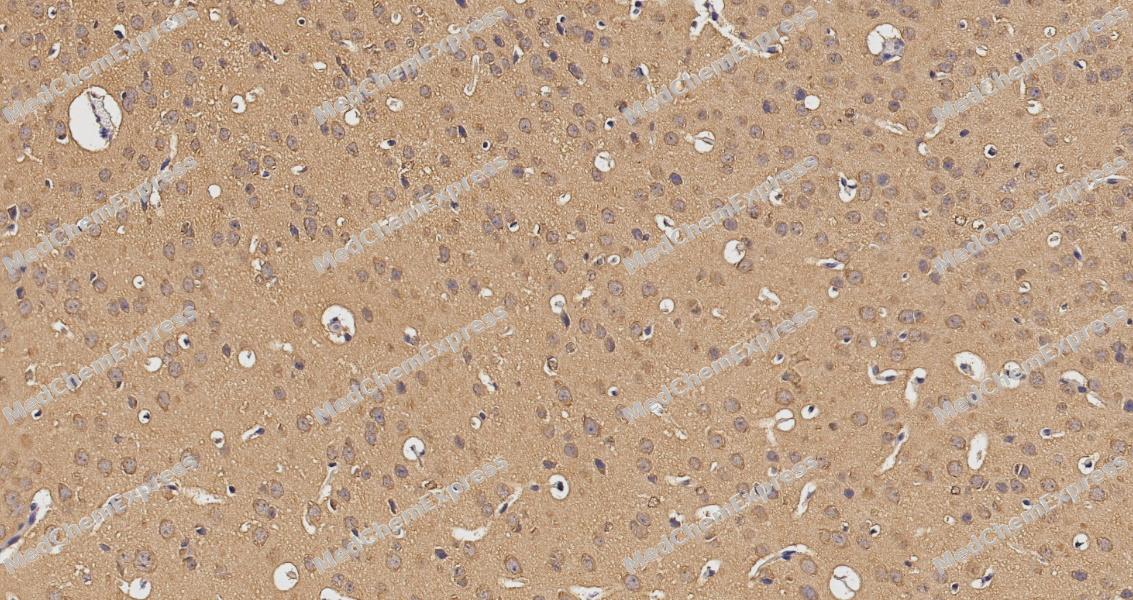
  • Immunohistochemical analysis of paraffin-embedded human brain using Phospho-Tau (Ser404) antibody. The section was pre-treated using heat mediated antigen retrieval with sodium citrate buffer (pH 6.0) for 2 minutes. The tissues were blocked with QuickBlock at room temperature for 30 minutes, washed with PBSand PBST, and then incubated with the primary antibody (HY-P80860, 1/200) overnight at 4℃. The detection was performed using an HRP conjugated compact polymer system. DAB was used as the chromogen. Tissues were counterstained with hematoxylin and mounted with DPX.

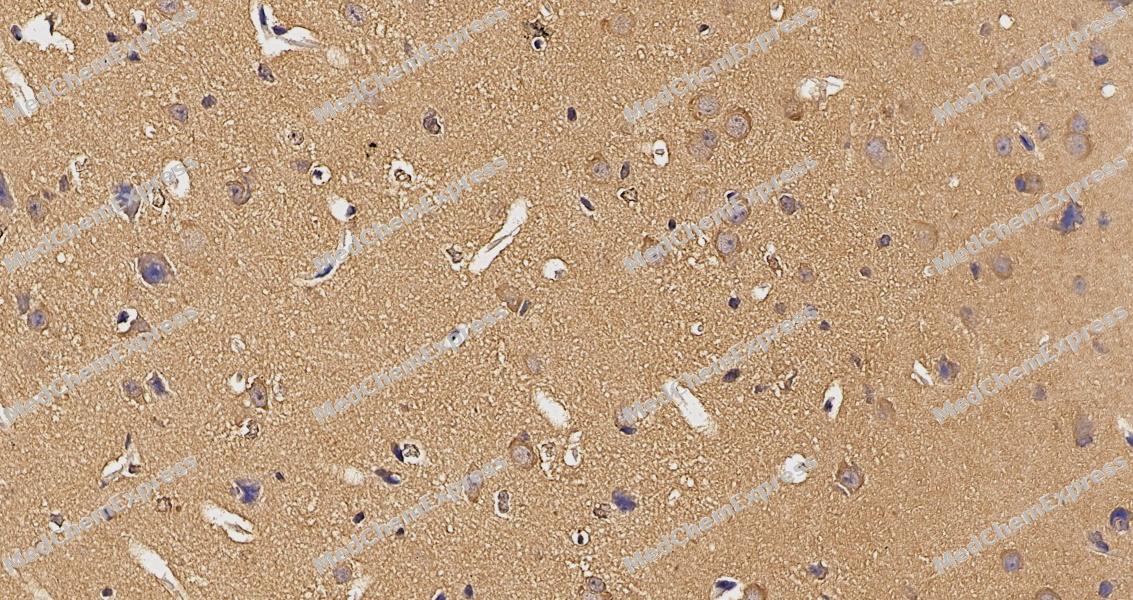
  • Immunohistochemical analysis of paraffin-embedded rat brain using Phospho-Tau (Ser404) antibody. The section was pre-treated using heat mediated antigen retrieval with sodium citrate buffer (pH 6.0) for 2 minutes. The tissues were blocked with QuickBlock at room temperature for 30 minutes, washed with PBSand PBST, and then incubated with the primary antibody (HY-P80860, 1/200) overnight at 4℃. The detection was performed using an HRP conjugated compact polymer system. DAB was used as the chromogen. Tissues were counterstained with hematoxylin and mounted with DPX.

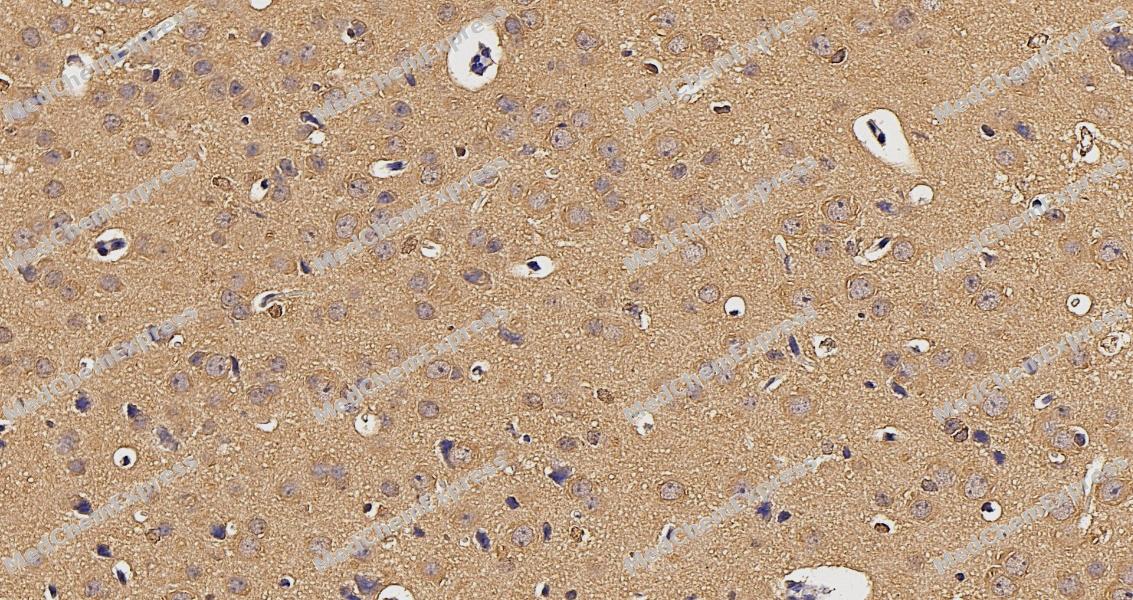
  • Immunohistochemical analysis of paraffin-embedded mouse brain using Phospho-Tau (Ser404) antibody. The section was pre-treated using heat mediated antigen retrieval with sodium citrate buffer (pH 6.0) for 2 minutes. The tissues were blocked with QuickBlock at room temperature for 30 minutes, washed with PBSand PBST, and then incubated with the primary antibody (HY-P80860, 1/200) overnight at 4℃. The detection was performed using an HRP conjugated compact polymer system. DAB was used as the chromogen. Tissues were counterstained with hematoxylin and mounted with DPX.

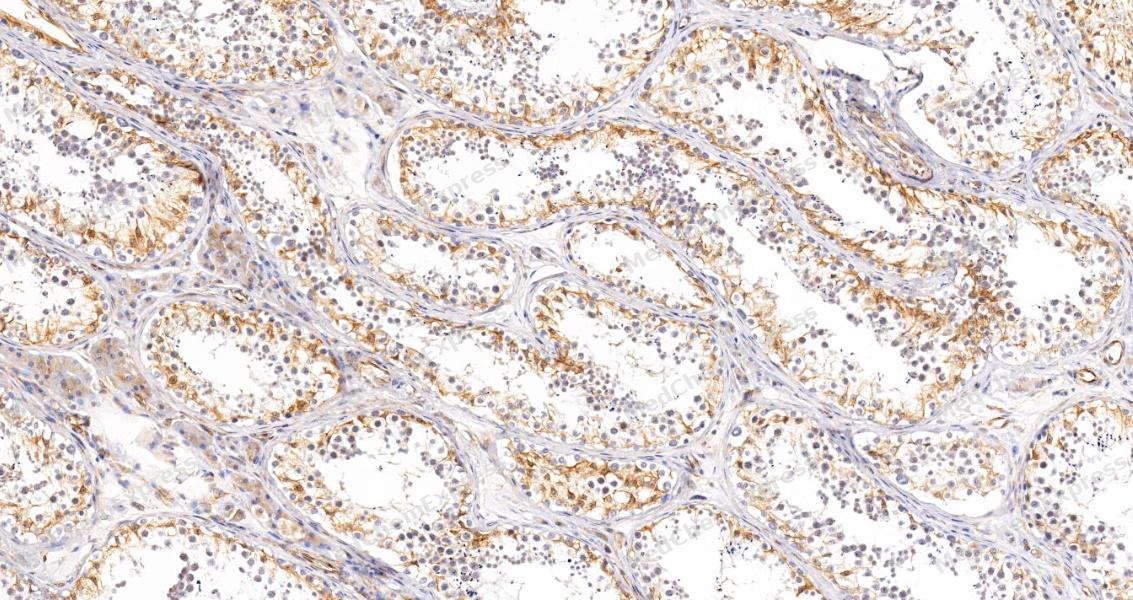
  • Immunohistochemical analysis of paraffin-embedded human testis tissue using Phospho-Tau (Ser404) Antibody (HY-P80860, 1/200). The section was pretreated using heat mediated antigen retrieval with sodium citrate buffer (pH 6.0) for 8 minutes. The tissues were blocked with quick block buffer for 0.5 hours at room temperature, washed with PBS and PBST, and then incubated with the primary antibody overnight at 4℃. The detection was performed using an HRP conjugated compact polymer system. DAB was used as the chromogen. Tissues were counterstained with hematoxylin and mounted with DPX.

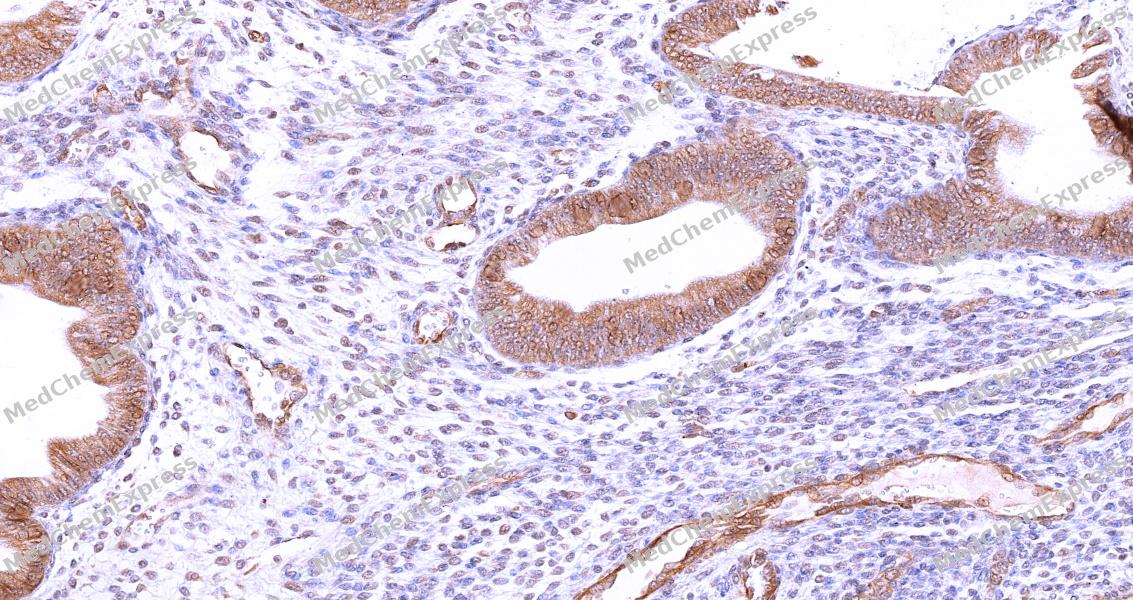
  • Immunohistochemical analysis of paraffin-embedded human endometrium tissue using Phospho-Tau (Ser404) Antibody (HY-P80860, 1/200). The section was pretreated using heat mediated antigen retrieval with sodium citrate buffer (pH 6.0) for 8 minutes. The tissues were blocked with quick block buffer for 0.5 hours at room temperature, washed with PBS and PBST, and then incubated with the primary antibody overnight at 4℃. The detection was performed using an HRP conjugated compact polymer system. DAB was used as the chromogen. Tissues were counterstained with hematoxylin and mounted with DPX.

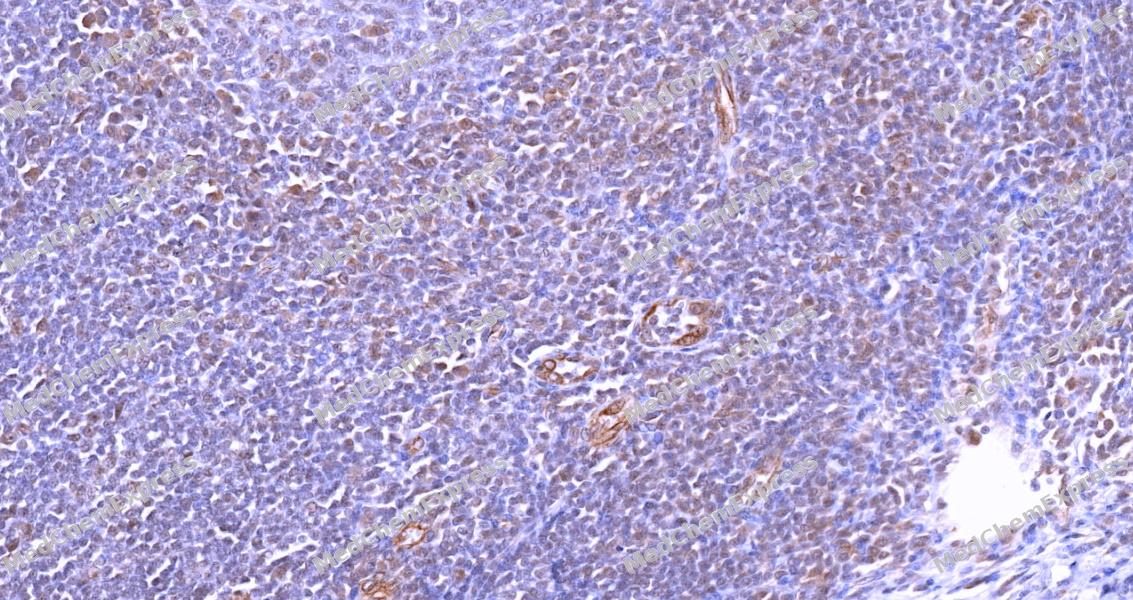
  • Immunohistochemical analysis of paraffin-embedded human tonsil tissue using Phospho-Tau (Ser404) Antibody (HY-P80860, 1/200). The section was pretreated using heat mediated antigen retrieval with sodium citrate buffer (pH 6.0) for 8 minutes. The tissues were blocked with quick block buffer for 0.5 hours at room temperature, washed with PBS and PBST, and then incubated with the primary antibody overnight at 4℃. The detection was performed using an HRP conjugated compact polymer system. DAB was used as the chromogen. Tissues were counterstained with hematoxylin and mounted with DPX.

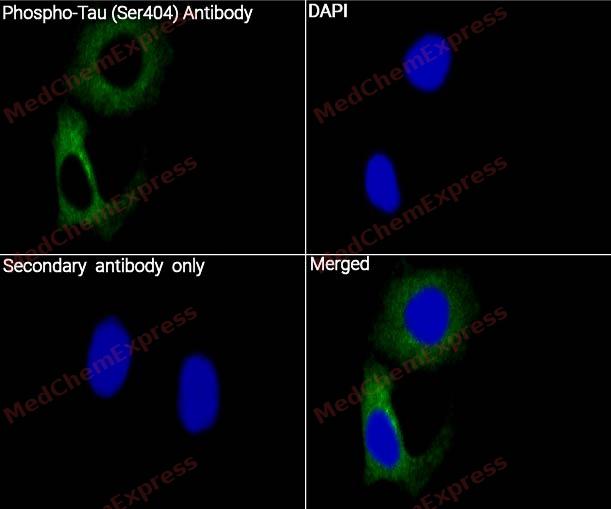
  • Immunocytochemistry analysis of HeLa cells labeling Phospho-Tau (Ser404) with Phospho-Tau (Ser404) Antibody (HY-P80860) at 1/20 dilution. Cells were fixed in 4% paraformaldehyde for 15 minutes at room temperature, permeabilized with 0.1% Triton X-100 in PBS for 15 minutes at room temperature, then blocked with quick block buffer for 10 minutes at room temperature. Cells were then incubated with Phospho-Tau (Ser404) Antibody (HY-P80860) at 1/20 dilution in quick block buffer overnight at 4 ℃. AF488-conjugated Goat Anti-Rabbit IgG H&L(HY-P8002, Green) was used as the secondary antibody at 1/1,000 dilution. PBS instead of the primary antibody was used as the secondary antibody only control. The Nuclear counterstain was DAPI (Blue).

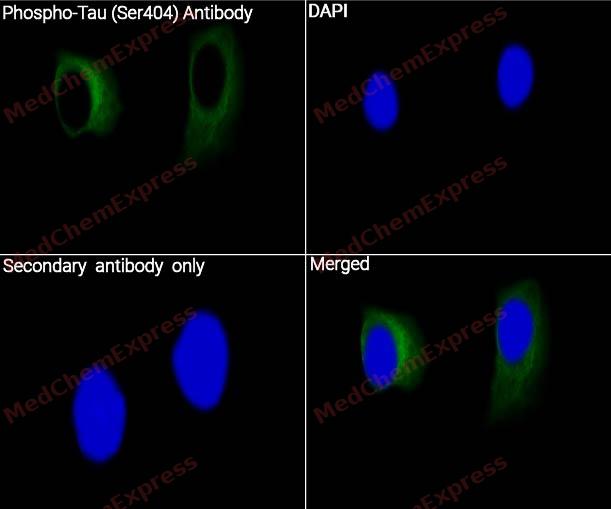
  • Immunocytochemistry analysis of HeLa cells labeling Phospho-Tau (Ser404) with Phospho-Tau (Ser404) Antibody (HY-P80860) at 1/50 dilution. Cells were fixed in 4% paraformaldehyde for 15 minutes at room temperature, permeabilized with 0.1% Triton X-100 in PBS for 15 minutes at room temperature, then blocked with quick block buffer for 10 minutes at room temperature. Cells were then incubated with Phospho-Tau (Ser404) Antibody (HY-P80860) at 1/50 dilution in quick block buffer overnight at 4 ℃. AF488-conjugated Goat Anti-Rabbit IgG H&L(HY-P8002, Green) was used as the secondary antibody at 1/1,000 dilution. PBS instead of the primary antibody was used as the secondary antibody only control. The Nuclear counterstain was DAPI (Blue).

Background
Function:Promotes microtubule assembly and stability, and might be involved in the establishment and maintenance of neuronal polarity (PubMed:21985311). The C-terminus binds axonal microtubules while the N-terminus binds neural plasma membrane components, suggesting that tau functions as a linker protein between both (PubMed:21985311, PubMed:32961270). Axonal polarity is predetermined by TAU/MAPT localization (in the neuronal cell) in the domain of the cell body defined by the centrosome. The short isoforms allow plasticity of the cytoskeleton whereas the longer isoforms may preferentially play a role in its stabilization
Subcellular Localization:Cytoplasm, cytosol; Cell membrane; Peripheral membrane protein; Cytoplasmic side; Cytoplasm, cytoskeleton; Cell projection, axon; Cell projection, dendrite; Secreted
Expression:
Tissue_specificity:It is expressed in neurons. The PNS-tau subtype is expressed in the peripheral nervous system, while other subtypes are expressed in the central nervous system.
Isoforms & Post-Translational Modification:P10636 has 9 isomers: P10636-1: 78928 Da (predicted); P10636-2: 36760 Da (predicted); P10636-3: 32944 Da (predicted); P10636-4: 39720 Da (predicted); P10636-5: 42603 Da (predicted); P10636-6: 40007 Da (predicted); P10636-7: 42967 Da (predicted); P10636-8: 45850 Da (predicted); P10636-9: 80941 Da (predicted).
Phosphorylation at serine and threonine residues in S-P or T-P motifs by proline-directed protein kinases (PDPK1, CDK1, CDK5, GSK3, MAPK) (only 2-3 sites per protein in interphase, seven-fold increase in mitosis, and in the form associated with paired helical filaments (PHF-tau)), and at serine residues in K-X-G-S motifs by MAP/microtubule affinity-regulating kinase (MARK1, MARK2, MARK3 or MARK4), causing detachment from microtubules, and their disassembly (PubMed:23666762, PubMed:7706316). Phosphorylation decreases with age. Phosphorylation within tau/MAP's repeat domain or in flanking regions seems to reduce tau/MAP's interaction with, respectively, microtubules or plasma membrane components (PubMed:7706316). Phosphorylation on Ser-610, Ser-622, Ser-641 and Ser-673 in several isoforms during mitosis. Phosphorylation at Ser-548 by GSK3B reduces ability to bind and stabilize microtubules. Phosphorylation at Ser-579 by BRSK1 and BRSK2 in neurons affects ability to bind microtubules and plays a role in neuron polarization. Phosphorylated at Ser-554, Ser-579, Ser-602, Ser-606 and Ser-669 by PHK. Phosphorylation at Ser-214 by SGK1 mediates microtubule depolymerization and neurite formation in hippocampal neurons. There is a reciprocal down-regulation of phosphorylation and O-GlcNAcylation. Phosphorylation on Ser-717 completely abolishes the O-GlcNAcylation on this site, while phosphorylation on Ser-713 and Ser-721 reduces glycosylation by a factor of 2 and 4 respectively. Phosphorylation on Ser-721 is reduced by about 41.5% by GlcNAcylation on Ser-717. Dephosphorylated at several serine and threonine residues by the serine/threonine phosphatase PPP5C;Polyubiquitinated. Requires functional TRAF6 and may provoke SQSTM1-dependent degradation by the proteasome (By similarity). PHF-tau can be modified by three different forms of polyubiquitination. 'Lys-48'-linked polyubiquitination is the major form, 'Lys-6'-linked and 'Lys-11'-linked polyubiquitination also occur;O-glycosylated. O-GlcNAcylation content is around 8.2%. There is reciprocal down-regulation of phosphorylation and O-GlcNAcylation. Phosphorylation on Ser-717 completely abolishes the O-GlcNAcylation on this site, while phosphorylation on Ser-713 and Ser-721 reduces O-GlcNAcylation by a factor of 2 and 4 respectively. O-GlcNAcylation on Ser-717 decreases the phosphorylation on Ser-721 by about 41.5%;Glycation of PHF-tau, but not normal brain TAU/MAPT. Glycation is a non-enzymatic post-translational modification that involves a covalent linkage between a sugar and an amino group of a protein molecule forming ketoamine. Subsequent oxidation, fragmentation and/or cross-linking of ketoamine leads to the production of advanced glycation endproducts (AGES). Glycation may play a role in stabilizing PHF aggregation leading to tangle formation in AD
Subunit:Interacts with MARK1, MARK2, MARK3 and MARK4 (PubMed:23666762). Interacts with PSMC2 through SQSTM1 (By similarity). Interacts with SQSTM1 when polyubiquitinated (PubMed:15953362). Interacts with FKBP4 (By similarity). Binds to CSNK1D (PubMed:14761950). Interacts with SGK1 (PubMed:16982696). Interacts with EPM2A; the interaction dephosphorylates MAPT at Ser-396 (PubMed:19542233). Interacts with PIN1 (PubMed:11313338). Interacts with LRRK2 (PubMed:26014385). Interacts with LRP1, leading to endocytosis; this interaction is reduced in the presence of LRPAP1/RAP (PubMed:32296178)
Database
Research Field

Neuroscience

Synonyms
MAPT; MAPTL; MTBT1; TAU; Microtubule-associated protein tau; Neurofibrillary tangle protein; Paired helical filament-tau; PHF-tau
ドキュメンテーション
Help & FAQs
  • Do most proteins show cross-species activity?

    Species cross-reactivity must be investigated individually for each product. Many human cytokines will produce a nice response in mouse cell lines, and many mouse proteins will show activity on human cells. Other proteins may have a lower specific activity when used in the opposite species.

最近チェックした製品:

オンラインお問い合わせ

Your information is safe with us. * Required Fields.

製品名


カスタマ需要量 *

お名前 *


タイトル

メールアドレス *


電話番号 *

デパートメント


組纖名 *

市区町村

都道府県

国或いは地域 *


必ず会社名を記載ください。個人への返信は行いません。

備考

バルクお問い合わせ

Inquiry Information

製品名:
Phospho-Tau (Ser404) Antibody (YA142)
製品番号:
HY-P80860
数量:
MCE 日本正規代理店: