



Progesterone Receptor Antibody (YA1866)
(Synonyms: PGR; NR3C3; Progesterone receptor; PR; Nuclear receptor subfamily 3 group C member 3)Based on 1 Customer Validation
Progesterone Receptor Antibody (YA1866) is a Rabbit-derived and non-conjugated IgG monoclonal antibody, targeting to Progesterone Receptor.
-
Host:
Rabbit
-
Isotype:
IgG
-
Application:
WB, IHC-P, ICC/IF, IP
-
Reactivity :
Human
-
Formulation:
Supplied in Rabbit IgG in 10mM phosphate buffered saline , pH 7.4, 150mM sodium chloride, 0.05% BSA, 0.02% sodium azide and 50% glycerol.
-
Conjugation:
Non-conjugated


To place orders, for customer services and technical support, please contact: MedChemExpress USA
Tel: 609-228-6898 E-mail: [email protected] [email protected]





Applications
| Application |
WB

WB: Western Blot
|
IHC-P
IHC-P: Immunohistochemistry-Paraffin
|
ICC/IF
ICC/IF: Immunocytochemistry/
Immunofluorescence |
IP
IP: Immunoprecipitation
|
|---|---|---|---|---|
| Dilution Ratio | 1:500-1:1000 | 1:50-1:100 | 1:50-1:200 | 1:50 |


Product Details
Progesterone Receptor Antibody (YA1866) is a Rabbit-derived and non-conjugated IgG monoclonal antibody, targeting to Progesterone Receptor.
-
Host Rabbit

-
Clonality Recombinant,Monoclonal

-
Species ReactivityHuman
-
Observed Molecular WeightObserved band size: 118 kDa
Note: Due to possible protein modifications or aggregation, the molecular weight should be confirmed by actual measurement, and the predicted value is for reference only.

-
Calculated Molecular Weight Predicted band size: 99 kDa

A synthesized peptide derived from human Progesterone Receptor aa1-49.
Endogenous
Affinity Chromatography
Non-conjugated
Unmodified
IgG


Product Properties
-
Appearance
Solution
-
Formulation
Supplied in Rabbit IgG in 10mM phosphate buffered saline , pH 7.4, 150mM sodium chloride, 0.05% BSA, 0.02% sodium azide and 50% glycerol.
-
Concentration
Batch-dependent, Please check the COA for the concentration of each lot. Check Lot Concentration
-
Storage & Stability
Stored at -20°C for 1 year. Avoid repeated freeze / thaw cycles.
-
Shipping
Shipping with blue ice.


Verification Images
-
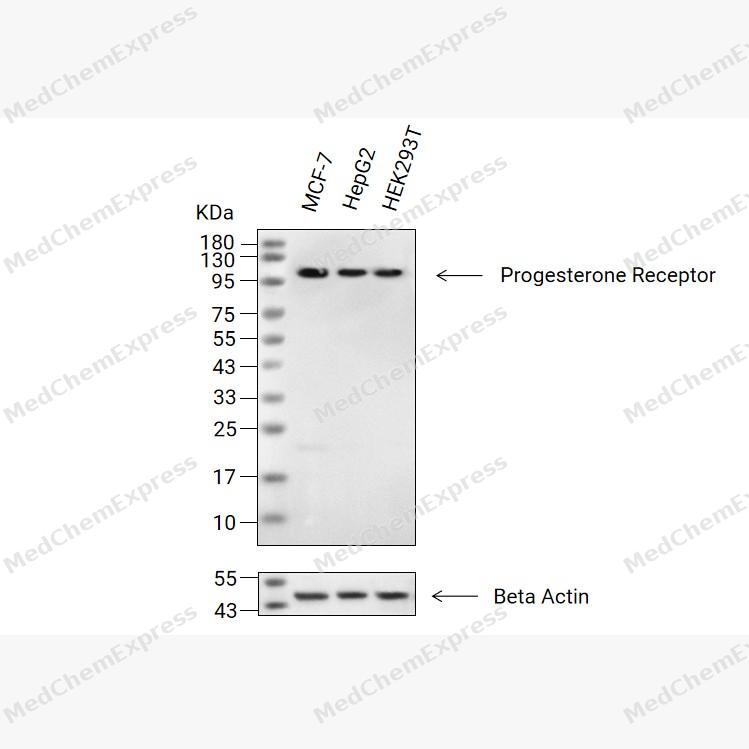 Western blot analysis of extracts from MCF-7(lane 2(20μg)), HepG2(lane 3(20μg)) and HEK293T(lane 4(20μg)) using Progesterone Receptor Antibody(HY-P82121). Proteins were transferred to a PVDF membrane and blocked with 5% non-fat milk in TBST for 2 hour at room temperature. The primary antibody ( 1/1000) and Loading control antibody (Beta Actin, HY-P80993,1/10000) was used in 5% non-fat milk in TBST at 4°C overnight. Goat Anti-Rabbit IgG-HRP Secondary Antibody (HY-P8001,1/10,000) was used for 1 hour at room temperature.
 -
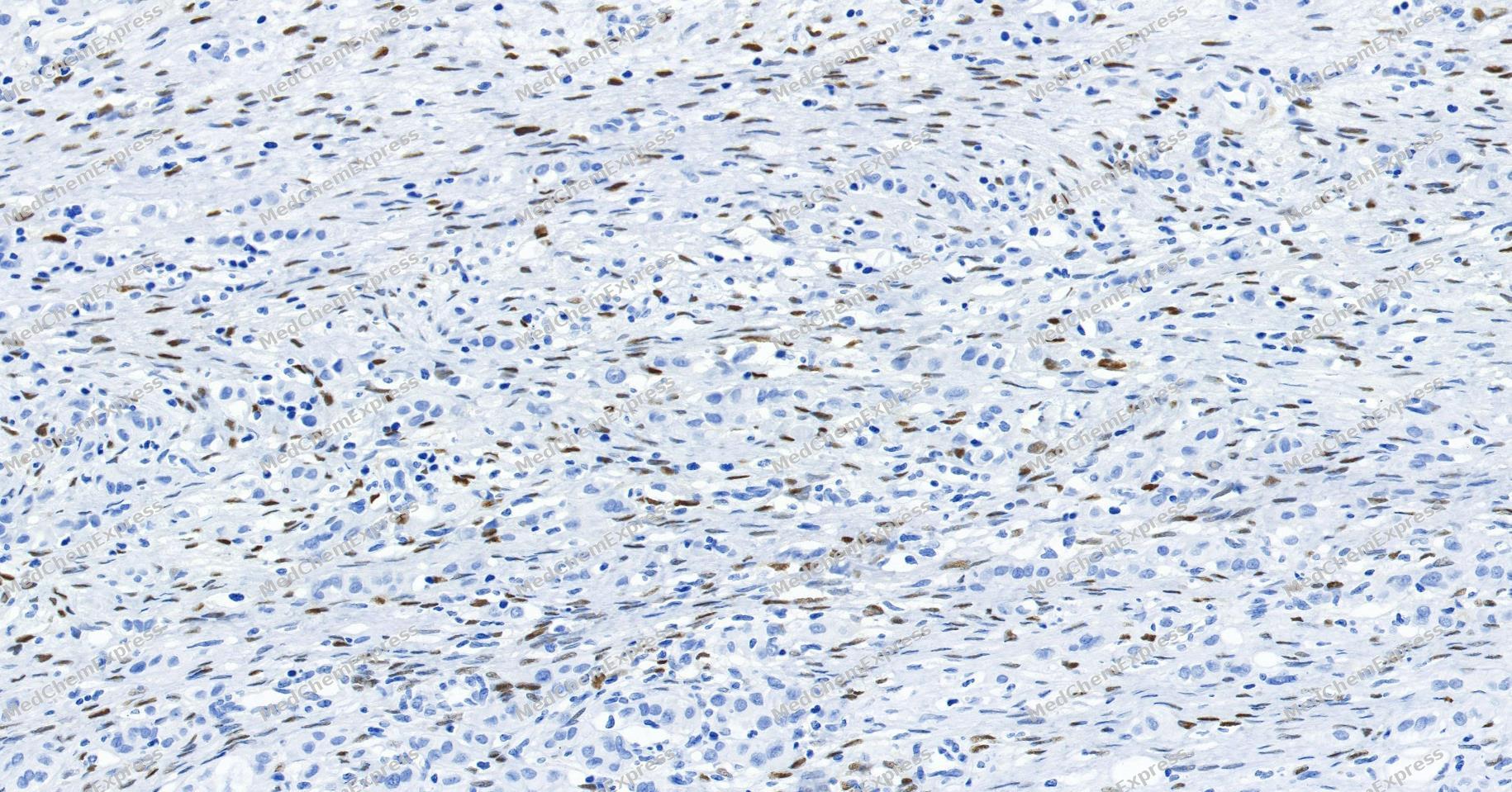 Immunohistochemical analysis of paraffin-embedded human breast cancer tissue using Progesterone Receptor Antibody (YA1866). The section was pre-treated using heat mediated antigen retrieval with Tris/EDTA buffer (pH 9.0) for 20 minutes. The tissues were probed with the primary antibody (HY-P82121, 1/100) overnight at 4℃. The detection was performed using an HRP conjugated compact polymer system. DAB was used as the chromogen. Tissues were counterstained with hematoxylin and mounted with neutral balsam.
 -
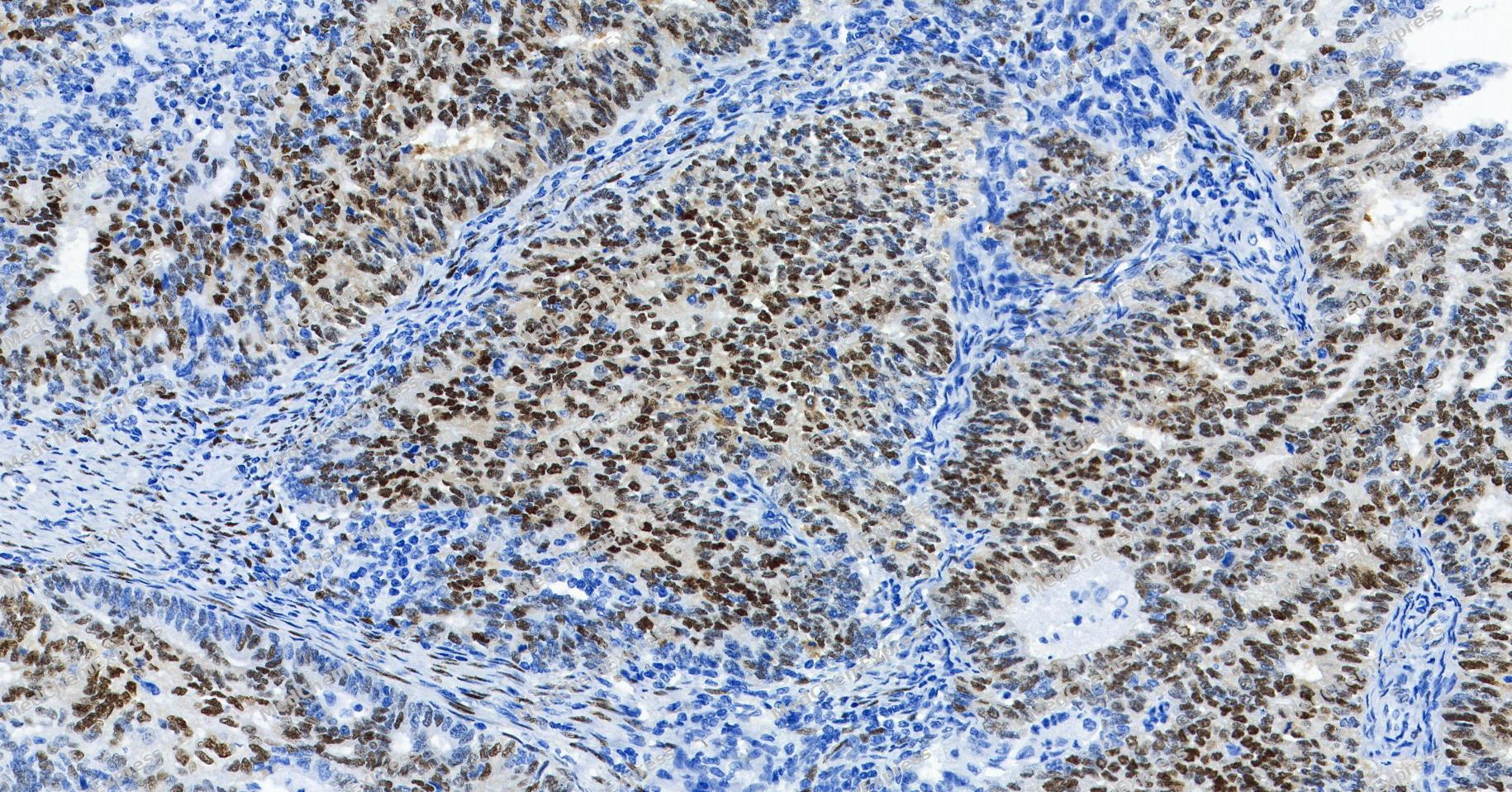 Immunohistochemical analysis of paraffin-embedded human endometrial cancer tissue using Progesterone Receptor Antibody (YA1866). The section was pre-treated using heat mediated antigen retrieval with Tris/EDTA buffer (pH 9.0) for 20 minutes. The tissues were probed with the primary antibody (HY-P82121, 1/100) overnight at 4℃. The detection was performed using an HRP conjugated compact polymer system. DAB was used as the chromogen. Tissues were counterstained with hematoxylin and mounted with neutral balsam.
 -
 Immunocytochemistry analysis of A549 cells labeling Progesterone Receptor with Progesterone Receptor Antibody (HY-P82121) at 1/100 dilution. Cells were fixed in 4% paraformaldehyde for 15 minutes at room temperature, permeabilized with 0.1% Triton X-100 in PBS for 15 minutes at room temperature, then blocked with quick block buffer for 10 minutes at room temperature. Cells were then incubated with Progesterone Receptor Antibody (HY-P82121) at 1/100 dilution in quick block buffer overnight at 4 ℃. AF488-conjugated Goat Anti-Rabbit IgG H&L (HY-P8002, Green) was used as the secondary antibody at 1/1,000 dilution. PBS instead of the primary antibody was used as the secondary antibody only control. The Nuclear counterstain was DAPI (Blue).
 -
 Immunocytochemistry analysis of Hela cells labeling Progesterone Receptor with Progesterone Receptor Antibody (HY-P82121) at 1/100 dilution. Cells were fixed in 4% paraformaldehyde for 15 minutes at room temperature, permeabilized with 0.1% Triton X-100 in PBS for 15 minutes at room temperature, then blocked with quick block buffer for 10 minutes at room temperature. Cells were then incubated with Progesterone Receptor Antibody (HY-P82121) at 1/100 dilution in quick block buffer overnight at 4 ℃. AF488-conjugated Goat Anti-Rabbit IgG H&L (HY-P8002, Green) was used as the secondary antibody at 1/1,000 dilution. PBS instead of the primary antibody was used as the secondary antibody only control. The Nuclear counterstain was DAPI (Blue).
 -
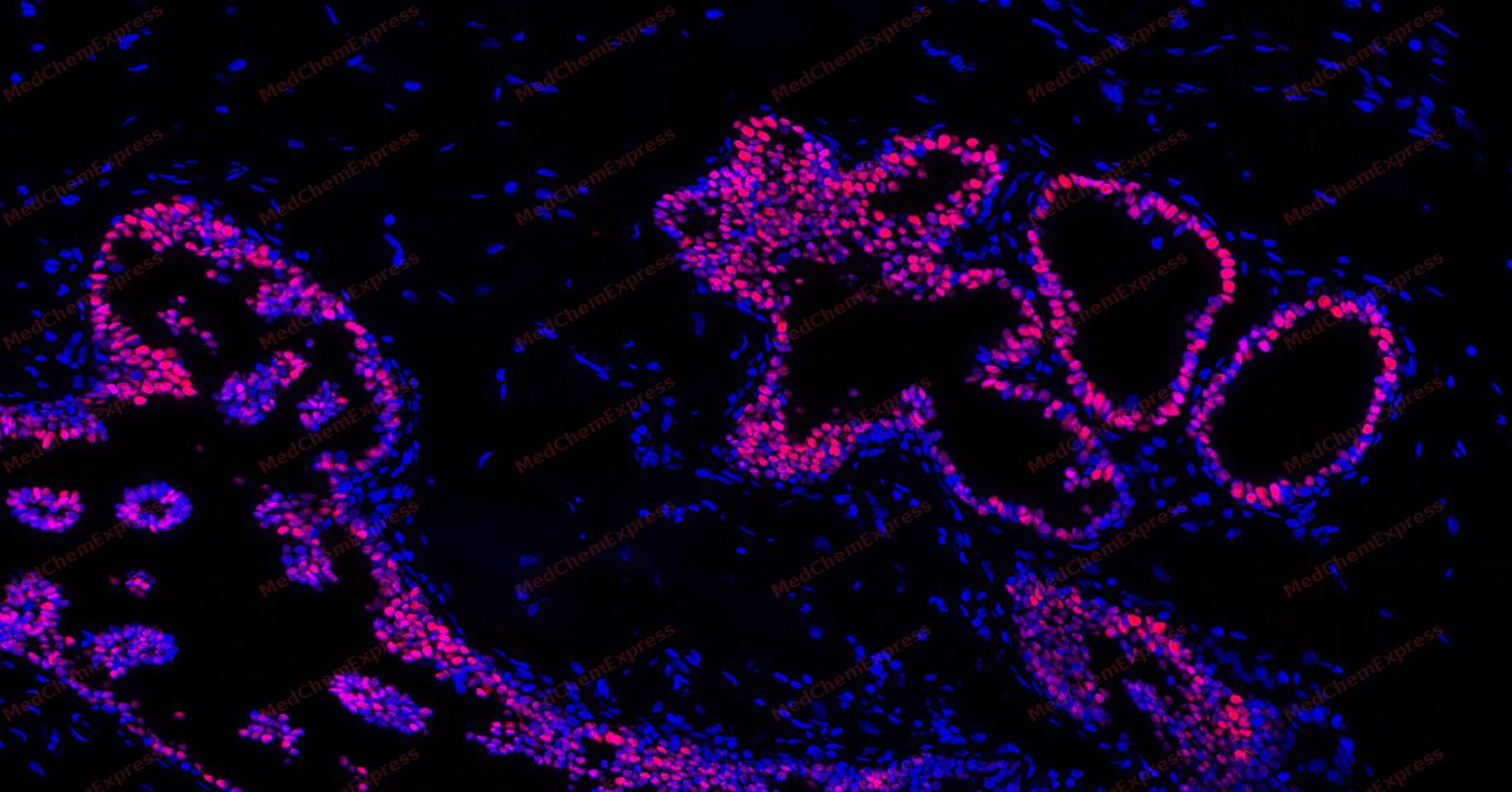 Tyramide signaling amplification based immunofluorescence analysis of paraffin-embedded human breast tissue using Progesterone Receptor Antibody (YA1866). The section was pre-treated using heat mediated antigen retrieval with Tris/EDTA buffer (pH 9.0) for 20 minutes. The tissues were probed with the primary antibody (HY-P82121, 1/300) overnight at 4℃. The detection was performed using an HRP conjugated compact polymer and fluorescent tyramide signal amplification system.Immunostaining was performed using a Bicolor signal amplification fluorescence staining kit. Tissues were counterstained with DAPI (blue) and mounted with Anti-fade fluorescence mounting medium.
 -
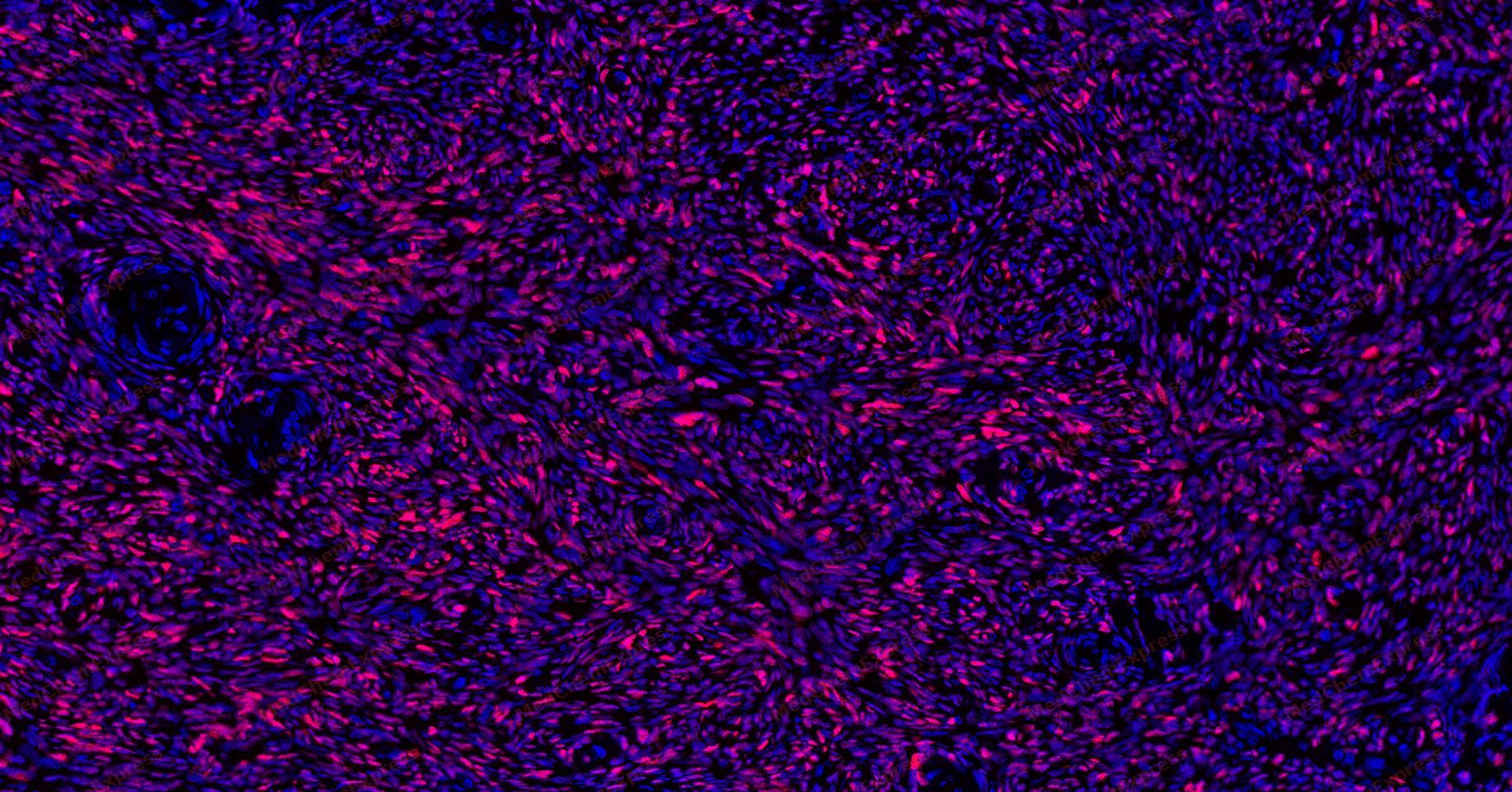 Tyramide signaling amplification based immunofluorescence analysis of paraffin-embedded human ovary tissue using Progesterone Receptor Antibody (YA1866) . The section was pre-treated using heat mediated antigen retrieval with Tris/EDTA buffer (pH 9.0) for 20 minutes. The tissues were probed with the primary antibody (HY-P82121, 1/300) overnight at 4℃. The detection was performed using an HRP conjugated compact polymer and fluorescent tyramide signal amplification system.Immunostaining was performed using a Bicolor signal amplification fluorescence staining kit. Tissues were counterstained with DAPI (blue) and mounted with Anti-fade fluorescence mounting medium.
 -
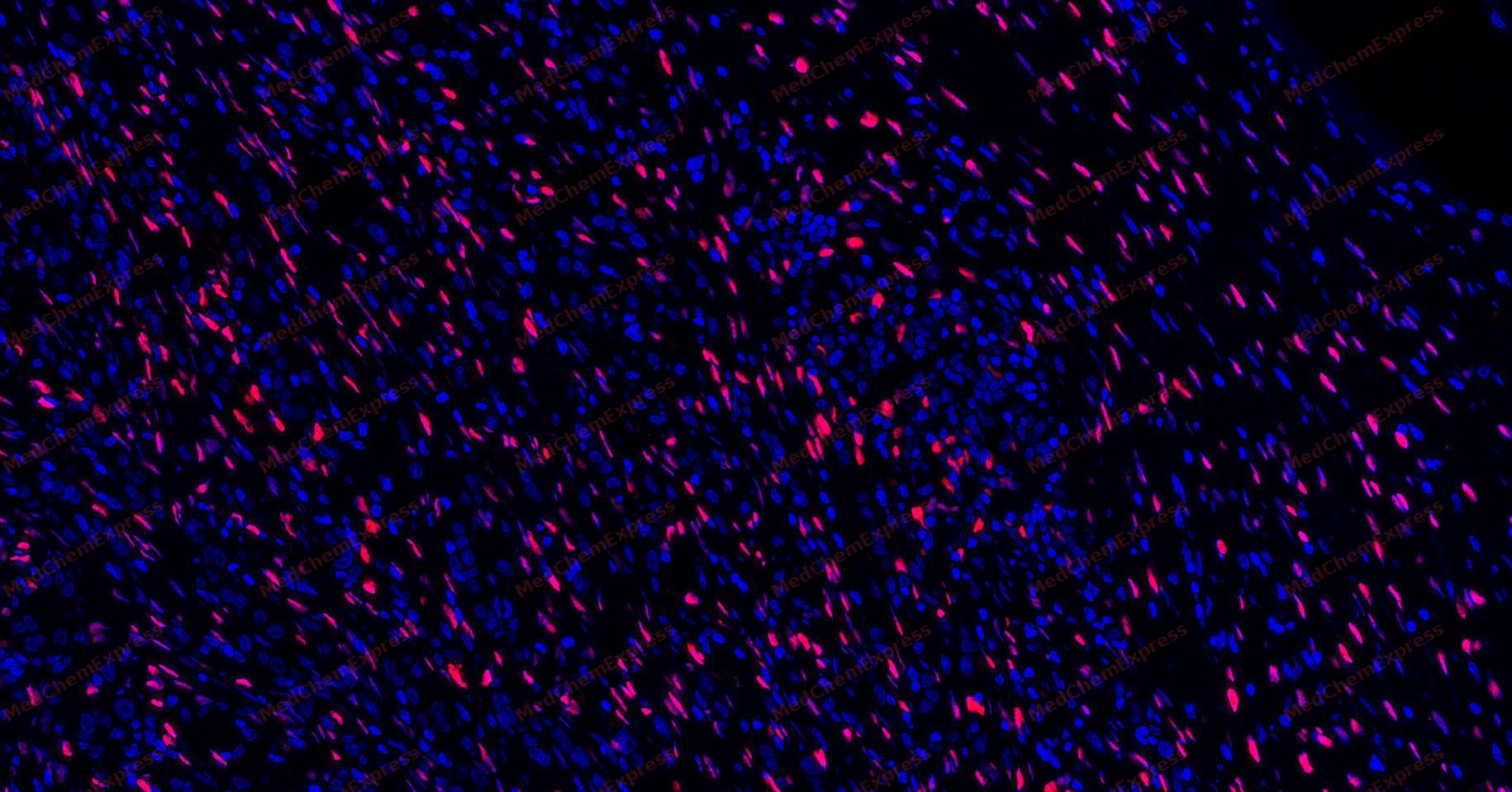 Tyramide signaling amplification based immunofluorescence analysis of paraffin-embedded human breast cancer tissue using Progesterone Receptor Antibody (YA1866). The section was pre-treated using heat mediated antigen retrieval with Tris/EDTA buffer (pH 9.0) for 20 minutes. The tissues were probed with the primary antibody (HY-P82121, 1/300) overnight at 4℃. The detection was performed using an HRP conjugated compact polymer and fluorescent tyramide signal amplification system.Immunostaining was performed with Vari Fluor 594 TSA (200×)(HY-D1835). Tissues were counterstained with DAPI (blue) and mounted with Anti-fade fluorescence mounting medium.
 -
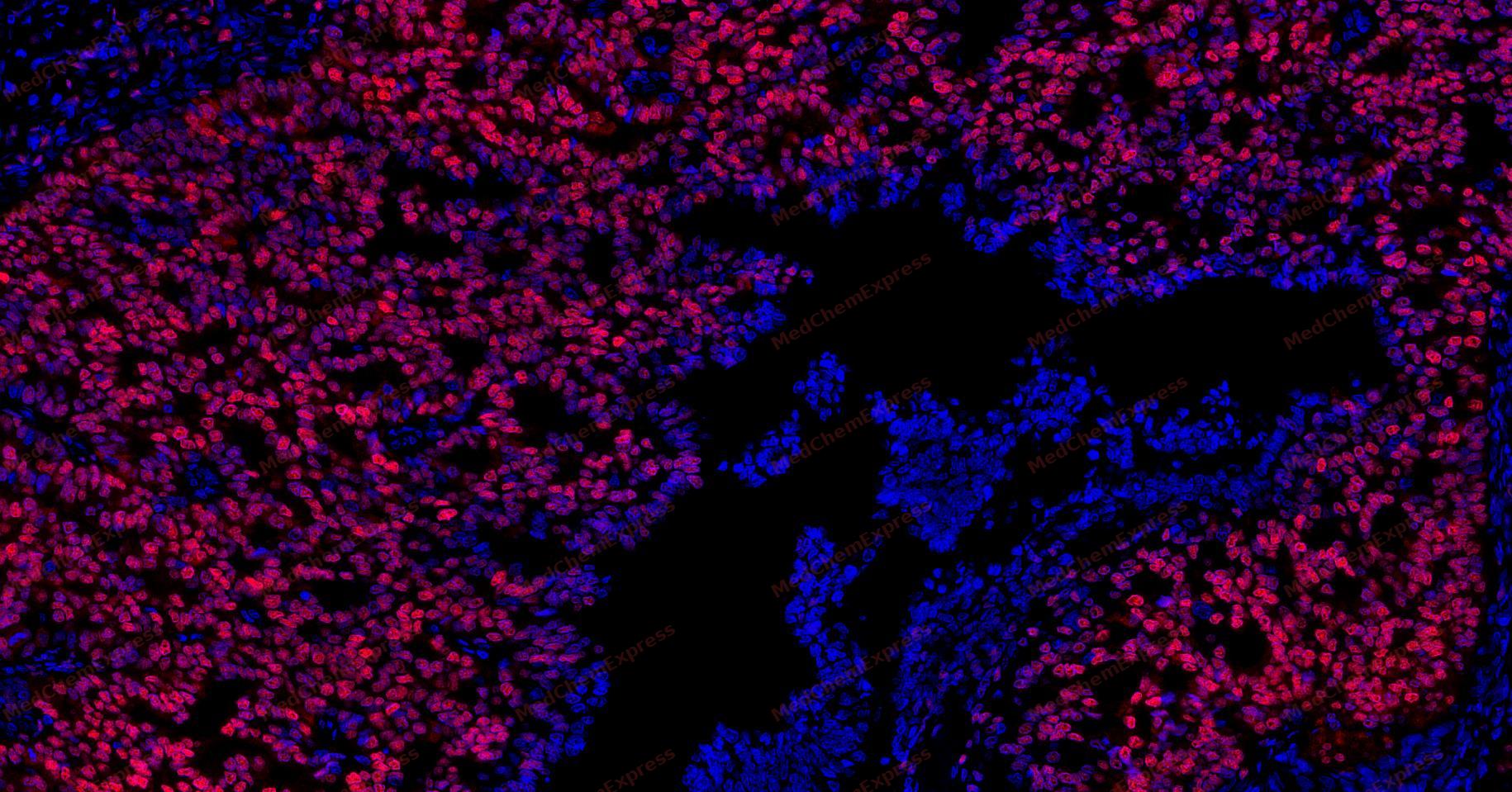 Tyramide signaling amplification based immunofluorescence analysis of paraffin-embedded human endometrial cancer tissue using Progesterone Receptor Antibody (YA1866). The section was pre-treated using heat mediated antigen retrieval with Tris/EDTA buffer (pH 9.0) for 20 minutes. The tissues were probed with the primary antibody (HY-P82121, 1/300) overnight at 4℃. The detection was performed using an HRP conjugated compact polymer and fluorescent tyramide signal amplification system.Immunostaining was performed with Vari Fluor 594 TSA (200×)(HY-D1835). Tissues were counterstained with DAPI (blue) and mounted with Anti-fade fluorescence mounting medium.


Background
-
Function
Progesterone receptor (PR) is a member of the steroid/thyroid hormone-retinoid receptor superfamily of ligand-activated nuclear transcription factors. Progesterone receptor plays a vital role in female reproductive tissue development, differentiation, and maintenance. Progesterone receptor is able to bind to a large number and variety of ligands that elicit a broad range of transcriptional responses ranging from full agonism to full antagonism and numerous mixed profiles inbetween. Progesterone receptor, such as progesterone, induces conformation changes in PR ligand binding domain (LBD), thus mediates subsequent gene regulation cascades. In humans, the biological response to progesterone is mediated by two distinct forms of the progesterone receptor (human PR-A and PR-B) .
-
Subcellular Localization
Nucleus; Cytoplasm; Nucleus; Cytoplasm; Mitochondrion outer membrane
-
Expression
Tissue_specificity:In reproductive tissues, the expression of type A and type B isoforms varies with development and hormone levels. During the proliferative phase of the menstrual cycle, the expression levels of type A and type B isoforms are comparable in the uterine glandular epithelium. During the mid-secretory phase, type B isoform is persistently expressed in the glands, while type A is no longer expressed. In the stroma, type A is the predominant form throughout the cycle. The heterogeneity of isoform expression between the basal and functional layers of the endometrium suggests differences in the response to hormonal stimulation in different regions. -
Isoforms & Post-Translational Modification
P06401 has 5 isomers: P06401-1: 98981 Da (predicted); P06401-2: 82295 Da (predicted); P06401-3: 38798 Da (predicted); P06401-4: 36318 Da (predicted); P06401-5: 87747 Da (predicted).
Phosphorylated on multiple serine sites. Several of these sites are hormone-dependent. Phosphorylation on Ser-294 occurs preferentially on isoform B, is highly hormone-dependent and modulates ubiquitination and sumoylation on Lys-388. Phosphorylation on Ser-102 and Ser-345 also requires induction by hormone. Basal phosphorylation on Ser-81, Ser-162, Ser-190 and Ser-400 is increased in response to progesterone and can be phosphorylated in vitro by the CDK2-A1 complex. Increased levels of phosphorylation on Ser-400 also in the presence of EGF, heregulin, IGF, PMA and FBS. Phosphorylation at this site by CDK2 is ligand-independent, and increases nuclear translocation and transcriptional activity. Phosphorylation at Ser-162 and Ser-294, but not at Ser-190, is impaired during the G(2)/M phase of the cell cycle. Phosphorylation on Ser-345 by ERK1/2 MAPK is required for interaction with SP1;Sumoylation is hormone-dependent and represses transcriptional activity. Sumoylation on all three sites is enhanced by PIAS3. Desumoylated by SENP1. Sumoylation on Lys-388, the main site of sumoylation, is repressed by ubiquitination on the same site, and modulated by phosphorylation at Ser-294;Ubiquitination is hormone-dependent and represses sumoylation on the same site (PubMed:10628747, PubMed:10655479, PubMed:15798179, PubMed:17173941, PubMed:17717077, PubMed:18202149, PubMed:8702648). Promoted by MAPK-mediated phosphorylation on Ser-294 (PubMed:10628747, PubMed:10655479, PubMed:15798179, PubMed:17173941, PubMed:17717077, PubMed:18202149, PubMed:8702648). Ubiquitinated by UBR5, leading to its degradation: UBR5 specifically recognizes and binds ligand-bound PGR when it is not associated with coactivators (NCOAs) (PubMed:37478846). In presence of NCOAs, the UBR5-degron is not accessible, preventing its ubiquitination and degradation (PubMed:37478846);Palmitoylated by ZDHHC7 and ZDHHC21. Palmitoylation is required for plasma membrane targeting and for rapid intracellular signaling via ERK and AKT kinases and cAMP generation -
Subunit
Interacts with SMARD1 and UNC45A. Interacts with CUEDC2; the interaction promotes ubiquitination, decreases sumoylation, and represses transcriptional activity. Interacts with PIAS3; the interaction promotes sumoylation of PR in a hormone-dependent manner, inhibits DNA-binding, and alters nuclear export. Interacts with SP1; the interaction requires ligand-induced phosphorylation on Ser-345 by ERK1/2 MAPK. Interacts with PRMT2. Isoform A interacts with NCOR2. Isoform B (but not isoform A) interacts with NCOA2 and NCOA1. Isoform B (but not isoform A) interacts with KLF9. Interacts with GTF2B (PubMed:1517211)
-
SwissProt ID
-
Synonyms
PGR; NR3C3; Progesterone receptor; PR; Nuclear receptor subfamily 3 group C member 3
-
Research Field
Epigenetics and Nuclear Signaling


Documentation
-
Data Sheet (234 KB)
-
SDS (251 KB)
- English - EN (251 KB)
- Français - FR (251 KB)
- Deutsch - DE (251 KB)
- Norwegian - NO (251 KB)
- Español - ES (251 KB)
- Swedish - SV (251 KB)
- Italian - IT (251 KB)
- Korean - KR (251 KB)
- Portuguese - PT (251 KB)
-
User Guide for Antibodies (1077 KB)

 Powered by Bioz
