1. Search Result
Search Result
Results for "

Wood sugar

" in MedChemExpress (MCE) Product Catalog:

14

Inhibitors & Agonists

1

Biochemical Assay Reagents

2

Natural
Products

11

Isotope-Labeled Compounds

1

Oligonucleotides

Cat. No. Product Name Target Research Areas Chemical Structure
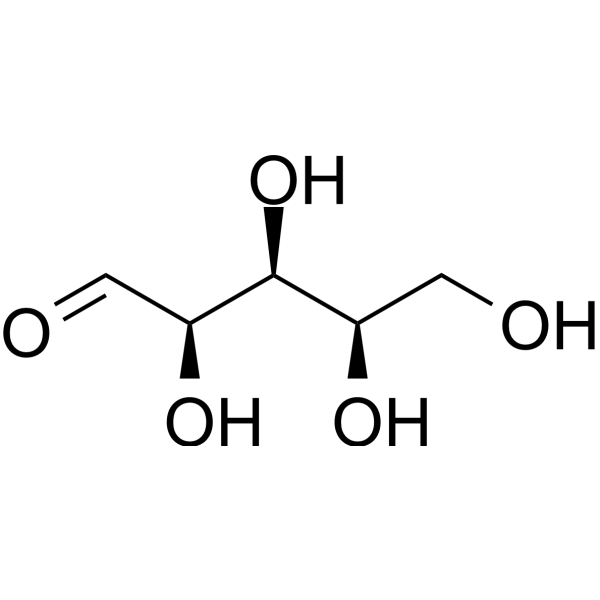
  • HY-N0537
    Xylose
    5 Publications Verification

    D-(+)-Xylose; (+)-Xylose; Wood sugar

    Environmental Pollutants Endogenous Metabolite Metabolic Disease
    Xylose (D-(+)-Xylose) is a natural pentose sugar that is catalyzed by xylose isomerase to form xylulose, which is a key step in the anaerobic ethanol fermentation of Xylose. Xylose can be used by microorganisms to produce fuels, chemicals, and bulk industrial enzymes. Xylose provides the substances and energy for cells, as a carbon source for the biosynthesis of high-value chemicals and biofuel. Xylose can be used to fully explore lignocellulose resources and provide a new direction for microbia fermentation .
    Xylose
  • HY-NP0147
    Wheat Germ Agglutinin (Fluorescein)
    1 Publications Verification

    WGA (Fluorescein)

    Fluorescent Dye Infection Neurological Disease
    Wheat Germ Agglutinin (WGA) Fluorescein is a classic fluorescent label that specifically binds to sugar residues such as N-acetylglucosamine, N-acetylneuraminic acid and sialic acid. Wheat Germ Agglutinin Fluorescein performs regionally differential fluorescent staining of the ocular surface epithelial glycocalyx to assess its integrity, and causes no damage to the eye at safe concentrations. Wheat Germ Agglutinin Fluorescein is also used for staining structures including red blood cells, cultured cells, bacteria and pine wood nematodes, and facilitates the isolation of wheat-associated plant-growth-promoting rhizobacterial strains. Wheat Germ Agglutinin Fluorescein can be applied to the detection of ocular glycocalyx integrity and the research of related diseases such as pine wilt disease .
    Wheat Germ Agglutinin (Fluorescein)
  • HY-W779019

    D-(+)-Xylose-13C5; (+)-Xylose-13C5; Wood sugar-13C5

    Isotope-Labeled Compounds Endogenous Metabolite Metabolic Disease
    Xylose- 13C5 (D-(+)-Xylose- 13C5) is 13C labeled Xylose. Xylose (D-(+)-Xylose) is a natural pentose sugar that is catalyzed by xylose isomerase to form xylulose, which is a key step in the anaerobic ethanol fermentation of Xylose. Xylose can be used by microorganisms to produce fuels, chemicals, and bulk industrial enzymes. Xylose provides the substances and energy for cells, as a carbon source for the biosynthesis of high-value chemicals and biofuel. Xylose can be used to fully explore lignocellulose resources and provide a new direction for microbia fermentation .
    Xylose-13C5
  • HY-N0537R

    D-(+)-Xylose (Standard); (+)-Xylose (Standard); Wood sugar (Standard)

    Reference Standards Endogenous Metabolite Metabolic Disease
    Xylose (Standard) (D-(+)-Xylose (Standard)) is the analytical standard of Xylose (HY-N0537). This product is intended for research and analytical applications. Xylose (D-(+)-Xylose) is a natural pentose sugar that is catalyzed by xylose isomerase to form xylulose, which is a key step in the anaerobic ethanol fermentation of Xylose. Xylose can be used by microorganisms to produce fuels, chemicals, and bulk industrial enzymes. Xylose provides the substances and energy for cells, as a carbon source for the biosynthesis of high-value chemicals and biofuel. Xylose can be used to fully explore lignocellulose resources and provide a new direction for microbia fermentation.
    Xylose (Standard)
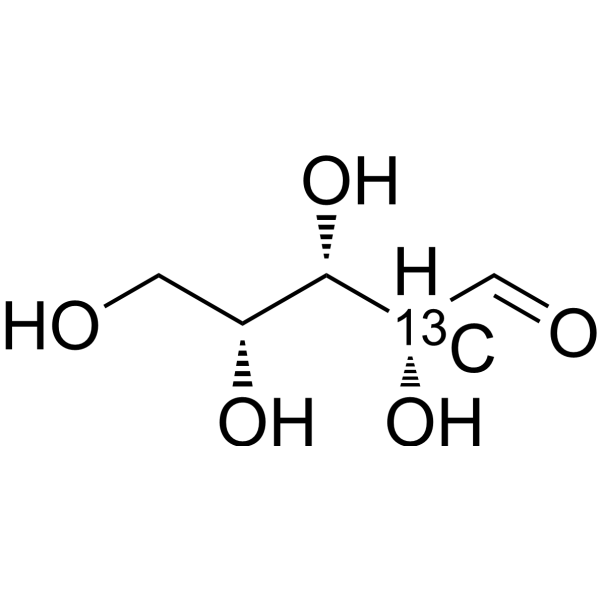
  • HY-N0537S3

    D-(+)-Xylose-2-13C; (+)-Xylose-2-13C; Wood sugar-2-13C

    Isotope-Labeled Compounds Endogenous Metabolite Metabolic Disease
    Xylose-2- 13C (D-(+)-Xylose-2- 13C) is the 13C labeled Xylose (HY-N0537). Xylose (D-(+)-Xylose) is a natural pentose sugar that is catalyzed by xylose isomerase to form xylulose, which is a key step in the anaerobic ethanol fermentation of Xylose. Xylose can be used by microorganisms to produce fuels, chemicals, and bulk industrial enzymes. Xylose provides the substances and energy for cells, as a carbon source for the biosynthesis of high-value chemicals and biofuel. Xylose can be used to fully explore lignocellulose resources and provide a new direction for microbia fermentation .
    Xylose-2-13C
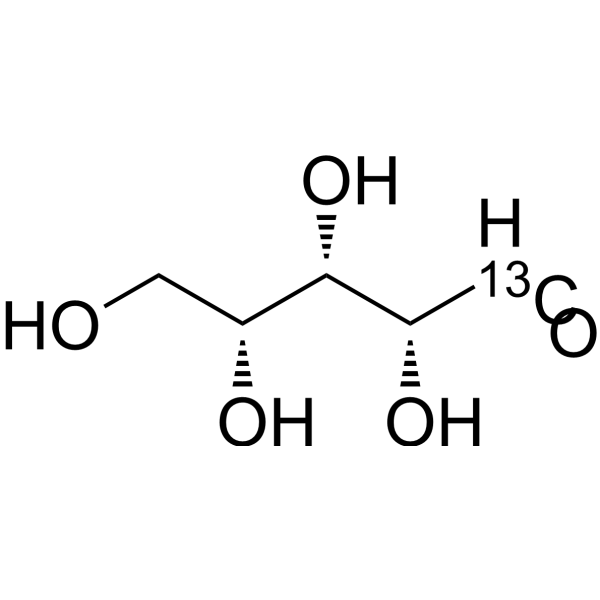
  • HY-N0537S2

    D-(+)-Xylose-1-13C; (+)-Xylose-1-13C; Wood sugar-1-13C

    Isotope-Labeled Compounds Endogenous Metabolite Others
    Xylose-1- 13C is the 13C labeled Xylose.
    Xylose-1-13C
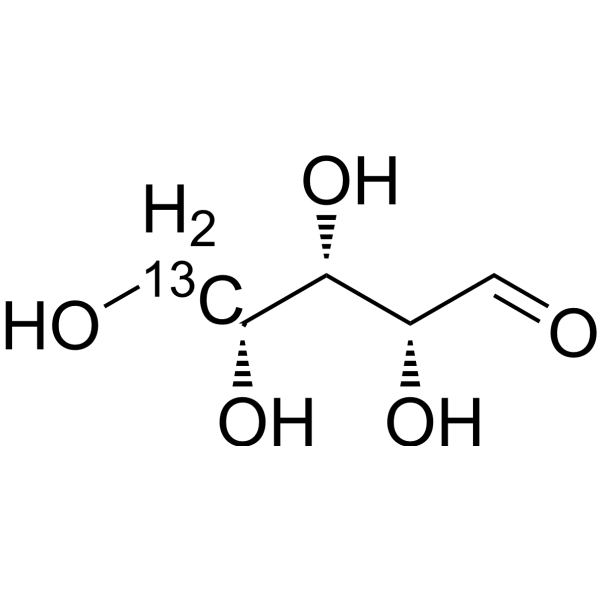
  • HY-N0537S4

    D-(+)-Xylose-5-13C; (+)-Xylose-5-13C; Wood sugar-5-13C

    Isotope-Labeled Compounds Endogenous Metabolite Others
    Xylose-5- 13C is the 13C labeled Xylose.
    Xylose-5-13C
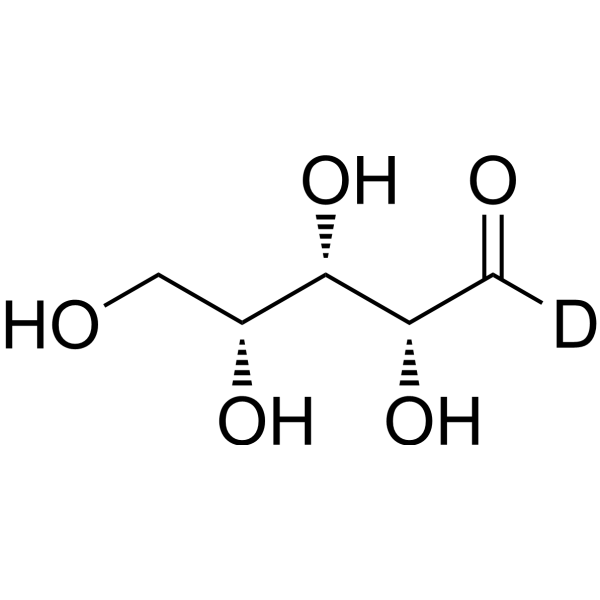
  • HY-N0537S12

    D-(+)-Xylose-d-3; (+)-Xylose-d-3; Wood sugar-d1-3

    Isotope-Labeled Compounds Endogenous Metabolite Others
    Xylose-d-3 is the deuterium labeled Xylose.
    Xylose-d1-3
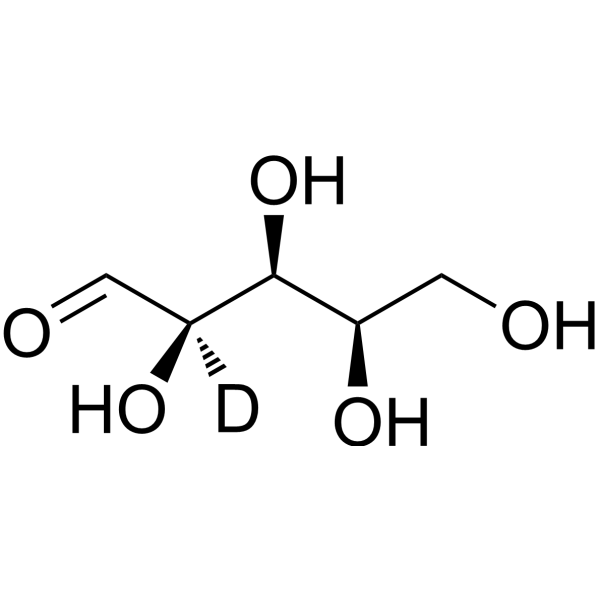
  • HY-N0537S13

    D-(+)-Xylose-d-4; (+)-Xylose-d-4; Wood sugar-d1-4

    Isotope-Labeled Compounds Endogenous Metabolite Others
    Xylose-d-4 is the deuterium labeled Xylose.
    Xylose-d1-4
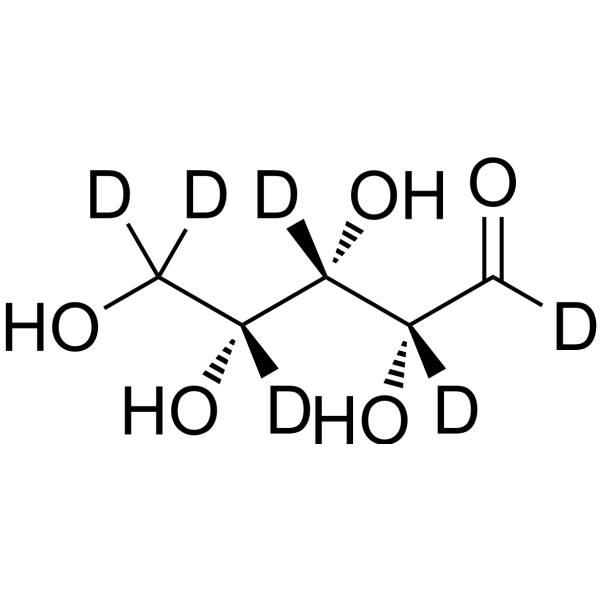
  • HY-N0537S9

    D-(+)-Xylose-d6; (+)-Xylose-d6; Wood sugar-d6

    Isotope-Labeled Compounds Endogenous Metabolite Others
    Xylose-d6 is the deuterium labeled Xylose.
    Xylose-d6
  • HY-N0537S5

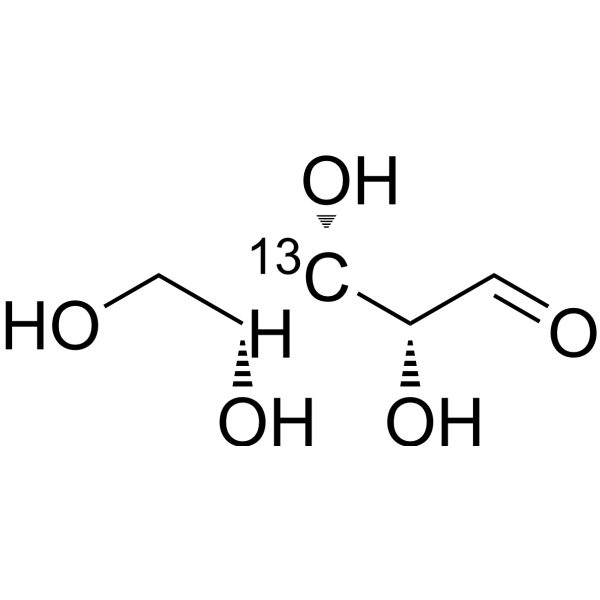
    D-(+)-Xylose-3-13C; (+)-Xylose-3-13C; Wood sugar-3-13C

    Isotope-Labeled Compounds Endogenous Metabolite Others
    Xylose-3- 13C is the 13C labeled Xylose.
    Xylose-3-13C
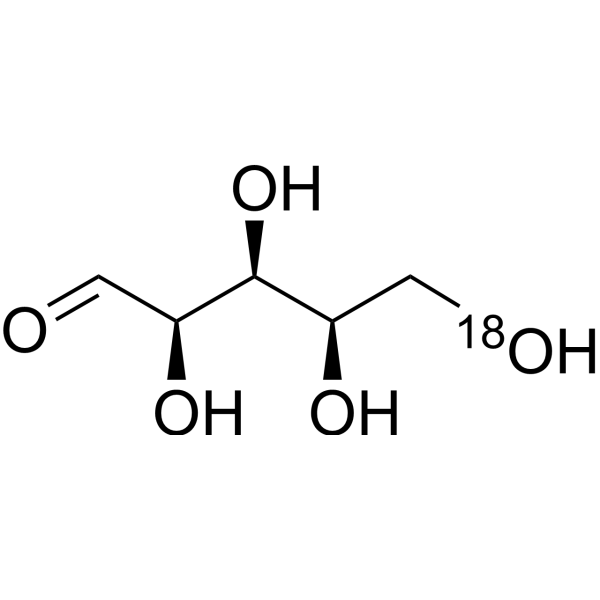
  • HY-N0537S

    D-(+)-Xylose-18O-18O; (+)-Xylose-18O-18O; Wood sugar-18O

    Isotope-Labeled Compounds Endogenous Metabolite Others
    Xylose- 18O is the 18O labeled Xylose.
    Xylose-18O
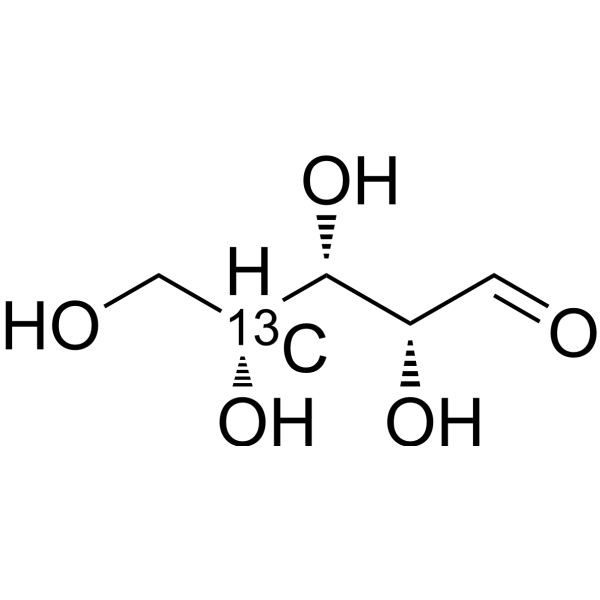
  • HY-N0537S6

    D-(+)-Xylose-4-13C; (+)-Xylose-4-13C; Wood sugar-4-13C

    Isotope-Labeled Compounds Endogenous Metabolite Others
    Xylose-4- 13C is the 13C labeled Xylose.
    Xylose-4-13C
  • HY-W779018

    D-(+)-Xylose-13C2; (+)-Xylose-13C2; Wood sugar-13C2

    Isotope-Labeled Compounds Endogenous Metabolite Metabolic Disease
    Xylose- 13C2 (D-(+)-Xylose- 13C2) is the 13C-labeled Xylose. Xylose (D-(+)-Xylose) is a natural pentose sugar that is catalyzed by xylose isomerase to form xylulose, which is a key step in the anaerobic ethanol fermentation of Xylose. Xylose can be used by microorganisms to produce fuels, chemicals, and bulk industrial enzymes. Xylose provides the substances and energy for cells, as a carbon source for the biosynthesis of high-value chemicals and biofuel. Xylose can be used to fully explore lignocellulose resources and provide a new direction for microbia fermentation .
    Xylose-13C2

Inquiry Online

Your information is safe with us. * Required Fields.

Salutation


Country or Region *

Applicant Name *


Organization Name *

Department *


Email Address *


Product Name *

Cat. No.


Requested quantity *

Phone Number *


Remarks

Inquiry Online

Inquiry Information

Product Name:
Cat. No.:
Quantity:
MCE Japan Authorized Agent:

