Search Result
Results for "
1,2-Dipalmitoyl-sn-glycero-3-PS
" in MedChemExpress (MCE) Product Catalog:
19
Biochemical Assay Reagents
9
Isotope-Labeled Compounds
| Cat. No. |
Product Name |
Target |
Research Areas |
Chemical Structure |
-
- HY-W040268
-
|
|
Endogenous Metabolite
|
Others
|
|
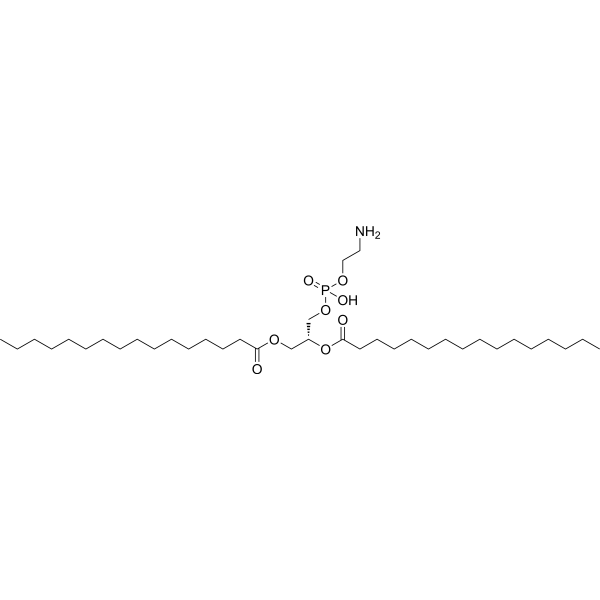
1,2-Dipalmitoyl-sn-glycero-3-phosphoethanolamine is a phospholipid that is a major component of the lipid bilayer that surrounds cells and provides stability to the membrane .
|
-
-
- HY-125940
-
|
1,2-Dipalmitoyl-sn-glycero-3-phosphoglycerol sodium
|
Liposome
|
Others
|
|
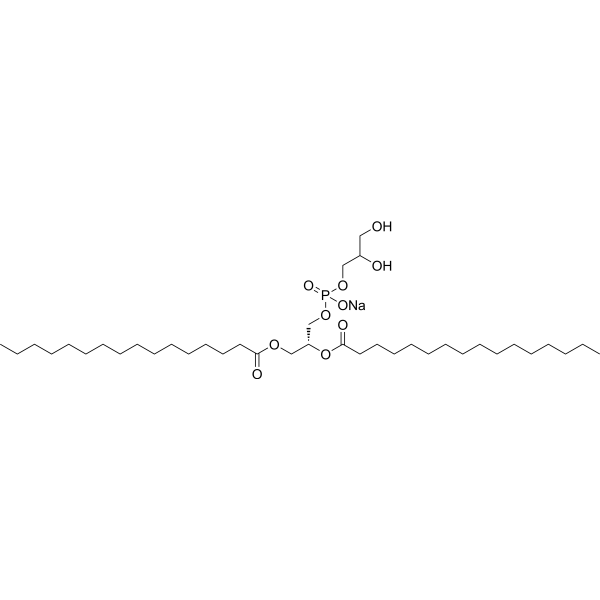
DPPG (1,2-Dipalmitoyl-sn-glycero-3-phosphoglycerol sodium) is a phospholipid that contains long-chain (16:0) palmitic acid inserted at the sn-1 and sn-2 positions, and it serves as an active component to prevent BaP molecules from entering the water subphase. DPPG is used to prepare micelles, liposomes, and other types of artificial membranes that can resist damage from UV radiation .
|
-
-
- HY-145539
-
|
|
Liposome
|
Others
|
|
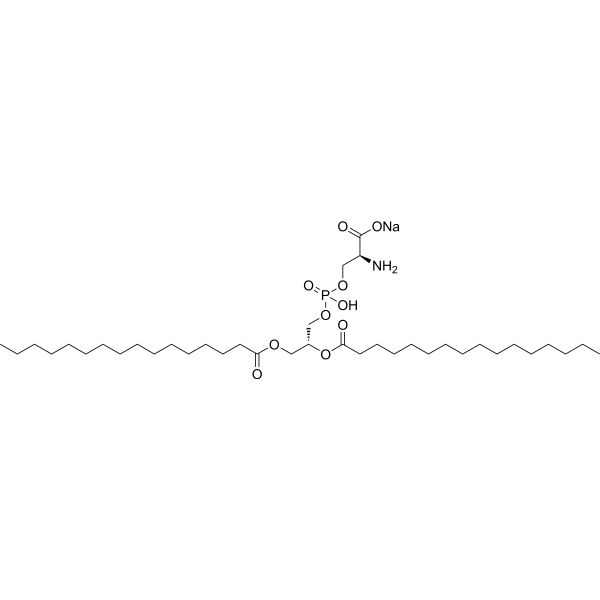
1,2-Dipalmitoyl-sn-glycero-3-PS sodium is a phosphatidylserine phospholipid. 1,2-Dipalmitoyl-sn-glycero-3-PS sodium is used for the preparation of phospholipid bilayers .
|
-
-
- HY-144012
-
|
16:0 PEG2000 PE ammonium; 1,2-Dipalmitoyl-sn-glycero-3-phosphoethanolamine-N-[methoxy(polyethylene glycol)-2000] ammonium
|
Liposome
|
Others
|
|
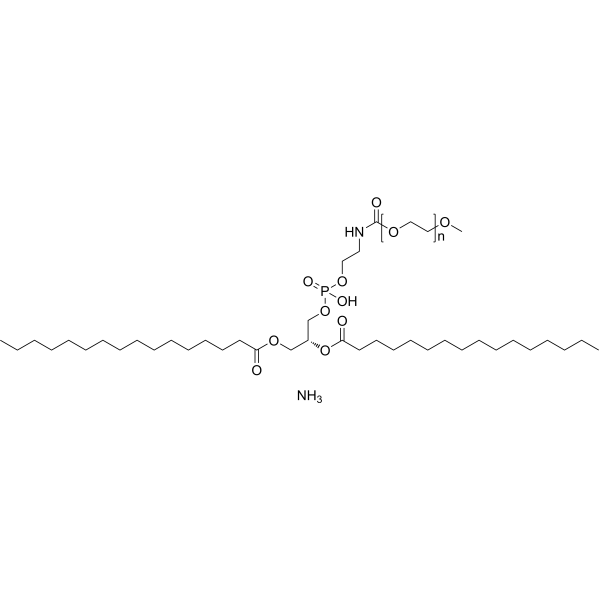
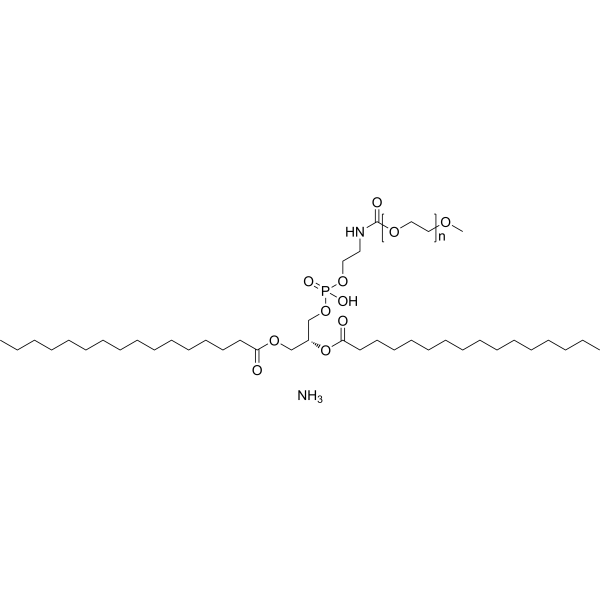
DPPE-PEG2000 ammonium (16:0 PEG5000 PE) is a polymer-lipid conjugate and LipoParticle stabilizer with a PEG chain of 5,000 g/mol molecular weight attached to its polar head, and it can be internalized by biological membranes. DPPE-PEG2000 ammonium enables LipoParticle to maintain colloidal stability after 20-fold dilution in PBS or cell culture medium, and prevents aggregate formation during lyophilization and rehydration. DPPE-PEG2000 ammonium helps enhance the non-cytotoxic property of LipoParticle formulations against human osteoblasts. DPPE-PEG2000 ammonium serves as a PEG lipid functional end group for synthesizing liposomes (LPs), is used in the design of conjugated polymer nanoparticles, and applies to research related to bone and joint infections .
|
-
-
- HY-144012H
-
|
16:0 PEG5000 PE; 1,2-Dipalmitoyl-sn-glycero-3-phosphoethanolamine-N-[methoxy(polyethylene glycol)-5000] ammonium
|
Liposome
|
Others
|
|
DPPE-PEG5000 (16:0 PEG5000 PE) is a polymer-lipid conjugate and LipoParticle stabilizer with a PEG chain of 5,000 g/mol molecular weight attached to its polar head, and it can be internalized by biological membranes. DPPE-PEG5000 enables LipoParticle to maintain colloidal stability after 20-fold dilution in PBS or cell culture medium, and prevents aggregate formation during lyophilization and rehydration. DPPE-PEG5000 helps enhance the non-cytotoxic property of LipoParticle formulations against human osteoblasts. DPPE-PEG5000 serves as a PEG lipid functional end group for synthesizing liposomes (LPs), is used in the design of conjugated polymer nanoparticles, and applies to research related to bone and joint infections .
|
-
-
- HY-W127459
-
|
D-DPPC, 95%
|
Liposome
|
Others
|
|
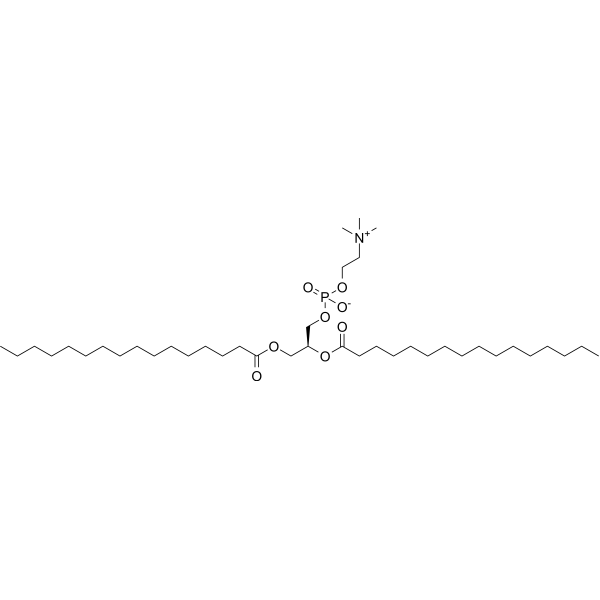
2,3-Dipalmitoyl-sn-glycero-1-phosphocholine, 95% (D-DPPC, 95%) is a chiral phospholipid that serves as a membrane-forming lipid component for bicelle assembly. 2,3-Dipalmitoyl-sn-glycero-1-phosphocholine, 95% can form bicelle assemblies with DHPC, which induce an induced circular dichroism (ICD) signal in the chiral probe DPH, with a polarity opposite to that induced by chiral L-DPPC/DHPC bicelles .
|
-
-
- HY-144012A
-
|
16:0 PEG350 PE; 1,2-Dipalmitoyl-sn-glycero-3-phosphoethanolamine-N-[methoxy(polyethylene glycol)-350] ammonium
|
Liposome
CD1
|
Others
|
|
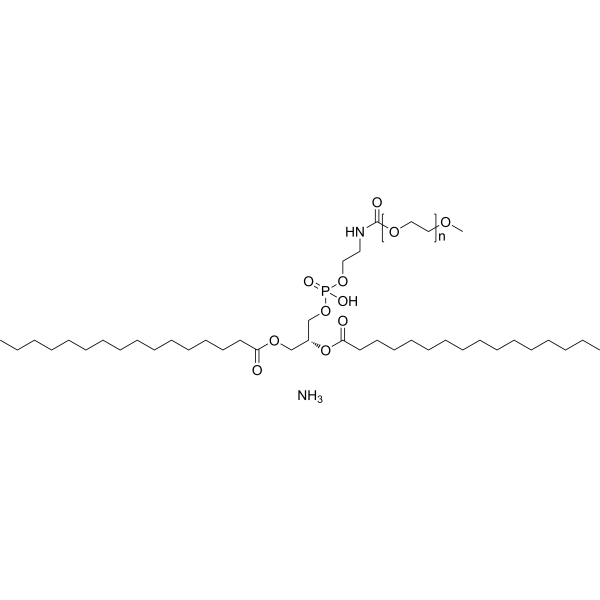
DPPE-PEG350 is a CD1d-dependent lipid antagonist thus blocking the ERK phosphorylation pathway in iNKT cells . DPPE-PEG350 is a PEG lipid functional end group used in the synthesis of liposomes (LPs) for the design of conjugated polymer nanoparticles.
|
-
-
- HY-141615
-
|
PDME; 16:0 Dimethyl PE
|
Liposome
|
Cancer
|
|
1,2-Dipalmitoyl-sn-glycero-3-phospho-N,N-dimethylethanolamine has been used in the generation of liposomes and monolayers for use in the study of membrane permeability and monolayer viscosity, respectively.
|
-

-
- HY-W800793
-
|
1,2-Dipalmitoyl-sn-glycero-3-phosphoethanolamine-N-(succinyl)
|
Liposome
|
Cancer
|
|
16:0 Succinyl PE is a carboxylic acid-functionalized lipid with a two carbon linker to a phosphoethanolamine bound to two palmitic acid tails.
|
-

-
- HY-W800797
-
|
1,2-Dipalmitoyl-sn-glycero-3-phosphoethanolamine-N-(biotinyl)
|
Liposome
|
Cancer
|
|
16:0 Biotinyl PE is a biotin-functionalized lipid attached to a phosphoethanolamine linked to two palmitic acid groups.
|
-

-
- HY-125385
-
|
|
Endogenous Metabolite
|
Metabolic Disease
|
|
Sulforhodamine 101 DHPE is a fluorescent probe made from the conjugation of the phospholipid 1,2-dipalmitoyl-sn-glycero-3-PE to sulforhodamine 101, a red fluorescent dye that displays excitation/emission spectra of 586/605 nm, respectively. It integrates into phospholipid bilayers and has been used for imaging of solid supported lipid bilayers, detection of protein-ligand binding on bilayers, and to monitor colocalization of lipid probes in liposomes via resonance energy transfer (RET).
|
-

-
- HY-W343736
-
|
1,3-DPPE; 1,3-Dipalmitoyl-sn-glycero-2-PE
|
Liposome
|
Cancer
|
|
1,3-Dipalmitoyl-glycero-2-phosphoethanolamine is a phospholipid containing the saturated long-chain (16:0) stearic acid inserted at the sn-1 and sn-3 positions and PE at the sn-2 site. It can be used in the generation of micelles, liposomes, and other types of artificial membranes.
|
-

-
- HY-167811
-
|
16:0 Lysyl PG hydrochloride
|
Biochemical Assay Reagents
|
|
|
1,2-Dipalmitoyl-sn-glycero-3-[phospho-rac-(3-lysyl(1-glycerol))] hydrochloride (16:0 Lysyl PG hydrochloride) is a synthetic phospholipid with the activity of promoting the preparation of artificial vesicles.
|
-
![1,2-Dipalmitoyl-sn-glycero-3-[phospho-rac-(3-lysyl(1-glycerol))] hydrochloride](//file.medchemexpress.com/product_pic/hy-167811.gif)
-
- HY-164160
-
|
DPPS
|
Biochemical Assay Reagents
|
|
|
1,2-Dipalmitoyl-rac-glycero-3-phospho-L-serine (DPPS) is a phospholipid compound with good membrane-forming ability. 1,2-Dipalmitoyl-rac-glycero-3-phospho-L-serine can form stable and well-defined bilayers, which are suitable for the study of membrane dynamics. 1,2-Dipalmitoyl-rac-glycero-3-phospho-L-serine is often used to prepare liposomes for various applications in the biomedical field.
|
-

-
- HY-W040268S1
-
|
|
Isotope-Labeled Compounds
Endogenous Metabolite
|
Others
|
|
1,2-Dipalmitoyl-sn-glycero-3-phosphoethanolamine-d9 is deuterium labeled 1,2-Dipalmitoyl-sn-glycero-3-phosphoethanolamine. 1,2-Dipalmitoyl-sn-glycero-3-phosphoethanolamine is a phospholipid that is a major component of the lipid bilayer that surrounds cells and provides stability to the membrane .
|
-

-
- HY-W040268S
-
|
|
Isotope-Labeled Compounds
Endogenous Metabolite
|
Others
|
|
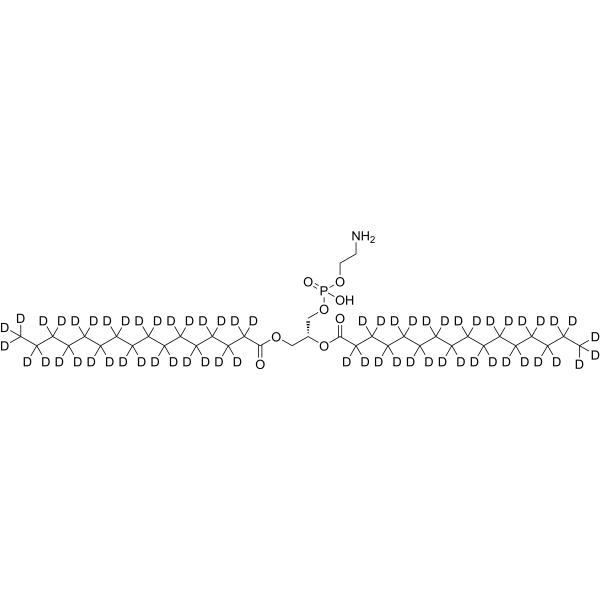
1,2-Dipalmitoyl-sn-glycero-3-phosphoethanolamine-d62 is deuterium labeled 1,2-Dipalmitoyl-sn-glycero-3-phosphoethanolamine. 1,2-Dipalmitoyl-sn-glycero-3-phosphoethanolamine is a phospholipid that is a major component of the lipid bilayer that surrounds cells and provides stability to the membrane .
|
-
-
- HY-167547
-
-

-
- HY-W800794
-
|
DPPE-NG; 1,2-Dipalmitoyl-sn-glycero-3-phosphoethanolamine-N-(glutaryl)
|
Liposome
|
Cancer
|
|
16:0 Glutaryl PE is is a carboxylic acid-functionalized lipid with a three carbon linker to a phosphoethanolamine bound to two palmitic acid tails.
|
-

-
- HY-145502
-
|
|
Biochemical Assay Reagents
|
Others
|
|
1,2-Dipalmitoyl-sn-glycero-3-PE-N-(cap biotin) sodium is used in the composition of lipid vesicles for supported lipid bilayer (SLB) formation. 1,2-Dipalmitoyl-sn-glycero-3-PE-N-(cap biotin) sodium can be used as a probe for understanding the interactions between proteins and lipid-tethered ligands .
|
-

-
- HY-172385
-
|
1,2-Dipalmitoyl-sn-glycero-3-succinate
|
Biochemical Assay Reagents
|
Others
|
|
16:0 DGS (1,2-Dipalmitoyl-sn-glycero-3-succinate) can be used for the preparation of pH-sensitive liposomes .
|
-

-
- HY-144012B
-
|
16:0 PEG550 PE; 1,2-Dipalmitoyl-sn-glycero-3-phosphoethanolamine-N-[methoxy(polyethylene glycol)-550] ammonium
|
Biochemical Assay Reagents
Liposome
|
Others
|
|
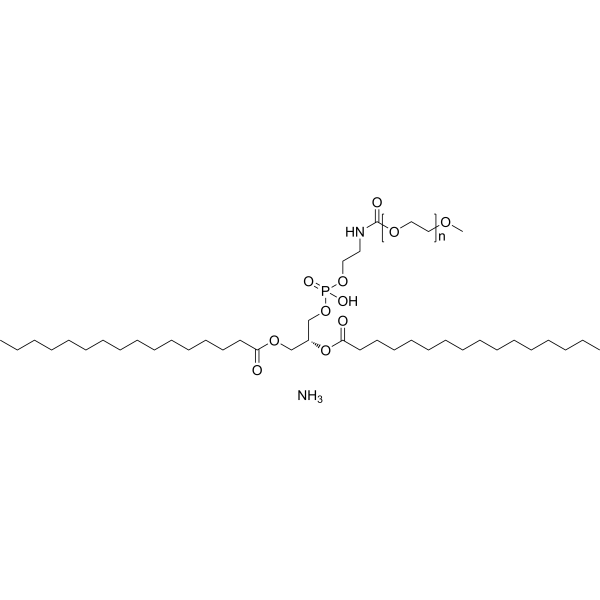
DPPE-PEG550 is a PEG lipid functional end group used in the synthesis of liposomes (LPs) for the design of conjugated polymer nanoparticles. Through biotin modification and carboxyl terminus, lipid nanoparticles (LNPs) further coupling with other biomolecules can be achieved. Functionalized nanoparticles can be used for targeted labeling of specific cellular proteins. With streptavidin as a linker, biotinylated PEG lipid-conjugated polymer nanoparticles are able to bind to biotinylated antibodies on cell surface receptors, yielding the utility of fluorescence-based imaging and sensing.
|
-
-
- HY-144012D
-
|
16:0 PEG1000 PE; 1,2-Dipalmitoyl-sn-glycero-3-phosphoethanolamine-N-[methoxy(polyethylene glycol)-1000] ammonium
|
Liposome
|
Others
|
|
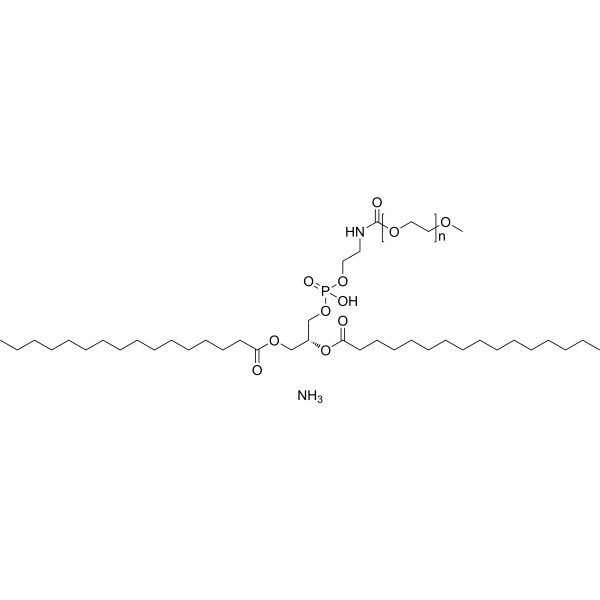
DPPE-PEG1000 is a PEG lipid functional end group used in the synthesis of liposomes (LPs) for the design of conjugated polymer nanoparticles. Through biotin modification and carboxyl terminus, lipid nanoparticles (LNPs) further coupling with other biomolecules can be achieved. Functionalized nanoparticles can be used for targeted labeling of specific cellular proteins. With streptavidin as a linker, biotinylated PEG lipid-conjugated polymer nanoparticles are able to bind to biotinylated antibodies on cell surface receptors, yielding the utility of fluorescence-based imaging and sensing.
|
-
-
- HY-144012E
-
|
16:0 PEG3000 PE; 1,2-Dipalmitoyl-sn-glycero-3-phosphoethanolamine-N-[methoxy(polyethylene glycol)-3000] ammonium
|
Liposome
|
Others
|
|
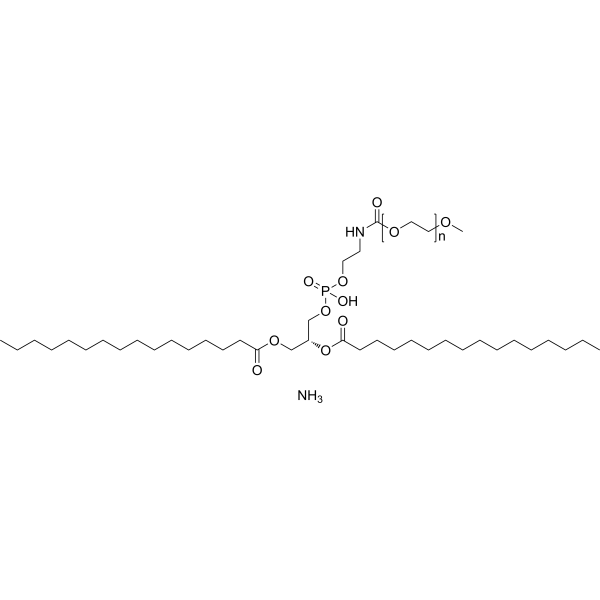
DPPE-PEG3000 is a PEG lipid functional end group used in the synthesis of liposomes (LPs) for the design of conjugated polymer nanoparticles. Through biotin modification and carboxyl terminus, lipid nanoparticles (LNPs) further coupling with other biomolecules can be achieved. Functionalized nanoparticles can be used for targeted labeling of specific cellular proteins. With streptavidin as a linker, biotinylated PEG lipid-conjugated polymer nanoparticles are able to bind to biotinylated antibodies on cell surface receptors, yielding the utility of fluorescence-based imaging and sensing.
|
-
-
- HY-144012C
-
|
16:0 PEG750 PE; 1,2-Dipalmitoyl-sn-glycero-3-phosphoethanolamine-N-[methoxy(polyethylene glycol)-750] ammonium
|
Biochemical Assay Reagents
Liposome
|
Others
|
|
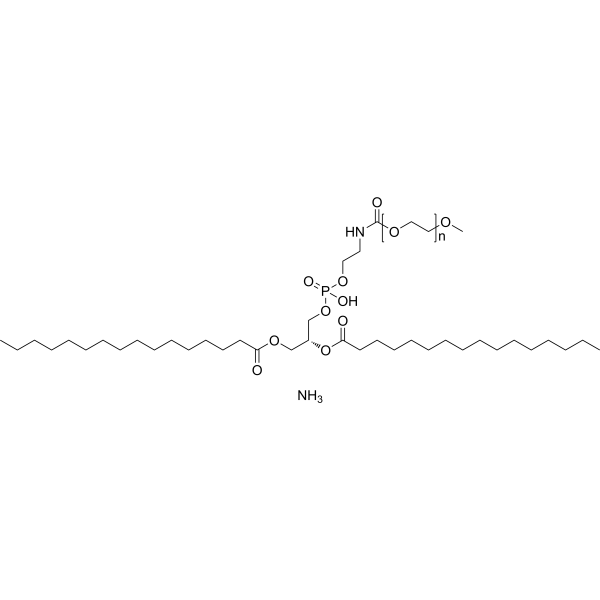
DPPE-PEG750 is a PEG lipid functional end group used in the synthesis of liposomes (LPs) for the design of conjugated polymer nanoparticles. Through biotin modification and carboxyl terminus, lipid nanoparticles (LNPs) further coupling with other biomolecules can be achieved. Functionalized nanoparticles can be used for targeted labeling of specific cellular proteins. With streptavidin as a linker, biotinylated PEG lipid-conjugated polymer nanoparticles are able to bind to biotinylated antibodies on cell surface receptors, yielding the utility of fluorescence-based imaging and sensing.
|
-
-
- HY-W127459A
-
|
D-DPPC, 99%
|
Liposome
|
Others
|
|
2,3-Dipalmitoyl-sn-glycero-1-phosphocholine, 99% (D-DPPC, 99%) is a chiral phospholipid that serves as a membrane-forming lipid component for bicelle assembly. 2,3-Dipalmitoyl-sn-glycero-1-phosphocholine, 99% can form bicelle assemblies with DHPC, which induce an induced circular dichroism (ICD) signal in the chiral probe DPH, with a polarity opposite to that induced by chiral L-DPPC/DHPC bicelles .
|
-

-
- HY-130671A
-
|
(R)-1,2-Dipalmitoyl-sn-glycero-3-phosphoglycerol sodium
|
Liposome
|
Others
|
|
L-DPPG ((R)-1,2-Dipalmitoyl-sn-glycero-3-phosphoglycerol sodium) is a phospholipid targeting biological membranes. L-DPPG interacts with lipid bilayers through hydrophobic and electrostatic interactions. L-DPPG is used in research on drug delivery systems .
|
-

-
- HY-W928314
-
|
1,2-DPPG ammonium salt; 16:0/16:0-PG ammonium salt; PG(16:0/16:0) ammonium salt
|
Biochemical Assay Reagents
|
Others
|
|
1,2-Dipalmitoyl-rac-glycero-3-PG ammonium salt is a biochemical reagent.
|
-

-
- HY-125940S
-
|
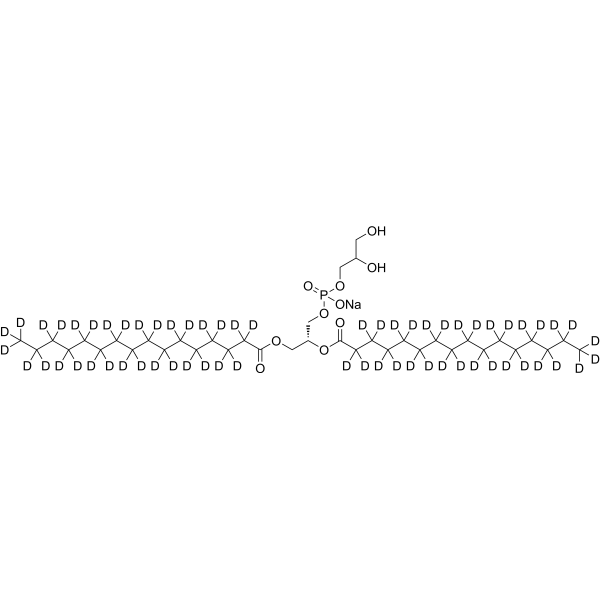
1,2-Dipalmitoyl-sn-glycero-3-phosphoglycerol-d62 sodium
|
Isotope-Labeled Compounds
|
Others
|
|
DPPG-d62 (sodium) is deuterium labeled DPPG. DPPG sodium (1,2-Dipalmitoyl-sn-glycero-3-PG sodium) is a phospholipid containing the long-chain(16:0) palmitic acid inserted at the sn-1 and sn-2 positions. DPPG sodium is used in the generation of micelles, l
|
-
-
- HY-130671B
-
|
(S,S)-1,2-Dipalmitoyl-sn-glycero-3-phosphoglycerol sodium
|
Liposome
|
Others
|
|
(S,S)-DPPG is an enantiomeric isomer of L-DPPG. L-DPPG ((R)-1,2-Dipalmitoyl-sn-glycero-3-phosphoglycerol (sodium)) is a phospholipid targeting biological membranes. L-DPPG interacts with lipid bilayers through hydrophobic and electrostatic interactions. L-DPPG is used in research on drug delivery systems .
|
-

-
- HY-145539S
-
|
|
Isotope-Labeled Compounds
Liposome
|
Others
|
|
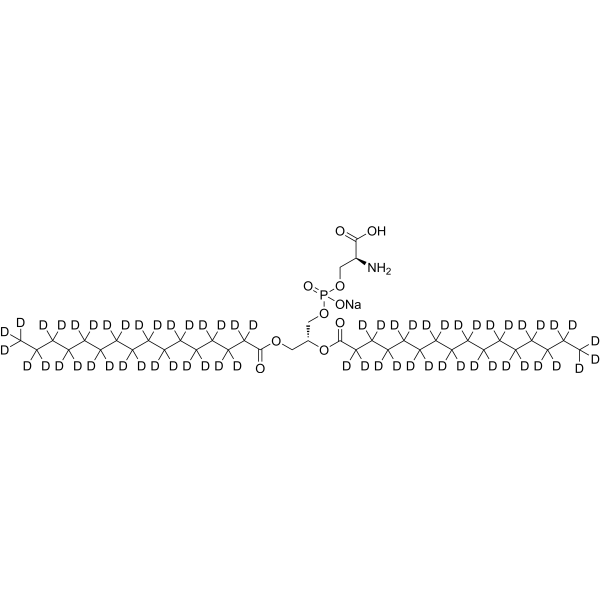
1,2-Dipalmitoyl-sn-glycero-3-PS-d62 sodium is deuterium labeled 1,2-Dipalmitoyl-sn-glycero-3-PS sodium (HY-145539). 1,2-Dipalmitoyl-sn-glycero-3-PS sodium is a phosphatidylserine phospholipid. 1,2-Dipalmitoyl-sn-glycero-3-PS sodium is used for the preparation of phospholipid bilayers .
|
-
-
- HY-145539A
-
|
|
Liposome
|
Others
|
|
1,2-Dipalmitoyl-sn-glycero-3-PS is a phosphatidylserine phospholipid. 1,2-Dipalmitoyl-sn-glycero-3-PS is used for the preparation of phospholipid bilayers .
|
-

-
- HY-145539SA
-
|
|
Isotope-Labeled Compounds
|
Others
|
|
1,2-Dipalmitoyl-sn-glycero-3-PS-d62 ammonium is the deuterium labeled 1,2-Dipalmitoyl-sn-glycero-3-PS ammonium. 1,2-Dipalmitoyl-sn-glycero-3-PS is a phosphatidylserine phospholipid. 1,2-Dipalmitoyl-sn-glycero-3-PS is used for the preparation of phospholipid bilayers.
|
-

-
- HY-178754S
-
-

-
- HY-W040268R
-
|
|
Endogenous Metabolite
Reference Standards
|
Others
|
|
1,2-Dipalmitoyl-sn-glycero-3-phosphoethanolamine (Standard) is the analytical standard of 1,2-Dipalmitoyl-sn-glycero-3-phosphoethanolamine (HY-W040268). This product is intended for research and analytical applications. 1,2-Dipalmitoyl-sn-glycero-3-phosphoethanolamine is a phospholipid that is a major component of the lipid bilayer that surrounds cells and provides stability to the membrane .
|
-

-
- HY-W800798
-
|
1,2-Dipalmitoyl-sn-glycero-3-phosphoethanolamine-N-(cyanur)
|
Liposome
|
Cancer
|
|
16:0 Cyanur PE is a cyanur-functionalized lipid attached to a phosphoethanolamine linked to two palmitic acid groups.
|
-

-
- HY-W127550
-
|
PG(16:0/16:0)
|
Biochemical Assay Reagents
|
Others
|
|
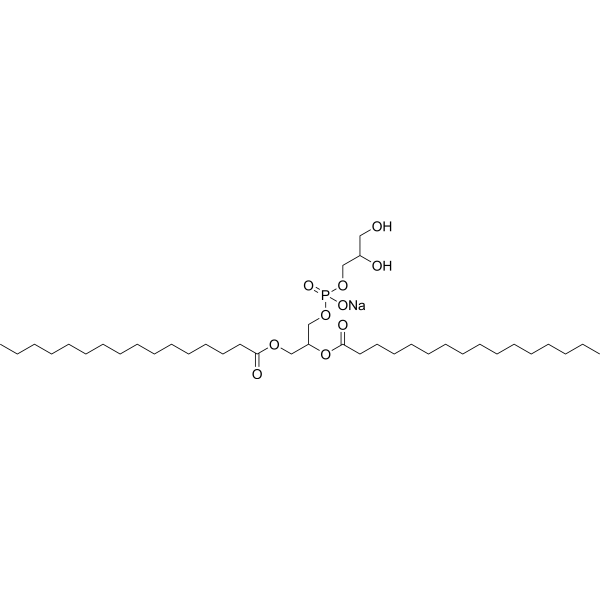
rac-DPPG sodium is a biochemical reagent that can be used as a biological material or organic compound for life science related research.
|
-
-
- HY-W127567
-
|
|
Biochemical Assay Reagents
|
Others
|
|
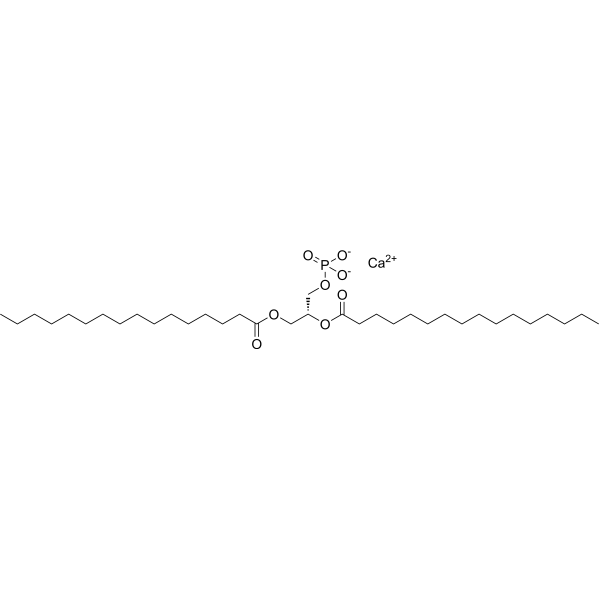
1,2-Dipalmitoyl-sn-glycero-3-phosphate (calcium) is a biochemical reagent that can be used as a biological material or organic compound for life science related research.
|
-
-
- HY-178766S
-
|
DPPG-d62 ammonium
|
Isotope-Labeled Compounds
|
Others
|
|
1,2-Dipalmitoyl-sn-glycero-3-phosphoglycerol-d62 ammonium (DPPG-d62 ammonium) is the deuterium labeled 1,2-Dipalmitoyl-sn-glycero-3-phosphoglycerol ammonium.
|
-

-
- HY-W350486
-
|
1,2-Dipalmitoyl-sn-glycero-3-phosphomethanol sodium
|
Biochemical Assay Reagents
|
Others
|
|
16:0 Phosphatidylmethanol (1,2-Dipalmitoyl-sn-glycero-3-phosphomethanol) sodium is a phosphatidyl alcohol with methanol head groups .
|
-

-
- HY-170463
-
|
1,2-Dipalmitoyl-sn-glycero-3-phosphopropanol sodium
|
Biochemical Assay Reagents
|
Others
|
|
16:0 Phosphatidylpropanol (1,2-Dipalmitoyl-sn-glycero-3-phosphopropanol) sodium is a phosphatidyl alcohol with propanol head groups .
|
-

-
- HY-146836S1
-
|
1,2-Dipalmitoyl-rac-glycero(-d5)-3-phospho-(1'-myo-inositol-5'-phosphate) ammonium salt
|
Isotope-Labeled Compounds
|
Others
|
|
16:0 PI(5)P-d5 ammonium is the deuterium labeled 16:0 PI(5)P ammonium .
|
-

-
- HY-W341624
-
|
1,2-Dipalmitoyl-sn-glycero-3-phosphothioethanol sodium salt
|
Liposome
|
Metabolic Disease
|
|
16:0 Ptd thioethanol sodium is a lipid that can be used to prepare lipid nanoparticles (LNPs) for drug delivery.
|
-

-
- HY-130671S
-
-

| Cat. No. |
Product Name |
Type |
-
- HY-125940
-
|
1,2-Dipalmitoyl-sn-glycero-3-phosphoglycerol sodium
|
Biochemical Assay Reagents
|
|
DPPG (1,2-Dipalmitoyl-sn-glycero-3-phosphoglycerol sodium) is a phospholipid that contains long-chain (16:0) palmitic acid inserted at the sn-1 and sn-2 positions, and it serves as an active component to prevent BaP molecules from entering the water subphase. DPPG is used to prepare micelles, liposomes, and other types of artificial membranes that can resist damage from UV radiation .
|
-
- HY-145539
-
|
|
Biochemical Assay Reagents
|
|
1,2-Dipalmitoyl-sn-glycero-3-PS sodium is a phosphatidylserine phospholipid. 1,2-Dipalmitoyl-sn-glycero-3-PS sodium is used for the preparation of phospholipid bilayers .
|
-
- HY-144012
-
|
16:0 PEG2000 PE ammonium; 1,2-Dipalmitoyl-sn-glycero-3-phosphoethanolamine-N-[methoxy(polyethylene glycol)-2000] ammonium
|
Biochemical Assay Reagents
|
|
DPPE-PEG2000 ammonium (16:0 PEG5000 PE) is a polymer-lipid conjugate and LipoParticle stabilizer with a PEG chain of 5,000 g/mol molecular weight attached to its polar head, and it can be internalized by biological membranes. DPPE-PEG2000 ammonium enables LipoParticle to maintain colloidal stability after 20-fold dilution in PBS or cell culture medium, and prevents aggregate formation during lyophilization and rehydration. DPPE-PEG2000 ammonium helps enhance the non-cytotoxic property of LipoParticle formulations against human osteoblasts. DPPE-PEG2000 ammonium serves as a PEG lipid functional end group for synthesizing liposomes (LPs), is used in the design of conjugated polymer nanoparticles, and applies to research related to bone and joint infections .
|
-
- HY-144012H
-
|
16:0 PEG5000 PE; 1,2-Dipalmitoyl-sn-glycero-3-phosphoethanolamine-N-[methoxy(polyethylene glycol)-5000] ammonium
|
Biochemical Assay Reagents
|
|
DPPE-PEG5000 (16:0 PEG5000 PE) is a polymer-lipid conjugate and LipoParticle stabilizer with a PEG chain of 5,000 g/mol molecular weight attached to its polar head, and it can be internalized by biological membranes. DPPE-PEG5000 enables LipoParticle to maintain colloidal stability after 20-fold dilution in PBS or cell culture medium, and prevents aggregate formation during lyophilization and rehydration. DPPE-PEG5000 helps enhance the non-cytotoxic property of LipoParticle formulations against human osteoblasts. DPPE-PEG5000 serves as a PEG lipid functional end group for synthesizing liposomes (LPs), is used in the design of conjugated polymer nanoparticles, and applies to research related to bone and joint infections .
|
-
- HY-W127459
-
|
D-DPPC, 95%
|
Biochemical Assay Reagents
|
|
2,3-Dipalmitoyl-sn-glycero-1-phosphocholine, 95% (D-DPPC, 95%) is a chiral phospholipid that serves as a membrane-forming lipid component for bicelle assembly. 2,3-Dipalmitoyl-sn-glycero-1-phosphocholine, 95% can form bicelle assemblies with DHPC, which induce an induced circular dichroism (ICD) signal in the chiral probe DPH, with a polarity opposite to that induced by chiral L-DPPC/DHPC bicelles .
|
-
- HY-144012A
-
|
16:0 PEG350 PE; 1,2-Dipalmitoyl-sn-glycero-3-phosphoethanolamine-N-[methoxy(polyethylene glycol)-350] ammonium
|
Biochemical Assay Reagents
|
|
DPPE-PEG350 is a CD1d-dependent lipid antagonist thus blocking the ERK phosphorylation pathway in iNKT cells . DPPE-PEG350 is a PEG lipid functional end group used in the synthesis of liposomes (LPs) for the design of conjugated polymer nanoparticles.
|
-
- HY-167811
-
|
16:0 Lysyl PG hydrochloride
|
Biochemical Assay Reagents
|
|
1,2-Dipalmitoyl-sn-glycero-3-[phospho-rac-(3-lysyl(1-glycerol))] hydrochloride (16:0 Lysyl PG hydrochloride) is a synthetic phospholipid with the activity of promoting the preparation of artificial vesicles.
|
-
- HY-164160
-
|
DPPS
|
Biochemical Assay Reagents
|
|
1,2-Dipalmitoyl-rac-glycero-3-phospho-L-serine (DPPS) is a phospholipid compound with good membrane-forming ability. 1,2-Dipalmitoyl-rac-glycero-3-phospho-L-serine can form stable and well-defined bilayers, which are suitable for the study of membrane dynamics. 1,2-Dipalmitoyl-rac-glycero-3-phospho-L-serine is often used to prepare liposomes for various applications in the biomedical field.
|
-
- HY-167547
-
-
- HY-172385
-
|
1,2-Dipalmitoyl-sn-glycero-3-succinate
|
Biochemical Assay Reagents
|
|
16:0 DGS (1,2-Dipalmitoyl-sn-glycero-3-succinate) can be used for the preparation of pH-sensitive liposomes .
|
-
- HY-144012B
-
|
16:0 PEG550 PE; 1,2-Dipalmitoyl-sn-glycero-3-phosphoethanolamine-N-[methoxy(polyethylene glycol)-550] ammonium
|
Biochemical Assay Reagents
|
|
DPPE-PEG550 is a PEG lipid functional end group used in the synthesis of liposomes (LPs) for the design of conjugated polymer nanoparticles. Through biotin modification and carboxyl terminus, lipid nanoparticles (LNPs) further coupling with other biomolecules can be achieved. Functionalized nanoparticles can be used for targeted labeling of specific cellular proteins. With streptavidin as a linker, biotinylated PEG lipid-conjugated polymer nanoparticles are able to bind to biotinylated antibodies on cell surface receptors, yielding the utility of fluorescence-based imaging and sensing.
|
-
- HY-144012D
-
|
16:0 PEG1000 PE; 1,2-Dipalmitoyl-sn-glycero-3-phosphoethanolamine-N-[methoxy(polyethylene glycol)-1000] ammonium
|
Biochemical Assay Reagents
|
|
DPPE-PEG1000 is a PEG lipid functional end group used in the synthesis of liposomes (LPs) for the design of conjugated polymer nanoparticles. Through biotin modification and carboxyl terminus, lipid nanoparticles (LNPs) further coupling with other biomolecules can be achieved. Functionalized nanoparticles can be used for targeted labeling of specific cellular proteins. With streptavidin as a linker, biotinylated PEG lipid-conjugated polymer nanoparticles are able to bind to biotinylated antibodies on cell surface receptors, yielding the utility of fluorescence-based imaging and sensing.
|
-
- HY-144012E
-
|
16:0 PEG3000 PE; 1,2-Dipalmitoyl-sn-glycero-3-phosphoethanolamine-N-[methoxy(polyethylene glycol)-3000] ammonium
|
Biochemical Assay Reagents
|
|
DPPE-PEG3000 is a PEG lipid functional end group used in the synthesis of liposomes (LPs) for the design of conjugated polymer nanoparticles. Through biotin modification and carboxyl terminus, lipid nanoparticles (LNPs) further coupling with other biomolecules can be achieved. Functionalized nanoparticles can be used for targeted labeling of specific cellular proteins. With streptavidin as a linker, biotinylated PEG lipid-conjugated polymer nanoparticles are able to bind to biotinylated antibodies on cell surface receptors, yielding the utility of fluorescence-based imaging and sensing.
|
-
- HY-144012C
-
|
16:0 PEG750 PE; 1,2-Dipalmitoyl-sn-glycero-3-phosphoethanolamine-N-[methoxy(polyethylene glycol)-750] ammonium
|
Biochemical Assay Reagents
|
|
DPPE-PEG750 is a PEG lipid functional end group used in the synthesis of liposomes (LPs) for the design of conjugated polymer nanoparticles. Through biotin modification and carboxyl terminus, lipid nanoparticles (LNPs) further coupling with other biomolecules can be achieved. Functionalized nanoparticles can be used for targeted labeling of specific cellular proteins. With streptavidin as a linker, biotinylated PEG lipid-conjugated polymer nanoparticles are able to bind to biotinylated antibodies on cell surface receptors, yielding the utility of fluorescence-based imaging and sensing.
|
-
- HY-W127459A
-
|
D-DPPC, 99%
|
Biochemical Assay Reagents
|
|
2,3-Dipalmitoyl-sn-glycero-1-phosphocholine, 99% (D-DPPC, 99%) is a chiral phospholipid that serves as a membrane-forming lipid component for bicelle assembly. 2,3-Dipalmitoyl-sn-glycero-1-phosphocholine, 99% can form bicelle assemblies with DHPC, which induce an induced circular dichroism (ICD) signal in the chiral probe DPH, with a polarity opposite to that induced by chiral L-DPPC/DHPC bicelles .
|
-
- HY-W127550
-
|
PG(16:0/16:0)
|
Biochemical Assay Reagents
|
|
rac-DPPG sodium is a biochemical reagent that can be used as a biological material or organic compound for life science related research.
|
-
- HY-W127567
-
|
|
Biochemical Assay Reagents
|
|
1,2-Dipalmitoyl-sn-glycero-3-phosphate (calcium) is a biochemical reagent that can be used as a biological material or organic compound for life science related research.
|
-
- HY-W350486
-
|
1,2-Dipalmitoyl-sn-glycero-3-phosphomethanol sodium
|
Biochemical Assay Reagents
|
|
16:0 Phosphatidylmethanol (1,2-Dipalmitoyl-sn-glycero-3-phosphomethanol) sodium is a phosphatidyl alcohol with methanol head groups .
|
-
- HY-170463
-
|
1,2-Dipalmitoyl-sn-glycero-3-phosphopropanol sodium
|
Biochemical Assay Reagents
|
|
16:0 Phosphatidylpropanol (1,2-Dipalmitoyl-sn-glycero-3-phosphopropanol) sodium is a phosphatidyl alcohol with propanol head groups .
|
| Cat. No. |
Product Name |
Category |
Target |
Chemical Structure |
| Cat. No. |
Product Name |
Chemical Structure |
-
- HY-W040268S1
-
|
|
|
1,2-Dipalmitoyl-sn-glycero-3-phosphoethanolamine-d9 is deuterium labeled 1,2-Dipalmitoyl-sn-glycero-3-phosphoethanolamine. 1,2-Dipalmitoyl-sn-glycero-3-phosphoethanolamine is a phospholipid that is a major component of the lipid bilayer that surrounds cells and provides stability to the membrane .
|
-
-
- HY-W040268S
-
|
|
|
1,2-Dipalmitoyl-sn-glycero-3-phosphoethanolamine-d62 is deuterium labeled 1,2-Dipalmitoyl-sn-glycero-3-phosphoethanolamine. 1,2-Dipalmitoyl-sn-glycero-3-phosphoethanolamine is a phospholipid that is a major component of the lipid bilayer that surrounds cells and provides stability to the membrane .
|
-
-
- HY-125940S
-
|
|
|
DPPG-d62 (sodium) is deuterium labeled DPPG. DPPG sodium (1,2-Dipalmitoyl-sn-glycero-3-PG sodium) is a phospholipid containing the long-chain(16:0) palmitic acid inserted at the sn-1 and sn-2 positions. DPPG sodium is used in the generation of micelles, l
|
-
-
- HY-145539S
-
|
|
|
1,2-Dipalmitoyl-sn-glycero-3-PS-d62 sodium is deuterium labeled 1,2-Dipalmitoyl-sn-glycero-3-PS sodium (HY-145539). 1,2-Dipalmitoyl-sn-glycero-3-PS sodium is a phosphatidylserine phospholipid. 1,2-Dipalmitoyl-sn-glycero-3-PS sodium is used for the preparation of phospholipid bilayers .
|
-
-
- HY-145539SA
-
|
|
|
1,2-Dipalmitoyl-sn-glycero-3-PS-d62 ammonium is the deuterium labeled 1,2-Dipalmitoyl-sn-glycero-3-PS ammonium. 1,2-Dipalmitoyl-sn-glycero-3-PS is a phosphatidylserine phospholipid. 1,2-Dipalmitoyl-sn-glycero-3-PS is used for the preparation of phospholipid bilayers.
|
-
-
- HY-178754S
-
|
|
|
12-Dipalmitoyl-sn-glycero-3-PS-d3 ammonium is the deuterium labeled 12-Dipalmitoyl-sn-glycero-3-PS ammonium.
|
-
-
- HY-178766S
-
|
|
|
1,2-Dipalmitoyl-sn-glycero-3-phosphoglycerol-d62 ammonium (DPPG-d62 ammonium) is the deuterium labeled 1,2-Dipalmitoyl-sn-glycero-3-phosphoglycerol ammonium.
|
-
-
- HY-146836S1
-
|
|
|
16:0 PI(5)P-d5 ammonium is the deuterium labeled 16:0 PI(5)P ammonium .
|
-
-
- HY-130671S
-
|
|
|
L-DPPG-d9 (free base) is deuterium labeled L-DPPG (free base) .
|
-
| Cat. No. |
Product Name |
|
Classification |
-
- HY-W040268
-
|
|
|
Phospholipids
|
|
1,2-Dipalmitoyl-sn-glycero-3-phosphoethanolamine is a phospholipid that is a major component of the lipid bilayer that surrounds cells and provides stability to the membrane .
|
-
- HY-125940
-
|
1,2-Dipalmitoyl-sn-glycero-3-phosphoglycerol sodium
|
|
Phospholipids
|
|
DPPG (1,2-Dipalmitoyl-sn-glycero-3-phosphoglycerol sodium) is a phospholipid that contains long-chain (16:0) palmitic acid inserted at the sn-1 and sn-2 positions, and it serves as an active component to prevent BaP molecules from entering the water subphase. DPPG is used to prepare micelles, liposomes, and other types of artificial membranes that can resist damage from UV radiation .
|
-
- HY-145539
-
|
|
|
Phospholipids
|
|
1,2-Dipalmitoyl-sn-glycero-3-PS sodium is a phosphatidylserine phospholipid. 1,2-Dipalmitoyl-sn-glycero-3-PS sodium is used for the preparation of phospholipid bilayers .
|
-
- HY-144012
-
|
16:0 PEG2000 PE ammonium; 1,2-Dipalmitoyl-sn-glycero-3-phosphoethanolamine-N-[methoxy(polyethylene glycol)-2000] ammonium
|
|
Pegylated Lipids
|
|
DPPE-PEG2000 ammonium (16:0 PEG5000 PE) is a polymer-lipid conjugate and LipoParticle stabilizer with a PEG chain of 5,000 g/mol molecular weight attached to its polar head, and it can be internalized by biological membranes. DPPE-PEG2000 ammonium enables LipoParticle to maintain colloidal stability after 20-fold dilution in PBS or cell culture medium, and prevents aggregate formation during lyophilization and rehydration. DPPE-PEG2000 ammonium helps enhance the non-cytotoxic property of LipoParticle formulations against human osteoblasts. DPPE-PEG2000 ammonium serves as a PEG lipid functional end group for synthesizing liposomes (LPs), is used in the design of conjugated polymer nanoparticles, and applies to research related to bone and joint infections .
|
-
- HY-144012H
-
|
16:0 PEG5000 PE; 1,2-Dipalmitoyl-sn-glycero-3-phosphoethanolamine-N-[methoxy(polyethylene glycol)-5000] ammonium
|
|
Pegylated Lipids
|
|
DPPE-PEG5000 (16:0 PEG5000 PE) is a polymer-lipid conjugate and LipoParticle stabilizer with a PEG chain of 5,000 g/mol molecular weight attached to its polar head, and it can be internalized by biological membranes. DPPE-PEG5000 enables LipoParticle to maintain colloidal stability after 20-fold dilution in PBS or cell culture medium, and prevents aggregate formation during lyophilization and rehydration. DPPE-PEG5000 helps enhance the non-cytotoxic property of LipoParticle formulations against human osteoblasts. DPPE-PEG5000 serves as a PEG lipid functional end group for synthesizing liposomes (LPs), is used in the design of conjugated polymer nanoparticles, and applies to research related to bone and joint infections .
|
-
- HY-144012A
-
|
16:0 PEG350 PE; 1,2-Dipalmitoyl-sn-glycero-3-phosphoethanolamine-N-[methoxy(polyethylene glycol)-350] ammonium
|
|
Pegylated Lipids
|
|
DPPE-PEG350 is a CD1d-dependent lipid antagonist thus blocking the ERK phosphorylation pathway in iNKT cells . DPPE-PEG350 is a PEG lipid functional end group used in the synthesis of liposomes (LPs) for the design of conjugated polymer nanoparticles.
|
-
- HY-141615
-
|
PDME; 16:0 Dimethyl PE
|
|
Phospholipids
|
|
1,2-Dipalmitoyl-sn-glycero-3-phospho-N,N-dimethylethanolamine has been used in the generation of liposomes and monolayers for use in the study of membrane permeability and monolayer viscosity, respectively.
|
-
- HY-W800793
-
|
1,2-Dipalmitoyl-sn-glycero-3-phosphoethanolamine-N-(succinyl)
|
|
Phospholipids
|
|
16:0 Succinyl PE is a carboxylic acid-functionalized lipid with a two carbon linker to a phosphoethanolamine bound to two palmitic acid tails.
|
-
- HY-W800797
-
|
1,2-Dipalmitoyl-sn-glycero-3-phosphoethanolamine-N-(biotinyl)
|
|
Phospholipids
|
|
16:0 Biotinyl PE is a biotin-functionalized lipid attached to a phosphoethanolamine linked to two palmitic acid groups.
|
-
- HY-W343736
-
|
1,3-DPPE; 1,3-Dipalmitoyl-sn-glycero-2-PE
|
|
Phospholipids
|
|
1,3-Dipalmitoyl-glycero-2-phosphoethanolamine is a phospholipid containing the saturated long-chain (16:0) stearic acid inserted at the sn-1 and sn-3 positions and PE at the sn-2 site. It can be used in the generation of micelles, liposomes, and other types of artificial membranes.
|
-
- HY-167811
-
|
16:0 Lysyl PG hydrochloride
|
|
Phospholipids
|
|
1,2-Dipalmitoyl-sn-glycero-3-[phospho-rac-(3-lysyl(1-glycerol))] hydrochloride (16:0 Lysyl PG hydrochloride) is a synthetic phospholipid with the activity of promoting the preparation of artificial vesicles.
|
-
- HY-W800794
-
|
DPPE-NG; 1,2-Dipalmitoyl-sn-glycero-3-phosphoethanolamine-N-(glutaryl)
|
|
Phospholipids
|
|
16:0 Glutaryl PE is is a carboxylic acid-functionalized lipid with a three carbon linker to a phosphoethanolamine bound to two palmitic acid tails.
|
-
- HY-145502
-
|
|
|
Phospholipids
|
|
1,2-Dipalmitoyl-sn-glycero-3-PE-N-(cap biotin) sodium is used in the composition of lipid vesicles for supported lipid bilayer (SLB) formation. 1,2-Dipalmitoyl-sn-glycero-3-PE-N-(cap biotin) sodium can be used as a probe for understanding the interactions between proteins and lipid-tethered ligands .
|
-
- HY-144012B
-
|
16:0 PEG550 PE; 1,2-Dipalmitoyl-sn-glycero-3-phosphoethanolamine-N-[methoxy(polyethylene glycol)-550] ammonium
|
|
Pegylated Lipids
|
|
DPPE-PEG550 is a PEG lipid functional end group used in the synthesis of liposomes (LPs) for the design of conjugated polymer nanoparticles. Through biotin modification and carboxyl terminus, lipid nanoparticles (LNPs) further coupling with other biomolecules can be achieved. Functionalized nanoparticles can be used for targeted labeling of specific cellular proteins. With streptavidin as a linker, biotinylated PEG lipid-conjugated polymer nanoparticles are able to bind to biotinylated antibodies on cell surface receptors, yielding the utility of fluorescence-based imaging and sensing.
|
-
- HY-144012D
-
|
16:0 PEG1000 PE; 1,2-Dipalmitoyl-sn-glycero-3-phosphoethanolamine-N-[methoxy(polyethylene glycol)-1000] ammonium
|
|
Pegylated Lipids
|
|
DPPE-PEG1000 is a PEG lipid functional end group used in the synthesis of liposomes (LPs) for the design of conjugated polymer nanoparticles. Through biotin modification and carboxyl terminus, lipid nanoparticles (LNPs) further coupling with other biomolecules can be achieved. Functionalized nanoparticles can be used for targeted labeling of specific cellular proteins. With streptavidin as a linker, biotinylated PEG lipid-conjugated polymer nanoparticles are able to bind to biotinylated antibodies on cell surface receptors, yielding the utility of fluorescence-based imaging and sensing.
|
-
- HY-144012E
-
|
16:0 PEG3000 PE; 1,2-Dipalmitoyl-sn-glycero-3-phosphoethanolamine-N-[methoxy(polyethylene glycol)-3000] ammonium
|
|
Pegylated Lipids
|
|
DPPE-PEG3000 is a PEG lipid functional end group used in the synthesis of liposomes (LPs) for the design of conjugated polymer nanoparticles. Through biotin modification and carboxyl terminus, lipid nanoparticles (LNPs) further coupling with other biomolecules can be achieved. Functionalized nanoparticles can be used for targeted labeling of specific cellular proteins. With streptavidin as a linker, biotinylated PEG lipid-conjugated polymer nanoparticles are able to bind to biotinylated antibodies on cell surface receptors, yielding the utility of fluorescence-based imaging and sensing.
|
-
- HY-144012C
-
|
16:0 PEG750 PE; 1,2-Dipalmitoyl-sn-glycero-3-phosphoethanolamine-N-[methoxy(polyethylene glycol)-750] ammonium
|
|
Pegylated Lipids
|
|
DPPE-PEG750 is a PEG lipid functional end group used in the synthesis of liposomes (LPs) for the design of conjugated polymer nanoparticles. Through biotin modification and carboxyl terminus, lipid nanoparticles (LNPs) further coupling with other biomolecules can be achieved. Functionalized nanoparticles can be used for targeted labeling of specific cellular proteins. With streptavidin as a linker, biotinylated PEG lipid-conjugated polymer nanoparticles are able to bind to biotinylated antibodies on cell surface receptors, yielding the utility of fluorescence-based imaging and sensing.
|
-
- HY-130671A
-
|
(R)-1,2-Dipalmitoyl-sn-glycero-3-phosphoglycerol sodium
|
|
Phospholipids
|
|
L-DPPG ((R)-1,2-Dipalmitoyl-sn-glycero-3-phosphoglycerol sodium) is a phospholipid targeting biological membranes. L-DPPG interacts with lipid bilayers through hydrophobic and electrostatic interactions. L-DPPG is used in research on drug delivery systems .
|
-
- HY-W928314
-
|
1,2-DPPG ammonium salt; 16:0/16:0-PG ammonium salt; PG(16:0/16:0) ammonium salt
|
|
Phospholipids
|
|
1,2-Dipalmitoyl-rac-glycero-3-PG ammonium salt is a biochemical reagent.
|
-
- HY-130671B
-
|
(S,S)-1,2-Dipalmitoyl-sn-glycero-3-phosphoglycerol sodium
|
|
Phospholipids
|
|
(S,S)-DPPG is an enantiomeric isomer of L-DPPG. L-DPPG ((R)-1,2-Dipalmitoyl-sn-glycero-3-phosphoglycerol (sodium)) is a phospholipid targeting biological membranes. L-DPPG interacts with lipid bilayers through hydrophobic and electrostatic interactions. L-DPPG is used in research on drug delivery systems .
|
-
- HY-W800798
-
|
1,2-Dipalmitoyl-sn-glycero-3-phosphoethanolamine-N-(cyanur)
|
|
Phospholipids
|
|
16:0 Cyanur PE is a cyanur-functionalized lipid attached to a phosphoethanolamine linked to two palmitic acid groups.
|
-
- HY-W341624
-
|
1,2-Dipalmitoyl-sn-glycero-3-phosphothioethanol sodium salt
|
|
Phospholipids
|
|
16:0 Ptd thioethanol sodium is a lipid that can be used to prepare lipid nanoparticles (LNPs) for drug delivery.
|
Your information is safe with us. * Required Fields.
Inquiry Information
- Product Name:
- Cat. No.:
- Quantity:
- MCE Japan Authorized Agent:





![1,2-Dipalmitoyl-sn-glycero-3-[phospho-rac-(3-lysyl(1-glycerol))] hydrochloride](http://file.medchemexpress.com/product_pic/hy-167811.gif)





