1. Search Result
Search Result
Results for "

Colchicine derivative

" in MedChemExpress (MCE) Product Catalog:

11

Inhibitors & Agonists

1

Peptides

1

Isotope-Labeled Compounds

Targets Recommended:
Cat. No. Product Name Target Research Areas Chemical Structure
  • HY-116852

    Microtubule/Tubulin Apoptosis Cancer
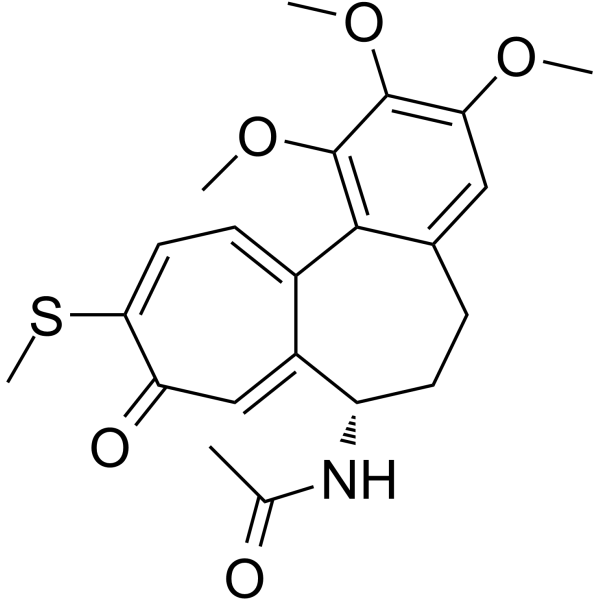
    Thiocolchicine, a derivative modified in the C Ring of Colchicine (HY-16569) with enhanced biological properties. Thiocolchicine is a potent inhibitor of tubulin polymerization (IC50=2.5 µM) and competitively binds to tubulin with a Ki of 0.7 µM. Thiocolchicine induces cell apoptosis . Thiocolchicine can be used as an ADC cytotoxin in ADC technology.
    Thiocolchicine
  • HY-182795

    MMP Interleukin Related TGF-beta/Smad Metabolic Disease
    Colchicine derivative-1 is a colchicine derivative. Colchicine derivative-1 exhibits cytotoxicity against various cells. Colchicine derivative-1 arrests cancer cells at the G2/M phase of the cell cycle. Colchicine derivative-1 increases the levels of MMP-2, MMP-8, MMP-9, IL-2, IL-6, IL-17A, IL-22, IL-4, and IL-5 in the blood, inhibits the gene expression of hepatic fibrinogen α, β, γ and TGF-β1, and alleviates hepatic fibrosis symptoms in mice. Colchicine derivative-1 has antifibrotic activity and can be used in studies related to hepatic fibrosis .
    Colchicine derivative-1
  • HY-162594

    Microtubule/Tubulin Cancer
    Antitumor agent-164 (compound 60c) is a colchicine-binding site inhibitor (CBSI) with potency against taxane-sensitive TNBC. Antitumor agent-164 is a next-generation derivative of VERU-111 .
    Antitumor agent-164
  • HY-121434

    Drug Derivative Microtubule/Tubulin Arf Family GTPase Cancer
    N-Deacetylcolchicine is a microtubule polymerization inhibitor with an IC50 of 3 μM against bovine brain microtubules. N-Deacetylcolchicine is a derivative of Colchicine (HY-16569). N-Deacetylcolchicine can activate the GTPase activity of microtubules and can be used for the research of cancer .
    N-Deacetylcolchicine
  • HY-155362

    Microtubule/Tubulin Apoptosis Cancer
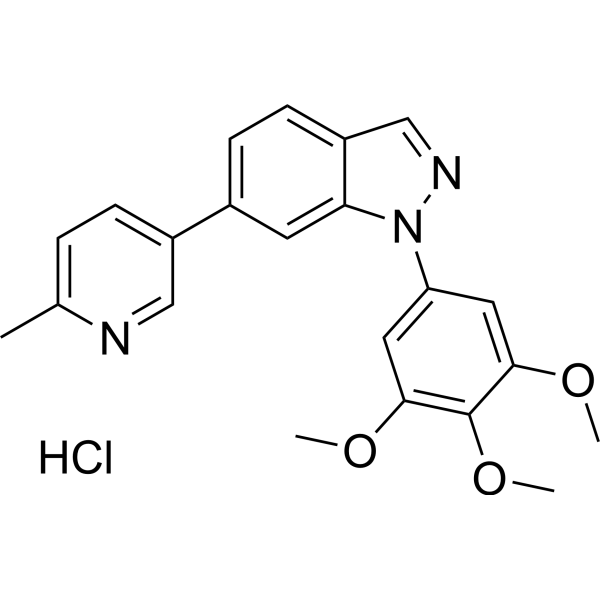
    Tubulin polymerization-IN-56 (compound 8l), an indazole derivative, is a potent tubulin polymerization inhibitor through interacting with the colchicine site, resulting in cell cycle arrest and cellular apoptosis. polymerization-IN-56 reduces cell migration and leads to more potent inhibition of tumor growth in vivo .
    Tubulin polymerization-IN-56
  • HY-119427

    Microtubule/Tubulin Cancer
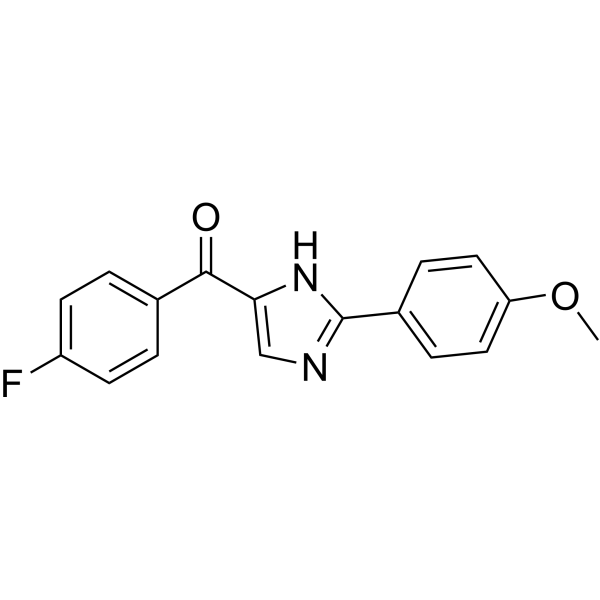
    Anti-melanoma agent 3 (compound 5cb) is a 2-aryl-4-benzoyl-imidazole (ABI) derivative and an inhibitor of melanoma xenogeneic tumors. Anti-melanoma agent 3 exerts anticancer activity by interacting with the colchicine binding site to inhibit tubulin polymerization .
    Anti-melanoma agent 3
  • HY-P10589

    Microtubule/Tubulin Cancer
    Phomopsinamine A is a derivative of Phomopsin A (HY-N6793). Phomopsinamine A is an inhibitor for tubulin polymerization with IC50 of 0.53 μM. Phomopsinamine A inhibits the binding of Vinblastine (HY-13780) to tubulin (IC50 =0.56 μM), promotes the the binding of Colchicine (HY-16569) to tubulin (IC50 =0.32 μM) .
    Phomopsinamine A
  • HY-116852S

    Microtubule/Tubulin Apoptosis Cancer
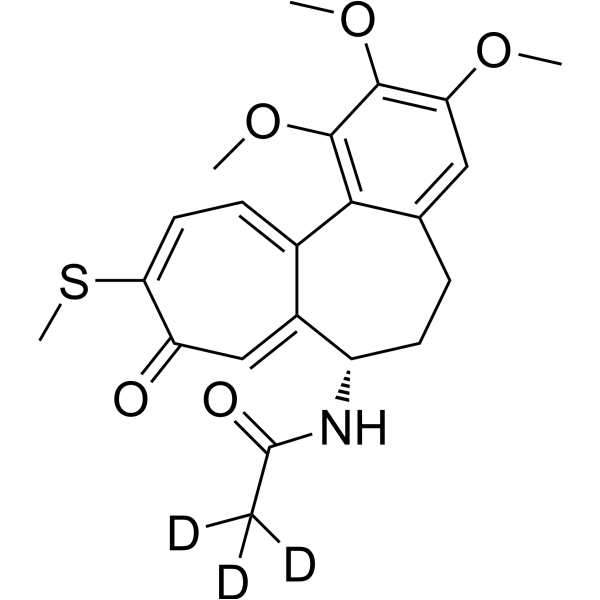
    Thiocolchicine-d3 is deuterium labeled Thiocolchicine. Thiocolchicine, a derivative modified in the C Ring of Colchicine (HY-16569) with enhanced biological properties. Thiocolchicine is a potent inhibitor of tubulin polymerization (IC50=2.5 μM) and competitively binds to tubulin with a Ki of 0.7 μM. Thiocolchicine induces cell apoptosis . Thiocolchicine can be used as an ADC cytotoxin in ADC technology.
    Thiocolchicine-d3
  • HY-161324

    Microtubule/Tubulin Cancer
    Tubulin degrader 1 (Compound 5i) is a BML284 (HY-19987) derivative that is an orally active colchicine-site noncovalent tubulin degradation agent with IC50 values ranging from 0.02 to 0.05 μM against the five tumor cell lines (Hela, HCT116, MCF-7, K562 and Molm-13). Tubulin degrader 1 has antiproliferative activity that effectively suppressed tumor growth .
    Tubulin degrader 1
  • HY-121434A

    Drug Derivative Microtubule/Tubulin Arf Family GTPase Cancer
    N-Deacetylcolchicine tartrate is a microtubule polymerization inhibitor with an IC50 of 3 μM against bovine brain microtubules. N-Deacetylcolchicine tartrate is a derivative of Colchicine (HY-16569). N-Deacetylcolchicine tartrate can activate the GTPase activity of microtubules and can be used for the research of cancer .
    N-Deacetylcolchicine tartrate
  • HY-179523

    Drug Derivative NAMPT Microtubule/Tubulin Neurological Disease Cancer
    Carba1 is a bifunctional Carbazole (HY-D0204) derivative that activates nicotinamide phosphoribosyltransferase (NAMPT) and enhances NAD biosynthesis. Carba1 binds to colchicine site of tubulin, enhancing the anti-tumor effect of various chemotherapy drugs, such as Paclitaxel (HY-B0015). Carba1 exerts neuroprotective effect and can regulate cell energy metabolism. Carba1 can be used for the researches of cancer and chemotherapy-induced peripheral neuropathy (CIPN) .
    Carba1

Inquiry Online

Your information is safe with us. * Required Fields.

Salutation


Country or Region *

Applicant Name *


Organization Name *

Department *


Email Address *


Product Name *

Cat. No.


Requested quantity *

Phone Number *


Remarks

Inquiry Online

Inquiry Information

Product Name:
Cat. No.:
Quantity:
MCE Japan Authorized Agent:

