14 Results for "

EGFR/c-Met inhibitor

" in MedChemExpress (MCE) Product Catalog:
Products (14)

14 Results for "EGFR/c-Met inhibitor" in MCE Product Catalog:

3
3 Cited Publications
Cat. No.: HY-15196
CAS No.: 871026-44-7
Purity:  99.70%
Target:  

EGFR

Research Areas:  

Cancer

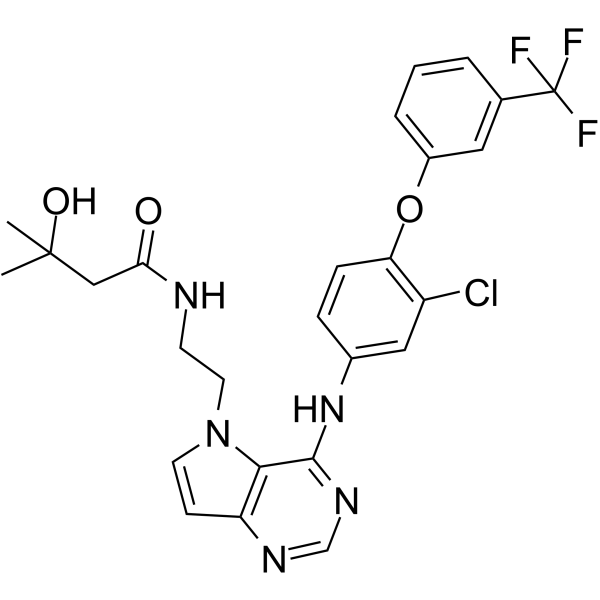
TAK-285 is a potent, selective, ATP-competitive and orally active HER2 and EGFR(HER1) inhibitor with IC50 of 17 nM and 23 nM, respectively. TAK-285 is >10-fold selectivity for HER1/2 than HER4, and less potent to MEK1/5, c-Met, Aurora B, Lck, CSK etc. TAK-285 has effective antitumor activity . TAK-285 can cross the blood-brain barrier (BBB) .
loading...
    loading...
2
2 Cited Publications
Cat. No.: HY-10261B
CAS No.: 439081-18-2
Purity:  99.98%
Synonyms: (E/Z)-BIBW 2992
Research Areas:  

Others Cancer

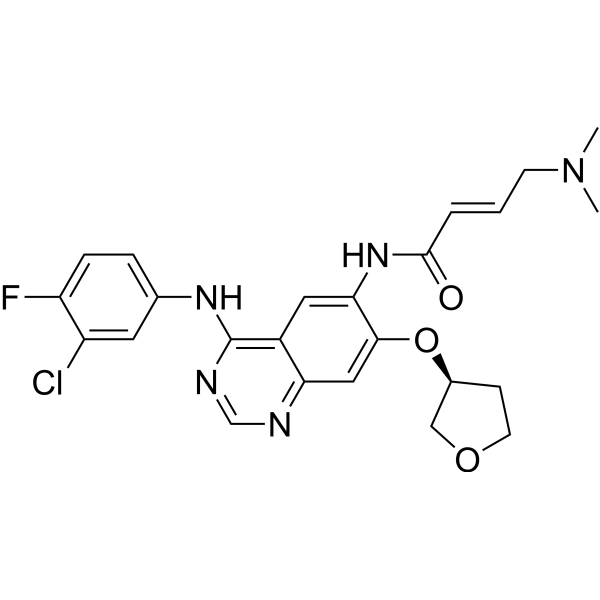
(E/Z)-Afatinib ((E/Z)-BIBW 2992) is the mixture of (E)-Afatinib and (Z)-Afatinib. Afatinib (HY-10261) is an irreversible inhibitor of EGFR, by irreversibly binding to their ATP binding site to block activation of EGFR, HER2, HER4, and EGFRvIII. Afatinib used in co-administration with Temozolomide (HY-17364), potently targeting to EGFRvIII-cMet signaling in glioblastoma cells .
loading...
    loading...
Cat. No.: HY-171124
Synonyms: AZD9592
Tilatamig samrotecan (AZD9592) is an anti-EGFR/c-MET antibody-drug conjugate (ADC). Tilatamig samrotecan consists of an anti-EGFR/c-MET antibody with the drug-linker conjugate being AZ14170133 (HY-145399) (a topoisomerase I (TOP1i) inhibitor payload). Tilatamig samrotecan induces multiple DNA damage response pathway markers (like ATM, ATR, γH2AX). Tilatamig samrotecan selectively binds to EGFR and c-MET, delivering the cytotoxic payload. Tilatamig samrotecan exerts anti-tumor activity in vivo. Tilatamig samrotecan can be used for non-small cell lung cancer (NSCLC) and head and neck squamous cell carcinoma (HNSCC) research .
loading...
    loading...
Cat. No.: HY-P990947
CAS No.: 2868265-50-1
Synonyms: AZD9592 Antibody

Target:  

ADC Antibodies EGFR

Research Areas:  

Cancer

Tilatamig (AZD9592 Antibody) is a human antibody of the Ig (G1-κ_G1-λ2) subtype that targets EGFR/MET. Tilatamig conjugates with the Top1 inhibitor AZ14170133 (HY-145399) to form the antibody-drug conjugate (ADC) Tilatamig samrotecan (HY-171124) (AZD9592). Tilatamig accurately targets NSCLC models including EGFR-mutant, EGFR-wildtype, and EGFR tyrosine kinase inhibitor-treated ones, and its activity correlates with high expression of EGFR, c-MET and SLFN11. Tilatamig is available for in vivo anti-tumor studies in patient-derived xenograft models of non-small cell lung cancer (NSCLC) and head and neck squamous cell carcinoma (HNSCC) .
loading...
    loading...
Cat. No.: HY-126320
CAS No.: 2407957-87-1
Purity:  98.01%
Target:  

EGFR c-Met/HGFR

Research Areas:  

Cancer

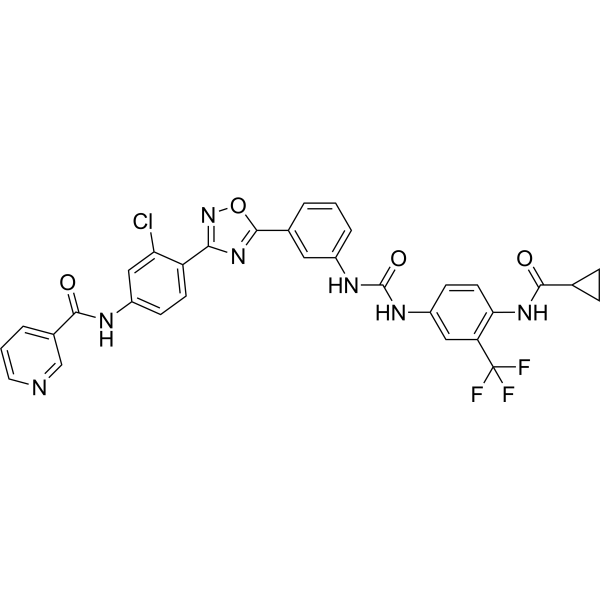
EGFR-IN-8 is a dual EGFR and c-Met inhibitor, compound 48. EGFR-IN-8 can be a promising candidate for further development to target EGFR TKI-resistant NSCLC .
loading...
    loading...
Cat. No.: HY-155736
CAS No.: 3052814-46-4
Purity:  98.54%
Research Areas:  

Cancer

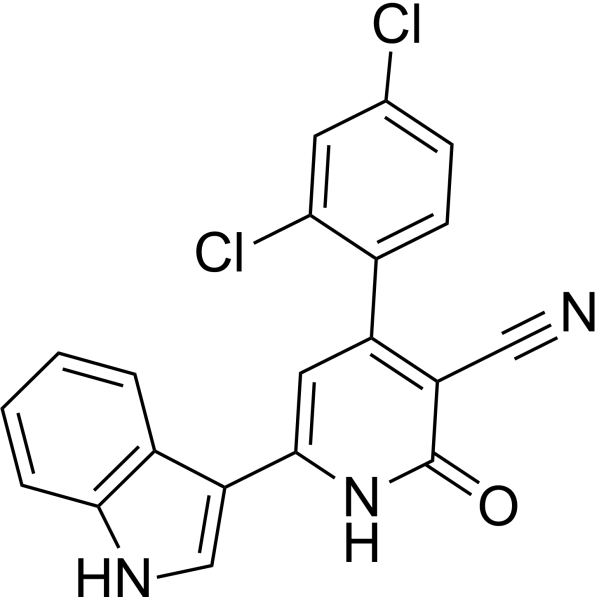
MAPK-IN-2 (compound 3h) is a potent MAPK inhibitor with antineoplastic activity. MAPK-IN-2 inhibits cancer cell proliferation among serval cancer cell lines, and suppresses MAPK pathway with potant efficacy (EGFR WT IC50=281 nM, c-MET IC50=205 nM, B-RAF WT IC50=112 nM, and CDK4/6 IC50=95 and 184 nM, respectively). MAPK-IN-2 even shows a remarkable potency against mutated EGFR and B-RAF (EGFR T790M IC50=69 nM and B-RAF V600E IC50=83 nM) .
loading...
    loading...
Cat. No.: HY-161141
CAS No.: 2761180-01-0
Target:  

c-Met/HGFR

Research Areas:  

Cancer

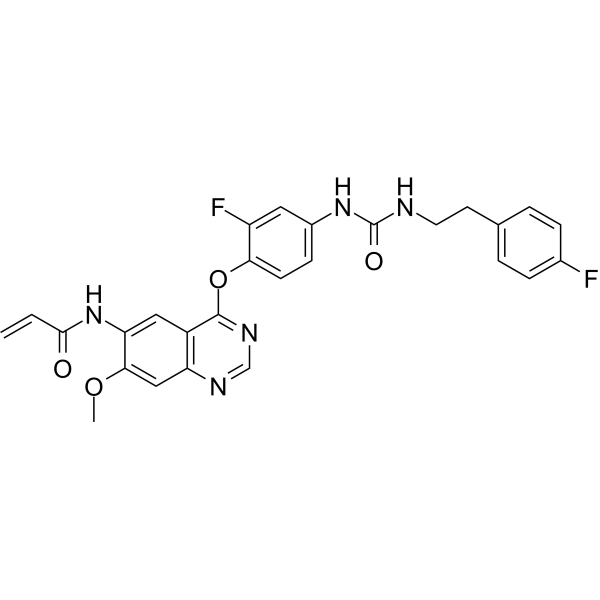
EGFR/ C-Met-in-2 (Compound H-22) is a dual inhibitor of EGFR/c-Met. EGFR/c-Met-IN-2 inhibits cell proliferation by arresting G2/M phase. EGFR/c-Met-IN-2 has antitumor activity .
loading...
    loading...
Cat. No.: HY-163006
CAS No.: 3020728-68-8
Target:  

EGFR c-Met/HGFR

Research Areas:  

Cancer

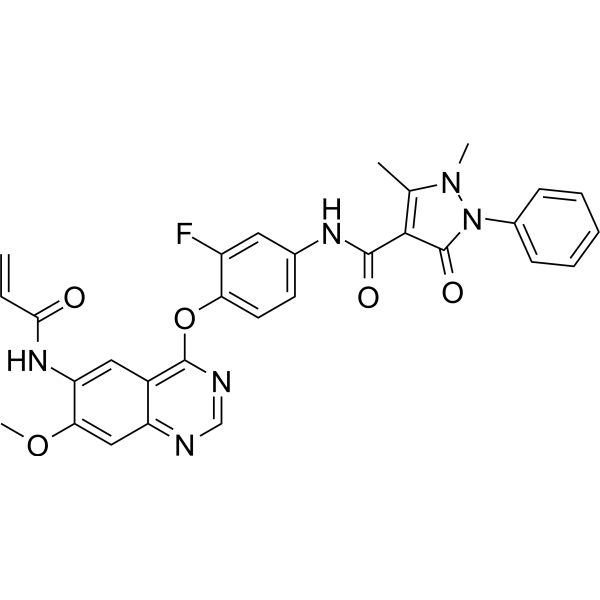
EGFR/c-Met-IN-1 (compound TS-41) is a dual-target inhibitor of EGFR/c-Met. The IC50 for inhibiting EGFR L858R and c-Met is 68.1 nM and 0.26 nM respectively. . EGFR/c-Met-IN-1 induces apoptosis and cell cycle arrest in A549-P cells, downregulating the phosphorylation of EGFR, c-Met, and downstream AKT. EGFR/c-Met-IN-1 inhibits tumor growth in vitro and in vivo .
loading...
    loading...
Cat. No.: HY-10261BR
CAS No.: 439081-18-2
Synonyms: (E/Z)-BIBW 2992 (Standard)
(E/Z)-Afatinib (Standard) is the analytical standard of (E/Z)-Afatinib. This product is intended for research and analytical applications. (E/Z)-Afatinib ((E/Z)-BIBW 2992) is the mixture of (E)-Afatinib and (Z)-Afatinib. Afatinib (HY-10261) is an irreversible inhibitor of EGFR, by irreversibly binding to their ATP binding site to block activation of EGFR, HER2, HER4, and EGFRvIII. Afatinib used in co-administration with Temozolomide (HY-17364), potently targeting to EGFRvIII-cMet signaling in glioblastoma cells .
loading...
    loading...
Cat. No.: HY-181776
Target:  

c-Met/HGFR VEGFR EGFR

Research Areas:  

Cancer

c-Met-IN-31 is a c-Met inhibitor with an IC50 value of 0.021 μM. c-Met-IN-31 also inhibits VEGFR-2 and EGFR activities, with IC50 values ​​of 0.32 μM and 9.3 μM, respectively. c-Met-IN-31 inhibits cancer cell proliferation. c-Met-IN-31 suppresses neovascularization in the chick chorioallantoic membrane (CAM) assay, exhibiting in vivo anti-angiogenic activity. c-Met-IN-31 can be used in research related to breast cancer and lung cancer .
loading...
    loading...
Cat. No.: HY-181775
Target:  

VEGFR c-Met/HGFR EGFR

Research Areas:  

Cardiovascular Disease

VEGFR-2/c-Met/EGFR-IN-1 is a VEGFR-2/c-Met/EGFR inhibitor with IC50 values of 0.014 μM, 0.072 μM, and 0.94 μM, respectively. c-Met-IN-27 inhibits neovascularization in the chick chorioallantoic membrane (CAM) assay and exhibits in vivo anti-angiogenic activity. c-Met-IN-27 can be used in angiogenesis-related research .
loading...
    loading...
Cat. No.: HY-184720
Target:  

VEGFR c-Met/HGFR EGFR PDGFR

Research Areas:  

Cancer

VEGFR-2-IN-89 is a VEGFR-2 inhibitor with an IC50 of 77 nM. VEGFR-2-IN-89 potently inhibits c-Met kinase activity with an IC50 of 0.152 μM, and also exhibits good inhibitory activity against EGFR (IC50 = 0.269 μM) and PDGFR-β kinase (IC50 = 0.301 μM). VEGFR-2-IN-89 displays anticancer activity against liver cancer. VEGFR-2-IN-89 can be used in the research of hepatocellular carcinoma .
loading...
    loading...
Cat. No.: HY-184719
VEGFR-2-IN-88 is a VEGFR-2 inhibitor with an IC50 of 0.202 μM. VEGFR-2-IN-88 potently inhibits EGFR (IC50 = 0.139 μM), and moderately inhibits PDGFR-β (IC50 of 0.236 μM) and c-Met (IC50 of 0.281 μM). VEGFR-2-IN-88 acts as a cell cycle inhibitor that arrests cells at the G0/G1 phase. VEGFR-2-IN-88 induces Apoptosis. VEGFR-2-IN-88 downregulates serum AST and ALT levels. VEGFR-2-IN-88 exerts selective anticancer effects. VEGFR-2-IN-88 reduces liver weight in in vivo models. VEGFR-2-IN-88 can be used in research related to hepatocellular carcinoma .
loading...
    loading...
Cat. No.: HY-L016
1,695 compounds

Protein tyrosine kinases (PTKs) are key signaling molecules and important drug targets. Two classes of PTKs are present in cells: the transmembrane receptor PTKs (RTKs) and the nonreceptor PTKs. The RTK family includes the receptors for insulin and for many growth factors, such as EGFR, FGFR, PDGFR, VEGFR, and NGFR. RTKs are transmembrane glycoproteins that are activated by the binding of their ligands, and they transduce the extracellular signal to the cytoplasm by phosphorylating tyrosine residues on the receptors themselves (autophosphorylation) and on downstream signaling proteins. Their principal functions of PTKs involve the regulation of multicellular aspects of the organism. Cell to cell signals concerning growth, differentiation, adhesion, motility, and death are frequently transmitted through tyrosine kinases. In humans, tyrosine kinases have been demonstrated to play significant roles in the development of many disease states, including diabetes and cancers.

MCE designs a unique collection of 1,695 compounds that act as a useful tool for PTKs-related drug screening and disease research.

  • 1

