Search Result
Results for "
amide analogs
" in MedChemExpress (MCE) Product Catalog:
1
Biochemical Assay Reagents
1
Isotope-Labeled Compounds
| Cat. No. |
Product Name |
Target |
Research Areas |
Chemical Structure |
-
- HY-103423
-
|
|
Dopamine Receptor
|
Neurological Disease
|
|
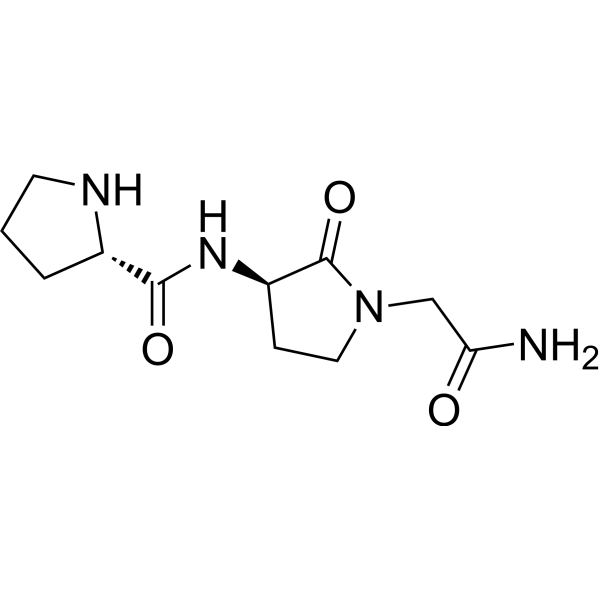
PAOPA, an analog of L-proline-l-leucine-glycine amide (PLG) peptide, is an allosteric modulator of Dopamine D2 Receptor. PAOPA can effectively reduce behavioral abnormalities in rodent models of schizophrenia. PAOPA increases the high affinity dopamine D2 receptor and promotes its binding to agonists .
|
-
-
- HY-108490
-
|
|
LPL Receptor
|
Inflammation/Immunology
|
|
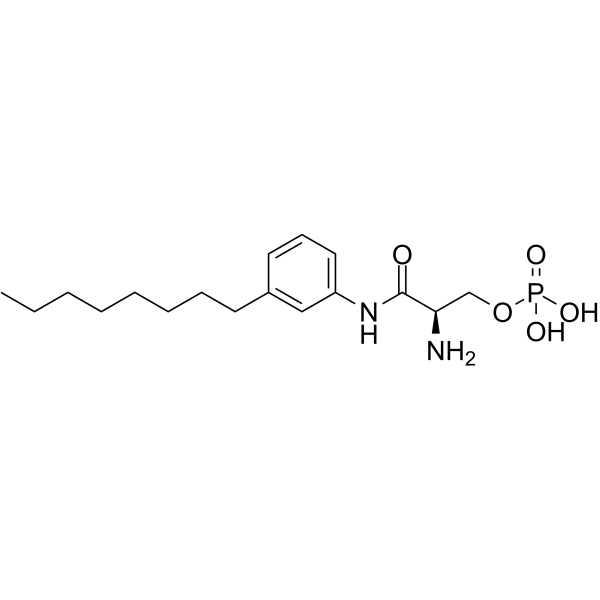
VPC 23019, an aryl amide-containing Sphingosine 1-phosphate (S1P) analog, is a competitive antagonist at the S1P1 and S1P3 receptors (pKi= 7.86 and 5.93, respectively) and an agonist at the S1P4 and S1P5 receptors (pEC50= 6.58 and 7.07, respectively) .
|
-
-
- HY-W008213
-
|
|
Biochemical Assay Reagents
|
Others
|
|
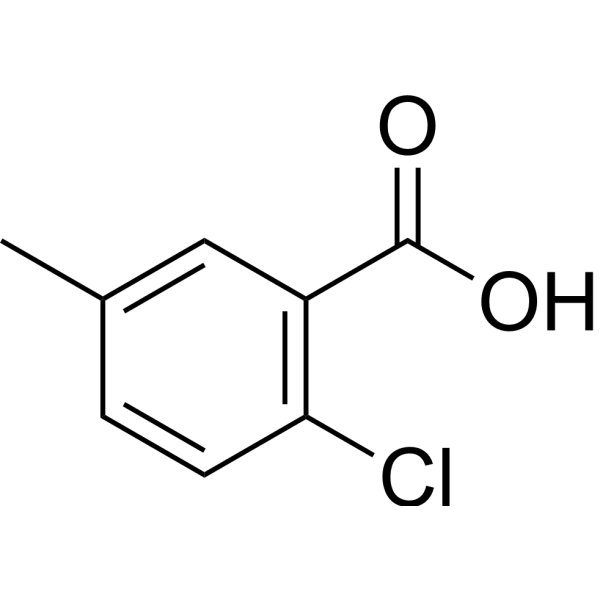
2-Chloro-5-methylbenzoic acid can be used to synthesize amide when coupled with 1-Adamantylmethanamine. 2-Chloro-5-methylbenzoic acid can also give analog when coupled with an amine using EDC hydrochlorie and Et3N in anhydrous CH2Cl2 .
|
-
-
- HY-P3594
-
|
|
GHR
|
Endocrinology
|
|
[His1,Nle27] GHRF (1-32), amide, human is a Growth hormone releasing hormone (GHRH) analog. [His1,Nle27] GHRF (1-32), amide, human has great receptor affinity for GHRHR .
|
-
-
- HY-161943
-
|
|
Influenza Virus
|
Neurological Disease
|
|
NEU3-IN-1 (compound 963) is a NEU3 inhibitor (Ki: 0.12 μM; IC50: 0.31 μM) based on the 2-deoxy-2,3-didehydro-N-acetylneuraminic acid (DANA) scaffold and is a C9 biphenylcarbamate derivative. NEU is a human neuraminidase with 4 isozymes; NEU3-IN-1 is an important tool for studying the function of NEU3 isozymes; its amide and triazole linker analogs are selective for NEU1 and NEU4 isozymes, respectively .
|
-
-
- HY-151821
-
|
|
ADC Linker
|
Others
|
|
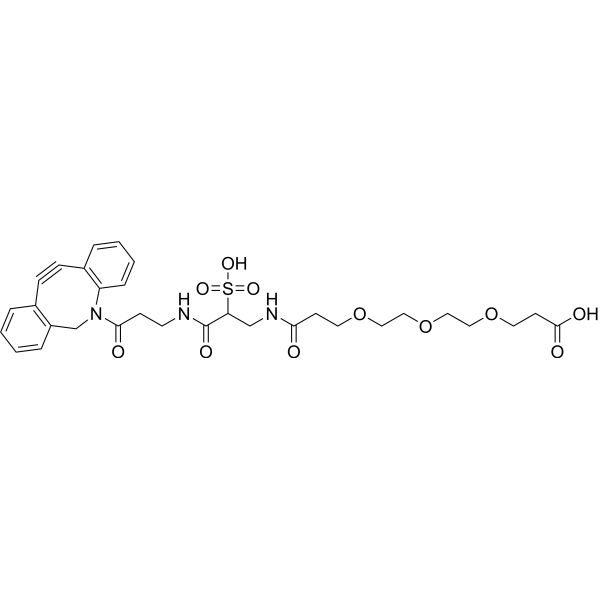
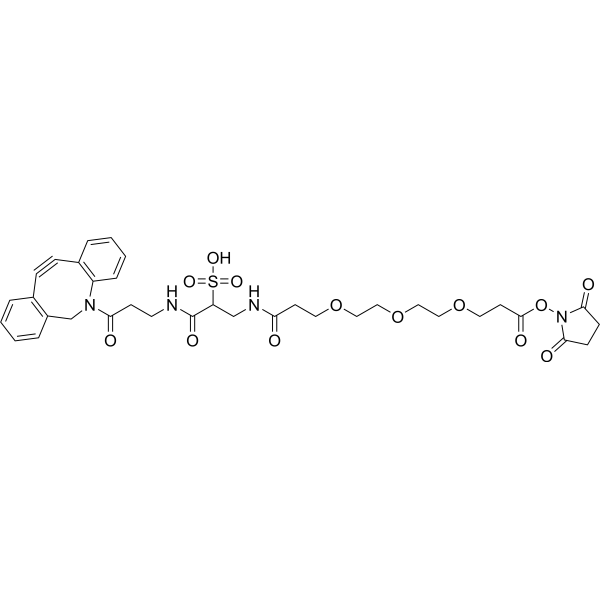
Sulfo DBCO-PEG3-acid is a click chemistry reagent containing an azide group. Sulfo DBCO-PEG3-acid is an analog of DBCO-Acid with PEG linker and a DBCO group. The DBCO groups is commonly used for copper-free Click Chemistry reactions due to its strain promoted high energy. The hydrophilic PEG chain and sulfo group increase water solubility. The terminal carboxylic acid can react with primary amine groups in the presence of activators (e.g. EDC, or HATU) to form a stable amide bond. Reagent grade, for research use only .
|
-
-
- HY-137462
-
|
L-Leucyl-L-phenylalaninamide
|
Neurokinin Receptor
|
Neurological Disease
Inflammation/Immunology
|
|
Leucyl-phenylalanine amide (L-Leucyl-L-phenylalaninamide) is a dipeptide analog. Leucyl-phenylalanine amide is a ligand of SP1-7 with a Ki value of 10.2 nM. Leucyl-phenylalanine amide shows no binding activity to human NK-1 or NK-3 receptors .
|
-
-
- HY-44630
-
|
(S,R,S)-AHPC-CO-C6-COOH
|
E3 Ligase Ligand-Linker Conjugates
|
Cancer
|
|
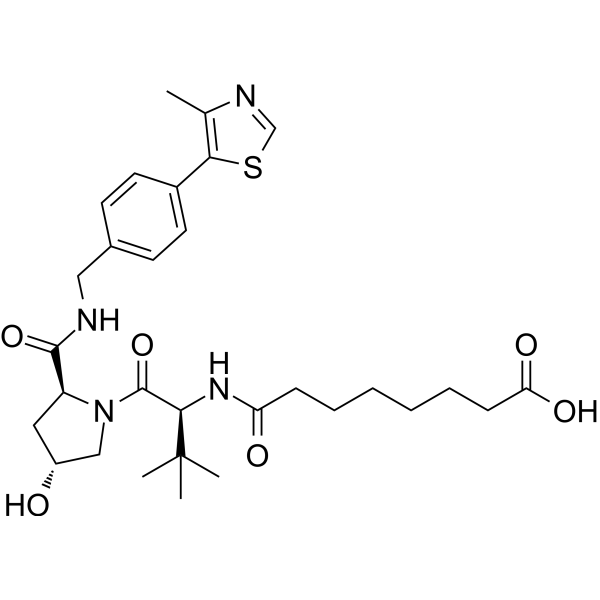
VH 032 amide-alkylC6-acid ((S,R,S)-AHPC-CO-C6-COOH) is a VH032 analog that acts as a ligand for VHL, recruiting von Hippel-Lindau (VHL) protein. VH 032 amide-alkylC6-acid can be used in the synthesis of PROTACs .
|
-
-
- HY-114867
-
|
15(R)-17-phenyl trinor PGF2α ethyl amide
|
Prostaglandin Receptor
|
Endocrinology
|
|
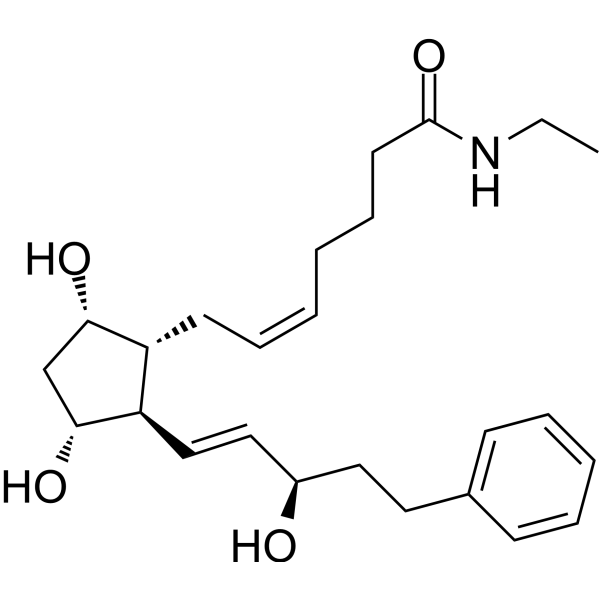
(15R)-Bimatoprost (15(R)-17-phenyl trinor PGF2α ethyl amide) is a prostaglandin analog used to study glaucoma and ocular hypertension. (15R)-Bimatoprost is an isomer of Bimatoprost with an inverted (β) hydroxyl group on C-15 .
|
-
-
- HY-P4555
-
|
|
Somatostatin Receptor
|
Neurological Disease
|
|
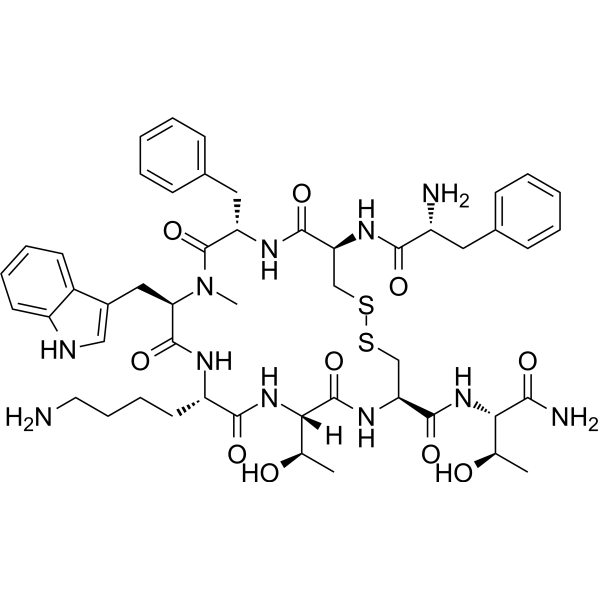
(D-Phe5,Cys6,11,N-Me-D-Trp8)-Somatostatin-14 (5-12) amide (Compound 4) is a somatostatin analog with Kds of 0.61, 11.05, 23.5, 1200 and >1000 nM for SSTR5, SSTR3, SSTR2, SSTR1 and SSTR4, respectively .
|
-
-
- HY-151820
-
|
|
ADC Linker
|
Others
|
|
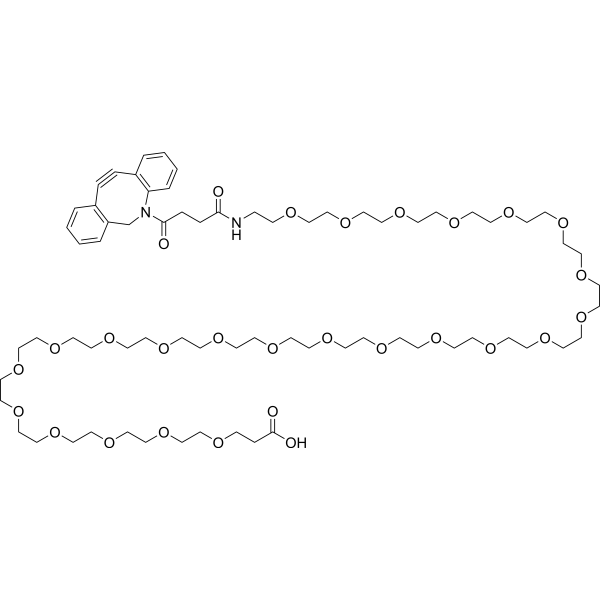
DBCO-PEG24-acid is a click chemistry reagent. DBCO-PEG24-acid is an analog of DBCO-Acid with PEG linker and a DBCO group. The DBCO groups is commonly used for copper-free Click Chemistry reactions due to its strain promoted high energy. The hydrophilic PEG chain allows for increased water solubility. The terminal carboxylic acid can react with primary amine groups in the presence of activators (e.g. EDC, or HATU) to form a stable amide bond. Reagent grade, for research use only .
|
-
-
- HY-148840
-
|
|
Biochemical Assay Reagents
|
Others
|
|
Sulfo DBCO-PEG3-NHS ester is a click chemistry reagent containing an azide group. Sulfo DBCO-PEG3-NHS ester is an analog of DBCO-Acid with PEG linker and a DBCO group. The DBCO group is commonly used for copper-free Click Chemistry reactions due to its strain promoted high energy. The hydrophilic PEG chain and sulfo group increase water solubility. The terminal carboxylic acid can react with primary amine groups in the presence of activators (e.g. EDC, or HATU) to form a stable amide bond. Reagent grade, for research use only .
|
-
-
- HY-P4818
-
-
-
- HY-120467
-
|
Bimatoprost serinol amide
|
Prostaglandin Receptor
|
Endocrinology
|
|
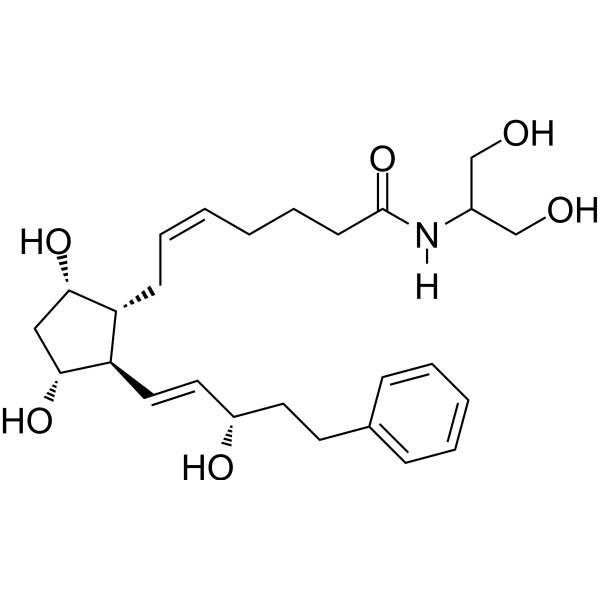
Bima SA (Bimatoprost serinol amide) is a Prostaglandin analog and has the potential for the research of glaucoma .
|
-
-
- HY-W746888
-
|
17-p-PGF2α-NEt2; 17-Phenyl trinor PGF2α diethyl amide
|
Prostaglandin Receptor
|
Cardiovascular Disease
|
|
17-Phenyl trinor prostaglandin F2α diethyl amide (17-phenyl trinor PGF2α diethyl amide) is a PGF2α analog with hypotensive efficacy .
|
-
-
- HY-118599
-
|
|
Prostaglandin Receptor
|
Others
|
|
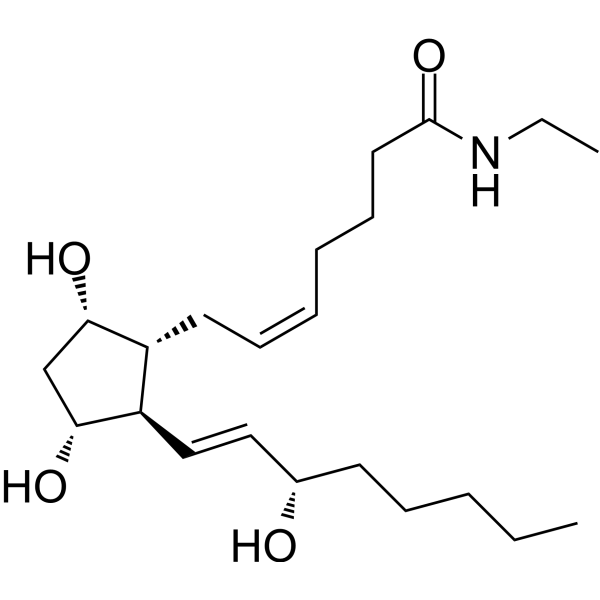
Prostaglandin F2α ethyl amide is an analog of Prostaglandin F2α (HY-12956). Prostaglandin F2α ethyl amide is supposed to be potent lowering intraocular pressure (IOP) for its N-ethyl amide group, like Bimatoprost (HY-B0191) .
|
-
-
- HY-176021
-
|
|
Prostaglandin Receptor
|
Cardiovascular Disease
|
|
U-44069 serinol amide is a derivative of U-44069 (HY-121825). U-44069 serinol amide is a stable analog of the endoperoxide prostaglandin H2 (HY-136500). U-44069 serinol amide is a vasoconstrictor that can induce preglomerular Ca 2+ influx .
|
-
-
- HY-176022
-
|
|
Prostaglandin Receptor
|
Cardiovascular Disease
|
|
U-46619 serinol amide is a derivative of U-46619 (HY-108566). U-46619 serinol amide is a stable analog of Thromboxane A2 (HY-113350) (TXA2). U-46619 serinol amide is a potent TXA2 agonist that can induce platelet shape change and aggregation .
|
-
-
- HY-P10309
-
|
[Nle8'18,Tyr34]hPTH (3-34) amide
|
PTHR
|
Endocrinology
|
|
[Nle8,18,Tyr34]-pTH (3-34) amide human ([Nle8,18,Tyr34]hPTH (3-34) amide) is a parathyroid hormone (PTH) analog .
|
-
-
- HY-124219
-
|
17-Phenoxy trinor PGF2α ethyl amide
|
Prostaglandin Receptor
|
Others
|
|
17-Phenoxy trinor prostaglandin F2α ethyl amide (17-Phenoxy trinor PGF2α ethyl amide) is an analog of Bimatoprost (HY-12956). 17-Phenoxy trinor prostaglandin F2α ethyl amide is an agonist for Prostaglandin F2α Receptor (FP receptor). 17-Phenoxy trinor prostaglandin F2α ethyl amide is potent to reduce the intraocular pressure and attenuate the glaucoma .
|
-
-
- HY-134110
-
|
|
Endogenous Metabolite
|
Metabolic Disease
|
|
Anandamide (AEA) is an endogenous cannabinoid that binds to both central cannabinoid (CB1) and peripheral cannabinoid (CB2) receptors. The biological actions of AEA are terminated by cellular uptake and hydrolysis of the amide bond by the enzyme fatty acid amide hydrolase. Arachidonoyl-N-methyl amide is an analog of anandamide that binds to the human central cannabinoid (CB1) receptor with a Ki of 60 nM. It inhibits rat glial gap junction cell-cell communication 100% at a concentration of 50 μM.
|
-
-
- HY-134055
-
|
Arachidonic acid-N,N-dimethyl amide
|
Cannabinoid Receptor
|
Metabolic Disease
|
|
Anandamide (AEA) is an endogenous cannabinoid that binds to both central cannabinoid (CB1) and peripheral cannabinoid (CB2) receptors. The biological actions of AEA are terminated by cellular uptake and hydrolysis of the amide bond by the enzyme fatty acid amide hydrolase. Arachidonoyl-N,N-dimethyl amide is an analog of anandamide that exhibits weak or no binding to the human central cannabinoid (CB1) receptor (Ki >1 μM). It inhibits rat glial gap junction cell-cell communication 100% at a concentration of 50 μM.
|
-
-
- HY-120197
-
|
|
Prostaglandin Receptor
|
Endocrinology
|
|
17-Phenyl trinor prostaglandin F2α methyl amide is a prostaglandin F 2α (PGF 2α) analog that competes with native PGF 2α for receptor binding .
|
-
-
- HY-139085A
-
|
|
Drug Intermediate
|
Cancer
|
|
XL388-C2-amide-PEG9-NH2 hydrochloride is an intermediate used in the synthesis of C26-linked Rapamycin analog .
|
-
-
- HY-139085B
-
|
|
Drug Intermediate
|
Cancer
|
|
XL388-C2-amide-PEG9-NH2 TFA is an intermediate used in the synthesis of C26-linked Rapamycin analog .
|
-
-
- HY-116833
-
|
|
Drug Derivative
|
Metabolic Disease
|
|
4-Chloro-3,5-dimethylphenoxyacetic acid (compound 602 UC) is a product of masked amide bond hydrolysis of auxin analog 602 (compound 602). Auxin can effectively stimulate hypocotyl growth in wild-type seedlings .
|
-
-
- HY-152320
-
|
|
Nucleoside Antimetabolite/Analog
|
Others
|
|
Adenosine-2-carboxy methyl amide is a purine nucleoside analogue. Purine nucleoside analogs have broad antitumor activity targeting indolent lymphoid malignancies. Anticancer mechanisms in this process rely on inhibition of DNA synthesis, induction of apoptosis, etc .
|
-
-
- HY-163376
-
|
17-CF3PTPG2α EA
|
Prostaglandin Receptor
|
Metabolic Disease
|
|
17-Trifluoromethylphenyl trinor prostaglandin F2α ethyl amide (compound 17-CF3PTPG2α EA) is a lipophilic analog of 17-trifluoromethylphenyl trinor PGF2α .
|
-
-
- HY-129934S
-
|
Lat-NEt-d4
|
Isotope-Labeled Compounds
Prostaglandin Receptor
|
Endocrinology
|
|
Latanoprost ethyl amide-d4 (Lat-NEt-d4) is deuterium labeled Latanoprost ethyl amide. Latanoprost ethyl amide (Lat-NEt) is a latanoprost analog in which the C-1 carboxyl group has been modified to an N-ethyl amide. Prostaglandin esters have been shown to have ocular hypotensive activity.1 Prostaglandin N-ethyl amides were recently introduced as alternative prostaglandin ocular hypotensive prodrugs. Although it has been claimed that prostaglandin ethyl amides are not converted to the free acids in vivo, studies in our laboratories have shown that bovine and human corneal tissue converts the N-ethyl amides of various prostaglandins to the free acids with a conversion rate of about 2.5 μg/g corneal tissue/hr. Lat-NEt would be expected to show the typical intraocular effects of Latanoprost free acid, but with the much slower hydrolysis pharmacokinetics of the prostaglandin N-amides .
|
-
-
- HY-117742
-
|
|
Bacterial
|
Infection
|
|
DA-7867 is an antibacterial compound with activity against a wide range of bacteria, including drug-resistant bacteria. DA-7867 shows promising antibacterial activity against some clinically important pathogens, including drug-resistant bacteria. It is an amide analog of Tedizolid (HY-14855), reflecting the potential use of tetrazoles in the development of new antibacterial agents .
|
-
-
- HY-124243
-
|
17-Phenyl trinor prostaglandin F2α cyclopropyl methyl amide
|
Prostaglandin Receptor
|
Others
|
|
N-Cyclopropyl methyl bimatoprost (17-Phenyl trinor prostaglandin F2α cyclopropyl methyl amide) is an analog of Bimatoprost (HY-12956). N-Cyclopropyl methyl bimatoprost is an agonist for Prostaglandin F2α Receptor (FP receptor). N-Cyclopropyl methyl bimatoprost is potent to reduce the intraocular pressure and attenuate the glaucoma .
|
-
-
- HY-176008
-
|
|
Drug Derivative
|
Inflammation/Immunology
|
|
Lauric acid leelamide is the lauric acid (C-12) amide analog of Leelamine (HY-W005629). Leelamine exhibits inhibitory activity against pyruvate dehydrogenase kinase (PDHK) with an IC50 value of 9.5 µM. Leelamine derivatives possess anti-inflammatory effects and can inhibit phospholipase A2 activity from various sources .
|
-
-
- HY-129934
-
|
Lat-NEt
|
Prostaglandin Receptor
|
Endocrinology
|
|
Latanoprost ethyl amide (Lat-NEt) is a latanoprost analog in which the C-1 carboxyl group has been modified to an N-ethyl amide. Prostaglandin esters have been shown to have ocular hypotensive activity.1 Prostaglandin N-ethyl amides were recently introduced as alternative prostaglandin ocular hypotensive prodrugs. Although it has been claimed that prostaglandin ethyl amides are not converted to the free acids in vivo, studies in our laboratories have shown that bovine and human corneal tissue converts the N-ethyl amides of various prostaglandins to the free acids with a conversion rate of about 2.5 μg/g corneal tissue/hr. Lat-NEt would be expected to show the typical intraocular effects of Latanoprost free acid, but with the much slower hydrolysis pharmacokinetics of the prostaglandin N-amides.
|
-
-
- HY-148840A
-
|
|
Biochemical Assay Reagents
|
Others
|
|
Sulfo DBCO-PEG3-NHS ester TEA is a click chemistry reagent containing an azide group. Sulfo DBCO-PEG3-NHS ester (TEA) is an analog of DBCO-Acid with PEG linker and a DBCO group. The DBCO group is commonly used for copper-free Click Chemistry reactions due to its strain promoted high energy. The hydrophilic PEG chain and sulfo group increase water solubility. The terminal carboxylic acid can react with primary amine groups in the presence of activators (e.g. EDC, or HATU) to form a stable amide bond. Reagent grade, for research use only .
|
-
-
- HY-176833
-
|
Dinoprost diethyl amide; PGF2α diethyl amide; PGF2α-NEt2
|
Drug Derivative
|
Others
|
|
Prostaglandin F2α diethyl amide (Dinoprost diethyl amide) is an analog of Dinoprost (PGF2α) (HY-12956) .
|
-
-
- HY-181441
-
|
|
Drug Derivative
|
Others
|
|
(+)-Cloprostenol methyl amide is a derivative analog of the carboxylic acid terminus of (+)-Cloprostenol (HY-107381).
|
-
-
- HY-W746807
-
|
N-Cyclohexyl-desamethyl bimatoprost; 17-Phenyl trinor prostaglandin F2α cyclohexyl amide
|
Prostaglandin Receptor
|
Endocrinology
|
|
Bimatoprost cyclohexyl amide (N-Cyclohexyl-desamethyl bimatoprost; 17-Phenyl trinor prostaglandin F2α cyclohexyl amide) is an analog of bimatoprost (HY-B0191). Bimatoprost cyclohexyl amide is an agonist of the prostaglandin F2α receptor. Bimatoprost cyclohexyl amide is used in research on reducing intraocular pressure and glaucoma .
|
-
-
- HY-P3048
-
-
-
- HY-181444
-
|
|
Prostaglandin Receptor
|
Others
|
|
16-Phenoxy tetranor Prostaglandin F2α methyl amide (16-phenoxy-17,18,19,20-tetranor-PGF2α) is a structural analog of PGF2α (HY-12956), and its binding affinity for the PGF2α (FP) receptor in sheep luteal cells reaches approximately 440% of that of PGF2α .
|
-
-
- HY-103423R
-
|
|
Reference Standards
Dopamine Receptor
|
Neurological Disease
|
|
PAOPA (Standard) is the analytical standard of PAOPA (HY-103423). This product is intended for research and analytical applications. PAOPA, an analog of L-proline-l-leucine-glycine amide (PLG) peptide, is an allosteric modulator of Dopamine D2 Receptor. PAOPA can effectively reduce behavioral abnormalities in rodent models of schizophrenia. PAOPA increases the high affinity dopamine D2 receptor and promotes its binding to agonists .
|
-
-
- HY-108490R
-
|
|
Reference Standards
LPL Receptor
|
Inflammation/Immunology
|
|
VPC 23019 (Standard) is the analytical standard of VPC 23019 (HY-108490). This product is intended for research and analytical applications. VPC 23019, an aryl amide-containing Sphingosine 1-phosphate (S1P) analog, is a competitive antagonist at the S1P1 and S1P3 receptors (pKi= 7.86 and 5.93, respectively) and an agonist at the S1P4 and S1P5 receptors (pEC50= 6.58 and 7.07, respectively) .
|
-
-
- HY-181047
-
|
|
Dopamine Receptor
|
Neurological Disease
|
|
FMJ-01-042 is a blood-brain barrier-permeable, low-efficacy partial agonist with high affinity (Kᵢ = 4.33 nM) and exceptional subtype selectivity for the dopamine D4 receptor. FMJ-01-042 exhibits good metabolic stability and is suitable for research on neurological and psychiatric disorders .
|
-
-
- HY-181049
-
|
|
Dopamine Receptor
|
Neurological Disease
|
|
FMJ-01-054 is a selective dopamine D4 Receptor (D4R) antagonist with a Ki od 77.7 nM. FMJ-01-054 shows subtype selectivity over D2R and D3R. FMJ-01-054 inhibits D4R-mediated β-arrestin recruitment and cAMP production with IC50 values of 3800 nM and 134 nM, respectively. FMJ-01-054 has desirable plasma half-life and brain exposure in rats. FMJ-01-054 can be used for the research of neurological disorders .
|
-
| Cat. No. |
Product Name |
Type |
-
- HY-W008213
-
|
|
Biochemical Assay Reagents
|
|
2-Chloro-5-methylbenzoic acid can be used to synthesize amide when coupled with 1-Adamantylmethanamine. 2-Chloro-5-methylbenzoic acid can also give analog when coupled with an amine using EDC hydrochlorie and Et3N in anhydrous CH2Cl2 .
|
| Cat. No. |
Product Name |
Target |
Research Area |
-
- HY-P3594
-
|
|
GHR
|
Endocrinology
|
|
[His1,Nle27] GHRF (1-32), amide, human is a Growth hormone releasing hormone (GHRH) analog. [His1,Nle27] GHRF (1-32), amide, human has great receptor affinity for GHRHR .
|
-
- HY-P4555
-
|
|
Somatostatin Receptor
|
Neurological Disease
|
|
(D-Phe5,Cys6,11,N-Me-D-Trp8)-Somatostatin-14 (5-12) amide (Compound 4) is a somatostatin analog with Kds of 0.61, 11.05, 23.5, 1200 and >1000 nM for SSTR5, SSTR3, SSTR2, SSTR1 and SSTR4, respectively .
|
-
- HY-P4818
-
-
- HY-P10309
-
|
[Nle8'18,Tyr34]hPTH (3-34) amide
|
PTHR
|
Endocrinology
|
|
[Nle8,18,Tyr34]-pTH (3-34) amide human ([Nle8,18,Tyr34]hPTH (3-34) amide) is a parathyroid hormone (PTH) analog .
|
-
- HY-P3048
-
| Cat. No. |
Product Name |
Chemical Structure |
-
- HY-129934S
-
|
|
|
Latanoprost ethyl amide-d4 (Lat-NEt-d4) is deuterium labeled Latanoprost ethyl amide. Latanoprost ethyl amide (Lat-NEt) is a latanoprost analog in which the C-1 carboxyl group has been modified to an N-ethyl amide. Prostaglandin esters have been shown to have ocular hypotensive activity.1 Prostaglandin N-ethyl amides were recently introduced as alternative prostaglandin ocular hypotensive prodrugs. Although it has been claimed that prostaglandin ethyl amides are not converted to the free acids in vivo, studies in our laboratories have shown that bovine and human corneal tissue converts the N-ethyl amides of various prostaglandins to the free acids with a conversion rate of about 2.5 μg/g corneal tissue/hr. Lat-NEt would be expected to show the typical intraocular effects of Latanoprost free acid, but with the much slower hydrolysis pharmacokinetics of the prostaglandin N-amides .
|
-
| Cat. No. |
Product Name |
|
Classification |
-
- HY-151821
-
|
|
|
DBCO
|
|
Sulfo DBCO-PEG3-acid is a click chemistry reagent containing an azide group. Sulfo DBCO-PEG3-acid is an analog of DBCO-Acid with PEG linker and a DBCO group. The DBCO groups is commonly used for copper-free Click Chemistry reactions due to its strain promoted high energy. The hydrophilic PEG chain and sulfo group increase water solubility. The terminal carboxylic acid can react with primary amine groups in the presence of activators (e.g. EDC, or HATU) to form a stable amide bond. Reagent grade, for research use only .
|
-
- HY-151820
-
|
|
|
DBCO
|
|
DBCO-PEG24-acid is a click chemistry reagent. DBCO-PEG24-acid is an analog of DBCO-Acid with PEG linker and a DBCO group. The DBCO groups is commonly used for copper-free Click Chemistry reactions due to its strain promoted high energy. The hydrophilic PEG chain allows for increased water solubility. The terminal carboxylic acid can react with primary amine groups in the presence of activators (e.g. EDC, or HATU) to form a stable amide bond. Reagent grade, for research use only .
|
-
- HY-148840
-
|
|
|
DBCO
|
|
Sulfo DBCO-PEG3-NHS ester is a click chemistry reagent containing an azide group. Sulfo DBCO-PEG3-NHS ester is an analog of DBCO-Acid with PEG linker and a DBCO group. The DBCO group is commonly used for copper-free Click Chemistry reactions due to its strain promoted high energy. The hydrophilic PEG chain and sulfo group increase water solubility. The terminal carboxylic acid can react with primary amine groups in the presence of activators (e.g. EDC, or HATU) to form a stable amide bond. Reagent grade, for research use only .
|
-
- HY-148840A
-
|
|
|
DBCO
|
|
Sulfo DBCO-PEG3-NHS ester TEA is a click chemistry reagent containing an azide group. Sulfo DBCO-PEG3-NHS ester (TEA) is an analog of DBCO-Acid with PEG linker and a DBCO group. The DBCO group is commonly used for copper-free Click Chemistry reactions due to its strain promoted high energy. The hydrophilic PEG chain and sulfo group increase water solubility. The terminal carboxylic acid can react with primary amine groups in the presence of activators (e.g. EDC, or HATU) to form a stable amide bond. Reagent grade, for research use only .
|
| Cat. No. |
Product Name |
|
Classification |
-
- HY-152320
-
|
|
|
Nucleoside Analogs
Adenosine
|
|
Adenosine-2-carboxy methyl amide is a purine nucleoside analogue. Purine nucleoside analogs have broad antitumor activity targeting indolent lymphoid malignancies. Anticancer mechanisms in this process rely on inhibition of DNA synthesis, induction of apoptosis, etc .
|
Your information is safe with us. * Required Fields.
Inquiry Information
- Product Name:
- Cat. No.:
- Quantity:
- MCE Japan Authorized Agent: