
1. Search Result
Search Result
Pathways Recommended: Stem Cell/Wnt Cell Cycle/DNA Damage
Results for "

anaplastic large cell lymphomas

" in MedChemExpress (MCE) Product Catalog:

19

Inhibitors & Agonists

4

Inhibitory Antibodies

1

Oligonucleotides

Cat. No. Product Name Target Research Areas Chemical Structure
  • HY-P99669

    MDX-060

    TNF Receptor Cancer
    Iratumumab (MDX-060) a human anti-CD30 IgG1κ monoclonal antibody. Iratumumab inhibits the growth of CD30-expressing tumor cells. Iratumumab can be used for research of Hodgkin's lymphoma (HL) and anaplastic large-cell lymphoma (ALCL) .
    Iratumumab
  • HY-171825

    PROTACs Anaplastic lymphoma kinase (ALK) Cancer
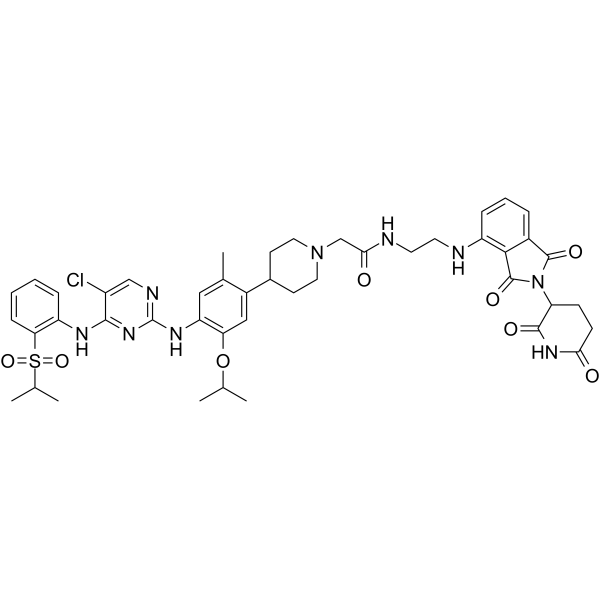
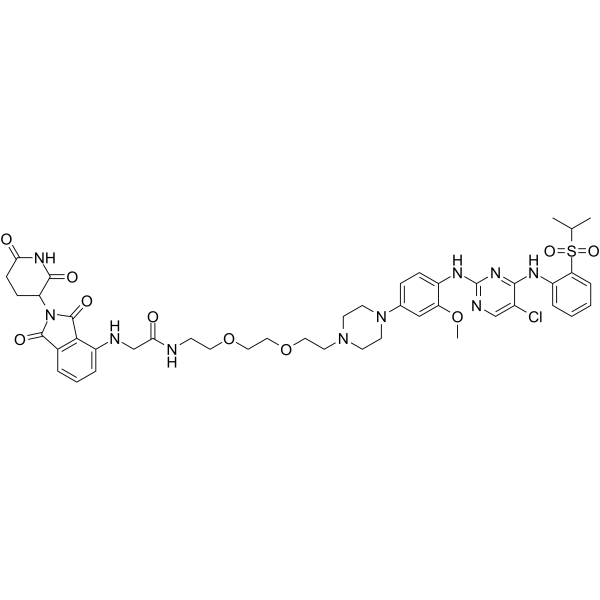
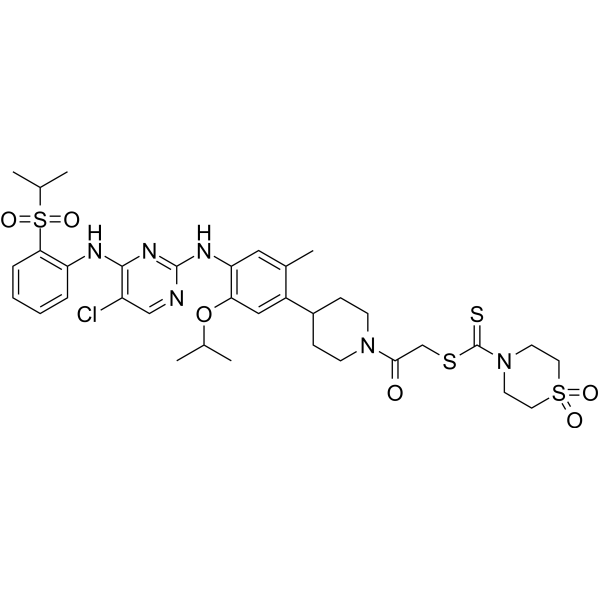
    SIAIS001 is a CRBN-dependent ALK PROTAC degrader with a DC50 of 3.9 nM. SIAIS001 induces ALK protein degradation via the ubiquitin-proteasome system. SIAIS001 induces G1/S phase cell cycle arrest and inhibits proliferation of cancer cells. SIAIS001 can be used for the research of anaplastic large-cell lymphomas .
    SIAIS001
  • HY-18030A

    Anaplastic lymphoma kinase (ALK) Cancer
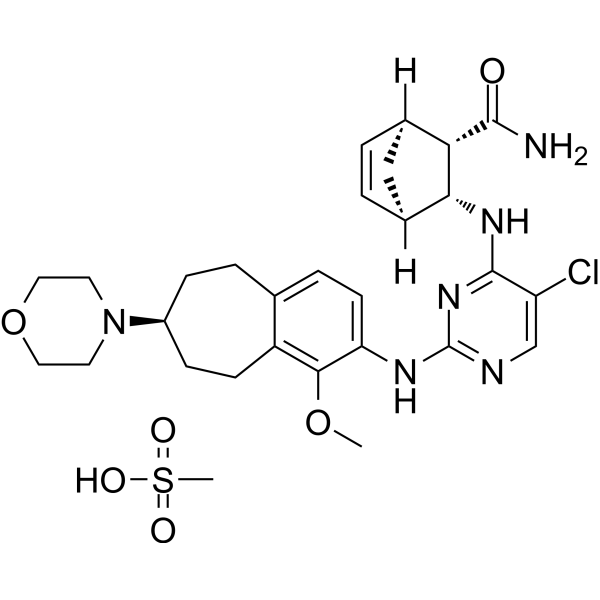
    CEP-28122 mesylate salt, a diaminopyrimidine derivative, is a potent, selective, and orally active ALK inhibitor with an IC50 value of 1.9 nM. CEP-28122 mesylate salt has antitumor activity in experimental models of ALK-positive human cancers. CEP-28122 mesylate salt has good pharmacodynamic and pharmacokinetic activity. CEP-28122 mesylate salt can be used for the study of ALK-positive anaplastic large-cell lymphoma (ALCL), non-small cell lung cancer (NSCLC), and neuroblastoma cells .
    CEP-28122 mesylate salt
  • HY-18030

    Anaplastic lymphoma kinase (ALK) Cancer
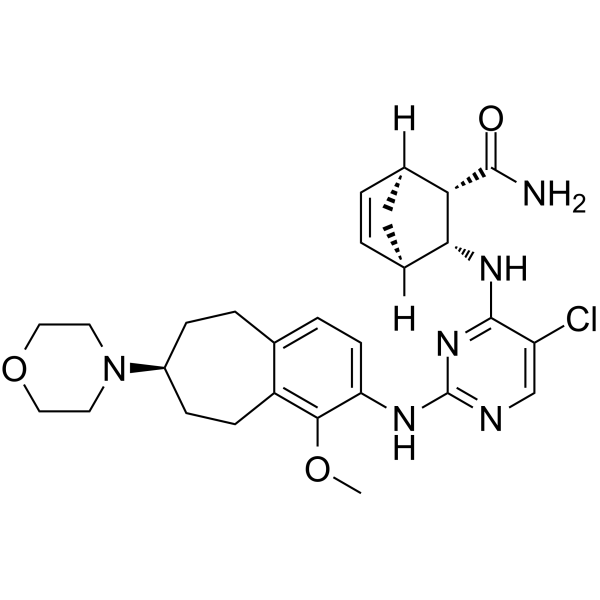
    CEP-28122, a diaminopyrimidine derivative, is a potent, selective, and orally active ALK inhibitor with an IC50 value of 1.9 nM. CEP-28122 has antitumor activity in experimental models of ALK-positive human cancers. CEP-28122 has good pharmacodynamic and pharmacokinetic activity. CEP-28122 can be used for the study of ALK-positive anaplastic large-cell lymphoma (ALCL), non-small cell lung cancer (NSCLC), and neuroblastoma cells .
    CEP-28122
  • HY-146408

    Anaplastic lymphoma kinase (ALK) Cancer
    ALK-IN-21 (Compound B10), a potent ALK inhibitor for ALKG1202R mutation, exhibits remarkable enzymatic inhibitory potency with IC50 values of 4.59 nM, 2.07 nM and 5.95 nM toward ALK WT, ALK L1196M and ALK G1202R, respectively. ALK-IN-21 efficiently inhibits the proliferation of ALK-positive Karpas299 and H2228 cells both with IC50 values of 0.07 μM. ALK-IN-21 can be used for the research of anaplastic large cell lymphoma .
    ALK-IN-21
  • HY-P991638

    TNF Receptor Cancer
    XmAb-2513 is a humanized monoclonal antibody inhibitor targeting CD30. XmAb-2513 has significant anti-proliferative activity and superior antibody-dependent cell-mediated cytotoxicity (ADCC) as well as antibody-dependent cell-mediated phagocytosis (ADCP). XmAb-2513 can be used for hematologic malignancies like Hodgkin Lymphoma (HL) and Anaplastic Large Cell Lymphoma (ALCL) research .
    XmAb-2513
  • HY-P991512

    Apoptosis Cancer
    SGN-30 is a chimeric antibody derived from a mouse antihuman CD30 antibody, AC10, with the variable regions of AC10 and human α 1 heavy chain and κ light chain constant regions. SGN-30 induces apoptosis and cell-cycle arrest in cancer cells. SGN-30 can be used for the study of Hodgkin lymphoma (HL) and anaplastic large cell lymphoma (ALCL) .
    SGN-30
  • HY-18315

    JAK Apoptosis Cancer
    Bayer-18 is an inhibitor for TYK2. Bayer-18 inhibits the viability of ALCL cell K299, SR786, Mac1 and Mac2a with IC50 of 2-3 µM, and induces apoptosis in K299 and SR786 .
    Bayer-18
  • HY-177823

    TNF Receptor Cancer
    C2NP sodium is a single-strand DNA aptamer that targets CD30. The multivalent C2NP is able to induce oligomerization of CD30 receptors and, in effect, activate downstream signaling, which led to apoptosis of anaplastic large cell lymphoma (ALCL) cells.
    C2NP sodium
  • HY-18030B

    Anaplastic lymphoma kinase (ALK) Others
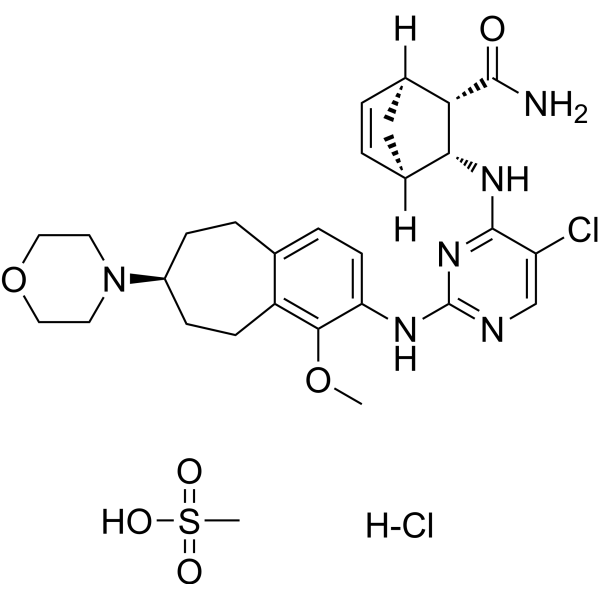
    CEP-28122 mesylate hydrochloride, a diaminopyrimidine derivative, is a potent, selective, and orally active ALK inhibitor with an IC50 value of 1.9 nM. CEP-28122 mesylate hydrochloride has antitumor activity in experimental models of ALK-positive human cancers. CEP-28122 mesylate hydrochloride has good pharmacodynamic and pharmacokinetic activity. CEP-28122 mesylate hydrochloride can be used for the study of ALK-positive anaplastic large-cell lymphoma (ALCL), non-small cell lung cancer (NSCLC), and neuroblastoma cells .
    CEP-28122 mesylate hydrochloride
  • HY-P991553

    TNF Receptor Apoptosis Inflammation/Immunology Cancer
    HeFi-1 is a mouse anti-CD30 IgG1 monoclonal antibody. HeFi-1 recognizes the ligand-binding site on CD30. HeFi-1 can inhibit the growth of tumor cells with high expression of CD30. HeFi-1 can induce eosinophil apoptosis. HeFi-1 can be used for researches on cancer or inflammation conditions such as anaplastic large-cell lymphoma (ALCL) and asthma .
    HeFi-1
  • HY-111277

    Anaplastic lymphoma kinase (ALK) Insulin Receptor VEGFR Tie MAP3K Apoptosis Cancer
    CEP-14513 is an ALK inhibitor with an IC50 of 4 nM. CEP-14513 also inhibits insulin receptor, VEGFR2, TIE2 and DLK kinases, but does not inhibit MET, IKKβ, or CDK1/2/5. CEP-14513 induces cancer cell apoptosis. CEP-14513 is applicable to research related to non-small cell lung cancer, anaplastic large cell lymphoma, inflammatory myofibroblastic tumor, and diffuse large B-cell lymphoma .
    CEP-14513
  • HY-180970

    PROTACs Anaplastic lymphoma kinase (ALK) Cancer
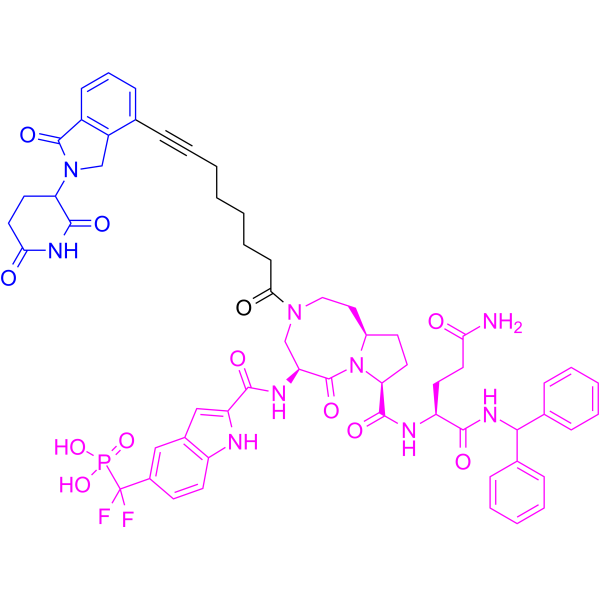
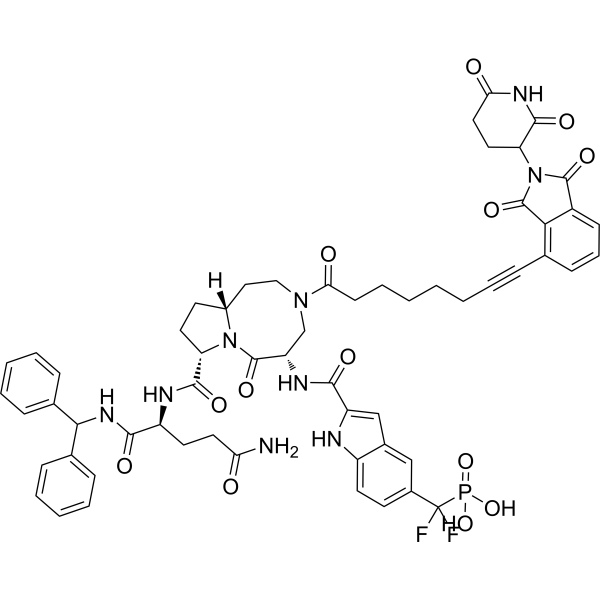
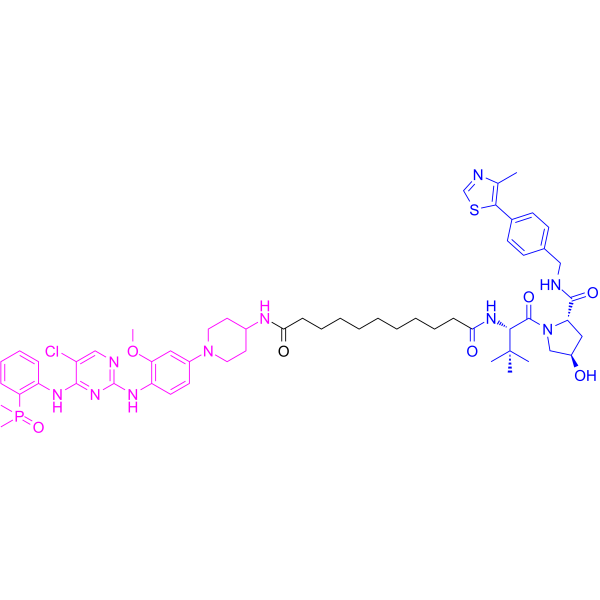
    TD-004 is a potent ALK PROTAC degrader. TD-004 exhibits anti-ALK inhibitory activity with an IC50 of 0.11 µM and selectively inhibits the proliferation of SU-DHL-1 and H3122 cells (ALK-positive cancer cells) with IC50s of 0.058 µM and 0.28 µM, respectively. TD-004 induces degradation of ALK fusion proteins (NPM-ALK and EML4-ALK) via recruitment of the VHL E3 ligase and the proteasome pathway. TD-004 demonstrates significant tumor growth inhibition with a favorable safety profile in vivo. TD-004 can be used for the research of anaplastic large cell lymphoma and non-small cell lung cancer .
    TD-004
  • HY-183767

    Aurora Kinase Anaplastic lymphoma kinase (ALK) Mitochondrial Metabolism Apoptosis Reactive Oxygen Species (ROS) Aldehyde Dehydrogenase (ALDH) Cancer
    Aurora kinase/ALK-IN-1 is a dual Aurora A kinase and ALK inhibitor with IC50 values of 0.296 μM and 0.332 μM, respectively. Aurora kinase/ALK-IN-1 induces G2/M cell cycle arrest, triggers mitochondrial apoptosis, elevates intracellular reactive oxygen species (ROS) levels, and inhibits ALDH1 activity. Aurora kinase/ALK-IN-1 demonstrates cytotoxicity and tumor selectivity. Aurora kinase/ALK-IN-1 can be used for the research of anaplastic large cell lymphoma .
    Aurora kinase/ALK-IN-1
  • HY-142079

    Drug Derivative Cancer
    Br-C1-CONH-C5-CO-Val-Cit-PAB-MMAE (compound 62) is a drug-linker conjugate that contains a monomethyl auristatin E (MMAE) drug moiety, which is linked to a bromoacetamide-containing extension unit via a valine-citrulline (Val-Cit) dipeptide and a self-immolative p-aminobenzyl (PAB) spacer. Br-C1-CONH-C5-CO-Val-Cit-PAB-MMAE is applicable to the research of breast cancer, anaplastic large cell lymphoma and lung adenocarcinoma .
    Br-C1-CONH-C5-CO-Val-Cit-PAB-MMAE
  • HY-180956

    PROTACs Anaplastic lymphoma kinase (ALK) STAT Cancer
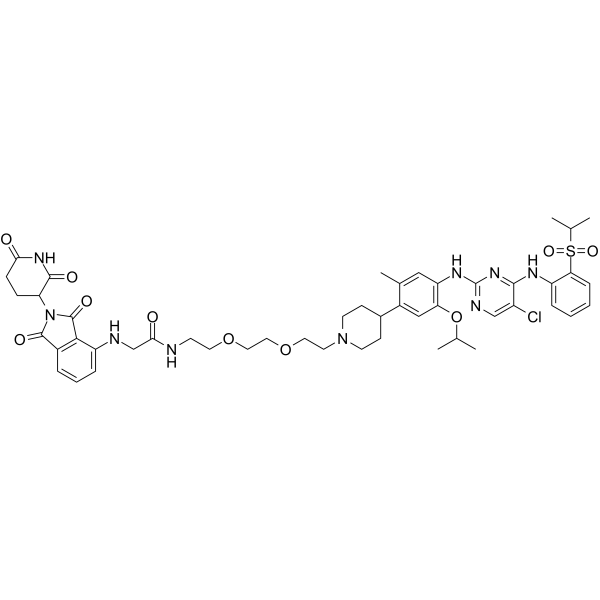
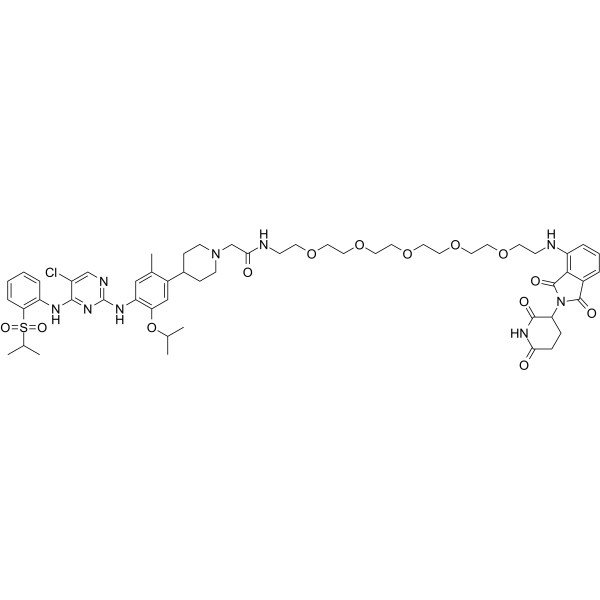
    PROTAC ALK degrader-5 (Compound 17) is an efficient ALK PROTAC degrader, with its inhibitory effects on EML4-ALK and NPM-ALK being 27.4 nM and 116.5 nM respectively. PROTAC ALK degrader-5 exhibits potent anti-proliferative activity against H3122 and Karpas 299. PROTAC ALK degrader-5 effectively inhibits the phosphorylation of ALK and STAT3. PROTAC ALK degrader-5 can be used for the study of ALK-driven malignant tumors, such as human non-small cell lung cancer and anaplastic large cell lymphoma .
    PROTAC ALK degrader-5
  • HY-180971

    Ligands for Target Protein for PROTAC Anaplastic lymphoma kinase (ALK) Cancer
    Ceritinib-amide-C3-acid is a target protein ligand-linker conjugate. Ceritinib-amide-C3-acid incorporates a protein ligand Ceritinib (HY-15656) and a link for E3 ligases ligand. Ceritinib-amide-C3-acid can be used for the synthesis of TD-004 (HY-180970) .
    Ceritinib-amide-C3-acid
  • HY-181113

    Anaplastic lymphoma kinase (ALK) Cancer
    ALK-IN-34 is an Anaplastic Lymphoma Kinase (ALK) inhibitor with an IC50 of 0.26 μM. ALK-IN-34 demonstrates antiproliferative activity against lung cancer cells and gastric adenocarcinoma cells .
    ALK-IN-34
  • HY-164401A

    EAAT DNA/RNA Synthesis DNA Alkylator/Crosslinker Cancer
    QBS10072S dihydrochloride is a LAT1-selective substrate with blood-brain barrier permeability that inhibits tumor growth. QBS10072S dihydrochloride enters LAT1-expressing tumor cells via LAT1-mediated active transport, induces interstrand DNA cross-linking and cell apoptosis, and reduces leptomeningeal dissemination. QBS10072S dihydrochloride can be used in studies related to glioblastoma multiforme, diffuse intrinsic pontine glioma, triple-negative breast cancer brain metastases, and aggressive T-cell lymphoma .
    QBS10072S dihydrochloride

Inquiry Online

Your information is safe with us. * Required Fields.

Salutation


Country or Region *

Applicant Name *


Organization Name *

Department *


Email Address *


Product Name *

Cat. No.


Requested quantity *

Phone Number *


Remarks

Inquiry Online

Inquiry Information

Product Name:
Cat. No.:
Quantity:
MCE Japan Authorized Agent:

