1. Search Result
Search Result
Results for "

rat lung tissue

" in MedChemExpress (MCE) Product Catalog:

7

Inhibitors & Agonists

1

Biochemical Assay Reagents

Cat. No. Product Name Target Research Areas Chemical Structure
  • HY-112465

    PKA PKC PKG Neurological Disease Cancer
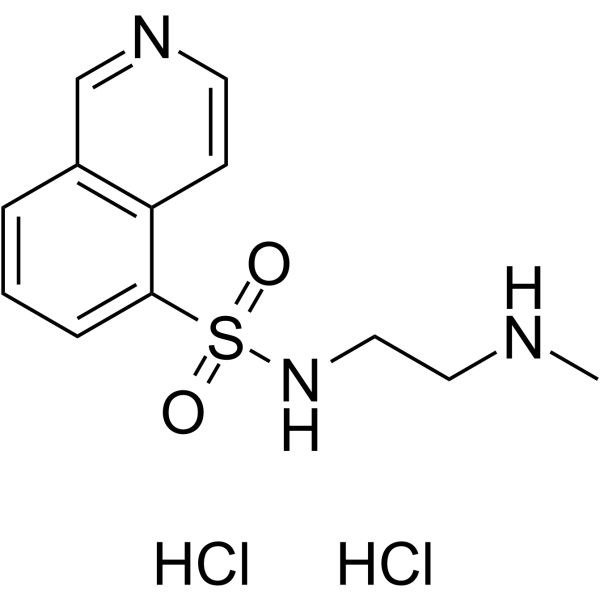
    H-8 dihydrochloride is a selective Cyclic nucleotide-dependent protein kinase inhibitor. H-8 dihydrochloride potently inhibits cGMP- and cAMP-dependent protein phosphorylation. H-8 dihydrochloride enhances the vasodilatory effect induced by 8-bromo-cAMP (HY-12306A). H-8 dihydrochloride fails to attenuate the vasodilatory effects induced by 8-bromo-cGMP (HY-101379A), atrial natriuretic peptide II, or Sodium nitroprusside (HY-B0564) in rat aorta .
    H-8 dihydrochloride
  • HY-135115

    3,4-DHPEA-EA

    α-synuclein HDAC Adrenergic Receptor Inflammation/Immunology
    Oleuropein Aglycone (3,4-DHPEA-EA) is a polyphenol and the aglycone form of oleuropein (HY-N0292), formed by enzymatic, acidic or acetylated hydrolysis of oleuropein. Dietary intake of oleuropein Aglycone (50 mg/kg diet) increases the number of neuronal autophagic vesicles, reverses cognitive deficits in the TgCRND8 transgenic mouse model of Alzheimer's disease, and reduces the levels of histone deacetylase 2 (HDAC2) in the cortex and hippocampus. Oleuropein Aglycone increases urinary norepinephrine, interscapular brown adipose tissue epinephrine, and UCP1 protein levels, and reduced plasma leptin levels and total abdominal adipose tissue weight in a rat model of high-fat diet-induced obesity. Oleuropein Aglycone also reduced lung neutrophil infiltration, lipid peroxidation, and IL-1β levels in a mouse model of carrageenan-induced pleurisy.
    Oleuropein Aglycone
  • HY-Y1269D

    Salmiac, for molecular biology

    TGF-beta/Smad Apoptosis Chloride Channel Neurological Disease Cancer
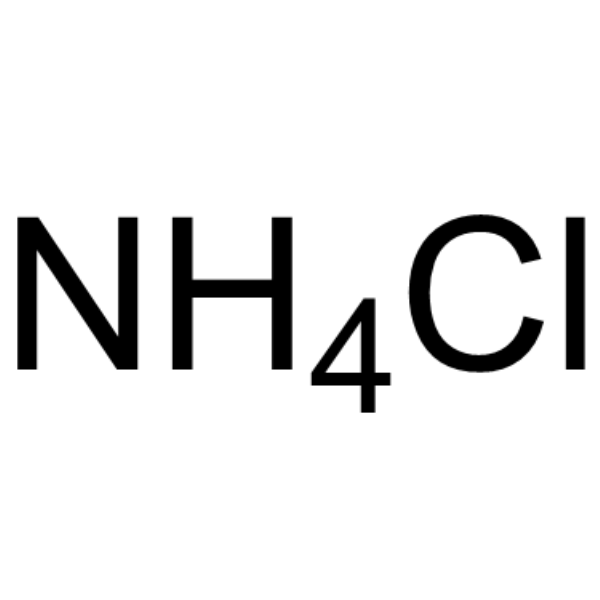
    Ammonium chloride (Salmiac), for molecular biology is an inhibitor of Slc26a4 and SMAD2. Ammonium chloride, for molecular biology reduces the protein expression level of Slc26a4 in lung tissue, and attenuates ozone-induced increases in proinflammatory cytokines, inflammatory cells, pulmonary resistance, goblet cell hyperplasia, peribronchial inflammation and thiocyanate levels in mouse tissues and bronchoalveolar lavage fluid. Ammonium chloride, for molecular biology decreases the level of phosphorylated SMAD2, inhibits autophagy by reducing autophagy-related proteins, and enhances Cisplatin (HY-17394)-induced cancer cell apoptosis and DNA double-strand breaks. Ammonium chloride, for molecular biology also inhibits the TCA cycle, reduces ATP production, increases glucose utilization, regulates the levels of lactic acid, glutamic acid and ATP, and induces morphological degeneration of neuroblastoma cells. Ammonium chloride, for molecular biology can be used in studies related to ozone-induced airway injury, hepatocellular carcinoma, human cervical cancer, hepatic encephalopathy, Reye syndrome, epilepsy and neurodegenerative diseases .
    Ammonium chloride, for molecular biology
  • HY-122010

    VEGFR Others
    NVP-AAD777 is a specific inhibitor of VEGFR-2, demonstrated in vivo by its effective suppression of phospho-VEGFR-2 (Tyr1175) signaling in rat lung tissues. Unlike the nonspecific VEGFR inhibitor SUG-5416, NVP-AAD777 did not induce emphysematous changes in the lungs after three weeks of treatment, even when combined with exposure to cigarette smoke. Additionally, there were no alterations observed in vascular density compared to control animals. This indicates NVP-AAD777's targeted action in inhibiting VEGFR-2 without adverse pulmonary effects, highlighting its potential therapeutic utility in managing conditions associated with aberrant VEGFR-2 signaling .
    NVP-AAD777
  • HY-118200

    Adrenergic Receptor Neurological Disease
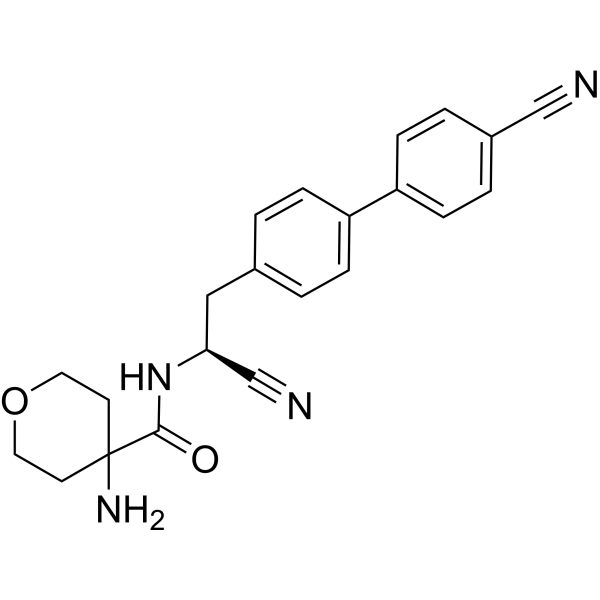
    BRL-41992 is a selective α₂B-adrenergic receptor antagonist. BRL-41992 exhibits 94-fold higher selectivity for the α₂B-receptor than for the α₂A-receptor with Kᵢ values in neonatal rat lung tissue (expressing the α₂B-receptor) and in human platelet membranes (expressing the α₂A-receptor) of 1.1 and 103.3 nM. BRL-41992 can be used to verify the functional differences of α₂ receptor subtypes .
    BRL-41992
  • HY-185424

    Integrin Others
    Tri-SM6.1 is a tridentate small-molecule ligand targeting integrin αvβ6. Tri-SM6.1 binds to integrin αvβ6 on epithelial cells to deliver conjugated α-ENaC RNAi agents .
    Tri-SM6.1
  • HY-181646

    Phosphodiesterase (PDE) TNF Receptor Inflammation/Immunology
    PDE4-IN-34 is a phosphodiesterase 4 (PDE4) inhibitor, with IC50 values of 19 pM and 14 pM against PDE4B1 and PDE4D2, respectively. PDE4-IN-34 shows weak inhibitory activity against PDE8A1, with an IC50 value of 4.092 μM, and exhibits significant selectivity over other subtypes (IC50 > 10 μM). PDE4-IN-34 improves pulmonary function, reduces inflammatory responses and alleviates lung tissue damage in a rat model induced by cigarette smoke combined with LPS (HY-D1056). PDE4-IN-34 can be used for research related to chronic obstructive pulmonary disease .
    PDE4-IN-34

Inquiry Online

Your information is safe with us. * Required Fields.

Salutation


Country or Region *

Applicant Name *


Organization Name *

Department *


Email Address *


Product Name *

Cat. No.


Requested quantity *

Phone Number *


Remarks

Inquiry Online

Inquiry Information

Product Name:
Cat. No.:
Quantity:
MCE Japan Authorized Agent:

