



Ammonium chloride, for molecular biology
Based on 62 publication(s) in Google Scholar
Ammonium chloride (Salmiac), for molecular biology is an inhibitor of Slc26a4 and SMAD2. Ammonium chloride, for molecular biology reduces the protein expression level of Slc26a4 in lung tissue, and attenuates ozone-induced increases in proinflammatory cytokines, inflammatory cells, pulmonary resistance, goblet cell hyperplasia, peribronchial inflammation and thiocyanate levels in mouse tissues and bronchoalveolar lavage fluid. Ammonium chloride, for molecular biology decreases the level of phosphorylated SMAD2, inhibits autophagy by reducing autophagy-related proteins, and enhances Cisplatin (HY-17394)-induced cancer cell apoptosis and DNA double-strand breaks. Ammonium chloride, for molecular biology also inhibits the TCA cycle, reduces ATP production, increases glucose utilization, regulates the levels of lactic acid, glutamic acid and ATP, and induces morphological degeneration of neuroblastoma cells. Ammonium chloride, for molecular biology can be used in studies related to ozone-induced airway injury, hepatocellular carcinoma, human cervical cancer, hepatic encephalopathy, Reye syndrome, epilepsy and neurodegenerative diseases.
For research use only. We do not sell to patients.
- CAS No.: 12125-02-9
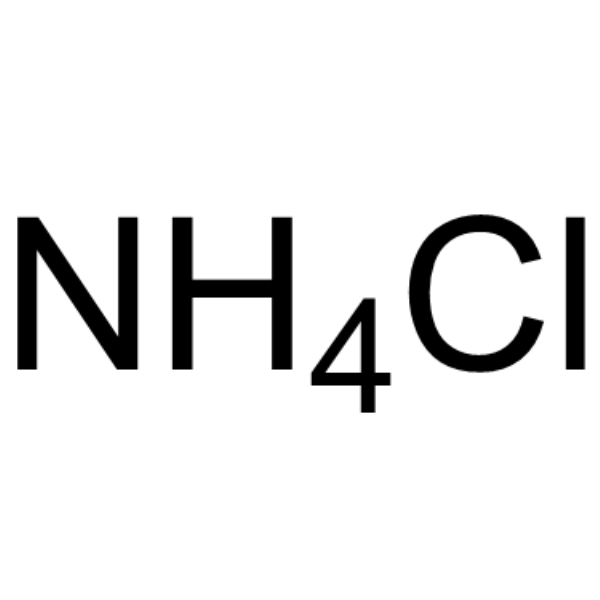
- Formula: NH4Cl
- Molecular Weight:53.49
-
Storage:
Please store the product under the recommended conditions in the Certificate of Analysis.

To place orders, for customer services and technical support, please contact: MedChemExpress USA
Tel: 609-228-6898 E-mail: [email protected] [email protected]


-
 Biological Activity
-
Chemical Information
- Protocols
- Purity & Documentation
- References
-
 Help & FAQs


-
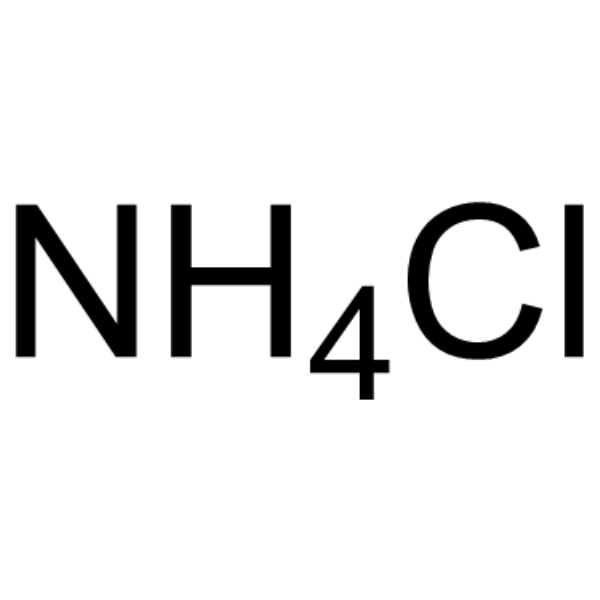
HY-Y1269
Ammonium chloride, AR, 99.5%Autophagy Inhibitor/Ionic Compound -
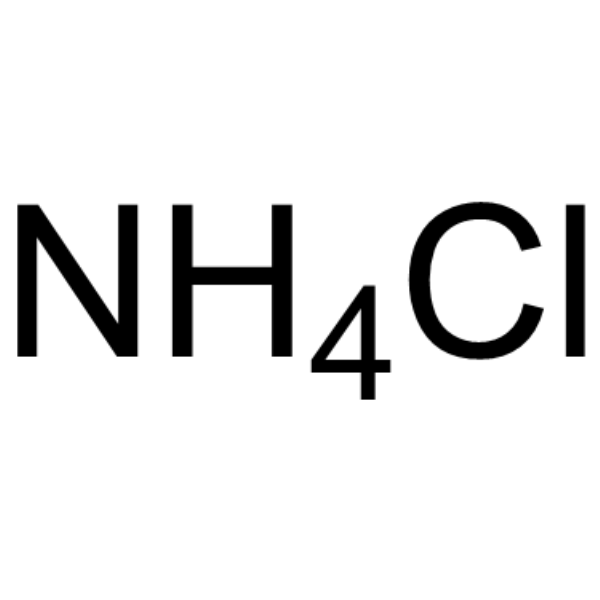
HY-Y1269C
Ammonium chloride, for cell cultureAutophagy Inhibitor -
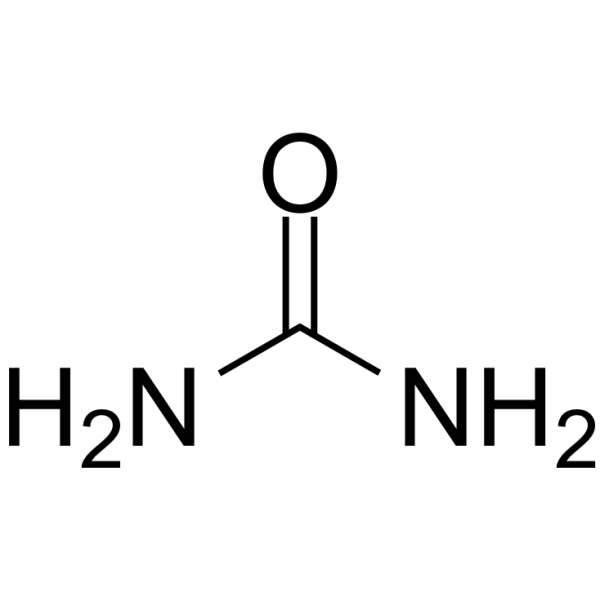
HY-Y0271
UreaProtein Denaturant -

HY-Y0537
Potassium chloride, AR, 99.5%Potassium Supplement -

HY-Y0537E
Potassium chloride, for cell cultureInorganic Salt -
HY-Y1269H
Ammonium chloride, meets analytical specification of Ph. Eur. BP USP FCCSlc26a4/SMAD2 Inhibitor -
HY-Y1269I
Ammonium chloride, United States Pharmacopeia (USP) Reference StandardAutophagy Inhibitor -

HY-Y0344D
Sodium chloride, for cell cultureBiochemical Assay Reagent -

HY-Y0537B
Potassium chloride, for molecular biologyPotassium Chloride -

HY-Y0537C
Potassium chloride, ≥99.99% trace metals basisPotassium chloride
Publications Citing Use of MedChemExpress (MCE) Ammonium chloride, for molecular biology
More- Signal Transduct Target Ther. 2024 Dec 30;9(1):367. [Abstract]
- Cell. 2026 Jan 22;189(2):418-434.e24. [Abstract]
- Autophagy. 2026 May 7:1-17. [Abstract]
- Autophagy. 2025 Aug 28:1-15. [Abstract]
- Autophagy. 2025 Aug;21(8):1644-1661. [Abstract]
- Nat Commun. 2026 May 27. [Abstract]
- Nat Commun. 2025 Jan 2;16(1):339. [Abstract]
- Nat Commun. 2024 Jul 18;15(1):6043. [Abstract]
- Acta Pharm Sin B. 2021 Sep;11(9):2850-2858. [Abstract]
- Adv Sci (Weinh). 2025 Nov 7:e18323. [Abstract]
- Adv Sci (Weinh). 2025 Oct 22:e07602. [Abstract]
- Adv Sci (Weinh). 2025 Aug 4:e04680. [Abstract]
- MedComm (2020). 2025 Aug 31;6(9):e70353. [Abstract]
- Adv Sci (Weinh). 2025 Jun 29:e09533. [Abstract]
- Cell Death Differ. 2025 Jun;32(6):1041-1057. [Abstract]
- Cell Death Differ. 2025 May 20. [Abstract]
- Cell Death Differ. 2025 Apr 8. [Abstract]
- J Control Release. 2026 May 10:393:114827. [Abstract]
- Cell Death Dis. 2024 Sep 11;15(9):665. [Abstract]
- Cancer Lett. 2025 Jul 28:623:217715. [Abstract]
- Cell Commun Signal. 2026 Feb 9;24(1):168. [Abstract]
- J Hazard Mater. 2026 Mar 15:506:141417. [Abstract]
- Acta Pharmacol Sin. 2026 Apr 30. [Abstract]
- Cell Rep. 2026 Jul 24;45(8):117719.
- Cell Rep. 2025 Apr 2;44(4):115489. [Abstract]
- Cell Rep. 2025 Feb 19;44(3):115339. [Abstract]
- Br J Pharmacol. 2026 Jul;183(13):3578-3598. [Abstract]
- Eur J Med Chem. 2025 Oct 15:296:117871. [Abstract]
- Biochem Pharmacol. 2018 Apr:150:280-292. [Abstract]
- Int J Mol Sci. 2026 Jun 5;27(11):5116. [Abstract]
- Int J Mol Sci. 2026 Jan;27(11):4744.
- Glia. 2026 Feb;74(2):e70116. [Abstract]
- mBio. 2026 Apr 8;17(4):e0336825. [Abstract]
- PLoS Pathog. 2025 Jul 16;21(7):e1013344. [Abstract]
- PLoS Pathog. 2024 Feb 14;20(2):e1011981. [Abstract]
- iScience. 2024 Mar 12;27(4):109497. [Abstract]
- Aquaculture. 2026 May 4;623:744110.
- Aquaculture. 2025 Oct 15.
- Aquaculture. 2025 Feb 15.
- Antiviral Res. 2026 May:249:106403. [Abstract]
- Antiviral Res. 2023 Jun:214:105606. [Abstract]
- Fish Shellfish Immunol. 2026 Mar:170:111129. [Abstract]
- J Virol. 2026 Apr 21;100(4):e0209725. [Abstract]
- J Virol. 2026 Apr 27:e0149525. [Abstract]
- J Virol. 2025 Jun 17;99(6):e0034725. [Abstract]
- J Immunol. 2025 Sep 1;214(9):2371-2384. [Abstract]
- Virol J. 2022 Sep 20;19(1):151. [Abstract]
- Biochim Biophys Acta Mol Cell Biol Lipids. 2025 Jun;1870(5):159618. [Abstract]
- Vet Res. 2025 Apr 23;56(1):87. [Abstract]
- Vet Res. 2025 Feb 28;56(1):46. [Abstract]
- Viruses. 2019 Dec 30;12(1):43. [Abstract]
- J Leukoc Biol. 2025 Jul 9;117(7):qiaf095. [Abstract]
- BMC Vet Res. 2026 Jul 17.
- Vet Microbiol. 2026 Sep:320:111150.
- Vet Microbiol. 2026 Jul 10:320:111134.
- Res Sq. 2026 May 20.
- bioRxiv. 2026 Mar 29.
- Thai Journal of Pharmaceutical Sciences. 2025 Dec.
- SSRN. 2025 Sep 30.
- bioRxiv. 2025 Sep 6.
- bioRxiv. 2024 November 19.
- Research Square Preprint. 2023 Jun 22.
 Customer Validation & Images

-
WB
-
Bio/Physico-chemical Assay
-
WB
-
WB
-
WB


Biological Activity
Description
In Vitro
Ammonium chloride (for molecular biology) (10 mmol/L) inhibits rapamycin-induced autophagy in human hepatocellular carcinoma HepG2 cells by decreasing phosphorylated SMAD2 levels, and this inhibitory effect is completely reversed by TGFβ1-induced SMAD2 phosphorylation[2].
Ammonium chloride (2 mM; 24 h) has no significant effect on HeLa human cervical cancer cell viability alone, but enhances cisplatin-induced cell growth inhibition in these cells[3].
Ammonium chloride (2 mM; 24 h) induces a 4.1% apoptotic rate in HeLa human cervical cancer cells alone, and enhances cisplatin-induced apoptosis to a 19.4% rate in these cells[3].
Ammonium chloride (2 mM; 24 h) does not induce active caspase-3 expression in HeLa human cervical cancer cells alone, but enhances cisplatin-induced active caspase-3 expression in these cells[3].
Ammonium chloride (2 mM; 24 h) induces low levels of γ-H2AX expression (DNA double-strand breaks) in HeLa human cervical cancer cells alone, and enhances cisplatin-induced γ-H2AX upregulation (severe DNA double-strand breaks) in these cells[3].
Ammonium chloride (2 mM; 24 h) increases cleaved caspase-3 levels in HeLa human cervical cancer cells alone, and enhances cisplatin-induced cleaved caspase-3 upregulation in these cells[3].
MedChemExpress (MCE) has not independently confirmed the accuracy of these methods. They are for reference only. Further protocols information, click here.
-
Cell Line:HeLa human cervical cancer cells
-
Concentration:2 mM
-
Incubation Time:24 h
-
Result:Had no significant effect on cell viability.
Enhanced cisplatin-induced cell growth inhibition, resulting in a lower cell viability percentage compared to cisplatin alone.
-
Cell Line:HeLa human cervical cancer cells
-
Concentration:2 mM
-
Incubation Time:24 h
-
Result:Resulted in an apoptotic rate (sub-G1 peak) of 4.1%.
Increased the apoptotic rate to 19.4% when combined with cisplatin, compared to 12.5% with cisplatin alone.
-
Cell Line:HeLa human cervical cancer cells
-
Concentration:2 mM
-
Incubation Time:24 h
-
Result:Did not induce detectable active caspase-3 expression.
Increased the intensity of red fluorescence (indicating active caspase-3) compared to cisplatin treatment alone when combined with cisplatin.\nInduced low-intensity green fluorescence (γ-H2AX expression), which was less intense than that induced by cisplatin alone.
Induced the strongest green fluorescence (γ-H2AX expression) compared to all other treatment groups when combined with cisplatin.
-
Cell Line:HeLa human cervical cancer cells
-
Concentration:2 mM
-
Incubation Time:24 h
-
Result:Increased the ratio of cleaved caspase-3 to β-actin compared to control cells, but to a lesser extent than cisplatin alone.
Further increased the ratio of cleaved caspase-3 to β-actin compared to cisplatin treatment alone when combined with cisplatin.
In Vivo
MedChemExpress (MCE) has not independently confirmed the accuracy of these methods. They are for reference only.
-
Animal Model:BALB/c mice with Airway inflammation (6-week-old, female, ozone-induced airway inflammation model)[1]
-
Dosage:0.1 mM; 1 mM; 10 mM
-
Administration:i.n.; 8 total doses (5 minutes before ozone exposure on Days 7, 9, 11, 13, 15, 17, 19, and 21)
-
Result:Attenuated ozone-induced increases in bronchoalveolar lavage fluid total cells, macrophages, neutrophils, and lymphocytes in a dose-dependent manner.
Significantly reduced ozone-enhanced lung resistance, goblet cell count, and peribronchial inflammation index to sham-treated levels at 10 mM dose.
Reduced Slc26a4 protein levels in lung lysates and thiocyanate levels in bronchoalveolar lavage fluid in a dose-dependent manner.
Reduced ozone-induced Slc26a4 and Muc5ac co-expression in bronchial epithelium at 10 mM dose.
Markedly downregulated ozone-induced increases in lung lysate levels of IFN-γ, TNF-α, IL-17, mature IL-1β, and p20-activated caspase-1 at 10 mM dose.


Chemical Information
-
CAS No. 12125-02-9
-
Molecular Weight 53.49
-
Formula NH4Cl
-
SMILES
N.Cl
-
Synonyms
Salmiac, for molecular biology
-
Shipping
Room temperature in continental US; may vary elsewhere.
-
Storage
Please store the product under the recommended conditions in the Certificate of Analysis.


Publications (62)
-
Journal Impact Factor
-
Most Recent
-
Signal Transduct Target Ther
2024 Dec 30;9(1):367. PMID: 39737965 -
Cell
Tumor-produced ammonia is metabolized by regulatory T cells to further impede anti-tumor immunity. [Abstract]2026 Jan 22;189(2):418-434.e24. PMID: 41448182 -
Autophagy
2026 May 7:1-17. PMID: 42080372 -
Autophagy
2025 Aug 28:1-15. PMID: 40851277 -
Autophagy
The alpha-coronavirus E protein inhibits the JAK-STAT pathway signaling by triggering STAT2 degradation through OPTN- and NBR1-mediated selective autophagy. [Abstract]2025 Aug;21(8):1644-1661. PMID: 40091174 -
Nat Commun
African swine fever virus B66L drives extracellular mitochondrial release to promote systemic inflammation in mice. [Abstract]2026 May 27. PMID: 42203763 -
Nat Commun
The hybrid lipoplex induces cytoskeletal rearrangement via autophagy/RhoA signaling pathway for enhanced anticancer gene therapy. [Abstract]2025 Jan 2;16(1):339. PMID: 39747218 -
Nat Commun
Necroptosis enhances 'don't eat me' signal and induces macrophage extracellular traps to promote pancreatic cancer liver metastasis. [Abstract]2024 Jul 18;15(1):6043. PMID: 39025845 -
Acta Pharm Sin B
Repurposing carrimycin as an antiviral agent against human coronaviruses, including the currently pandemic SARS-CoV-2. [Abstract]2021 Sep;11(9):2850-2858. PMID: 33723501 -
Adv Sci (Weinh)
Fe-S Protein FDX1 Triggers Tumor-Intrinsic Innate Immunity via Mitochondrial Nucleic Acids Release to Orchestrate Ferroptosis in CCRCC. [Abstract]2025 Nov 7:e18323. PMID: 41199656 -
Adv Sci (Weinh)
Genetic and Functional Evidence Links Germline Biallelic Inactivating Variants in WWOX to Histological Mixed-Type Thyroid Cancer. [Abstract]2025 Oct 22:e07602. PMID: 41124647 -
Adv Sci (Weinh)
Fusidic Acid Reverses Chemoresistance in Breast Cancer via Targeting DDX6 to Downregulate GSK-3β/β-Catenin Signaling. [Abstract]2025 Aug 4:e04680. PMID: 40757496
Ammonium chloride, for molecular biology purchased from MedChemExpress. Usage Cited in: Adv Sci (Weinh). 2025 Aug 4:e04680. [Abstract]
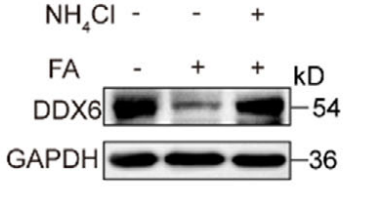
Resistant cells were treated with 25 mM Ammonium chloride (NH4Cl) alone or co‐treated with 80 µm FA, and the expression level of DDX6 was detected by immunoblotting, n = 3. The results showed that supplementation with the lysosomal inhibitor NH4Cl could rescue DDX6 expression reduced by FA intervention.
-
MedComm (2020)
2025 Aug 31;6(9):e70353. PMID: 40900808
Ammonium chloride, for molecular biology purchased from MedChemExpress. Usage Cited in: MedComm (2020). 2025 Aug 31;6(9):e70353. [Abstract]
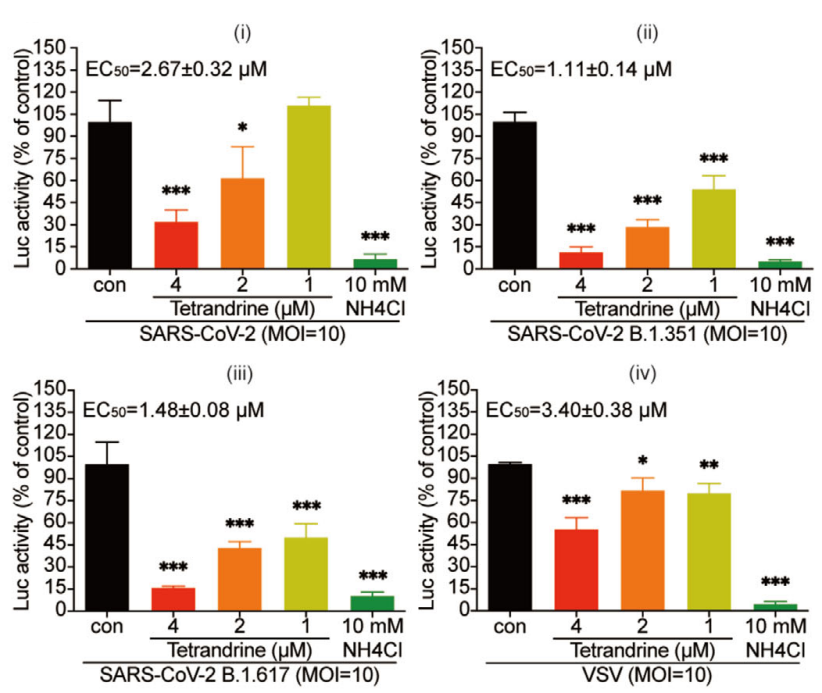
HEK293T‐hACE2 cells were exposed to pseudotyped SARS‐COV‐2 (wild type and two variants: B.1.351 and B.1.671) or VSV (MOI = 10) in the presence of varying concentrations of tetrandrine or Ammonium chloride (NH4Cl). Firefly luciferase activity, indicative of infection, was measured 24 h post‐infection and normalized to the mock‐treated control. *p < 0.05, **p < 0.01, ***p < 0.001 versus virus control. Mock, cell group. Con, virus‐infected group.
-
Adv Sci (Weinh)
Tryptophan Metabolite Indole-3-Aldehyde Induces AhR and c-MYC Degradation to Promote Tumor Immunogenicity. [Abstract]2025 Jun 29:e09533. PMID: 40583248 -
Cell Death Differ
Redox regulation of TRIM28 facilitates neuronal ferroptosis by promoting SUMOylation and inhibiting OPTN-selective autophagic degradation of ACSL4. [Abstract]2025 Jun;32(6):1041-1057. PMID: 39875520 -
Cell Death Differ
GPX4-AUTAC induces ferroptosis in breast cancer by promoting the selective autophagic degradation of GPX4 mediated by TRAF6-p62. [Abstract]2025 May 20. PMID: 40394165 -
Cell Death Differ
Sphingosine kinase 2 deficiency impairs VLDL secretion by inhibiting mTORC2 phosphorylation and activating chaperone-mediated autophagy. [Abstract]2025 Apr 8. PMID: 40200091 -
J Control Release
Immunogenic cell death-primed autophagosome vaccines drive dendritic cell cross-presentation and suppress colon cancer metastasis. [Abstract]2026 May 10:393:114827. PMID: 41856327 -
Cell Death Dis
Phosphatase LHPP confers prostate cancer ferroptosis activation by modulating the AKT-SKP2-ACSL4 pathway. [Abstract]2024 Sep 11;15(9):665. PMID: 39261475 -
Cancer Lett
2025 Jul 28:623:217715. PMID: 40220852
Ammonium chloride, for molecular biology purchased from MedChemExpress. Usage Cited in: Cancer Lett. 2025 Jul 28:623:217715. [Abstract]
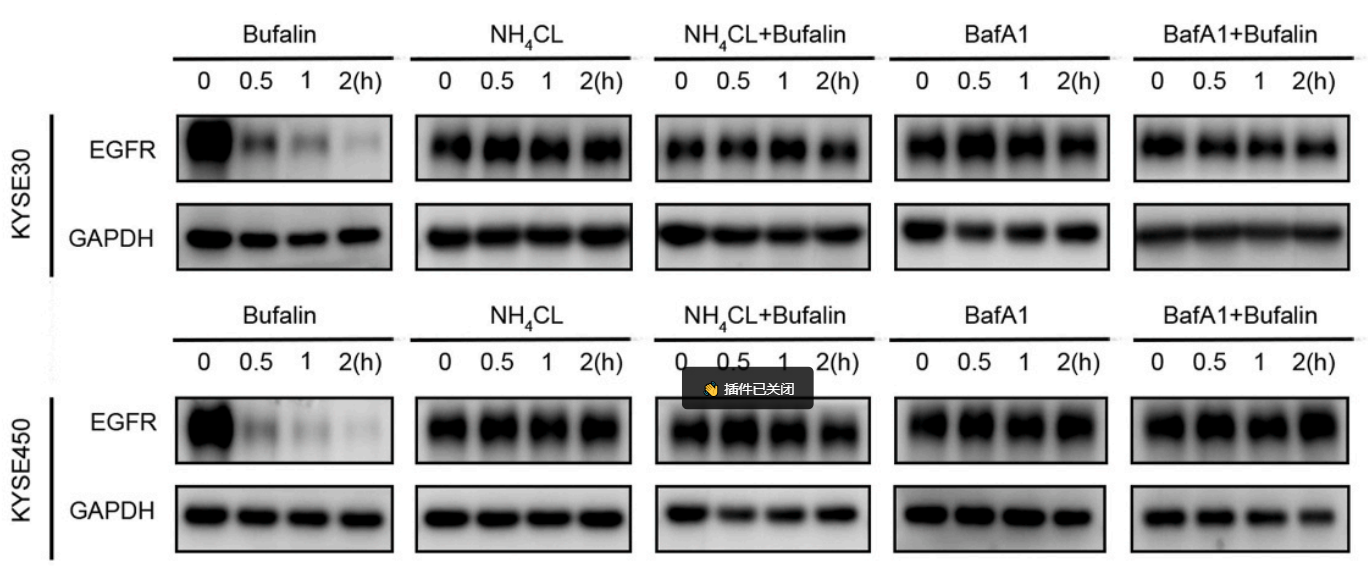
Western blot was used to test the influence of Bufalin (100 nM) combined with Ammonium chloride (NH4CL, 30 mM) or BafA1 (50 nM) for different time (0, 0.5, 1, 2 h) in KYSE30 and KYSE450. The results showed that Bufalin-induced EGFR degradation could be reversed by lysosomal protease NH4CL.
-
Cell Commun Signal
Grass carp reovirus VP35 hijacks DHX15 into phase-separated inclusion bodies to evade host antiviral immunity. [Abstract]2026 Feb 9;24(1):168. PMID: 41664180 -
J Hazard Mater
Ammonia-induced exosomal miRNA disrupts autophagy and promotes lung injury: Therapeutic potential of natural compounds. [Abstract]2026 Mar 15:506:141417. PMID: 41775203 -
Acta Pharmacol Sin
Deficient chaperone-mediated autophagy drives multiorgan fibrogenesis via SMAD2/4 stabilization to sustain TGFβ-SMAD signaling. [Abstract]2026 Apr 30. PMID: 42062474 -
-
Cell Rep
LAMP2A-mediated neuronal hyperexcitability by enhancing NKAβ1 degradation underlies depression-induced allodynia. [Abstract]2025 Apr 2;44(4):115489. PMID: 40178973 -
Cell Rep
HSPA8 dampens SCAP/INSIG split and SREBP activation by reducing PKR-mediated INSIG phosphorylation. [Abstract]2025 Feb 19;44(3):115339. PMID: 39977267 -
Br J Pharmacol
Cordycepin alleviates ischaemic brain injury by suppressing microglia-induced neuroinflammation via regulating the Notch1 signalling pathway. [Abstract]2026 Jul;183(13):3578-3598. PMID: 41913462 -
Eur J Med Chem
Targeting both wild-type EGFR and its drug-resistant mutants with erlotinib-aptamer conjugates. [Abstract]2025 Oct 15:296:117871. PMID: 40554308
Ammonium chloride, for molecular biology purchased from MedChemExpress. Usage Cited in: Eur J Med Chem. 2025 Oct 15:296:117871. [Abstract]
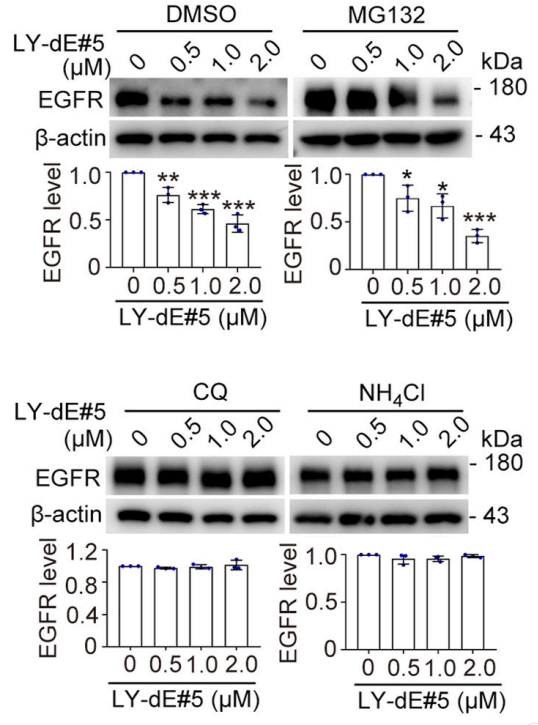
Immunoblots and quantification of EGFR in A549 cells treated with different concentrations of LY-dE#5, with or without MG132, CQ, and Ammonium chloride (NH4Cl) (0.5-2 μM). The results showed that NH4Cl significantly blocked LY-dE#5-mediated EGFR degradation.
-
Biochem Pharmacol
Lanatoside C inhibits cell proliferation and induces apoptosis through attenuating Wnt/β-catenin/c-Myc signaling pathway in human gastric cancer cell. [Abstract]2018 Apr:150:280-292. PMID: 29475060 -
Int J Mol Sci
African Swine Fever Virus pD345L Suppresses JAK-STAT Signaling by Selectively Triggering STAT1 Degradation. [Abstract]2026 Jun 5;27(11):5116. PMID: 42278638 -
-
Glia
SGK1 Inhibition Improved Mitochondrial Dysfunction and Astrocyte Senescence in Hepatic Encephalopathy via IL-6/JAK2/STAT3 Signaling Pathway. [Abstract]2026 Feb;74(2):e70116. PMID: 41369184 -
mBio
African swine fever virus hijacks lipolysis induced by chaperone-mediated autophagy to upregulate fatty acid β-oxidation and promote viral replication. [Abstract]2026 Apr 8;17(4):e0336825. PMID: 41801037 -
PLoS Pathog
2025 Jul 16;21(7):e1013344. PMID: 40668819
Ammonium chloride, for molecular biology purchased from MedChemExpress. Usage Cited in: PLoS Pathog. 2025 Jul 16;21(7):e1013344. [Abstract]
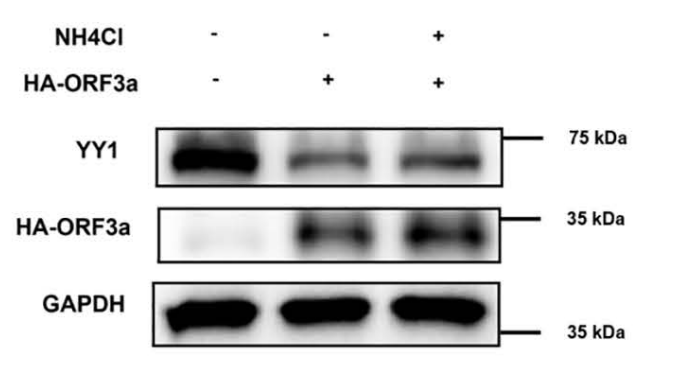
293T cells were transfected with the pCAGGS-HA-ORF3a plasmid and subsequently treated with Ammonium chloride (NH4Cl) (20 mM). Cells were harvested after 48 h, and the expression levels of endogenous YY1 were assessed by Western blot using either HA or YY1 antibodies.
-
PLoS Pathog
The HN protein of Newcastle disease virus induces cell apoptosis through the induction of lysosomal membrane permeabilization. [Abstract]2024 Feb 14;20(2):e1011981. PMID: 38354122 -
iScience
Genome editing of FTR42 improves zebrafish survival against virus infection by enhancing IFN immunity. [Abstract]2024 Mar 12;27(4):109497. PMID: 38550983 -
-
-
-
Antiviral Res
Salinomycin inhibits orthopoxvirus infection in vitro and in vivo by blocking endosomal acidification. [Abstract]2026 May:249:106403. PMID: 41941992 -
Antiviral Res
Omicsynin B4 potently blocks coronavirus infection by inhibiting host proteases cathepsin L and TMPRSS2. [Abstract]2023 Jun:214:105606. PMID: 37076089 -
Fish Shellfish Immunol
IGF2BP stabilizes RNF34 mRNA to orchestrate apoptosis and host susceptibility to Vibrio splendidus in Apostichopus japonicus. [Abstract]2026 Mar:170:111129. PMID: 41544989 -
J Virol
PEX19 restricts porcine deltacoronavirus replication through farnesylation-dependent and -independent mechanisms. [Abstract]2026 Apr 21;100(4):e0209725. PMID: 41874194 -
J Virol
PTBP1 is upregulated in response to Zika virus infection and restrains viral replication by hijacking viral NS1 protein to induce NS1 degradation. [Abstract]2026 Apr 27:e0149525. PMID: 42037413 -
J Virol
Palmitoylation enhances the stability of porcine epidemic diarrhea virus spike protein by antagonizing its degradation via chaperone-mediated autophagy to facilitate viral proliferation. [Abstract]2025 Jun 17;99(6):e0034725. PMID: 40401979 -
J Immunol
Mallard ILF2 negatively regulates type I IFN production through autophagy-lysosome-dependent degradation of IRF7. [Abstract]2025 Sep 1;214(9):2371-2384. PMID: 40447123 -
Virol J
2022 Sep 20;19(1):151. PMID: 36127711 -
Biochim Biophys Acta Mol Cell Biol Lipids
2025 Jun;1870(5):159618. PMID: 40294697 -
Vet Res
The African swine fever virus B125R protein antagonizes JAK-STAT signalling by promoting the degradation of IFNAR2. [Abstract]2025 Apr 23;56(1):87. PMID: 40270033 -
Vet Res
2025 Feb 28;56(1):46. PMID: 40022242 -
Viruses
Feline Infectious Peritonitis Virus Nsp5 Inhibits Type I Interferon Production by Cleaving NEMO at Multiple Sites. [Abstract]2019 Dec 30;12(1):43. PMID: 31905881 -
J Leukoc Biol
Berbamine promotes autophagy and GPX4 expression through inducing abundant ROS to restrict HIV-1 and Mtb coinfection in macrophages. [Abstract]2025 Jul 9;117(7):qiaf095. PMID: 40581081 -
-
-
-
-
-
-
-
-
-

Protocols
-
RNA extraction experimental
By lysing cells, releasing RNA, and removing impurities such as proteins and DNA, high-purity RNA products are finally obtained. The commonly used traditional method is the guanidine isothiocyanate/phenol/chloroform method (Trizol), which is suitable for a variety of animal materials including animal tissues, microorganisms, cultured cells, etc., and most plant materials.
-
Western Blot
Western blotting (WB) is a commonly used experimental method in molecular biology, biochemistry, and immunogenetics for identifying and quantifying target proteins. It combines gel electrophoresis with immunoassay, enabling researchers to analyze protein expression, post-translational modifications, and molecular weight.
-
Apoptosis
Apoptosis, also called programmed cell death, is generally characterized by distinct morphological characteristics.
-
TUNEL staining for apoptotic DNA fragmentation
TUNEL staining detects DNA strand breaks by using terminal deoxynucleotidyl transferase to add labeled nucleotides to exposed 3′-OH DNA termini, generating either microscopic staining in fixed cells or tissue sections, or fluorescence/cytometric signal in cell suspensions. TUNEL positivity reflects DNA fragmentation but should not be interpreted alone as definitive apoptosis, because TUNEL can also label necrotic, autolytic, mechanically damaged, or DNA-repair-associated DNA breaks.
-
Annexin V plus membrane-impermeant dye apoptosis staining
Annexin V-based apoptosis assays rely on the detection of phosphatidylserine (PS) externalization from the inner leaflet of the plasma membrane to the outer leaflet, an early biochemical hallmark of apoptosis. Fluorescently labeled Annexin V binds PS in a calcium-dependent manner, enabling identification of early apoptotic cells by flow cytometry or fluorescence microscopy. When combined with a membrane-impermeant DNA-binding dye (e. g. , propidium iodide), this approach allows discrimination between viable (Annexin V−/dye−), early apoptotic (Annexin V+/dye−), and late apoptotic or necrotic (Annexin V+/dye+) cell populations by assessing membrane integrity and PS exposure.
-
Autophagy
Autophagy is a process in which eukaryotic cells use lysosomes to degrade their own cytoplasmic proteins and damaged organelles under the regulation of autophagy related gene (Atg). Microtubule-associated proteins light chain 3 (LC3) is recognized as autophagy marker, which transfers from cytoplasmic LC3 (LC3-I) to membrane type (LC3-II). LC3-II/I ratio could be detected by Western Blot and fluorescence microscopy.
-
Apoptosis Solutions
Apoptosis is a regulated, generally non-lytic cell-death pathway that removes unwanted, damaged, infected, or abnormal cells through coordinated morphological changes, caspase activation, DNA fragmentation, and membrane remodeling. The intrinsic apoptosis pathway is controlled mainly by mitochondrial outer membrane permeabilization, BCL-2 family proteins, cytochrome c release, apoptosome formation, caspase-9 activation, and downstream executioner caspase-3/7 activation. The extrinsic apoptosis pathway is initiated by death receptors such as Fas, TNFR, and TRAIL receptors, which recruit adaptor proteins and activate caspase-8 before engaging executioner caspases or mitochondrial amplification through BID cleavage. Apoptosis is linked to many phenotypes, including cancer cell killing, tissue homeostasis, immune regulation, neurodegeneration, infection response, and treatment-induced cytotoxicity; unresolved questions include how apoptosis interacts with necroptosis, pyroptosis, ferroptos
-
Research Protocol for Inflammation-related Diseases
The NLRP3 inflammasome is a cytosolic innate immune signaling platform that integrates priming signals and danger-signal activation to promote caspase-1 activation, maturation of IL-1β and IL-18, and gasdermin D-mediated pyroptotic cell death. The core experimental logic is to determine whether inflammatory disease phenotypes are driven by increased NLRP3 expression, ASC-containing inflammasome assembly, caspase-1 cleavage, GSDMD cleavage, and extracellular release of IL-1β/IL-18 rather than by nonspecific cell injury alone. The pathway is strongly linked to inflammation-related disease phenotypes because monosodium urate crystals activate NALP3/NLRP3 inflammasome signaling in gout-like crystal inflammation, cholesterol crystals activate NLRP3 inflammasomes in atherogenesis models, and DSS-induced intestinal inflammation has been reported to involve NLRP3 inflammasome activity. However, experimental colitis studies also show context-dependent protective effects of NLRP3 inflammasome co
-
Lysosome and acidic-vesicle live-cell staining
Lysosome and acidic-vesicle live-cell staining detects acidic intracellular compartments by using membrane-permeant acidotropic probes that accumulate in low-pH vesicles, including lysosomes, late endosomes, autolysosomes, and acidic phagosomes. LysoTracker staining is commonly used as an intensity-based readout of acidic lysosomal compartment abundance or enlargement, while acridine orange produces green fluorescence in less concentrated compartments and red fluorescence after concentration-dependent accumulation in acidic vesicular organelles. Loss or reduction of acridine-orange red signal can be used as a readout of lysosomal membrane permeabilization or reduced acidic-vesicle integrity. This protocol is designed for live cultured cells and can be adapted for fluorescence microscopy, high-content imaging, plate-reader readout, or flow cytometry when the selected literature supports the readout. Because these dyes report acidotropic accumulation rather than lysosome identity alone,
-
Liver Cancer Modeling
Liver cancer can be classified into primary liver cancer and secondary liver cancer. Secondary liver cancer is the metastatic liver cancer. Primary liver cancer includes hepatocellular carcinoma (HCC), intrahepatic cholangiocarcinoma (ICC) and fibrolamellar HCC, of which HCC is the most common form, accounting for approximately 90% of primary liver cancers[1]. HCC mouse models include chemical agent-induced models, transplanted tumor models, and genetic engineered models.
-
Macroautophagy Solutions
Macroautophagy is a conserved lysosome-dependent degradation pathway in which cytoplasmic material is sequestered into double-membrane autophagosomes and delivered to lysosomes for degradation and recycling. The pathway supports cellular homeostasis during nutrient limitation, organelle stress, protein-aggregate accumulation, infection, differentiation, and tissue remodeling by coupling cargo sequestration, autophagosome maturation, lysosomal fusion, and degradation of cargo-derived macromolecules. The core molecular sequence includes initiation by nutrient- and stress-regulated autophagy machinery, autophagosome nucleation, LC3/ATG8-family conjugation to autophagosomal membranes, cargo selection through receptors such as SQSTM1/p62, autophagosome-lysosome fusion, and lysosomal degradation. LC3 was identified as a mammalian homolog of yeast Atg8 that localizes to autophagosomal membranes after processing, and p62/SQSTM1 was shown to connect ubiquitinated cargo with autophagic degradati
-
Protocol For Protein Expression And Purification
Recombinant protein expression in Escherichia coli followed by purification of a His-tagged soluble protein by immobilized metal affinity chromatography (IMAC), with optional MBP fusion and TEV tag removal when the construct includes these elements. The biological readout is production of the encoded target protein, detected as an inducible band at the expected molecular mass by SDS-PAGE and quantified by total protein assay or chromatographic absorbance; the purification readout is enrichment of the target protein in elution fractions after selective binding of polyhistidine residues to immobilized Ni2+/metal-chelate resin and elution by imidazole-containing buffer. Expression is driven by an inducible bacterial expression system, commonly T7/lac-based, in which IPTG or lactose/auto-induction activates transcription and translation of the cloned gene; lower induction temperature, lower inducer concentration, induction timing, and solubility-enhancing fusion tags can influence the frac


Purity & Documentation
References
[2]. Sun R, et al. Ammonium chloride inhibits autophagy of hepatocellular carcinoma cells through SMAD2 signaling. Tumour Biol. 2015;36(2):1173-1177. [Content Brief]
[3]. Xu Y, et al. Ammonium chloride enhances cisplatin cytotoxicity through DNA double-strand breaks in human cervical cancer cells. Oncol Rep. 2013;30(3):1195-1200. [Content Brief]
[4]. Haghighat N, et al. The effect of ammonium chloride on metabolism of primary neurons and neuroblastoma cells in vitro. Metab Brain Dis. 2000;15(2):151-162. [Content Brief]

Calculators
Concentration (start) × Volume (start) = Concentration (final) × Volume (final)


Ammonium chloride, for molecular biology Related Classifications
HY-Y1269D Related Classifications
 Powered by Bioz
Keywords
- Ammonium chloride, for molecular biology
- 12125-02-9
- Salmiac, for molecular biology
- TGF-beta/Smad
- Apoptosis
- Chloride Channel
- HeLa human cervical cancer cells
- mouse tissues
- phosphorylated SMAD2
- Slc26a4
- lung tissues
- rat primary cortical neurons
- cancer cells
- HepG2 cells
- neuroblastoma cells
- bronchoalveolar lavage fluid
- Inhibitor
- inhibitor
- inhibit