



Ammonium chloride, for cell culture
Based on 62 publication(s) in Google Scholar
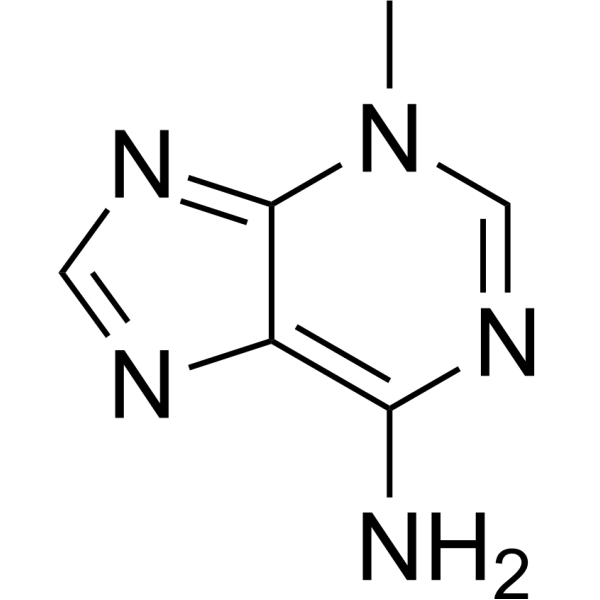
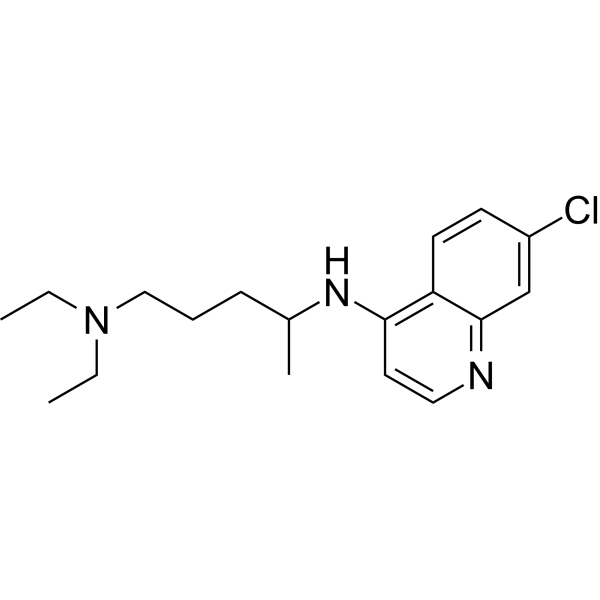
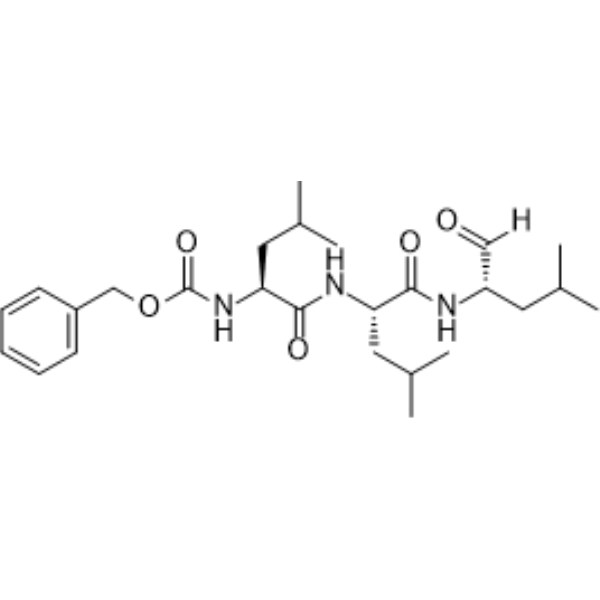
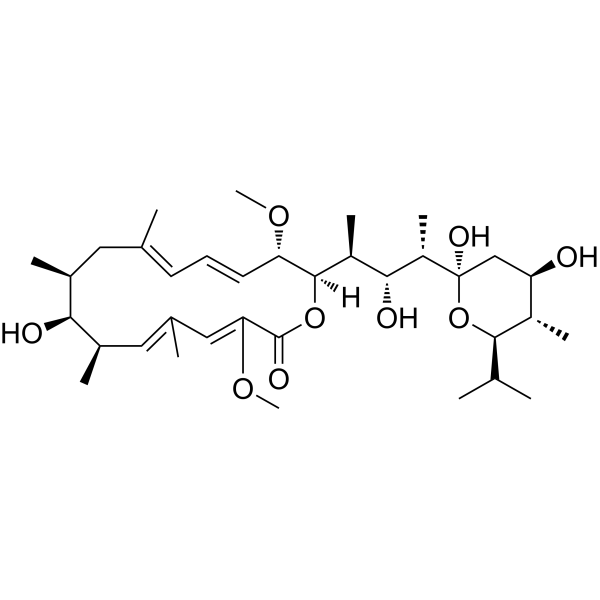
Ammonium chloride, for cell culture (Salmiac, for cell culture) is a reagent that can be used in cell culture to provide a source of nitrogen. Ammonium chloride can be used as a heteropolar compound to regulate pH value, which can cause intracellular alkalination and metabolic acidosis, thus affecting the activity of enzymes and affecting the process of biological systems. Ammonium chloride acts as an autophagy inhibitor.Ammonium chloride is also a lysosome inhibitor.
For research use only. We do not sell to patients.
- Purity : 99.0%
- CAS No.: 12125-02-9
- Formula: NH4Cl
- Molecular Weight:53.49
-
Storage:
4°C, sealed storage, away from moisture
* In solvent : -80°C, 6 months; -20°C, 1 month (sealed storage, away from moisture)


To place orders, for customer services and technical support, please contact: MedChemExpress USA
Tel: 609-228-6898 E-mail: [email protected] [email protected]


-
 Biological Activity
-
Chemical Information
-
Solvent & Solubility
- Purity & Documentation
- References
-
 Help & FAQs




Publications Citing Use of MedChemExpress (MCE) Ammonium chloride, for cell culture
More- Signal Transduct Target Ther. 2024 Dec 30;9(1):367. [Abstract]
- Cell. 2026 Jan 22;189(2):418-434.e24. [Abstract]
- Autophagy. 2026 May 7:1-17. [Abstract]
- Autophagy. 2025 Aug 28:1-15. [Abstract]
- Autophagy. 2025 Aug;21(8):1644-1661. [Abstract]
- Nat Commun. 2026 May 27. [Abstract]
- Nat Commun. 2025 Jan 2;16(1):339. [Abstract]
- Nat Commun. 2024 Jul 18;15(1):6043. [Abstract]
- Acta Pharm Sin B. 2021 Sep;11(9):2850-2858. [Abstract]
- Adv Sci (Weinh). 2025 Nov 7:e18323. [Abstract]
- Adv Sci (Weinh). 2025 Oct 22:e07602. [Abstract]
- Adv Sci (Weinh). 2025 Aug 4:e04680. [Abstract]
- MedComm (2020). 2025 Aug 31;6(9):e70353. [Abstract]
- Adv Sci (Weinh). 2025 Jun 29:e09533. [Abstract]
- Cell Death Differ. 2025 Jun;32(6):1041-1057. [Abstract]
- Cell Death Differ. 2025 May 20. [Abstract]
- Cell Death Differ. 2025 Apr 8. [Abstract]
- J Control Release. 2026 May 10:393:114827. [Abstract]
- Cell Death Dis. 2024 Sep 11;15(9):665. [Abstract]
- Cancer Lett. 2025 Jul 28:623:217715. [Abstract]
- Cell Commun Signal. 2026 Feb 9;24(1):168. [Abstract]
- J Hazard Mater. 2026 Mar 15:506:141417. [Abstract]
- Acta Pharmacol Sin. 2026 Apr 30. [Abstract]
- Cell Rep. 2026 Jul 24;45(8):117719.
- Cell Rep. 2025 Apr 2;44(4):115489. [Abstract]
- Cell Rep. 2025 Feb 19;44(3):115339. [Abstract]
- Br J Pharmacol. 2026 Jul;183(13):3578-3598. [Abstract]
- Eur J Med Chem. 2025 Oct 15:296:117871. [Abstract]
- Biochem Pharmacol. 2018 Apr:150:280-292. [Abstract]
- Int J Mol Sci. 2026 Jun 5;27(11):5116. [Abstract]
- Int J Mol Sci. 2026 Jan;27(11):4744.
- Glia. 2026 Feb;74(2):e70116. [Abstract]
- mBio. 2026 Apr 8;17(4):e0336825. [Abstract]
- PLoS Pathog. 2025 Jul 16;21(7):e1013344. [Abstract]
- PLoS Pathog. 2024 Feb 14;20(2):e1011981. [Abstract]
- iScience. 2024 Mar 12;27(4):109497. [Abstract]
- Aquaculture. 2026 May 4;623:744110.
- Aquaculture. 2025 Oct 15.
- Aquaculture. 2025 Feb 15.
- Antiviral Res. 2026 May:249:106403. [Abstract]
- Antiviral Res. 2023 Jun:214:105606. [Abstract]
- Fish Shellfish Immunol. 2026 Mar:170:111129. [Abstract]
- J Virol. 2026 Apr 21;100(4):e0209725. [Abstract]
- J Virol. 2026 Apr 27:e0149525. [Abstract]
- J Virol. 2025 Jun 17;99(6):e0034725. [Abstract]
- J Immunol. 2025 Sep 1;214(9):2371-2384. [Abstract]
- Virol J. 2022 Sep 20;19(1):151. [Abstract]
- Biochim Biophys Acta Mol Cell Biol Lipids. 2025 Jun;1870(5):159618. [Abstract]
- Vet Res. 2025 Apr 23;56(1):87. [Abstract]
- Vet Res. 2025 Feb 28;56(1):46. [Abstract]
- Viruses. 2019 Dec 30;12(1):43. [Abstract]
- J Leukoc Biol. 2025 Jul 9;117(7):qiaf095. [Abstract]
- BMC Vet Res. 2026 Jul 17.
- Vet Microbiol. 2026 Sep:320:111150.
- Vet Microbiol. 2026 Jul 10:320:111134.
- Res Sq. 2026 May 20.
- bioRxiv. 2026 Mar 29.
- Thai Journal of Pharmaceutical Sciences. 2025 Dec.
- SSRN. 2025 Sep 30.
- bioRxiv. 2025 Sep 6.
- bioRxiv. 2024 November 19.
- Research Square Preprint. 2023 Jun 22.
 Customer Validation & Images

-
WB
-
Bio/Physico-chemical Assay
-
WB
-
WB
-
WB


Biological Activity
Description
In Vitro
In Vivo
MedChemExpress (MCE) has not independently confirmed the accuracy of these methods. They are for reference only.
-
Animal Model:8-9-week-old C57B/L6 mice[1].
-
Dosage:0.28 M
-
Administration:Drinking water (5 mg/kg Doxorubicin once a week for 2 weeks)
-
Result:Effectively improved Doxorubicin (DOX)-induced cardiomyocyte apoptosis and cardiac dysfunction in mice.


Chemical Information
-
CAS No. 12125-02-9
-
Appearance Solid
-
Molecular Weight 53.49
-
Formula NH4Cl
-
Color White to off-white
-
SMILES
N.Cl
-
Synonyms
Salmiac, for cell culture
-
Shipping
Room temperature in continental US; may vary elsewhere.
-
Storage
4°C, sealed storage, away from moisture
* In solvent : -80°C, 6 months; -20°C, 1 month (sealed storage, away from moisture)


Publications (62)
-
Journal Impact Factor
-
Most Recent
-
Signal Transduct Target Ther
2024 Dec 30;9(1):367. PMID: 39737965 -
Cell
Tumor-produced ammonia is metabolized by regulatory T cells to further impede anti-tumor immunity. [Abstract]2026 Jan 22;189(2):418-434.e24. PMID: 41448182 -
Autophagy
2026 May 7:1-17. PMID: 42080372 -
Autophagy
2025 Aug 28:1-15. PMID: 40851277 -
Autophagy
The alpha-coronavirus E protein inhibits the JAK-STAT pathway signaling by triggering STAT2 degradation through OPTN- and NBR1-mediated selective autophagy. [Abstract]2025 Aug;21(8):1644-1661. PMID: 40091174 -
Nat Commun
African swine fever virus B66L drives extracellular mitochondrial release to promote systemic inflammation in mice. [Abstract]2026 May 27. PMID: 42203763 -
Nat Commun
The hybrid lipoplex induces cytoskeletal rearrangement via autophagy/RhoA signaling pathway for enhanced anticancer gene therapy. [Abstract]2025 Jan 2;16(1):339. PMID: 39747218 -
Nat Commun
Necroptosis enhances 'don't eat me' signal and induces macrophage extracellular traps to promote pancreatic cancer liver metastasis. [Abstract]2024 Jul 18;15(1):6043. PMID: 39025845 -
Acta Pharm Sin B
Repurposing carrimycin as an antiviral agent against human coronaviruses, including the currently pandemic SARS-CoV-2. [Abstract]2021 Sep;11(9):2850-2858. PMID: 33723501 -
Adv Sci (Weinh)
Fe-S Protein FDX1 Triggers Tumor-Intrinsic Innate Immunity via Mitochondrial Nucleic Acids Release to Orchestrate Ferroptosis in CCRCC. [Abstract]2025 Nov 7:e18323. PMID: 41199656 -
Adv Sci (Weinh)
Genetic and Functional Evidence Links Germline Biallelic Inactivating Variants in WWOX to Histological Mixed-Type Thyroid Cancer. [Abstract]2025 Oct 22:e07602. PMID: 41124647 -
Adv Sci (Weinh)
Fusidic Acid Reverses Chemoresistance in Breast Cancer via Targeting DDX6 to Downregulate GSK-3β/β-Catenin Signaling. [Abstract]2025 Aug 4:e04680. PMID: 40757496
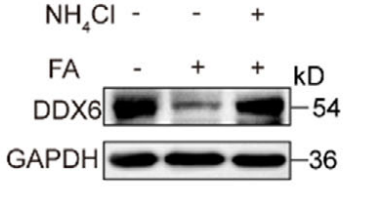
Ammonium chloride, for cell culture purchased from MedChemExpress. Usage Cited in: Adv Sci (Weinh). 2025 Aug 4:e04680. [Abstract]
Resistant cells were treated with 25 mM Ammonium chloride (NH4Cl) alone or co‐treated with 80 µm FA, and the expression level of DDX6 was detected by immunoblotting, n = 3. The results showed that supplementation with the lysosomal inhibitor NH4Cl could rescue DDX6 expression reduced by FA intervention.
-
MedComm (2020)
2025 Aug 31;6(9):e70353. PMID: 40900808
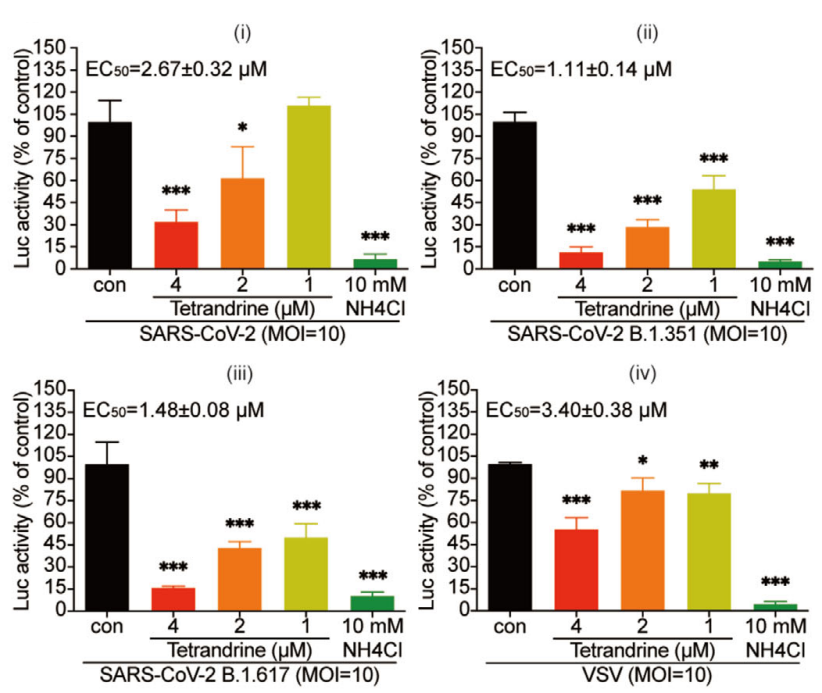
Ammonium chloride, for cell culture purchased from MedChemExpress. Usage Cited in: MedComm (2020). 2025 Aug 31;6(9):e70353. [Abstract]
HEK293T‐hACE2 cells were exposed to pseudotyped SARS‐COV‐2 (wild type and two variants: B.1.351 and B.1.671) or VSV (MOI = 10) in the presence of varying concentrations of tetrandrine or Ammonium chloride (NH4Cl). Firefly luciferase activity, indicative of infection, was measured 24 h post‐infection and normalized to the mock‐treated control. *p < 0.05, **p < 0.01, ***p < 0.001 versus virus control. Mock, cell group. Con, virus‐infected group.
-
Adv Sci (Weinh)
Tryptophan Metabolite Indole-3-Aldehyde Induces AhR and c-MYC Degradation to Promote Tumor Immunogenicity. [Abstract]2025 Jun 29:e09533. PMID: 40583248 -
Cell Death Differ
Redox regulation of TRIM28 facilitates neuronal ferroptosis by promoting SUMOylation and inhibiting OPTN-selective autophagic degradation of ACSL4. [Abstract]2025 Jun;32(6):1041-1057. PMID: 39875520 -
Cell Death Differ
GPX4-AUTAC induces ferroptosis in breast cancer by promoting the selective autophagic degradation of GPX4 mediated by TRAF6-p62. [Abstract]2025 May 20. PMID: 40394165 -
Cell Death Differ
Sphingosine kinase 2 deficiency impairs VLDL secretion by inhibiting mTORC2 phosphorylation and activating chaperone-mediated autophagy. [Abstract]2025 Apr 8. PMID: 40200091 -
J Control Release
Immunogenic cell death-primed autophagosome vaccines drive dendritic cell cross-presentation and suppress colon cancer metastasis. [Abstract]2026 May 10:393:114827. PMID: 41856327 -
Cell Death Dis
Phosphatase LHPP confers prostate cancer ferroptosis activation by modulating the AKT-SKP2-ACSL4 pathway. [Abstract]2024 Sep 11;15(9):665. PMID: 39261475 -
Cancer Lett
2025 Jul 28:623:217715. PMID: 40220852
Ammonium chloride, for cell culture purchased from MedChemExpress. Usage Cited in: Cancer Lett. 2025 Jul 28:623:217715. [Abstract]
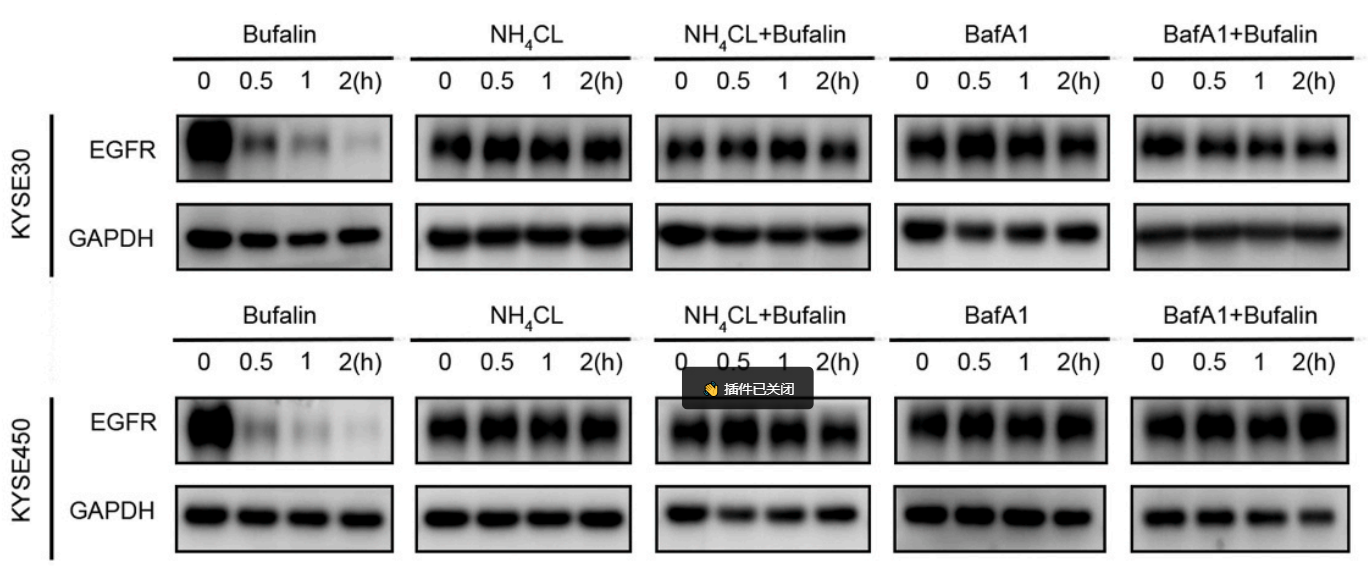
Western blot was used to test the influence of Bufalin (100 nM) combined with Ammonium chloride (NH4CL, 30 mM) or BafA1 (50 nM) for different time (0, 0.5, 1, 2 h) in KYSE30 and KYSE450. The results showed that Bufalin-induced EGFR degradation could be reversed by lysosomal protease NH4CL.
-
Cell Commun Signal
Grass carp reovirus VP35 hijacks DHX15 into phase-separated inclusion bodies to evade host antiviral immunity. [Abstract]2026 Feb 9;24(1):168. PMID: 41664180 -
J Hazard Mater
Ammonia-induced exosomal miRNA disrupts autophagy and promotes lung injury: Therapeutic potential of natural compounds. [Abstract]2026 Mar 15:506:141417. PMID: 41775203 -
Acta Pharmacol Sin
Deficient chaperone-mediated autophagy drives multiorgan fibrogenesis via SMAD2/4 stabilization to sustain TGFβ-SMAD signaling. [Abstract]2026 Apr 30. PMID: 42062474 -
-
Cell Rep
LAMP2A-mediated neuronal hyperexcitability by enhancing NKAβ1 degradation underlies depression-induced allodynia. [Abstract]2025 Apr 2;44(4):115489. PMID: 40178973 -
Cell Rep
HSPA8 dampens SCAP/INSIG split and SREBP activation by reducing PKR-mediated INSIG phosphorylation. [Abstract]2025 Feb 19;44(3):115339. PMID: 39977267 -
Br J Pharmacol
Cordycepin alleviates ischaemic brain injury by suppressing microglia-induced neuroinflammation via regulating the Notch1 signalling pathway. [Abstract]2026 Jul;183(13):3578-3598. PMID: 41913462 -
Eur J Med Chem
Targeting both wild-type EGFR and its drug-resistant mutants with erlotinib-aptamer conjugates. [Abstract]2025 Oct 15:296:117871. PMID: 40554308
Ammonium chloride, for cell culture purchased from MedChemExpress. Usage Cited in: Eur J Med Chem. 2025 Oct 15:296:117871. [Abstract]
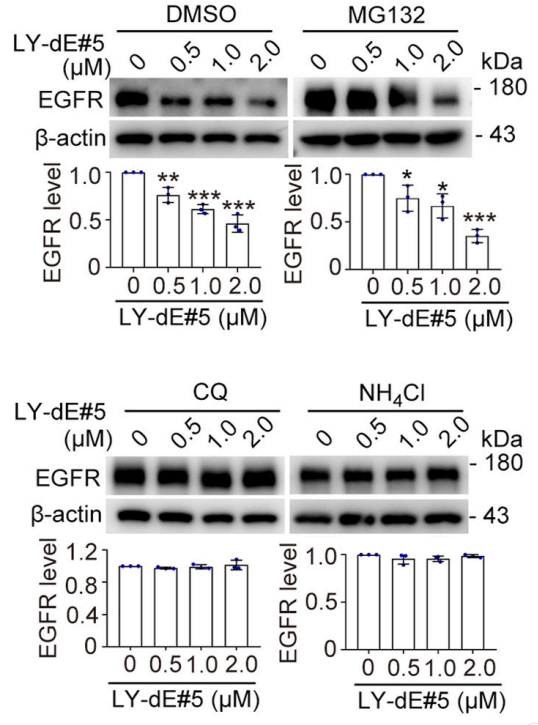
Immunoblots and quantification of EGFR in A549 cells treated with different concentrations of LY-dE#5, with or without MG132, CQ, and Ammonium chloride (NH4Cl) (0.5-2 μM). The results showed that NH4Cl significantly blocked LY-dE#5-mediated EGFR degradation.
-
Biochem Pharmacol
Lanatoside C inhibits cell proliferation and induces apoptosis through attenuating Wnt/β-catenin/c-Myc signaling pathway in human gastric cancer cell. [Abstract]2018 Apr:150:280-292. PMID: 29475060 -
Int J Mol Sci
African Swine Fever Virus pD345L Suppresses JAK-STAT Signaling by Selectively Triggering STAT1 Degradation. [Abstract]2026 Jun 5;27(11):5116. PMID: 42278638 -
-
Glia
SGK1 Inhibition Improved Mitochondrial Dysfunction and Astrocyte Senescence in Hepatic Encephalopathy via IL-6/JAK2/STAT3 Signaling Pathway. [Abstract]2026 Feb;74(2):e70116. PMID: 41369184 -
mBio
African swine fever virus hijacks lipolysis induced by chaperone-mediated autophagy to upregulate fatty acid β-oxidation and promote viral replication. [Abstract]2026 Apr 8;17(4):e0336825. PMID: 41801037 -
PLoS Pathog
2025 Jul 16;21(7):e1013344. PMID: 40668819
Ammonium chloride, for cell culture purchased from MedChemExpress. Usage Cited in: PLoS Pathog. 2025 Jul 16;21(7):e1013344. [Abstract]
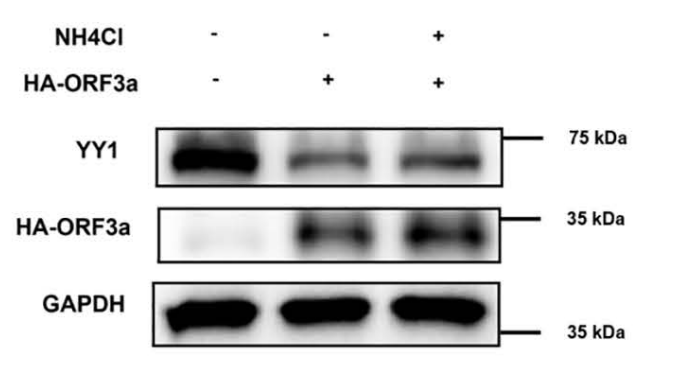
293T cells were transfected with the pCAGGS-HA-ORF3a plasmid and subsequently treated with Ammonium chloride (NH4Cl) (20 mM). Cells were harvested after 48 h, and the expression levels of endogenous YY1 were assessed by Western blot using either HA or YY1 antibodies.
-
PLoS Pathog
The HN protein of Newcastle disease virus induces cell apoptosis through the induction of lysosomal membrane permeabilization. [Abstract]2024 Feb 14;20(2):e1011981. PMID: 38354122 -
iScience
Genome editing of FTR42 improves zebrafish survival against virus infection by enhancing IFN immunity. [Abstract]2024 Mar 12;27(4):109497. PMID: 38550983 -
-
-
-
Antiviral Res
Salinomycin inhibits orthopoxvirus infection in vitro and in vivo by blocking endosomal acidification. [Abstract]2026 May:249:106403. PMID: 41941992 -
Antiviral Res
Omicsynin B4 potently blocks coronavirus infection by inhibiting host proteases cathepsin L and TMPRSS2. [Abstract]2023 Jun:214:105606. PMID: 37076089 -
Fish Shellfish Immunol
IGF2BP stabilizes RNF34 mRNA to orchestrate apoptosis and host susceptibility to Vibrio splendidus in Apostichopus japonicus. [Abstract]2026 Mar:170:111129. PMID: 41544989 -
J Virol
PEX19 restricts porcine deltacoronavirus replication through farnesylation-dependent and -independent mechanisms. [Abstract]2026 Apr 21;100(4):e0209725. PMID: 41874194 -
J Virol
PTBP1 is upregulated in response to Zika virus infection and restrains viral replication by hijacking viral NS1 protein to induce NS1 degradation. [Abstract]2026 Apr 27:e0149525. PMID: 42037413 -
J Virol
Palmitoylation enhances the stability of porcine epidemic diarrhea virus spike protein by antagonizing its degradation via chaperone-mediated autophagy to facilitate viral proliferation. [Abstract]2025 Jun 17;99(6):e0034725. PMID: 40401979 -
J Immunol
Mallard ILF2 negatively regulates type I IFN production through autophagy-lysosome-dependent degradation of IRF7. [Abstract]2025 Sep 1;214(9):2371-2384. PMID: 40447123 -
Virol J
2022 Sep 20;19(1):151. PMID: 36127711 -
Biochim Biophys Acta Mol Cell Biol Lipids
2025 Jun;1870(5):159618. PMID: 40294697 -
Vet Res
The African swine fever virus B125R protein antagonizes JAK-STAT signalling by promoting the degradation of IFNAR2. [Abstract]2025 Apr 23;56(1):87. PMID: 40270033 -
Vet Res
2025 Feb 28;56(1):46. PMID: 40022242 -
Viruses
Feline Infectious Peritonitis Virus Nsp5 Inhibits Type I Interferon Production by Cleaving NEMO at Multiple Sites. [Abstract]2019 Dec 30;12(1):43. PMID: 31905881 -
J Leukoc Biol
Berbamine promotes autophagy and GPX4 expression through inducing abundant ROS to restrict HIV-1 and Mtb coinfection in macrophages. [Abstract]2025 Jul 9;117(7):qiaf095. PMID: 40581081 -
-
-
-
-
-
-
-
-
-


Solvent & Solubility
In Vitro:
H2O : ≥ 100 mg/mL (1869.51 mM)
* "≥" means soluble, but saturation unknown.
Please refer to the solubility information to select the appropriate solvent. Once prepared, please aliquot and store the solution to prevent product inactivation from repeated freeze-thaw cycles.
Storage method and period of stock solution: -80°C, 6 months; -20°C, 1 month (sealed storage, away from moisture). When stored at -80°C, please use it within 6 months. When stored at -20°C, please use it within 1 month.
* Note: If you choose water as the stock solution, please dilute it to the working solution, then filter and sterilize it with a 0.22 μm filter before use.
Please refer to the solubility information to select the appropriate solvent. Once prepared, please aliquot and store the solution to prevent product inactivation from repeated freeze-thaw cycles.
Storage method and period of stock solution: -80°C, 6 months; -20°C, 1 month (sealed storage, away from moisture). When stored at -80°C, please use it within 6 months. When stored at -20°C, please use it within 1 month.
* Note: If you choose water as the stock solution, please dilute it to the working solution, then filter and sterilize it with a 0.22 μm filter before use.
Concentration (start) × Volume (start) = Concentration (final) × Volume (final)


Purity & Documentation
-
Data Sheet (273 KB)
-
SDS (537 KB)
- English - EN (537 KB)
- Français - FR (537 KB)
- Deutsch - DE (537 KB)
- Norwegian - NO (537 KB)
- Español - ES (537 KB)
- Swedish - SV (537 KB)
- Italian - IT (537 KB)
- Korean - KR (537 KB)
- Portuguese - PT (537 KB)
-
Handling Instructions (2659 KB)
References
[1]. Huang X, et al. NH4Cl treatment prevents doxorubicin-induced myocardial dysfunction in vivo. Life Sci. 2019;227:94-100. [Content Brief]
[2]. Canning WM, Fields BN. Ammonium chloride prevents lytic growth of reovirus and helps to establish persistent infection in mouse L cells. Science. 1983;219(4587):987-988. [Content Brief]
[3]. Yu C,et al. Lysosome dysfunction enhances oxidative stress-induced apoptosis through ubiquitinated protein accumulation in Hela cells. Anat Rec (Hoboken). 2013 Jan;296(1):31-9. [Content Brief]


Complete Stock Solution Preparation Table
Please refer to the solubility information to select the appropriate solvent. Once prepared, please aliquot and store the solution to prevent product inactivation from repeated freeze-thaw cycles.
Storage method and period of stock solution: -80°C, 6 months; -20°C, 1 month (sealed storage, away from moisture). When stored at -80°C, please use it within 6 months. When stored at -20°C, please use it within 1 month.
| Optional Solvent | Concentration Solvent Mass | 1 mg | 5 mg | 10 mg | 25 mg |
|---|---|---|---|---|---|
| H2O | 1 mM | 18.6951 mL | 93.4754 mL | 186.9508 mL | 467.3771 mL |
| 5 mM | 3.7390 mL | 18.6951 mL | 37.3902 mL | 93.4754 mL | |
| 10 mM | 1.8695 mL | 9.3475 mL | 18.6951 mL | 46.7377 mL | |
| 15 mM | 1.2463 mL | 6.2317 mL | 12.4634 mL | 31.1585 mL | |
| 20 mM | 0.9348 mL | 4.6738 mL | 9.3475 mL | 23.3689 mL | |
| 25 mM | 0.7478 mL | 3.7390 mL | 7.4780 mL | 18.6951 mL | |
| 30 mM | 0.6232 mL | 3.1158 mL | 6.2317 mL | 15.5792 mL | |
| 40 mM | 0.4674 mL | 2.3369 mL | 4.6738 mL | 11.6844 mL | |
| 50 mM | 0.3739 mL | 1.8695 mL | 3.7390 mL | 9.3475 mL | |
| 60 mM | 0.3116 mL | 1.5579 mL | 3.1158 mL | 7.7896 mL | |
| 80 mM | 0.2337 mL | 1.1684 mL | 2.3369 mL | 5.8422 mL | |
| 100 mM | 0.1870 mL | 0.9348 mL | 1.8695 mL | 4.6738 mL |
* Note: If you choose water as the stock solution, please dilute it to the working solution, then filter and sterilize it with a 0.22 μm filter before use.


Ammonium chloride, for cell culture Related Classifications
HY-Y1269C Related Classifications
 Powered by Bioz