



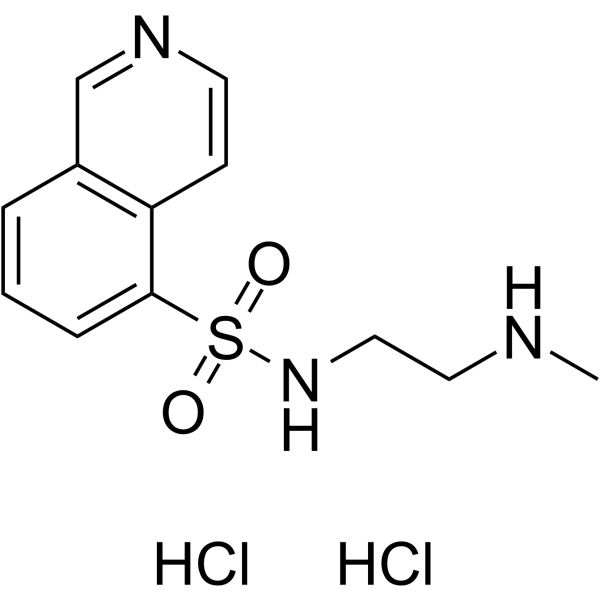
H-8 dihydrochloride

Based on 1 Customer Validation
H-8 dihydrochloride is a selective Cyclic nucleotide-dependent protein kinase inhibitor. H-8 dihydrochloride potently inhibits cGMP- and cAMP-dependent protein phosphorylation. H-8 dihydrochloride enhances the vasodilatory effect induced by 8-bromo-cAMP (HY-12306A). H-8 dihydrochloride fails to attenuate the vasodilatory effects induced by 8-bromo-cGMP (HY-101379A), atrial natriuretic peptide II, or Sodium nitroprusside (HY-B0564) in rat aorta.
Para uso exclusivo en investigación. No vendemos a pacientes.
- Pureza : 99.19%
- No. CAS: 113276-94-1
- Fòrmula: C12H17Cl2N3O2S
- Peso molecular:338.25
-
Almacenamiento:
-20°C, sealed storage, away from moisture
* In solvent : -80°C, 6 months; -20°C, 1 month (sealed storage, away from moisture)

To place orders, for customer services and technical support, please contact: MedChemExpress USA
Tel: 609-228-6898 E-mail: [email protected] [email protected]


-
 Actividad biológica
-
Chemical Information
-
Solvente y solubilidad
- Pureza y Documentación
- Referencias
-
 Help & FAQs


-
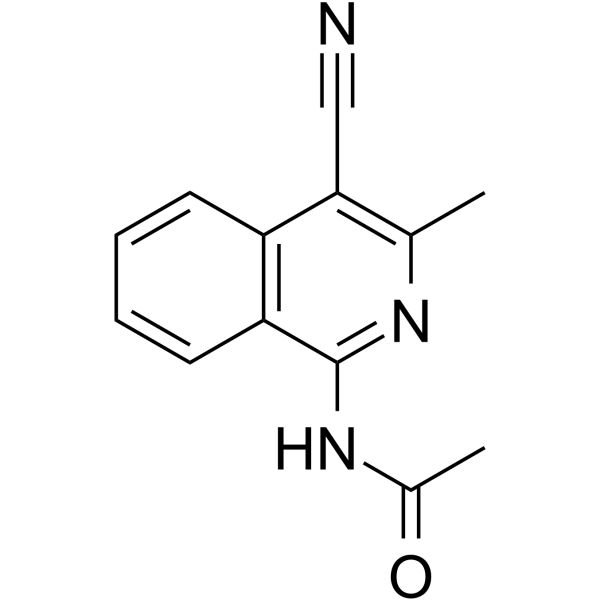
HY-115732
PKA-IN-1cAK Inhibitor -
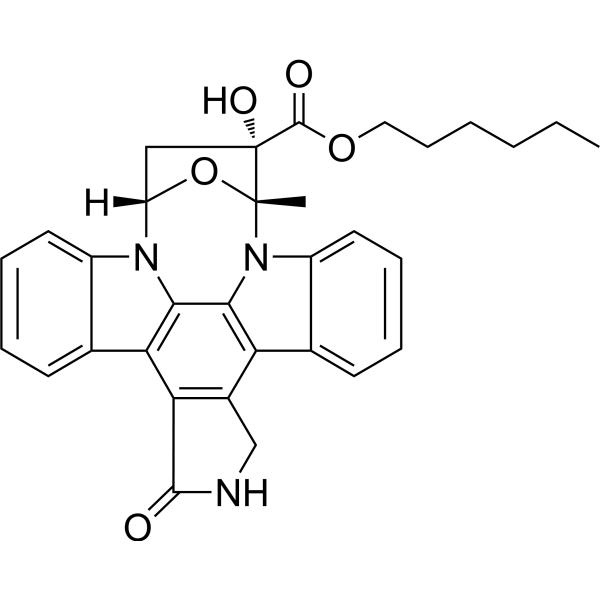
HY-N6789
KT5720PKA Inhibitor -
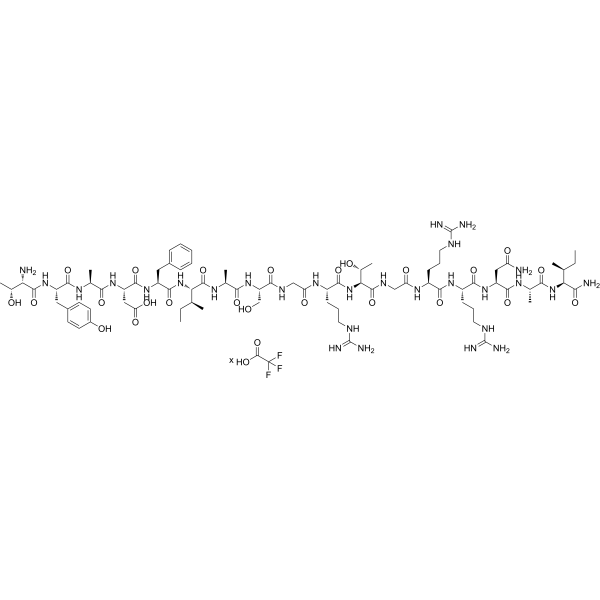
HY-P1290A
PKA Inhibitor Fragment (6-22) amide TFAPKA Inhibitor -
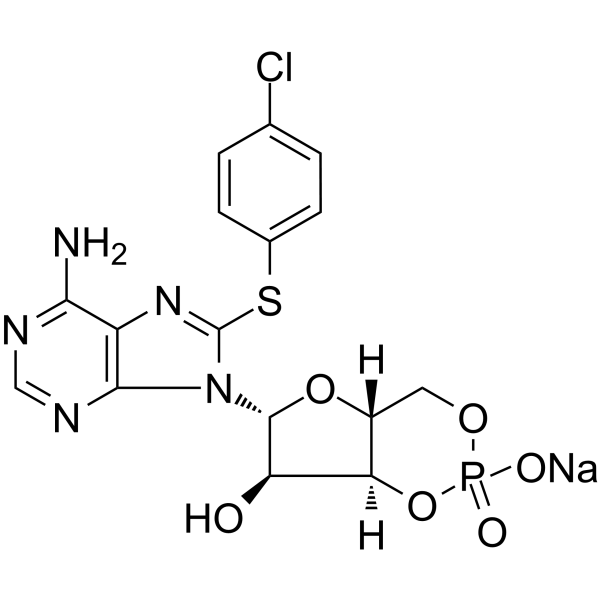
HY-111673
8-CPT-Cyclic AMP sodiumPKA Activator -
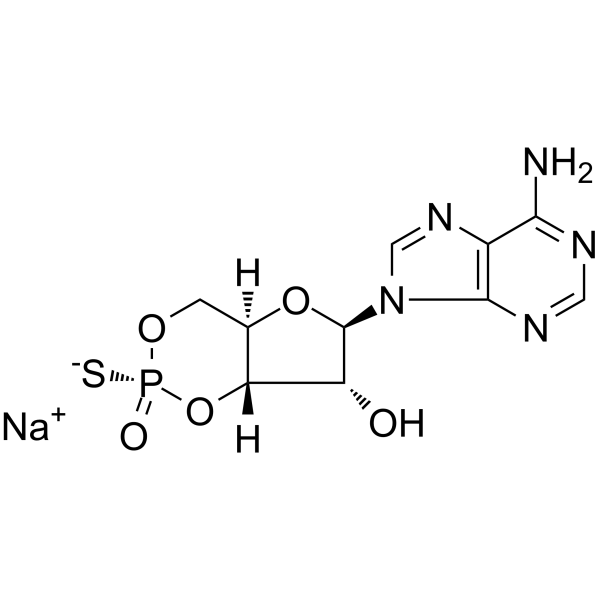
HY-100530D
Rp-cAMPS sodium saltPKA I/II Antagonist -
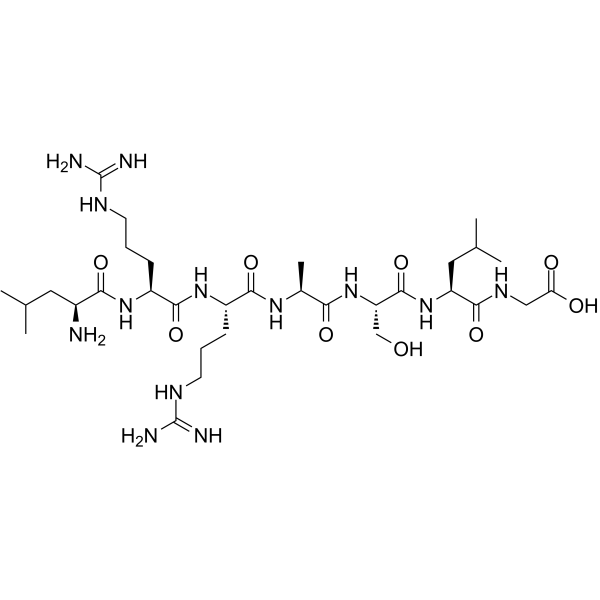
HY-P0248
KemptidePKA Substrate -
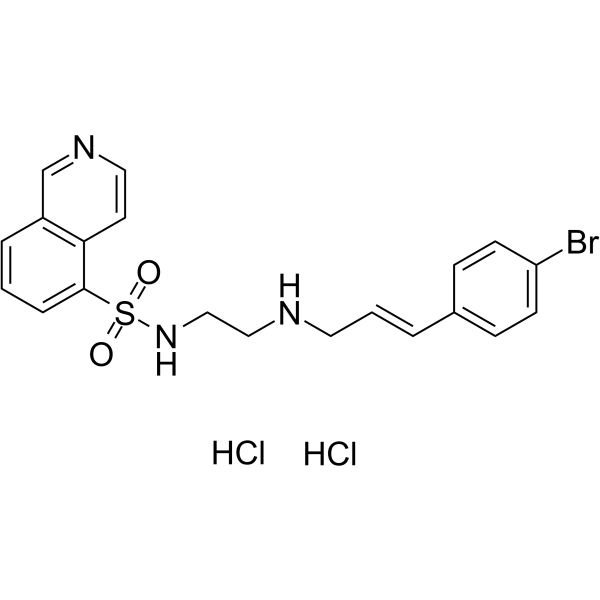
HY-15979A
H-89 dihydrochloridePKA Inhibitor -
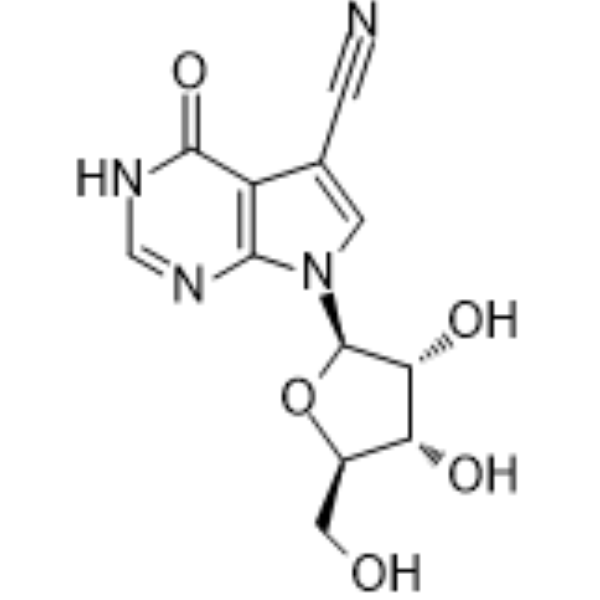
HY-111759
JaspamycinPKA Activator -
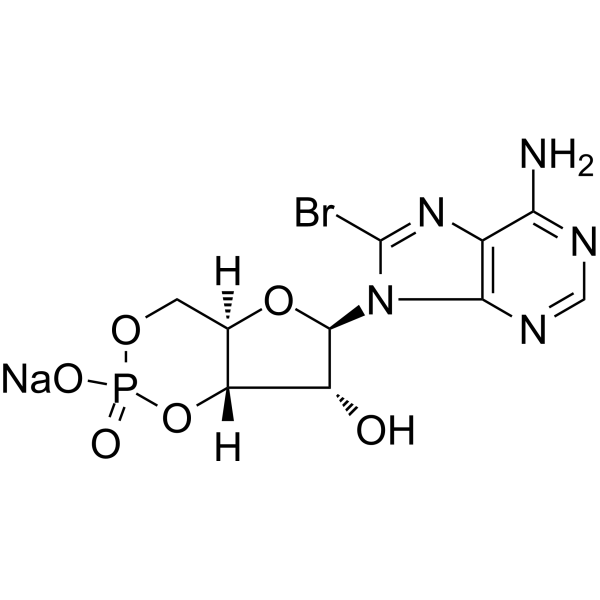
HY-12306
8-Bromo-cAMP sodium saltPKA Activator -
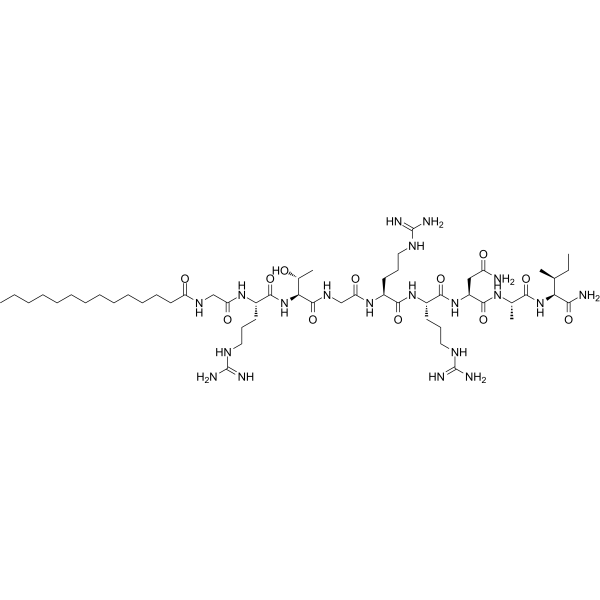
HY-P1291
PKI 14-22 amide,myristoylatedPKA Inhibitor -
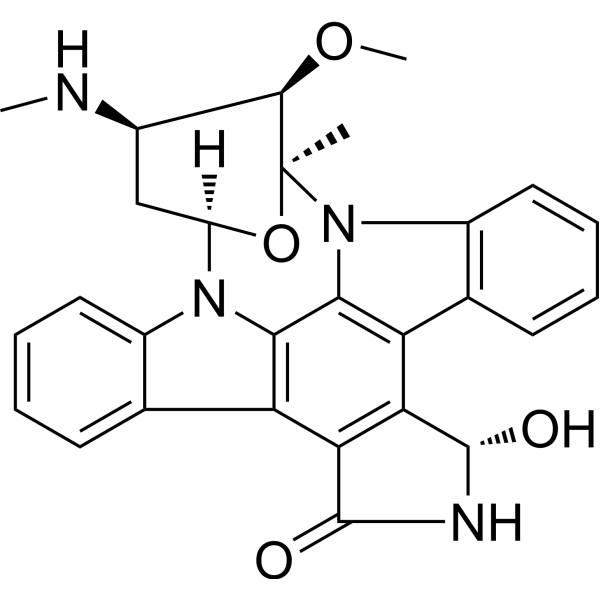
HY-108262
UCN-02PKC Inhibitor -
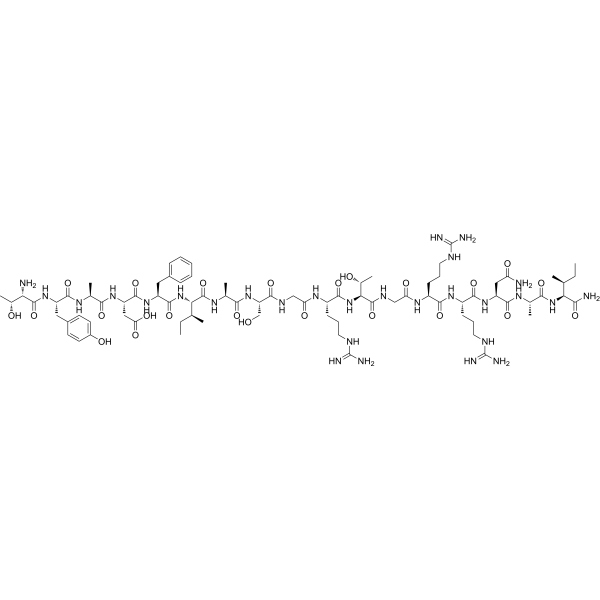
HY-P1290
PKA Inhibitor Fragment (6-22) amidePKA Inhibitor


Actividad biológica
Descripciòn
In Vitro
H-8 dihydrochloride (1-5 μM; 10 min preincubation) potently inhibits cGMP- and cAMP-dependent protein phosphorylation in intestinal homogenates of winter flounder, but does not inhibit Ca2+ -dependent protein phosphorylation, with the 5 μM concentration achieving nearly complete inhibition of cyclic nucleotide-dependent targets[1].
H-8 (5-100 μM) dihydrochloride significantly stimulates amiloride-sensitive Na+ transport in primary cultured rat fetal lung type II alveolar epithelial cells at a concentration of 100 μM, whereas no significant effect on this transport is observed at 5 μM, and it does not inhibit terbutaline-induced activation of this transport[3].
MedChemExpress (MCE) has not independently confirmed the accuracy of these methods. They are for reference only.


Chemical Information
-
No. CAS 113276-94-1
-
Appearance Solid
-
Peso molecular 338.25
-
Fòrmula C12H17Cl2N3O2S
-
Color White to off-white
-
SMILES
O=S(C1=CC=CC2=C1C=CN=C2)(NCCNC)=O.Cl.Cl
-
Envío
Room temperature in continental US; may vary elsewhere.
-
Almacenamiento
-20°C, sealed storage, away from moisture
* In solvent : -80°C, 6 months; -20°C, 1 month (sealed storage, away from moisture)


Solvente y solubilidad
In Vitro:
DMSO : 20.83 mg/mL (61.58 mM; ultrasonic and warming and heat to 60°C; Hygroscopic DMSO has a significant impact on the solubility of product, please use newly opened DMSO)
Please refer to the solubility information to select the appropriate solvent. Once prepared, please aliquot and store the solution to prevent product inactivation from repeated freeze-thaw cycles.
Storage method and period of stock solution: -80°C, 6 months; -20°C, 1 month (sealed storage, away from moisture). When stored at -80°C, please use it within 6 months. When stored at -20°C, please use it within 1 month.
Please refer to the solubility information to select the appropriate solvent. Once prepared, please aliquot and store the solution to prevent product inactivation from repeated freeze-thaw cycles.
Storage method and period of stock solution: -80°C, 6 months; -20°C, 1 month (sealed storage, away from moisture). When stored at -80°C, please use it within 6 months. When stored at -20°C, please use it within 1 month.
Concentration (start) × Volume (start) = Concentration (final) × Volume (final)
In Vivo:
Select the appropriate dissolution method based on your experimental animal and administration route.
- For the following dissolution methods, please ensure to first prepare a clear stock solution using an In Vitro approach and then sequentially add co-solvents:
- To ensure reliable experimental results, the clarified stock solution can be appropriately stored based on storage conditions. As for the working solution for In Vivo experiments, it is recommended to prepare freshly and use it on the same day.
- The percentages shown for the solvents indicate their volumetric ratio in the final prepared solution. If precipitation or phase separation occurs during preparation, heat and/or sonication can be used to aid dissolution.
Add each solvent one by one: 10% DMSO 40% PEG300 5% Tween-80 45% Saline
Solubility: ≥ 2.5 mg/mL (7.39 mM); Clear solution
This protocol yields a clear solution of ≥ 2.5 mg/mL (saturation unknown).
Taking 1 mL working solution as an example, add 100 μL DMSO stock solution (25.0 mg/mL) to 400 μL PEG300, and mix evenly; then add 50 μL Tween-80 and mix evenly; then add 450 μL Saline to adjust the volume to 1 mL.
Preparation of Saline: Dissolve 0.9 g sodium chloride in ddH₂O and dilute to 100 mL to obtain a clear Saline solution.
Add each solvent one by one: 10% DMSO 90% (20% SBE-β-CD in Saline)
Solubility: ≥ 2.5 mg/mL (7.39 mM); Clear solution
This protocol yields a clear solution of ≥ 2.5 mg/mL (saturation unknown).
Taking 1 mL working solution as an example, add 100 μL DMSO stock solution (25.0 mg/mL) to 900 μL 20% SBE-β-CD in Saline, and mix evenly.
Preparation of 20% SBE-β-CD in Saline (4°C, storage for one week): 2 g SBE-β-CD powder is dissolved in 10 mL Saline, completely dissolve until clear.
In Vivo Dissolution Calculator
Please enter the basic information of animal experiments:
-
-
-
-
Recommended: Prepare an additional quantity of animals to account for potential losses during experiments.
Please enter your animal formula composition:
-
%DMSO +
Recommended: Keep the proportion of DMSO in working solution below 2% if your animal is weak.
-
%+
-
+%Tween-80 + +
-
%Saline +
The co-solvents required include: DMSO, . All of co-solvents are available by MedChemExpress (MCE). , Tween 80. All of co-solvents are available by MedChemExpress (MCE).
Working solution concentration: 0.22 mg/mL
Method for preparing stock solution: mg drug dissolved in μL DMSO. Stock solution concentration: mg/mL. * In solvent : -80°C, 6 months; -20°C, 1 month (sealed storage, away from moisture)
1. Take μL DMSO stock solution;
2. Add μL .
μL , mix evenly;
3. Then add μL Tween 80, mix evenly;
4. Then add μL
Please ensure that the stock solution in the first step is dissolved to a clear state, and add co-solvents in sequence. You can use ultrasonic heating (ultrasonic cleaner, recommended frequency 20-40 kHz), vortexing, etc. to assist dissolution.


Pureza y Documentación
-
Ficha de datos (277 KB)
-
SDS (252 KB)
- English - EN (252 KB)
- Français - FR (252 KB)
- Deutsch - DE (252 KB)
- Norwegian - NO (252 KB)
- Español - ES (252 KB)
- Swedish - SV (252 KB)
- Italian - IT (252 KB)
- Korean - KR (252 KB)
- Portuguese - PT (252 KB)
-
Instrucciones de manejo (2659 KB)
Referencias
[1]. O'Grady SM, et al. Cyclic nucleotide-dependent protein kinase inhibition by H-8: effects on ion transport. Am J Physiol. 1988;254(1 Pt 1):C115-C121. [Content Brief]
[2]. Daugirdas JT, et al. Effect of H-8, an isoquinolinesulfonamide inhibitor of cyclic nucleotide-dependent protein kinase, on cAMP- and cGMP-mediated vasorelaxation. Blood Vessels. 1991;28(5):366-371. [Content Brief]
[3]. Niisato N, et al. Effects of PKA inhibitors, H-compounds, on epithelial Na+ channels via PKA-independent mechanisms. Life Sci. 1999;65(10):PL109-PL114. [Content Brief]


Complete Stock Solution Preparation Table
Please refer to the solubility information to select the appropriate solvent. Once prepared, please aliquot and store the solution to prevent product inactivation from repeated freeze-thaw cycles.
Storage method and period of stock solution: -80°C, 6 months; -20°C, 1 month (sealed storage, away from moisture). When stored at -80°C, please use it within 6 months. When stored at -20°C, please use it within 1 month.
| Optional Solvent | Concentration Solvent Mass | 1 mg | 5 mg | 10 mg | 25 mg |
|---|---|---|---|---|---|
| DMSO | 1 mM | 2.9564 mL | 14.7820 mL | 29.5639 mL | 73.9098 mL |
| 5 mM | 0.5913 mL | 2.9564 mL | 5.9128 mL | 14.7820 mL | |
| 10 mM | 0.2956 mL | 1.4782 mL | 2.9564 mL | 7.3910 mL | |
| 15 mM | 0.1971 mL | 0.9855 mL | 1.9709 mL | 4.9273 mL | |
| 20 mM | 0.1478 mL | 0.7391 mL | 1.4782 mL | 3.6955 mL | |
| 25 mM | 0.1183 mL | 0.5913 mL | 1.1826 mL | 2.9564 mL | |
| 30 mM | 0.0985 mL | 0.4927 mL | 0.9855 mL | 2.4637 mL | |
| 40 mM | 0.0739 mL | 0.3695 mL | 0.7391 mL | 1.8477 mL | |
| 50 mM | 0.0591 mL | 0.2956 mL | 0.5913 mL | 1.4782 mL | |
| 60 mM | 0.0493 mL | 0.2464 mL | 0.4927 mL | 1.2318 mL |


H-8 dihydrochloride Related Classifications
HY-112465 Related Classifications
 Powered by Bioz
Keywords
- H-8
- 113276-94-1
- H8
- H 8
- PKA
- PKC
- PKG
- vasoactive intestinal peptide
- cAMP-dependent protein kinase
- cyclic nucleotide-dependent protein kinases
- rat arterial tissue
- cGMP-dependent protein kinase
- rat fetal lung alveolar type II epithelial cells
- substance P
- atriopeptin III
- mammalian cells
- winter flounder intestinal mucosa
- Inhibitor
- inhibitor
- inhibit