



PKCι
PKCι (PRKCI) is an atypical serine/threonine protein kinase that supports epithelial cell polarity, proliferation, survival, and stem/progenitor-cell control[1][2]. Mechanistically, PRKCI links polarity signaling to Notch-dependent stem/progenitor expansion, and loss of Prkci increased multiple stem/progenitor populations through NUMB inactivation and NOTCH1 activation[2]. In cancer models, PKCι supports Ras-mediated transformation and colon carcinogenesis through a Ras-PKCι-Rac1 axis[3]. In lung squamous cell carcinoma, PRKCI and SOX2 are coamplified, and PKCι phosphorylates SOX2 to activate HHAT/Hedgehog signaling and maintain a stem-like phenotype[4]. Compared with the related atypical isoform PKCζ, PKCι shows distinct, non-overlapping cancer functions; in NSCLC cells, PKCι is highly expressed whereas PKCζ is undetectable[5][6]. For experimental applications, aurothiomalate and related gold compounds disrupt PKCι-Par6 PB1-domain interactions, block PKCι-dependent Rac1 signaling, and inhibit transformed growth in NSCLC models[7][8]. Fragment-based discovery has also produced potent PKCι inhibitors, supporting chemical-probe development for isoform-focused pathway studies[9].
References:
- [1]. Reina-Campos M, et al. The Dual Roles of the Atypical Protein Kinase Cs in Cancer. Cancer Cell. 2019 Sep 16;36(3):218-235. [Content Brief]
- [2]. Mah IK, et al. Atypical PKC-iota Controls Stem Cell Expansion via Regulation of the Notch Pathway. Stem Cell Reports. 2015 Nov 10;5(5):866-880. [Content Brief]
- [3]. Murray NR, et al. Protein kinase Ciota is required for Ras transformation and colon carcinogenesis in vivo. J Cell Biol. 2004 Mar 15;164(6):797-802. [Content Brief]
- [4]. Justilien V, et al. The PRKCI and SOX2 oncogenes are coamplified and cooperate to activate Hedgehog signaling in lung squamous cell carcinoma. Cancer Cell. 2014 Feb 10;25(2):139-51. [Content Brief]
- [5]. Regala RP, et al. Atypical protein kinase Ciota plays a critical role in human lung cancer cell growth and tumorigenicity. J Biol Chem. 2005 Sep 2;280(35):31109-15. [Content Brief]
- [6]. Fields AP, et al. Protein kinase C iota: human oncogene, prognostic marker and therapeutic target. Pharmacol Res. 2007 Jun;55(6):487-97. [Content Brief]
- [7]. Ali SR, et al. Nerve Density and Neuronal Biomarkers in Cancer. Cancers (Basel). 2022 Oct 1;14(19):4817. [Content Brief]
- [8]. Erdogan E, et al. Aurothiomalate inhibits transformed growth by targeting the PB1 domain of protein kinase Ciota. J Biol Chem. 2006 Sep 22;281(38):28450-9. [Content Brief]
- [9]. Kwiatkowski J, et al. Fragment-Based Drug Discovery of Potent Protein Kinase C Iota Inhibitors. J Med Chem. 2018 May 24;61(10):4386-4396. [Content Brief]
All Product Categories
-
PKCι Related Products (7)
Related Products (7)

-
Aurothiomalate sodium
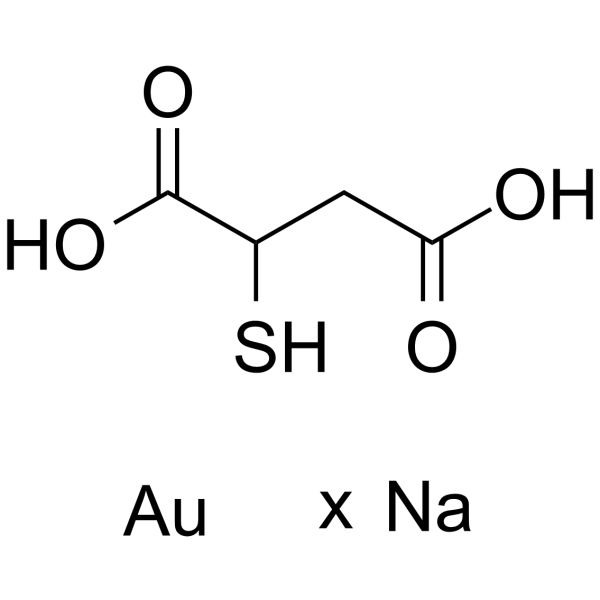 0 ImagesAurothiomalate sodium acts as an inhibitor of PKCI and TrxR1. Aurothiomalate sodium disrupts the PKCI-Par6-Rac1 signaling pathway, and also inhibits TrxR1 activity, TNFα-induced NF-κB activation, and the expression of pro-inflammatory genes. Aurothiomalate sodium blocks Kras-mediated BASC expansion and lung tumor growth, inhibits anchorage-independent growth and tumorigenicity of lung cancer cells, and suppresses neutrophil chemotaxis, phagocytosis, and leukocyte extravasation. Aurothiomalate sodium can be used in research related to rheumatoid arthritis and non-small cell lung cancer.
-
PS432
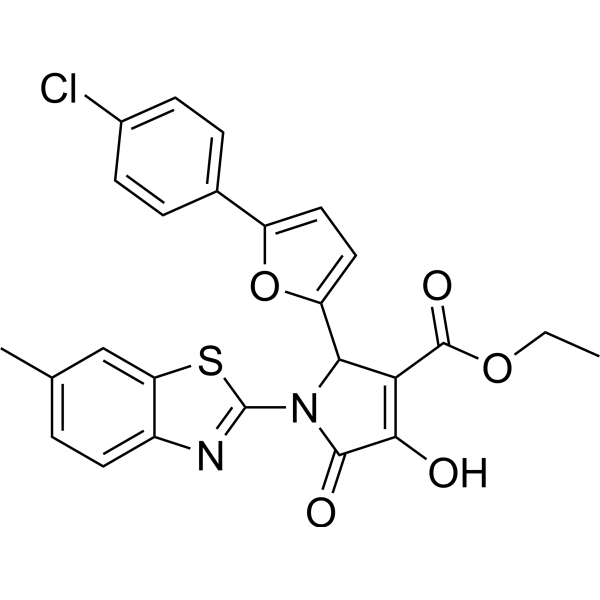 0 ImagesPS432 is a PKC inhibitor with IC50s of 16.9 μM (PKCι) and 18.5 μM (PKCζ), respectively. PS432 effectively inhibits the proliferation of non-small cell lung cancer cells (NSCLCs) and tumor growth in mouse xenograft models.
-
Aurothiomalate tetramer sodium
 0 ImagesCat. No.: HY-106381APurity: 98.0%Aurothiomalate tetramer sodium is the tetrameric form of Aurothiomalate sodium (HY-106381). Aurothiomalate sodium acts as an inhibitor of PKCI and TrxR1. Aurothiomalate sodium disrupts the PKCI-Par6-Rac1 signaling pathway, and also inhibits TrxR1 activity, TNFα-induced NF-κB activation, and the expression of pro-inflammatory genes. Aurothiomalate sodium blocks Kras-mediated BASC expansion and lung tumor growth, inhibits anchorage-independent growth and tumorigenicity of lung cancer cells, and suppresses neutrophil chemotaxis, phagocytosis, and leukocyte extravasation. Aurothiomalate sodium can be used in research related to rheumatoid arthritis and non-small cell lung cancer.
-
PKCiota-IN-2 formic
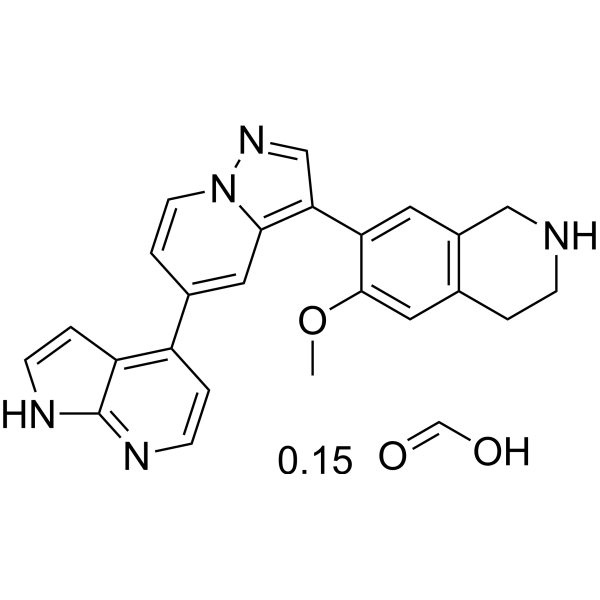 0 ImagesCat. No.: HY-122858APurity: 99.04%PKCiota-IN-2 formic is a potent PKCiota (PKC-ι) inhibitor with an IC50 of 2.8 nM. PKCiota-IN-2 formic also inhibits PKC-α and PKC-ε with IC50s of 71 nM and 350 nM, respectively.
-
PKCiota-IN-2
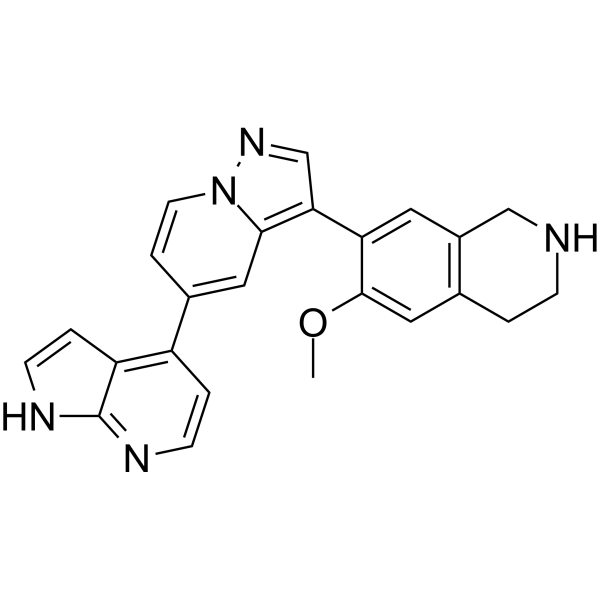 0 ImagesCat. No.: HY-122858CAS No.: 2230055-52-2PKCiota-IN-2 (Compound 49) is a potent PKCiota (PKC-ι) inhibitor with an IC50 of 2.8 nM. PKCiota-IN-2 also inhibits PKC-α and PKC-ε with IC50s of 71 nM and 350 nM, respectively.
-
Aurothiomalate disodium
 0 ImagesCat. No.: HY-W010270ACAS No.: 74916-57-7Aurothiomalate disodium acts as an inhibitor of PKCI and TrxR1. Aurothiomalate disodium disrupts the PKCI-Par6-Rac1 signaling pathway, and also inhibits TrxR1 activity, TNFα-induced NF-κB activation, and the expression of pro-inflammatory genes. Aurothiomalate disodium blocks Kras-mediated BASC expansion and lung tumor growth, inhibits anchorage-independent growth and tumorigenicity of lung cancer cells, and suppresses neutrophil chemotaxis, phagocytosis, and leukocyte extravasation. Aurothiomalate disodium can be used in research related to rheumatoid arthritis and non-small cell lung cancer.
-
PKCiota-IN-1
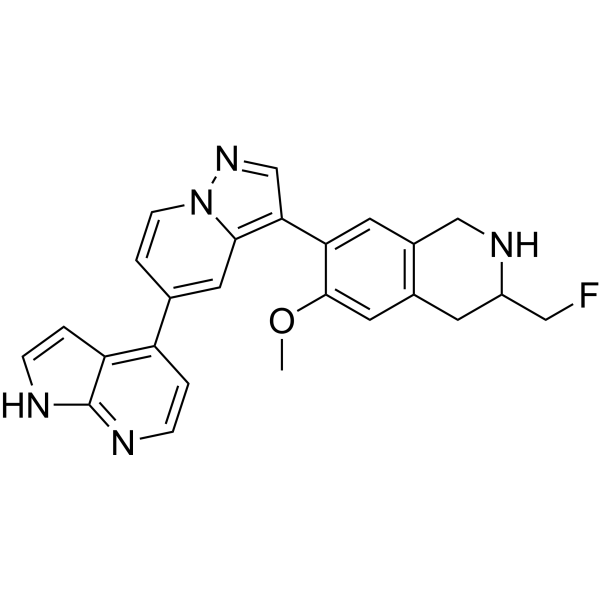 0 ImagesCat. No.: HY-122857CAS No.: 2230052-97-6PKCiota-IN-1 (compound 51) is a potent PKCiota (PKC-ι) inhibitor with an IC50 of 2.7 nM. PKCiota-IN-1 also inhibits PKC-α and PKC-ε with IC50s of 45 nM and 450 nM, respectively.



