



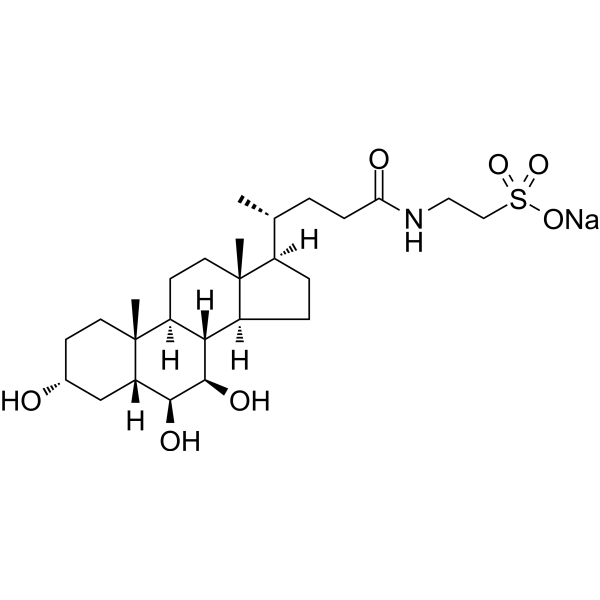
Tauro-β-muricholic acid sodium
Based on 6 publication(s) in Google Scholar
Tauro-β-muricholic Acid sodium (T-βMCA sodium), a endogenous metabolite, is a competitive and reversible farnesoid X receptor (FXR) antagonist, with an IC50 of 40 μM.
For research use only. We do not sell to patients.
- Purity : 99.54%
- CAS No.: 145022-92-0
- Formula: C26H44NNaO7S
- Molecular Weight:537.68
-
Storage:
-20°C, stored under nitrogen, away from moisture
* In solvent : -80°C, 6 months; -20°C, 1 month (stored under nitrogen, away from moisture)

To place orders, for customer services and technical support, please contact: MedChemExpress USA
Tel: 609-228-6898 E-mail: [email protected] [email protected]


-
 Biological Activity
-
Chemical Information
-
Solvent & Solubility
- Purity & Documentation
- References
-
 Help & FAQs


-
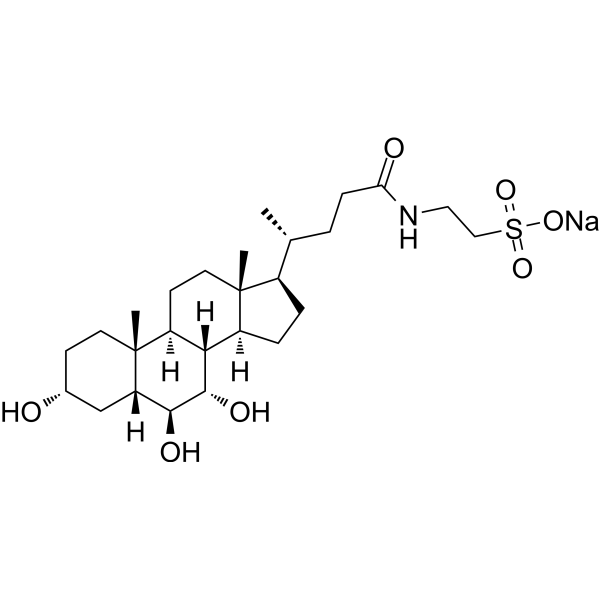
HY-133890A
Tauro-α-muricholic acid sodium -

HY-121799A
Taurohyocholic acid sodium salt -
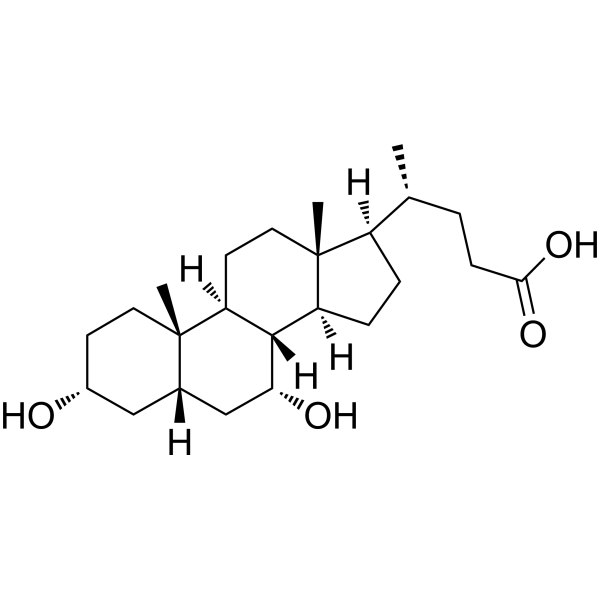
HY-76847
Chenodeoxycholic Acid -
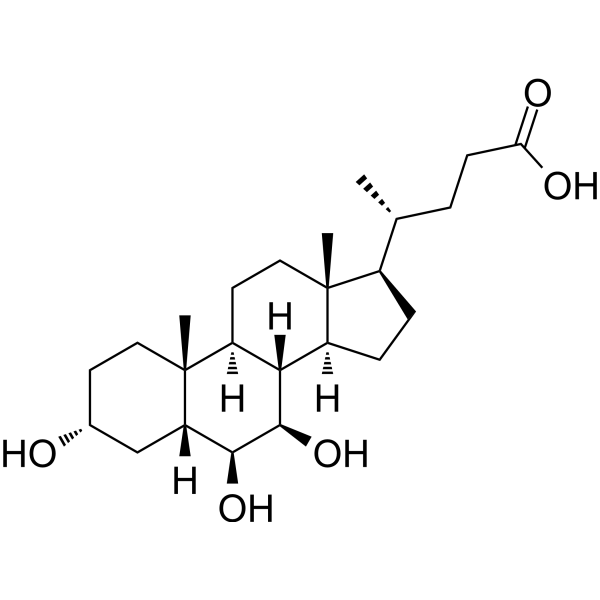
HY-133707
β-Muricholic acid -
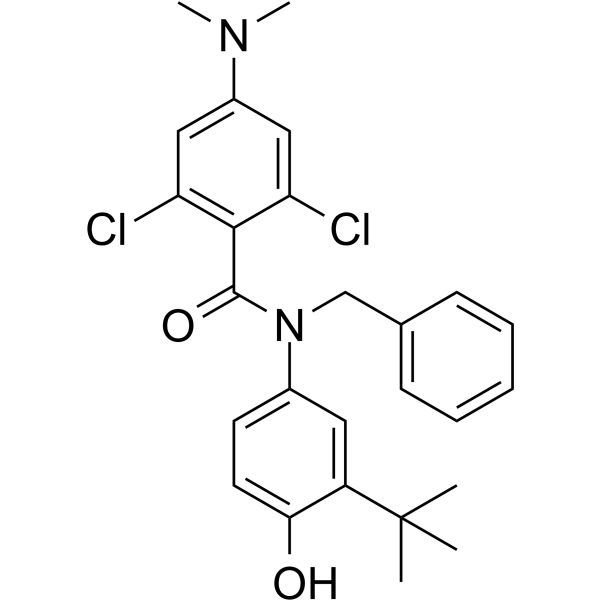
HY-138937
NDB -
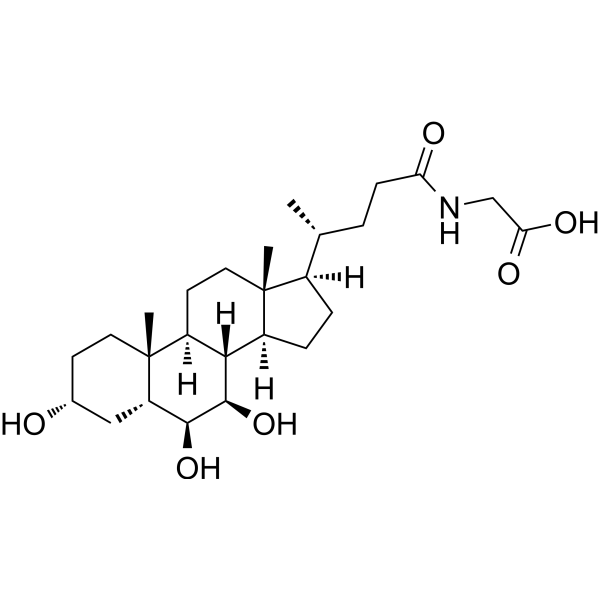
HY-114392
Gly-β-MCA -
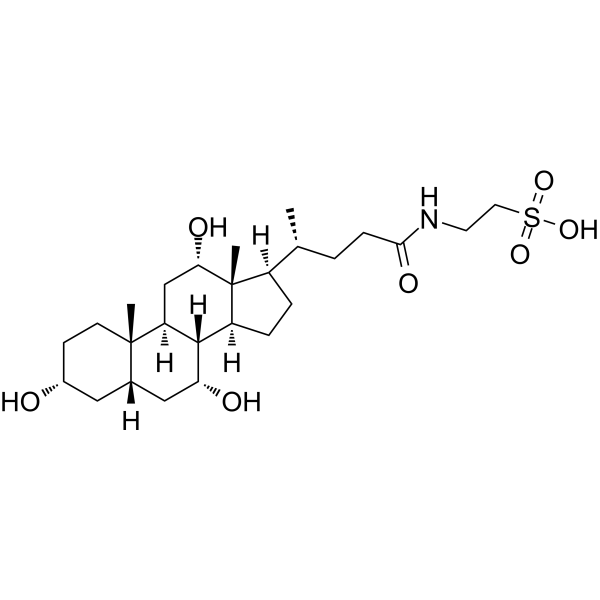
HY-B1788
Taurocholic acid -
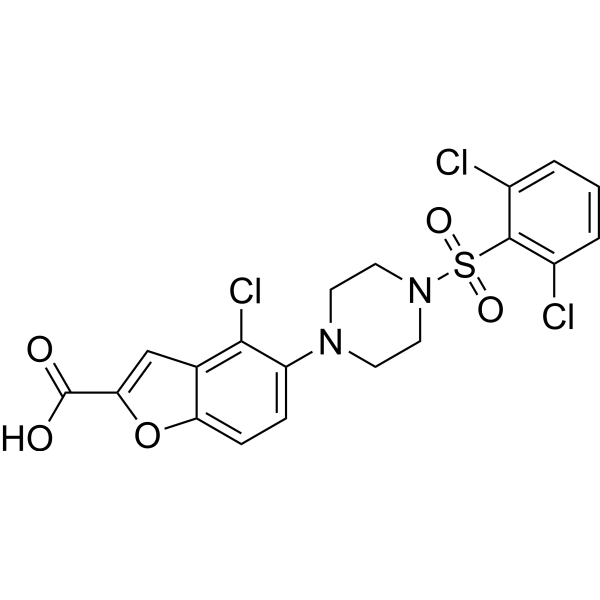
HY-109197
Vonafexor -
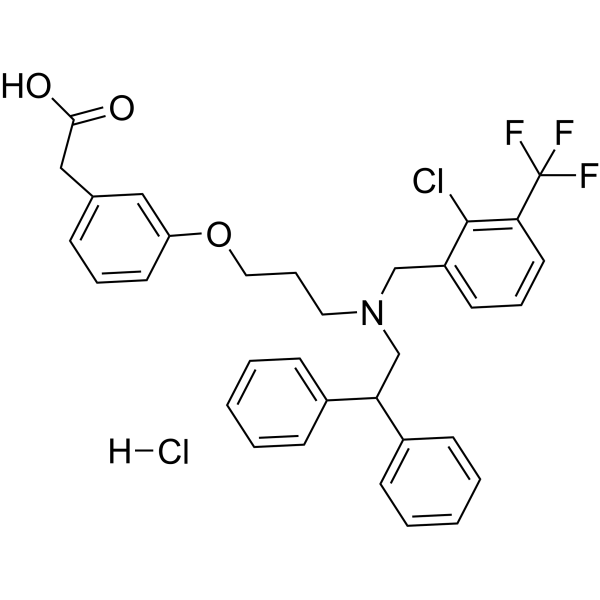
HY-10627A
GW3965 hydrochloride -
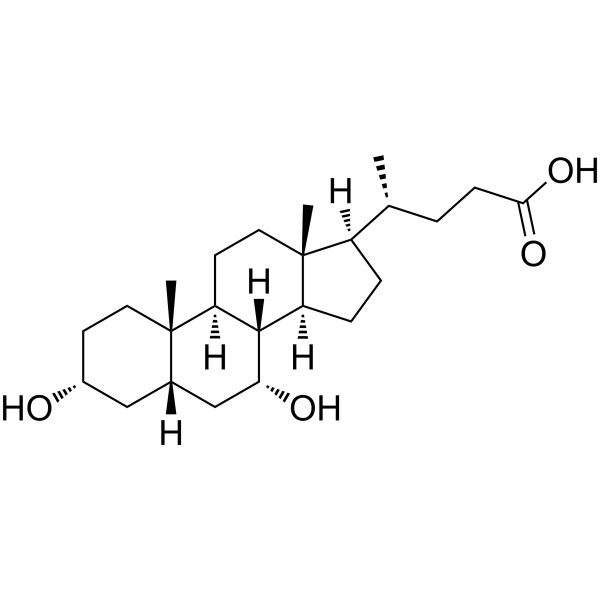
HY-76847R
Chenodeoxycholic Acid (Standard) -
HY-Y1888
Corn oil -
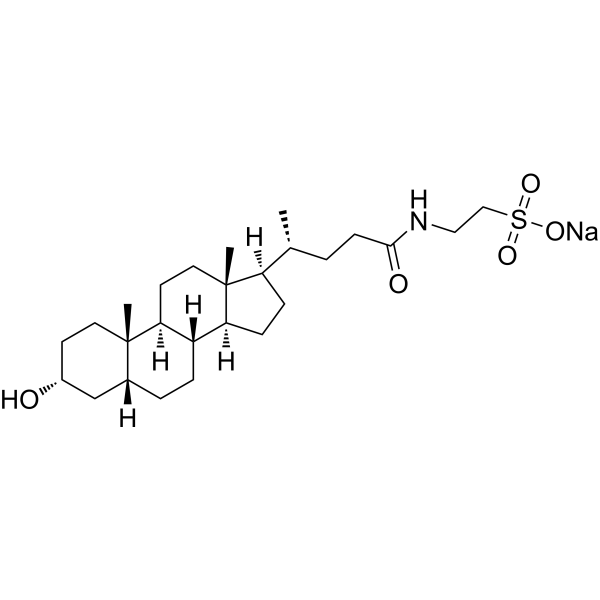
HY-113308A
Taurolithocholic acid sodium salt
Publications Citing Use of MedChemExpress (MCE) Tauro-β-muricholic acid sodium
More- Cancer Cell. 2026 Aug 10;44(8):1653-1671.e16.
- Cell. 2025 Aug 21;188(17):4530-4548.e25. [Abstract]
- Cell Host Microbe. 2024 Feb 14;32(2):191-208.e9. [Abstract]
- J Pharm Biomed Anal. 2026 Apr 27;278:117541.
- J Pharm Biomed Anal. 2025 Jul 15:259:116760. [Abstract]
- World J Gastrointest Oncol. 2025 Aug 15;17(8):107453. [Abstract]
 Customer Validation & Images

-
Bio/Physico-chemical Assay

-
RT-PCR


Biological Activity
Description
IC50 & Target
IC50: 40 μM (FXR)[1]
In Vitro
T-βMCA sodium inhibits FXR reporter activity in the CRC cell line HT29 (EC50 ~10 μM)[3].
T-βMCA sodium dose-dependently increases WNT signaling in HT29 and HCT116 cells[3].
T-βMCA sodium induces proliferation and DNA damage in Lgr5+ cells[3].
MedChemExpress (MCE) has not independently confirmed the accuracy of these methods. They are for reference only.
In Vivo
T-βMCA sodium treatment also significantly increases levels of serum cytokines, including IFN-γ, IL-6, and IL-17[3].
MedChemExpress (MCE) has not independently confirmed the accuracy of these methods. They are for reference only.
-
Animal Model:APCmin/+ mice[3]
-
Dosage:400 mg/kg
-
Administration:Oral gavage; twice a week; for 6 weeks
-
Result:Markedly decreased intestinal integrity and accelerated tumor growth in the intestine and colon.


Chemical Information
-
CAS No. 145022-92-0
-
Appearance Solid
-
Molecular Weight 537.68
-
Formula C26H44NNaO7S
-
Color White to off-white
-
SMILES
C[C@@]([C@]1([H])[C@H](O)[C@@H]2O)(CC[C@@H](O)C1)[C@]3([H])[C@]2([H])[C@@](CC[C@]4([H])[C@H](C)CCC(NCCS(=O)(O[Na])=O)=O)([H])[C@]4(C)CC3
-
Synonyms
T-βMCA sodium
-
Shipping
Room temperature in continental US; may vary elsewhere.
-
Storage
-20°C, stored under nitrogen, away from moisture
* In solvent : -80°C, 6 months; -20°C, 1 month (stored under nitrogen, away from moisture)


Publications (6)
-
Journal Impact Factor
-
Most Recent
-
-
Cell
A microbial amino-acid-conjugated bile acid, tryptophan-cholic acid, improves glucose homeostasis via the orphan receptor MRGPRE. [Abstract]2025 Aug 21;188(17):4530-4548.e25. PMID: 40446798 -
Cell Host Microbe
A gut microbiota-bile acid axis promotes intestinal homeostasis upon aspirin-mediated damage. [Abstract]2024 Feb 14;32(2):191-208.e9. PMID: 38237593
Tauro-β-muricholic acid sodium purchased from MedChemExpress. Usage Cited in: Cell Host Microbe. 2024 Feb 14;32(2):191-208.e9. [Abstract]
The expression of two FXR downstream markers, fibroblast growth factor 19 (FGF19) and small heterodimer partner (SHP), were increased by CDCA. But this was abrogated by TβMCA (Tauro-β-muricholic acid sodium, 20 μM), UDCA, and 7-keto-LCA in both intestinal cell lines.
-
-
J Pharm Biomed Anal
Integrating 16S rDNA sequencing analysis and targeted metabolomics to explore the mechanism of Xiexin Tang in treating atherosclerosis mice induced by high-fat diet. [Abstract]2025 Jul 15:259:116760. PMID: 40014894
Tauro-β-muricholic acid sodium purchased from MedChemExpress. Usage Cited in: J Pharm Biomed Anal. 2025 Jul 15:259:116760. [Abstract]
The contents of bile acids such as TCA, T-α-MCA, DCA, TDCA, CA, TCDCA, T-β-MCA, CDCA, and TUDCA were significantly altered when AS occurred (p < 0.01, vs. Ctrl group). However, XXT could only significantly reverse the changes of CDCA, DCA, T-β-MCA, TCA, and TCDCA (p < 0.01, vs. AS group).
-
World J Gastrointest Oncol
Deoxycholic acid induces reactive oxygen species accumulation and promotes colorectal cancer cell apoptosis through the CaMKII-Ca2+ pathway. [Abstract]2025 Aug 15;17(8):107453. PMID: 40837770


Solvent & Solubility
In Vitro:
DMSO : 10 mg/mL (18.60 mM; Need ultrasonic and warming; Hygroscopic DMSO has a significant impact on the solubility of product, please use newly opened DMSO)
Please refer to the solubility information to select the appropriate solvent. Once prepared, please aliquot and store the solution to prevent product inactivation from repeated freeze-thaw cycles.
Storage method and period of stock solution: -80°C, 6 months; -20°C, 1 month (stored under nitrogen, away from moisture). When stored at -80°C, please use it within 6 months. When stored at -20°C, please use it within 1 month.
Please refer to the solubility information to select the appropriate solvent. Once prepared, please aliquot and store the solution to prevent product inactivation from repeated freeze-thaw cycles.
Storage method and period of stock solution: -80°C, 6 months; -20°C, 1 month (stored under nitrogen, away from moisture). When stored at -80°C, please use it within 6 months. When stored at -20°C, please use it within 1 month.
Concentration (start) × Volume (start) = Concentration (final) × Volume (final)


Purity & Documentation
-
Data Sheet (275 KB)
-
SDS (393 KB)
- English - EN (393 KB)
- Français - FR (393 KB)
- Deutsch - DE (393 KB)
- Norwegian - NO (393 KB)
- Español - ES (393 KB)
- Swedish - SV (393 KB)
- Italian - IT (393 KB)
- Korean - KR (393 KB)
- Portuguese - PT (393 KB)
-
Handling Instructions (2659 KB)
References
[1]. Sayin SI, et al. Gut microbiota regulates bile acid metabolism by reducing the levels of tauro-beta-muricholic acid, a naturally occurring FXR antagonist. Cell Metab. 2013 Feb 5;17(2):225-35. [Content Brief]
[2]. Wahlström A, et al. Induction of farnesoid X receptor signaling in germ-free mice colonized with a human microbiota. J Lipid Res. 2017 Feb;58(2):412-419. [Content Brief]
[3]. Fu T, et al. FXR Regulates Intestinal Cancer Stem Cell Proliferation. Cell. 2019 Feb 21;176(5):1098-1112.e18. [Content Brief]


Complete Stock Solution Preparation Table
Please refer to the solubility information to select the appropriate solvent. Once prepared, please aliquot and store the solution to prevent product inactivation from repeated freeze-thaw cycles.
Storage method and period of stock solution: -80°C, 6 months; -20°C, 1 month (stored under nitrogen, away from moisture). When stored at -80°C, please use it within 6 months. When stored at -20°C, please use it within 1 month.
| Optional Solvent | Concentration Solvent Mass | 1 mg | 5 mg | 10 mg | 25 mg |
|---|---|---|---|---|---|
| DMSO | 1 mM | 1.8598 mL | 9.2992 mL | 18.5984 mL | 46.4961 mL |
| 5 mM | 0.3720 mL | 1.8598 mL | 3.7197 mL | 9.2992 mL | |
| 10 mM | 0.1860 mL | 0.9299 mL | 1.8598 mL | 4.6496 mL | |
| 15 mM | 0.1240 mL | 0.6199 mL | 1.2399 mL | 3.0997 mL |


Tauro-β-muricholic acid sodium Related Classifications
HY-135103 Related Classifications
 Powered by Bioz