



2-PMPA
Based on 7 publication(s) in Google Scholar
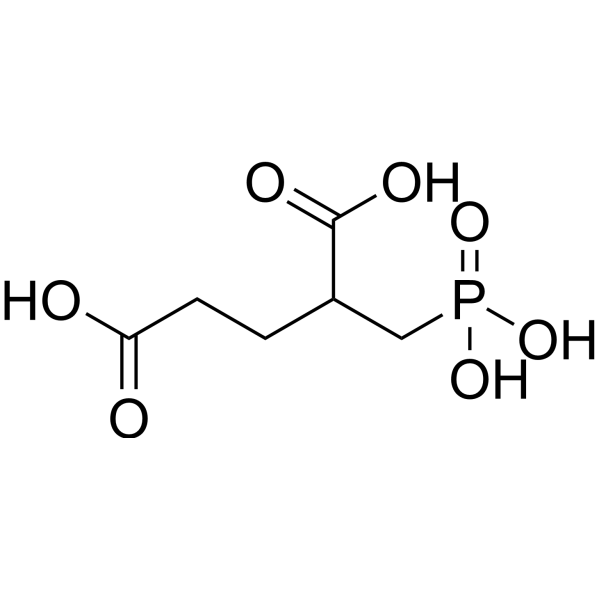
2-PMPA (2-(Phosphonomethyl)pentanedioic acid) is a glutamate carboxypeptidase II (GCPII) inhibitor with an IC50 of 0.0003 μM. 2-PMPA shows low blood-brain barrier penetration. 2-PMPA sodium blocks the hydrolysis of NAAG, regulates glutamate levels in the brain and neurovascular coupling. 2-PMPA is applicable to the research of neurological diseases.
For research use only. We do not sell to patients.
- Purity : 98.0%
- CAS No.: 173039-10-6
- Formula: C6H11O7P
- Molecular Weight:226.12
-
Storage:
4°C, stored under nitrogen, away from moisture
* In solvent : -80°C, 6 months; -20°C, 1 month (stored under nitrogen, away from moisture)

To place orders, for customer services and technical support, please contact: MedChemExpress USA
Tel: 609-228-6898 E-mail: [email protected] [email protected]


-
 Biological Activity
-
Chemical Information
-
Solvent & Solubility
- Purity & Documentation
- References
-
 Help & FAQs


-
HY-15244
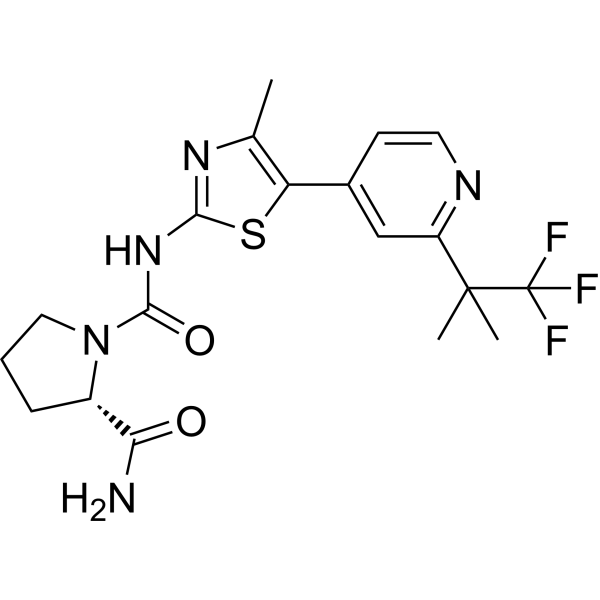
AlpelisibPI3Kα Inhibitor -
HY-10583
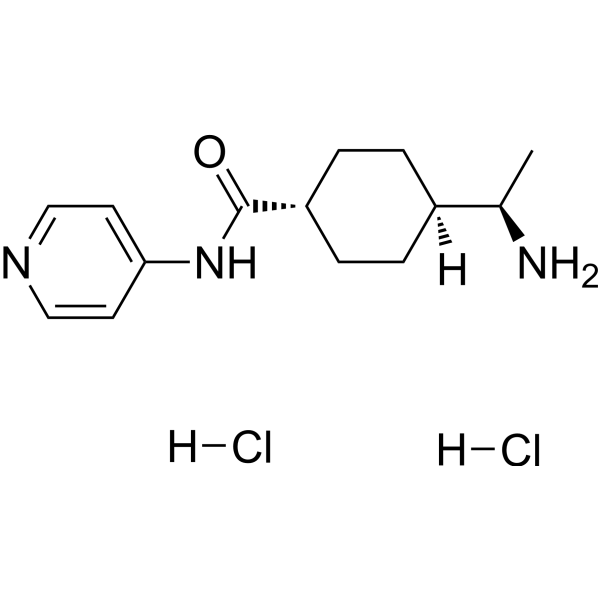
Y-27632 dihydrochlorideROCK Inhibitor -
HY-103344
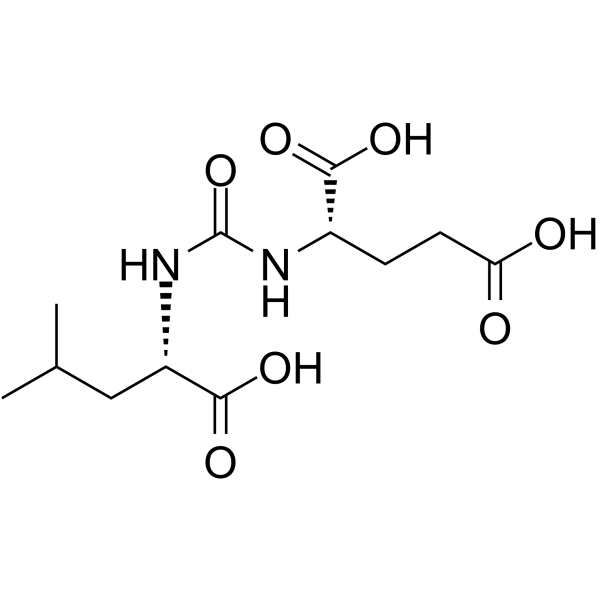
ZJ43NAAG Peptidase Inhibitor -
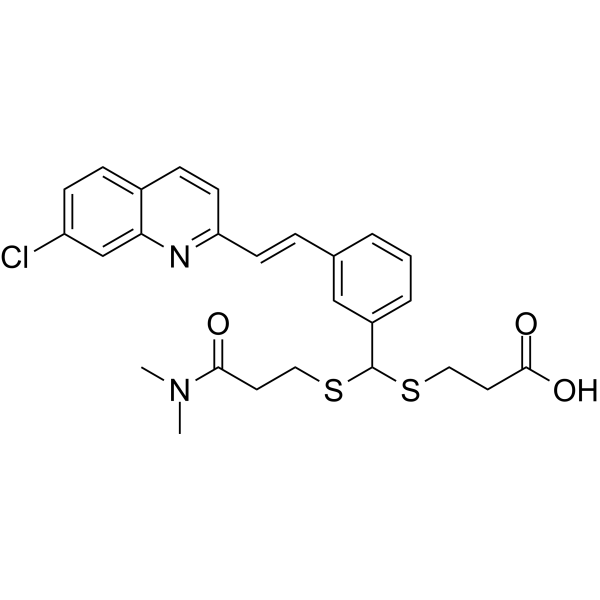
HY-19989
MK-571ABCC1/MRP4 Inhibitor -
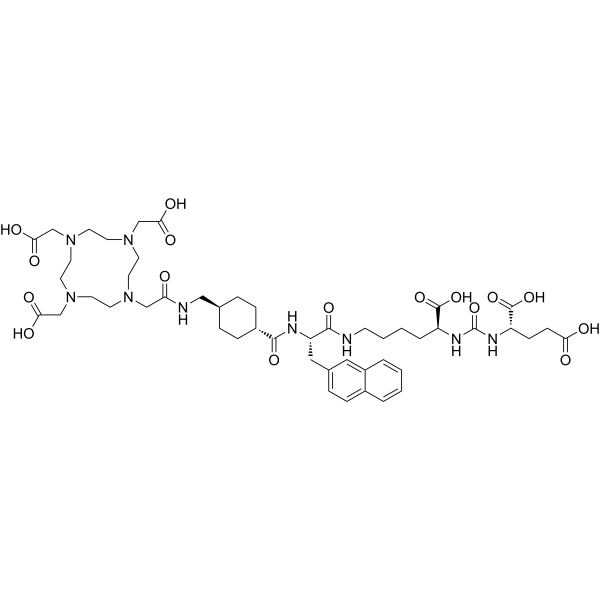
HY-117410
Vipivotide tetraxetanPSMA Inhibitor -

HY-K0301
Cell Counting Kit-8 -
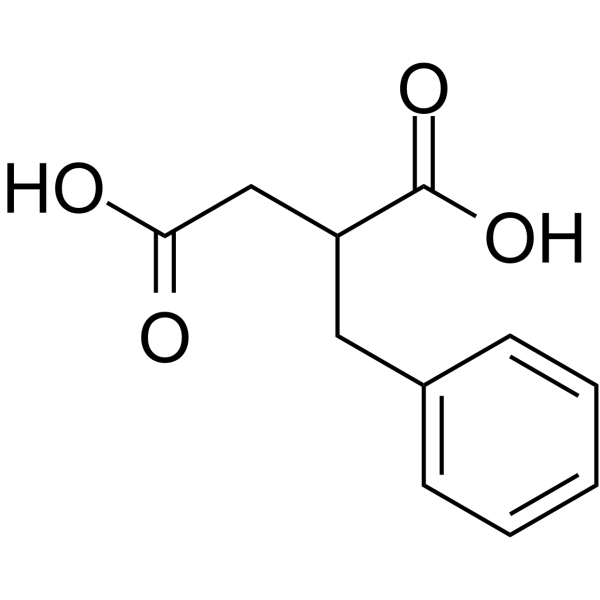
HY-W044764
2-Benzylsuccinic acidCPA Inhibitor -

HY-100788C
2-PMPA sodiumGCPII Inhibitor -
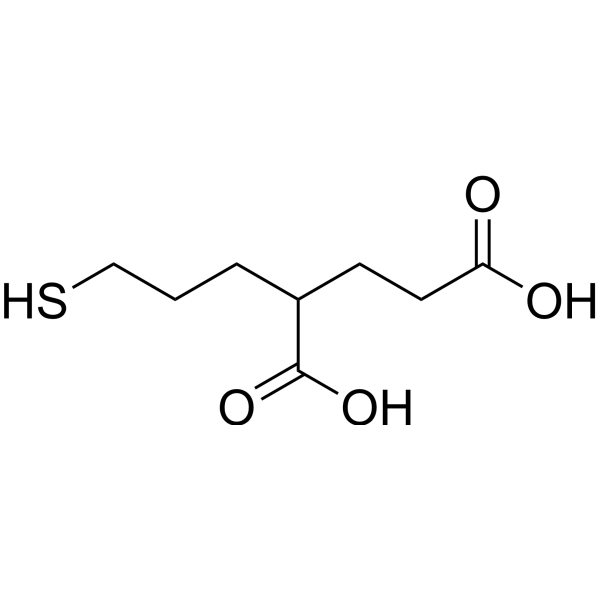
HY-103345
2-MPPAGCP II Inhibitor -

HY-100788R
2-PMPA (Standard)Standard -
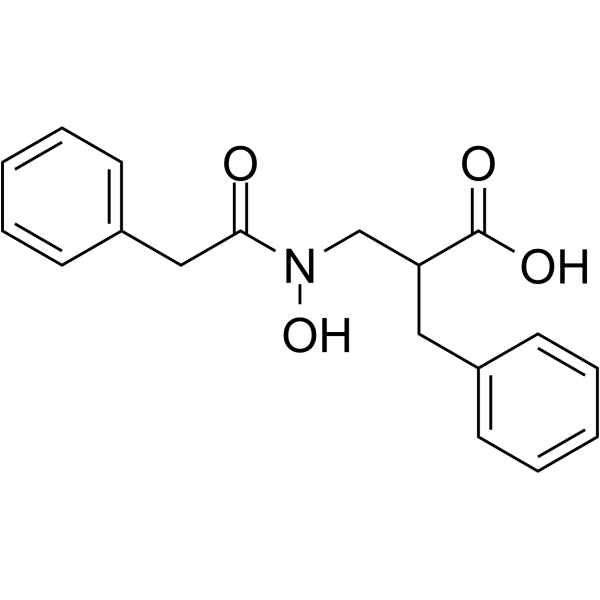
HY-70005
CPA inhibitorCPA Inhibitor -
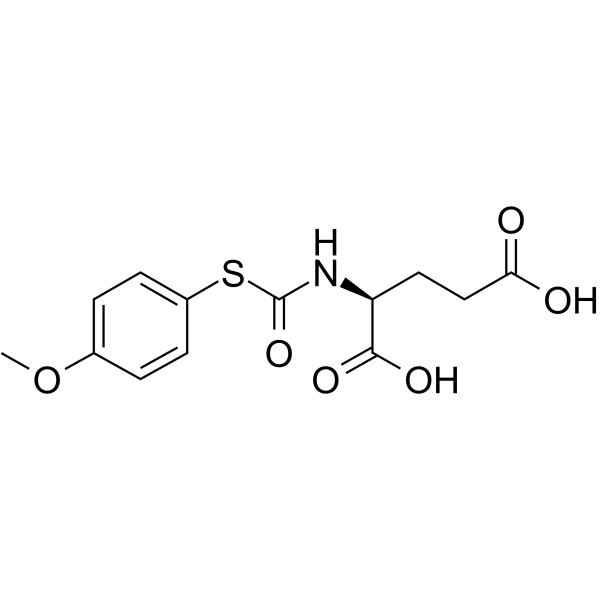
HY-70003
Carboxypeptidase G2 (CPG2) InhibitorCPG2 Inhibitor
Publications Citing Use of MedChemExpress (MCE) 2-PMPA
More- ACS Nano. 2021 Apr 27;15(4):7179-7194. [Abstract]
- Br J Cancer. 2026 Jul 23.
- J Med Chem. 2021 Apr 8;64(7):4179-4195. [Abstract]
- Pharmaceuticals (Basel). 2023 May 3;16(5):692. [Abstract]
- Biochem Biophys Res Commun. 2020 Dec 17;533(4):1393-1399. [Abstract]
- ChemistrySelect. 2026 May 27;11(21):e06967.
- Ghent University. 2021 Mar.
 Customer Validation & Images

-
Flow Cytometry
-
Histological Imaging/Staining


Biological Activity
Description
Cellular Effect
|
Cell Line

|
Type | Value | Description | References |
|---|---|---|---|---|
| LNCaP | IC50 |
1.1 nM
Compound: 7, 2-PMPA
|
Inhibition of NAALADase activity in human LNCaP cell membranes assessed as inhibition of [3H]NAG conversion to [3H]glutamate after 30 mins by liquid scintillation counting
Inhibition of NAALADase activity in human LNCaP cell membranes assessed as inhibition of [3H]NAG conversion to [3H]glutamate after 30 mins by liquid scintillation counting
|
[PMID: 23025786] |
| LNCaP | IC50 |
52 nM
Compound: PMPA
|
Displacement of [125I]23 from PSMA in human LNCAP cells
Displacement of [125I]23 from PSMA in human LNCAP cells
|
[PMID: 26894427] |
In Vitro
2-PMPA remains stable in rat plasma when stored at room temperature for 4 h, subjected to 3 freeze-thaw cycles, stored at -80°C for 28 days, and placed in a 10°C autosampler for 18 h[2].
MedChemExpress (MCE) has not independently confirmed the accuracy of these methods. They are for reference only.
In Vivo
2-PMPA (80 mg/kg; i.p.; single dose) exerts no significant effects on motor coordination or cognitive ability in Swiss-Webster mice within 24 hours[1].
2-PMPA (100 mg/kg; intraperitoneal injection; single dose) is rapidly absorbed in male Wistar rats, with low brain penetration (a brain/plasma AUC0-t ratio of 0.018), while it shows higher penetration in peripheral nerve tissues[2].
MedChemExpress (MCE) has not independently confirmed the accuracy of these methods. They are for reference only.
-
Animal Model:Swiss-Webster (SW) (male, approx 6-8 wk old)[2]
-
Dosage:80 mg/kg
-
Administration:i.p.; single dose
-
Result:Showed mean latency to fall not significantly different from control mice at all tested time points (70, 240, 420, 1440 min post-administration).
Caused no impairment in motor coordination or cognitive ability observed over the 24-h period.


Chemical Information
-
CAS No. 173039-10-6
-
Appearance Oil
-
Molecular Weight 226.12
-
Formula C6H11O7P
-
Color Off-white to light yellow
-
SMILES
O=C(O)C(CP(O)(O)=O)CCC(O)=O
-
Synonyms
2-(Phosphonomethyl)pentanedioic acid
-
Shipping
Room temperature in continental US; may vary elsewhere.
-
Storage
4°C, stored under nitrogen, away from moisture
* In solvent : -80°C, 6 months; -20°C, 1 month (stored under nitrogen, away from moisture)


Publications (7)
-
Journal Impact Factor
-
Most Recent
-
ACS Nano
Metabolic Control by Heat Stress Determining Cell Fate to Ferroptosis for Effective Cancer Therapy. [Abstract]2021 Apr 27;15(4):7179-7194. PMID: 33861924
2-PMPA purchased from MedChemExpress. Usage Cited in: ACS Nano. 2021 Apr 27;15(4):7179-7194. [Abstract]
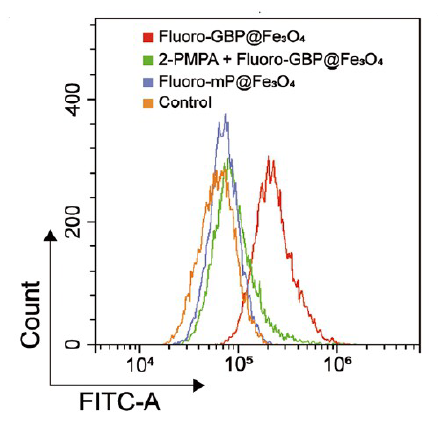
After incubation with 2-PMPA (0.5 mM; 6 h), the uptake of Fluoro-GBP@Fe3O4 (50 μg Fe/mL) in C4-2 cells was assessed by flow cytometry.
2-PMPA purchased from MedChemExpress. Usage Cited in: ACS Nano. 2021 Apr 27;15(4):7179-7194. [Abstract]
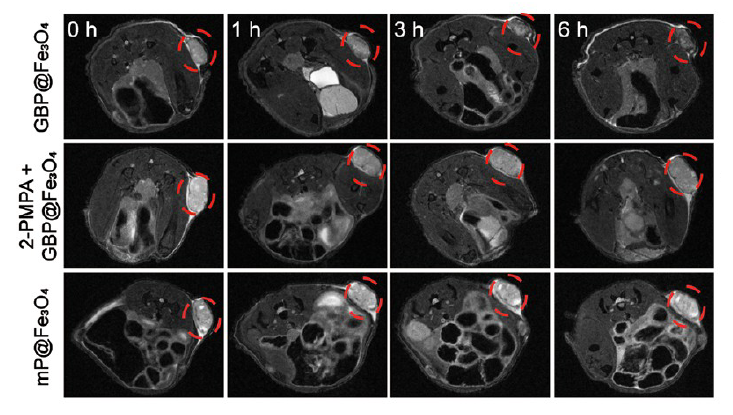
2-PMPA (0.5 μM; i.v.; 1-6 h) obviously inhibited the gradual aggregation of GBP@Fe3O4 at the tumor sites in C4-2 tumor-bearing mice.
-
-
J Med Chem
Synthesis, Preclinical Evaluation, and First-in-Human PET Study of Quinoline-Containing PSMA Tracers with Decreased Renal Excretion. [Abstract]2021 Apr 8;64(7):4179-4195. PMID: 33783213 -
Pharmaceuticals (Basel)
Characterization of Non-Specific Uptake and Retention Mechanisms of [177Lu]Lu-PSMA-617 in the Salivary Glands. [Abstract]2023 May 3;16(5):692. PMID: 37242475 -
Biochem Biophys Res Commun
2020 Dec 17;533(4):1393-1399. PMID: 33092792 -
-


Solvent & Solubility
In Vitro:
H2O : 100 mg/mL (442.24 mM; Need ultrasonic)
Please refer to the solubility information to select the appropriate solvent. Once prepared, please aliquot and store the solution to prevent product inactivation from repeated freeze-thaw cycles.
Storage method and period of stock solution: -80°C, 6 months; -20°C, 1 month (stored under nitrogen, away from moisture). When stored at -80°C, please use it within 6 months. When stored at -20°C, please use it within 1 month.
* Note: If you choose water as the stock solution, please dilute it to the working solution, then filter and sterilize it with a 0.22 μm filter before use.
Please refer to the solubility information to select the appropriate solvent. Once prepared, please aliquot and store the solution to prevent product inactivation from repeated freeze-thaw cycles.
Storage method and period of stock solution: -80°C, 6 months; -20°C, 1 month (stored under nitrogen, away from moisture). When stored at -80°C, please use it within 6 months. When stored at -20°C, please use it within 1 month.
* Note: If you choose water as the stock solution, please dilute it to the working solution, then filter and sterilize it with a 0.22 μm filter before use.
Concentration (start) × Volume (start) = Concentration (final) × Volume (final)
In Vivo:
For the following dissolution methods, please prepare the working solution directly:
It is recommended to prepare fresh solutions and use them promptly within a short period of time.
The percentages shown for the solvents indicate their volumetric ratio in the final prepared solution. If precipitation or phase separation occurs during preparation, heat and/or sonication can be used to aid dissolution.
Add each solvent one by one: PBS
Solubility: 100 mg/mL (442.24 mM); Clear solution; Need ultrasonic


Purity & Documentation
-
Data Sheet (274 KB)
-
SDS (394 KB)
- English - EN (394 KB)
- Français - FR (394 KB)
- Deutsch - DE (394 KB)
- Norwegian - NO (394 KB)
- Español - ES (394 KB)
- Swedish - SV (394 KB)
- Italian - IT (394 KB)
- Korean - KR (394 KB)
- Portuguese - PT (394 KB)
-
Handling Instructions (2659 KB)
References
[1]. Rais R, et al. Bioanalytical method for evaluating the pharmacokinetics of the GCP-II inhibitor 2-phosphonomethyl pentanedioic acid (2-PMPA). J Pharm Biomed Anal. 2014 Jan;88:162-9. [Content Brief]
[2]. Baslow MH, et al. 2-PMPA, a NAAG peptidase inhibitor, attenuates magnetic resonance BOLD signals in brain of anesthetized mice: evidence of a link between neuron NAAG release and hyperemia. J Mol Neurosci. 2005;26(1):1-15. [Content Brief]


Complete Stock Solution Preparation Table
Please refer to the solubility information to select the appropriate solvent. Once prepared, please aliquot and store the solution to prevent product inactivation from repeated freeze-thaw cycles.
Storage method and period of stock solution: -80°C, 6 months; -20°C, 1 month (stored under nitrogen, away from moisture). When stored at -80°C, please use it within 6 months. When stored at -20°C, please use it within 1 month.
| Optional Solvent | Concentration Solvent Mass | 1 mg | 5 mg | 10 mg | 25 mg |
|---|---|---|---|---|---|
| H2O | 1 mM | 4.4224 mL | 22.1122 mL | 44.2243 mL | 110.5608 mL |
| 5 mM | 0.8845 mL | 4.4224 mL | 8.8449 mL | 22.1122 mL | |
| 10 mM | 0.4422 mL | 2.2112 mL | 4.4224 mL | 11.0561 mL | |
| 15 mM | 0.2948 mL | 1.4741 mL | 2.9483 mL | 7.3707 mL | |
| 20 mM | 0.2211 mL | 1.1056 mL | 2.2112 mL | 5.5280 mL | |
| 25 mM | 0.1769 mL | 0.8845 mL | 1.7690 mL | 4.4224 mL | |
| 30 mM | 0.1474 mL | 0.7371 mL | 1.4741 mL | 3.6854 mL | |
| 40 mM | 0.1106 mL | 0.5528 mL | 1.1056 mL | 2.7640 mL | |
| 50 mM | 0.0884 mL | 0.4422 mL | 0.8845 mL | 2.2112 mL | |
| 60 mM | 0.0737 mL | 0.3685 mL | 0.7371 mL | 1.8427 mL | |
| 80 mM | 0.0553 mL | 0.2764 mL | 0.5528 mL | 1.3820 mL | |
| 100 mM | 0.0442 mL | 0.2211 mL | 0.4422 mL | 1.1056 mL |
* Note: If you choose water as the stock solution, please dilute it to the working solution, then filter and sterilize it with a 0.22 μm filter before use.


2-PMPA Related Classifications
HY-100788 Related Classifications
 Powered by Bioz