



Chembridge-5861528
Based on 1 publication(s) in Google Scholar
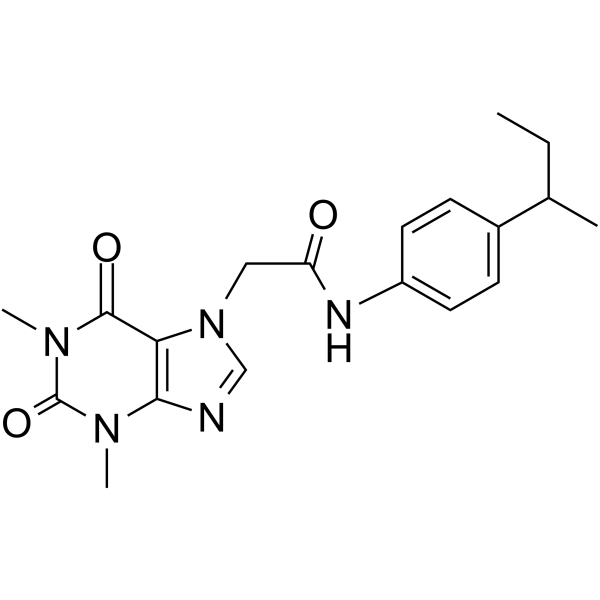
Chembridge-5861528 (TCS 5861528) is a potent TRPA1 channel antagonist that antagonizes similarly allyl isothiocyanate- and 4-HNE-evoked TRPA1 responses, with IC50 values of 14.3 μM and 18.7 μM, respectively. Chembridge-5861528 shows antihypersensitivity activities.
For research use only. We do not sell to patients.
- Purity : 99.12%
- CAS No.: 332117-28-9
- Formula: C19H23N5O3
- Molecular Weight:369.42
-
Storage:Powder -20°C, 3 years , 4°C, 2 years ; In solvent -80°C, 2 years , -20°C, 1 year

To place orders, for customer services and technical support, please contact: MedChemExpress USA
Tel: 609-228-6898 E-mail: [email protected] [email protected]


-
 Biological Activity
-
Chemical Information
-
Solvent & Solubility
- Purity & Documentation
- References
-
 Help & FAQs


-
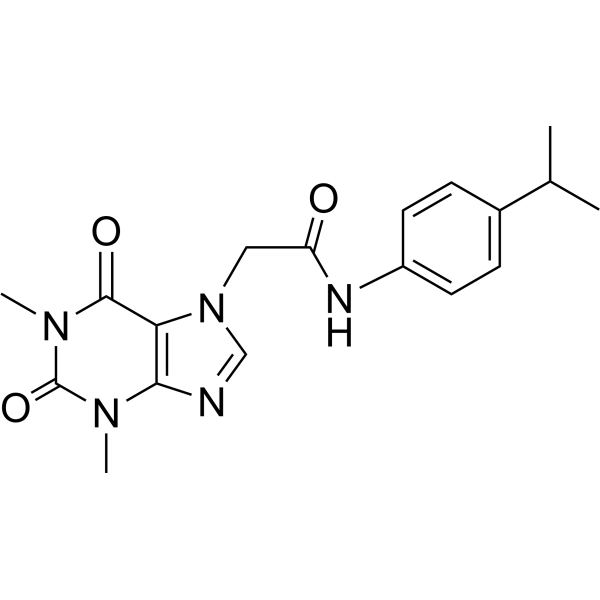
HY-15064
HC-030031TRP Channel Inhibitor -
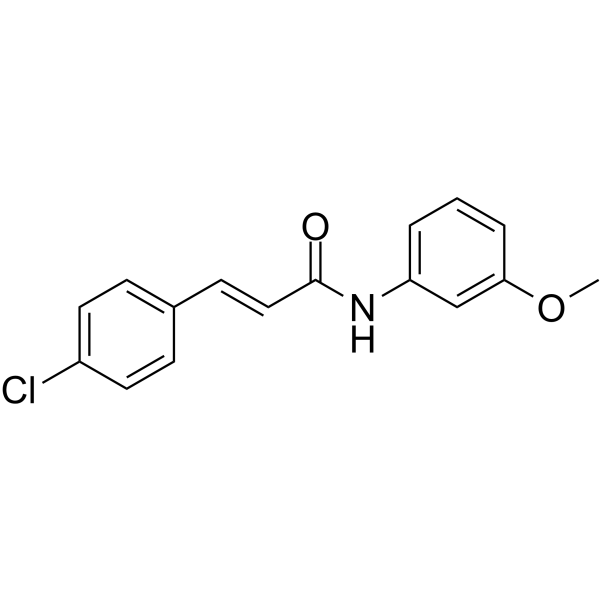
HY-12245
SB-366791VR1/TRPV1 Antagonist -
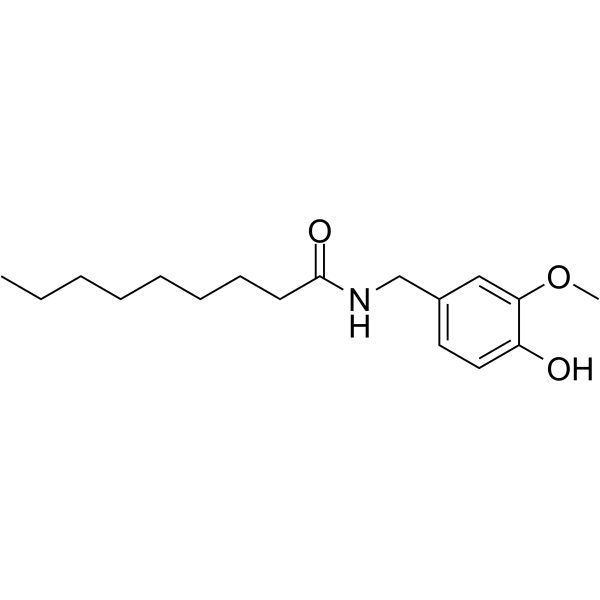
HY-17568
NonivamideTRP Channel Agonist -
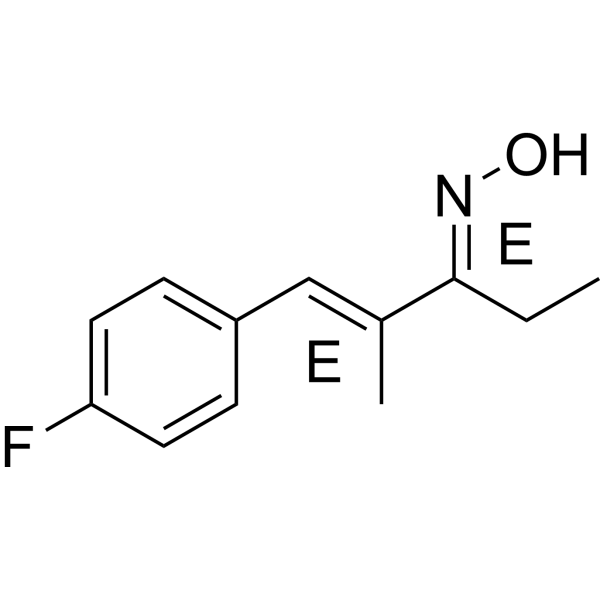
HY-108463
A-967079TRPA1 Receptor Antagonist -
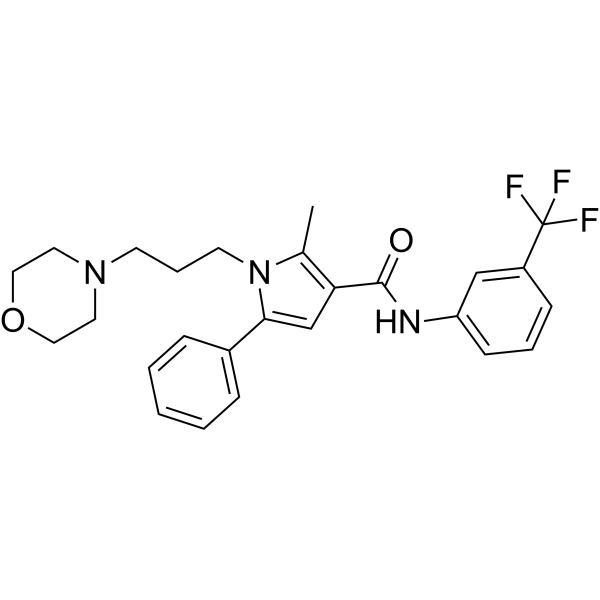
HY-100208
HC-067047TRPV4 Antagonist -
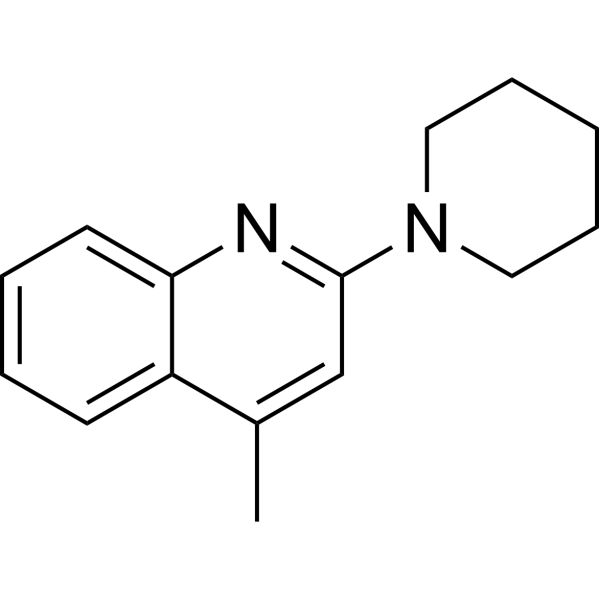
HY-12949
ML204TRPC4/TRPC5 Channel Inhibitor -
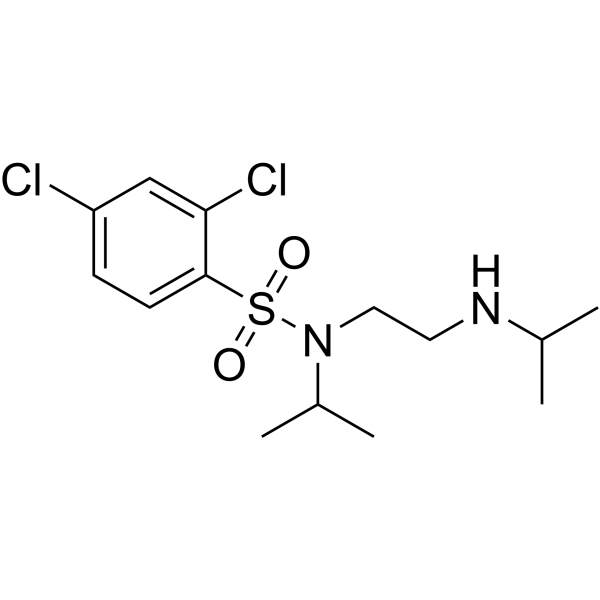
HY-19975
RN-1734TRP Channel Antagonist -
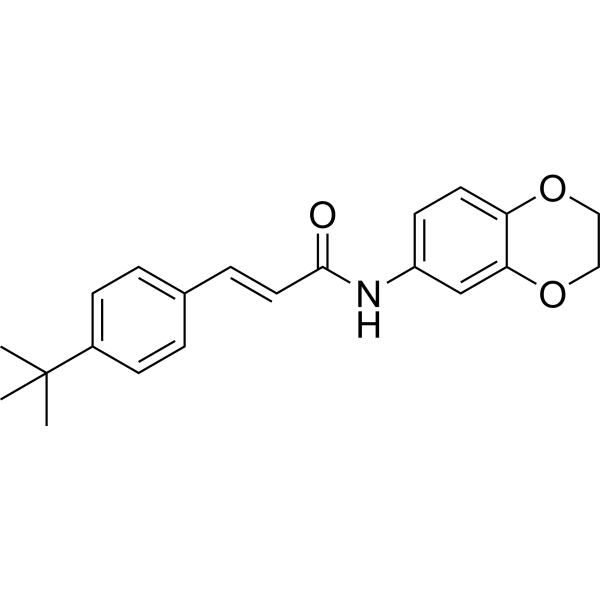
HY-101736
AMG9810TRPV1 Antagonist -
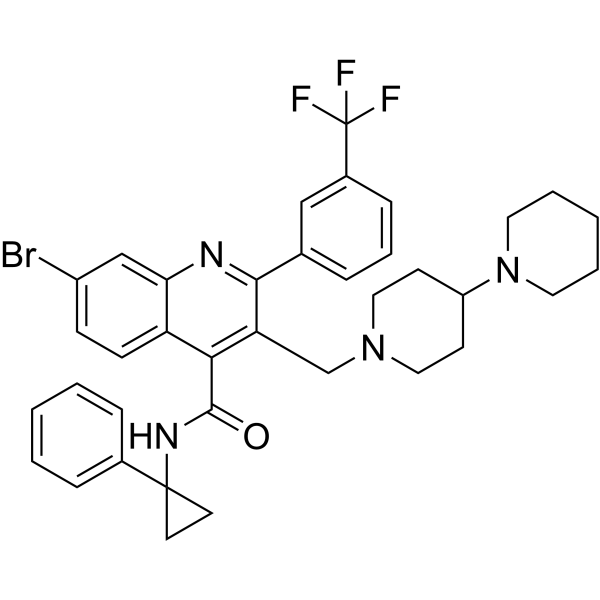
HY-100720
GSK2193874TRPV4 Antagonist -
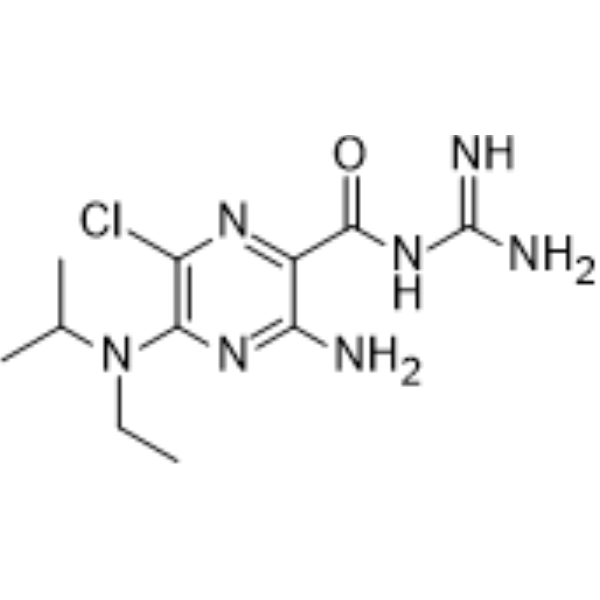
HY-101840
EIPATRPP3 Channel Inhibitor -
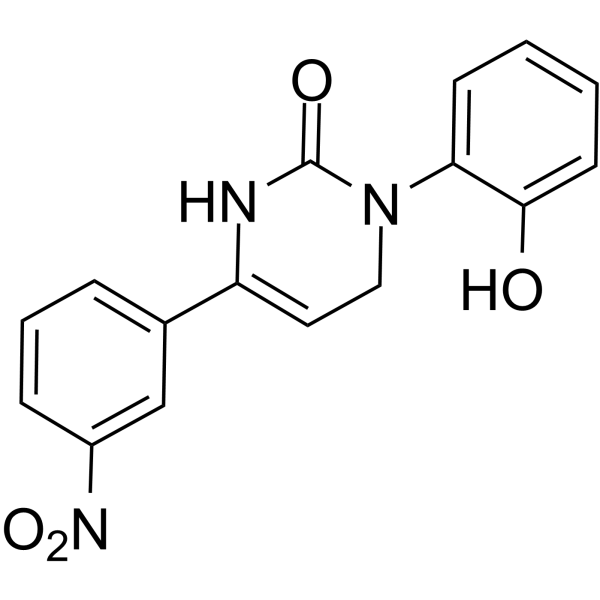
HY-11062
IcilinTRPM8 Agonist -
HY-108449
AcoltremonTRPM8 agonist
Publications Citing Use of MedChemExpress (MCE) Chembridge-5861528
More

Biological Activity
Description
IC50 & Target
[1]|
TRPA1 14.3 μM (IC50, allyl isothiocyanate-evoked TRPA1 response) |
TRPA1 18.7 μM (IC50, 4-HNE-evoked TRPA1 response) |
In Vitro
In Vivo
Chembridge-5861528 (3 and 10 μg/rat; i.t.; once) attenuates Capsaicin (HY-10448)-induced blood flow increase in a dose-related fashion[2].
MedChemExpress (MCE) has not independently confirmed the accuracy of these methods. They are for reference only.
-
Animal Model:Male Hannover-Wistar rats, Streptozocin-induced diabetes mellitus model[1]
-
Dosage:30 mg/kg
-
Administration:Intraperitoneal injection, twice daily for a week
-
Result:Significantly attenuated development of mechanical hypersensitivity as revealed by the paw pressure test (F1,80= 31.4, P < 0.0001).
-
Animal Model:Male Hannover–Wistar rats (220-260 g), Capsaicin-induced neurogenic inflammation model[2]
-
Dosage:0, 3, and 10 μg/rat
-
Administration:Intrathecal injection, 20 min before Capsaicin injection
-
Result:Significantly decreased the blood flow at 10 μg.


Chemical Information
-
CAS No. 332117-28-9
-
Appearance Solid
-
Molecular Weight 369.42
-
Formula C19H23N5O3
-
Color White to off-white
-
SMILES
O=C1C2=C(N=CN2CC(NC3=CC=C(C(C)CC)C=C3)=O)N(C)C(N1C)=O
-
Synonyms
TCS 5861528
-
Shipping
Room temperature in continental US; may vary elsewhere.
-
Storage
Powder -20°C 3 years 4°C 2 years In solvent -80°C 2 years -20°C 1 year


Publications (1)
-
Journal Impact Factor
-
Most Recent
-
Antioxidants (Basel)
Lipid Peroxidation Products 4-ONE and 4-HNE Modulate Voltage-Gated Sodium Channels in Neuronal Cell Lines and DRG Action Potentials. [Abstract]2026 Feb 4;15(2):206. PMID: 41750587


Solvent & Solubility
In Vitro:
DMSO : 120 mg/mL (324.83 mM; Need ultrasonic; Hygroscopic DMSO has a significant impact on the solubility of product, please use newly opened DMSO)
Please refer to the solubility information to select the appropriate solvent. Once prepared, please aliquot and store the solution to prevent product inactivation from repeated freeze-thaw cycles.
Storage method and period of stock solution: -80°C, 2 years; -20°C, 1 year. When stored at -80°C, please use it within 2 years. When stored at -20°C, please use it within 1 year.
Please refer to the solubility information to select the appropriate solvent. Once prepared, please aliquot and store the solution to prevent product inactivation from repeated freeze-thaw cycles.
Storage method and period of stock solution: -80°C, 2 years; -20°C, 1 year. When stored at -80°C, please use it within 2 years. When stored at -20°C, please use it within 1 year.
Concentration (start) × Volume (start) = Concentration (final) × Volume (final)
In Vivo:
Select the appropriate dissolution method based on your experimental animal and administration route.
- For the following dissolution methods, please ensure to first prepare a clear stock solution using an In Vitro approach and then sequentially add co-solvents:
- To ensure reliable experimental results, the clarified stock solution can be appropriately stored based on storage conditions. As for the working solution for In Vivo experiments, it is recommended to prepare freshly and use it on the same day.
- The percentages shown for the solvents indicate their volumetric ratio in the final prepared solution. If precipitation or phase separation occurs during preparation, heat and/or sonication can be used to aid dissolution.
Add each solvent one by one: 10% DMSO 90% (20% SBE-β-CD in Saline)
Solubility: ≥ 3 mg/mL (8.12 mM); Clear solution
This protocol yields a clear solution of ≥ 3 mg/mL (saturation unknown).
Taking 1 mL working solution as an example, add 100 μL DMSO stock solution (30.0 mg/mL) to 900 μL 20% SBE-β-CD in Saline, and mix evenly.
Preparation of 20% SBE-β-CD in Saline (4°C, storage for one week): 2 g SBE-β-CD powder is dissolved in 10 mL Saline, completely dissolve until clear.
In Vivo Dissolution Calculator
Please enter the basic information of animal experiments:
-
-
-
-
Recommended: Prepare an additional quantity of animals to account for potential losses during experiments.
Please enter your animal formula composition:
-
%DMSO +
Recommended: Keep the proportion of DMSO in working solution below 2% if your animal is weak.
-
%+
-
+%Tween-80 + +
-
%Saline +
The co-solvents required include: DMSO, . All of co-solvents are available by MedChemExpress (MCE). , Tween 80. All of co-solvents are available by MedChemExpress (MCE).
Working solution concentration: 0.22 mg/mL
Method for preparing stock solution: mg drug dissolved in μL DMSO. Stock solution concentration: mg/mL.
1. Take μL DMSO stock solution;
2. Add μL .
μL , mix evenly;
3. Then add μL Tween 80, mix evenly;
4. Then add μL
Please ensure that the stock solution in the first step is dissolved to a clear state, and add co-solvents in sequence. You can use ultrasonic heating (ultrasonic cleaner, recommended frequency 20-40 kHz), vortexing, etc. to assist dissolution.


Purity & Documentation
-
Data Sheet (275 KB)
-
SDS (393 KB)
- English - EN (393 KB)
- Français - FR (393 KB)
- Deutsch - DE (393 KB)
- Norwegian - NO (393 KB)
- Español - ES (393 KB)
- Swedish - SV (393 KB)
- Italian - IT (393 KB)
- Korean - KR (393 KB)
- Portuguese - PT (393 KB)
-
Handling Instructions (2659 KB)
References
[1]. Wei H, et al. Attenuation of mechanical hypersensitivity by an antagonist of the TRPA1 ion channel in diabetic animals. Anesthesiology. 2009 Jul;111(1):147-54. [Content Brief]
[2]. Wei H, et al. Spinal TRPA1 ion channels contribute to cutaneous neurogenic inflammation in the rat. Neurosci Lett. 2010 Aug 2;479(3):253-6. [Content Brief]


Complete Stock Solution Preparation Table
Please refer to the solubility information to select the appropriate solvent. Once prepared, please aliquot and store the solution to prevent product inactivation from repeated freeze-thaw cycles.
Storage method and period of stock solution: -80°C, 2 years; -20°C, 1 year. When stored at -80°C, please use it within 2 years. When stored at -20°C, please use it within 1 year.
| Optional Solvent | Concentration Solvent Mass | 1 mg | 5 mg | 10 mg | 25 mg |
|---|---|---|---|---|---|
| DMSO | 1 mM | 2.7069 mL | 13.5347 mL | 27.0695 mL | 67.6736 mL |
| 5 mM | 0.5414 mL | 2.7069 mL | 5.4139 mL | 13.5347 mL | |
| 10 mM | 0.2707 mL | 1.3535 mL | 2.7069 mL | 6.7674 mL | |
| 15 mM | 0.1805 mL | 0.9023 mL | 1.8046 mL | 4.5116 mL | |
| 20 mM | 0.1353 mL | 0.6767 mL | 1.3535 mL | 3.3837 mL | |
| 25 mM | 0.1083 mL | 0.5414 mL | 1.0828 mL | 2.7069 mL | |
| 30 mM | 0.0902 mL | 0.4512 mL | 0.9023 mL | 2.2558 mL | |
| 40 mM | 0.0677 mL | 0.3384 mL | 0.6767 mL | 1.6918 mL | |
| 50 mM | 0.0541 mL | 0.2707 mL | 0.5414 mL | 1.3535 mL | |
| 60 mM | 0.0451 mL | 0.2256 mL | 0.4512 mL | 1.1279 mL | |
| 80 mM | 0.0338 mL | 0.1692 mL | 0.3384 mL | 0.8459 mL | |
| 100 mM | 0.0271 mL | 0.1353 mL | 0.2707 mL | 0.6767 mL |


Chembridge-5861528 Related Classifications
HY-15065 Related Classifications
 Powered by Bioz