



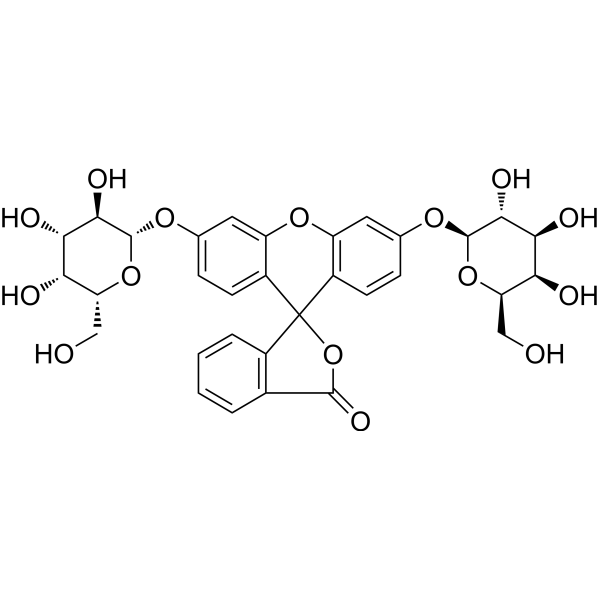
Fluorescein di(β-D-galactopyranoside)
Based on 7 publication(s) in Google Scholar
Fluorescein di(β-D-galactopyranoside) is a fluorogenic substrate for β-galactosidase (λex=485 nm, λem=535 nm).
For research use only. We do not sell to patients.
- Purity : 99.81%
- CAS No.: 17817-20-8
- Formula: C32H32O15
- Molecular Weight:656.59
-
Storage:
-20°C, protect from light
* The compound is unstable in solutions, freshly prepared is recommended.

To place orders, for customer services and technical support, please contact: MedChemExpress USA
Tel: 609-228-6898 E-mail: [email protected] [email protected]


-
 Biological Activity
-
Chemical Information
-
Solvent & Solubility
- Purity & Documentation
- References
-
 Help & FAQs


-
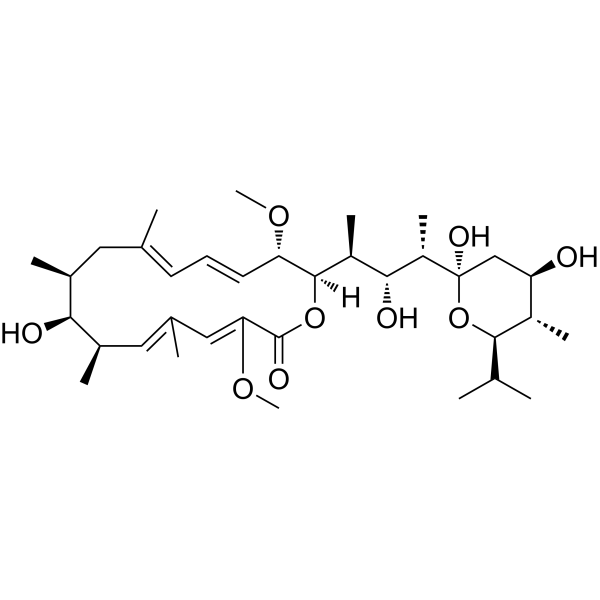
HY-100558
Bafilomycin A1V-ATPase Inhibitor -
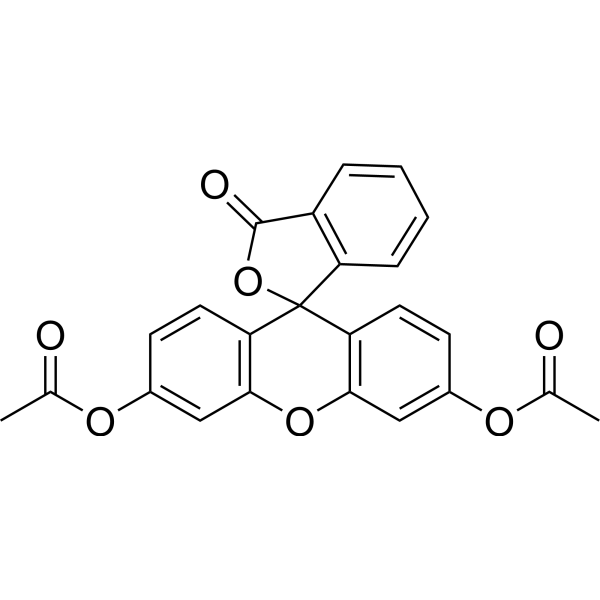
HY-D0719
Fluorescein DiacetateFluorogenic Substrate -
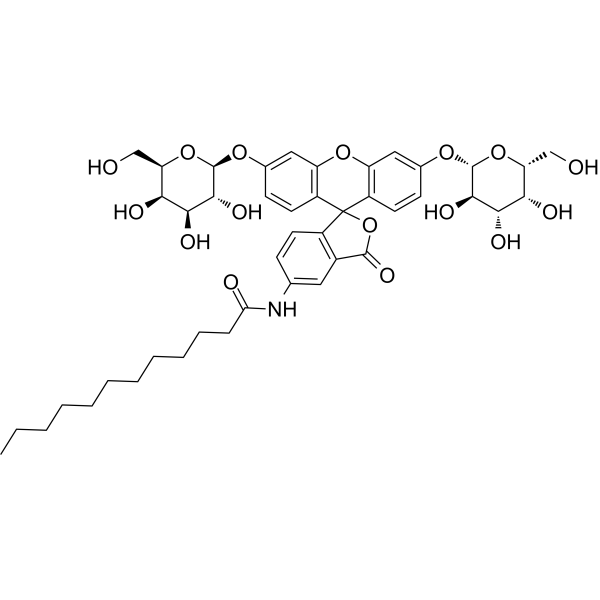
HY-126839
C12FDGβ-Galactosidase Fluorescent Substrate -
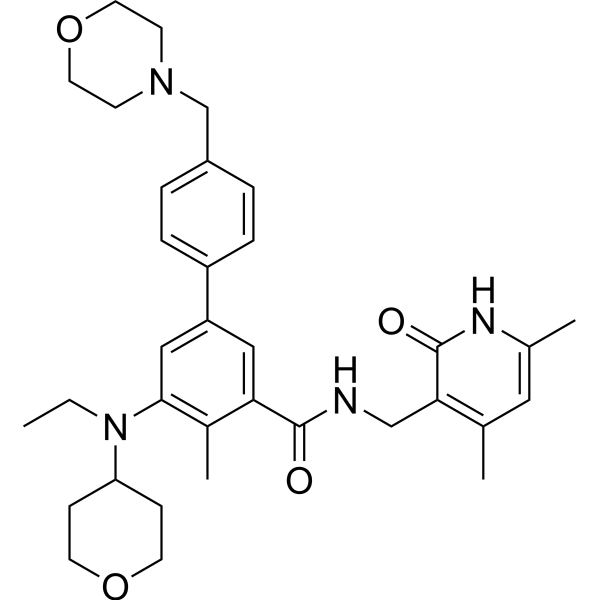
HY-13803
TazemetostatEZH2 Inhibitor -
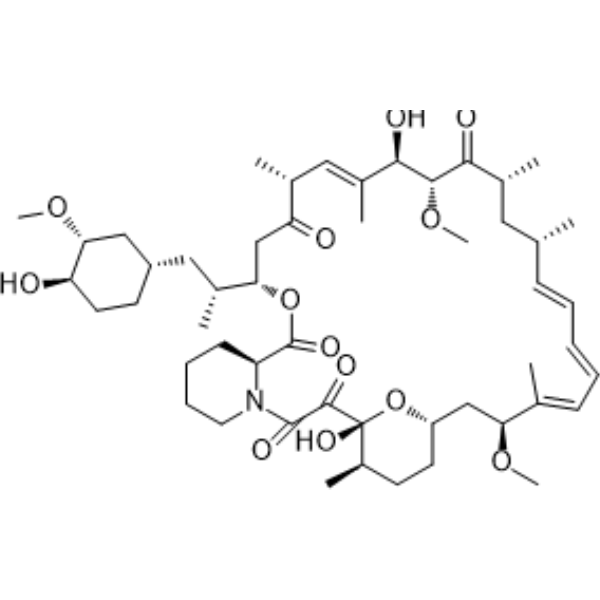
HY-10219
RapamycinmTOR Inhibitor -

HY-DY1033
C12FDG (solution)β-Galactosidase Fluorescent Substrate -
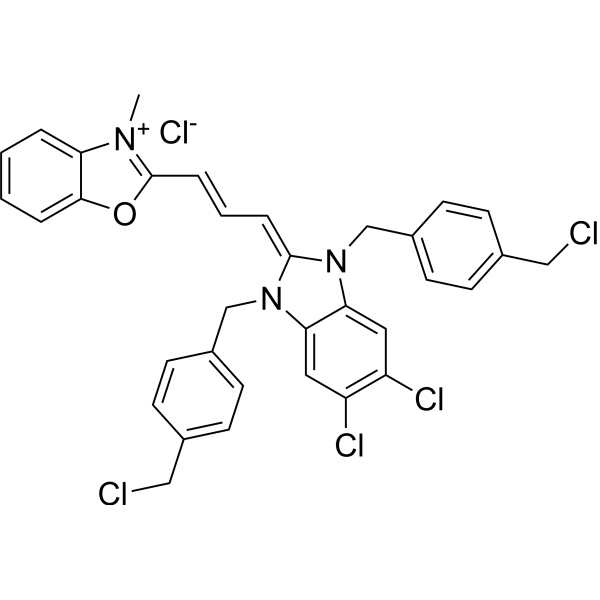
HY-135056
MitoTracker Green FMMitochondrial Dye -

HY-D0719R
Fluorescein Diacetate (Standard)Fluorogenic Substrate -
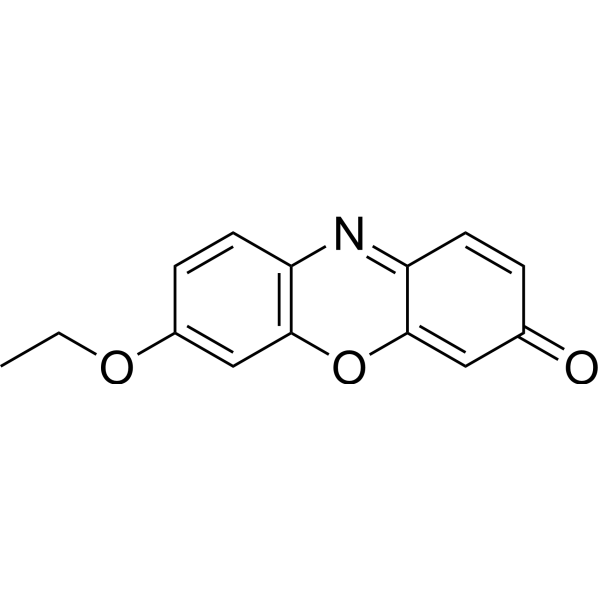
HY-D0145
7-EthoxyresorufinCytochrome P450 Inhibitor -
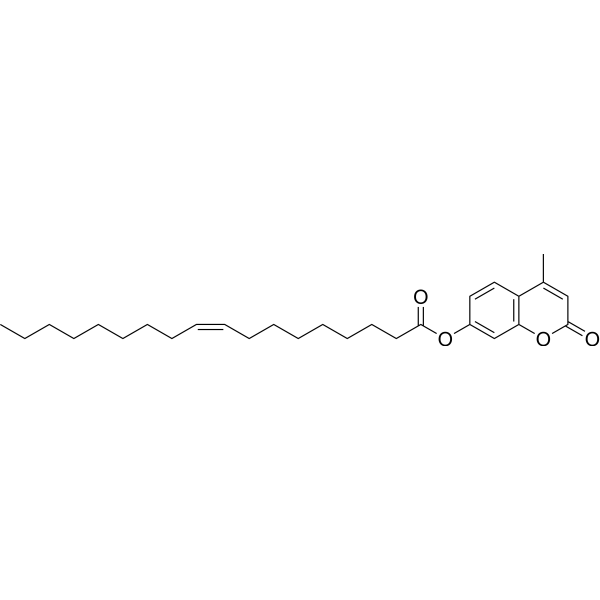
HY-117095
4-Methylumbelliferyl oleateFluorescent Substrate -

HY-113899
Biotin 4-amidobenzoic acid sodiumBiotinylated Reagent -
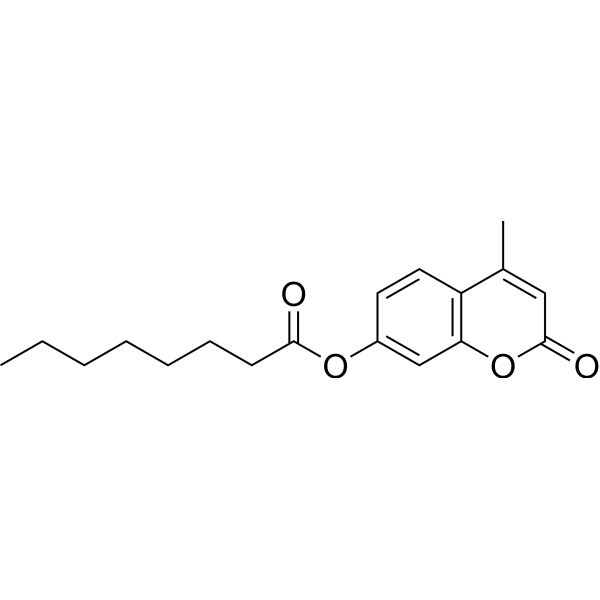
HY-W099648
4-Methylumbelliferyl octanoateOctoate
Publications Citing Use of MedChemExpress (MCE) Fluorescein di(β-D-galactopyranoside)
More- Nat Immunol. 2025 Apr 11. [Abstract]
- Bone Res. 2025 Jun 12;13(1):62. [Abstract]
- Autophagy. 2025 Feb;21(2):352-373. [Abstract]
- Nat Commun. 2023 Dec 5;14(1):7699. [Abstract]
- ACS Nano. 2021 Aug 24;15(8):13077-13084. [Abstract]
- ACS Appl Mater Interfaces. 2022 Mar 30;14(12):14693-14702. [Abstract]
- SSRN. 2025 Jun 18.


Biological Activity
Description
In Vitro
Guidelines (the following is our recommended protocol; this protocol is provided for guidance only and should be modified according to your specific needs).
Assay of senescence-associated β-galactosidase (SA-βG) activity[1].
The cells (5×10³ cells per well) are cultured in a 96-
well plate.
Wash with PBS.
Fixed for 5 min in 2% formaldehyde and 0.2% glutaraldehyde buffered with PBS.
Washing thrice in PBS.
An aliquot (100 μL) of the reaction buffer (i.e., the staining solution without X-Gal) is added into each well (containing 3.7 mL 0.2 M citric acid, 6.3 mL 0.4 M Na2HPO4 (citrate-phosphate buffer), 1 mL 100 mM potassium ferricyanide, 1 mL 100 mM potassium ferrocyanide, 0.6 mL 5 M NaCl, 0.2 mL 0.2 M MgCl2, and 7.2 mL deinozied water in a total volume of 20 mL is used) .
10 μL of 2 mM FDG is added per well and the plate was incubated in the dark at 37°C for 24 h without CO2 supply.
The fluorescein fluorescence was measured using a fluorometer (Ex/Em = 485/535 nm).
MedChemExpress (MCE) has not independently confirmed the accuracy of these methods. They are for reference only. .
Emission (Em)
520
Excitation (Ex)
488


Chemical Information
-
CAS No. 17817-20-8
-
Appearance Solid
-
Molecular Weight 656.59
-
Formula C32H32O15
-
Color Yellow to orange
-
SMILES
O=C1OC2(C(C=CC(O[C@@H]([C@@H]([C@@H](O)[C@H]3O)O)O[C@@H]3CO)=C4)=C4OC5=CC(O[C@@H]([C@@H]([C@@H](O)[C@H]6O)O)O[C@@H]6CO)=CC=C25)C7=C1C=CC=C7
-
Synonyms
FDG
-
Shipping
Room temperature in continental US; may vary elsewhere.
-
Storage
-20°C, protect from light
* The compound is unstable in solutions, freshly prepared is recommended.


Publications (7)
-
Journal Impact Factor
-
Most Recent
-
Nat Immunol
2025 Apr 11. PMID: 40217111 -
Bone Res
Chaperone-mediated autophagy directs a dual mechanism to balance premature senescence and senolysis to prevent intervertebral disc degeneration. [Abstract]2025 Jun 12;13(1):62. PMID: 40506462 -
Autophagy
Impaired degradation of PLCG1 by chaperone-mediated autophagy promotes cellular senescence and intervertebral disc degeneration. [Abstract]2025 Feb;21(2):352-373. PMID: 39212196 -
Nat Commun
2023 Dec 5;14(1):7699. PMID: 38052788 -
ACS Nano
Digital Hybridization Human Papillomavirus Assay with Attomolar Sensitivity without Amplification. [Abstract]2021 Aug 24;15(8):13077-13084. PMID: 34324808 -
ACS Appl Mater Interfaces
Ultrasensitive Analysis of Exosomes Using a 3D Self-Assembled Nanostructured SiO2 Microfluidic Chip. [Abstract]2022 Mar 30;14(12):14693-14702. PMID: 35199982 -


Solvent & Solubility
In Vitro:
DMSO : 5 mg/mL (7.62 mM; ultrasonic and warming and heat to 60°C; Hygroscopic DMSO has a significant impact on the solubility of product, please use newly opened DMSO)
Please refer to the solubility information to select the appropriate solvent. The compound is unstable in solutions, freshly prepared is recommended.
Please refer to the solubility information to select the appropriate solvent. The compound is unstable in solutions, freshly prepared is recommended.
Concentration (start) × Volume (start) = Concentration (final) × Volume (final)


Purity & Documentation
-
Data Sheet (279 KB)
-
SDS (394 KB)
- English - EN (394 KB)
- Français - FR (394 KB)
- Deutsch - DE (394 KB)
- Norwegian - NO (394 KB)
- Español - ES (394 KB)
- Swedish - SV (394 KB)
- Italian - IT (394 KB)
- Korean - KR (394 KB)
- Portuguese - PT (394 KB)
-
Handling Instructions (2659 KB)
References


Complete Stock Solution Preparation Table
Please refer to the solubility information to select the appropriate solvent. The compound is unstable in solutions, freshly prepared is recommended.
| Optional Solvent | Concentration Solvent Mass | 1 mg | 5 mg | 10 mg | 25 mg |
|---|---|---|---|---|---|
| DMSO | 1 mM | 1.5230 mL | 7.6151 mL | 15.2302 mL | 38.0755 mL |
| 5 mM | 0.3046 mL | 1.5230 mL | 3.0460 mL | 7.6151 mL |


Fluorescein di(β-D-galactopyranoside) Related Classifications
HY-101895 Related Classifications
 Powered by Bioz