



Menaquinone-4
Based on 9 publication(s) in Google Scholar
Menaquinone-4 is a vitamin K, used as a hemostatic agent, and also a adjunctive therapy for the pain of osteoporosis.
Nos produits utilisent uniquement pour la recherche. Nous ne vendons pas aux patients.
- Pureté : 99.96%
- CAS No.: 863-61-6
- Formule: C31H40O2
- Masse moléculaire:444.65
-
Stockage:
4°C, protect from light
* In solvent : -80°C, 6 months; -20°C, 1 month (protect from light)

To place orders, for customer services and technical support, please contact: MedChemExpress USA
Tel: 609-228-6898 E-mail: [email protected] [email protected]


-
 Activité biologique
-
Chemical Information
-
Solvant et solubilité
- Pureté et documentation
- Références
-
 Help & FAQs


-
HY-N0684
Vitamin K1Endogenous Metabolite -
HY-112499
Menaquinone-7Vitamin K2 Subtype -
HY-B0332
MenadioneEndogenous Metabolite -
HY-15398
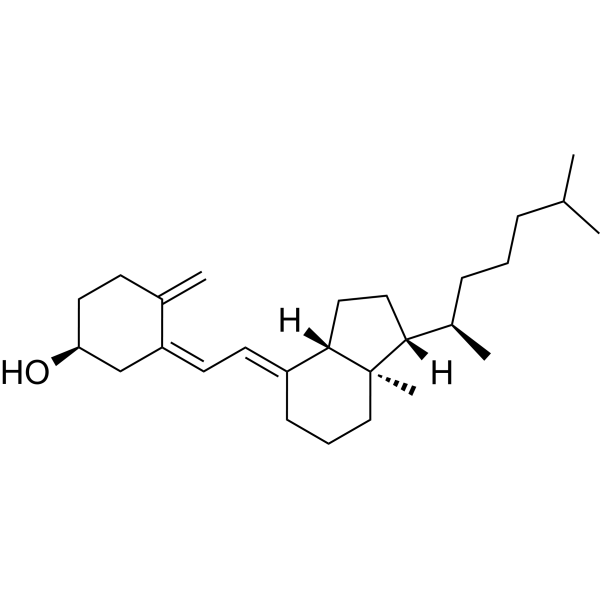
Vitamin D3Vitamin -
HY-B1508
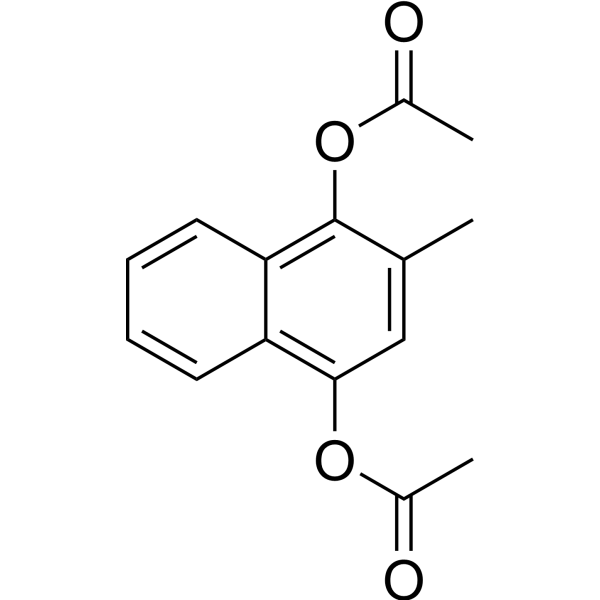
Vitamin K4Endogenous Metabolite -
HY-100579
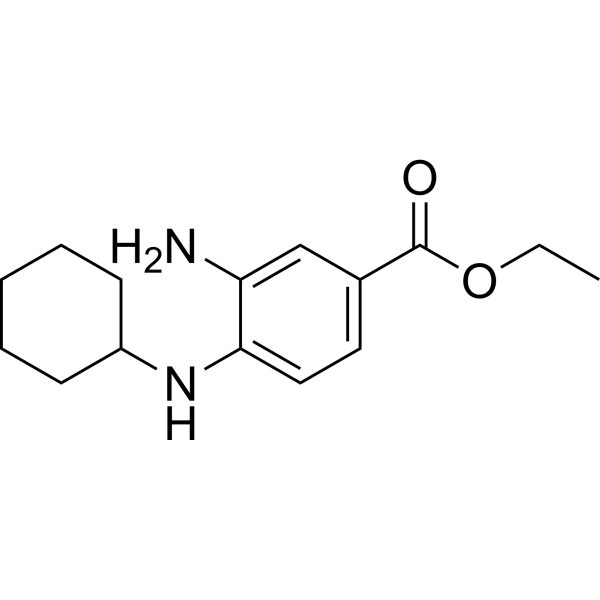
Ferrostatin-1Ferroptosis Inhibitor -
HY-N0683
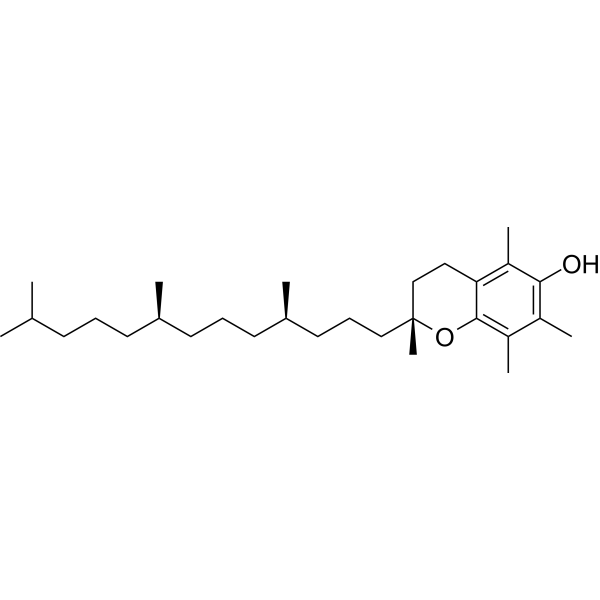
α-Vitamin EAntioxidant -

HY-B2156R
Menaquinone-4 (Standard)Endogenous Metabolite -
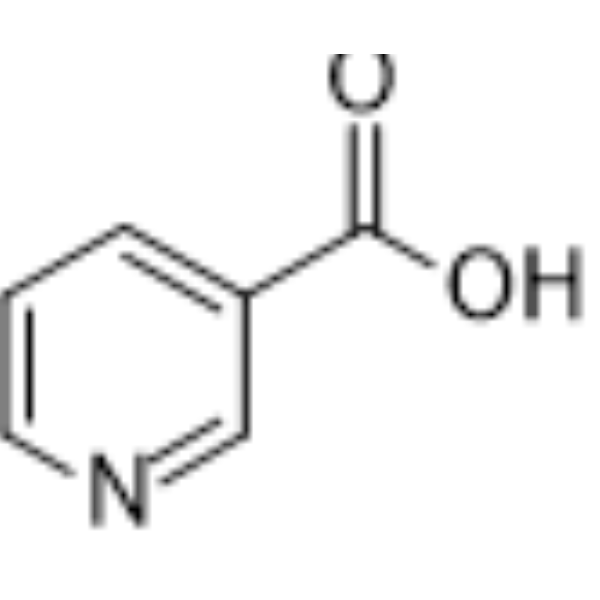
HY-B0143
NiacinB3 vitamin -
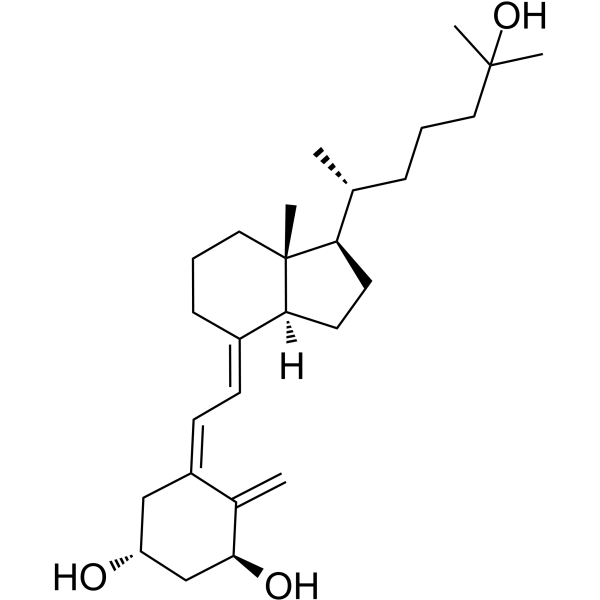
HY-10002
CalcitriolVDR Agonist -
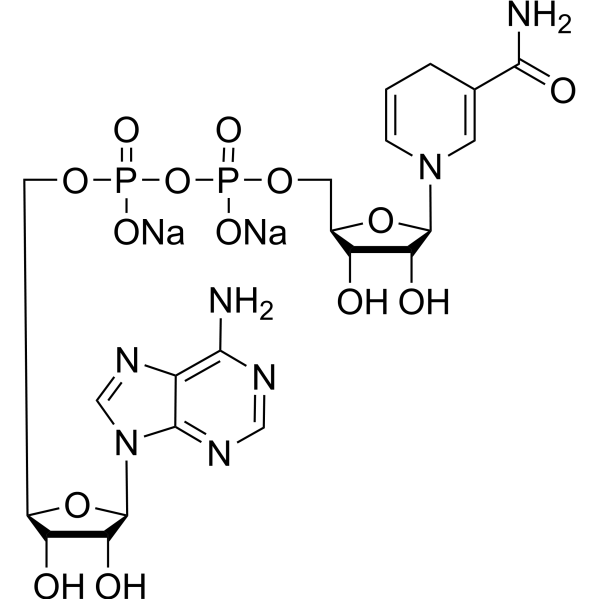
HY-F0001
NADH disodium saltReduced Coenzyme -
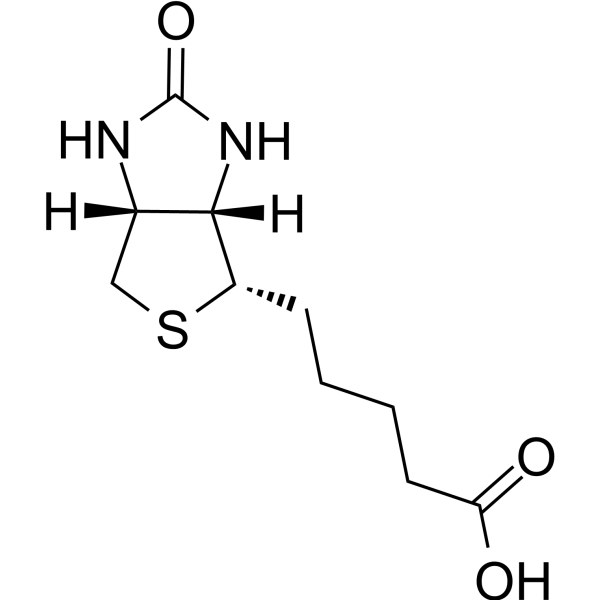
HY-B0511
BiotinVitamin B7
Publications Citing Use of MedChemExpress (MCE) Menaquinone-4
More- J Pharm Anal. 2025 May;15(5):101092. [Abstract]
- Acta Pharmacol Sin. 2025 Jun 23. [Abstract]
- Sci China Life Sci. 2026 Aug 6.
- J Ethnopharmacol. 2026 Oct 28:369:121880. [Abstract]
- Int Immunopharmacol. 2024 Jun 15:134:112257. [Abstract]
- Int J Antimicrob Agents. 2025 Nov 25;67(1):107679. [Abstract]
- J Inflamm Res. 2024 Oct 24:17:7675-7685. [Abstract]
- Gene. 2025 Oct 20:970:149785. [Abstract]
- SSRN. 2024 Nov 1.
 Customer Validation & Images

-
Cell Proliferation/Viability Assay
-
Cell Proliferation/Viability Assay
-
IF
-
ELISA
-
IP
Voir tous les produits spécifiques à Isoform Endogenous Metabolite
More

Activité biologique
Description
IC50 & Target
|
Human Endogenous Metabolite |
In Vitro
Menaquinone-4 (MK-4, 0, 1, 5, 10 μM) increases the ALP activity in Caco-2 cells. Menaquinone-4 (1 μM) significantly increases intensities of hSI expression[1].
MedChemExpress (MCE) has not independently confirmed the accuracy of these methods. They are for reference only.
In Vivo
MedChemExpress (MCE) has not independently confirmed the accuracy of these methods. They are for reference only.


Chemical Information
-
CAS No. 863-61-6
-
Appearance <35°C Solid,>35°C Liquid
-
Masse moléculaire 444.65
-
Formule C31H40O2
-
Color Light yellow to yellow
-
SMILES
O=C1C(C)=C(C/C=C(C)/CC/C=C(C)/CC/C=C(C)/CC/C=C(C)\C)C(C2=C1C=CC=C2)=O
-
Synonyms
Vitamin K2(MK-4); Menaquinone K4
-
Structure Classification
-
Initial Source
-
Livraison
Room temperature in continental US; may vary elsewhere.
-
Stockage
4°C, protect from light
* In solvent : -80°C, 6 months; -20°C, 1 month (protect from light)


Publications (9)
-
Journal Impact Factor
-
Most Recent
-
J Pharm Anal
Screen of FDA-approved drug library identifies vitamin K as anti-ferroptotic drug for osteoarthritis therapy through Gas6. [Abstract]2025 May;15(5):101092. PMID: 40496065
Menaquinone-4 purchased from MedChemExpress. Usage Cited in: J Pharm Anal. 2025 May;15(5):101092. [Abstract]
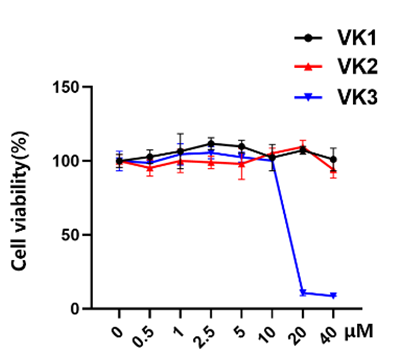
Menaquinone-4 (VK2, 0.5-40 μM; 24 h). Evaluation of cellular toxicity of vitamin K. Chondrocytes were treated with indicated vitamin K concentrations for 24 h.
-
Acta Pharmacol Sin
Ginsenoside (20)S-APPT induces ferroptosis in hepatocellular carcinoma and cholangiocarcinoma by targeting FSP1. [Abstract]2025 Jun 23. PMID: 40550962
Menaquinone-4 purchased from MedChemExpress. Usage Cited in: Acta Pharmacol Sin. 2025 Jun 23. [Abstract]
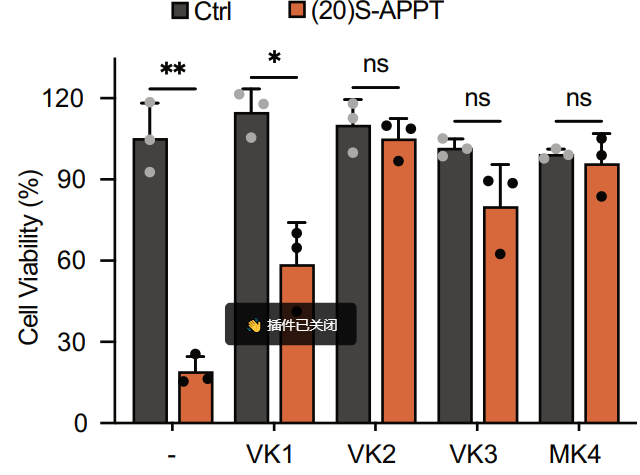
Cell viability analysis of SK-HEP-1 cells after treatment with 10 μM (20)S-APPT alone or simultaneously with various VKs (VK1 at 10 μM, Menaquinone-4 (VK2) at 10 μM, VK3 at 5 μM, and MK4 at 5 μM). The results demonstrated that VK2 could also serve as a substrate for FSP1, significantly attenuating cell death induced by (20)S-APPT.
-
-
J Ethnopharmacol
Ginkgo biloba extract GBE50 alleviates vascular calcification through inhibiting the NF-κB pathway and the NLRP3 inflammasome. [Abstract]2026 Oct 28:369:121880. PMID: 42155821 -
Int Immunopharmacol
Menaquinone-4 alleviates hypoxic-ischemic brain damage in neonatal rats by reducing mitochondrial dysfunction via Sirt1-PGC-1α-TFAM signaling pathway. [Abstract]2024 Jun 15:134:112257. PMID: 38759366 -
Int J Antimicrob Agents
2025 Nov 25;67(1):107679. PMID: 41308844 -
J Inflamm Res
Menaquinone-4 Alleviates Sepsis-Associated Acute Lung Injury via Activating SIRT3-p53/SLC7A11 Pathway. [Abstract]2024 Oct 24:17:7675-7685. PMID: 39469061
Menaquinone-4 purchased from MedChemExpress. Usage Cited in: J Inflamm Res. 2024 Oct 24:17:7675-7685. [Abstract]
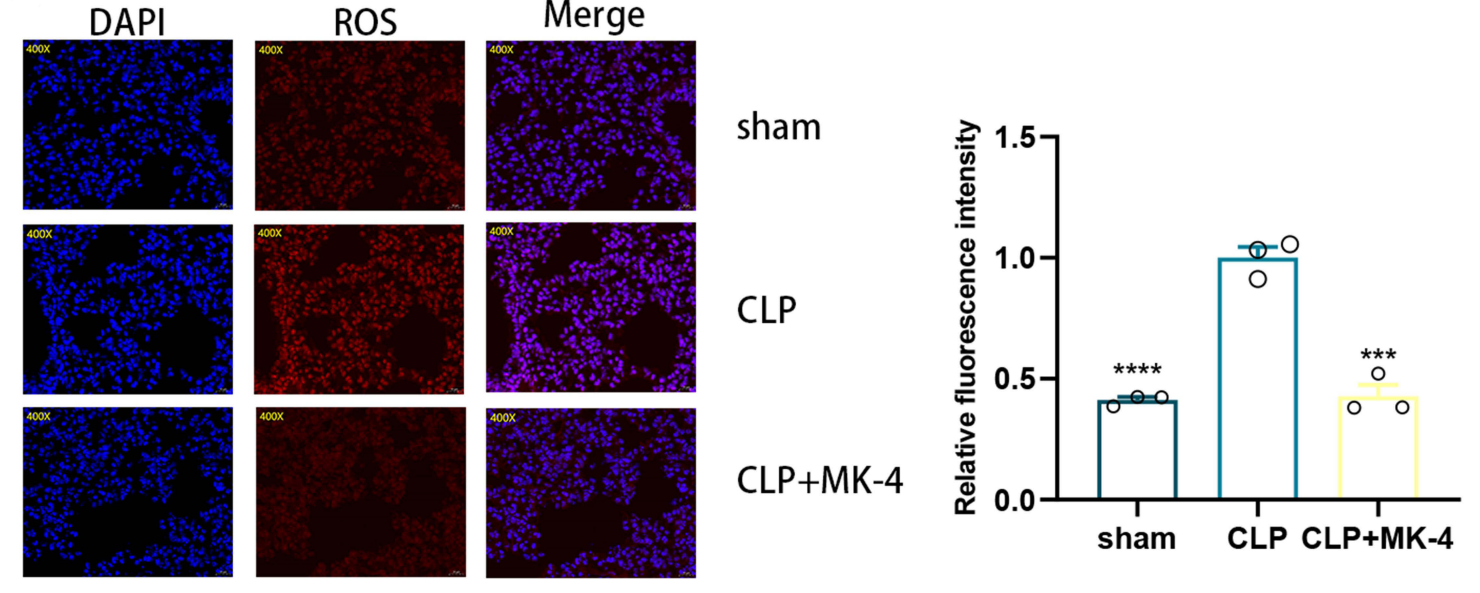
Immunofluorescence staining and quantitative detection of ROS levels in lung tissue. Magnification: ×200 (n=3). The results showed that the ROS level was significantly increased in the sepsis group (CLP group) compared with the control group or the sham-operated group. However, the ROS level in the Menaquinone-4 (MK-4, 200 mg/kg; i.p.; once daily for 3 days) + CLP group was markedly lower than that in the CLP group, suggesting that MK-4 ameliorated oxidative stress in SI-ALI in C57BL/6N mice.CLP: Cecal ligation and puncture.
Menaquinone-4 purchased from MedChemExpress. Usage Cited in: J Inflamm Res. 2024 Oct 24:17:7675-7685. [Abstract]
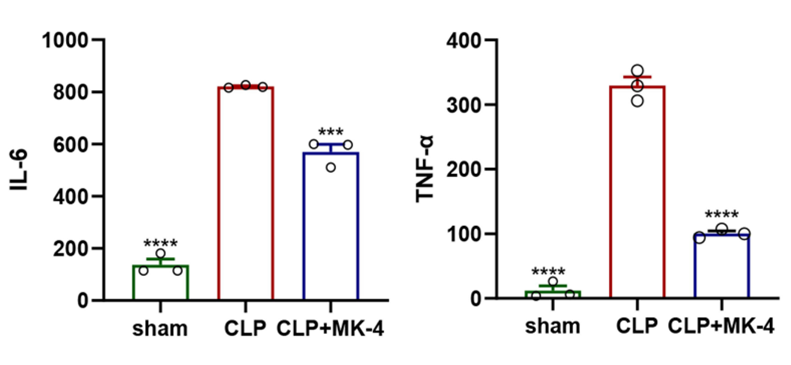
ELISA was used to measure the levels of IL-6 and TNF-α in cardiac blood (n=3). The results indicated that Menaquinone-4 (MK‑4, 200 mg/kg; i.p.; once daily for 3 days) reduced the levels of inflammatory cytokines in SI‑ALI in C57BL/6N mice. CLP: Cecal ligation and puncture.
Menaquinone-4 purchased from MedChemExpress. Usage Cited in: J Inflamm Res. 2024 Oct 24:17:7675-7685. [Abstract]
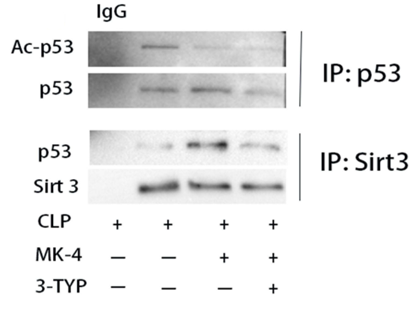
Menaquinone-4 (MK-4, 200 mg/kg; i.p.; once daily for 3 days) attenuated cecal ligation and puncture (CLP)-induced p53 acetylation in C57BL/6N mice.
-
Gene
Menaquinone-4 ameliorates abdominal aortic aneurysm by suppressing ferroptosis through NRF2/GCLM axis. [Abstract]2025 Oct 20:970:149785. PMID: 40992546 -


Solvant et solubilité
In Vitro:
DMSO : 10 mg/mL (22.49 mM; Need ultrasonic; Hygroscopic DMSO has a significant impact on the solubility of product, please use newly opened DMSO)
Please refer to the solubility information to select the appropriate solvent. Once prepared, please aliquot and store the solution to prevent product inactivation from repeated freeze-thaw cycles.
Storage method and period of stock solution: -80°C, 6 months; -20°C, 1 month (protect from light). When stored at -80°C, please use it within 6 months. When stored at -20°C, please use it within 1 month.
Please refer to the solubility information to select the appropriate solvent. Once prepared, please aliquot and store the solution to prevent product inactivation from repeated freeze-thaw cycles.
Storage method and period of stock solution: -80°C, 6 months; -20°C, 1 month (protect from light). When stored at -80°C, please use it within 6 months. When stored at -20°C, please use it within 1 month.
Concentration (start) × Volume (start) = Concentration (final) × Volume (final)
In Vivo:
Select the appropriate dissolution method based on your experimental animal and administration route.
- For the following dissolution methods, please ensure to first prepare a clear stock solution using an In Vitro approach and then sequentially add co-solvents:
- To ensure reliable experimental results, the clarified stock solution can be appropriately stored based on storage conditions. As for the working solution for In Vivo experiments, it is recommended to prepare freshly and use it on the same day.
- The percentages shown for the solvents indicate their volumetric ratio in the final prepared solution. If precipitation or phase separation occurs during preparation, heat and/or sonication can be used to aid dissolution.
Add each solvent one by one: 10% DMSO 40% PEG300 5% Tween-80 45% Saline
Solubility: ≥ 2.08 mg/mL (4.68 mM); Clear solution
This protocol yields a clear solution of ≥ 2.08 mg/mL (saturation unknown).
Taking 1 mL working solution as an example, add 100 μL DMSO stock solution (20.8 mg/mL) to 400 μL PEG300, and mix evenly; then add 50 μL Tween-80 and mix evenly; then add 450 μL Saline to adjust the volume to 1 mL.
Preparation of Saline: Dissolve 0.9 g sodium chloride in ddH₂O and dilute to 100 mL to obtain a clear Saline solution.
Add each solvent one by one: 10% DMSO 90% (20% SBE-β-CD in Saline)
Solubility: 2 mg/mL (4.50 mM); Suspended solution; Need ultrasonic
This protocol yields a suspended solution of 2 mg/mL. Suspended solution can be used for oral and intraperitoneal injection.
Taking 1 mL working solution as an example, add 100 μL DMSO stock solution (20.0 mg/mL) to 900 μL 20% SBE-β-CD in Saline, and mix evenly.
Preparation of 20% SBE-β-CD in Saline (4°C, storage for one week): 2 g SBE-β-CD powder is dissolved in 10 mL Saline, completely dissolve until clear.
In Vivo Dissolution Calculator
Please enter the basic information of animal experiments:
-
-
-
-
Recommended: Prepare an additional quantity of animals to account for potential losses during experiments.
Please enter your animal formula composition:
-
%DMSO +
Recommended: Keep the proportion of DMSO in working solution below 2% if your animal is weak.
-
%+
-
+%Tween-80 + +
-
%Saline +
The co-solvents required include: DMSO, . All of co-solvents are available by MedChemExpress (MCE). , Tween 80. All of co-solvents are available by MedChemExpress (MCE).
Working solution concentration: 0.22 mg/mL
Method for preparing stock solution: mg drug dissolved in μL DMSO. Stock solution concentration: mg/mL. * In solvent : -80°C, 6 months; -20°C, 1 month (protect from light)
1. Take μL DMSO stock solution;
2. Add μL .
μL , mix evenly;
3. Then add μL Tween 80, mix evenly;
4. Then add μL
Please ensure that the stock solution in the first step is dissolved to a clear state, and add co-solvents in sequence. You can use ultrasonic heating (ultrasonic cleaner, recommended frequency 20-40 kHz), vortexing, etc. to assist dissolution.


Pureté et documentation
-
Fiche technique (271 KB)
-
SDS (394 KB)
- English - EN (394 KB)
- Français - FR (394 KB)
- Deutsch - DE (394 KB)
- Norwegian - NO (394 KB)
- Español - ES (394 KB)
- Swedish - SV (394 KB)
- Italian - IT (394 KB)
- Korean - KR (394 KB)
- Portuguese - PT (394 KB)
-
Instruction de manipulation (2659 KB)
Références
[1]. Noda S, et al. Menaquinone-4 (vitamin K2) up-regulates expression of human intestinal alkaline phosphatase in Caco-2 cells. Nutr Res. 2016 Nov;36(11):1269-1276. [Content Brief]
[2]. Kim M, et al. Vitamin K1 (phylloquinone) and K2 (menaquinone-4) supplementation improves bone formation in a high-fat diet-induced obese mice. J Clin Biochem Nutr. 2013 Sep;53(2):108-13. [Content Brief]


Complete Stock Solution Preparation Table
Please refer to the solubility information to select the appropriate solvent. Once prepared, please aliquot and store the solution to prevent product inactivation from repeated freeze-thaw cycles.
Storage method and period of stock solution: -80°C, 6 months; -20°C, 1 month (protect from light). When stored at -80°C, please use it within 6 months. When stored at -20°C, please use it within 1 month.
| Optional Solvent | Concentration Solvent Mass | 1 mg | 5 mg | 10 mg | 25 mg |
|---|---|---|---|---|---|
| DMSO | 1 mM | 2.2490 mL | 11.2448 mL | 22.4896 mL | 56.2240 mL |
| 5 mM | 0.4498 mL | 2.2490 mL | 4.4979 mL | 11.2448 mL | |
| 10 mM | 0.2249 mL | 1.1245 mL | 2.2490 mL | 5.6224 mL | |
| 15 mM | 0.1499 mL | 0.7497 mL | 1.4993 mL | 3.7483 mL | |
| 20 mM | 0.1124 mL | 0.5622 mL | 1.1245 mL | 2.8112 mL |


Menaquinone-4 Related Classifications
HY-B2156 Related Classifications
 Powered by Bioz