



Chelidonium majus
-
Chelidonium majus (13)

- 1
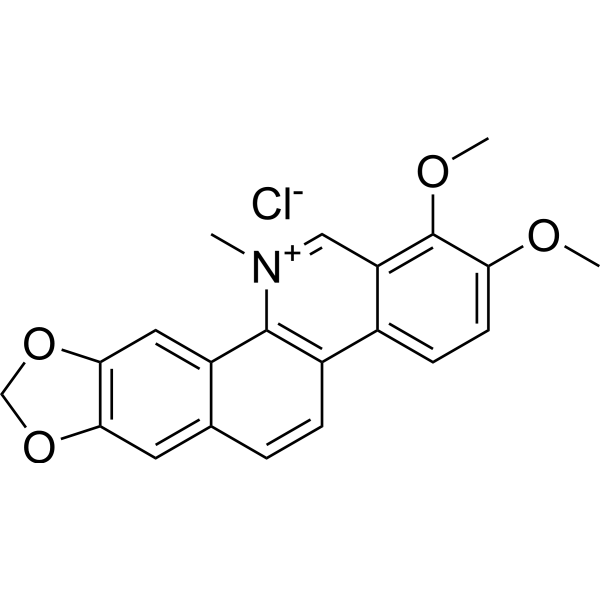
- Formula: C21H18ClNO4
- Molecular Weight: 383.82
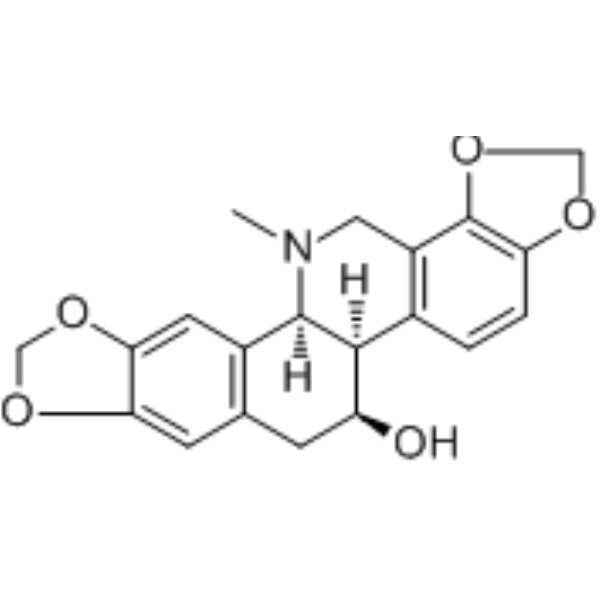
- Formula: C20H19NO5
- Molecular Weight: 353.37
Chelidonine, an isoquinoline alkaloid, can be isolated from Chelidonium majus L.. Chelidonine causes G2/M arrest and induces caspase-dependent and caspase-independent apoptosis, and prevents cell cycle progression of stem cells in Dugesia japonica. Chelidonine has cytotoxic activity against melanoma cell lines. with anticancer and antiviral activity.
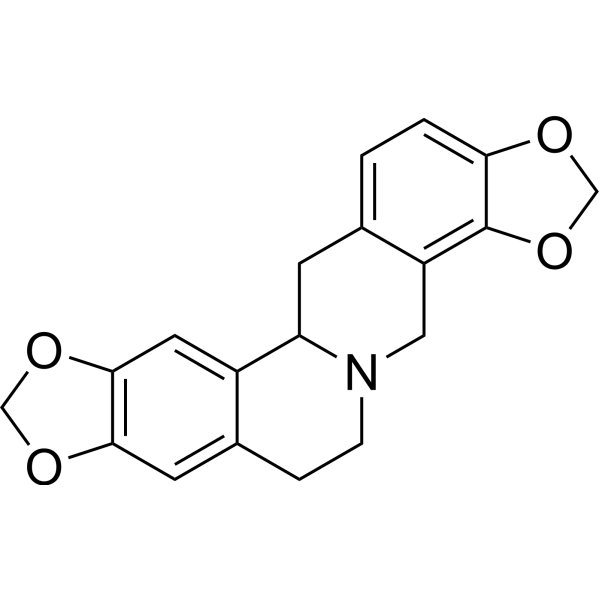
- Formula: C19H17NO4
- Molecular Weight: 323.34
(±)-Stylopine (Tetrahydrocoptisine) is an alkaloid compound. (±)-Stylopine can be isolated from the tubers of the plant Corydalis. (±)-Stylopine inhibits TNF-α, IL-6, and NO production, and attenuates phosphorylation of p38 MAPK, ERK1/2. (±)-Stylopine inhibits NF-κB expression. (±)-Stylopine exhibits anti-inflammatory activity. (±)-Stylopine has protective effects against foot edema, gastric ulcers, anxiety, depression, and acute lung injury.
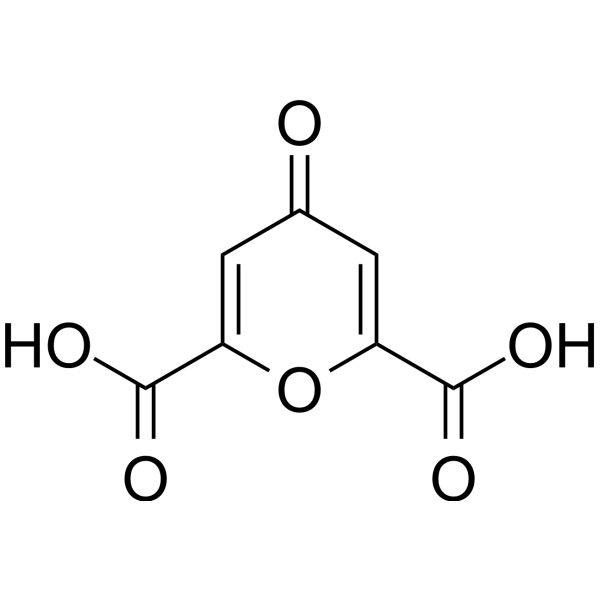
- Formula: C7H4O6
- Molecular Weight: 184.10
Chelidonic acid is a component of Chelidonium majus L., used as an antimicrobial. Chelidonic acid also shows anti-inflammatory activity. Chelidonic acid has potential to inhibit IL-6 production by blocking NF-κB and caspase-1. Chelidonic acid is a glutamate decarboxylase inhibitor, with a Ki of 1.2 μM.
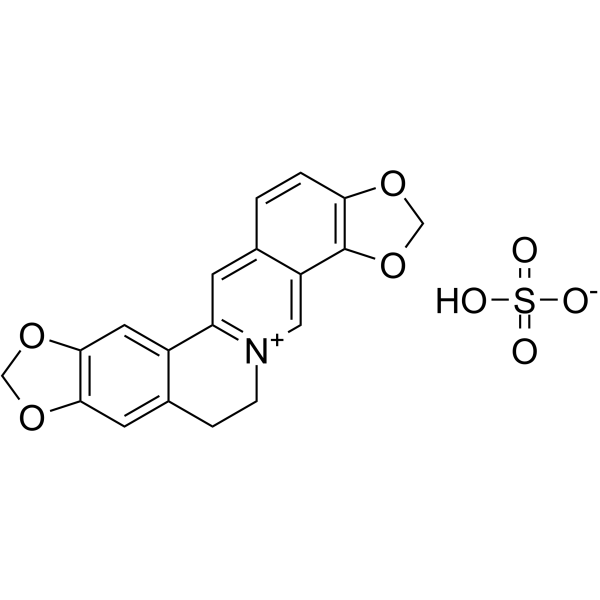
- Formula: C19H15NO8S
- Molecular Weight: 417.39
Coptisine Sulfate is an orally active and brain-penetrant alkaloid found in Coptis chinensis. Coptisine Sulfate is a reversible, uncompetitive IDO inhibitor with a Ki of 5.8 μM and an IC50 of 6.3 μM. Coptisine Sulfate suppresses neuroinflammation, reduces Aβ plaque burden and shows neuroprotective activity. Coptisine Sulfate shows anti-inflammation activity by blocking NF-κB, MAPK, and PI3K/Akt activation. Coptisine Sulfate inhibits cancer cells proliferation, induces DNA damage, G2/M phase cell cycle arrest, apoptosis, ROS production and mitochondrial dysfunction. Coptisine Sulfate inhibits Rho/ROCK pathway activation, reduces arrhythmia, limits cardiac injury marker release, reduces infarct size, and preserves cardiac function in rat myocardial ischemia/reperfusion models. Coptisine Sulfate downregulates HMGCR and upregulates LDLR and CYP7A1 to modulate cholesterol metabolism, reduces abnormal serum lipid levels, and promotes fecal bile acid excretion. Coptisine Sulfate be used for the research of cancer, hypercholesterolemia, Alzheimer’s disease, inflammatory disorders and cardiovascular disease.


- Formula: C20H19NO6
- Molecular Weight: 369.37
(+)-Chelamine (Compound 2) is a hexahydrobenzo[c]phenanthridine isoquinoline alkaloid that can be isolated from Chelidonium majus.

- Formula: C7H4O6
- Molecular Weight: 184.10
Chelidonic acid (Standard) is the analytical standard of Chelidonic acid. This product is intended for research and analytical applications. Chelidonic acid is a component of Chelidonium majus L., used as an antimicrobial. Chelidonic acid also shows anti-inflammatory activity. Chelidonic acid has potential to inhibit IL-6 production by blocking NF-κB and caspase-1. Chelidonic acid is a glutamate decarboxylase inhibitor, with a Ki of 1.2 μM.

- Formula: C20H19NO5
- Molecular Weight: 353.37
Chelidonine (Standard) is the analytical standard of Chelidonine. This product is intended for research and analytical applications. Chelidonine, an isoquinoline alkaloid, can be isolated from Chelidonium majus L.. Chelidonine causes G2/M arrest and induces caspase-dependent and caspase-independent apoptosis, and prevents cell cycle progression of stem cells in Dugesia japonica. Chelidonine has cytotoxic activity against melanoma cell lines. with anticancer and antiviral activity.

- Formula: C21H18ClNO4
- Molecular Weight: 383.82
Chelerythrine (chloride) (Standard) is the analytical standard of Chelerythrine (chloride). This product is intended for research and analytical applications. Chelerythrine chloride is a potent, cell-permeable inhibitor of protein kinase C, with an IC50 of 660 nM. Chelerythrine chloride inhibits the Bcl-XL-Bak BH3 peptide binding with IC50 of 1.5 μM and displaces Bax from Bcl-XL. Chelerythrine chloride induces apoptosis and autophagy.
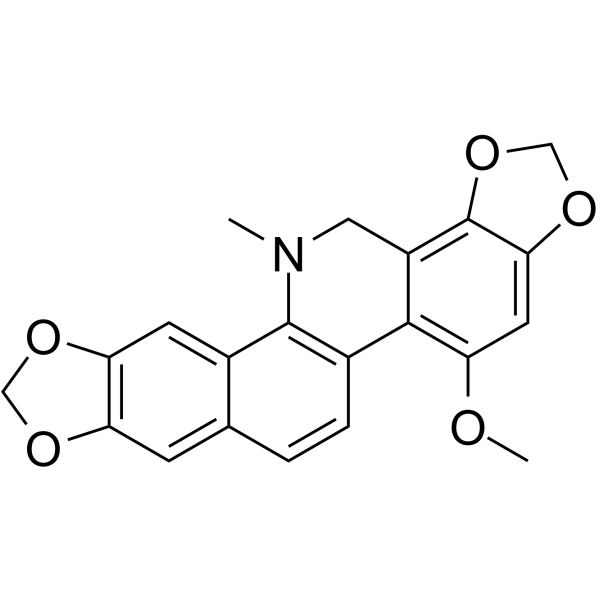
- Formula: C21H17NO5
- Molecular Weight: 363.36
Dihydrochelirubine is an alkaloid which can be found in roots of macleaya cordata.
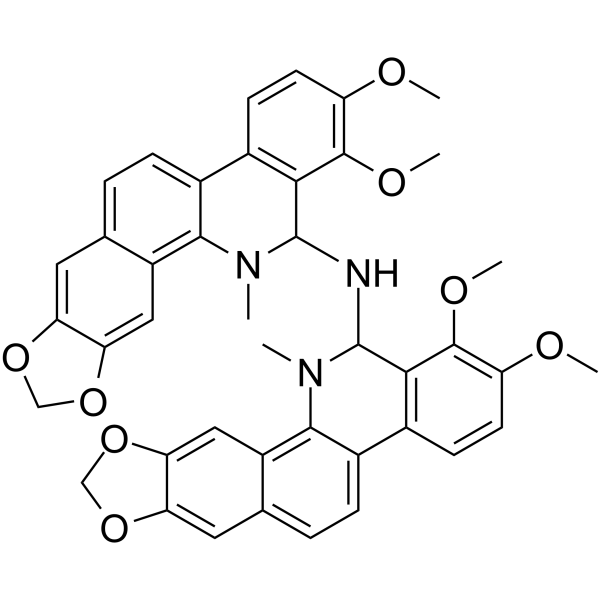
- Formula: C42H37N3O8
- Molecular Weight: 711.76
Bis(dihydrochelerythrinyl)amine possesses anti-bacteria activity.

- Formula: C19H17NO4
- Molecular Weight: 323.34
(±)-Stylopine (Tetrahydrocoptisine) is an alkaloid compound originally isolated from Corydalis tubers that exhibits anti-inflammatory and anti-parasitic activities.
- 1



