



Chelidonine (Standard)
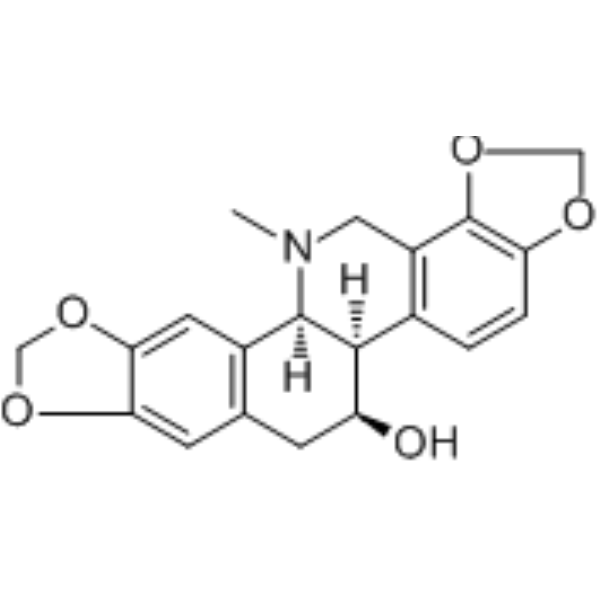
Chelidonine (Standard) is the analytical standard of Chelidonine. This product is intended for research and analytical applications. Chelidonine, an isoquinoline alkaloid, can be isolated from Chelidonium majus L.. Chelidonine causes G2/M arrest and induces caspase-dependent and caspase-independent apoptosis, and prevents cell cycle progression of stem cells in Dugesia japonica. Chelidonine has cytotoxic activity against melanoma cell lines. with anticancer and antiviral activity.
For research use only. We do not sell to patients.
- CAS No.: 476-32-4
- Formula: C20H19NO5
- Molecular Weight:353.37
-
Storage:
Please store the product under the recommended conditions in the Certificate of Analysis.


To place orders, for customer services and technical support, please contact: MedChemExpress USA
Tel: 609-228-6898 E-mail: [email protected] [email protected]


-
 Product Information
-
Chemical Information
- Purity & Documentation
-
 Help & FAQs


-
HY-N2369
ChelidonineIsoquinoline Alkaloid -
HY-76299
GalanthamineCholinesterase (ChE) Inhibitor -
HY-N0286
IsoimperatorinCholinesterase (ChE) Inhibitor -
HY-N0923
CorydalineCholinesterase (ChE) Inhibitor -
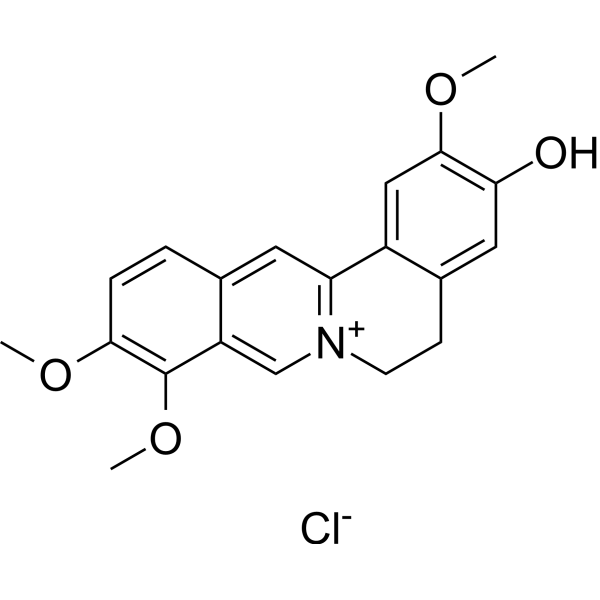
HY-N0740
Jatrorrhizine chlorideBioactive Alkaloid -
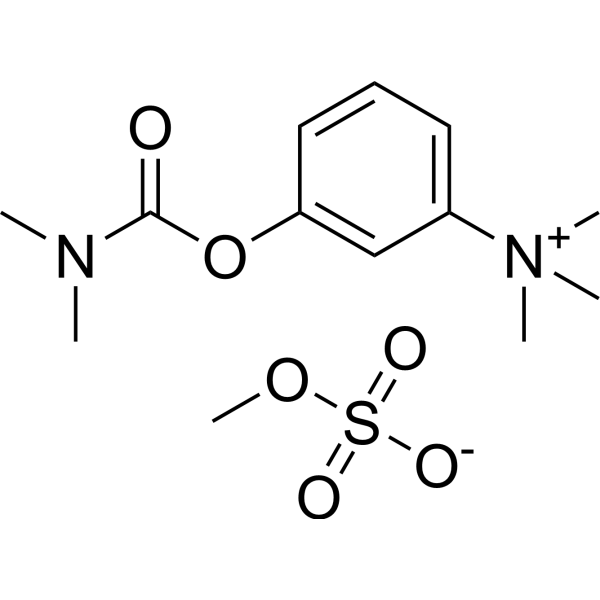
HY-B1206
Neostigmine (methyl sulfate)Acetylcholinesterase Inhibitor -
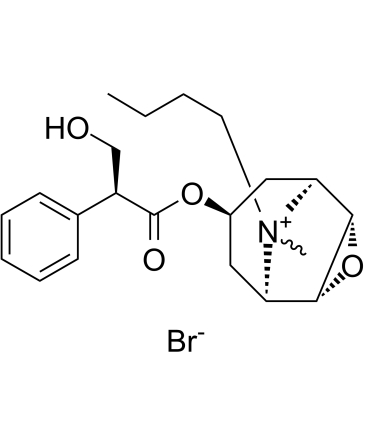
HY-N0340
Scopolamine butylbromideSpasmolytic -

HY-76299R
Galanthamine (Standard)Cholinesterase (ChE) Inhibitor -

HY-B1206R
Neostigmine (methyl sulfate) (Standard)Acetylcholinesterase Inhibitor -
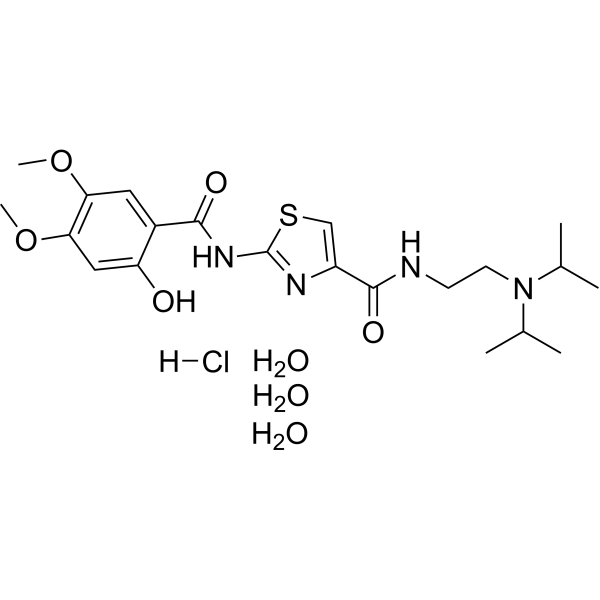
HY-B2155
Acotiamide monohydrochloride trihydrateAChE Inhibitor -

HY-N0286R
Isoimperatorin (Standard)Cholinesterase (ChE) Inhibitor -

HY-N0923R
Corydaline (Standard)Cholinesterase (ChE) Inhibitor


Product Information
Information
Application
The compound is the grade of analytical standard, which is the reference standard supplied assay. It is commonly used in qualitative, quantitative and methodological research experiments in HPLC, GC and MS.


Chemical Information
-
CAS No. 476-32-4
-
Molecular Weight 353.37
-
Formula C20H19NO5
-
SMILES
CN1[C@@]2([H])[C@@]([C@H](CC3=C2C=C4C(OCO4)=C3)O)([H])C5=C(C6=C(OCO6)C=C5)C1
-
Structure Classification
-
Initial Source
-
Shipping
Room temperature in continental US; may vary elsewhere.
-
Storage
Please store the product under the recommended conditions in the Certificate of Analysis.


Purity & Documentation
References
[1]. Lee YK, et al. Chelidonine Induces Caspase-Dependent and Caspase-Independent Cell Death through G2/M Arrest in the T98G Human Glioblastoma Cell Line. Evid Based Complement Alternat Med. 2019 May 26;2019:6318179. [Content Brief]
[2]. Isolani ME, et al. The in vivo effect of chelidonine on the stem cell system of planarians. Eur J Pharmacol. 2012 Jul 5;686(1-3):1-7. [Content Brief]
[3]. Hammerová J, et al. Benzo[c]phenanthridine alkaloids exhibit strong anti-proliferative activity in malignant melanoma cells regardless of their p53 status. J Dermatol Sci. 2011 Apr;62(1):22-35. [Content Brief]

Calculators
Concentration (start) × Volume (start) = Concentration (final) × Volume (final)


Chelidonine (Standard) Related Classifications
HY-N2369R Related Classifications
 Powered by Bioz