



Pancreatic Polypeptide, human

Based on 1 Customer Validation
Pancreatic Polypeptide, human is a C-terminally amidated 36 amino acid peptide, which acts as a neuropeptide Y (NPY) Y4/Y5 receptor agonist.
Nur für Forschungszwecke. Wir verkaufen nicht an Patienten.
- Reinheit : 99.39%
- CAS. Nr.: 75976-10-2
- Formel: C185H287N53O54S2
- Molecular Weight:4181.71
-
Speicherung:
Sealed storage, away from moisture.
Powder -80°C, 2 years , -20°C, 1 year* In solvent : -80°C, 6 months; -20°C, 1 month (sealed storage, away from moisture)


To place orders, for customer services and technical support, please contact: MedChemExpress USA
Tel: 609-228-6898 E-mail: [email protected] [email protected]


-
 Biologische Aktivität
-
Chemical Information
-
Lösungsmittel & Löslichkeit
- Reinheit & Dokumentation
- Verweise
-
 Help & FAQs


-
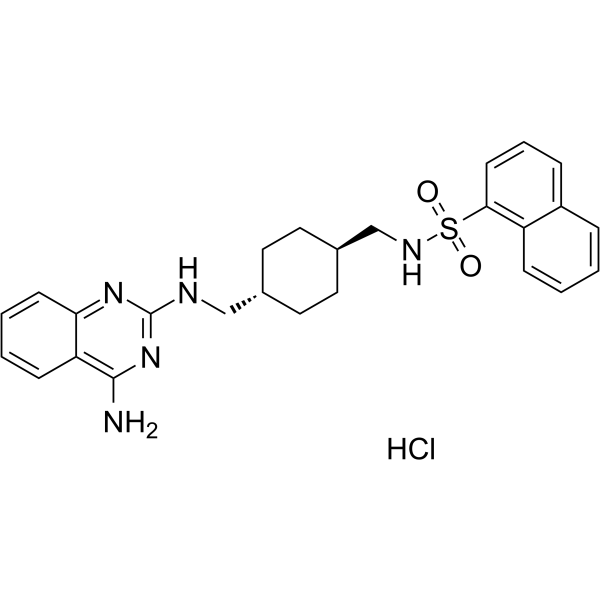
HY-107723
CGP71683 hydrochlorideNeuropeptide Receptor Antagonist -
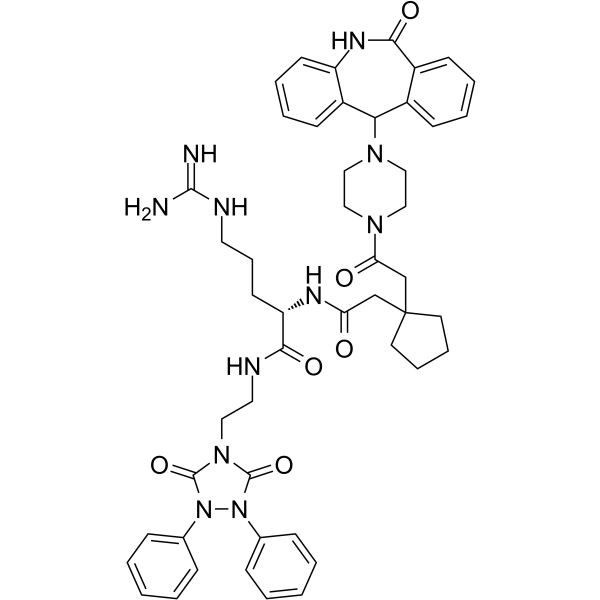
HY-101986
BIIE-0246NPY2R Antagonist -
![[D-Trp34]-Neuropeptide Y](https://file.medchemexpress.com/product_pic/hy-p1322.gif)
HY-P1322
[D-Trp34]-Neuropeptide YNPY Y5 Receptor Agonist -

HY-P1127
Galanin (1-30), humanGalR Agonist -
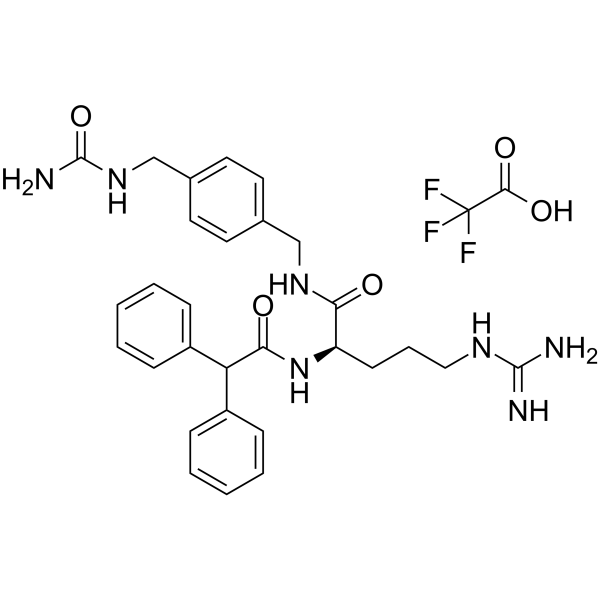
HY-107725
BIBO3304NPY Y1 Receptor Antagonist -
![[Leu31,Pro34]-Neuropeptide Y (porcine)](https://file.medchemexpress.com/product_pic/hy-p0208.gif)
HY-P0208
[Leu31,Pro34]-Neuropeptide Y (porcine)NPY Y1 Receptor Agonist -
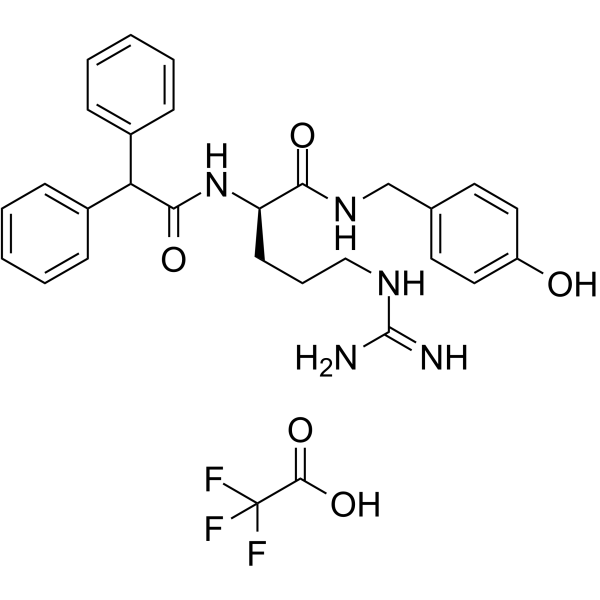
HY-107726
BIBP3226 TFANPY Y1/NPFF Receptor Antagonist -
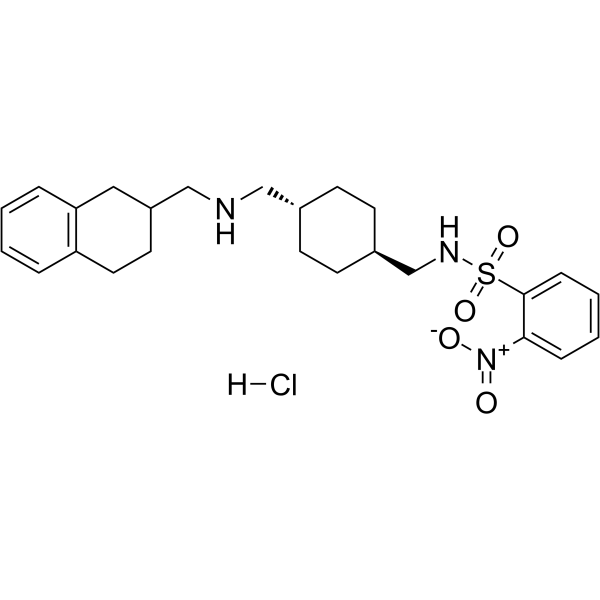
HY-107733
NTNCB hydrochlorideNPY Y5 Receptor Antagonist -
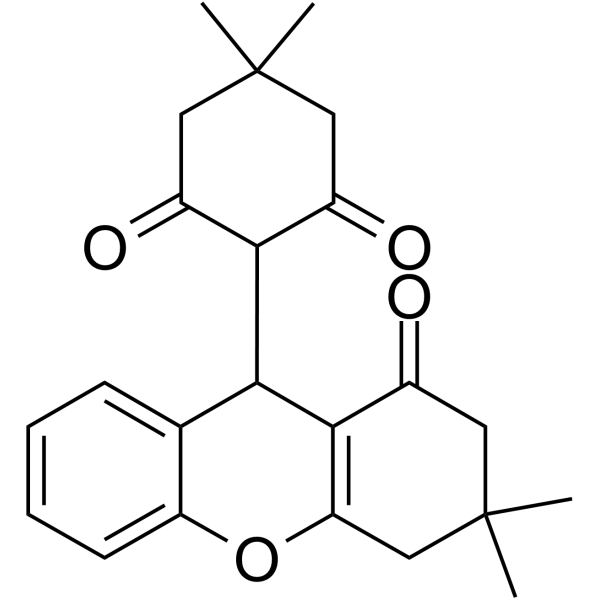
HY-107734
L 152804NPY Y5 Receptor Antagonist -
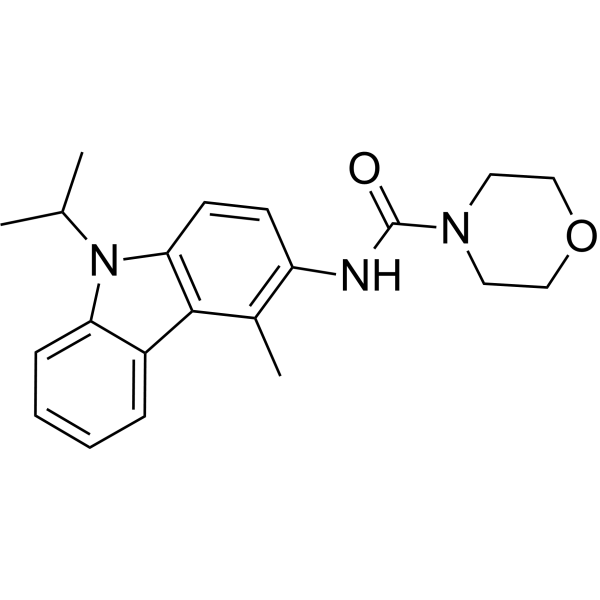
HY-107730
NPY5RA-972NPY Y5 Receptor Antagonist -

HY-P0198
Neuropeptide Y (human,rat,mouse)Active Compound -
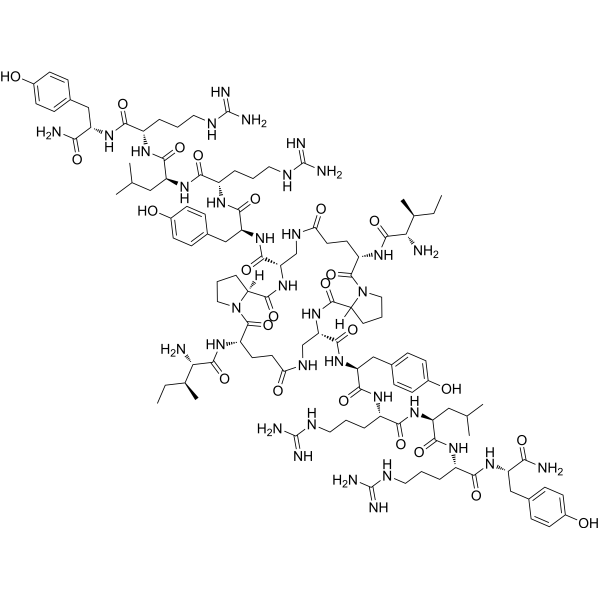
HY-P1321
GR231118Neuropeptide YY Receptor Antagonist
Alle Neuropeptide Y Receptor Isoform-spezifische Produkte anzeigen
More

Biologische Aktivität
Beschreibung
IC50 & Target
Neuropeptide Y (NPY) Y4/Y5 receptor[1]
Cellular Effect
|
Cell Line

|
Type | Value | Description | References |
|---|---|---|---|---|
| CHO | EC50 |
10.6 nM
Compound: hPP
|
Agonist activity at human Y4 receptor expressed in CHO cells co-expressing Gqi5-mtAEQ assessed as intracellular calcium mobilization measured for 43 secs in presence of coelenterazine by aequorin-reporter gene based luminescence assay
Agonist activity at human Y4 receptor expressed in CHO cells co-expressing Gqi5-mtAEQ assessed as intracellular calcium mobilization measured for 43 secs in presence of coelenterazine by aequorin-reporter gene based luminescence assay
|
[PMID: 32614182] |
| CHO | EC50 |
9.7 nM
Compound: PP
|
Agonist activity at human NPY Y4 receptor expressed in CHO cells co-expressing Gqi5-mtAEQ assessed as induction of calcium mobilization by aequorin luminescence assay
Agonist activity at human NPY Y4 receptor expressed in CHO cells co-expressing Gqi5-mtAEQ assessed as induction of calcium mobilization by aequorin luminescence assay
|
[PMID: 27223253] |
| HEK293 | EC50 |
0.73 nM
Compound: PP
|
Agonist activity at human NPY Y4 receptor expressed in HEK293 cells co-expressing CRE-Luc gene assessed as inhibition of forskolin stimulated luciferase activity after 4.5 hrs by luminescence assay
Agonist activity at human NPY Y4 receptor expressed in HEK293 cells co-expressing CRE-Luc gene assessed as inhibition of forskolin stimulated luciferase activity after 4.5 hrs by luminescence assay
|
[PMID: 27223253] |
| HEK-293T | EC50 |
2.4 nM
Compound: hPP
|
Agonist activity at human Y4R expressed in HEK293T cells co-expressing ARRB1 assessed as induction of beta-arrestin1 recruitment measured for 40 mins by D-luciferin based luminescence assay
Agonist activity at human Y4R expressed in HEK293T cells co-expressing ARRB1 assessed as induction of beta-arrestin1 recruitment measured for 40 mins by D-luciferin based luminescence assay
|
[PMID: 32614182] |
| HEK-293T | EC50 |
4.1 nM
Compound: hPP
|
Agonist activity at human Y4R expressed in HEK293T cells co-expressing ARRB2 assessed as induction of beta-arrestin2 recruitment measured for 40 mins by D-luciferin based luminescence assay
Agonist activity at human Y4R expressed in HEK293T cells co-expressing ARRB2 assessed as induction of beta-arrestin2 recruitment measured for 40 mins by D-luciferin based luminescence assay
|
[PMID: 32614182] |
In Vitro
Human pancreatic polypeptide (hPP) is one such peptide, being released postprandially from F cells of the pancreatic islets depending on caloric load, food consumption and circadian rhythm. It is a C-terminally amidated 36 amino acid peptide with a characteristic hairpin-like pancreatic polypeptide (PP)-fold and acts at the Y4 receptor to induce satiety and delay gastric emptying and motility[1]. Addition of the human pancreatic polypeptide (hPP) (10 nM-1 μM) results in a significant, dose-dependent reduction in both basal and stimulated release. Human pancreatic polypeptide (hPP) can also inhibit basal and stimulated NPY release with a pharmacological profile suggesting a role for Y4 presynaptic receptors[2].
MedChemExpress (MCE) has not independently confirmed the accuracy of these methods. They are for reference only. .


Chemical Information
-
CAS. Nr. 75976-10-2
-
Appearance Solid
-
Molecular Weight 4181.71
-
Formel C185H287N53O54S2
-
Color White to off-white
-
Synonyms
Human pancreatic polypeptide
-
Sequence
Ala-Pro-Leu-Glu-Pro-Val-Tyr-Pro-Gly-Asp-Asn-Ala-Thr-Pro-Glu-Gln-Met-Ala-Gln-Tyr-Ala-Ala-Asp-Leu-Arg-Arg-Tyr-Ile-Asn-Met-Leu-Thr-Arg-Pro-Arg-Tyr-NH2
-
Sequence Shortening
APLEPVYPGDNATPEQMAQYAADLRRYINMLTRPRY-NH2
-
Versand
Room temperature in continental US; may vary elsewhere.
-
Speicherung
Sealed storage, away from moisture
Powder -80°C 2 years -20°C 1 year * In solvent : -80°C, 6 months; -20°C, 1 month (sealed storage, away from moisture)


Lösungsmittel & Löslichkeit
In Vitro:
DMSO : 25 mg/mL (5.98 mM; Need ultrasonic; Hygroscopic DMSO has a significant impact on the solubility of product, please use newly opened DMSO)
Please refer to the solubility information to select the appropriate solvent. Once prepared, please aliquot and store the solution to prevent product inactivation from repeated freeze-thaw cycles.
Storage method and period of stock solution: -80°C, 6 months; -20°C, 1 month (sealed storage, away from moisture). When stored at -80°C, please use it within 6 months. When stored at -20°C, please use it within 1 month.
Please refer to the solubility information to select the appropriate solvent. Once prepared, please aliquot and store the solution to prevent product inactivation from repeated freeze-thaw cycles.
Storage method and period of stock solution: -80°C, 6 months; -20°C, 1 month (sealed storage, away from moisture). When stored at -80°C, please use it within 6 months. When stored at -20°C, please use it within 1 month.
Konzentration (Stammlösung) × Volumen (Stammlösung) = Konzentration (Ziellösung) × Volumen (Ziellösung)
In Vivo:
Select the appropriate dissolution method based on your experimental animal and administration route.
- For the following dissolution methods, please ensure to first prepare a clear stock solution using an In Vitro approach and then sequentially add co-solvents:
- To ensure reliable experimental results, the clarified stock solution can be appropriately stored based on storage conditions. As for the working solution for In Vivo experiments, it is recommended to prepare freshly and use it on the same day.
- The percentages shown for the solvents indicate their volumetric ratio in the final prepared solution. If precipitation or phase separation occurs during preparation, heat and/or sonication can be used to aid dissolution.
Add each solvent one by one: 10% DMSO 90% (20% SBE-β-CD in Saline)
Solubility: ≥ 2.5 mg/mL (0.60 mM); Clear solution
This protocol yields a clear solution of ≥ 2.5 mg/mL (saturation unknown).
Taking 1 mL working solution as an example, add 100 μL DMSO stock solution (25.0 mg/mL) to 900 μL 20% SBE-β-CD in Saline, and mix evenly.
Preparation of 20% SBE-β-CD in Saline (4°C, storage for one week): 2 g SBE-β-CD powder is dissolved in 10 mL Saline, completely dissolve until clear.
In Vivo Dissolution Calculator
Please enter the basic information of animal experiments:
-
-
-
-
Recommended: Prepare an additional quantity of animals to account for potential losses during experiments.
Please enter your animal formula composition:
-
%DMSO +
Recommended: Keep the proportion of DMSO in working solution below 2% if your animal is weak.
-
%+
-
+%Tween-80 + +
-
%Saline +
The co-solvents required include: DMSO, . All of co-solvents are available by MedChemExpress (MCE). , Tween 80. All of co-solvents are available by MedChemExpress (MCE).
Working solution concentration: 0.22 mg/mL
Method for preparing stock solution: mg drug dissolved in μL DMSO. Stock solution concentration: mg/mL. * In solvent : -80°C, 6 months; -20°C, 1 month (sealed storage, away from moisture)
1. Take μL DMSO stock solution;
2. Add μL .
μL , mix evenly;
3. Then add μL Tween 80, mix evenly;
4. Then add μL
Please ensure that the stock solution in the first step is dissolved to a clear state, and add co-solvents in sequence. You can use ultrasonic heating (ultrasonic cleaner, recommended frequency 20-40 kHz), vortexing, etc. to assist dissolution.


Reinheit & Dokumentation
-
Data Sheet (270 KB)
-
SDS (252 KB)
- English - EN (252 KB)
- Français - FR (252 KB)
- Deutsch - DE (252 KB)
- Norwegian - NO (252 KB)
- Español - ES (252 KB)
- Swedish - SV (252 KB)
- Italian - IT (252 KB)
- Korean - KR (252 KB)
- Portuguese - PT (252 KB)
-
Handling Instructions (2659 KB)
Verweise
[1]. Thieme V, et al. High molecular weight PEGylation of human pancreatic polypeptide at position 22 improvesstability and reduces food intake in mice. Br J Pharmacol. 2016 Nov;173(22):3208-3221. [Content Brief]
[2]. King PJ, et al. Regulation of neuropeptide Y release by neuropeptide Y receptor ligands and calcium channel antagonists in hypothalamic slices. J Neurochem. 1999 Aug;73(2):641-6. [Content Brief]


Complete Stock Solution Preparation Table
Please refer to the solubility information to select the appropriate solvent. Once prepared, please aliquot and store the solution to prevent product inactivation from repeated freeze-thaw cycles.
Storage method and period of stock solution: -80°C, 6 months; -20°C, 1 month (sealed storage, away from moisture). When stored at -80°C, please use it within 6 months. When stored at -20°C, please use it within 1 month.
| Optional Solvent | Concentration Solvent Mass | 1 mg | 5 mg | 10 mg | 25 mg |
|---|---|---|---|---|---|
| DMSO | 1 mM | 0.2391 mL | 1.1957 mL | 2.3914 mL | 5.9784 mL |
| 5 mM | 0.0478 mL | 0.2391 mL | 0.4783 mL | 1.1957 mL |


Pancreatic Polypeptide, human Related Classifications
HY-P0199 Related Classifications
 Powered by Bioz