



NPY Y1 receptor
Neuropeptide Y (NPY) activates a family of G protein-coupled Y receptors, and the Y1 receptor is the best-characterized subtype for dissecting NPY biology in central and peripheral models[1]. Mechanistically, Y1 receptor engagement links ligand binding to intracellular calcium responses and pertussis toxin-sensitive inhibition of forskolin-stimulated adenylyl cyclase, supporting its use in GPCR signaling studies[2][3]. In experimental physiology, Y1 receptor activation mediates peripheral vasoconstriction and pressor responses, while centrally administered NPY has been associated with anxiolytic effects and food-intake regulation[1][4]. Compared with Y2 receptors, Y1 receptors do not bind long C-terminal NPY fragments such as NPY-(13-36), and[Leu31,Pro34]NPY selectively labels or activates Y1-expressing cells[2]. Compared with Y4 receptors, Y1 receptors show different ligand pharmacology because 1229U91 antagonizes Y1 signaling but acts as a potent Y4 agonist[5]. For experimental applications, BIBP3226 and[³H]BIBP3226 provide selective nonpeptide antagonist and radioligand tools, while Y1 antagonism has also been applied to osteogenic differentiation and femoral defect repair models[6][7][8].
References:
- [1]. Gehlert DR, et al. Neuropeptide Y receptor antagonists in obesity. Expert Opin Investig Drugs. 1997 Dec;6(12):1827-38. [Content Brief]
- [2]. Fuhlendorff J, et al. [Leu31, Pro34]neuropeptide Y: a specific Y1 receptor agonist. Proc Natl Acad Sci U S A. 1990 Jan;87(1):182-6. [Content Brief]
- [3]. Sah R, et al. Neuropeptide Y as a partial agonist of the Y1 receptor. Eur J Pharmacol. 2005 Nov 21;525(1-3):60-8. [Content Brief]
- [4]. Alam MJ, et al. Catestatin reverses the hypertrophic effects of norepinephrine in H9c2 cardiac myoblasts by modulating the adrenergic signaling. Mol Cell Biochem. 2020 Jan;464(1-2):205-219. [Content Brief]
- [5]. Schober DA, et al. The neuropeptide Y Y1 antagonist, 1229U91, a potent agonist for the human pancreatic polypeptide-preferring (NPY Y4) receptor. Peptides. 1998;19(3):537-42. [Content Brief]
- [6]. Rudolf K, et al. The first highly potent and selective non-peptide neuropeptide Y Y1 receptor antagonist: BIBP3226. Eur J Pharmacol. 1994 Dec 27;271(2-3):R11-3. [Content Brief]
- [7]. Entzeroth M, et al. Labeling of neuropeptide Y receptors in SK-N-MC cells using the novel, nonpeptide Y1 receptor-selective antagonist [3H]BIBP3226. Eur J Pharmacol. 1995 May 24;278(3):239-42. [Content Brief]
- [8]. Liu S, et al. [Neuropeptide Y Y1 receptor antagonist PD160170 promotes osteogenic differentiation of rat bone marrow mesenchymal stem cells in vitro and femoral defect repair in rats]. Nan Fang Yi Ke Da Xue Xue Bao. 2018 Jun 20;38(6):669-676. Chinese. [Content Brief]
-
NPY Y1 receptor Related Products (21)
Related Products (21)

- 1
- 2
-
BIBO3304
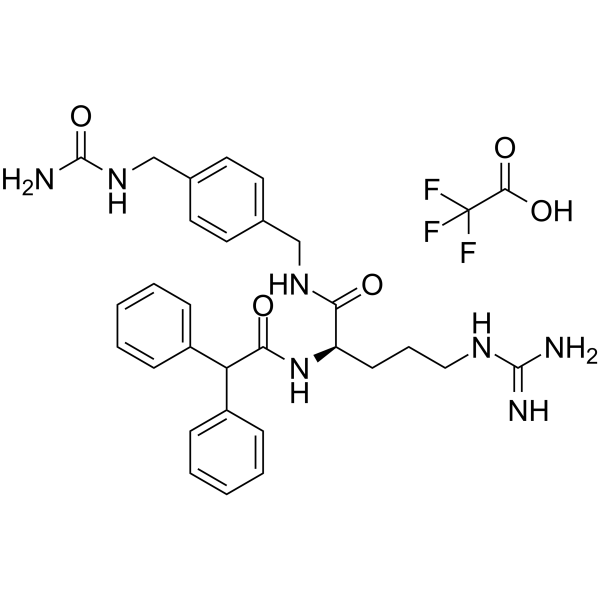 0 ImagesBIBO3304, a chemical probe, is a potent, orally active, and selective neuropeptide Y (NPY) Y1 receptor antagonist, with subnanomolar affinity for both the human and the rat Y1 receptor (IC50=0.38 and 0.72 nM, respectively).
-
BIBP3226 TFA
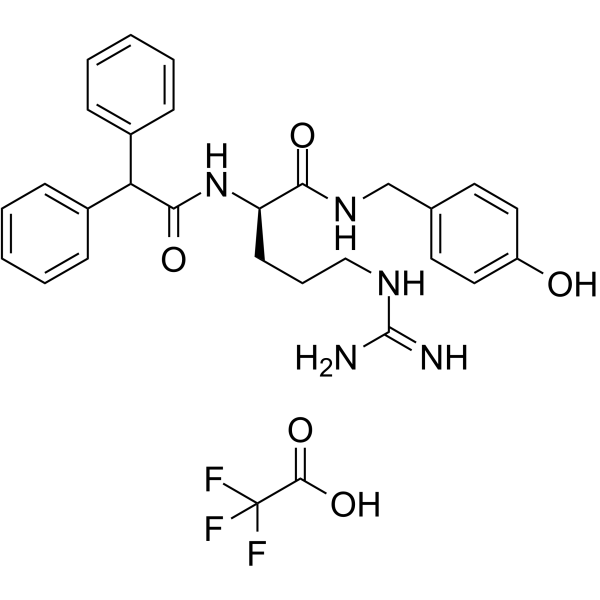 0 ImagesBIBP3226 TFA is a potent and selective neuropeptide Y Y1 (NPY Y1) and neuropeptide FF (NPFF) receptor antagonist, with Kis of 1.1, 79, and 108 nM for rNPY Y1, hNPFF2, and rNPFF, respectively. BIBP3226 TFA displays anxiogenic-like effect.
-
[Leu31,Pro34]-Neuropeptide Y (porcine)
![[Leu31,Pro34]-Neuropeptide Y (porcine)](https://file.medchemexpress.com/product_pic/hy-p0208.gif "Click to View [Leu31,Pro34]-Neuropeptide Y (porcine) Product Detail") 0 Images[Leu31,Pro34]- Neuropeptide Y (porcine), a Neuropeptide Y (NPY) analog, is a selective NPY Y1 receptor agonist. [Leu31,Pro34]- Neuropeptide Y (porcine) exhibits anxiolytic effects.
0 Images[Leu31,Pro34]- Neuropeptide Y (porcine), a Neuropeptide Y (NPY) analog, is a selective NPY Y1 receptor agonist. [Leu31,Pro34]- Neuropeptide Y (porcine) exhibits anxiolytic effects.
-
RF9
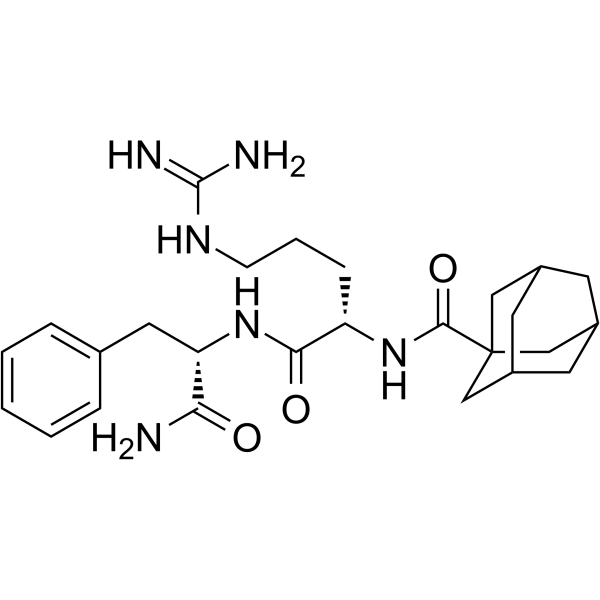 0 ImagesRF9 is a potent and selective Neuropeptide FF receptor antagonist, with Ki values of 58 and 75 nM for hNPFF1R and hNPFF2R, respectively.
-
[Leu31,Pro34]-Neuropeptide Y (human,rat,mouse) TFA
![[Leu31,Pro34]-Neuropeptide Y (human,rat,mouse) TFA](https://file.medchemexpress.com/product_pic/hy-p1323a.gif "Click to View [Leu31,Pro34]-Neuropeptide Y (human,rat,mouse) TFA Product Detail") 0 ImagesCat. No.: HY-P1323APurity: 98.00%[Leu31,Pro34]-Neuropeptide Y(human,rat) TFA is a specific neuropeptide Y Y1 receptor agonist. [Leu31,Pro34]-Neuropeptide Y(human,rat) TFA slao activates Y4, Y5. [Leu31,Pro34]-Neuropeptide Y(human,rat) TFA can increase blood pressure in anesthetized rats and increases food intake.
0 ImagesCat. No.: HY-P1323APurity: 98.00%[Leu31,Pro34]-Neuropeptide Y(human,rat) TFA is a specific neuropeptide Y Y1 receptor agonist. [Leu31,Pro34]-Neuropeptide Y(human,rat) TFA slao activates Y4, Y5. [Leu31,Pro34]-Neuropeptide Y(human,rat) TFA can increase blood pressure in anesthetized rats and increases food intake.
-
BMS-193885
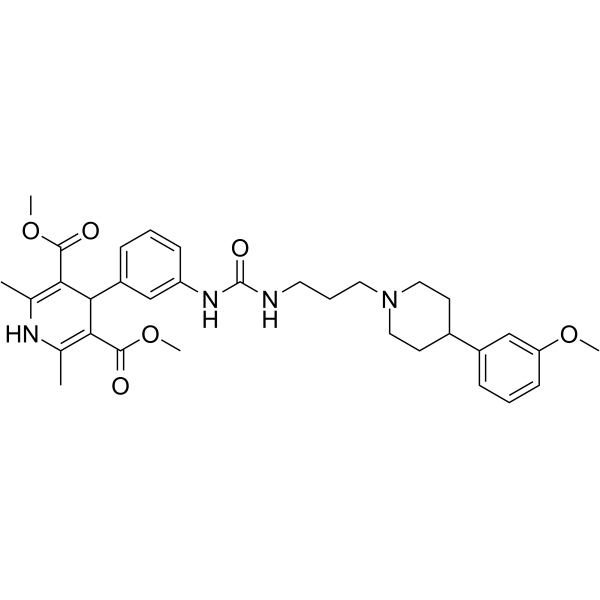 0 ImagesBMS-193885 is a selective neuropeptide Y1 receptor antagonist (Ki=3.3 nM) that competitively blocks the receptor to inhibit NPY-mediated appetite regulation signaling pathways, reduce food intake and inhibit weight gain. BMS-193885 has good blood-brain barrier penetration and is mainly used in the study of obesity and related metabolic diseases.
-
NTNCB hydrochloride
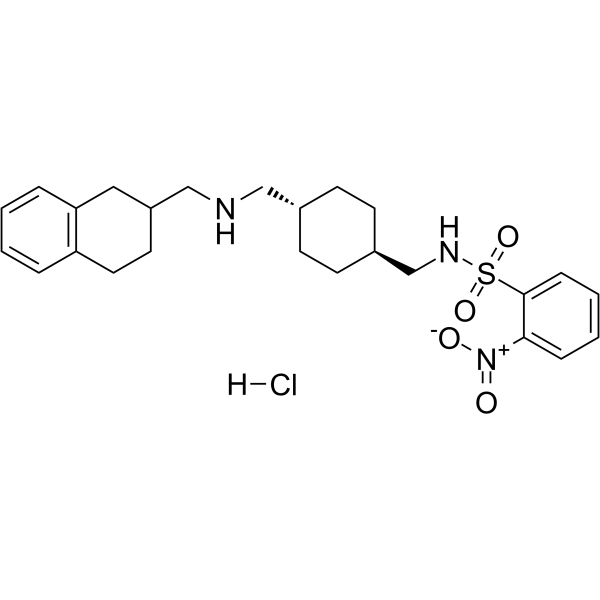 0 ImagesNTNCB (Compound 11) hydrochloride is a potent and selective neuropeptide Y Y5 (NPY Y5) receptor antagonist with a Ki of 8 nM against human Y5.
-
[cPP1-7,NPY19-23,Ala31,Aib32,Gln34]-hPancreatic Polypeptide
![[cPP1-7,NPY19-23,Ala31,Aib32,Gln34]-hPancreatic Polypeptide](https://file.medchemexpress.com/product_pic/hy-p1324.gif "Click to View [cPP1-7,NPY19-23,Ala31,Aib32,Gln34]-hPancreatic Polypeptide Product Detail") 0 Images[cPP1-7,NPY19-23,Ala31,Aib32,Gln34]-hPancreatic Polypeptide is a potent and selective neuropeptide Y Y5 receptor agonist with an IC50 of 0.24 nM for binding to the hY5 receptor. [cPP1-7,NPY19-23,Ala31,Aib32,Gln34]-hPancreatic Polypeptide induces a high amount of food intake.
0 Images[cPP1-7,NPY19-23,Ala31,Aib32,Gln34]-hPancreatic Polypeptide is a potent and selective neuropeptide Y Y5 receptor agonist with an IC50 of 0.24 nM for binding to the hY5 receptor. [cPP1-7,NPY19-23,Ala31,Aib32,Gln34]-hPancreatic Polypeptide induces a high amount of food intake.
-
(Leu31,Pro34)-Peptide YY (human) TFA
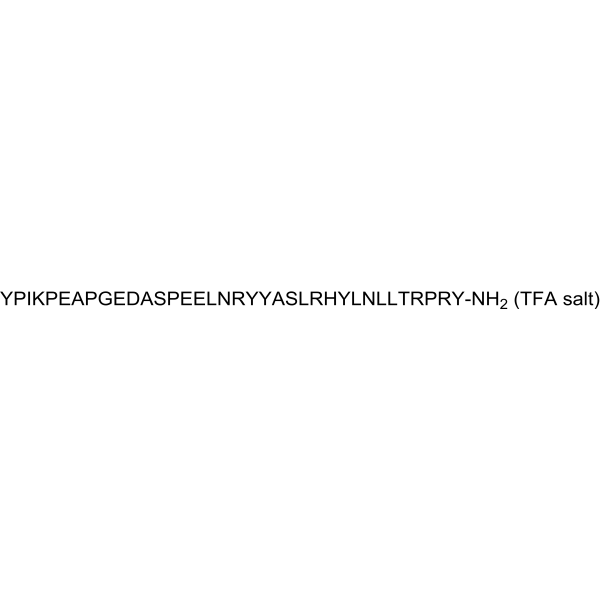 0 ImagesCat. No.: HY-P3877APurity: 98.63%(Leu31,Pro34)-Peptide YY (human) (TFA) is the TFA form of (Leu31,Pro34)-Peptide YY (human) (HY-P3877). (Leu31,Pro34)-Peptide YY (human) (TFA) is a Peptide YY (HY-P1514) derivative and is a potent and selective Y1 agonist with a KD of 1.0 nM.
-
RF9 hydrochloride
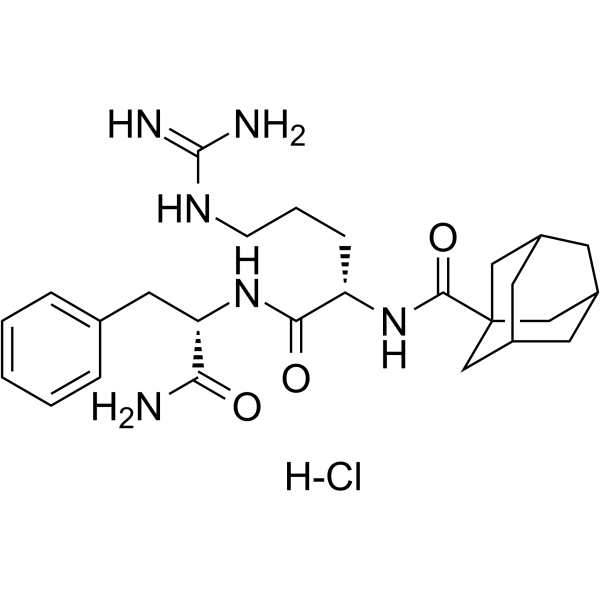 0 ImagesCat. No.: HY-107382APurity: 99.91%RF9 hydrochloride is a potent and selective Neuropeptide FF receptor antagonist, with Ki values of 58 and 75 nM for hNPFF1R and hNPFF2R, respectively.
-
(Leu31,Pro34)-Peptide YY (human)
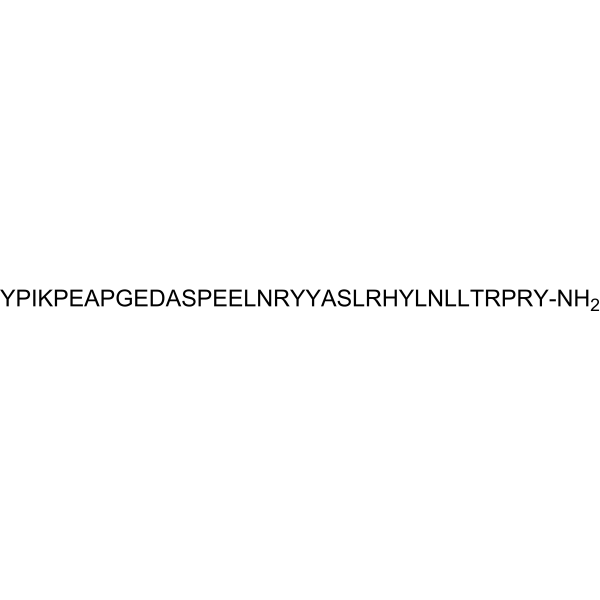 0 ImagesCat. No.: HY-P3877CAS No.: 179986-95-9(Leu31,Pro34)-Peptide YY (human) is a Peptide YY (HY-P1514) derivative and is a potent and selective Y1 agonist with a KD of 1.0 nM.
-
GEP44
 0 ImagesCat. No.: HY-P11043GEP44 is a peptide biased triple agonist targeting Glucagon-like peptide 1 receptor (GLP-1R), neuropeptide Y1 Receptor (Y1-R), and neuropeptide Y2 Receptor (Y2-R). GEP44 induces Y1-R antagonist-controlled, GLP-1R-dependent stimulation of insulin secretion in both rat and human pancreatic islets by counteracting effects of Y1-R and GLP-1R agonism. GEP44 promotes insulin-independent Y1-R-mediated glucose uptake in muscle tissue and significantly reduces food intake and body weight in diet-induced obese rat models. GEP44 can be used for obesity and type 2 diabetes mellitus research.
-
Y1R probe-1
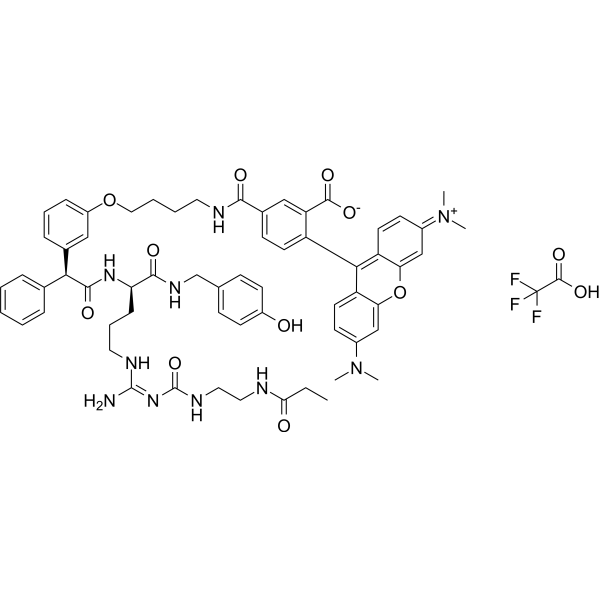 0 ImagesCat. No.: HY-145837CAS No.: 2773476-41-6Y1R probe-1 (Compound 39) is a high-affinity fluorescence probe for the Neuropeptide Y Y1 Receptor. Y1R probe-1 has the potential for the research of cancer disease.
-
[Leu31,Pro34]-Neuropeptide Y (human,rat,mouse)
![[Leu31,Pro34]-Neuropeptide Y (human,rat,mouse)](https://file.medchemexpress.com/product_pic/hy-p1323.gif "Click to View [Leu31,Pro34]-Neuropeptide Y (human,rat,mouse) Product Detail") 0 ImagesCat. No.: HY-P1323CAS No.: 132699-73-1[Leu31,Pro34]-Neuropeptide Y(human,rat) is a specific neuropeptide Y Y1 receptor agonist. [Leu31,Pro34]-Neuropeptide Y(human,rat) slao activates Y4, Y5. [Leu31,Pro34]-Neuropeptide Y(human,rat) can increase blood pressure in anesthetized rats and increases food intake.
0 ImagesCat. No.: HY-P1323CAS No.: 132699-73-1[Leu31,Pro34]-Neuropeptide Y(human,rat) is a specific neuropeptide Y Y1 receptor agonist. [Leu31,Pro34]-Neuropeptide Y(human,rat) slao activates Y4, Y5. [Leu31,Pro34]-Neuropeptide Y(human,rat) can increase blood pressure in anesthetized rats and increases food intake.
-
[D-Arg25]-Neuropeptide Y (human)
![[D-Arg25]-Neuropeptide Y (human)](https://file.medchemexpress.com/product_pic/hy-p0198b.gif "Click to View [D-Arg25]-Neuropeptide Y (human) Product Detail") 0 ImagesCat. No.: HY-P0198B[D-Arg25]-Neuropeptide Y (human) ([D-Arg25] NPY) is a Y1 receptor selective agonist. Neuropeptide Y (human) is involved in Alzheimer's disease (AD) and protects rat cortical neurons against β-Amyloid toxicity.
0 ImagesCat. No.: HY-P0198B[D-Arg25]-Neuropeptide Y (human) ([D-Arg25] NPY) is a Y1 receptor selective agonist. Neuropeptide Y (human) is involved in Alzheimer's disease (AD) and protects rat cortical neurons against β-Amyloid toxicity.
-
BWX 46
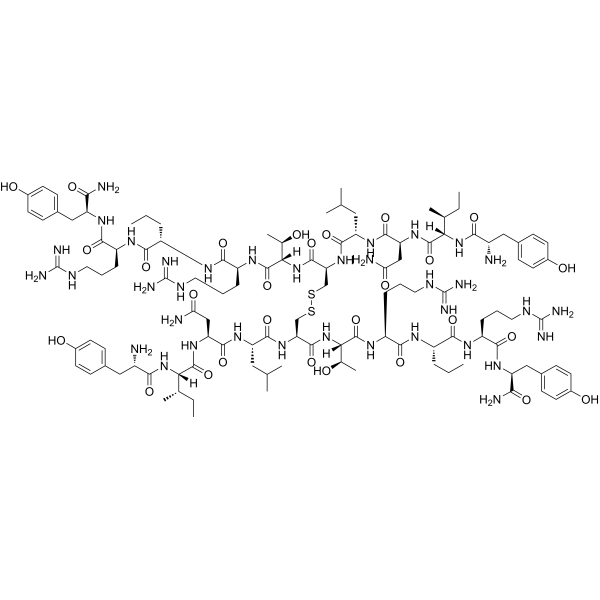 0 ImagesCat. No.: HY-P1325CAS No.: 172997-92-1Synonyms: ((Cys31, Nva 34)-Neuropeptide Y (27-36))2BWX 46 (((Cys31, Nva 34)-Neuropeptide Y (27-36))2) is a selective Y5 receptor agonist with an IC50 value of 0.85 nM. BWX 46 can inhibit the synthesis of cAMP in Y5 cells.
-
(Pro34)-Peptide YY (human)
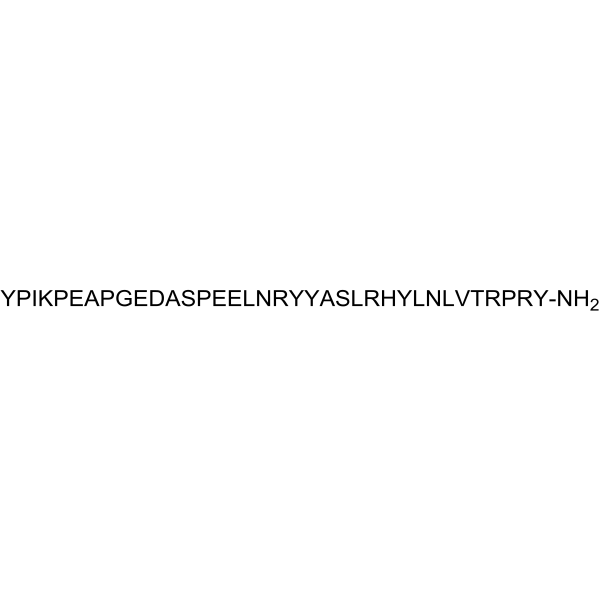 0 ImagesCat. No.: HY-P3876CAS No.: 179986-93-7(Pro34)-Peptide YY (human) is a highly Y1-selective full agonist of Peptide YY (HY-P1514)/neuropeptide Y receptors.
-
[cPP1-7,NPY19-23,Ala31,Aib32,Gln34]-hPancreatic polypeptide TFA
![[cPP1-7,NPY19-23,Ala31,Aib32,Gln34]-hPancreatic polypeptide TFA](https://file.medchemexpress.com/product_pic/hy-p1324a.gif "Click to View [cPP1-7,NPY19-23,Ala31,Aib32,Gln34]-hPancreatic polypeptide TFA Product Detail") 0 ImagesCat. No.: HY-P1324A[cPP1-7,NPY19-23,Ala31,Aib32,Gln34]-hPancreatic Polypeptide is a potent and selective neuropeptide Y Y5 receptor agonist with an IC50 of 0.24 nM for binding to the hY5 receptor. [cPP1-7,NPY19-23,Ala31,Aib32,Gln34]-hPancreatic Polypeptide induces a high amount of food intake.
0 ImagesCat. No.: HY-P1324A[cPP1-7,NPY19-23,Ala31,Aib32,Gln34]-hPancreatic Polypeptide is a potent and selective neuropeptide Y Y5 receptor agonist with an IC50 of 0.24 nM for binding to the hY5 receptor. [cPP1-7,NPY19-23,Ala31,Aib32,Gln34]-hPancreatic Polypeptide induces a high amount of food intake.
-
Neuropeptide Y Y1 receptor antagonist 1
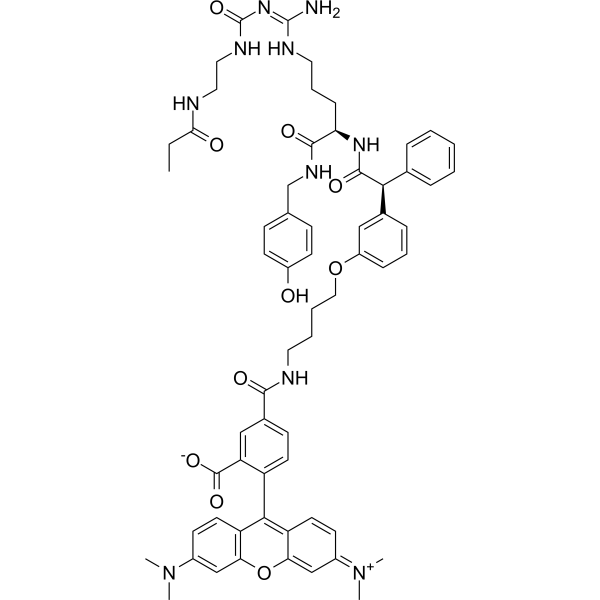 0 ImagesCat. No.: HY-144603CAS No.: 2773476-40-5Neuropeptide Y Y1 receptor antagonist 1 (compound 39), a fluorescent probe, is a potent antagonist of neuropeptide Y Y1 receptor (Y1R), with a Ki of 0.19 nM.
-
NPY Y2 antagonist 2
 0 ImagesCat. No.: HY-180406CAS No.: 1262495-12-4NPY Y2 antagonist 2 is a modulator targeting the neuropeptide Y (NPY) receptor Y2, with pKi values of 6.8 nM and 7.2 nM in human and rat brains, respectively, and demonstrating blood-brain barrier penetration. NPY Y2 antagonist 2 shows selectivity for the Y1 and Y5 receptors. NPY Y2 antagonist 2 blocks the negative feedback regulation mediated by the NPY Y2 receptor, thereby increasing endogenous NPY release and enhancing Y1 receptor activation, resulting in the modulation of central neurotransmitter release. NPY Y2 antagonist 2 exhibits moderate in vivo clearance, high free fraction in rat brain, and a favorable brain/plasma ratio and brain exposure. NPY Y2 antagonist 2 is applicable for research in conditions such as mood disorders, anxiety induced by alcohol withdrawal, and social anxiety associated with nicotine withdrawal.
- 1
- 2



