



BMS-193885
Based on 1 publication(s) in Google Scholar
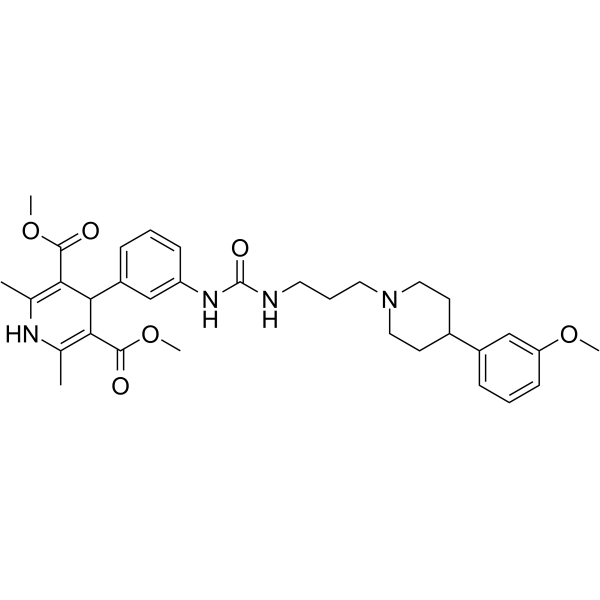
BMS-193885 is a selective neuropeptide Y1 receptor antagonist (Ki=3.3 nM) that competitively blocks the receptor to inhibit NPY-mediated appetite regulation signaling pathways, reduce food intake and inhibit weight gain. BMS-193885 has good blood-brain barrier penetration and is mainly used in the study of obesity and related metabolic diseases.
연구목적의 판매만을 진행합니다. 환자를 대상으로 한 판매는 하지 않습니다.
- Purity : 98.68%
- CAS No.: 186185-03-5
- 화학식: C33H42N4O6
- 분자량:590.71
-
보관:Powder -20°C, 3 years , 4°C, 2 years ; In solvent -80°C, 6 months , -20°C, 1 month

To place orders, for customer services and technical support, please contact: MedChemExpress USA
Tel: 609-228-6898 E-mail: [email protected] [email protected]


-
 Biological Activity
-
Chemical Information
-
용액&용해도
- Protocol
- 순도&문서
- References
-
 Help & FAQs


-
HY-107725
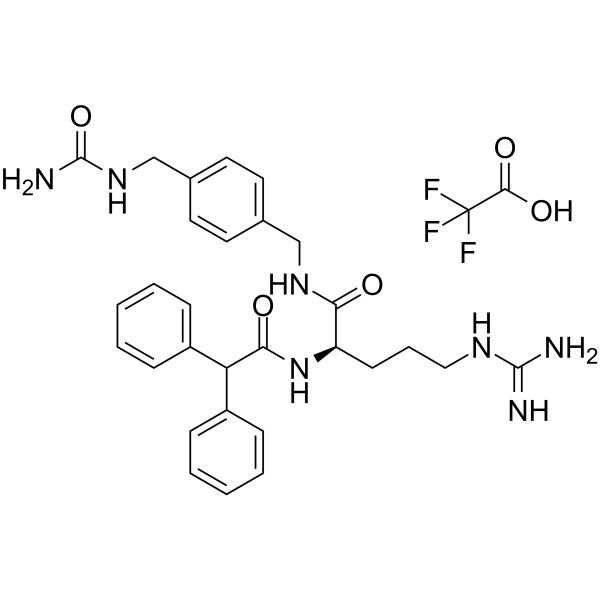
BIBO3304NPY Y1 Receptor Antagonist -
HY-14450
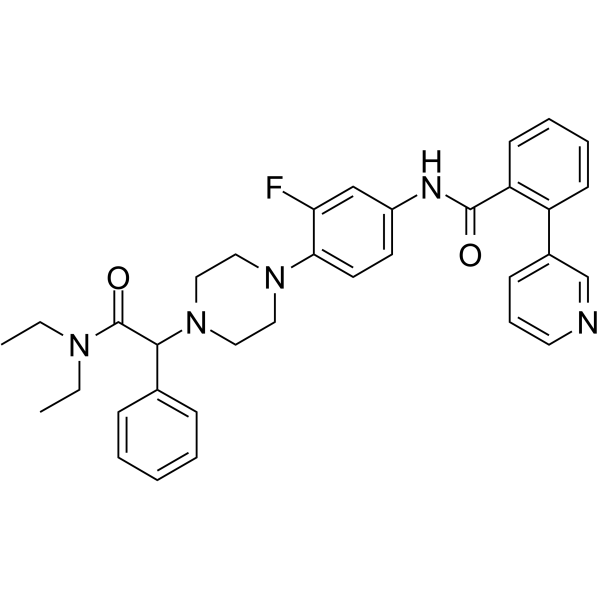
JNJ-31020028Y2 Receptor Antagonist -
HY-107723
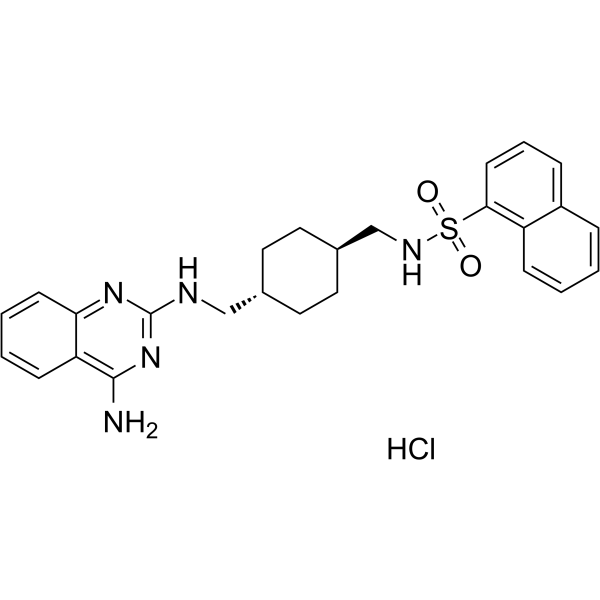
CGP71683 hydrochlorideNeuropeptide Receptor Antagonist -

HY-P0198
Neuropeptide Y (human,rat,mouse)Active Compound -
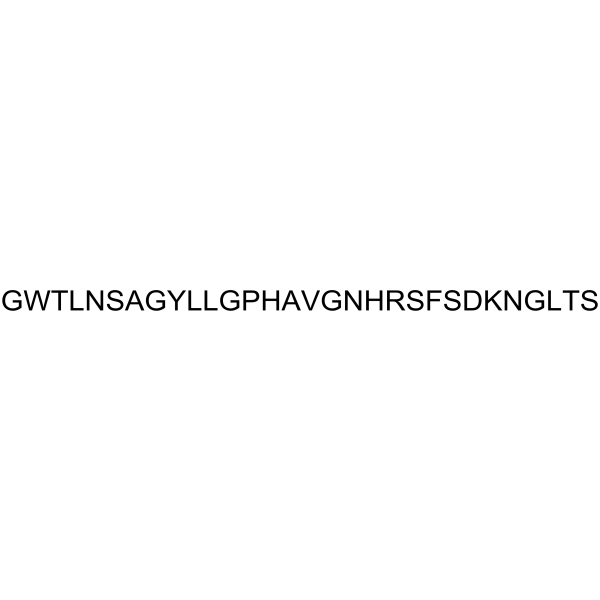
HY-P1127
Galanin (1-30), humanGalR Agonist -
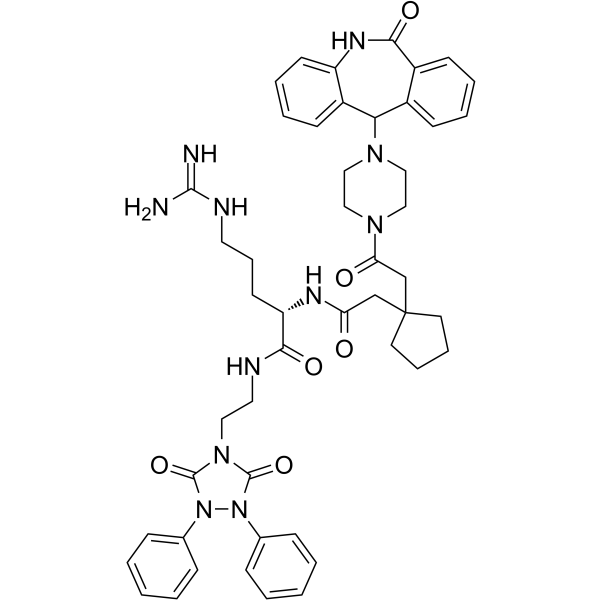
HY-101986
BIIE-0246NPY2R Antagonist -
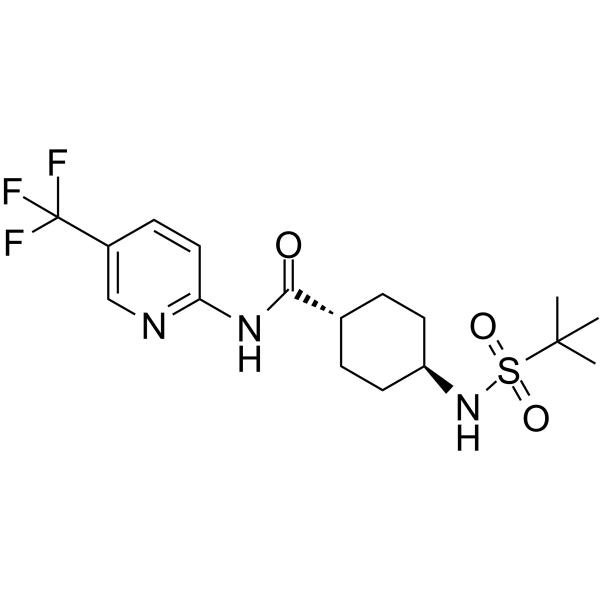
HY-14423
VelneperitNeuropeptide Y Receptor Antagonist -
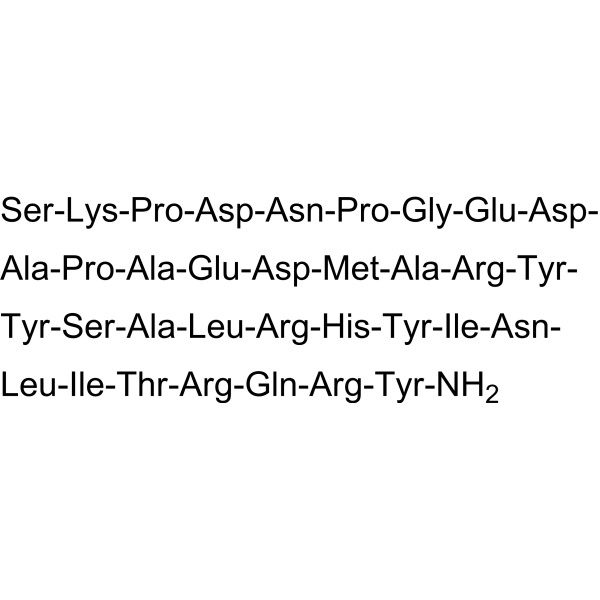
HY-P2543
Neuropeptide Y (3-36) (human, rat)Neuropeptide -
HY-107734
L 152804NPY Y5 Receptor Antagonist -
![[D-Trp34]-Neuropeptide Y](https://file.medchemexpress.com/product_pic/hy-p1322.gif)
HY-P1322
[D-Trp34]-Neuropeptide YNPY Y5 Receptor Agonist -
![[Leu31,Pro34]-Neuropeptide Y (porcine)](https://file.medchemexpress.com/product_pic/hy-p0208.gif)
HY-P0208
[Leu31,Pro34]-Neuropeptide Y (porcine)NPY Y1 Receptor Agonist -
HY-107730
NPY5RA-972NPY Y5 Receptor Antagonist
Publications Citing Use of MedChemExpress (MCE) BMS-193885
MoreAll Neuropeptide Y Receptor Isoforms
More

Biological Activity
제품 설명
IC50 & Target
[1]|
NPY Y1 receptor |
NPY Y1 receptor 3.3 nM (Ki) |
Cellular Effect
|
Cell Line

|
Type | Value | Description | References |
|---|---|---|---|---|
| SK-N-MC | IC50 |
4.2 nM
Compound: 2f (dihydropyridine analogs)
|
Binding affinity against Neuropeptide Y receptor type 1 using I-PYY as a radioligand in human neuroblastoma SK-N-MC cells
Binding affinity against Neuropeptide Y receptor type 1 using I-PYY as a radioligand in human neuroblastoma SK-N-MC cells
|
[PMID: 11814791] |
In Vitro
Binding assay: BMS-193885 competitively inhibits the binding of [125I]Peptide YY to human Y1 receptor in SK-N-MC cell membranes with a Ki value of 3.3 nM for Y1 receptor[1].
Functional cAMP assay: BMS-193885 (30-3000 nM; 30 min) reverses NPY-induced inhibition of Forskolin (HY-15371)-stimulated cAMP production in CHO cells expressing human Y1 receptor as a competitive antagonist with an apparent Kb of 4.5 nM[1].
Selectivity analysis: BMS-193885 (10 nM; 1 h) has no significant affinity for other NPY receptors Y2, Y4, and Y5, and is 200-fold less selective for the α1-adrenergic receptor[1].
MedChemExpress (MCE) has not independently confirmed the accuracy of these methods. They are for reference only. Further protocols information, click here.
In Vivo
Peripheral feeding suppression: BMS-193885 (10 mg/kg; i.p.; single dose) reduces NPY-induced 1-hour food intake and spontaneous nocturnal food intake in male Sprague-Dawley rats[1][2].
Chronic weight loss: BMS-193885 (10 mg/kg; i.p.; once daily for 44 days) reduces cumulative food intake and weight gain in male Sprague-Dawley rats without tolerance[1].
Cardiovascular safety: BMS-193885 (30 mg/kg; i.v.; single dose) had no serious adverse effects on heart rate and blood pressure in conscious rats and anesthetized dogs[1].
BMS-193885 (5 mg/kg; i.p.; single dose) significantly blocked NPY Y1 receptors in Wistar rats and reduced the effects of NPY injection on cardiopulmonary function[3].
MedChemExpress (MCE) has not independently confirmed the accuracy of these methods. They are for reference only.
-
Animal Model:Male Sprague-Dawley rats (220-280 g), satiated, with i.c.v. cannula implantation[1]
-
Dosage:30-50 μg (10% DMSO in sterile Ringer)
-
Administration:i.c.v. injection (5 μL), single dose
-
Result:Significantly reduced NPY-induced 1-h food intake by 57% (30 μg) and 63% (50 μg) compared to vehicle controls. No effect was observed on basal food intake1.
-
Animal Model:Male Sprague-Dawley rats (220-280 g), satiated[1]
-
Dosage:10 mg/kg (40% PEG 400 + 60% saline)
-
Administration:i.p. injection, single dose 30 min before dark cycle
-
Result:Reduced NPY-induced 1-h food intake by 33-57% and spontaneous overnight food intake by 29-54% compared to vehicle.
-
Animal Model:Male Sprague-Dawley rats (220-280 g), naive[1]
-
Dosage:10 mg/kg BMS-193885 (40% PEG 400 + 60% saline)
-
Administration:i.p. injection daily for 44 days, 2 h before dark cycle
-
Result:Reduced cumulative food intake by 12-15% and suppressed body weight gain by 8.5% compared to vehicle. No tolerance developed, but adhesive peritonitis occurred in some animals.
-
Animal Model:Conscious male Sprague-Dawley rats (220-280 g); anesthetized dogs[1]
-
Dosage:30 mg/kg (rats), 10 mg/kg (dogs) (in sterile saline)
-
Administration:i.v. injection, single dose
-
Result:No significant changes in heart rate or blood pressure were observed in rats or dogs. Oral bioavailability was <0.1% due to poor absorption[1]1.


Chemical Information
-
CAS No. 186185-03-5
-
Appearance Solid
-
분자량 590.71
-
화학식 C33H42N4O6
-
Color White to yellow
-
SMILES
O=C(C1=C(C)NC(C)=C(C(OC)=O)C1C2=CC=CC(NC(NCCCN3CCC(C4=CC=CC(OC)=C4)CC3)=O)=C2)OC
-
선적
Room temperature in continental US; may vary elsewhere.
-
보관
Powder -20°C 3 years 4°C 2 years In solvent -80°C 6 months -20°C 1 month


Publications (1)
-
Journal Impact Factor
-
Most Recent
-
Nat Chem Biol
Photo-cross-linking-assisted deorphanization deciphers GPR50-L-LEN pairing in metabolism. [Abstract]2026 Jan 6. PMID: 41495223


용액&용해도
In Vitro:
DMSO : 100 mg/mL (169.29 mM; Need ultrasonic; Hygroscopic DMSO has a significant impact on the solubility of product, please use newly opened DMSO)
Please refer to the solubility information to select the appropriate solvent. Once prepared, please aliquot and store the solution to prevent product inactivation from repeated freeze-thaw cycles.
Storage method and period of stock solution: -80°C, 6 months; -20°C, 1 month. When stored at -80°C, please use it within 6 months. When stored at -20°C, please use it within 1 month.
Please refer to the solubility information to select the appropriate solvent. Once prepared, please aliquot and store the solution to prevent product inactivation from repeated freeze-thaw cycles.
Storage method and period of stock solution: -80°C, 6 months; -20°C, 1 month. When stored at -80°C, please use it within 6 months. When stored at -20°C, please use it within 1 month.
Concentration (start) × Volume (start) = Concentration (final) × Volume (final)
In Vivo:
Select the appropriate dissolution method based on your experimental animal and administration route.
- For the following dissolution methods, please ensure to first prepare a clear stock solution using an In Vitro approach and then sequentially add co-solvents:
- To ensure reliable experimental results, the clarified stock solution can be appropriately stored based on storage conditions. As for the working solution for In Vivo experiments, it is recommended to prepare freshly and use it on the same day.
- The percentages shown for the solvents indicate their volumetric ratio in the final prepared solution. If precipitation or phase separation occurs during preparation, heat and/or sonication can be used to aid dissolution.
Add each solvent one by one: 10% DMSO 40% PEG300 5% Tween-80 45% Saline
Solubility: ≥ 2.5 mg/mL (4.23 mM); Clear solution
This protocol yields a clear solution of ≥ 2.5 mg/mL (saturation unknown).
Taking 1 mL working solution as an example, add 100 μL DMSO stock solution (25.0 mg/mL) to 400 μL PEG300, and mix evenly; then add 50 μL Tween-80 and mix evenly; then add 450 μL Saline to adjust the volume to 1 mL.
Preparation of Saline: Dissolve 0.9 g sodium chloride in ddH₂O and dilute to 100 mL to obtain a clear Saline solution.
Add each solvent one by one: 10% DMSO 90% (20% SBE-β-CD in Saline)
Solubility: 2.5 mg/mL (4.23 mM); Suspended solution; Need ultrasonic
This protocol yields a suspended solution of 2.5 mg/mL. Suspended solution can be used for oral and intraperitoneal injection.
Taking 1 mL working solution as an example, add 100 μL DMSO stock solution (25.0 mg/mL) to 900 μL 20% SBE-β-CD in Saline, and mix evenly.
Preparation of 20% SBE-β-CD in Saline (4°C, storage for one week): 2 g SBE-β-CD powder is dissolved in 10 mL Saline, completely dissolve until clear.
In Vivo Dissolution Calculator
Please enter the basic information of animal experiments:
-
-
-
-
Recommended: Prepare an additional quantity of animals to account for potential losses during experiments.
Please enter your animal formula composition:
-
%DMSO +
Recommended: Keep the proportion of DMSO in working solution below 2% if your animal is weak.
-
%+
-
+%Tween-80 + +
-
%Saline +
The co-solvents required include: DMSO, . All of co-solvents are available by MedChemExpress (MCE). , Tween 80. All of co-solvents are available by MedChemExpress (MCE).
Working solution concentration: 0.22 mg/mL
Method for preparing stock solution: mg drug dissolved in μL DMSO. Stock solution concentration: mg/mL.
1. Take μL DMSO stock solution;
2. Add μL .
μL , mix evenly;
3. Then add μL Tween 80, mix evenly;
4. Then add μL
Please ensure that the stock solution in the first step is dissolved to a clear state, and add co-solvents in sequence. You can use ultrasonic heating (ultrasonic cleaner, recommended frequency 20-40 kHz), vortexing, etc. to assist dissolution.

Protocol
-
Research Protocol for Metabolic Diseases
AMP-activated protein kinase, AMPK, is a conserved cellular energy sensor that responds to reduced cellular energy status and coordinates metabolism by increasing ATP-generating catabolic pathways while suppressing ATP-consuming anabolic processes. In metabolic disease research, the AMPK pathway is experimentally relevant because it regulates hepatic lipid synthesis, fatty acid oxidation, glucose production, skeletal-muscle glucose disposal, mTORC1-linked biosynthesis, autophagy, mitochondrial homeostasis, and whole-body energy balance. The central pathway logic is that energy stress, metformin, exercise-like stimulation, or direct AMPK activators increase AMPKα Thr172 phosphorylation and downstream substrate phosphorylation, including ACC and RAPTOR. Phosphorylation of ACC suppresses lipogenesis and supports fatty acid oxidation, whereas phosphorylation of RAPTOR suppresses mTORC1 signaling and links cellular energy status to growth and protein synthesis control. The pathway is linked


순도&문서
-
Data Sheet (277 KB)
-
SDS (392 KB)
- English - EN (392 KB)
- Français - FR (392 KB)
- Deutsch - DE (392 KB)
- Norwegian - NO (392 KB)
- Español - ES (392 KB)
- Swedish - SV (392 KB)
- Italian - IT (392 KB)
- Korean - KR (392 KB)
- Portuguese - PT (392 KB)
-
Handling Instructions (2659 KB)
References
[2]. Poindexter GS, et al. Dihydropyridine neuropeptide Y Y(1) receptor antagonists. Bioorg Med Chem Lett. 2002 Feb 11;12(3):379-82. [Content Brief]
[3]. Kaczyńska K, et al. NPY Y(1) receptors are involved in cardio-respiratory responses to intravenous injection of neuropeptide Y in anaesthetized rats. Pharmacol Res. 2010 Nov;62(5):444-9. [Content Brief]


Complete Stock Solution Preparation Table
Please refer to the solubility information to select the appropriate solvent. Once prepared, please aliquot and store the solution to prevent product inactivation from repeated freeze-thaw cycles.
Storage method and period of stock solution: -80°C, 6 months; -20°C, 1 month. When stored at -80°C, please use it within 6 months. When stored at -20°C, please use it within 1 month.
| Optional Solvent | Concentration Solvent Mass | 1 mg | 5 mg | 10 mg | 25 mg |
|---|---|---|---|---|---|
| DMSO | 1 mM | 1.6929 mL | 8.4644 mL | 16.9288 mL | 42.3219 mL |
| 5 mM | 0.3386 mL | 1.6929 mL | 3.3858 mL | 8.4644 mL | |
| 10 mM | 0.1693 mL | 0.8464 mL | 1.6929 mL | 4.2322 mL | |
| 15 mM | 0.1129 mL | 0.5643 mL | 1.1286 mL | 2.8215 mL | |
| 20 mM | 0.0846 mL | 0.4232 mL | 0.8464 mL | 2.1161 mL | |
| 25 mM | 0.0677 mL | 0.3386 mL | 0.6772 mL | 1.6929 mL | |
| 30 mM | 0.0564 mL | 0.2821 mL | 0.5643 mL | 1.4107 mL | |
| 40 mM | 0.0423 mL | 0.2116 mL | 0.4232 mL | 1.0580 mL | |
| 50 mM | 0.0339 mL | 0.1693 mL | 0.3386 mL | 0.8464 mL | |
| 60 mM | 0.0282 mL | 0.1411 mL | 0.2821 mL | 0.7054 mL | |
| 80 mM | 0.0212 mL | 0.1058 mL | 0.2116 mL | 0.5290 mL | |
| 100 mM | 0.0169 mL | 0.0846 mL | 0.1693 mL | 0.4232 mL |


BMS-193885 Related Classifications
HY-120619 Related Classifications
 Powered by Bioz