



Paritaprevir
Based on 13 publication(s) in Google Scholar
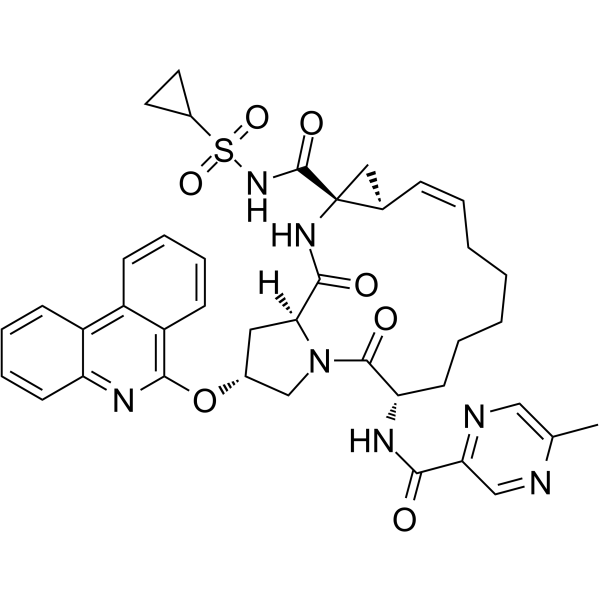
Paritaprevir (ABT-450) is a potent, orally active and antiviral non-structural protein 3/4A (NS3/4A) protease inhibitor with EC50s of 1 and 0.21 nM against HCV 1a and 1b, respectively. Paritaprevir is also a SARS-CoV 3CLpro inhibitor with an IC50 of 1.31 μM. Paritaprevir is metabolized primarily by cytochrome P450 (CYP) 3A. The plasma concentration and half-life of Paritaprevir can be enhanced by Ritonavir (a CYP450 inhibitor).
Nur für Forschungszwecke. Wir verkaufen nicht an Patienten.
- Reinheit : 99.84%
- CAS. Nr.: 1216941-48-8
- Formel: C40H43N7O7S
- Molecular Weight:765.88
-
Speicherung:
4°C, sealed storage, away from moisture and light
* In solvent : -80°C, 6 months; -20°C, 1 month (sealed storage, away from moisture and light)

To place orders, for customer services and technical support, please contact: MedChemExpress USA
Tel: 609-228-6898 E-mail: [email protected] [email protected]


-
 Biologische Aktivität
-
Chemical Information
-
Lösungsmittel & Löslichkeit
- Protokoll
- Reinheit & Dokumentation
- Verweise
-
 Help & FAQs


-
HY-17634
GlecaprevirHCV NS3/4A Protease Inhibitor -
HY-10238
DanoprevirHCV NS3/4A Inhibitor -
HY-10241
SimeprevirHCV NS3/4A Inhibitor -
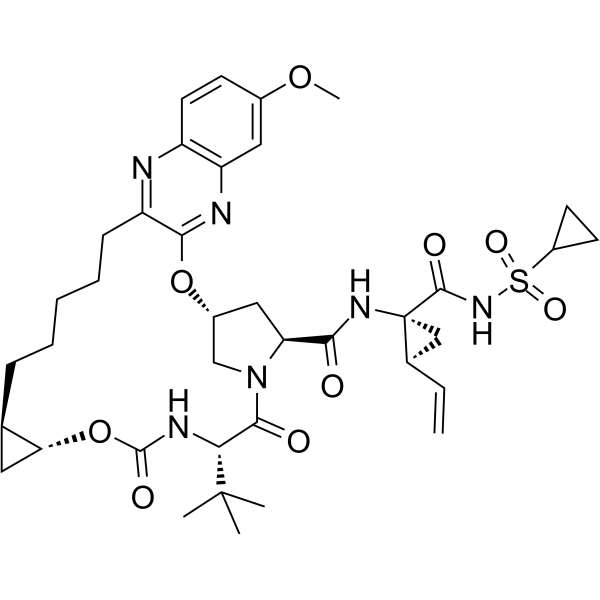
HY-15298
GrazoprevirHCV Protease Inhibitor -
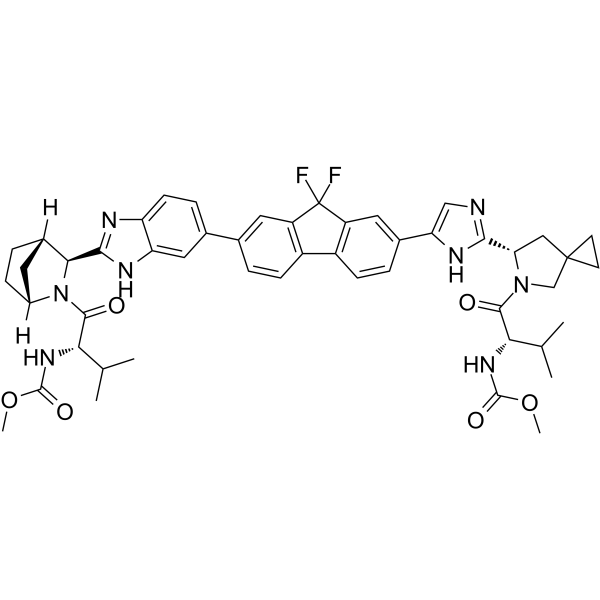
HY-15602
LedipasvirHCV NS5A Inhibitor -
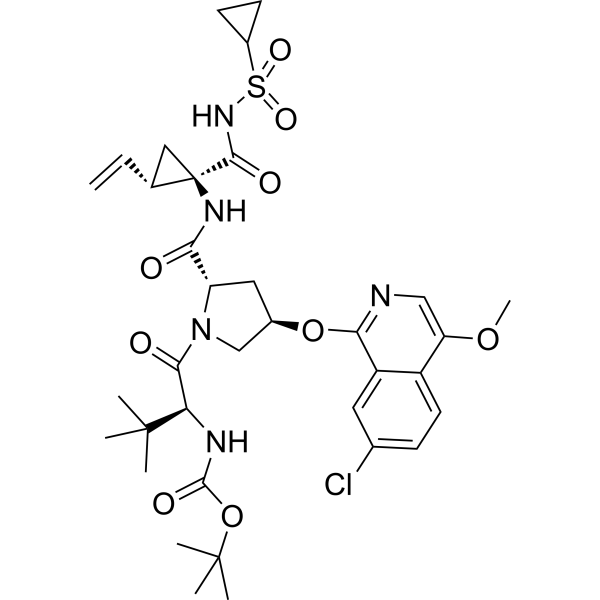
HY-14434
AsunaprevirHCV Protease Inhibitor -
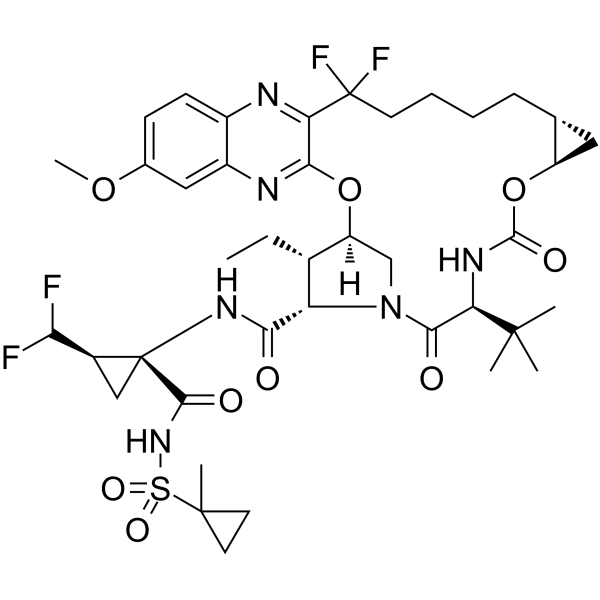
HY-19840
VoxilaprevirHCV NS3/4A Protease Inhibitor -
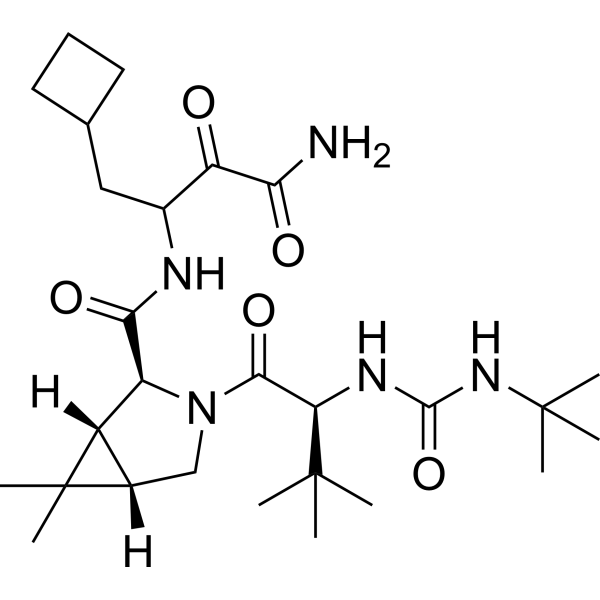
HY-10237
BoceprevirHCV NS3 Protease Inhibitor -
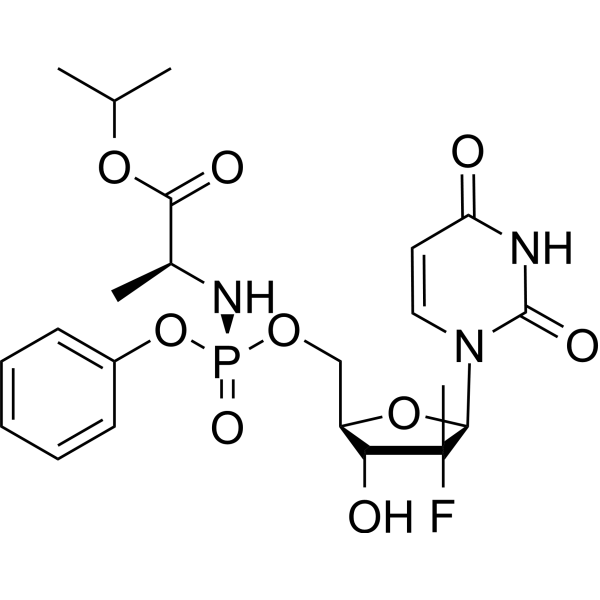
HY-15005
Sofosbuvir -
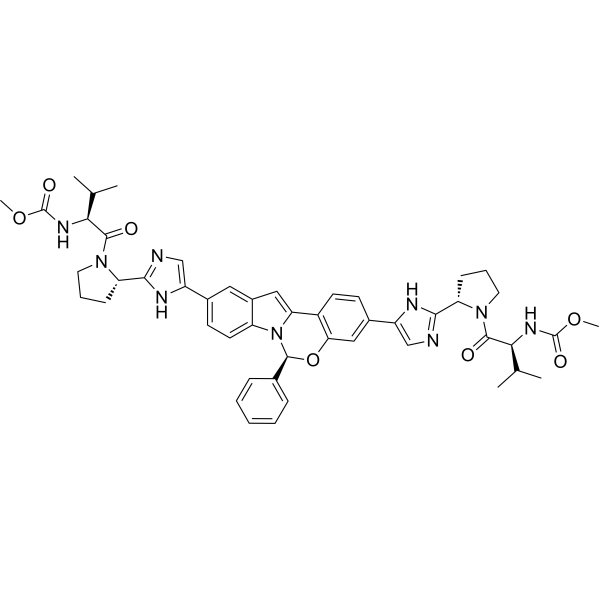
HY-15789
ElbasvirHCV NS5A Inhibitor -
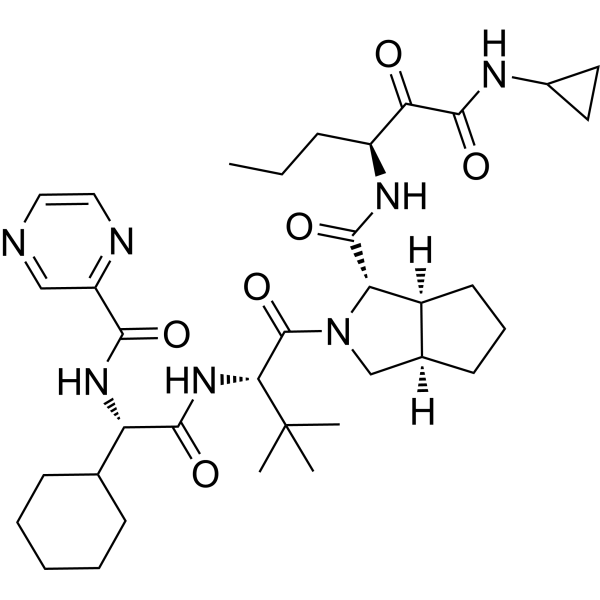
HY-10235
TelaprevirHCV NS3-4A Protease Inhibitor -
HY-13997
OmbitasvirHCV NS5A Inhibitor
Publications Citing Use of MedChemExpress (MCE) Paritaprevir
More- Signal Transduct Target Ther. 2021 May 29;6(1):212. [Abstract]
- Nat Commun. 2023 Jun 10;14(1):3445. [Abstract]
- J Transl Med. 2025 Jan 22;23(1):103. [Abstract]
- J Gastroenterol. 2019 May;54(5):449-458. [Abstract]
- Antiviral Res. 2019 Nov:171:104612. [Abstract]
- Antiviral Res. 2017 Mar:139:18-24. [Abstract]
- J Pharm Pharmacol. 2017 Dec;69(12):1794-1801. [Abstract]
- Xenobiotica. 2019 Aug;49(8):935-944. [Abstract]
- J Liq ChromaTogr R T. 2019: 1-9.
- University of Glasgow. 2024 Mar.
- Elife. 2020 Jun 9:9:e56469. [Abstract]
- Charles University. 2019.
- Chem Cent J. 2017 Jan 3:11:1. [Abstract]


Biologische Aktivität
Beschreibung
IC50 & Target
EC50: 1 nM (HCV 1a), 0.21 nM (HCV 1b)[1]
IC50: 1.31 μM (SARS-CoV 3CLpro)[3]
In Vitro
In Vivo
The acute toxicity of Paritaprevir is considered to be low. Single oral doses of ≤600 mg/kg in rats and ≤100 mg/kg in dogs produces no mortality and were well tolerated. However, since Paritaprevir is administered without ritonavir as a PK enhancer, the exposures are low, especially in male rats (rat 600 mg/kg, males: Cmax 1.82 μg/mL, AUC0-24 8.89 μg·h/mL; dog 100 mg/kg, mean: Cmax 61.3 μg/mL, AUC0-24 285 μg·h/mL).
MedChemExpress (MCE) has not independently confirmed the accuracy of these methods. They are for reference only.


Chemical Information
-
CAS. Nr. 1216941-48-8
-
Appearance Solid
-
Molecular Weight 765.88
-
Formel C40H43N7O7S
-
Color White to off-white
-
SMILES
O=C([C@]1(NC([C@@]2([H])N3C[C@H](OC4=C(C=CC=C5)C5=C6C(C=CC=C6)=N4)C2)=O)[C@H](/C=C\CCCCC[C@H](NC(C7=NC=C(C)N=C7)=O)C3=O)C1)NS(=O)(C8CC8)=O
-
Synonyms
ABT-450; Veruprevir
-
Versand
Room temperature in continental US; may vary elsewhere.
-
Speicherung
4°C, sealed storage, away from moisture and light
* In solvent : -80°C, 6 months; -20°C, 1 month (sealed storage, away from moisture and light)


Publications (13)
-
Journal Impact Factor
-
Most Recent
-
Signal Transduct Target Ther
Bardoxolone and bardoxolone methyl, two Nrf2 activators in clinical trials, inhibit SARS-CoV-2 replication and its 3C-like protease. [Abstract]2021 May 29;6(1):212. PMID: 34052830 -
Nat Commun
2023 Jun 10;14(1):3445. PMID: 37301862 -
J Transl Med
Single-cell profiling of SLC family transporters: uncovering the role of SLC7A1 in osteosarcoma. [Abstract]2025 Jan 22;23(1):103. PMID: 39844299 -
J Gastroenterol
Combinations of two drugs among NS3/4A inhibitors, NS5B inhibitors and non-selective antiviral agents are effective for hepatitis C virus with NS5A-P32 deletion in humanized-liver mice. [Abstract]2019 May;54(5):449-458. PMID: 30684016 -
Antiviral Res
Construction and characterization of Genotype-3 hepatitis C virus replicon revealed critical genotype-3-specific polymorphism for drug resistance and viral fitness. [Abstract]2019 Nov:171:104612. PMID: 31542377 -
Antiviral Res
A profiling study of a newly developed HCVcc strain PR63cc's sensitivity to direct-acting antivirals. [Abstract]2017 Mar:139:18-24. PMID: 28025084 -
J Pharm Pharmacol
2017 Dec;69(12):1794-1801. PMID: 28990653 -
Xenobiotica
Minor contribution of CYP3A5 to the metabolism of hepatitis C protease inhibitor paritaprevir in vitro. [Abstract]2019 Aug;49(8):935-944. PMID: 30227770 -
-
-
Elife
Acute disruption of the synaptic vesicle membrane protein synaptotagmin 1 using knockoff in mouse hippocampal neurons. [Abstract]2020 Jun 9:9:e56469. PMID: 32515733 -
-
Chem Cent J
Simultaneous determination of newly developed antiviral agents in pharmaceutical formulations by HPLC-DAD. [Abstract]2017 Jan 3:11:1. PMID: 28101128


Lösungsmittel & Löslichkeit
In Vitro:
DMSO : ≥ 125 mg/mL (163.21 mM; Hygroscopic DMSO has a significant impact on the solubility of product, please use newly opened DMSO)
H2O : < 0.1 mg/mL (insoluble)
* "≥" means soluble, but saturation unknown.
Please refer to the solubility information to select the appropriate solvent. Once prepared, please aliquot and store the solution to prevent product inactivation from repeated freeze-thaw cycles.
Storage method and period of stock solution: -80°C, 6 months; -20°C, 1 month (sealed storage, away from moisture and light). When stored at -80°C, please use it within 6 months. When stored at -20°C, please use it within 1 month.
Please refer to the solubility information to select the appropriate solvent. Once prepared, please aliquot and store the solution to prevent product inactivation from repeated freeze-thaw cycles.
Storage method and period of stock solution: -80°C, 6 months; -20°C, 1 month (sealed storage, away from moisture and light). When stored at -80°C, please use it within 6 months. When stored at -20°C, please use it within 1 month.
Konzentration (Stammlösung) × Volumen (Stammlösung) = Konzentration (Ziellösung) × Volumen (Ziellösung)
In Vivo:
Select the appropriate dissolution method based on your experimental animal and administration route.
- For the following dissolution methods, please ensure to first prepare a clear stock solution using an In Vitro approach and then sequentially add co-solvents:
- To ensure reliable experimental results, the clarified stock solution can be appropriately stored based on storage conditions. As for the working solution for In Vivo experiments, it is recommended to prepare freshly and use it on the same day.
- The percentages shown for the solvents indicate their volumetric ratio in the final prepared solution. If precipitation or phase separation occurs during preparation, heat and/or sonication can be used to aid dissolution.
Add each solvent one by one: 10% DMSO 40% PEG300 5% Tween-80 45% Saline
Solubility: ≥ 2.08 mg/mL (2.72 mM); Clear solution
This protocol yields a clear solution of ≥ 2.08 mg/mL (saturation unknown).
Taking 1 mL working solution as an example, add 100 μL DMSO stock solution (20.8 mg/mL) to 400 μL PEG300, and mix evenly; then add 50 μL Tween-80 and mix evenly; then add 450 μL Saline to adjust the volume to 1 mL.
Preparation of Saline: Dissolve 0.9 g sodium chloride in ddH₂O and dilute to 100 mL to obtain a clear Saline solution.
In Vivo Dissolution Calculator
Please enter the basic information of animal experiments:
-
-
-
-
Recommended: Prepare an additional quantity of animals to account for potential losses during experiments.
Please enter your animal formula composition:
-
%DMSO +
Recommended: Keep the proportion of DMSO in working solution below 2% if your animal is weak.
-
%+
-
+%Tween-80 + +
-
%Saline +
The co-solvents required include: DMSO, . All of co-solvents are available by MedChemExpress (MCE). , Tween 80. All of co-solvents are available by MedChemExpress (MCE).
Working solution concentration: 0.22 mg/mL
Method for preparing stock solution: mg drug dissolved in μL DMSO. Stock solution concentration: mg/mL. * In solvent : -80°C, 6 months; -20°C, 1 month (sealed storage, away from moisture and light)
1. Take μL DMSO stock solution;
2. Add μL .
μL , mix evenly;
3. Then add μL Tween 80, mix evenly;
4. Then add μL
Please ensure that the stock solution in the first step is dissolved to a clear state, and add co-solvents in sequence. You can use ultrasonic heating (ultrasonic cleaner, recommended frequency 20-40 kHz), vortexing, etc. to assist dissolution.

Protokoll
-
Research Protocol for Infectious Diseases
Infectious-disease experiments test how pathogens interact with host barriers, innate immune receptors, inflammatory signaling, pathogen replication, and tissue injury; pattern-recognition receptors such as TLRs, RIG-I-like receptors, NOD-like receptors, and inflammasomes detect microbial molecules and activate NF-κB, interferon, and cytokine responses. The central hypothesis is that infection severity reflects the balance between pathogen burden and host response: protective inflammation restricts pathogen growth, whereas excessive or mislocalized inflammation contributes to tissue damage and disease phenotype. Unresolved questions include which host pathways are protective versus pathogenic, why some infection models fail to translate to human disease, and which combined readouts best predict clinically relevant infection outcomes.
-
Cell Cytotoxicity Assay
Cytotoxicity assays are usually based on the assessment of cell membrane damage, which can also be indirectly detected by measuring cell viability. Detection methods include MTT assay, CKK-8 assay, LDH assay and ATP assay, etc.
-
Protocol for Pharmacokinetic Study
Pharmacokinetic studies quantify how an organism handles a drug over time through absorption, distribution, metabolism, and excretion, and the core experimental readout is the concentration-time profile of parent drug and, when relevant, metabolites in biological matrices such as plasma, whole blood, urine, bile, or tissue. Pharmacokinetic analysis links dose, route, exposure, clearance, half-life, distribution, bioavailability, and systemic exposure to drug efficacy and toxicity hypotheses rather than measuring a signaling pathway directly. The literature links pharmacokinetics to drug-development phenotypes by showing that drug metabolism and pharmacokinetics influence compound progression, exposure-response interpretation, safety margins, dosing strategy, and failure risk during discovery and development. DMPK science contributes to compound optimization by integrating physicochemical properties, in vitro metabolism, transporter behavior, in vivo exposure, and pharmacodynamic contex


Reinheit & Dokumentation
-
Data Sheet (284 KB)
-
SDS (396 KB)
- English - EN (396 KB)
- Français - FR (396 KB)
- Deutsch - DE (396 KB)
- Norwegian - NO (396 KB)
- Español - ES (396 KB)
- Swedish - SV (396 KB)
- Italian - IT (396 KB)
- Korean - KR (396 KB)
- Portuguese - PT (396 KB)
-
Handling Instructions (2659 KB)
Verweise
[1]. Smith MA,et al. Profile of paritaprevir/ritonavir/ombitasvir plus dasabuvir in the treatment of chronic hepatitis C virus genotype 1 infection. Drug Des Devel Ther. 2015 Nov 13;9:6083-94. [Content Brief]
[2]. Schnell G, et al. Hepatitis C Virus Genotype 4 Resistance and Subtype Demographic Characterization of Patients Treated with Ombitasvir plus Paritaprevir/ritonavir. Antimicrob Agents Chemother. 2015 Aug 17. pii: AAC.01229-15. [Content Brief]
[3]. Qi Sun, et al. Bardoxolone and bardoxolone methyl, two Nrf2 activators in clinical trials, inhibit SARS-CoV-2 replication and its 3C-like protease. Signal Transduct Target Ther. 2021 May 29;6(1):212. [Content Brief]
[4]. Menon RM, et al. Drug-drug interaction profile of the all-oral anti-hepatitis C virus regimen of paritaprevir/ritonavir, ombitasvir, and dasabuvir. J Hepatol. 2015 Jul;63(1):20-9. [Content Brief]


Complete Stock Solution Preparation Table
Please refer to the solubility information to select the appropriate solvent. Once prepared, please aliquot and store the solution to prevent product inactivation from repeated freeze-thaw cycles.
Storage method and period of stock solution: -80°C, 6 months; -20°C, 1 month (sealed storage, away from moisture and light). When stored at -80°C, please use it within 6 months. When stored at -20°C, please use it within 1 month.
| Optional Solvent | Concentration Solvent Mass | 1 mg | 5 mg | 10 mg | 25 mg |
|---|---|---|---|---|---|
| DMSO | 1 mM | 1.3057 mL | 6.5284 mL | 13.0569 mL | 32.6422 mL |
| 5 mM | 0.2611 mL | 1.3057 mL | 2.6114 mL | 6.5284 mL | |
| 10 mM | 0.1306 mL | 0.6528 mL | 1.3057 mL | 3.2642 mL | |
| 15 mM | 0.0870 mL | 0.4352 mL | 0.8705 mL | 2.1761 mL | |
| 20 mM | 0.0653 mL | 0.3264 mL | 0.6528 mL | 1.6321 mL | |
| 25 mM | 0.0522 mL | 0.2611 mL | 0.5223 mL | 1.3057 mL | |
| 30 mM | 0.0435 mL | 0.2176 mL | 0.4352 mL | 1.0881 mL | |
| 40 mM | 0.0326 mL | 0.1632 mL | 0.3264 mL | 0.8161 mL | |
| 50 mM | 0.0261 mL | 0.1306 mL | 0.2611 mL | 0.6528 mL | |
| 60 mM | 0.0218 mL | 0.1088 mL | 0.2176 mL | 0.5440 mL | |
| 80 mM | 0.0163 mL | 0.0816 mL | 0.1632 mL | 0.4080 mL | |
| 100 mM | 0.0131 mL | 0.0653 mL | 0.1306 mL | 0.3264 mL |


Paritaprevir Related Classifications
HY-12594 Related Classifications
 Powered by Bioz