Infection
-
Infection Related Products (18904)
Related Products (18904)

-
Antibodies (22)
-
Retrocyclin-3
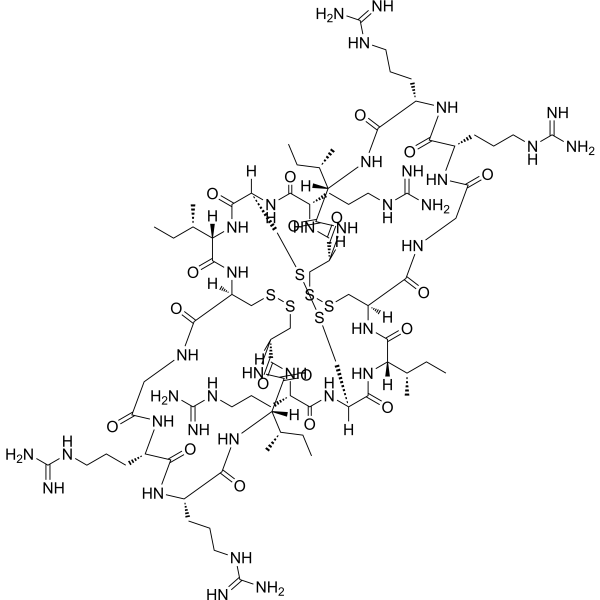 0 ImagesCat. No.: HY-P5644CAS No.: 724760-21-8
Retrocyclin-3 is an antimicrobial peptide against human immunodeficiency virus, influenza A and herpes simplex virus.
-
Antimycobacterial agent-4
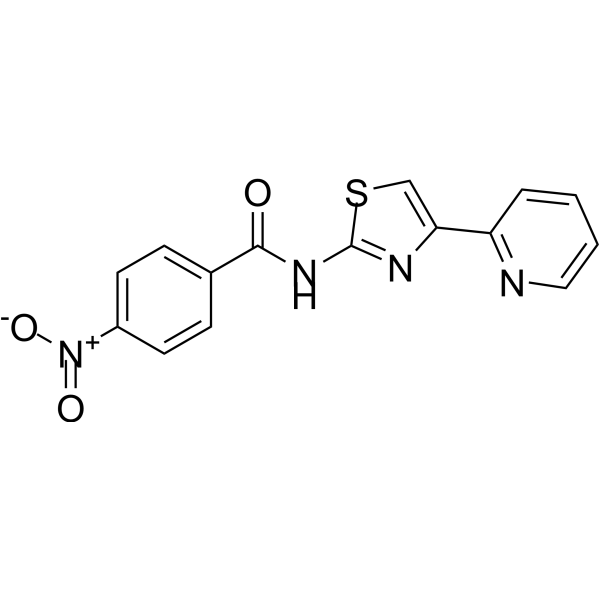 0 Images
Antimycobacterial agent-4 is a 2-amino-4-(2-pyridyl) thiazole derivative, with antimycobacterial activity, antiplasmodial activity, and cytotoxicity on a mammalian cell line.
-
Phenethicillin sodium-d5
 0 ImagesCat. No.: HY-W743292Synonyms: Pheneticillin sodium-d5; α-Phenoxyethylpenicillin sodium-d5
Phenethicillin sodium-d5 (Pheneticillin sodium-d5; α-Phenoxyethylpenicillin sodium-d5) is the deuterium labeled Phenethicillin sodium (HY-137945). Phenethicillin (α-Phenoxyethylpenicillin) sodium is a Penicillin, and has antimicrobial activity.
-
Faldaprevir-d7
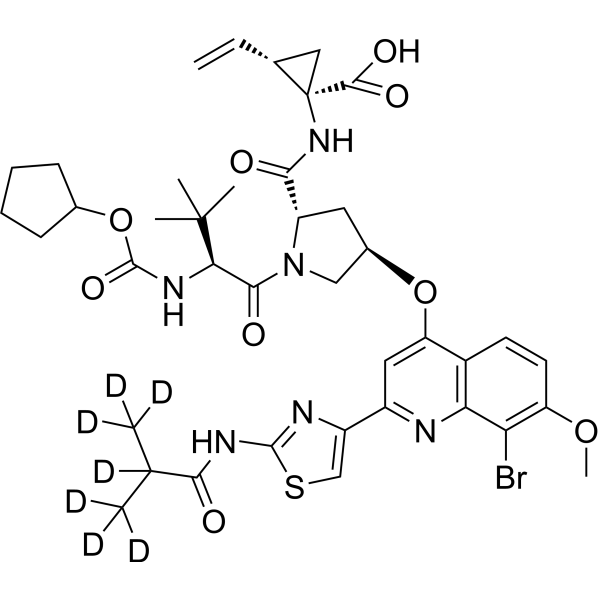 0 ImagesCat. No.: HY-15256S1CAS No.: 1613250-18-2
Faldaprevir-d7 is deuterium labeled Faldaprevir.

-
SARS-CoV-2 Mpro-IN-9
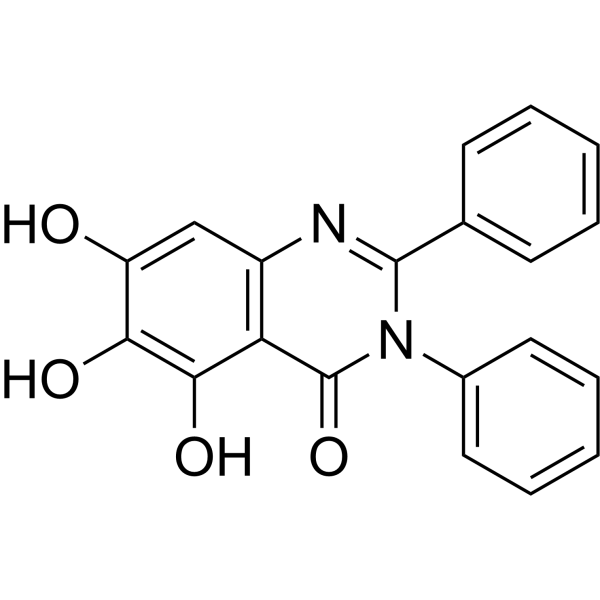 0 Images
SARS-CoV-2 Mpro-IN-9 (compound c7) is a nonpeptidic, noncovalent SARS-CoV-2 Mpro inhibitor (IC50=0.085 μM), with improved physicochemical and drug metabolism and pharmacokinetics (DMPK) properties. SARS-CoV-2 Mpro-IN-9 inhibits viral replication (EC50=1.10 μM) in SARS-CoV-2-infected Vero E6 cells, while exhibits low cytotoxic effects (CC50>50 μM).
-
Apelin-36(rat, mouse) TFA
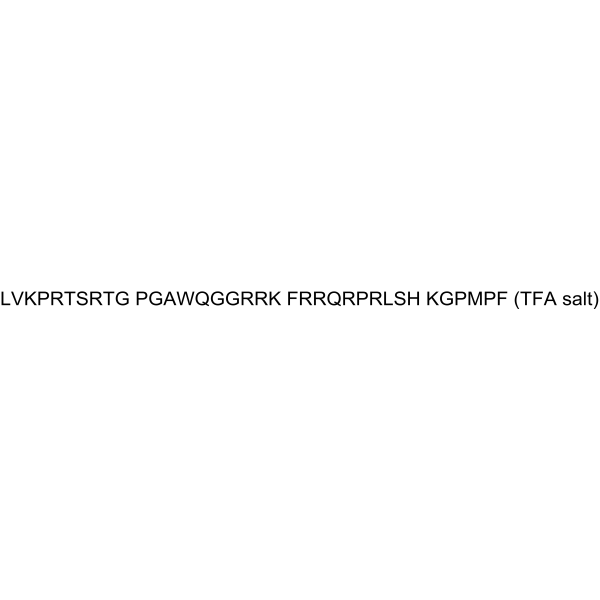 0 ImagesCat. No.: HY-P1065A
Apelin-36(rat, mouse) TFA is an endogenous orphan G protein-coupled receptor APJ agonist. Apelin-36(rat, mouse) TFA binds to APJ receptors with an IC50 of 5.4 nM, and potently inhibits cAMP production with an EC50 of 0.52 nM. Apelin-36(rat, mouse) TFA blocks entry of some HIV-1 and HIV-2 strains into NP-2/CD4 cells expressing APJ.
-
8-Epidiosbulbin E acetate
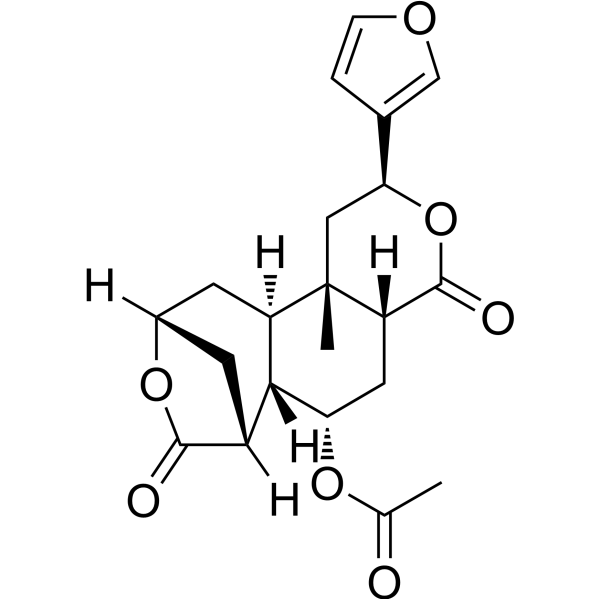 0 Images
8-Epidiosbulbin E acetate, a furanoid, is abundant in Dioscorea bulbifera L.. 8-Epidiosbulbin E acetate exhibits broad-spectrum plasmid-curing activity against multidrug-resistant (MDR) bacteria. 8-Epidiosbulbin E acetate induces liver injury in mice.
-
SET7-IN-DC21
 0 ImagesCat. No.: HY-133567CAS No.: 2567886-53-5
SET7-IN-DC21 is a selective, potent SET7 inhibitor (IC50 = 15.93 μM; KD = 18.00 μM). SET7-IN-DC21 has good selectivity for several other epigenetic targets, such as SUV39H1, G9a, NSD1, DOT1L and MOF. SET7-IN-DC21 can be used for the researches of cancer, infection, inflammation, metabolic and cardiovascular disease, such as breast cancer.
-
N-Choloylphenylalanine
 0 ImagesCat. No.: HY-176964CAS No.: 19651-46-8Synonyms: PheCA
-
2-Chloroacetamide-d4
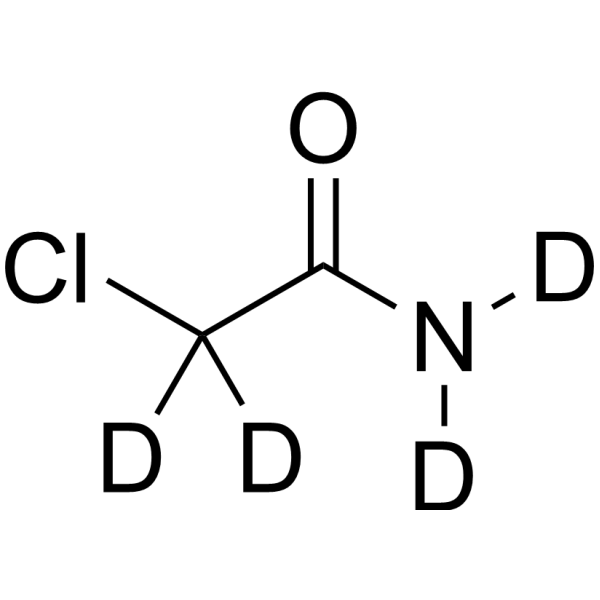 0 ImagesCat. No.: HY-W010629SCAS No.: 122775-20-6
2-Chloroacetamide-d4 is the deuterium labeled 2-Chloroacetamide. 2-Chloroacetamide is a preservative and is a herbicide for both uplands and paddy fields. 2-Chloroacetamide is a biocide in agriculture, glues, paints and coatings. 2-Chloroacetamide inhibits very-long-chain fatty acid elongase.
-
Cy3 labled Miravirsen sodium
 0 ImagesCat. No.: HY-132598E
Cy3 labled Miravirsen sodium is a Cy3 labled Miravirsen sodium.
-
Ophiobolin C
 0 ImagesCat. No.: HY-123902CAS No.: 19022-51-6Synonyms: Zizanin A
Ophiobolin C inhibits CCR5 binding to the envelop protein gp120 and CD4, which is responsible for mediating the entry of HIV-1 into cells. Ophiobolin C is also cytotoxic to chronic lymphocytic leukemia cells.
-
XA-E
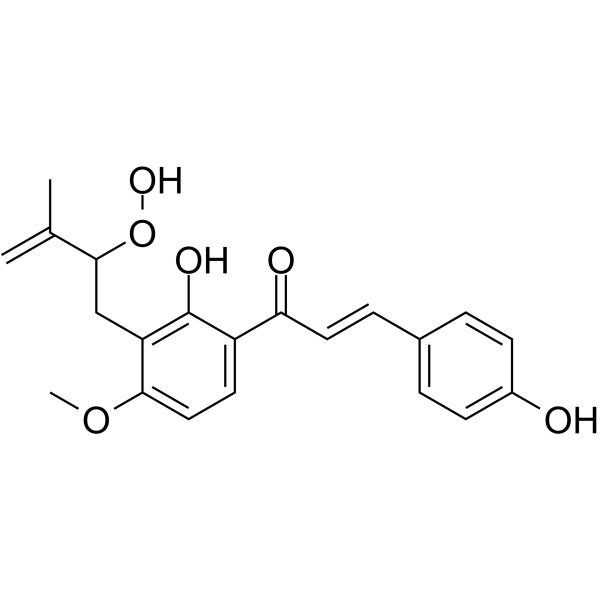 0 ImagesCat. No.: HY-115918CAS No.: 132998-84-6Synonyms: Xanthoangelol E
XA-E is a compound purified from a methanol-ethyl acetate extract from A. keiskei. XA-E displays anti-ZIKV activity with an IC50 value of 22.0 µM.
-
Muraminomicin F
 0 ImagesCat. No.: HY-N21881CAS No.: 695226-94-9
Muraminomicin F is a lipopeptide nucleoside antibiotic and MraY inhibitor (IC50 = 8.9 ng/mL). Muraminomicin F exerts antibacterial effects by inhibiting MraY, an essential key enzyme in bacterial cell wall peptidoglycan biosynthesis. Muraminomicin F can be used in research on bacterial infections.
-
Amiprilose
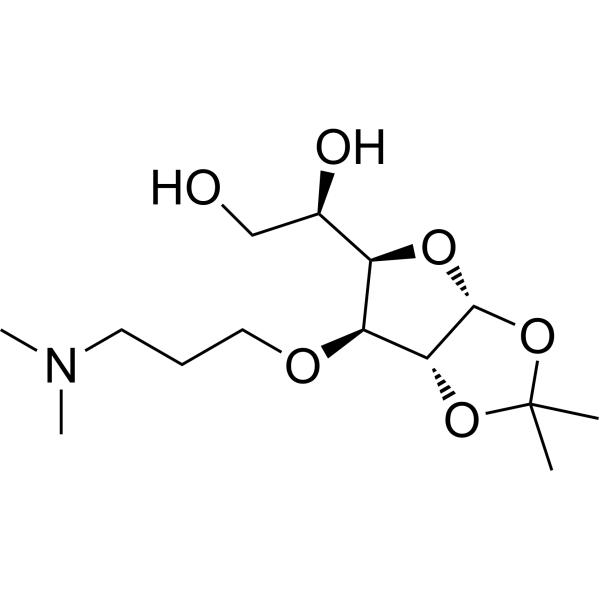 0 ImagesCat. No.: HY-121160CAS No.: 56824-20-5Synonyms: SM1213; Therafectin
Amiprilose (SM1213; Therafectin) is a potent inhibitor against Hepatocellular carcinoma (HCC). Amiprilose induces lymphokine-induced macrophage activation directly to kill Listeria monocytogenes.
-
β-Calacorene
 0 ImagesCat. No.: HY-W727391CAS No.: 50277-34-4
β-calacorene is an essential oil metabolite. β-calacorene shows AMES toxicity or mutagenic potential. β-calacorene can be used in the research of Staphylococcus aureus infections.
-
Aleuritic acid (Standard)
 0 ImagesSynonyms: (±)-erythro-Aleuritic acid (Standard); α-Aleuritic acid (Standard)
Aleuritic acid (Standard) ((±)-erythro-Aleuritic acid (Standard); α-Aleuritic acid (Standard)) is the analytical standard of Aleuritic acid (HY-N7076). This product is intended for research and analytical applications. Aleuritic acid ((±)-erythro-Aleuritic acid; α-Aleuritic acid) is a polyhydroxy fatty acid found in plant cutin and shellac. Aleuritic acid disrupts the Mycobacterium tuberculosis Nei2-β-clamp (DnaN) interaction and binds to the Mycobacterium tuberculosis β-clamp without affecting the intrinsic DNA glycosylase activity of Nei2. Aleuritic acid self-assembles with pectin to form cutin body nanoparticles. Aleuritic acid is the major component of Croton crassifolius. Aleuritic acid is used in mycobacterial and fragrance-related research.
-
3',5,5'-Trichlorosalicylanilide
 0 ImagesCat. No.: HY-W706466CAS No.: 106480-60-8Synonyms: TCSA
3',5,5'-Trichlorosalicylanilide (TCSA) acts as an inhibitor of fungal morphogenesis, preventing biofilm formation and hindering host cell invasion.
-
Momilactone A
 0 ImagesCat. No.: HY-N11293CAS No.: 51415-07-7
Momilactone A is a naturally derived diterpene lactone with multiple biological activities including anticancer, antibacterial and antioxidant properties. Momilactone A inhibits inflammatory responses by reducing NO production and iNOS expression. Momilactone A acts as a corrosion inhibitor for mild steel; it forms an isolating film on the metal surface via adsorption between oxygen atoms of the molecule and iron ions, thereby blocking corrosive media. Momilactone A inhibits the growth of fungal and bacterial organisms, and also functions as an allelochemical to inhibit the growth of adjacent competing plants. Momilactone A can be used in studies related to leukemia, fungal infections and bacterial infections.