Infection
-
Infection 관련 제품 (18904)
관련 제품 (18904)

-
Antibodies (22)
-
2-Chloroisonicotinohydrazide
 0 ImagesCat. No.: HY-W066819CAS No.: 58481-04-2Synonyms: 2-Chloro-isonicotinic acid hydrazide
2-Chloroisonicotinohydrazide (2-Chloro-isonicotinic acid hydrazide) (Compound 13a) is an Antibacterial agent. 2-Chloroisonicotinohydrazide exhibits antibacterial activity against Mycobacterium tuberculosis strain H37Rv, with a MIC50 of 392.0 μM. 2-Chloroisonicotinohydrazide can be used in the research of tuberculosis.
-
(-)-Deacetylsclerotiorin
 0 ImagesCat. No.: HY-129432CAS No.: 61248-35-9
(-)-Deacetylsclerotiorin (Compound 30) is the enantiomer of Deacetylsclerotiorin (HY-126167). Deacetylsclerotiorin is the metabolite of chloramphenicol isolated from the fungus Bartalinia robillardoides strain LF550. Deacetylsclerotiorin has significant inhibitory effects on Candida albicans (IC50=24 μM), Trichophyton rubrum (IC50=2.83 μM) and Septoria tritici (IC50=7.45 μM). In addition, Deacetylsclerotiorin also exhibits inhibitory effects on the enzyme phosphodiesterase 4 (PDE4) (IC50=2.8 μM).
-
Auramycin B
 0 ImagesCat. No.: HY-N13895CAS No.: 78173-91-8
Auramycin B, an anthracycline antibiotic that shows marked antibacterial activity against Gram-positive bacteria. Auramycin B also exhibits antitumor activity against P388 and L1210 leukemia in mice.
-
Temporin F
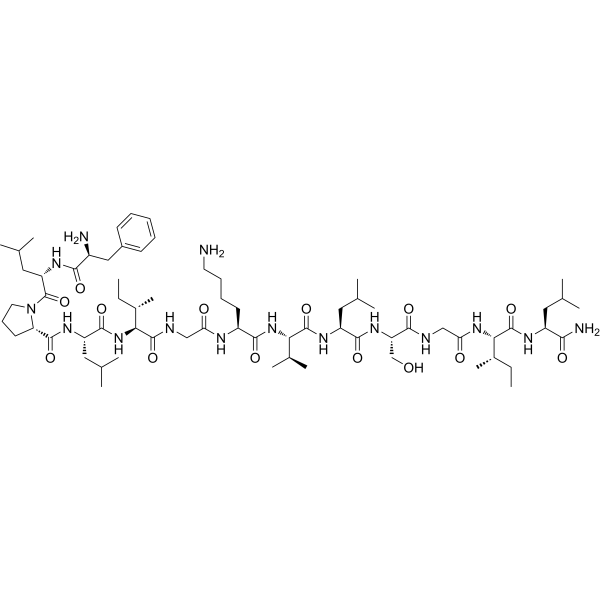 0 ImagesCat. No.: HY-P5597CAS No.: 188713-77-1
Temporin F is an antimicrobial peptide against Legionella pneumophila.
-
Vif-ElonginC interaction inhibitor 1
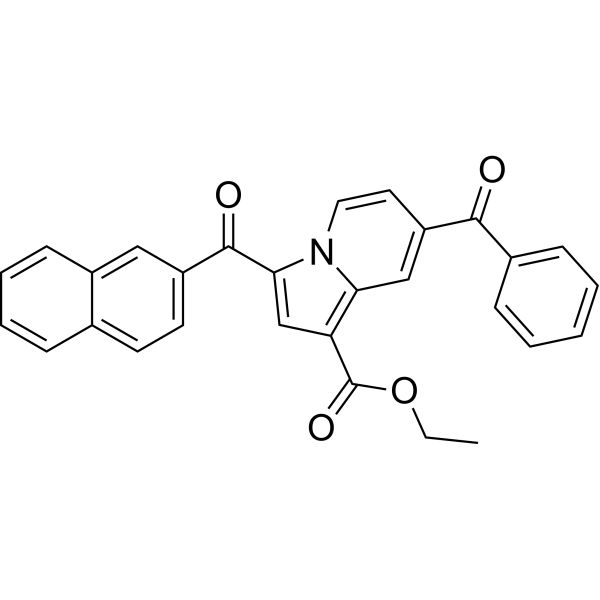 0 ImagesCat. No.: HY-120157CAS No.: 374679-27-3
Vif-ElonginC interaction inhibitor 1 (compound VEC-5) is a potent Vif inhibitor. Vif-ElonginC interaction inhibitor 1 can restrict HIV-1 in Vif-nonpermissive cells. Vif-ElonginC interaction inhibitor 1 can protect A3G, APOBEC3C (A3C), and APOBEC3F (A3F) from Vif-mediated degradation and drastically inhibit Vif function through blocking the interaction between Vif and ElonginC. Vif-ElonginC interaction inhibitor 1 enhances A3G incorporation into HIV-1 virions to reduce viral infectivity.

-
1-Hexacosanol (Standard)
 0 ImagesCat. No.: HY-W127493RCAS No.: 506-52-5Synonyms: Ceryl Alcohol (Standard)
1-Hexacosanol (Standard) is the analytical standard of 1-Hexacosanol. This product is intended for research and analytical applications. 1-Hexacosanol can be used as an inhibitor of acetylcholinesterase (AChE). 1-Hexacosanol has larvicidal activity and can inhibit the acetylcholinesterase activity of Culex quinquefasciatus, Aedes aegypti and Chironomus riparius, exerting neurotoxic effects.
-
Anti-SARS-CoV-2 S protein (RBD) Antibody (SARS2-38)
 0 ImagesCat. No.: HY-P991763
Anti-SARS-CoV-2 S protein (RBD) Antibody (SARS2-38) reacts with many variants of SARS-CoV-2 that binds a conserved epitope on the RBD (amino acids K444 and G446). Anti-SARS-CoV-2 S protein (RBD) Antibody (SARS2-38) does not cross-react with the SARS-CoV-1 spike protein. Recommend Isotype Controls: Mouse IgG1 kappa, Isotype Control (HY-P99977).
-
HBV-IN-10
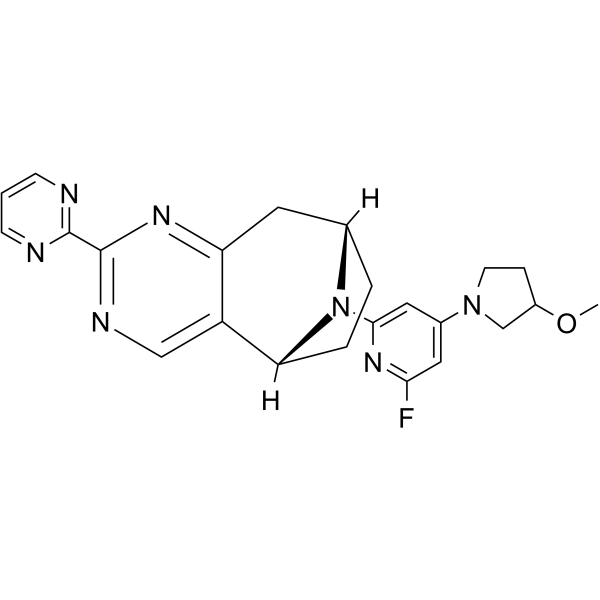 0 ImagesCat. No.: HY-145053CAS No.: 2716907-16-1
HBV-IN-10 is an enantiomer of compound 6 (WO2021204258A1). Compound 6 is a hepatitis B surface antigen (HBsAg) inhibitor (0.001 μM< EC50 ≤0.05 μM). From patent WO2021204258A1, compound 6.
-
Canthin-6-one N-oxide
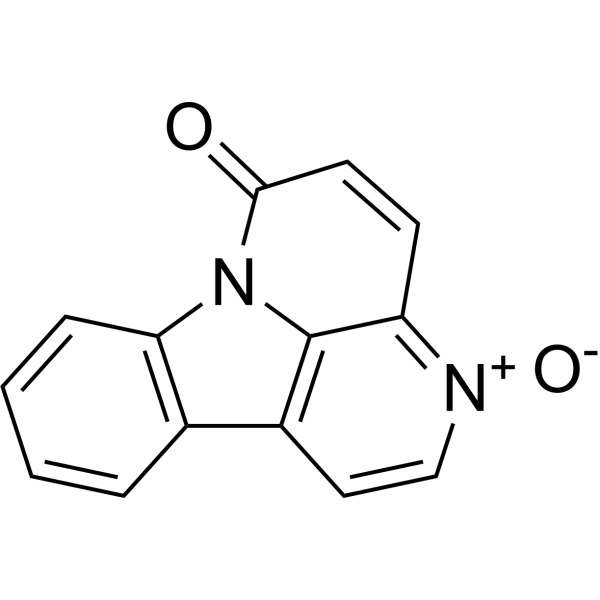 0 ImagesCat. No.: HY-129130CAS No.: 60755-87-5Synonyms: Canthin-6-one 3-oxide
Canthin-6-one N-oxide (Canthin-6-one 3-oxide) is an orally active antiparasitic agent with limited activity.
-
Monamycin G2
 0 ImagesCat. No.: HY-N14080CAS No.: 31556-81-7
Monamycin G2 is an ester peptide antibiotic. Monamycin G2 has activity against Gram-positive bacteria.
-
Gentamicin C1
 0 ImagesCat. No.: HY-167256CAS No.: 25876-10-2
Gentamicin C1 is a broad-spectrum aminoglycoside antibiotic with antimicrobial activity.

-
Napyradiomycin A2
 0 ImagesCat. No.: HY-N14412CAS No.: 111216-62-7
Napyradiomycin A2 is an antibiotic with anti-Gram-positive bacteria and mycobacterial activity.


-
Fluoxastrobin
 0 ImagesCat. No.: HY-W008927CAS No.: 361377-29-9
Fluoxastrobin is a fungicide. By binding to NAD-dependent epimerase/dehydratase, Fluoxastrobin interferes with electron transport, reduces ATP production and inhibits mycelial growth, thereby effectively controlling foliar diseases of tea plants. Fluoxastrobin induces oxidative stress by increasing ROS levels and lipid peroxidation, causes DNA damage and promotes apoptosis; meanwhile, it shows high acute toxicity to Danio rerio embryos and larvae. Fluoxastrobin can be used in research related to tea foliar diseases (including tea red leaf spot and tea gray leaf spot).
-
Scorodonin
 0 ImagesCat. No.: HY-N13915CAS No.: 74660-77-8
Scorodonin has anti-bacterial, Streptomyces and fungal effects. Scorodonin inhibits DNA-dependent RNA polymerases with an IC50 of 25 μg/mL.
-
Chlorocardicin
 0 ImagesCat. No.: HY-N14108CAS No.: 95927-71-2
Chlorocardicin is a monocyclic beta-lactam. Chlorocardicin has moderate in vitro activity against Enterobacteriaceae and Pseudomonas aeruginosa.
-
Asparenomycin B
 0 ImagesCat. No.: HY-N14183CAS No.: 79366-72-6
Asparenomycin B is a carbapenem antibiotic with strong β-lactamase inhibition activities.