



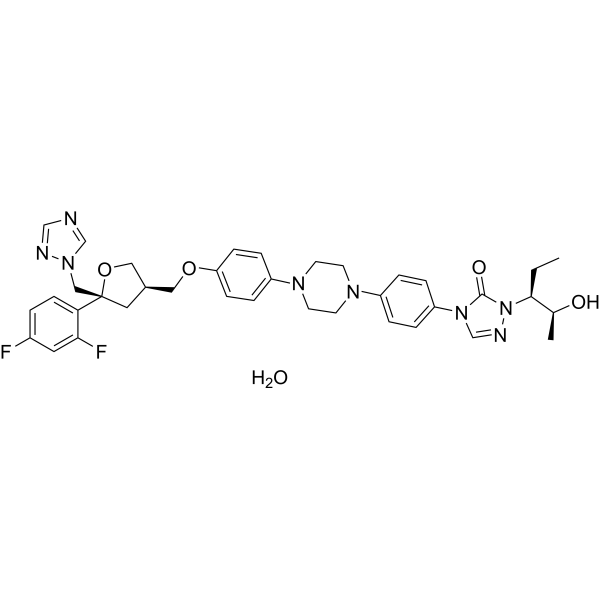
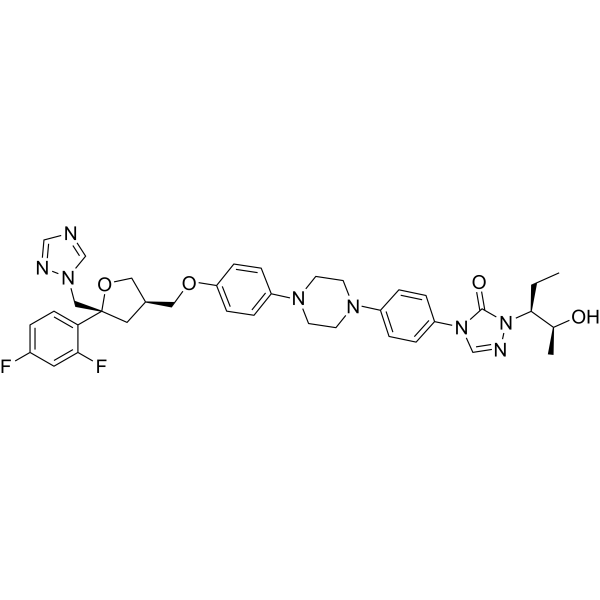
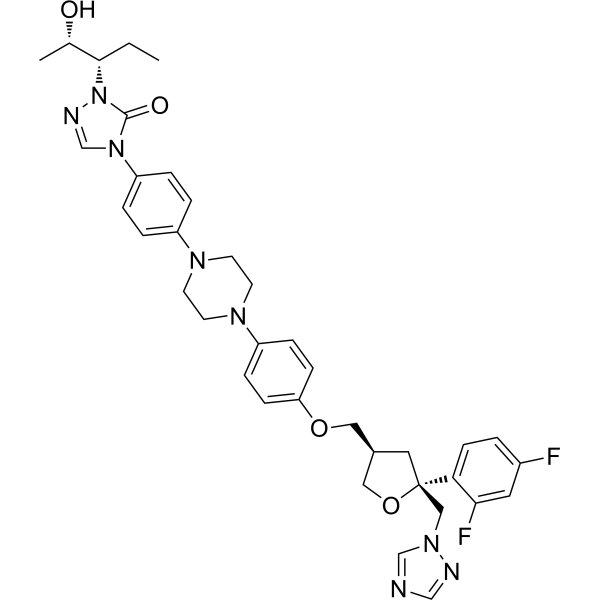
Posaconazole hydrate
Based on 14 publication(s) in Google Scholar
Posaconazole hydrate is a broad-spectrum, second generation, triazole compound with antifungal activity.
For research use only. We do not sell to patients.
- CAS No.: 1198769-38-8
- Formula: C37H44F2N8O5
- Molecular Weight:718.79
-
Storage:
Please store the product under the recommended conditions in the Certificate of Analysis.

To place orders, for customer services and technical support, please contact: MedChemExpress USA
Tel: 609-228-6898 E-mail: [email protected] [email protected]


-
 Biological Activity
-
Chemical Information
- Protocol
- Purity & Documentation
- References
-
 Help & FAQs


Publications Citing Use of MedChemExpress (MCE) Posaconazole hydrate
More- Adv Funct Mater. 2025 May 9.
- Sci China Life Sci. 2022 Feb;65(2):341-361. [Abstract]
- Clin Chem. 2019 Dec;65(12):1522-1531. [Abstract]
- BMC Microbiol. 2025 Nov 5;25(1):715. [Abstract]
- Microchem J. 2026 Mar 27.
- Mol Pharm. 2022 Nov 7;19(11):4320-4332. [Abstract]
- Microbiol Spectr. 2025 May 6;13(5):e0318524. [Abstract]
- Drug Metab Dispos. 2025 Nov;53(11):100168. [Abstract]
- Med Mycol. 2018 Jun 1;56(4):452-457. [Abstract]
- Mycoses. 2022 Apr;65(4):458-465. [Abstract]
- Am J Cancer Res. 2021 Sep 15;11(9):4528-4540. [Abstract]
- J Mycol Med. 2022 Mar;32(1):101227. [Abstract]
- SSRN. 2026 Mar 7.
- Curr Res Virol Sci. 2022;3:100019. [Abstract]
 Customer Validation & Images

-
Microbiological Assay
-
Microbiological Assay
All Parasite Isoforms
More

Biological Activity
Description
IC50 & Target
antifungal
In Vitro
Posaconazole has potent trypanocidal activity. Amiodarone acts synergistically with Posaconazole. Posaconazole also affects and disrupts Ca2+ homeostasis in T. cruzi. Posaconazole blocks the biosynthesis of ergosterol, which is essential for parasite survival. Posaconazole has a clear, dose-dependent effect on proliferation of the epimastigote (extracellular) stages, with a minimal inhibitory concentration of 20 nM and an IC50 of 14 nM. Against the clinically relevant intracellular amastigote form of the parasite, Posaconazole is even more potent. Posaconazole has the minimal inhibitory concentration and IC50 values of 3 nM and 0.25 nM[1]. Posaconazole is active against isolates of Candida and Aspergillus spp. that exhibit resistance to Fluconazole, Voriconazole, and Amphotericin B and is much more active than the other triazoles against zygomycetes[2].
MedChemExpress (MCE) has not independently confirmed the accuracy of these methods. They are for reference only.
In Vivo
MedChemExpress (MCE) has not independently confirmed the accuracy of these methods. They are for reference only.


Chemical Information
-
CAS No. 1198769-38-8
-
Molecular Weight 718.79
-
Formula C37H44F2N8O5
-
SMILES
FC1=CC=C([C@@]2(CN3C=NC=N3)C[C@H](COC4=CC=C(N5CCN(C6=CC=C(N7C=NN([C@@H](CC)[C@H](C)O)C7=O)C=C6)CC5)C=C4)CO2)C(F)=C1.O
-
Synonyms
SCH56592 hydrate
-
Shipping
Room temperature in continental US; may vary elsewhere.
-
Storage
Please store the product under the recommended conditions in the Certificate of Analysis.


Publications (14)
-
Journal Impact Factor
-
Most Recent
-
-
Sci China Life Sci
2022 Feb;65(2):341-361. PMID: 34047913 -
Clin Chem
Discovering Cross-Reactivity in Urine Drug Screening Immunoassays through Large-Scale Analysis of Electronic Health Records. [Abstract]2019 Dec;65(12):1522-1531. PMID: 31578215 -
BMC Microbiol
In vitro combination effects and mechanisms of Revaprazan with Triazole antifungal drugs on Aspergillus. [Abstract]2025 Nov 5;25(1):715. PMID: 41194018
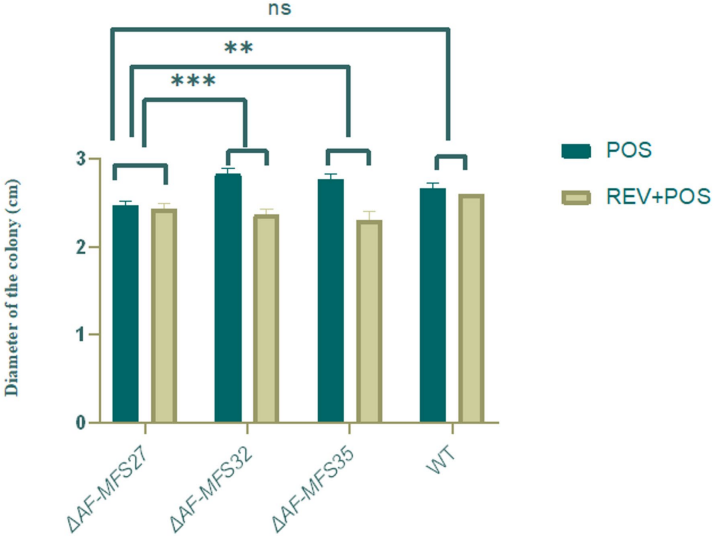
Posaconazole hydrate purchased from MedChemExpress. Usage Cited in: BMC Microbiol. 2025 Nov 5;25(1):715. [Abstract]
When REV combined with POS, the inhibition zone of ΔAF-MFS32, ΔAF-MFS35 was significantly smaller than that of control group ΔAF-MFS27. REV: Revaprazan (8 µg/ml); POS: posaconazole (8 µg/ml).
Posaconazole hydrate purchased from MedChemExpress. Usage Cited in: BMC Microbiol. 2025 Nov 5;25(1):715. [Abstract]
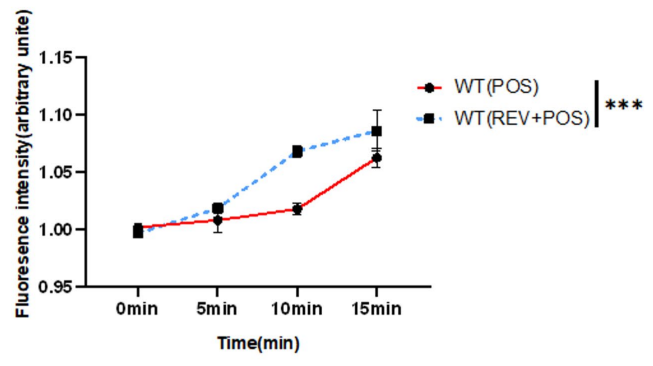
Rhodamine 6G efflux pump activity. When the wild-type strain WT was used together with Posaconazole (POS, 0. 015–4 µg/mL) in REV and POS, the efflux pump activity was significantly enhanced compared with that of POS alone, which was statistically significant.
-
-
Mol Pharm
2022 Nov 7;19(11):4320-4332. PMID: 36269563 -
Microbiol Spectr
Synergistic antifungal activity of minocycline as an effective augmenting agent of fluconazole against drug-resistant Candida tropicalis. [Abstract]2025 May 6;13(5):e0318524. PMID: 40162832 -
Drug Metab Dispos
Metabolic flux analysis of bile acid biosynthesis acidic pathway in HepG2 cells reveals CYP8B1 inhibition of azole antifungals. [Abstract]2025 Nov;53(11):100168. PMID: 41124962 -
Med Mycol
2018 Jun 1;56(4):452-457. PMID: 29420769 -
Mycoses
COVID-19-associated pulmonary aspergillosis in ICU patients in a German reference centre: Phenotypic and molecular characterisation of Aspergillus fumigatus isolates. [Abstract]2022 Apr;65(4):458-465. PMID: 35138651 -
Am J Cancer Res
Repurposing of posaconazole as a hedgehog/SMO signaling inhibitor for embryonal rhabdomyosarcoma therapy. [Abstract]2021 Sep 15;11(9):4528-4540. PMID: 34659903 -
J Mycol Med
In vitro synergistic effect of minocycline combined with antifungals against Cryptococcus neoformans. [Abstract]2022 Mar;32(1):101227. PMID: 34800920 -
-
Curr Res Virol Sci
Identification of broad anti-coronavirus chemical agents for repurposing against SARS-CoV-2 and variants of concern. [Abstract]2022;3:100019. PMID: 35072124

Protocol
Cell Assay[1]
The epimastigote form of the parasite is cultivated in liver infusion tryptose medium,12 supplemented with 10% new born calf serum at 28°C with strong (120 rpm) agitation. Cultures are initiated at a cell density of 2×10⁶ epimastigotes mL-1, and drugs are added at a cell density of 0.5-1.0 ×10⁷ epimastigotes mL-1. Cell densities are measured by using an electronic particle counter as well as by direct counting with a hemocytometer. Cell viability is followed by Trypan blue exclusion, using light microscopy. Amastigotes are cultured in Vero cells maintained in minimal essential medium supplemented with 1% fetal calf serum in a humidified atmosphere (95% air-5% CO2) at 37°C, as described previously. Cells are infected with 10 tissue culture-derived trypomastigotes per cell for 2 h and then washed three times with phosphate-buffered saline (PBS) to remove nonadherent parasites. Fresh medium with and without drugs is added, and the cells are incubated for 96 h with a medium change at 48 h. The percent of infected cells and the numbers of parasites per cell are determined directly using light microscopy, and a statistical analysis of the results is carried out as described previously. IC50 values are calculated by nonlinear regression, using the program GraFit. Cytoplasmic free Ca2+ concentrations in control and drug-treated extracellular epimastigotes are determined by fluorimetric methods, using Fura-2, again as described previously. Subcellular Ca2+ levels and mitochondrial membrane potentials are monitored on individual Vero cells infected with T. cruzi amastigotes by using time-scan confocal microscopy, as described in detail elsewhere. Briefly, Vero cells heavily infected (72 h) with T. cruzi amastigotes are plated onto 22×40 mm glass coverslips (0.15 mm thickness) and incubated simultaneously with 10 μM cell-permeant Rhod-2 and 10 μg/mL Rhodamine-123 for 50 min at 37°C in culture medium and then washed and incubated with Ringer's solution, with or without amiodarone. Under the conditions used, fluorescence of Rhod-2 comes mainly from intracellular Ca2+-rich compartments, like mitochondria, since its low affinity for Ca2+ limits its fluorescence in the Ca2+-poor cytoplasm of the Vero cells or amastigotes. Rhodamine-123 is a mitochondrion-specific cationic dye, which distributes across the inner mitochondrial membranes strictly according to their membrane potential.
MedChemExpress (MCE) has not independently confirmed the accuracy of these methods. They are for reference only.
Animal Administration[1]
In vivo studies are carried out by using the murine model of acute Chagas' disease in which female NMRI-IVIC mice (20-25 g) are infected with 105 or 103 bloodstream trypomastigotes and drug treatment is started 24 h later. Treatments are given for 30 consecutive days at 20 mg/kg/d for posaconazole (30 doses) and/or at 50 mg/kg every other day for amiodarone (15 doses). Negative controls (i.e. untreated animals) receive only the vehicle, while positive controls are treated with the anti-T. cruzi compound, nifurtimox, at 50 mg/kg/d for 30 days. Survival is followed daily and parasitemia weekly, the latter by direct microscopic examination. Animals are observed for 60 days postinfection, after which time parasitological cures are evaluated by using a combination of hemoculture, xenodiagnosis, and blood PCR tests. For PCR, primers TcZ1 (5'-CGAGCTCTTGCCCACACGGGTGCT-3') and TcZ2 (5'-CCTCCAAGCAGCGGATAGTTCAGG-3') are used to detect T. cruzi satellite DNA (TcZ DNA).
MedChemExpress (MCE) has not independently confirmed the accuracy of these methods. They are for reference only.


Purity & Documentation
References
[1]. Benaim G, et al. Amiodarone has intrinsic anti-Trypanosoma cruzi activity and acts synergistically with posaconazole. J Med Chem. 2006 Feb 9;49(3):892-9. [Content Brief]
[2]. Sabatelli F, et al. In vitro activities of posaconazole, fluconazole, itraconazole, voriconazole, and amphotericin B against a large collection of clinically important molds and yeasts. Antimicrob Agents Chemother. 2006 Jun;50(6):2009-15. [Content Brief]
[3]. Sansone-Parsons A, et al. Effect of a nutritional supplement on posaconazole pharmacokinetics following oral administration to healthy volunteers. Antimicrob Agents Chemother. 2006 May;50(5):1881-3. [Content Brief]
[4]. Veiga-Santos P, et al. Effects of amiodarone and posaconazole on the growth and ultrastructure of Trypanosoma cruzi. Int J Antimicrob Agents. 2012 Jul;40(1):61-71. [Content Brief]
[5]. Sun QN, et al. In vivo activity of posaconazole against Mucor spp. in an immunosuppressed-mouse model. Antimicrob Agents Chemother. 2002 Jul;46(7):2310-2. [Content Brief]

Calculators
Concentration (start) × Volume (start) = Concentration (final) × Volume (final)


Posaconazole hydrate Related Classifications
HY-17373A Related Classifications
 Powered by Bioz